

What Is a Sales Operations Team Responsible For?
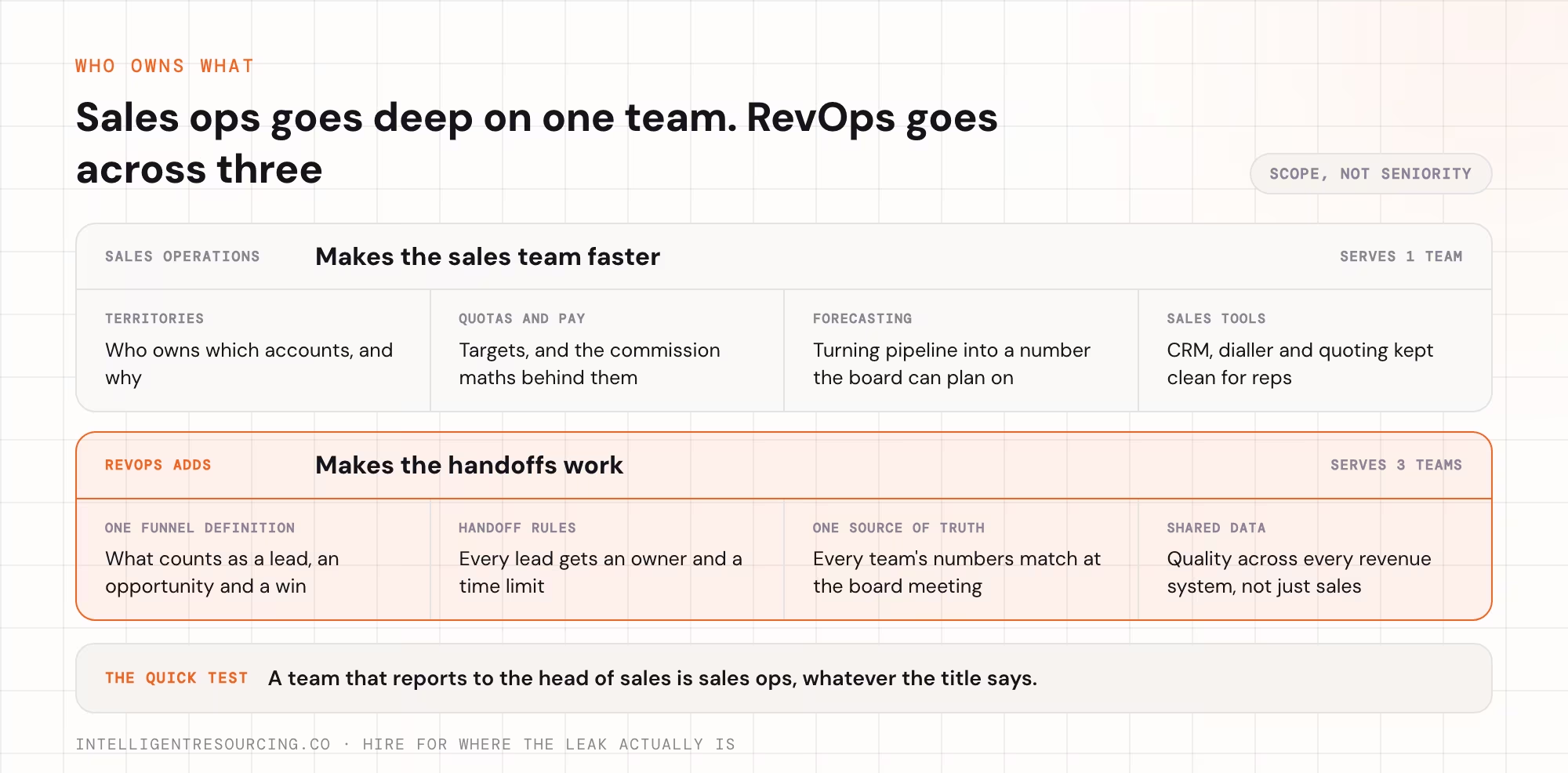
A sales operations team owns the systems that help salespeople sell. That covers territories, quotas, pay plans, pipeline reports and the sales side of the customer relationship management (CRM) system. Its customer is the head of sales. Work for marketing or customer success goes to revenue operations (RevOps) instead.
The daily work falls into 4 buckets:
- Territory and account design: who owns which accounts, and why.
- Quotas and pay: setting targets and checking commission maths.
- Forecasting: turning the pipeline into a number the board can plan on.
- Sales tools: keeping the CRM, dialler and quoting tools clean for reps.
A 2015 Harvard Business Review piece on rethinking sales territory design notes that companies apply more analytics to sales decisions every year, while territory design, meaning how account responsibility is assigned to salespeople, stays one of the most frequently undervalued areas.
A good sales ops lead fixes that before asking for more reps. When the fix needs marketing data too, it becomes revenue operations infrastructure work.
What Does RevOps Own Beyond Sales Ops?
RevOps owns the parts of the revenue process that sit between teams. It sets one definition of a qualified lead, routes leads from marketing to sales and passes closed deals to customer success. It also owns the shared data and reports, so 3 teams run as one process.
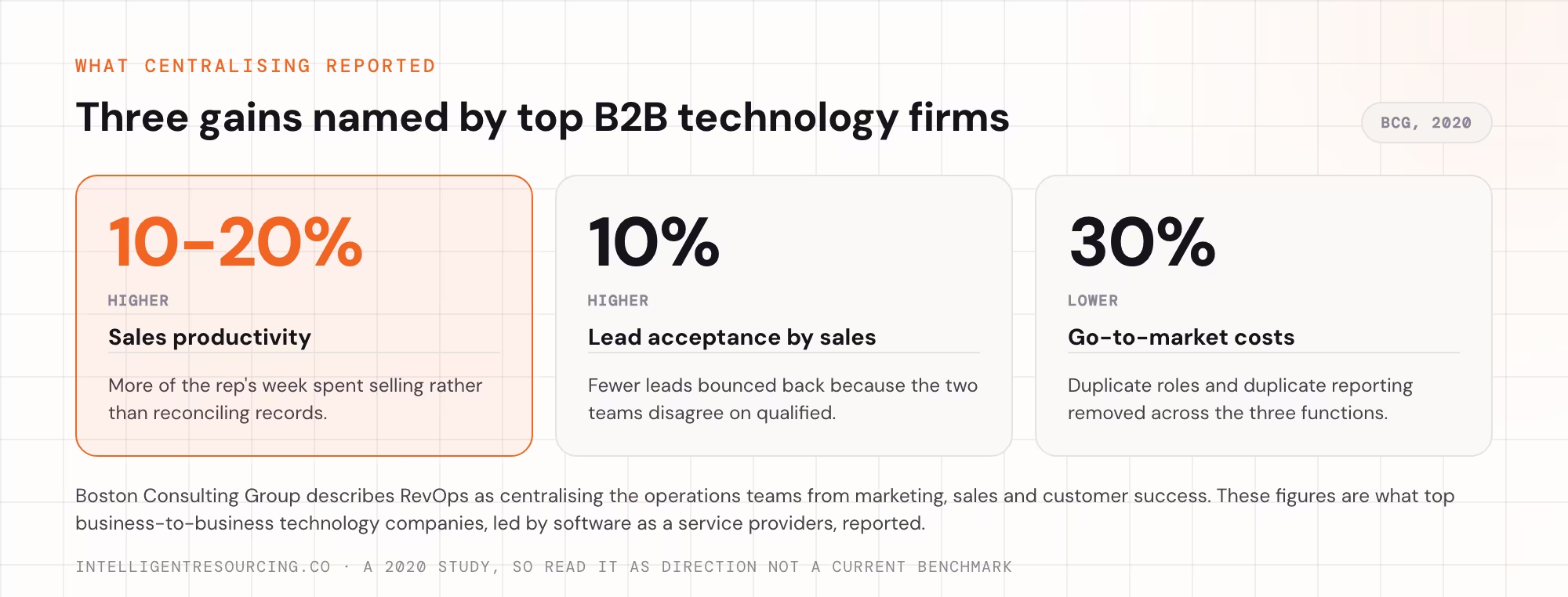
Boston Consulting Group's 2020 study of centralising go-to-market operations describes RevOps as centralising the operations teams from marketing, sales and customer success. Top business-to-business (B2B) technology companies, led by software as a service (SaaS) providers, reported:
- 10% to 20% higher sales productivity.
- 10% higher lead acceptance by sales.
- 30% lower go-to-market costs.
RevOps adds 3 jobs sales ops never had:
- One funnel definition of a lead, an opportunity and a win.
- Handoff rules giving every lead an owner and a time limit.
- One source of truth, so every team's numbers match at the board meeting.
Our guide to what RevOps covers sets out the full scope.
Who Does Each Role Report To?
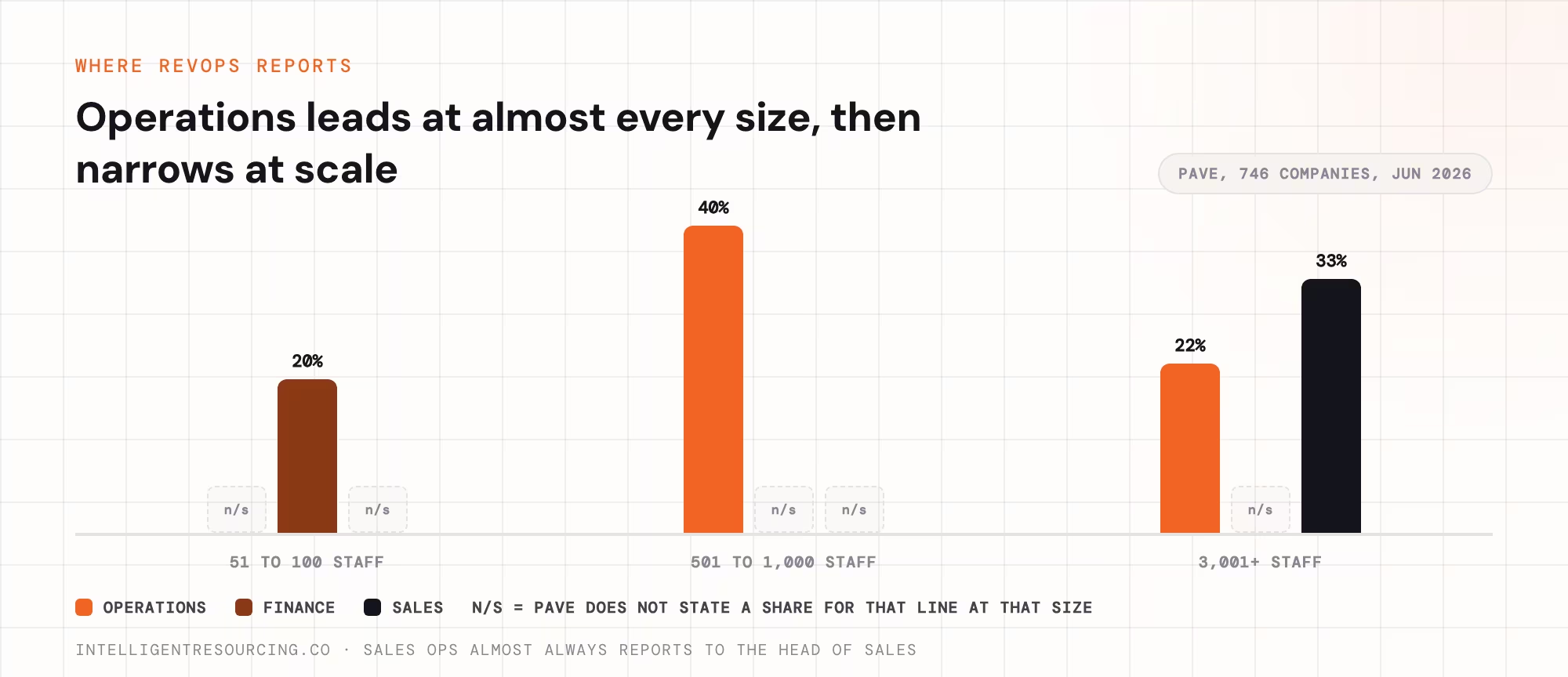
Sales ops almost always reports to the head of sales, because sales is its only customer. RevOps reporting lines vary much more. Pave's June 2026 analysis of where RevOps teams report, drawn from 746 companies, shows operations is the most common line at firms with 51 to 3,000 staff, and it leads at almost every size.
The answer shifts with company size:
- Finance takes 20% at firms with 51 to 100 staff, its highest share.
- Sales rises to 33% at firms with 3,001 staff or more, as the chief revenue officer (CRO) role becomes common.
- Operations peaks at 40% at firms with 501 to 1,000 staff, then drops to 22% above 3,000.
A "RevOps" team that reports to sales and only builds sales reports is doing sales ops work. That gap is one reason RevOps can feel too heavy for a small team.
Which Numbers Does Each Team Answer For?
Sales ops answers for sales numbers: win rate, forecast accuracy, pipeline size and quota reached. RevOps answers for the whole revenue chain: pipeline from every source, conversion at each handoff, retention and the cost to win each dollar. If marketing's lead count and sales' pipeline never match, that question belongs to RevOps.
| Metric | Sales Operations | RevOps |
|---|---|---|
| Win rate and forecast accuracy | Owns | Reviews |
| Lead-to-opportunity conversion | Sees the sales half | Owns end to end |
| Retention and expansion revenue | Rarely tracks | Owns with customer success |
| Data quality across systems | Sales records only | Every revenue system |
Data quality is where the 2 roles clash most. The RevOps Co-op's 2025 State of RevOps survey, run with Openprise and MarketingOps.com, found:
- 99% of respondents struggle with technical data issues.
- 71% of those who called their data "good enough" said it had still hurt their go-to-market team's ability to execute.
- 40% are comfortable relying on technical data definitions alone.
Fixing it is often the first job for a go-to-market (GTM) engineer. Here is what a GTM engineer does.
Can One Hire Cover Both Jobs?
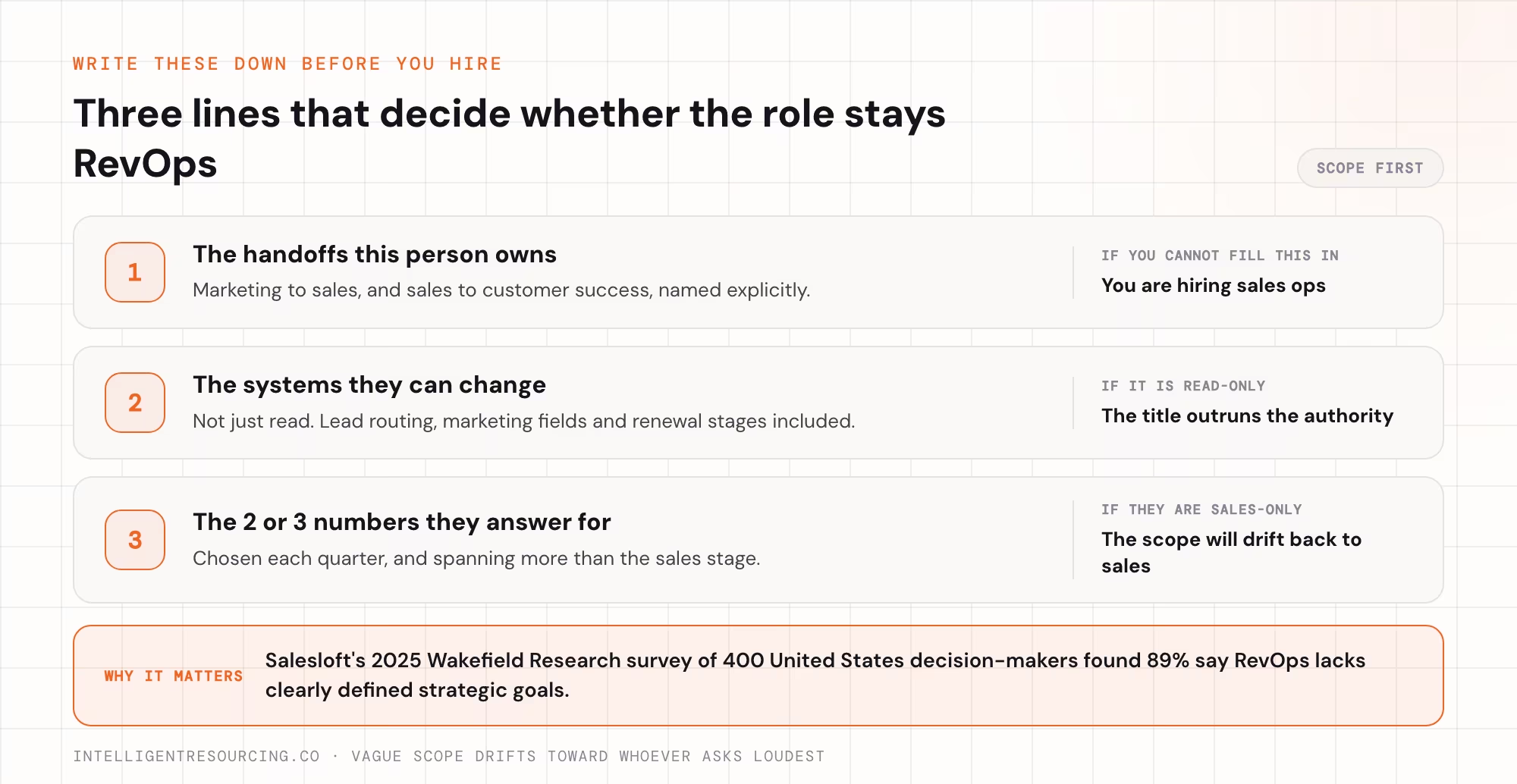
One hire can cover both jobs in a small business, but only if the scope is written down first. Without it, the role drifts toward whatever the loudest team asks for, which is usually sales. The title then says RevOps while the work stays in sales ops.
Vague scope is common even at larger firms. Salesloft's 2025 Wakefield Research study of RevOps surveyed 400 RevOps and executive decision-makers in the United States, across manufacturing, telecommunications, financial services and technology. Of those, 89% said the function lacks clearly defined strategic goals.
Before you hire, write down 3 things:
- The handoffs this person owns, such as marketing to sales and sales to customer success.
- The systems they can change, not just read.
- The 2 or 3 numbers they answer for each quarter.
If you cannot fill in the first line, you are hiring sales ops.
Some Australian firms skip the hire and use an outside team. This shortlist compares RevOps automation agencies in Australia.
When Should a Small Australian Business Add RevOps?
A small and medium-sized enterprise (SME) should add RevOps once more than 1 team uses revenue data and the numbers stop matching. Common signs are leads waiting days for a reply, reports that disagree and reps who no longer trust the CRM. Before that point, sales ops covers most needs.
Cost matters too. Jora puts the average Sales Operations Manager salary in Australia at AUD $130,000 a year, from full-time salary ranges disclosed in SEEK job ads over the previous 3 months. That is the advertised salary, not the fully loaded cost, and Jora notes that some disclosed figures include superannuation while others do not.
RevOps needs those skills plus authority over marketing and customer success, so many SMEs build a system before a department.
| Your situation | Right move |
|---|---|
| Sales is the only team with a real process | Stay with sales ops |
| All 3 teams run their own tools and reports | Add RevOps |
| You need RevOps results before a senior hire | Build the system first |
Ready to see where your leads stall? Get a map of the handoffs between your teams before you commit to a hire. Talk to our GTM engineering team.
RevOps Tools
Get a map of the handoffs between your teams before you commit to a hire.
FAQs
Does RevOps replace the sales operations team?
RevOps usually takes in sales ops as one part of a wider team. Territories, quotas and forecasts still need an owner. What changes is who the team reports to and which data it controls.
Can a sales operations manager move into a RevOps role?
Yes. A sales ops manager already holds most of the CRM and reporting skills RevOps needs. They need to learn the marketing and customer success side: how leads are scored, how handoffs work and how renewals are tracked.
What tools does each function usually own?
Sales ops usually owns the CRM, the quoting tool and the commission tool. RevOps owns those plus the links to marketing automation and the customer success platform, and is judged on data moving cleanly between them.
How do you know your sales ops team is really doing RevOps?
Check what the team can change. If it can edit lead routing, marketing fields and renewal stages, it works as RevOps. If it only builds sales reports, it is sales ops with a newer title.
Where does marketing operations fit alongside sales ops and RevOps?
Marketing operations does for marketing what sales ops does for sales. It runs campaign tools, lead scoring and marketing reports. Under RevOps, both ops teams sit in one group, so marketing and sales use the same lead and handoff rules.