

Which Buyer Signals Should a New Portfolio Company Track First?
Track the signals the deal thesis depends on, and define them before you collect any. A buyer signal is a dated event at a named account that makes a purchase more likely. In the first 100 days after a private equity (PE) deal, a short, defined list beats a long one.
Most acquired companies have never written their signals down. Sales ran on relationships, so each rep works from memory. Sales Xceleration's 2026 State of Sales found 66% of small and mid-sized business (SMB) leaders have no documented sales process. The sales consultancy drew that from 5,263 of its own assessments, so read it as its client base rather than the whole market.
A short list also fails more visibly, which is the point. Two signal types that route cleanly tell you the stack works. Ten that half-fire tell you nothing, because nobody can say which part broke.
Let the thesis set the list. If the deal depends on a new vertical, tech installs in that vertical matter more than funding news. Start with 2 or 3 signal types, then add more once those route and qualify cleanly.
Each signal should map to one action for a rep. A champion who moves into an ideal customer profile (ICP) account is a signal, because it names a person, a date and a company. For the full signal types and buying windows, see what counts as a buying signal.
How Do You Sequence CRM Enrichment After an Acquisition?
Audit the inherited CRM first. Then enrich only the fields the signal definitions call for. Doing both at once fills gaps against criteria nobody has agreed on.
An acquired CRM is rarely a clean base. Salesforce's 2026 State of Sales is its seventh edition and covers 4,050 sales staff in 22 countries. It found 74% working on data cleansing: removing duplicates, fixing errors and gaps, and making formats match across split systems. The buyer inherits all of that on day one.
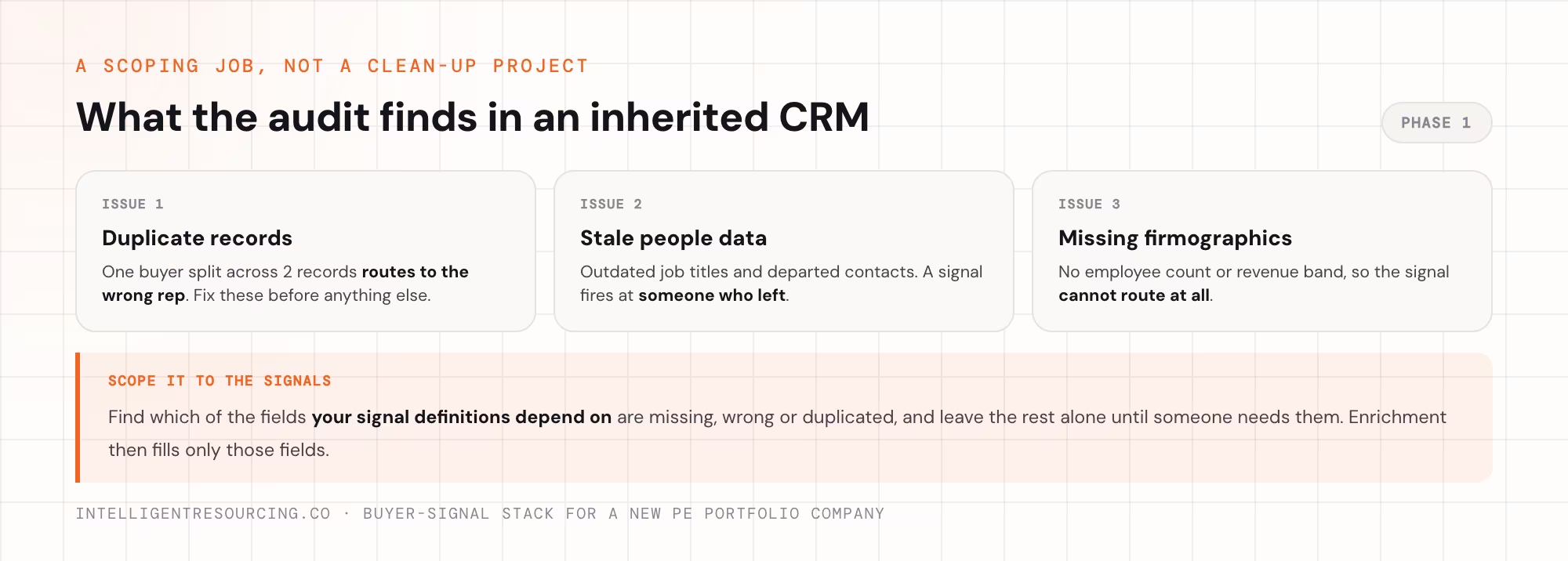
The audit usually finds the same issues.
- Duplicate contact and account records
- Outdated job titles and departed contacts
- Missing firmographic fields, such as employee count or revenue band
Each one can send a signal to the wrong person or stop it routing. CRM enrichment then fills only the fields the signals need.
The audit is not a data-quality project. It is a scoping job: find out which of the fields your signals depend on are missing, wrong or duplicated, and leave the rest alone until someone needs them.
How Does a Clay Workflow Turn Signals Into Action?
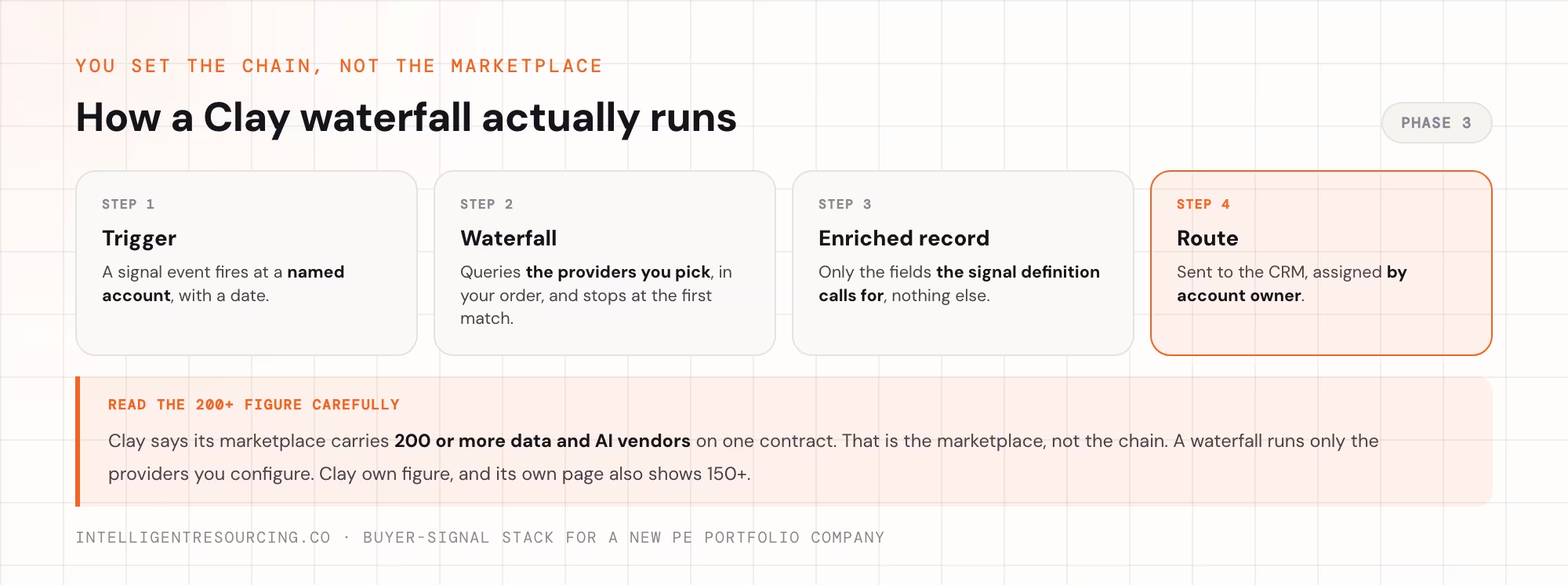
A Clay workflow takes a signal, enriches the matching record and sends it to the CRM with the fields sales needs. The order inside this phase is trigger, then enrichment, then routing by account owner.
The enrichment step uses a waterfall. Clay says its marketplace carries 200 or more data and AI vendors on one contract. A waterfall queries the providers you pick, in the order you set, and stops at the first one that returns a match. The count is Clay's own figure, and the chain is whatever you configure, not the whole marketplace.
For a new portfolio company, speed to a working route matters most, so reuse proven steps. Building a signal-led prospecting system covers the full Clay setup and routing rules outside the PE context.
When Should the Qualification Layer Go Live?
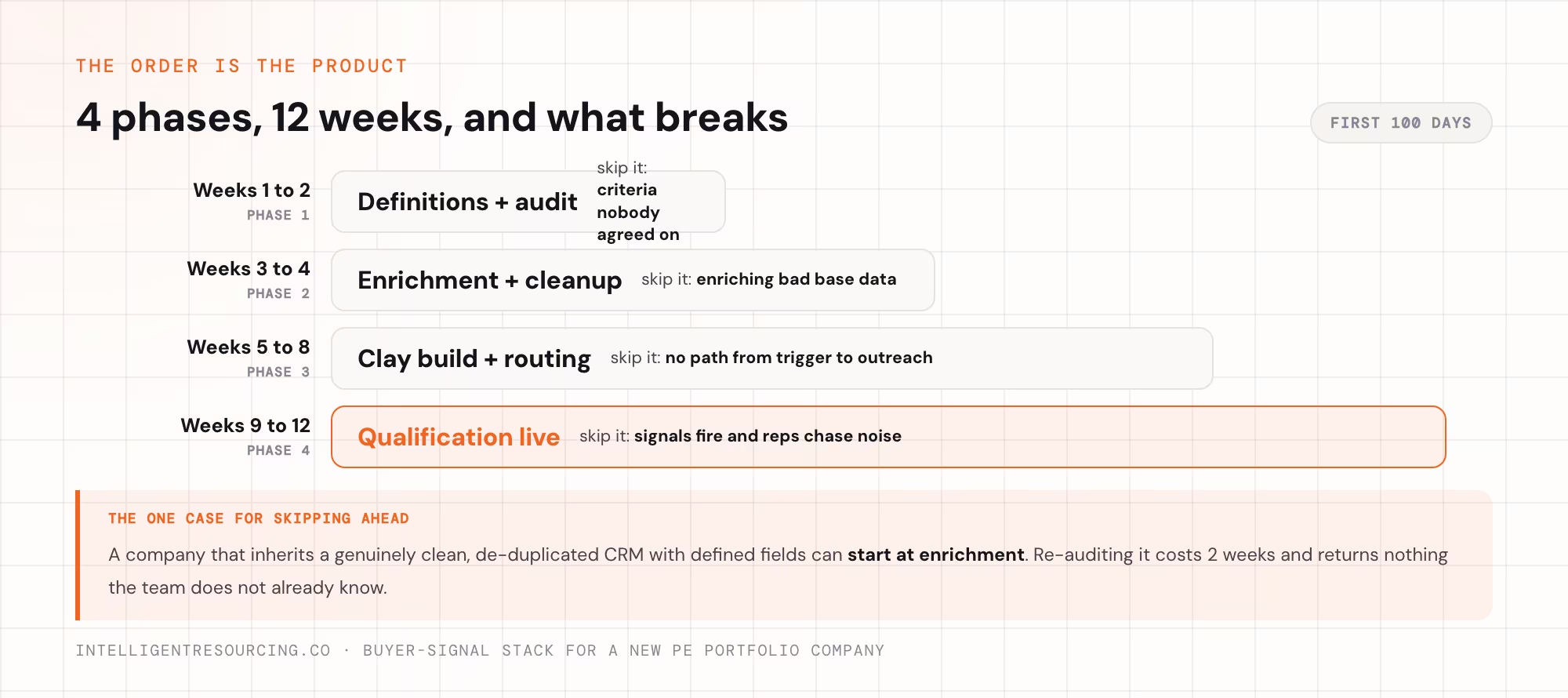
Turn on qualification only when trigger, enrichment and routing all run without manual help. In a new stack that is usually weeks 9 to 12.
- Trigger: fires on live signal events
- Enrichment: returns usable matches without manual cleanup
- Routing: sends every record to the correct queue
Investors expect this work to start early. In Alvarez and Marsal's 2026 survey of 200 European PE investors and portfolio company executives, 58% put value creation resources to work within the first 100 days. A year earlier it was 29%.
Use the false-positive rate as the readiness test. If more than 1 in 5 routed signals prove irrelevant when a rep reviews them, qualification is not ready, whatever the week.
That test matters more than the calendar because the cost of going early is not a delay. It is a sales team that stops opening the alerts, and winning that trust back takes longer than the build did.
Should the Stack Run Per Company or Across the Portfolio?
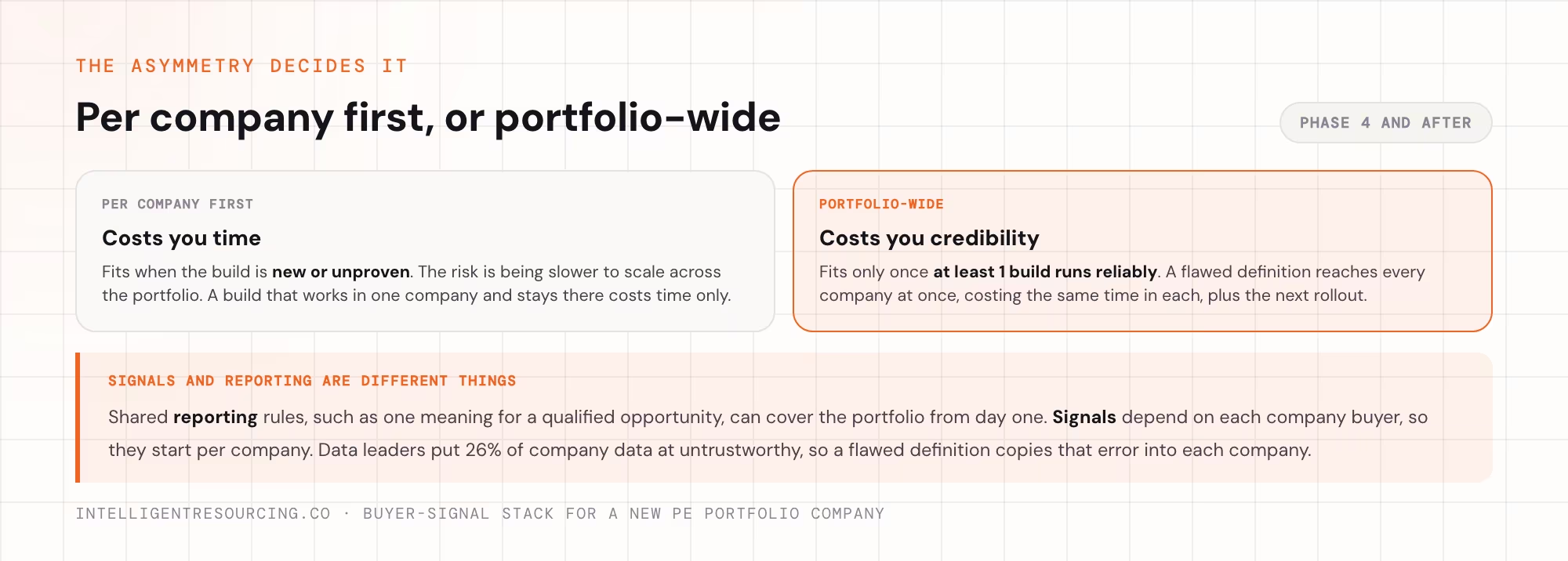
Build the signal stack in one company first and go portfolio-wide only once it runs reliably. A shared signal definition imposed too early rarely fits every company's buyer.
| Per company first | Portfolio-wide | |
|---|---|---|
| When it fits | The build is new or unproven | At least 1 build already runs reliably |
| Main risk | Slower to scale across the portfolio | A flawed signal definition reaches every company at once |
The asymmetry is what decides it. A build that works in one company and stays there costs you time. A flawed definition pushed to every company costs you the same time in each one, plus the credibility of the next rollout.
Signal definitions are not the same as reporting definitions. Shared reporting rules, such as one meaning for a qualified opportunity, can cover the whole portfolio from day one. Signals depend on each company's buyer, so they start per company.
Bad data multiplies at scale. Data and analytics leaders estimate 26% of their company's data is untrustworthy, according to Salesforce's State of Data and Analytics survey of nearly 8,000 executives. One flawed signal definition copied across companies carries that error into each one.
A GTM operating partner for PE portfolios decides when go-to-market (GTM) standards should cross companies. If 2 portfolio companies sell to the same buyer, start their signal definitions from one template and let each set its own thresholds.
How Do You Build the Stack Without In-House Capacity?
The 12-week plan assumes someone runs the build full time. Most new portfolio companies lack that person, so the build stalls at the audit or the Clay phase.
That is the honest limit of any sequence written down in an article. The order is the easy part; the constraint is whoever has to do the work each week while the rest of the integration is running.
Intelligent Resourcing builds and runs the signal stack for portfolio companies as a managed retainer, working in the CRM each company already uses. Start with a signal audit to see which buying signals the company is missing now.
Buyer Intent
Start with a signal audit on the CRM the company already runs, and find out which buying windows are opening without anyone acting on them.
FAQs
Which data should you audit first in an inherited CRM?
Start with the fields your signal definitions use: account ownership, job titles and firmographics such as employee count. Fix duplicates before anything else, because one buyer split across 2 records can route to the wrong rep.
How is a buyer-signal stack different from a CRM?
A CRM stores records. A buyer-signal stack detects events, enriches the matching record and routes it to the right person automatically, with the CRM as one part of it.
Should enrichment happen before or after the signal definitions are set?
After. Enrichment without agreed definitions fills in the wrong fields, so audit and define signals first, then enrich against them.
Can the same buyer-signal stack run across multiple portfolio companies?
Not straight away. Prove the build in one company first, then reuse it for companies that sell to the same buyer.
How long does a new buyer-signal stack take to build?
About 12 weeks: 2 for definitions and the audit, 2 for enrichment, 4 for the Clay workflow and routing, then 4 for the qualification layer. Skipping a phase usually means rebuilding it later.