

What Does Buyer Intent Data Cost in 2026?
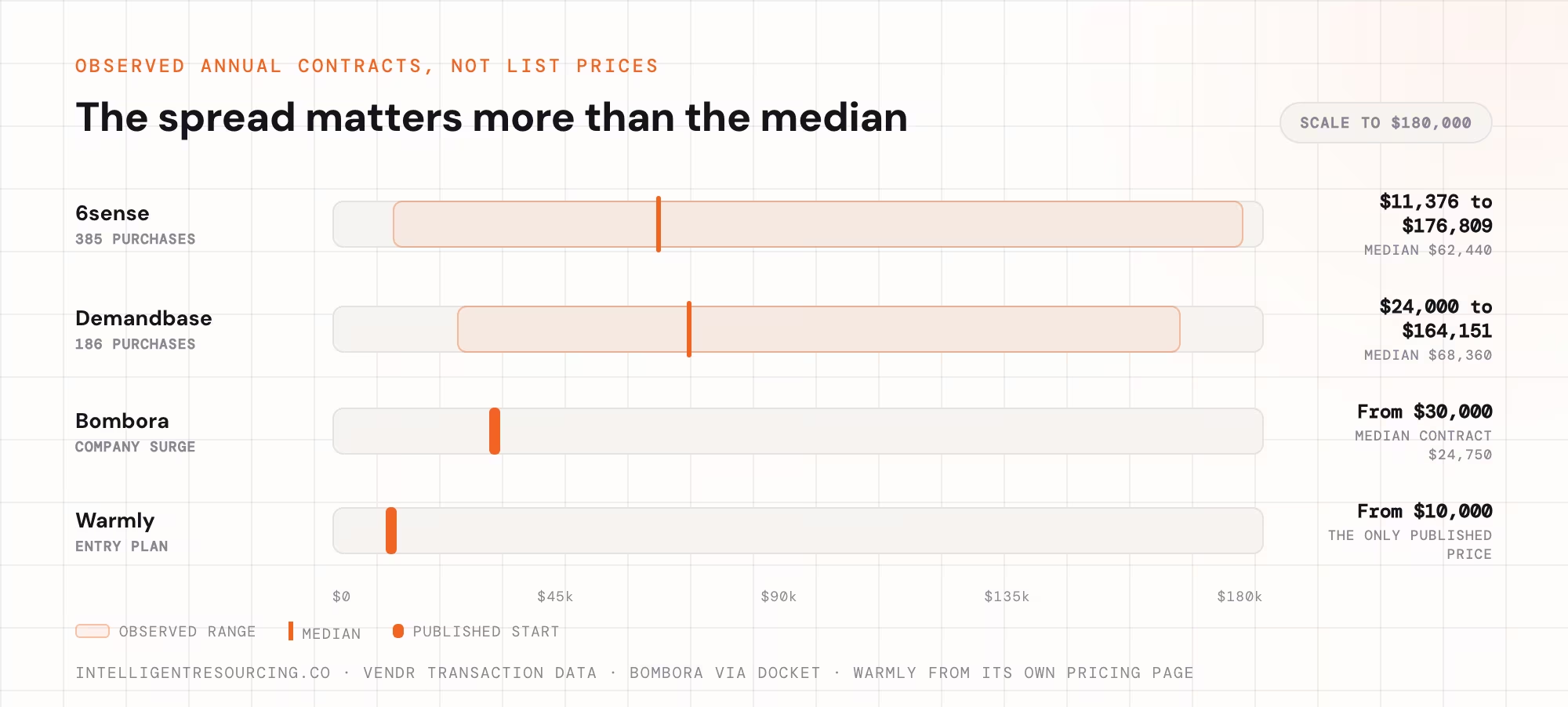
Buyer intent data costs between $10,000 and roughly $177,000 a year, depending on which layer of the market you buy and how many accounts you track. The midpoint for the two enterprise platforms sits near $62,000 to $68,000.
Those are not list prices, because list prices barely exist here. They come from Vendr, which aggregates what its customers actually paid, and from third-party analysis where Vendr has no coverage.
- 6sense: median $62,440 a year across 385 purchases, with observed deals from $11,376 to $176,809
- Demandbase: median $68,360 a year across 186 purchases, with observed deals from $24,000 to $164,151, per Vendr's Demandbase guide
- Bombora: Company Surge starts near $30,000 a year, with a median reported contract of $24,750, per Docket
- Warmly: entry plan from $10,000 a year, published on its own pricing page
- ZoomInfo Intent: custom, and usually bundled into an existing ZoomInfo contract rather than quoted alone
The spread matters more than the median. A 6sense quote can land anywhere across a 15x range depending on account tier and which modules are bundled, so treat the median as a negotiating reference rather than a forecast.
Why Is Buyer Intent Pricing So Hard to Find?
Because almost nobody publishes it. Of the 6 vendors here, only Warmly lists a starting price on its own site. Demandbase, 6sense and Bombora all route you to a discovery call, and ZoomInfo prices intent as part of a wider contract.
That is a deliberate sales motion, not an oversight. Pricing on target account volume, advertising spend, data access level and seats means the quote is assembled per buyer, and publishing a number would anchor every negotiation against the vendor.
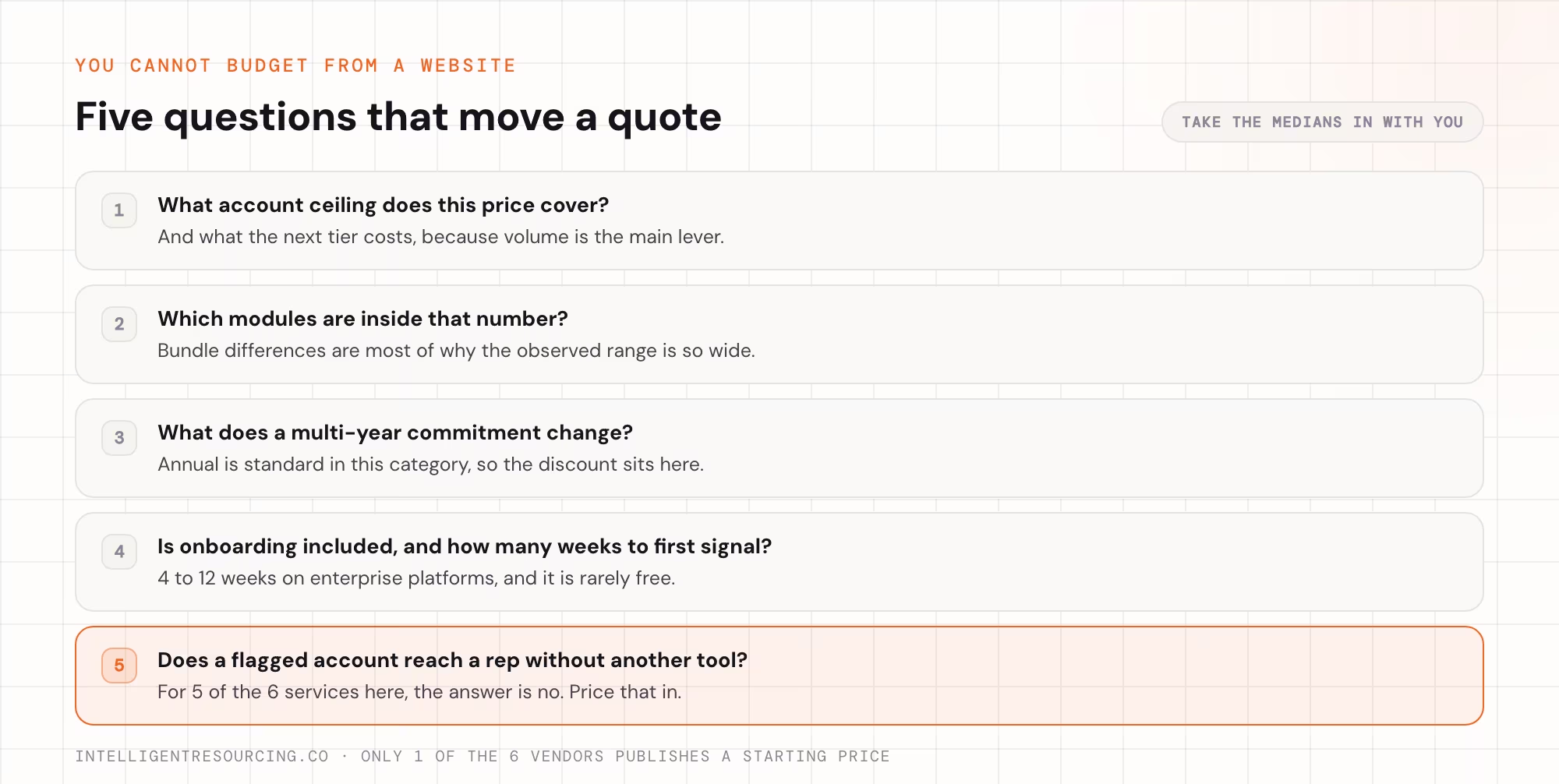
The practical consequence is that you cannot budget from a website. Go into the first call with the figures above and ask for the 5 things that actually move a quote:
- The account ceiling. How many target accounts the price covers, and what the next tier costs
- Which modules are in the number. Vendr's range is wide largely because bundles differ
- The contract term. Annual is standard here; ask what a multi-year commitment changes
- Implementation. Whether onboarding is included or billed, and how many weeks to the first signal
- What it does not do. Specifically whether a flagged account reaches a rep without another tool
What Does the Contract Price Not Include?
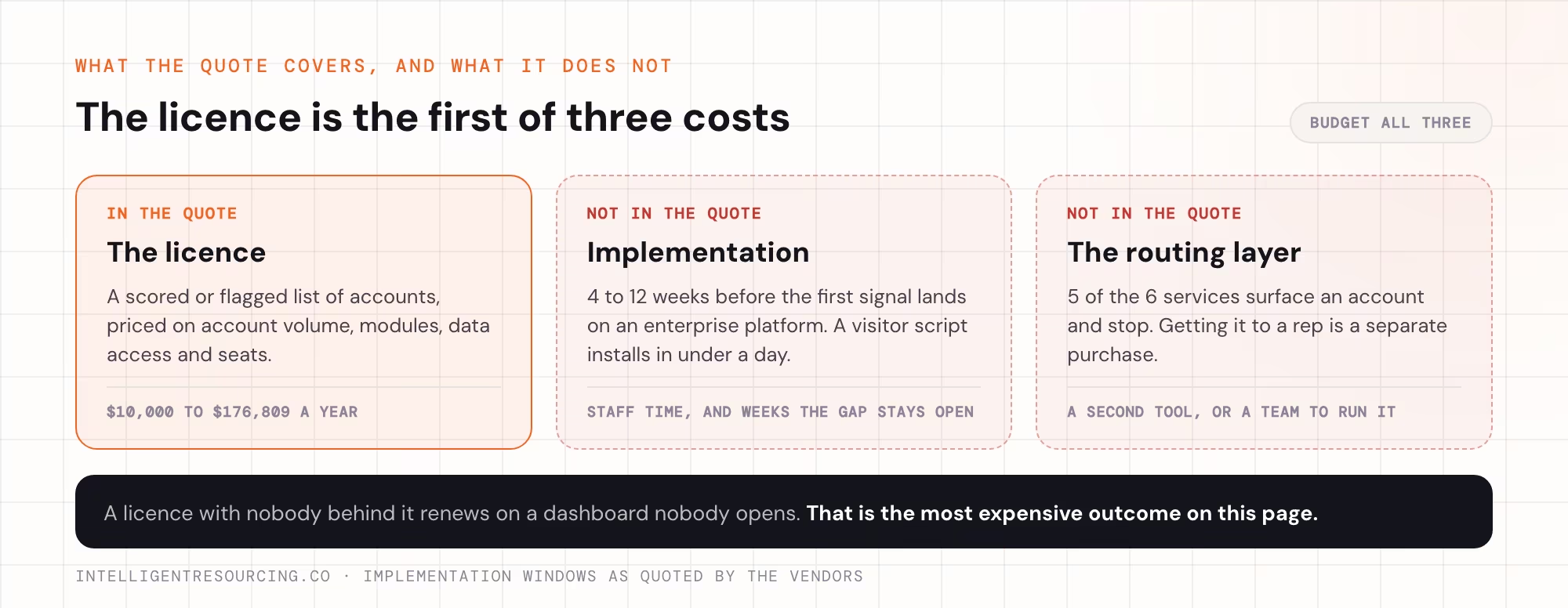
The licence fee is the first of 3 costs, and often not the largest over a first year.
Implementation time. Enterprise platforms quote 4 to 12 weeks before the first signal lands. A visitor-identification script installs in under a day. Those weeks are budget in staff time, and they are weeks the pipeline gap stays open.
The routing layer. 5 of the 6 services here surface a scored account and stop. Warmly triggers CRM or outreach actions directly, and Intelligent Resourcing exists to do exactly that job, but Demandbase, 6sense and Bombora all leave the last step to a separate workflow tool. ZoomInfo automates a next step only through its own Workflows product, which needs its own setup.
The team to run it. The enterprise platforms assume someone owns them after go-live. Where that person does not exist, the contract renews on a dashboard nobody opens, which is the most expensive outcome on this page. Automated lead scoring is the step that turns a flagged account into a ranked one, and it is rarely in the licence.
Which Vendor Costs What, and What the Money Buys

The order below runs most expensive to least, then the routing layer.
1. Demandbase, median $68,360 a year
Reads buyer research from its own B2B advertising bidstream rather than reselling another provider's feed. Its own site states the platform processes more than 2.1 trillion intent signals a month across 133 languages, and it imports Bombora, G2 and TrustRadius signals into one dashboard.
What the money buys: intent detection plus the advertising platform to act on it against the same accounts.
When to skip: no advertising budget. The ad layer is the differentiator, and you would be paying for it unused.
2. 6sense, median $62,440 a year
Combines third-party research signals with de-anonymised web traffic, then scores which accounts are in a buying window and at which stage. Reviewers on Capterra give it 4.6 out of 5 across 30 reviews, with features rated 4.4 and customer service 4.5. Implementation runs 4 to 8 weeks.
What the money buys: predictive scoring and stage detection, the most sophisticated model in this list.
When to skip: no dedicated owner. The platform surfaces scored accounts and does not trigger outreach itself.
3. Bombora, from about $30,000 a year
Company Surge tracks content consumption across a publisher network and flags when an account's research on a topic spikes above its baseline. Docket puts the co-op at more than 5,500 publisher sites covering more than 20,100 taxonomy topics.
What the money buys: an independently sourced signal you can layer onto a platform you already own.
When to skip: nothing to layer it onto. Bombora sells data only, with no contact enrichment and no routing.
4. ZoomInfo Intent, custom
Built on ZoomInfo's existing contact and company database, tracking growth signals, hiring tied to buying roles, and technology adoption. Its WebSight Buyer ID product adds person-level identification of website visitors, which ZoomInfo states covers United States visitors.
What the money buys: intent on a platform you are already paying for, with Workflows to trigger a next step.
When to skip: no existing contract. Bought alone you are paying for the database as well as the intent.
5. Warmly, from $10,000 a year
Matches website visitors to a name, work email, job title and LinkedIn profile using internet protocol (IP) intelligence and identity-graph matching. The entry AI Web-Deanonymization plan covers both contacts and companies from the first tier, at roughly $833 a month.
What the money buys: the cheapest path from anonymous traffic to a named person, and it routes.
When to skip: thin traffic. It only sees visitors who already reach your site, so a company researching you elsewhere stays invisible.
6. Intelligent Resourcing, custom and scoped
Not a data vendor. Agentic Signal Listening combines signals from sources a client already has, a third-party feed, hiring board activity, technology adoption, or first-party behaviour already sitting in a CRM, and routes a scored account into the CRM flagged inside the Verified Buying Window.
What the money buys: the step between a scored list and a rep making contact, built on the same go-to-market engineering methodology behind Intelligent Resourcing's outbound work.
When to skip: no signal source at all. This routes signal, it does not manufacture it, so one of the vendors above comes first.
Which Budget Fits Which Team?
Under $15,000 a year
Warmly, at $10,000, is the only realistic entry point, and only if you have traffic worth identifying. Below meaningful traffic volume, spend the budget on demand generation first and revisit intent later.
$30,000 to $40,000 a year
Bombora's Company Surge, but only if you already run a platform that can receive the feed. Bought alone it produces a list nobody acts on, which is the worst value on this page.
$60,000 and above
Demandbase or 6sense. Choose Demandbase if you will use the advertising layer, 6sense if you want the scoring model and have someone to run it. Budget implementation weeks alongside the licence.
Already paying, still not converting
The gap is activation rather than data. This is where a routing layer costs less than another data subscription, because the signal you need is already arriving and stopping at a dashboard.
Buyer Intent
Every number on this page is a reference point, not a quote. The one cost nobody puts in the contract is the gap between a scored account and a rep reaching it.
FAQs
How much does buyer intent data cost in 2026?
Warmly's entry plan starts at $10,000 a year. Bombora's Company Surge starts near $30,000. Vendr's transaction data puts the median 6sense contract at $62,440 a year and the median Demandbase contract at $68,360, with observed deals above $175,000. Only Warmly publishes starting prices on its own site, so the rest need a discovery call to confirm.
Why do intent data vendors hide their pricing?
Because the quote is assembled per buyer. Price tracks target account volume, advertising spend, data access level and seat count, so a published figure would anchor every negotiation. Aggregators like Vendr fill the gap by reporting what their customers actually paid.
Is buyer intent data worth the cost for a small team?
It depends on whether the signal can be acted on. A small team with real website traffic gets more from a $10,000 visitor-identification tool it can work daily than from a $60,000 platform nobody owns. The cheapest mistake is a licence with no one behind it.
What hidden costs come with an intent data contract?
Three: implementation time of 4 to 12 weeks on enterprise platforms, a routing or workflow tool for the 5 of 6 services that do not push a signal into a CRM, and the internal owner the platform assumes you have.
Should a mid-market company choose Bombora or 6sense on price?
Bombora is roughly half the median cost of 6sense, but the two are not substitutes. Bombora sells a data feed that needs somewhere to go. 6sense sells the scoring and integration as one platform. If you already own a platform, Bombora is the cheaper addition. If you do not, the Bombora saving disappears into the tool you buy next.