

What Is the Pipeline Gap, and Why Does It Widen After You Raise?
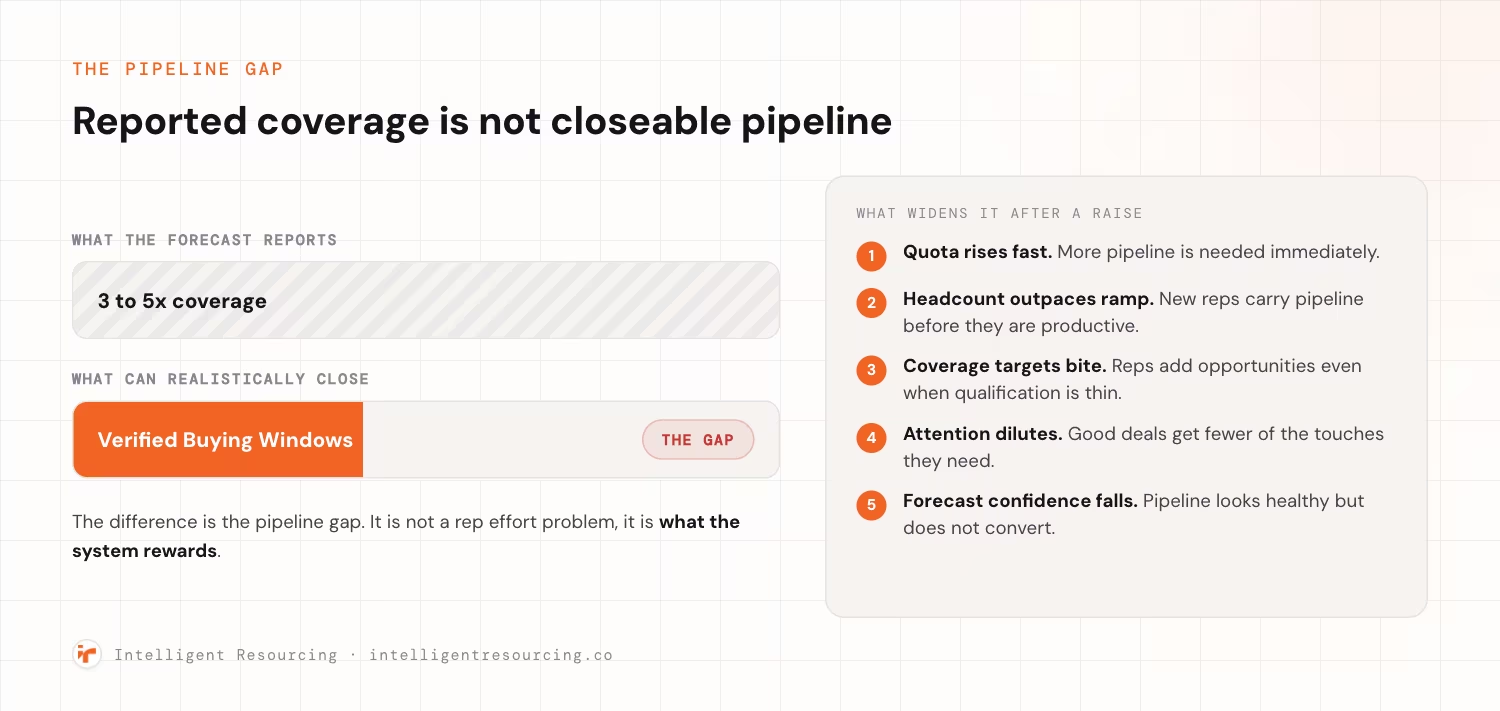
The pipeline gap is the difference between forecast coverage and pipeline that can actually close. After a raise, quota and headcount often increase faster than a team can source and qualify real opportunities. Reps respond by adding volume, but volume is not qualification, and that is where competitors gain ground.
| What changes after a raise | What it causes |
|---|---|
| Quota increases quickly | Teams need more pipeline immediately to support higher revenue targets. |
| Headcount grows faster than ramp | New reps are expected to carry pipeline before they are fully productive. |
| Coverage targets reach 3 to 5x | Reps add more opportunities to satisfy the ratio, even when qualification is thin. |
| Attention gets diluted | Good opportunities receive fewer of the touches needed to progress. |
| Forecast confidence falls | Optimistic close dates and weak qualification create pipeline that looks healthy but does not convert. |
Attention is the hidden constraint, Mark McInnes of Head of Sales estimates that 6 minutes weekly per opportunity across 7 to 10 touches represents the real attention cost of managing pipeline. As opportunity volume rises, that workload compounds and strong deals can be starved of the engagement needed to advance.
If the system rewards coverage, teams will optimise for coverage. Closing the gap requires measuring deal quality, tracking buying signals and building a Signal-Led Pipeline that advances fewer, better-qualified opportunities.
Why Are Your Competitors Winning the Deals You Should Close?
They win in the gap between buyer interest and buyer urgency, reaching the buying centre first. Most competitive losses are visibility and timing failures, not price failures. 6sense's Buyer Experience Report found that 94% of buying groups ranked a preferred vendor before their first contact with any seller.
MarketsandMarkets describes a taxonomy of 7 pipeline gaps that surface too late, and reports that competitive intelligence arrives too late, at objection handling or loss review, after the rival has set the criteria.
Why does raising capital open a pipeline gap?
Raising capital can widen the pipeline gap because quota and headcount often increase faster than a team can generate and qualify enough high-quality opportunities. Reps then add volume to meet coverage targets, which can lead to weaker qualification and less reliable close dates. Blue Ridge Partners' 2025 analysis found that 68% of SaaS companies rated their pipeline creation as only "somewhat effective", showing that pipeline quality is already a constraint for many growth teams.
The sequence is straightforward:
- Higher revenue targets increase coverage requirements.
- Coverage pressure increases opportunity volume.
- More volume can reduce qualification depth and rep attention per deal.
- Weak qualification produces less reliable close dates and more deal slippage.
- Competitors gain an advantage when they identify and engage active buying groups earlier.
The solution is to measure deal quality alongside coverage, using buying signals and Verified Buying Windows to prioritise opportunities with stronger evidence of purchase readiness.
How does invisible competition steal late-stage deals?
Invisible competition steals late-stage deals because you learn about the rival too late to respond. Competitive intelligence arrives at objection handling or loss review, by then the rival has shaped the criteria. The countermeasure is signal tracking that flags rival activity early.
The rival is present for weeks before you notice, they ran discovery and planted evaluation criteria that favour their strengths. Your first clue is a new objection that sounds oddly specific. 1 concrete countermeasure: track buying signals on every named account: monitor job changes, competitor case-study downloads, and new stakeholders joining calls.
Why do single-threaded deals collapse?
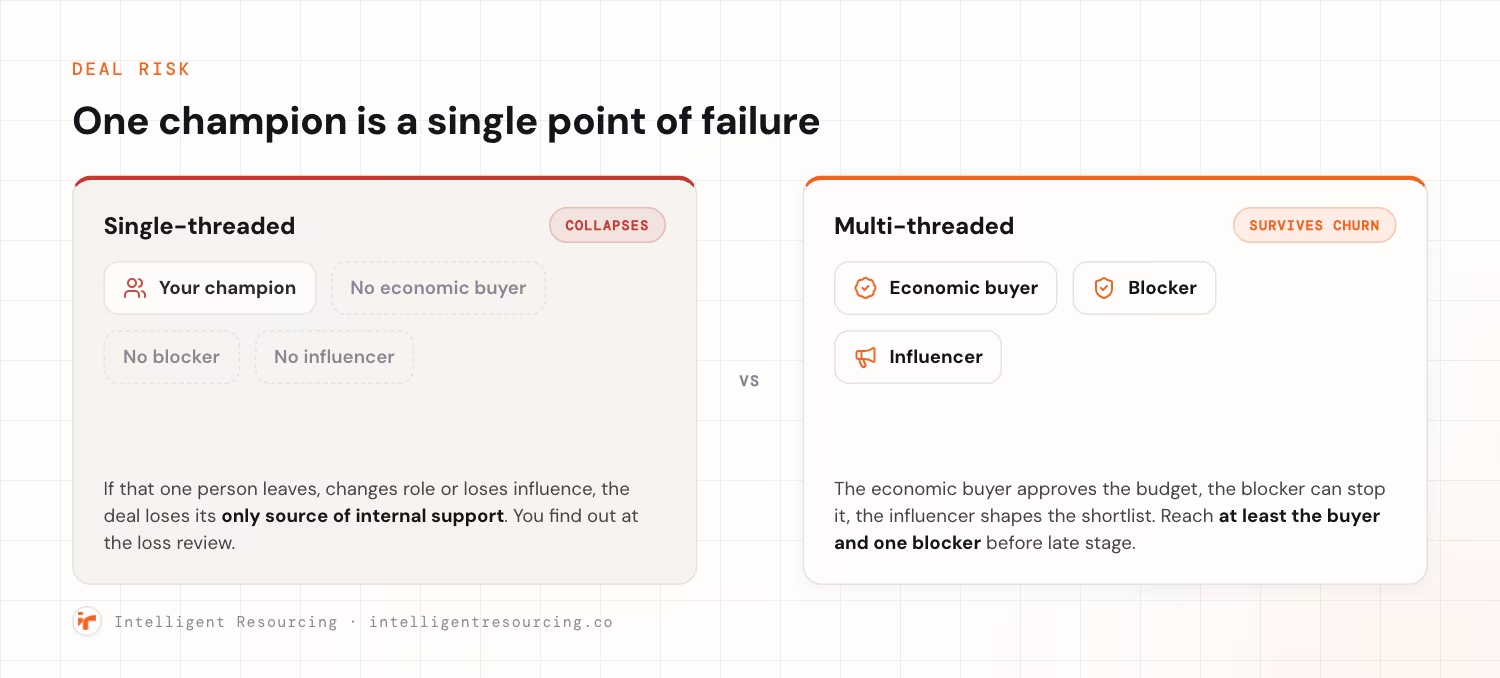
Single-threaded deals collapse because the opportunity depends on one internal champion. If that person leaves, changes roles or loses influence, the deal can lose its only source of internal support. Multi-threading reduces that risk by engaging the wider buying centre before the deal reaches a late stage.
| Buying-centre role | Why they matter |
|---|---|
| Economic buyer | Controls or approves the budget and final commercial decision. |
| Blocker | Can delay or stop the deal. Common examples include security, finance and procurement. |
| Influencer | Shapes the shortlist, evaluation criteria and internal recommendation. |
Before the late stage, aim to engage at least the economic buyer and one potential blocker. This gives the deal more than one internal route forward if the original champion becomes unavailable or loses influence.
Multi-threading is therefore a form of deal-risk management. It reduces dependence on one relationship and gives the sales team better visibility into who can approve, influence or prevent the purchase.
How Do You Choose Between a Volume-Led and a Signal-Led Pipeline?
Choose a volume-led pipeline for low-ticket, transactional sales with short buying cycles. Choose a Signal-Led Pipeline for high-value, multi-stakeholder B2B sales where timing, buying intent and stakeholder access affect the outcome. 6sense reports that signal-qualified accounts convert at a 75% higher rate than traditional leads.
| Factor | Volume-Led Pipeline | Signal-Led Pipeline |
|---|---|---|
| Primary measure | 3 to 5x pipeline coverage | Verified Buying Windows |
| Qualification | Opportunity volume and CRM stage | Evidence of active buying intent |
| Competitor visibility | Often identified late in the sales process | Monitored through account and buying signals |
| Stakeholder coverage | Can depend heavily on one champion | Multi-threaded across the buying centre |
| Best fit | Low-ticket, high-volume, short-cycle sales | High-value, multi-stakeholder B2B sales |
Timing is the main operational difference, volume-led teams optimise for having enough opportunities in the pipeline. Signal-led teams prioritise accounts showing stronger evidence of purchase readiness and use those signals to decide where sales attention should go. This is where GTM engineering becomes relevant, connecting buying signals, qualification logic and sales workflows so teams can act on verified intent rather than static coverage.
Volume-led selling still has a valid use case, when contract values are low, buying cycles are short and sales volume is high, additional signal infrastructure may add unnecessary complexity. For post-raise teams selling higher-value solutions to multiple stakeholders, however, Verified Buying Windows provide a stronger basis for prioritisation than coverage alone.
How Do You Close a Deal When a Competitor Is Already Winning?
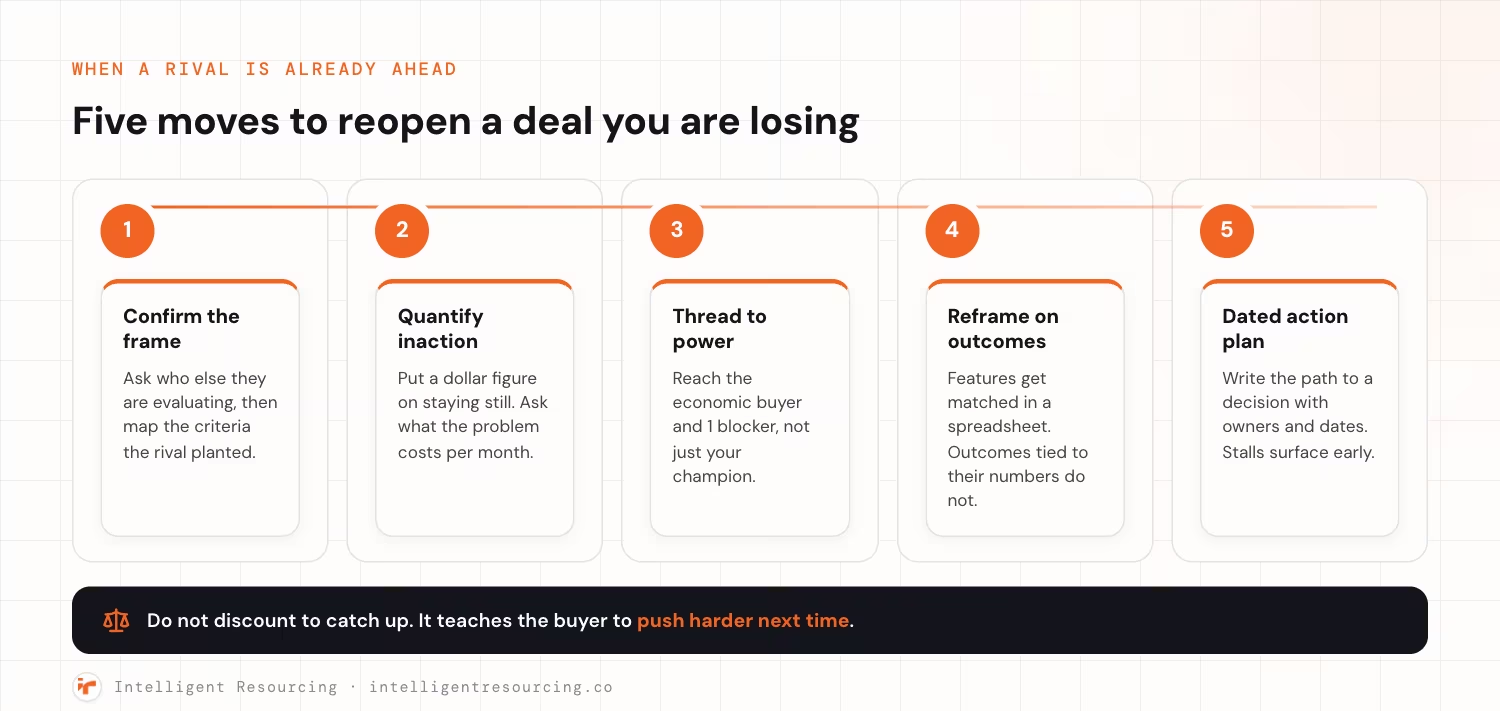
When a competitor is already winning, do not discount to catch up. Reopen the frame. Confirm who you are against, quantify the buyer's cost of inaction, multi-thread to power, and reframe on outcomes the rival cannot match. The Starr Conspiracy's 2024 intent benchmark shows 21.3% vs 8.4% close rates for intent-prioritised accounts against unscored ones.
- Confirm the competitor and the frame they set: Ask the buyer who else they are evaluating. Name the rival, then map the evaluation criteria they planted. You cannot counter a frame you cannot see.
- Re-open discovery to quantify the cost of inaction: Put a dollar figure on staying still. Ask what the problem costs per month. Cost of inaction, not features, creates urgency.
- Multi-thread to the economic buyer and 1 blocker: Do not let the deal rest on 1 champion. Reach the person who owns the budget and the person who can veto. Signal-based selling surfaces which stakeholders to reach and when.
- Reframe on outcomes the competitor cannot match: Compete on the result, not the feature list. Features get matched in a spreadsheet; outcomes tied to the buyer's own numbers do not.
- Propose a mutual action plan with dated steps: Write the path to a decision, with owners and dates. A shared plan creates urgency and exposes stalls early.
When we rebuilt a post-raise sales team's process around these 5 steps, the competitive win rate rose from 22% to 39% within 1 quarter. The change was not an effort; it was reaching the buying centre earlier and reframing before the rival's criteria hardened.
How Do You Negotiate and Defend Value Against a Competitor?
Price fixation is a symptom, not the problem. When a buyer fixates on price, the value gap is unresolved. Semir Jahic of Salesmotion writes that when buyers fixate on price, it means they have no compelling reason to focus on anything else. Quantified ROI and cost of inaction close that gap. Discounting does not.
Discounting to win teaches the buyer 1 lesson: push harder next time. It also signals your first price was inflated. Neither move defends value against a competitor.
Use 2 anti-discount moves instead.
- Trade every concession for scope or term. If they want a lower price, shorten the pilot or lengthen the contract. A concession without a trade is margin you gave away.
- Anchor against the buyer's cost of inaction, not the rival's quote. Frame the decision as action versus delay. The real competitor is the status quo, not the rival's product.
How Do You Measure Whether the Pipeline Gap Is Closing?
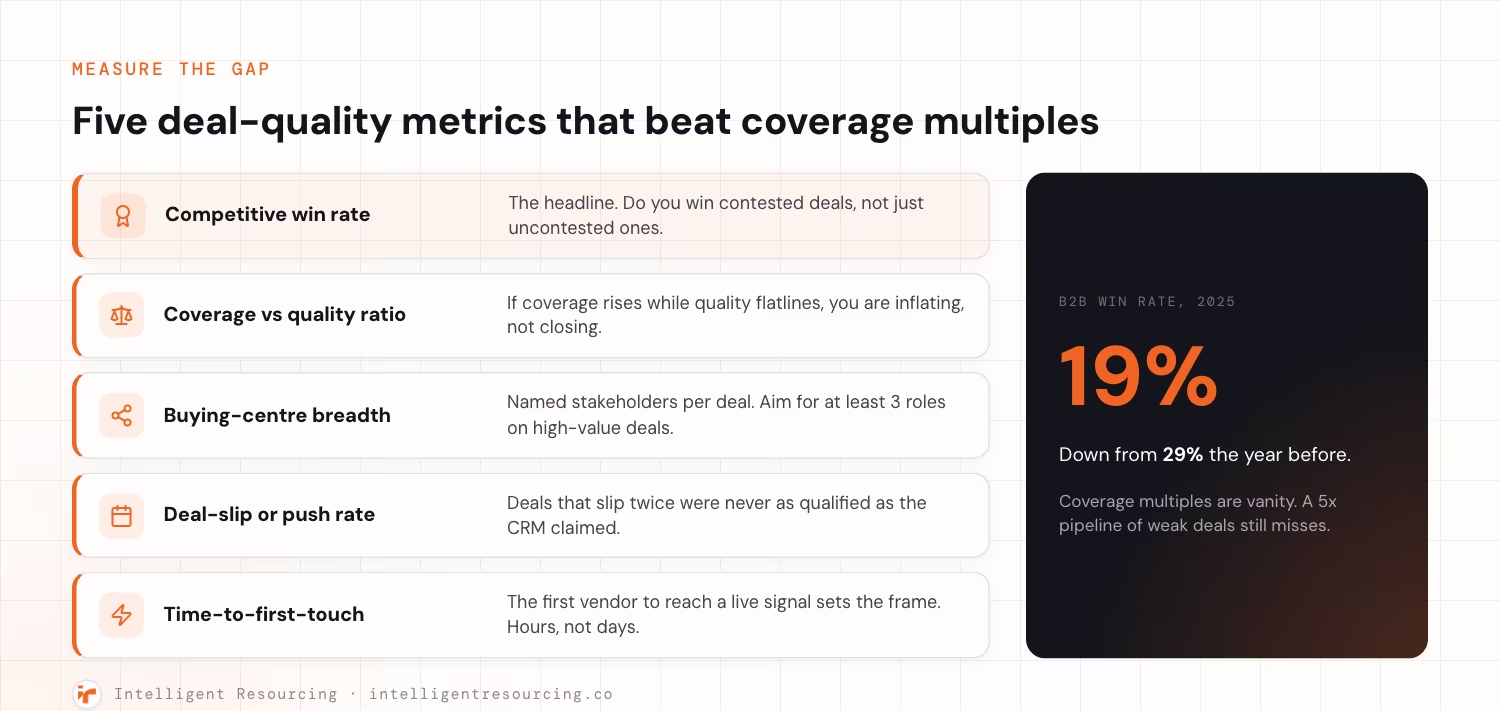
You measure the pipeline gap with quality signals, not coverage multiples. Track competitive win rate, coverage-versus-quality ratio, average buying-centre breadth per deal, deal-slip rate, and time-to-first-touch after a signal. Gradient Works' 2025 benchmark shows B2B win rates falling to 19%, down from 29% in 2024, confirming coverage multiples alone are not moving the needle.
Coverage multiples are vanity, a 5x pipeline of weak deals still misses. Deal-quality indicators predict attainment, so track these 5.
Competitive win rate is the headline. It answers whether you win contested deals, not just uncontested ones. Watch it quarter on quarter.
Coverage-versus-quality ratio compares raw coverage to deals with a Verified Buying Window. If coverage rises while quality flatlines, you are inflating, not closing.
Average buying-centre breadth counts named stakeholders engaged per deal. More threads, fewer collapses. Aim for at least 3 roles on every high-value deal.
Deal-slip or push rate exposes forecast fiction. Deals that slip twice were never as qualified as the CRM claimed.
Time-to-first-touch after a signal measures speed. The first vendor to reach a live signal sets the frame. Hours matter more than days. Track the median, and drive it down.
Buyer Intent
Closing the pipeline gap is a systems build, not a motivation problem. Book a call with Intelligent Resourcing's GTM engineering team to design a signal-led pipeline that tracks Verified Buying Windows and reaches accounts before competitors set the frame.
FAQs
What is the pipeline gap in B2B sales?
The pipeline gap in B2B sales is the difference between forecast coverage and pipeline that can actually close. Most of it forms upstream, before deals enter the CRM, in weak qualification and missed buying windows. Blue Ridge Partners' 2025 data shows most SaaS teams rate their pipeline creation only "somewhat effective".
Why do competitors win more deals after you raise capital?
After a raise, quota pressure pushes reps toward coverage volume over deal quality. They miss the buying windows that better-timed competitors reach first. MarketsandMarkets notes competitive intelligence arrives at loss review, too late to respond. Rivals set the criteria while you chase the ratio.
How do you close a deal when a competitor is already winning?
Re-open discovery and quantify the buyer's cost of inaction in dollars. Multi-thread to the economic buyer and 1 blocker, so the deal survives champion churn. Then reframe on outcomes the rival cannot match, not price. A dated mutual action plan creates urgency and exposes stalls early.
How do you negotiate against a competitor without discounting?
Anchor on quantified ROI and the buyer's cost of inaction, not the rival's quote. Trade any concession for scope or contract term rather than cutting price. Salesmotion frames price fixation as an unresolved value gap. Close that gap with numbers, and the discount conversation disappears.
What is the 3-3-3 rule in sales?
The 3-3-3 rule is a rule of thumb, not a law. 1 common version splits daily prospecting into 3 blocks: 3 new accounts, 3 warm follow-ups, and 3 nurture touches. It keeps a post-raise pipeline focused on a mix of fresh and advancing deals. Treat it as a cadence heuristic.