

What Types of Buying Signals Do B2B Sales Teams Track?
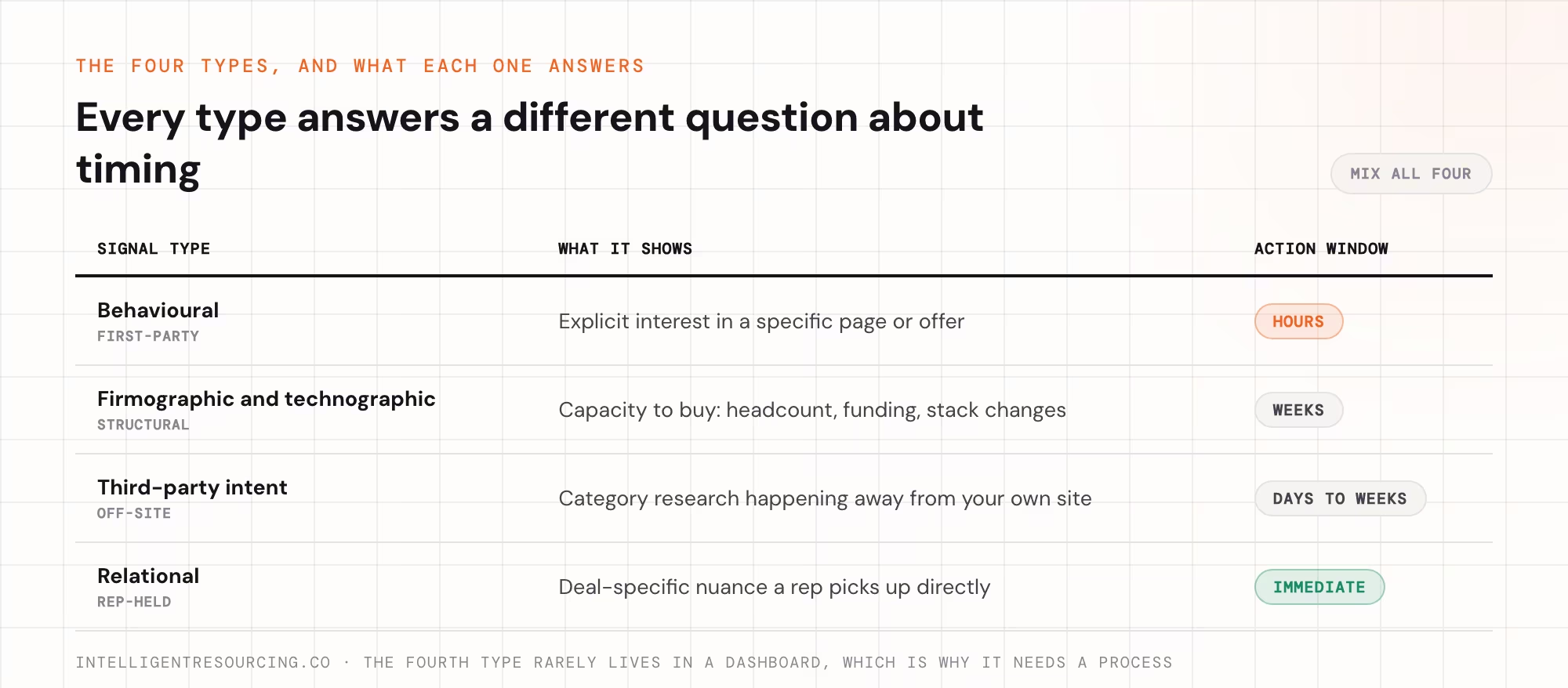
B2B sales teams track four broad types of buying signal: behavioural, firmographic and technographic, third-party intent, and relational. Each type answers a different question about how close an account sits to a purchase decision. Mixing all four gives a far clearer read on timing than any single category alone.
- Behavioural signals: pricing page visits, repeat site returns, content downloads, replies to an outbound sequence
- Firmographic and technographic signals: headcount growth in the buying department, a new executive hire, a change to the account's software stack, a funding round
- Third-party intent signals: category research happening on industry publishers or review sites, activity the prospect never shows on your own site
- Relational signals: a champion going quiet, a shift in tone on a call, a warm referral from an existing client
HubSpot's own buyer intent product groups signals this way inside a single CRM view. It tracks visitor intent, research intent, company news and contact-level changes. 30 days of signal history is surfaced the moment an account starts being tracked. Most teams underweight the fourth category simply because it does not live in a dashboard. That is exactly why it needs a deliberate process, not memory. The signal-based marketing framework explains how buyer signals are identified, captured, and used across the wider go-to-market motion. This piece focuses specifically on the sales execution layer: how teams interpret those signals, prioritise accounts, and take action while intent is still active.
How Do Buying Signals Differ From Buyer Intent Data?
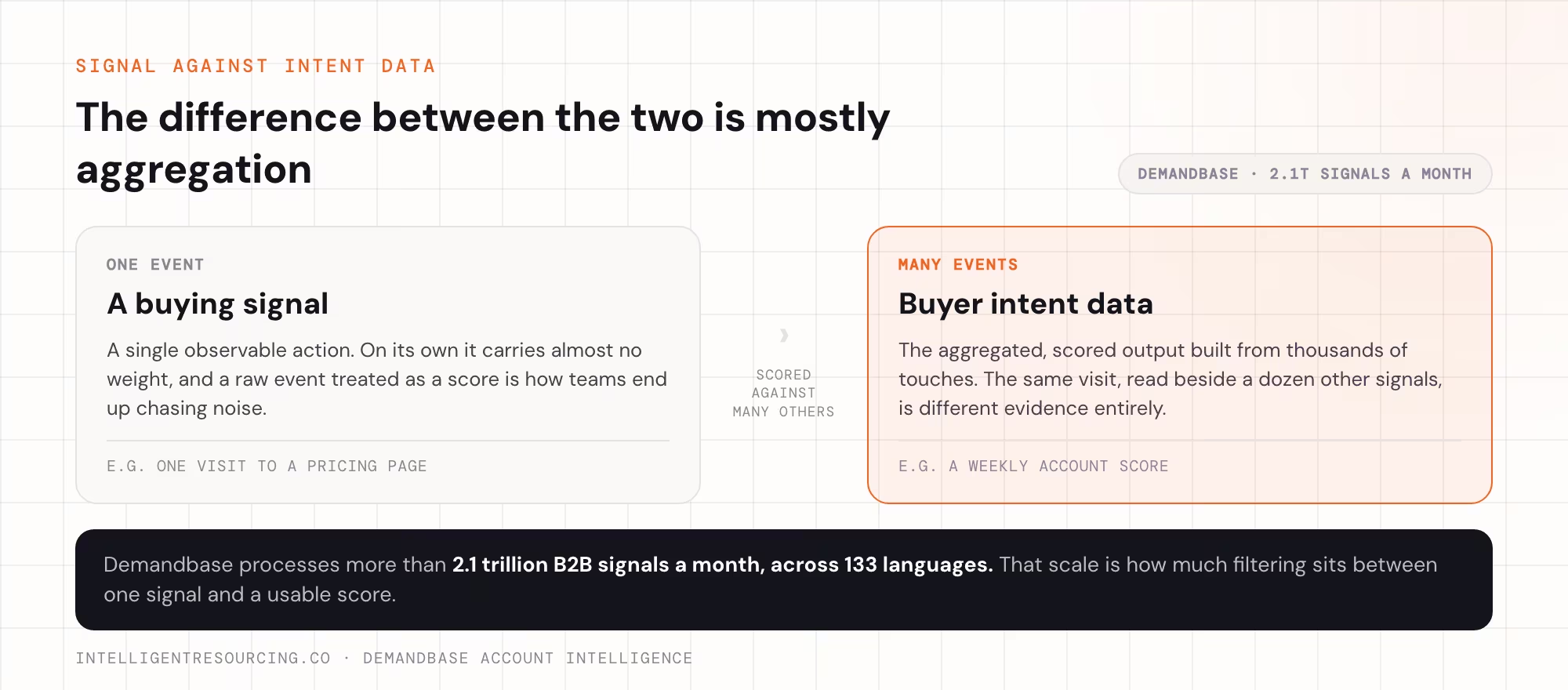
A buying signal is a single observable event. Buyer intent data is the aggregated, scored output built from many signals. A demo request is a signal. A weekly account score built from thousands of research touches is intent data. Treating every raw signal as a scored intent read is how sales teams end up chasing noise.
The gap between the two is mostly aggregation. Demandbase's own intent data product processes more than 2.1 trillion B2B signals a month, across 133 languages. That scale shows how much filtering sits between one signal and a usable score. A single visit to a competitor's pricing page tells you almost nothing alone. The same visit, scored against a dozen other signals from the same account, is different evidence entirely.
This is where a dedicated signal listening service earns its keep. It does the aggregation continuously. A rep working a dozen disconnected tools rarely spots the same pattern in time.
How Fast Does a Buying Signal Lose Its Value?
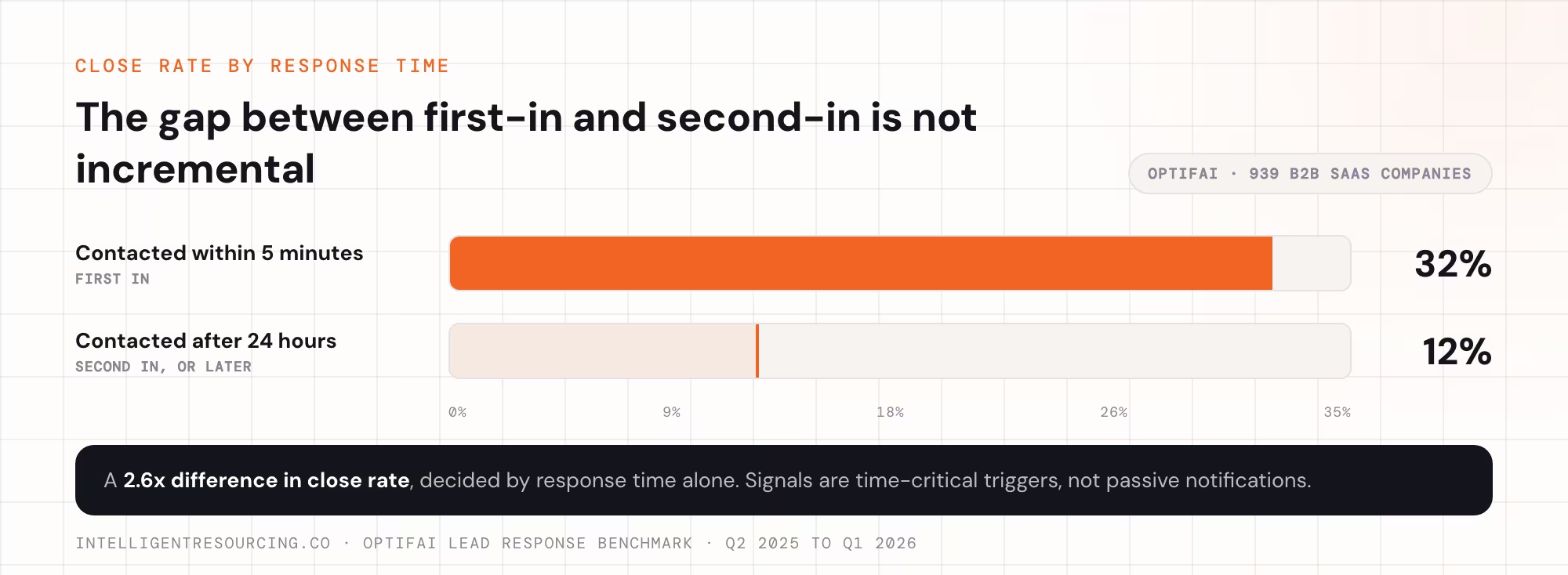
A buying signal's value decays within hours, not days. The buyer keeps moving, the window closes, and a competitor who responds first sets the shortlist. Sales teams that treat signals as passive notifications, rather than time-critical triggers, pay for that gap in deal count.
Optifai's pipeline study tracked 939 B2B SaaS companies between the second quarter of 2025 and the first quarter of 2026. It found that leads contacted within 5 minutes close at a 32% rate. Waiting 24 hours or longer drops that figure to 12%. The gap between first-in and second-in is not incremental: it is a 2.6x difference in close rate.
This is the logic behind grading every signal by how close it sits to a real buying window. Not every signal deserves the same urgency. When speed becomes the priority, teams need to understand which buyer intent monitoring approaches are worth considering and where managed services or software fit.
What Buying Signal Do B2B Sales Teams Miss Most Often?
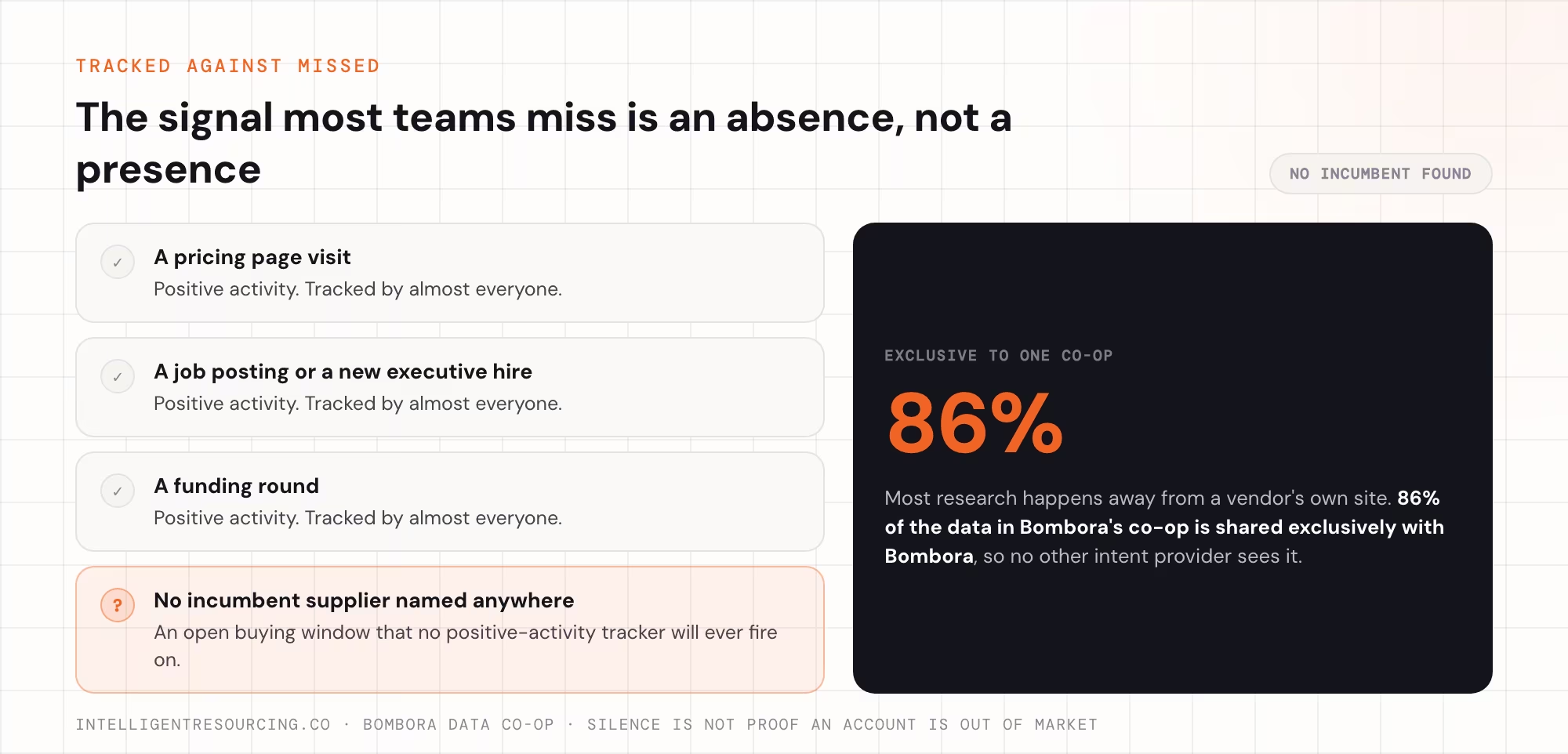
The buying signal most teams miss is an absence, not a presence. A target account with no incumbent supplier named in the public record is often an open buying window. Teams that track only positive activity, a website visit, a job posting, a funding round, miss accounts that have simply never had a reason to look yet.
Third-party intent networks exist because most research happens away from a vendor's own site. Bombora's intent data platform tracks tens of thousands of topics across a cooperative of thousands of publishers, B2B brands and data providers. 86% of that data is shared exclusively with Bombora, so no other intent provider sees it.
No website visits, form fills, or content engagement does not prove an account is out of market. It only shows they have not raised their hand publicly. Pairing outbound account research with a CRM enrichment and routing workflow turns "no incumbent found" into a qualified opportunity to start the conversation first.
Should a Sales Team Trust Data or Instinct When a Signal Fires?
Most B2B sales teams should trust scored, data-based signals over instinct. This holds once a team runs more than a handful of live deals. A system can hold hundreds of accounts' behaviour where one person cannot. Below that threshold, the relational signal described earlier still carries real weight.
Salesforce State of Sales found high performers are 1.7 times more likely than underperformers to use prospecting agents. The teams that treat signal routing as a system outperform those still treating it as a judgement call. Nobody drops a raw event into a shared inbox and hopes someone notices it in time.
Deals stall for reasons that have nothing to do with product fit. A signal spotted three weeks too late is one of the more common ones. That is the same pattern behind losing deals on timing alone, once a competitor reaches the buying committee first.
A signal only pays off if it reaches a rep before it goes cold. Verified Buying Window scoring routes a signal to the right person within hours, not days, which is the difference between a lead generation motion that compounds and one that restarts every quarter.
Buyer Intent
See how Verified Buying Window scoring routes a signal to the right person within hours, not days.
FAQs
What is an example of a buying signal in B2B sales?
A prospect visiting your pricing page three times in a week, a target account hiring a new Vice President of Operations, or a competitor's contract coming up for renewal are all buying signals. Each shows movement toward a decision, not just interest in a topic.
What's the difference between a buying signal and a buying trigger?
A buying signal is any observable action pointing toward readiness. A buying trigger is the specific event a sales team has decided to act on, such as a funding announcement or a hire into a buying role. Every trigger is a signal; not every signal gets treated as a trigger.
How many buying signals justify a sales outreach?
There is no fixed number. One strong signal, a demo request, for example, justifies immediate outreach on its own. Weaker signals, such as a single blog visit, usually need to combine with at least one other signal before a rep should reach out.
Do buying signals work for small or early-stage B2B companies?
Yes, though the mix shifts. Early-stage companies often have too little website traffic for behavioural signals to be reliable, so firmographic changes and direct relational signals carry more weight until traffic builds.
Can a sales team track buying signals without expensive software?
A basic version is possible with a CRM system, a shared spreadsheet for account changes, and alerts set up on target account names. It will miss the scale and speed that dedicated signal-tracking software provides, but it is a legitimate starting point.