

Why Does Demographic Targeting Miss Most of Your In-Market Pipeline?
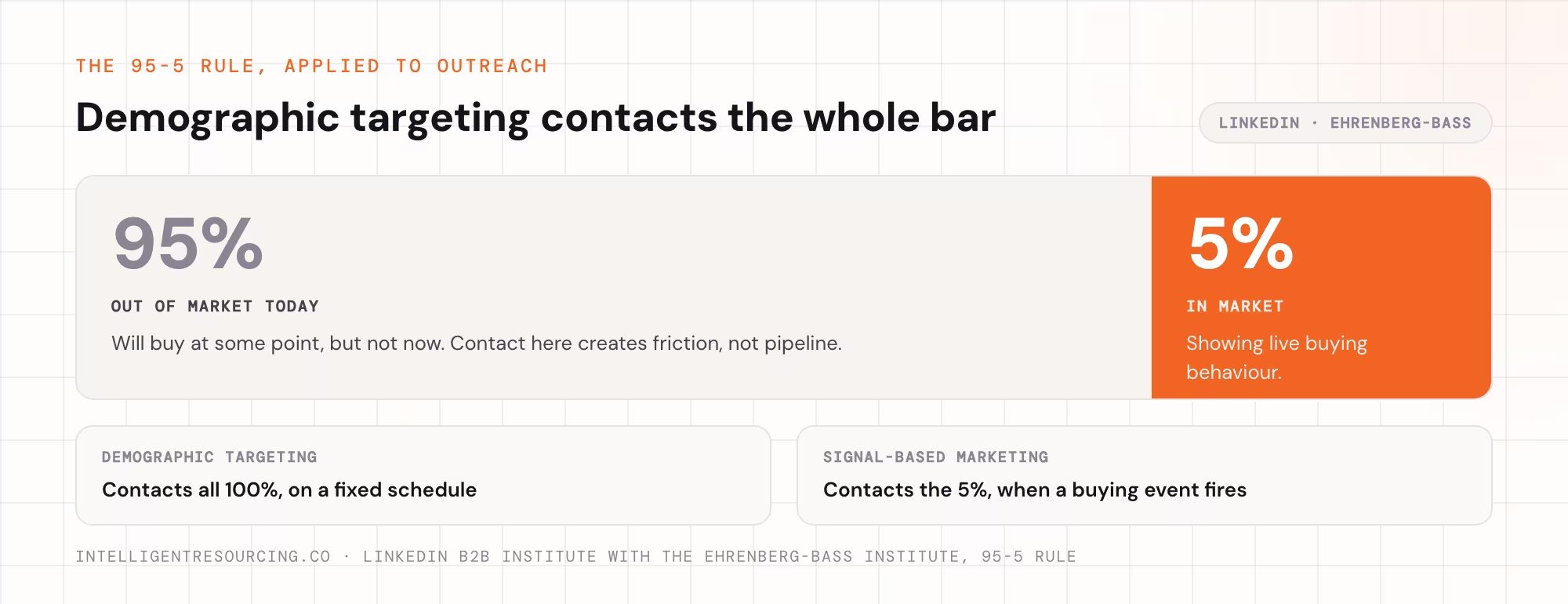
At any given time, 95% of your ideal customer profile (ICP) is not actively buying. The LinkedIn B2B Institute set this baseline with the Ehrenberg-Bass Institute in its research on the 95-5 rule. Demographic targeting treats all 100% of your ICP as equally worth contacting now. Signal-based marketing finds the 5% showing live buying behaviour and contacts them first.
The 95-5 rule reflects how B2B buying cycles actually run: 6 to 24 months, depending on deal size and category. Only a fraction of any ICP segment is evaluating vendors at a given point. Demographic targeting contacts the full ICP anyway.
Most of that outreach lands on accounts 12 to 18 months from a decision. It is not ready to meet. Contact there creates friction, not pipeline.
Signal-based marketing narrows the contact list to accounts showing specific indicators:
- A job change into a buying-committee role, such as a Vice President of Sales, a Head of Revenue Operations or a Chief Financial Officer
- A technology install or removal signalling vendor evaluation
- A funding event indicating active budget availability
- Content engagement matching your solution category
These are the accounts inside a live buying window. Contacting accounts outside it is not a messaging problem. It is a timing problem, and no amount of personalisation fixes it.
How Fast Does B2B Contact Data Decay?
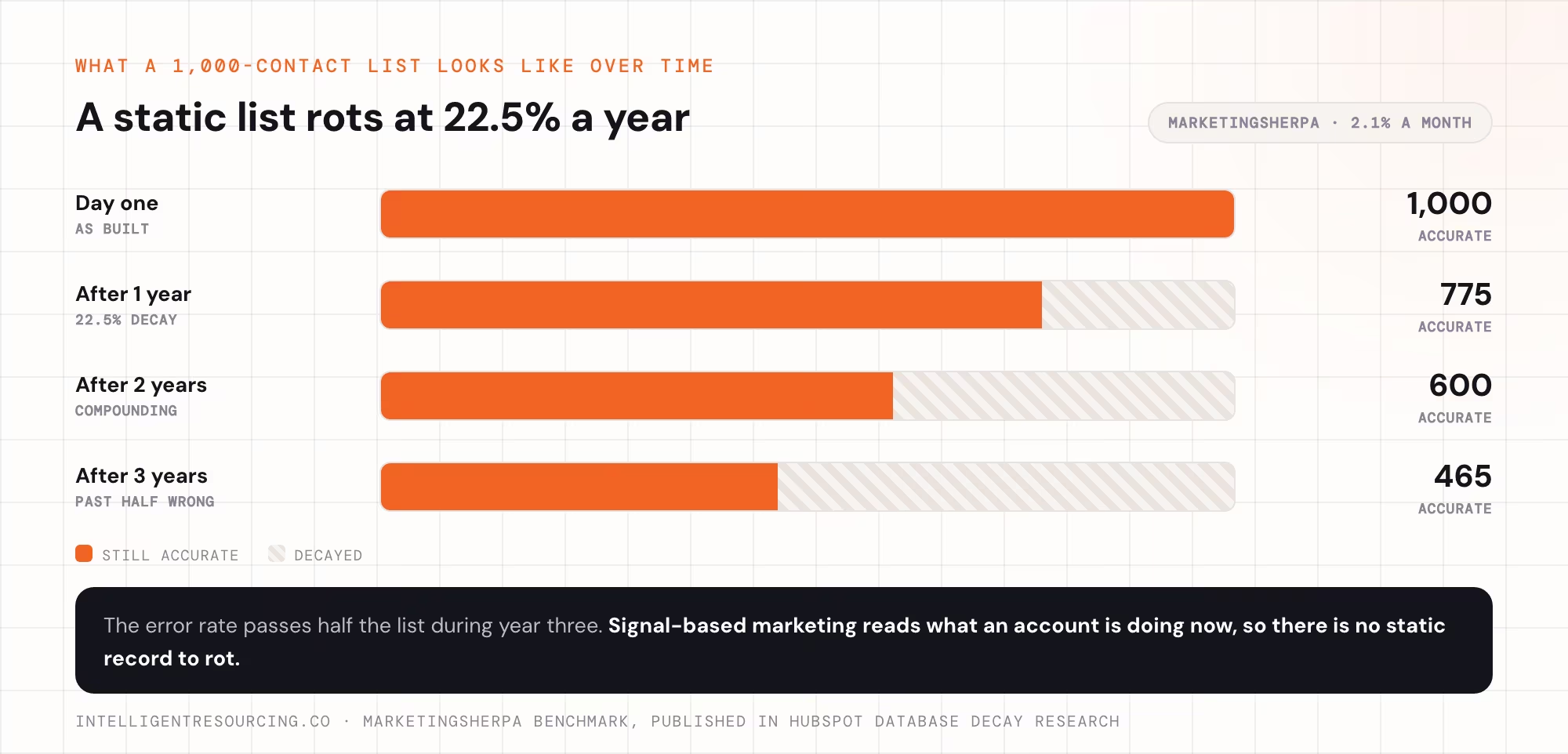
B2B contact data decays at 22.5% every year. That benchmark comes from MarketingSherpa, which measured decay at 2.1% per month, and is published in HubSpot's database decay research. Outreach built on stale data reaches the wrong people, at the wrong companies, with the wrong message.
The impact compounds fast. A list built in January with 1,000 valid contacts holds around 775 accurate records by December. Left alone, it passes a 50% error rate during year three.
The cost shows up in 3 places:
- Bounced emails that damage sender domain reputation and cut deliverability on every later send
- Calls and messages to contacts who no longer hold the role or have left the company
- Missed opportunities because the real decision maker was never identified
Signal-based marketing sidesteps the decay problem. It does not rely on a static record of who someone was 12 months ago. It monitors what accounts are doing now: which tools they are evaluating, which competitors they are assessing, which roles they are hiring into. CRM enrichment keeps the underlying record accurate as signals refresh it, so the demographic foundation does not rot beneath the signal layer.
What Do Cold Outreach Benchmarks Reveal About Demographic-Targeted Performance?
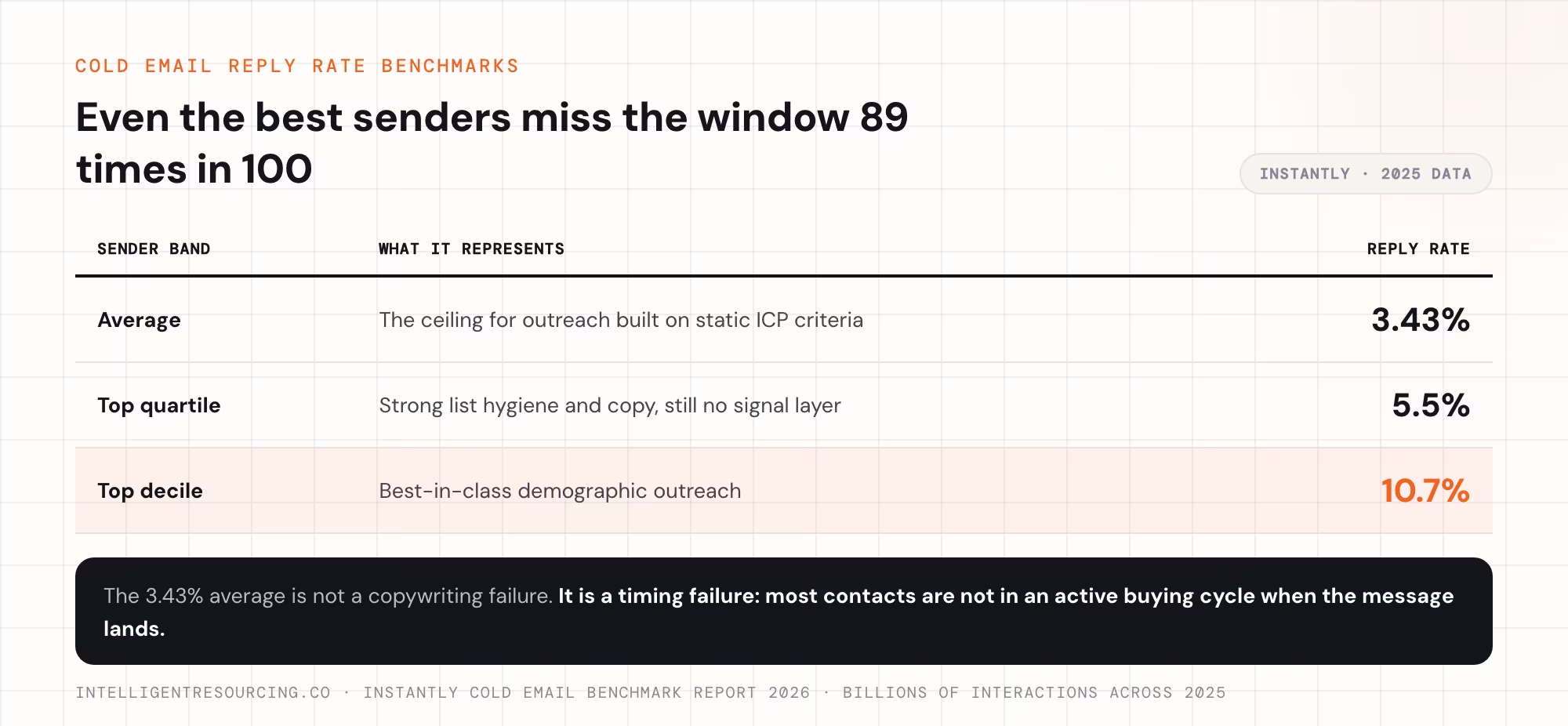
Instantly's 2026 benchmark, built on billions of cold email interactions across 2025, puts the average reply rate at 3.43%. Top-quartile senders reach 5.5%. The top decile reaches 10.7%. These figures are the performance ceiling for outreach built on static ICP criteria, with no signal layer.
The 3.43% average is not a failure of copywriting. It is a failure of timing. Most contacts receiving demographic outreach are not in an active buying cycle. They get a message about a problem they are not trying to solve, from a vendor they have no reason to evaluate yet.
Top-decile performance at 10.7% is real, and it still means 89 of every 100 contacts receive outreach outside a buying window.
Signal-triggered outreach works on a different premise. The message goes out when a specific event fires: a new head of sales hired, a competitor tool uninstalled, a funding round closed. Timing is the personalisation.
Why Do B2B Buyers Actively Avoid Demographically-Targeted Outreach?
Sopro's October 2025 survey of 442 B2B sales and marketing decision-makers in the United Kingdom and United States found 61% believe buyers are less trusting of prospecting than they used to be. 33% say buyers now expect more information and personalisation, and 31% say buyers are further through the research process before they engage with salespeople.
The mechanism is not message quality. It is timing. Demographic targeting cannot tell a buyer 3 months from a decision apart from one who is 2 years away.
Buyers now do most of their research alone, before they ever talk to a vendor. When outreach lands before they have flagged a problem as a priority, they do not just ignore it. They route it to spam, or block the sender's domain.
This creates a compounding penalty for demographic-targeted campaigns:
- Each irrelevant contact lowers the odds of reaching that account later, when a real buying cycle starts
- Bounce and spam damage cuts deliverability on every send after it
- A blocked sender loses the account entirely, even once a real buying window opens
Signal-based marketing avoids this by waiting for a trigger before it makes contact. A job change into a buying-committee role, a technology signal, a funding event: each shows active intent. The outreach lands relevant because it lands at the right time, inside the Verified Buying Window, not 18 months early. This is the case for go-to-market engineering: building systems that act on a live signal instead of a fixed schedule.
How Do You Combine Demographic Targeting With Signal-Based Marketing?
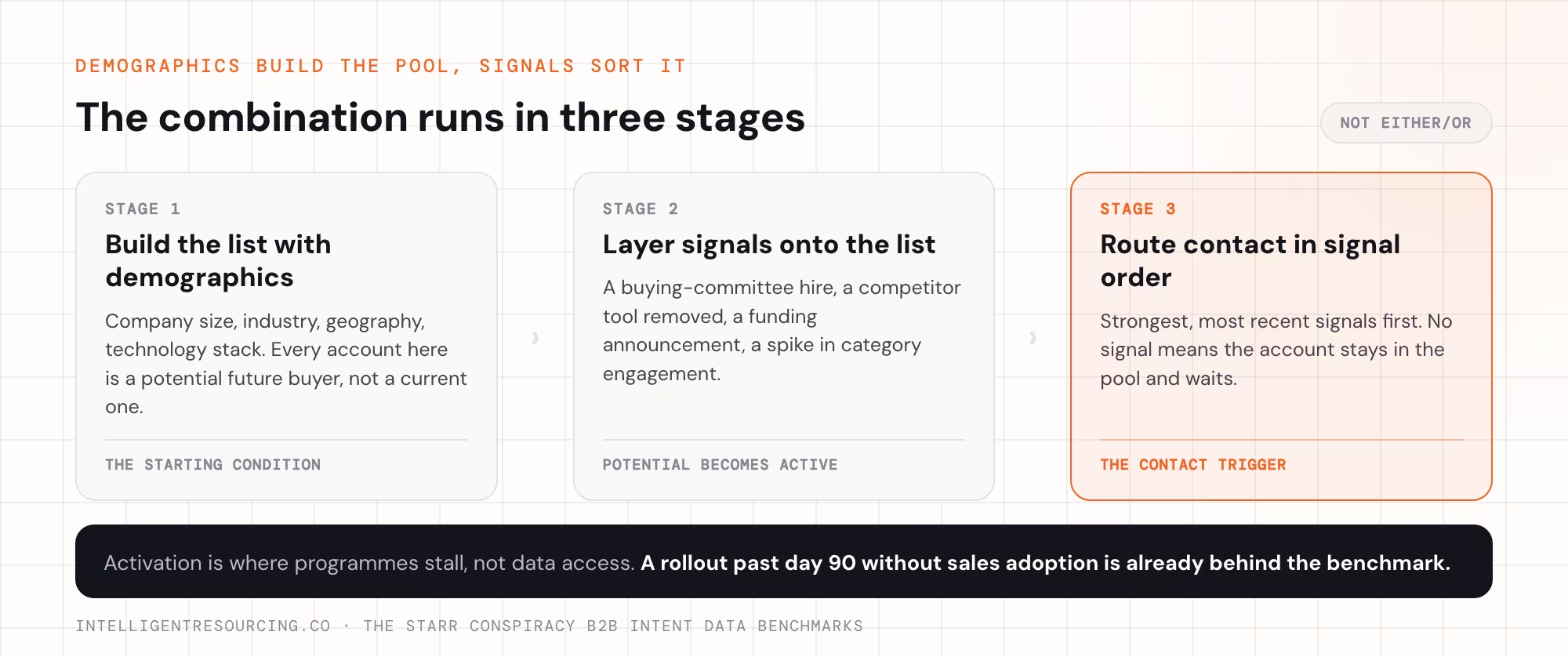
The 2 approaches work best together. Demographics build the pool. Signals set the contact order.
Buying the data is the easy part. The Starr Conspiracy's intent data benchmarks put the activation bar at 90 days: a rollout past day 90 without sales adoption is already behind. Its 2024 audit of 47 account-based marketing deployments also found median first-pass signal precision of 0.51, rising to 0.63 in programmes running more than 3 years. The gap is not data access. It is activation, and the accuracy of what gets activated.
The combination runs in 3 stages.
Stage 1: Build the ICP list with demographics
Define the target segment by firmographic criteria: company size, industry, geography, technology stack. This is the pool. Every account in it is a potential future buyer, not a current one. The demographic list is the starting condition, not the contact trigger.
Stage 2: Layer signals onto the list
Monitor the pool for buying events. These events move an account from potential to active:
- A new Vice President of Sales or Head of Revenue Operations hired into a target account
- A competitor tool removed from the tech stack
- A funding announcement indicating new budget
- A spike in content engagement matching your solution category
Stage 3: Route contact in signal order
Contact the accounts with the strongest, most recent signals first. Accounts with no signals stay in the pool for monitoring. Fitting the demographic criteria is never enough on its own: contact requires a trigger. Automated lead scoring handles the ranking, so the rep works the shortlist rather than the full pool. That step is what decides whether the signal layer gets used at all.
Buyer Intent
See how Verified Buying Window scoring finds the accounts inside a live buying window and routes them to the right rep before it closes.
FAQs
What is the difference between signal-based marketing and demographic targeting?
Demographic targeting selects accounts on static criteria: company size, industry, job title, geography. Signal-based marketing selects accounts on live behaviour: a job change, a funding event, a technology install, or content engagement showing an active decision. The core difference is timing. Demographics identify who might buy; signals identify who is buying now.
Can you use both approaches at the same time?
Yes, and this is the model to run. Use demographic targeting to define and build the ICP list. Use signal-based marketing to set the contact order inside that list. Accounts matching the demographic criteria with a live signal get contacted first. Accounts that match demographics but show no signal stay in the pool for later.
What counts as a buying signal in B2B marketing?
The strongest signals are behavioural events that show a decision is forming. Common examples: a new hire in a buying-committee role such as a Vice President of Sales or a Head of Revenue Operations, a funding announcement, a competitor product removed from the tech stack, or direct engagement with bottom-of-funnel content in your category. Multiple signals from one account in a short window mean stronger intent than any single signal alone.
How long does it take for signal-based marketing to produce pipeline?
Teams with a defined ICP and reliable signal data see the first signal-triggered opportunities within 30 to 60 days of activation. Full pipeline contribution, where signal-based outreach holds a steady share of new opportunities, takes 3 to 6 months as the system builds behavioural history across the account list.
Does signal-based marketing work for smaller B2B teams?
It works for smaller teams, and often works better than demographic-only outreach, because it puts limited sales capacity on the accounts most likely to convert. A team of 2 to 3 people contacting 20 signal-active accounts a week consistently beats a larger team sending 200 demographic-targeted emails a day, because the signal-based contacts land inside an active buying window.