

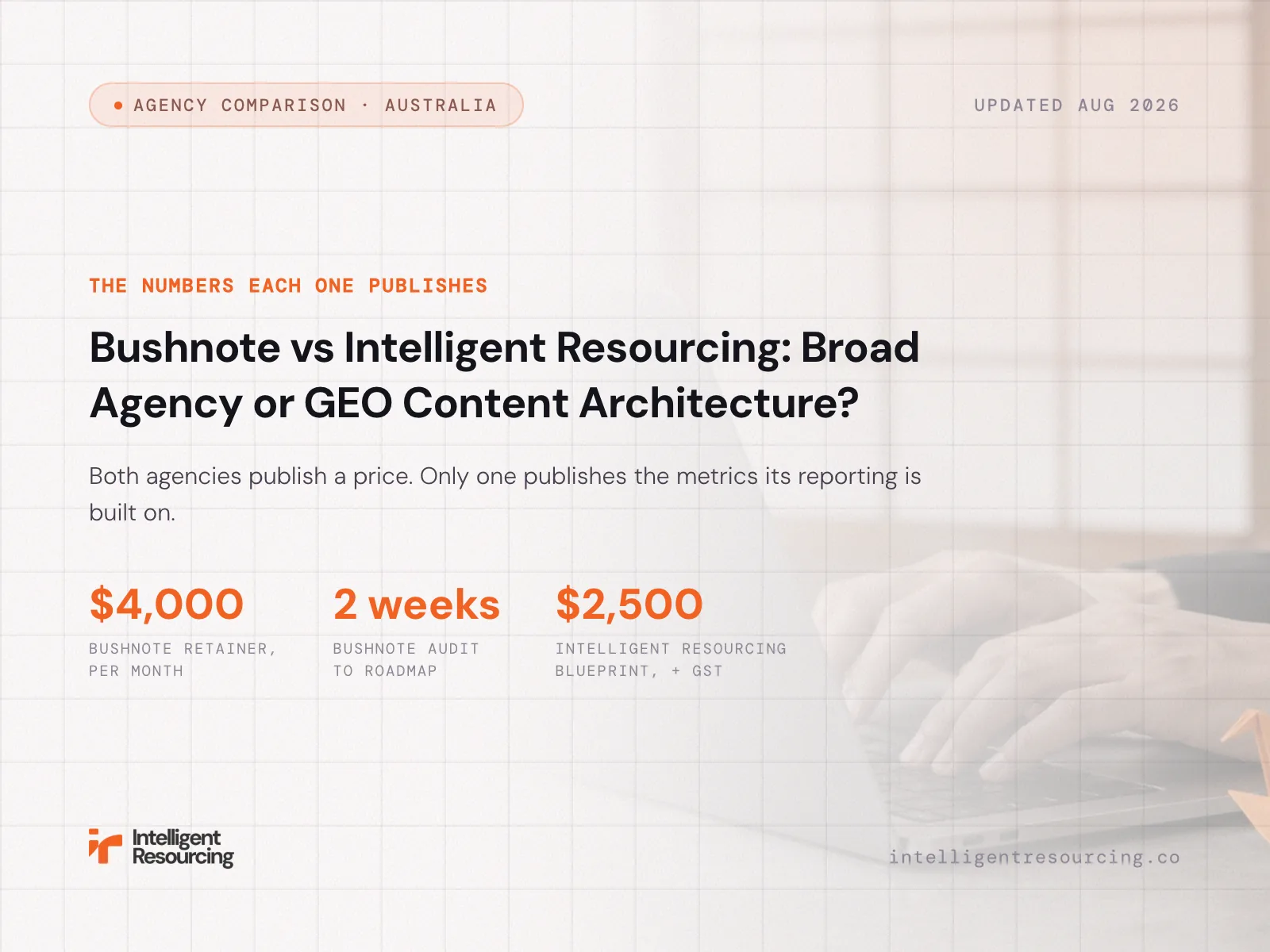
How Much Do Bushnote and Intelligent Resourcing Actually Overlap?
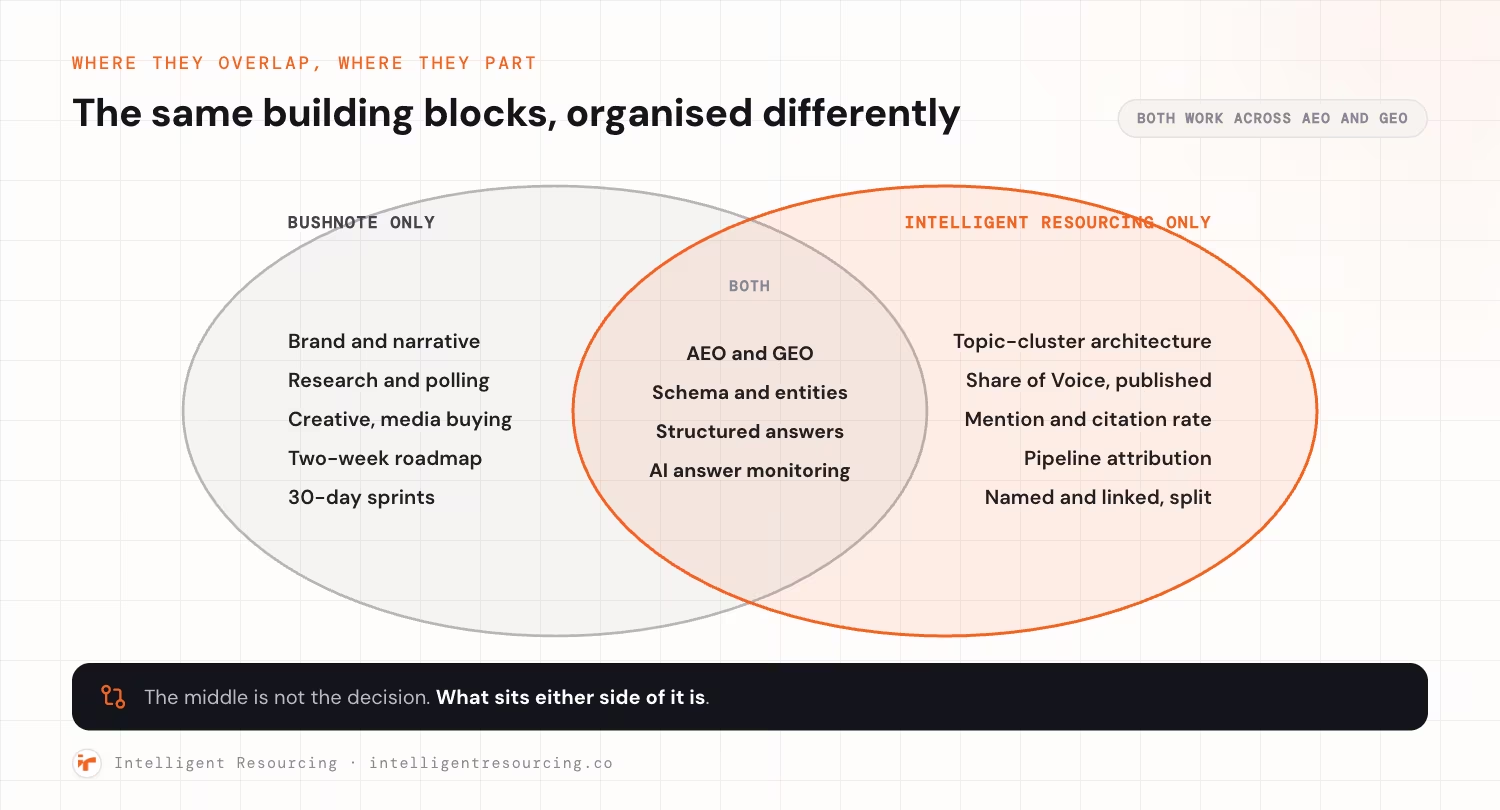
The two overlap heavily in AI search. Both work across AEO and GEO, structure content for AI answers, strengthen entity and schema signals, and check whether brands show up. The real difference is not whether they can lift AI visibility. It is how that work is packaged, scaled and measured.
What both agencies share
Both shape content so AI systems can read, retrieve and quote it. That means direct answers, structured content, entity work, schema and monitoring across AI search.
Neither treats schema as a shortcut, and both are right not to. An Ahrefs study of 1,885 pages added schema markup and found no meaningful citation lift on any major AI platform. Schema helps a machine parse a page. It does not buy a citation.
From a low base, either agency is a credible start. Bushnote adds strategy and creative. Intelligent Resourcing goes deeper on structured B2B GEO.
Where the overlap ends
The decision is not AEO against GEO, since both do both. It is how much structure and reporting depth you need.
Bushnote suits businesses wanting AI search inside a broader agency. Intelligent Resourcing fits B2B teams wanting GEO content structure, recurring citation-engineered assets, Share of Voice tracking and a clearer line to pipeline.
Where Do the Two Approaches Diverge?
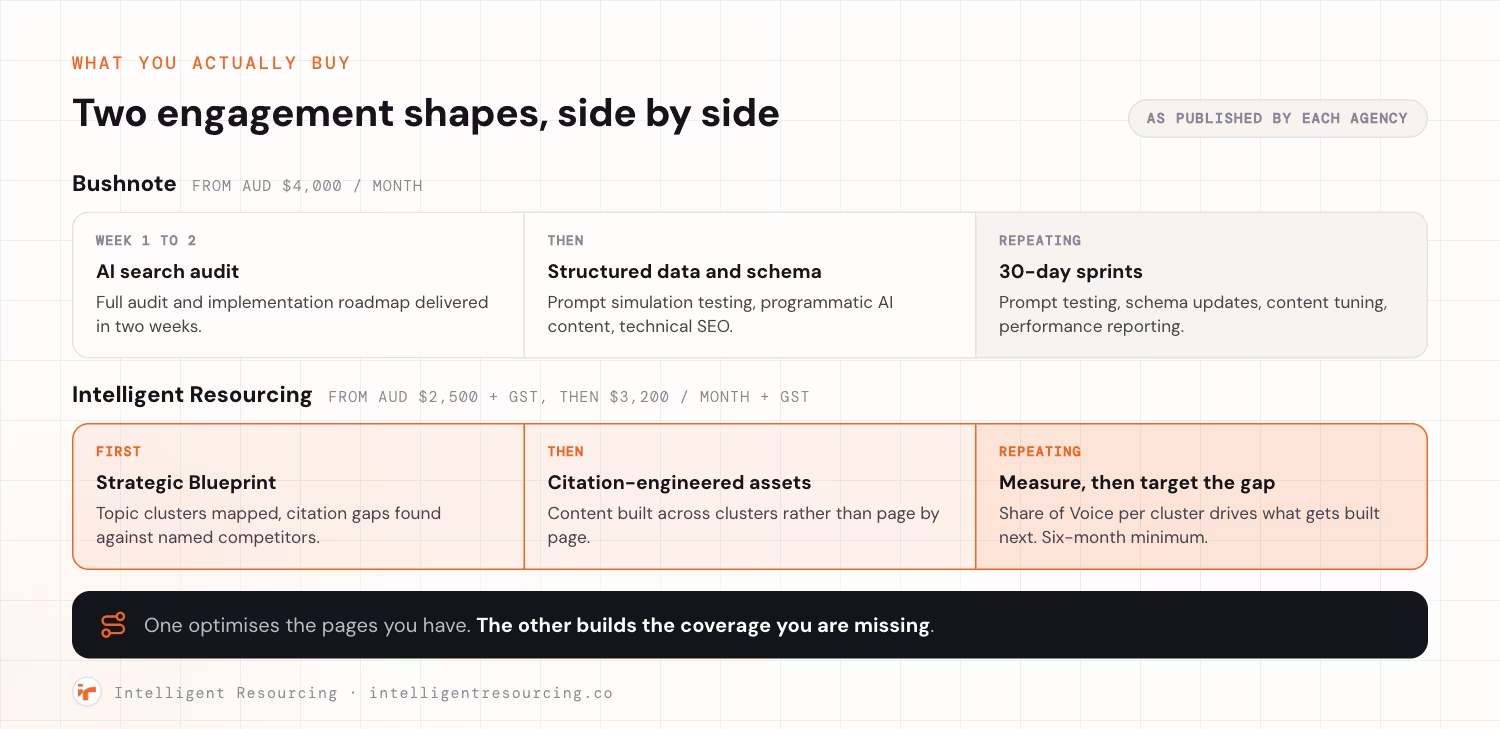
Both use the same GEO building blocks: structured content, schema, entity work and AI visibility tracking. The difference is how those pieces are organised. Bushnote folds AI search into a wider programme. Intelligent Resourcing centres its model on B2B content structure, topic-cluster coverage, Share of Voice and pipeline.
Bushnote's approach
Bushnote treats AI search as one part of a broader agency. Alongside AI Search it sells brand and narrative, strategy and campaigns, research and polling, creative and media buying, and website and automation.
Its AI Search Optimisation service covers audits, structured data and schemas, prompt simulation testing, programmatic AI content and technical SEO integration. The audit and roadmap land in two weeks. Tuning then runs in 30-day sprints across ChatGPT, Google AI Overviews, Perplexity and Bing Copilot.
Bushnote does not sell GEO as a standalone content architecture. It pairs AI search with wider strategy and creative support, which fits teams wanting it run alongside their other marketing work.
Intelligent Resourcing's GEO approach
Intelligent Resourcing's answer engine optimisation service is a narrower B2B GEO build. The method maps high-intent topic clusters, finds citation gaps against competitors, and builds structured content aimed at the prompts that carry commercial intent.
It works across content clusters rather than page by page. Schema markup for AI citation forms part of that architecture, alongside entity relationships, structured answers and topic-cluster mapping.
Pricing is published: from AUD $2,500 + GST for a one-off Strategic Blueprint, then retainers from AUD $3,200 a month + GST, with a six-month minimum.
The methodology gap
The real difference is breadth against depth, not AEO against GEO. Bushnote pairs AI search with strategy and creative. Intelligent Resourcing goes deeper on B2B GEO content, and measures it through Share of Voice, citation coverage and pipeline.
So the choice is not which agency can do AI search. It is whether you want that work inside a broader agency, or as a GEO content and reporting system of its own. How either fits your existing search programme is a separate sequencing question worth settling first.
How Does Each Agency Measure GEO Results?
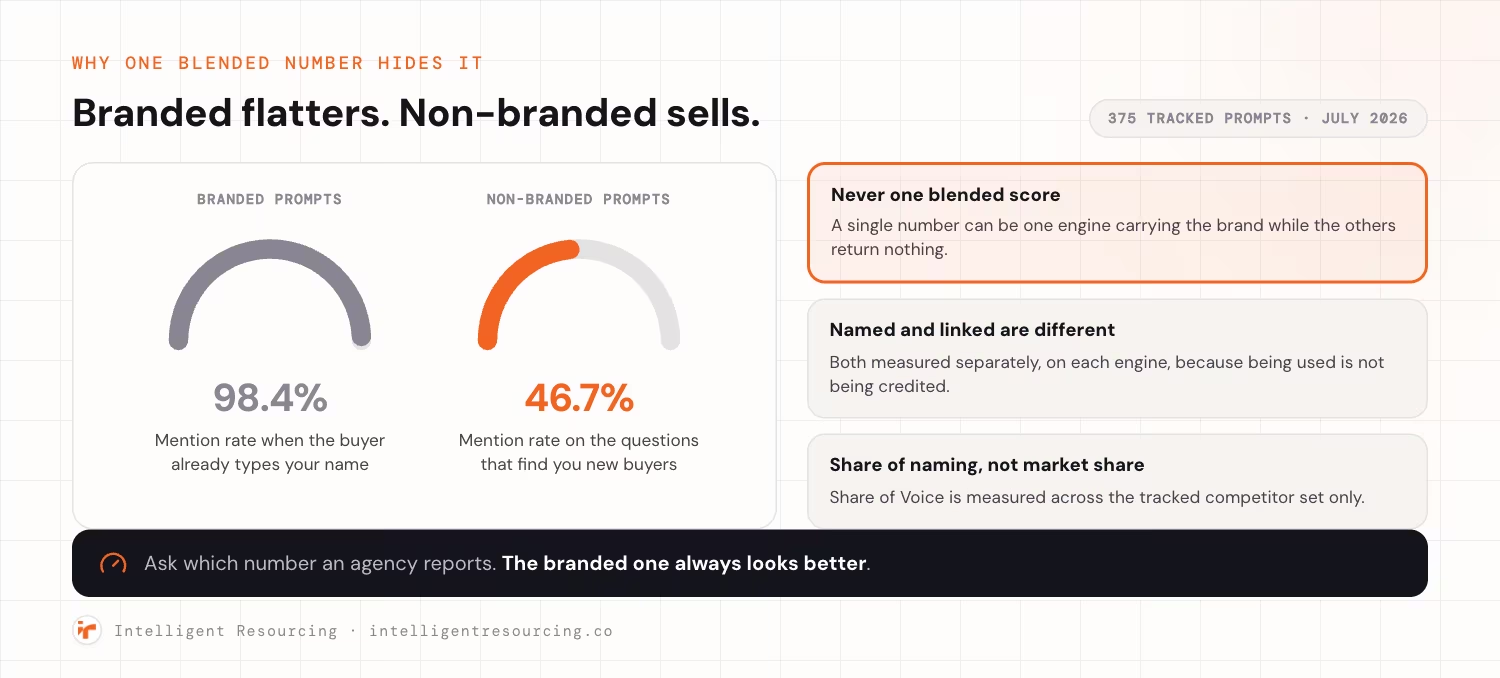
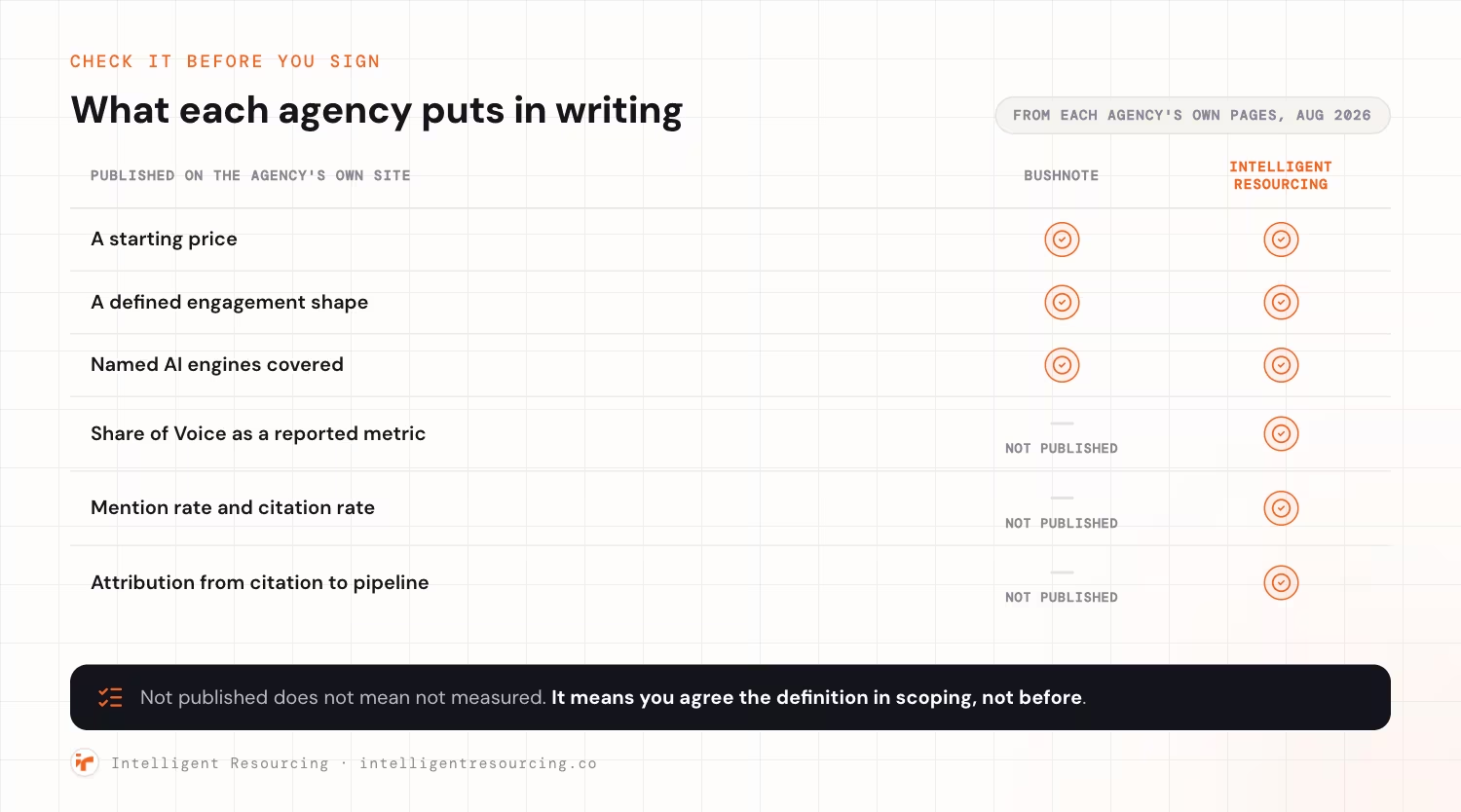
Both measure more than citation count. Bushnote reports performance across four named answer engines through its sprint cycle. Intelligent Resourcing tracks the same territory. It also publishes the metric set: Share of Voice, mention rate, citation rate and pipeline attribution. The difference is what each agency commits to in writing, not who can measure.
Why the measurement difference matters
You cannot judge GEO from one prompt or one engine. A brand can show up for one question and be missing across the wider set buyers actually use.
Tinuiti's AI citation study found the two Google surfaces pull from different pools. By January 2026, AI Mode cited 243% of the unique domains AI Overviews did. Measuring one tells you little about the other.
The ranking signals are no simpler. Pooled citation research puts crawlability, search rank and query match among the strongest AEO factors. An llms.txt file shows no measurable effect at all. An agency that cannot show you which lever moved is guessing alongside you.
Bushnote's measurement model
Bushnote measures whether a brand appears, and is represented accurately, in AI answers. Its published retainer covers prompt testing, schema updates, content tuning and performance reporting, feeding the next 30-day sprint.
What its service page does not publish is the metric set. Named measures like mention rate, citation rate or Share of Voice are not listed. You would agree the reporting definition during scoping rather than check it up front. Ask directly, as you should of any agency selling citation tracking.
Intelligent Resourcing's measurement model
Intelligent Resourcing centres its reporting on AI Search Share of Voice, measured across defined commercial prompt clusters and a named competitor set. Share of Voice here means share of naming across that tracked set, not market share. Mention rate, citation rate and AI-referred pipeline sit underneath it.
Three rules shape the reporting. Named and linked are measured as two outcomes, on each engine. No single blended AI-visibility number is reported, because a blended score can be one engine carrying a brand while the others return nothing. And branded prompts are split from non-branded, because the two diverge sharply. Across 375 tracked prompts for one mid-size vendor in July 2026, branded prompts returned a 98.4% mention rate against 46.7% on non-branded. The branded number flatters. The non-branded number wins new buyers.
This creates a feedback loop between reporting and content. If Share of Voice is weak in one topic cluster, the next cycle targets the missing questions and entities rather than simply producing more pages. Our Content Strategy service runs that loop as the programme, not a reporting add-on.
Which Should You Use?
Choose Bushnote if you want AI search as part of a broader strategy, creative and campaign brief. Choose Intelligent Resourcing if you want a B2B GEO system built around content structure, prompt-cluster coverage, Share of Voice and pipeline.
Use Bushnote if:
- You want broader agency support alongside AI search
- You need strategy, research, creative or media buying as part of the same engagement
- You want AI gains tied into wider search and marketing work
- You prefer a sprint model rather than a dedicated GEO content programme
Use Intelligent Resourcing's GEO service if:
- You want structured GEO coverage across the topic and prompt clusters that carry intent
- You need Share of Voice measurement against competitors across AI search environments
- You want recurring citation-engineered content rather than one-off page fixes
- You need a stronger link between AI answers, enquiries and pipeline
Honest exception
Bushnote may be the better fit if AI search is one part of a broader strategy, creative or campaign brief. Its two-week audit-to-roadmap turnaround beats a full content architecture build, and at AUD $4,000 a month the entry point is clear. Intelligent Resourcing is the more specialised option, for B2B teams that want GEO to run as a defined content, measurement and pipeline system.
Want to know where your brand shows up in AI search today, and which competitors own more Share of Voice? Book a GEO scope assessment with Intelligent Resourcing.
Comparisons
Find out where your brand appears in AI search today, which competitors own more Share of Voice, and where the biggest citation gaps sit. Book a GEO scope assessment with Intelligent Resourcing.
FAQs
Do you need to replace SEO with GEO?
No. GEO works alongside SEO rather than replacing it. Traditional search visibility still helps content become discoverable, while GEO focuses on how clearly that content can be interpreted, retrieved and referenced by AI systems.
How long does GEO take to influence AI visibility?
There is no fixed timeline because AI platforms refresh sources and citations at different rates. Bushnote runs 30-day optimisation sprints after a two-week audit. Progress is usually measured over repeated prompt checks, content updates and citation gains rather than a single ranking change.
Does a B2B company need new content to improve GEO performance?
Not always. Existing high-value pages can often be restructured with clearer answers, stronger entity signals, schema and better topic coverage. New content is most useful when important prompt or topic gaps remain uncovered.
What should you have in place before starting a GEO engagement?
Start with clear commercial topics, priority services, target competitors and a defined set of buyer questions. That gives the agency a stronger baseline for mapping prompt clusters, identifying citation gaps and measuring whether AI visibility improves over time.