

Why Is This Question Really About Ownership?
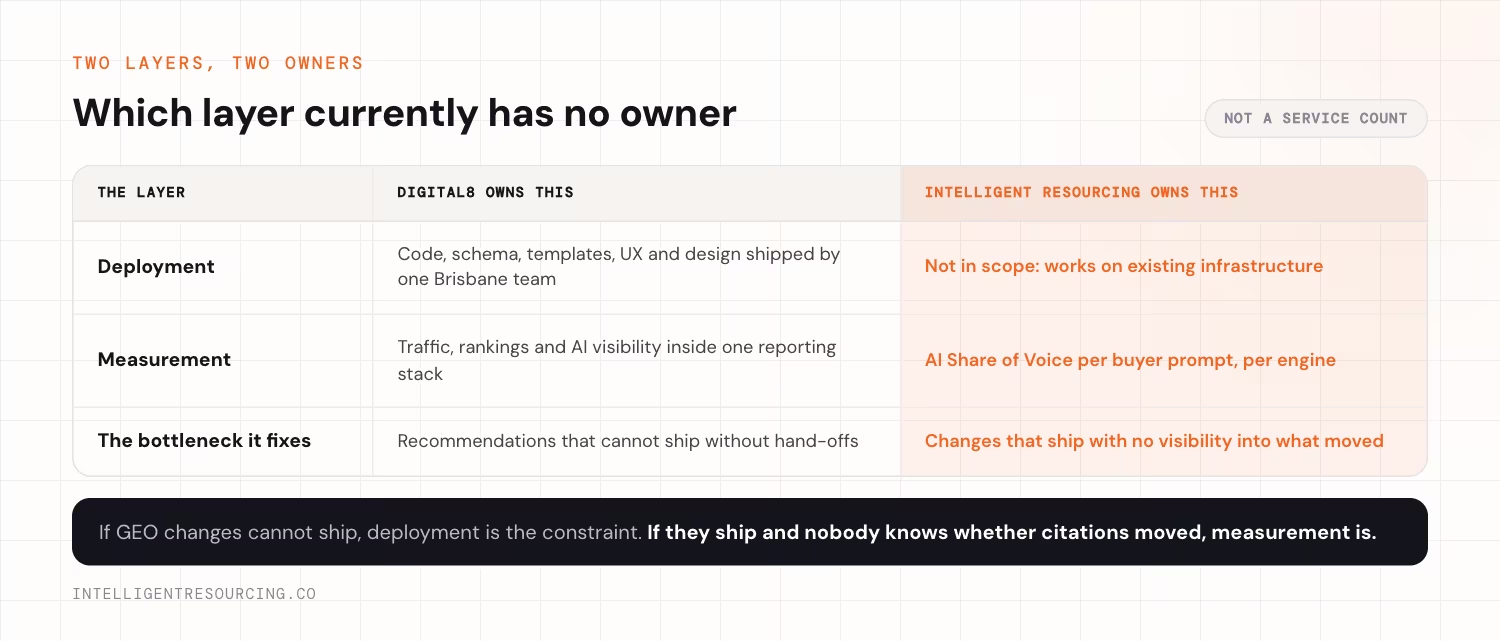
The comparison is less about which agency has more services and more about which layer of the AI search system needs a dedicated owner. Digital8 can own websites and marketing implementation. Intelligent Resourcing is built around owning the citation measurement layer. Different responsibilities, different outputs.
Digital8 operates across web design and development, app development, UX, SEO, PPC and digital marketing from its Brisbane studio. It positions itself as a team that keeps website and marketing implementation in one relationship: developers, designers and marketers working on the same digital environment.
Digital8 also published dedicated 2026 guidance on GEO, AEO and AI-search readiness. Its July 2026 guide defines GEO around optimising content for AI-generated citations and AEO around answering conversational queries directly. Both agencies recognise the shift. The difference is what each has built around it.
Which layer is currently unowned?
If GEO changes need code, schema updates, template changes and design work, but nobody can ship them without hand-offs to multiple parties, implementation is the bottleneck.
If content and schema changes are shipping, but nobody knows whether ChatGPT, Gemini or Copilot is citing the brand after those changes go live, measurement is the bottleneck.
When Does One Implementation Team Reduce Real GEO Risk?
One-team implementation becomes a genuine advantage when GEO and UX recommendations repeatedly touch the same technical environment. When developers, designers and SEO specialists work on the same website, hand-offs between recommendation and deployment shrink, and conflicting priorities have one team to resolve.
This is the honest concession for Digital8. A GEO audit on a website undergoing active development typically identifies changes that require:
- A service page template rebuilt to support answer-first content sections
- FAQ, Article and Organisation schema added across multiple templates
- Internal linking restructured across 30 or more existing pages
- Page-speed or rendering fixes preventing clean AI crawling
Digital8's guide to preparing websites for AI search covers question-led content structure, answer extraction formatting, schema markup, topical authority clusters and brand entity strengthening. Most of that needs developer involvement to implement correctly. When GEO recommendations and website build share the same sprint, one accountable implementation team reduces the risk that a schema change contradicts the component structure a developer just shipped.
Intelligent Resourcing cannot close that gap, and it is worth being direct about the limits:
- GEO and AEO only. No website builds, paid media, social delivery or UX design.
- Works on existing infrastructure. The engagement does not include redesigning or replatforming a site.
- Measurement is citation share, not sessions. Results appear in citation volume and AI mention count, the wrong report for a board that measures purely in rankings and traffic.
When Does Coordination Stop Being Enough for AI Citation Measurement?
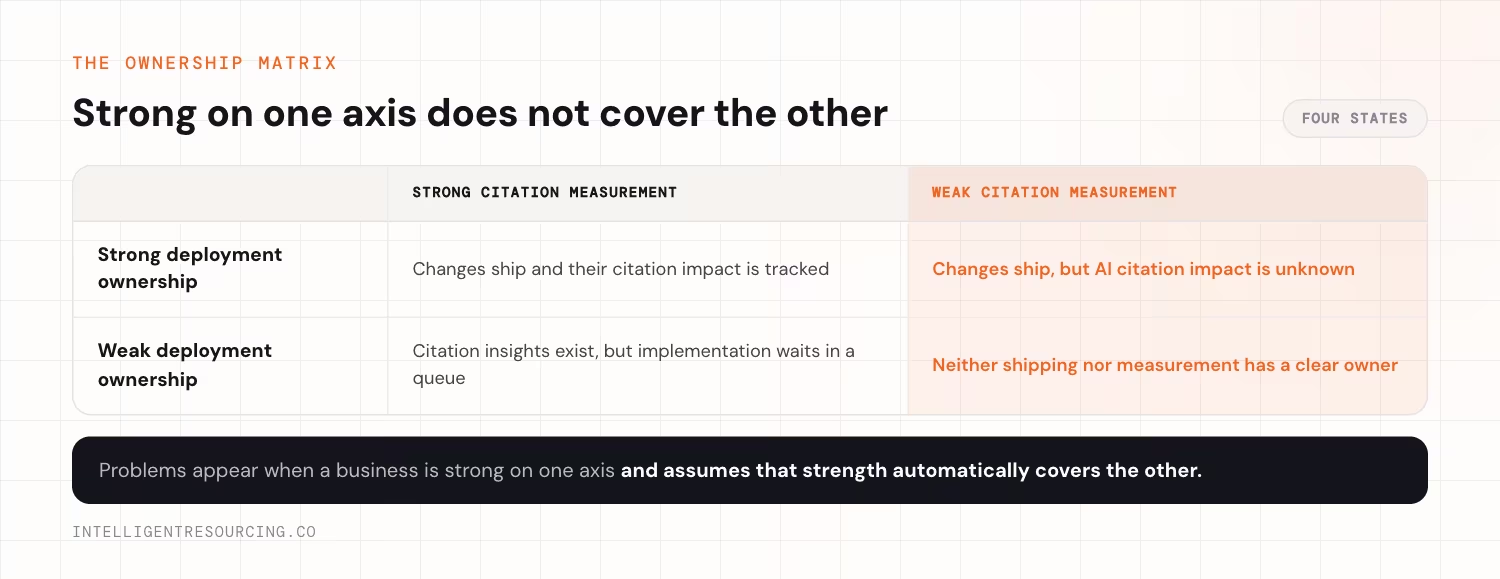
Coordination stops being enough when the business needs to know whether GEO changes are producing citation visibility inside specific AI engines. Shipping schema, content and technical updates answers the implementation question. It does not answer which prompts trigger the brand, which competitors appear more often, or whether citation share is improving.
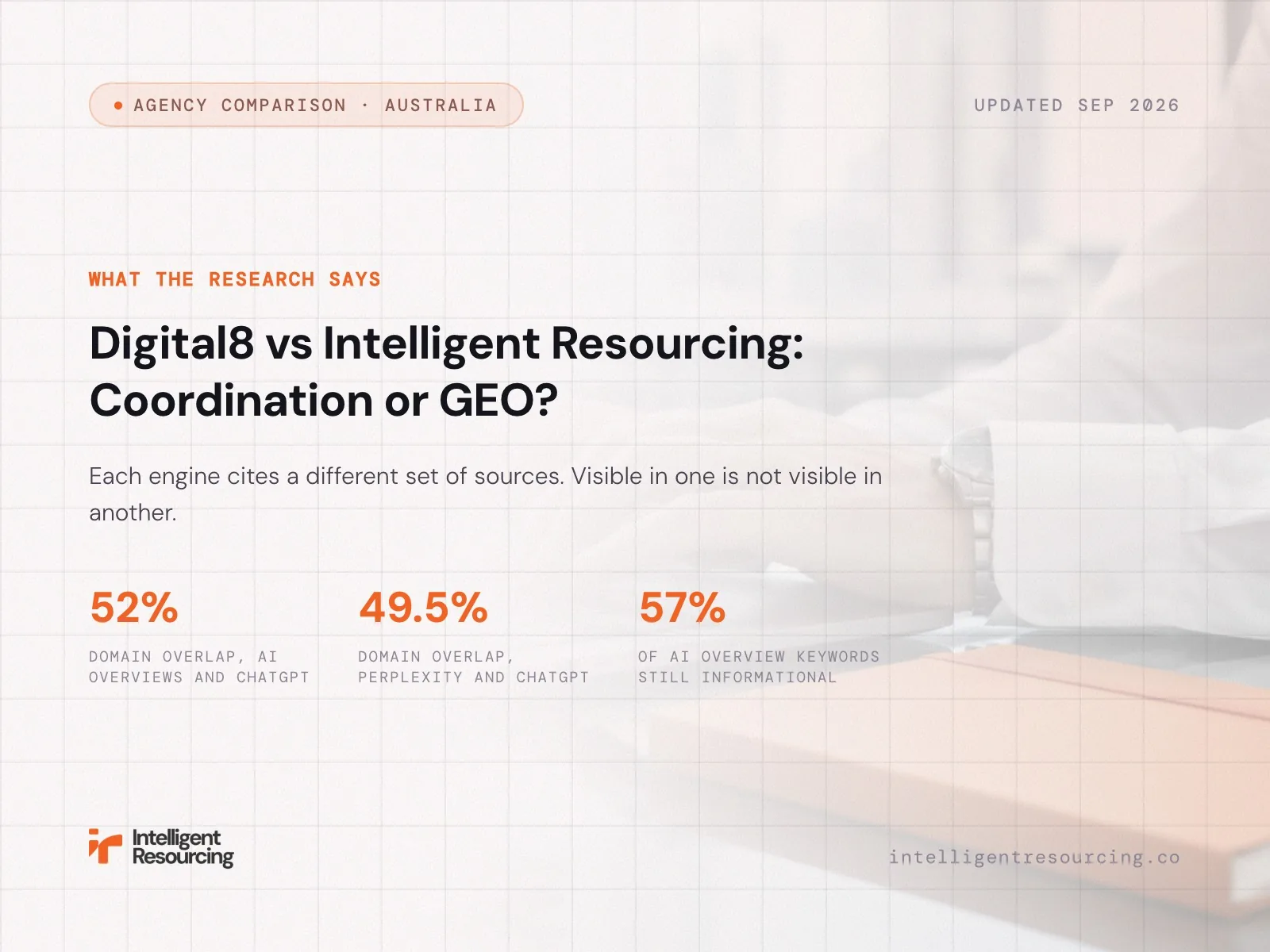
Keywords triggering AI Overviews shifted from 89.03% informational in October 2024 to 57.16% informational by October 2025, per Semrush analysis, expanding into the commercial and transactional queries where B2B buying decisions are made.
A business can have clean technical SEO and well-structured content and still be unable to answer:
- Which buyer prompts mention the brand?
- Which AI engines cite the brand, and which cite a competitor instead?
- Which pages earn those citations?
- Is citation share improving after this month's content changes?
AI Overviews and ChatGPT share only 52% of cited domains, and Perplexity and ChatGPT share just 49.5%, per Omnia's 2026 analysis. Because each engine cites a different set of sources, a brand invisible in one is not automatically visible in another, even with the same underlying website.
The original GEO research paper found structured, source-grounded content earns measurably more consistent citations from generative engines than unstructured writing on the same topic. Knowing whether that effect landed requires tracking it per engine. Coordination keeps implementation moving. It does not create the monitoring layer.
Which Failure Costs More: Deployment Friction or Unmeasured Visibility?
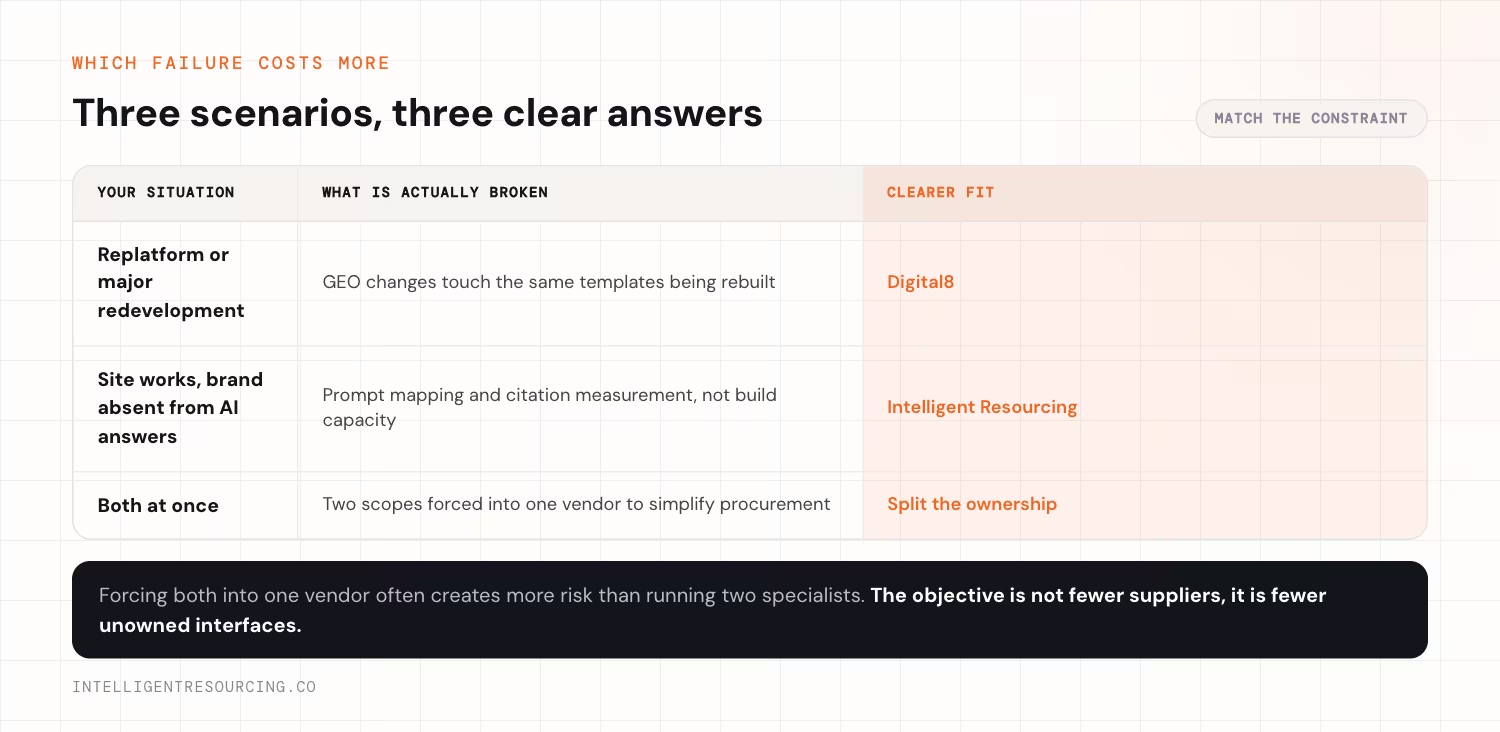
The right provider depends on which failure is currently costing more. Digital8 addresses the risk that GEO recommendations cannot be implemented cleanly across the website. Intelligent Resourcing addresses the risk that work ships with no visibility into citation performance or competitor movement.
ChatGPT search usage nearly doubled year on year, from 6.95% to 14.68% of users, per Datos in January 2025, with sessions per user growing 195% across 2024. Without a citation baseline, each month of movement since then cannot be attributed to any specific change.
Scenario 1: the website needs major redevelopment
A business replatforming its website, rebuilding navigation and redesigning service pages has a GEO recommendation problem that is also a development problem. GEO changes will touch the same templates being rebuilt.
Digital8 has the clearer fit. One team coordinates UX, development, SEO and AI-search requirements during the rebuild without routing recommendations through an unrelated technical queue. The value is not service breadth. It is fewer unowned interfaces during a technical transformation.
Scenario 2: the website works, but the brand rarely appears in AI answers
The CMS works, developers can make changes, and SEO performance is adequate. The problem is that nobody knows what happens when a buyer asks an AI assistant which provider to use, or what the best alternatives are.
Intelligent Resourcing has the clearer fit. The constraint is no longer implementation capacity. It is prompt mapping, citation architecture and repeatable measurement, which is what the generative engine optimisation service is built around.
Scenario 3: the business needs both
Some organisations genuinely need a rebuilt digital experience and dedicated citation measurement. That means separating 2 scopes deliberately:
- Deployment ownership: who controls the website, CMS, templates, UX and technical implementation?
- Measurement ownership: who defines the buyer prompts, measures citations, benchmarks competitors and decides what changes next?
Forcing both into one vendor to simplify procurement often creates more risk than running 2 specialists with clearly defined ownership. The objective is not fewer suppliers. It is fewer unowned interfaces.
What Should You Ask Before Choosing Either?
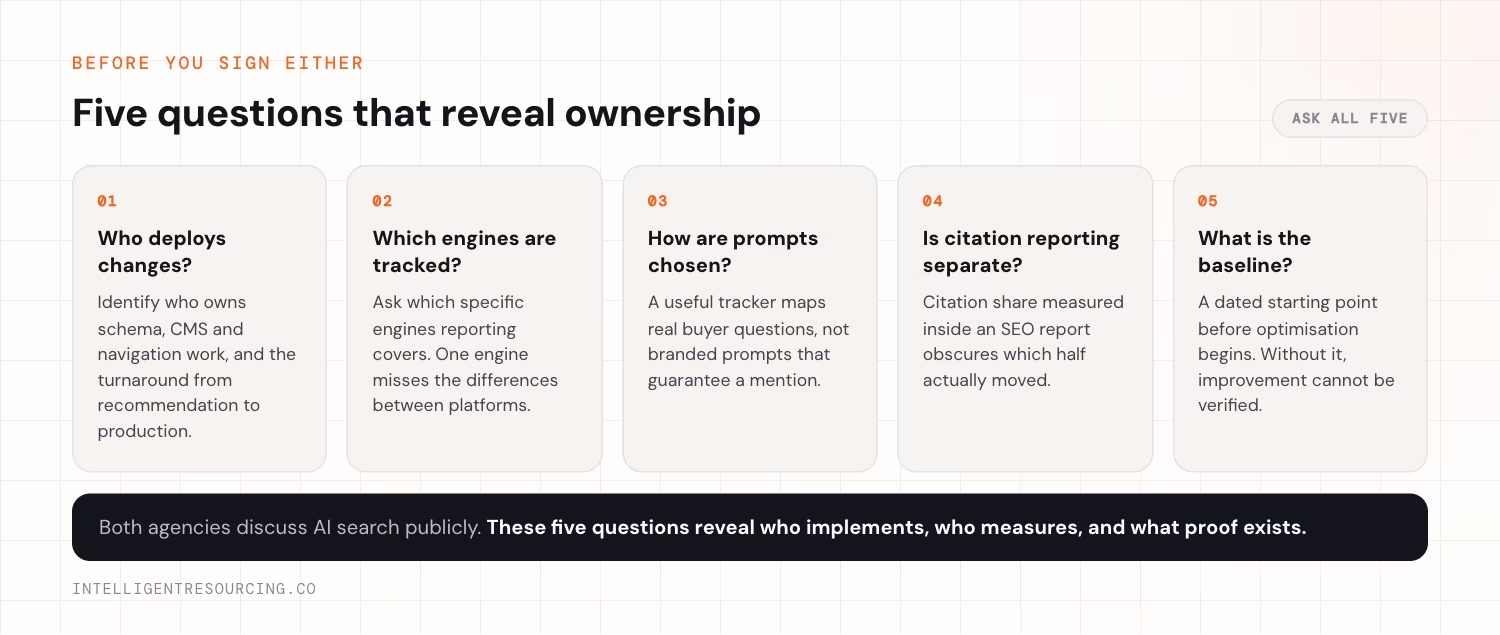
The decision gets clearer when procurement tests ownership and evidence rather than asking which agency does GEO. Better questions reveal who implements changes, how performance is measured, and what proof exists.
- Who deploys website changes? If a GEO recommendation requires schema, CMS templates or navigation changes, identify who owns implementation and the expected turnaround from recommendation to production.
- Which AI engines are tracked? Ask which specific engines reporting covers, not whether AI search is covered in general. A tracker monitoring one engine misses the citation differences between platforms.
- How are prompts selected? A useful tracker maps real buyer questions, not branded prompts that almost guarantee a mention. Ask to see the prompt set before committing.
- Is citation reporting separate from SEO reporting? Citation share should be measured independently from rankings and organic traffic. Bundled reporting obscures whether GEO work produced AI citation or just organic reach.
- What is the starting baseline? There should be a dated baseline before any optimisation begins. A do-it-yourself citation gap audit covers how to establish one. Without it, improvement cannot be verified and competitor movement cannot be benchmarked.
Comparisons
Intelligent Resourcing tracks AI Share of Voice across ChatGPT, Gemini, Google's AI Overview and Copilot, and engineers content to move it. Every engagement starts with a dated baseline before any content changes are made.
FAQs
Is Digital8 better if a website rebuild is part of the brief?
Digital8 is the stronger fit when the brief includes substantial website development, UX work and digital marketing alongside GEO requirements. Its team combines design, development and marketing in one relationship, which reduces hand-offs when GEO recommendations require code changes. Intelligent Resourcing works on existing infrastructure and does not deliver website builds.
How does Digital8 measure AI-search performance?
Digital8's public content discusses AI visibility and citation worthiness. The public material reviewed for this article does not include a dedicated per-engine citation tracking method with named prompt sets and share-of-voice reporting. Ask Digital8 specifically how AI citation performance is measured separately from rankings and organic traffic before committing.
What does Intelligent Resourcing track across AI engines?
Intelligent Resourcing tracks brand mentions, AI Share of Voice and competitor citation comparison across a defined buyer-question set, covering ChatGPT, Gemini, Google's AI Overview and Copilot. The Kynection engagement runs 393 buyer prompts across 8,891 AI runs, producing 22.88% AI Share of Voice and first position in its category as of August 2026.
Does Intelligent Resourcing rebuild websites?
No. The GEO engagement works on existing website infrastructure through content architecture, schema markup, entity frameworks and citation optimisation. It does not deliver website redesigns, replatforms or development work.
Can Digital8 and Intelligent Resourcing work together?
The capabilities operate at different layers and could run in parallel, with Digital8 owning website and marketing implementation and Intelligent Resourcing owning citation measurement. There is no published partnership between the 2 companies. Buyers treating this as a combined model should define the interface: who owns the implementation backlog, who measures citation impact, and how both outputs connect.