

Why do well-funded competitors pull ahead in AI search after a raise?
Funded competitors pull ahead because capital buys authority, not product superiority. A raise funds digital PR, review generation, and content velocity: the exact signals AI systems weight. AI models favour earned media over brand-owned pages, so the brand with more third-party coverage gets named first, and that gap compounds as citations generate more citations.
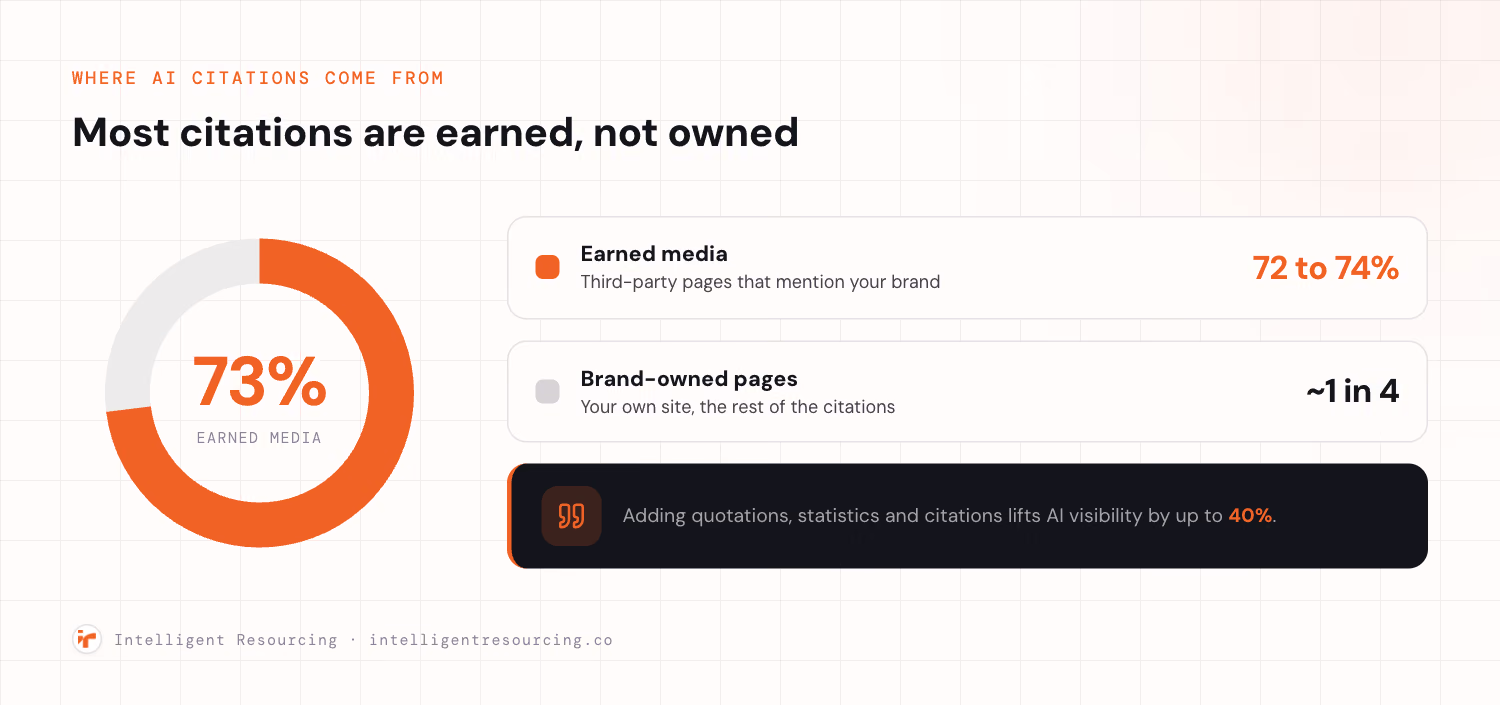
Think about what a raise actually funds, it funds digital PR agencies, review generation across G2 and Capterra, and content velocity. These are authority signals, not product features. AI systems weigh them heavily. A 2025 academic study found AI search is systematically biased toward earned media over brand-owned content. For software queries specifically, 72 to 74 percent of all AI citations came from earned media, with brand-owned pages supplying the remainder. Your own landing pages carry less weight than you assume.
So funded rivals compound faster with more earned coverage leading to more citations and more citations lead to more AI recommendations.
Capital cannot buy AI visibility on a zero-authority domain. A brand with no baseline stays invisible, funded or not. AI systems recommend brands they can confidently identify. Authority has to exist before money amplifies it - that is why a well-cited, under-funded brand can still beat a funded rival with thin earned coverage.
How do you run an AI search competitive analysis to find the gap?
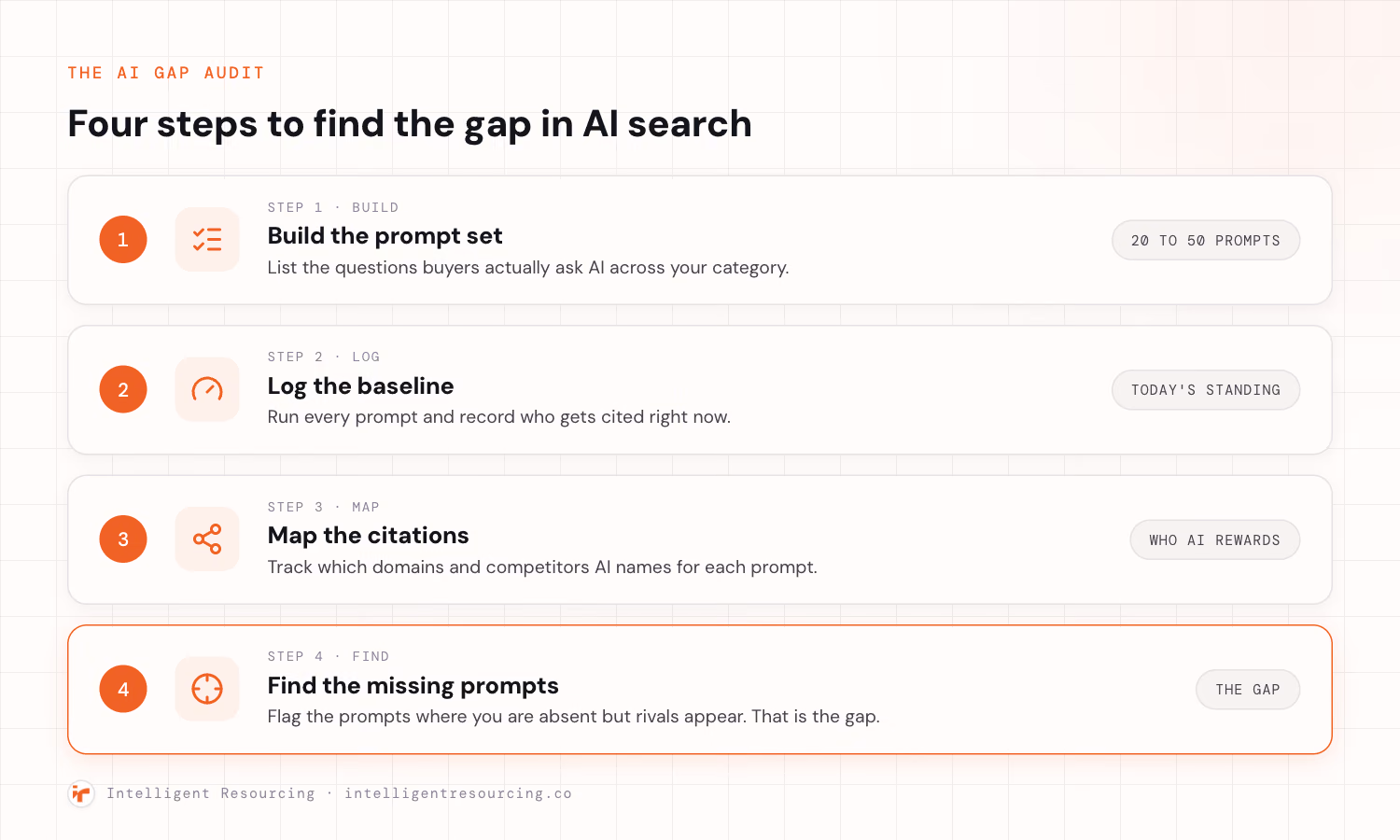
Build a fixed prompt set of 20 to 50 decision-oriented queries, test it across ChatGPT, Perplexity, and Gemini, and log presence, answer position and cited domains per prompt. Flag every prompt where rivals appear and you do not. Those are your priority targets. The whole audit fits in a spreadsheet and costs nothing to run.
Most teams skip this entirely. Scrunch's 2026 AI search survey found 71 percent of marketers do not measure AI share of voice against competitors. That gap is your opportunity.
- Build the prompt set: use 20 to 50 decision-oriented prompts. Think best-of, alternatives, and use-case queries. Skip informational questions, because buyers convert on decision prompts.
- Log the baseline: record presence, answer position, sentiment, and named competitors per prompt, per platform. One row per prompt keeps it clean.
- Map the citations: capture which third-party domains AI pulls from. These domains become your PR target list.
- Find the missing prompts: flag prompts where rivals appear and you do not. Fix the highest-value gaps first.
What changed in how AI search picks winners
AI search now rewards 3 signals: inclusion in a synthesised shortlist, third-party authority and recently updated content. This matters after a raise because funded competitors can invest faster in PR, reviews and publishing. Those investments increase their citation footprint, which helps them appear more often in AI-generated recommendations.
| Change | How AI search works now | Why it matters post-raise | Evidence |
|---|---|---|---|
| Synthesised shortlists | AI systems replace ranked link lists with 1 answer and a short set of recommendations. | Funded competitors gain more visibility when AI names only a few vendors. | Pew Research's 2025 study found AI summaries appeared on 18% of Google searches. Link clicks fell from 15% to 8% when a summary appeared. |
| Earned media carries weight | AI systems rely more on press coverage, reviews and third-party sources than on brand-owned pages. | A funding round gives competitors more budget for PR and external coverage, increasing their chance of earning citations. | A 2025 academic study found that 72% to 74% of citations for software queries came from earned media. |
| Fresh content wins citations | AI search systems favour recently published or updated pages. | Funded teams can publish and refresh content more often, helping them compound citations faster. | Perplexity applies a strong recency bias, so regular updates improve the chance of continued inclusion. |
How do you optimise content and authority to close the AI search gap?
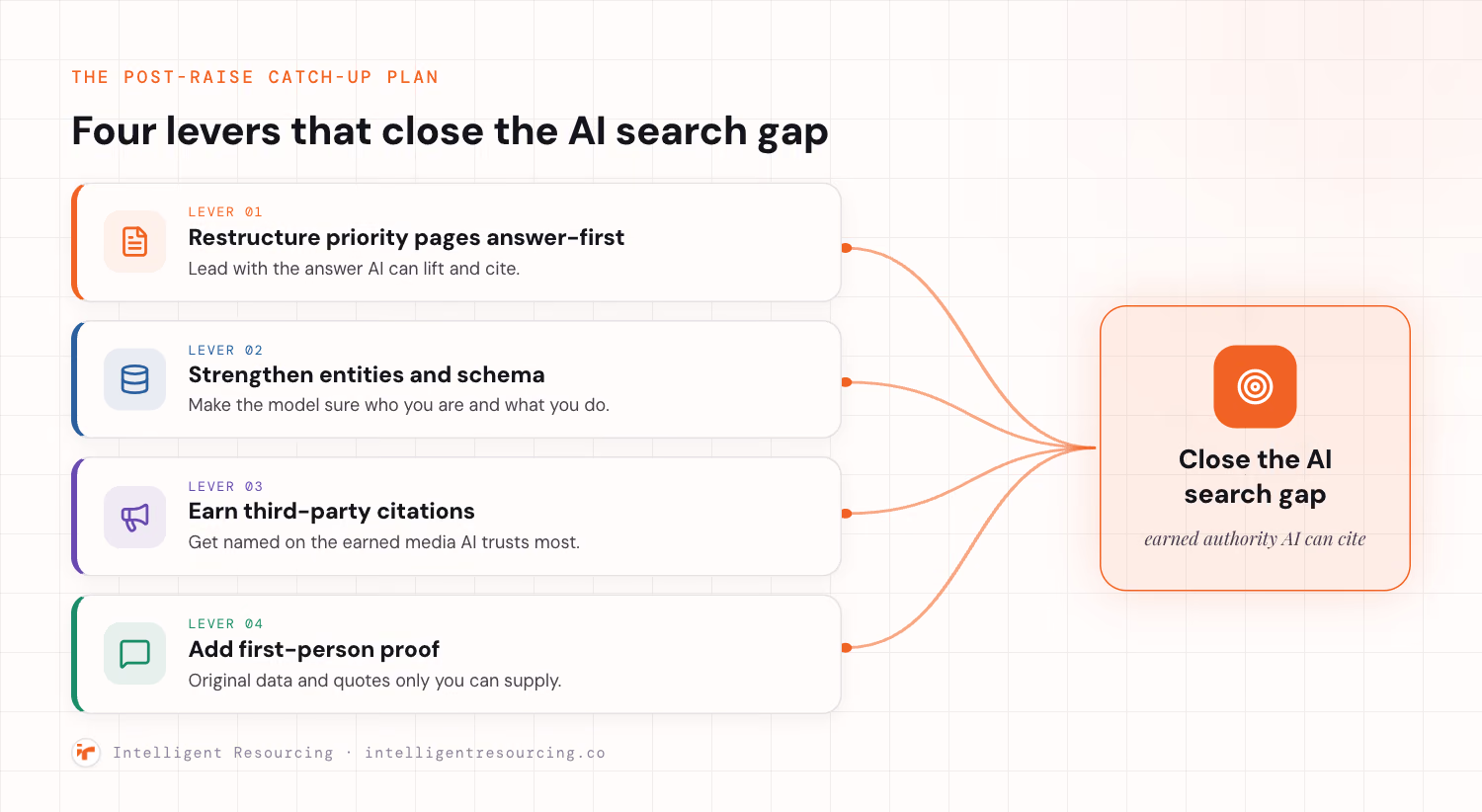
Close the gap with four levers: restructure priority pages answer-first with question headings, strengthen entity clarity so AI can identify and quote you correctly, earn third-party citations through targeted digital PR and add first-person proof only your team can supply. These four make up the Post-Raise Catch-Up Plan.
Restructure priority pages answer-first
Move the answer into the opening sentence. Convert vague headings into real questions. AI extracts content in short passages, and a buried answer never gets cited.
Strengthen entities and schema
Implement FAQPage and Article schema on key pages. Keep your brand name and details consistent across every profile. AI needs to identify you before it quotes you. This is the foundation of generative engine optimisation: making every page recognisable and extractable before a prompt is ever run.
Earn third-party citations
Pitch your newsworthy post-raise updates to press. Target the domains your citation map surfaced. Guest commentary and expert quotes both count. A KDD 2024 study found that adding quotations, statistics, and citations lifts AI visibility by up to 40 percent, with the largest gains going to lower-ranked sites. Catch-up is realistic.
Add first-person proof
Publish an outcome only your team can report. When we rebuilt a client's priority pages answer-first, one niche article was cited by AI within a week. In one case, that citation converted to a booked demo in three days. Specific, owned evidence is hard to fake and easy for AI to trust.
How do you measure whether you're actually catching up?
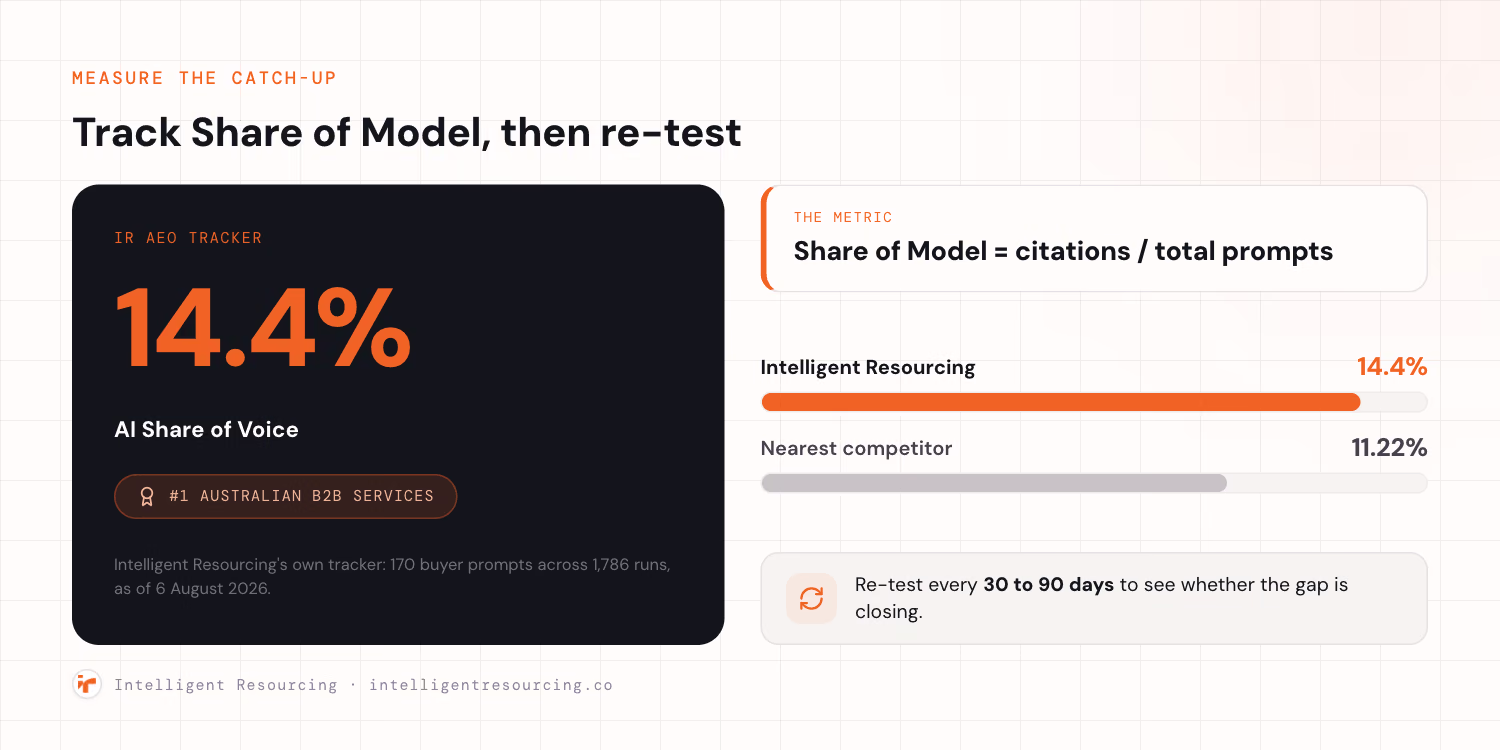
Measure catch-up with Share of Model: the AI equivalent of share of voice. It tracks how often AI names you for a fixed set of target prompts. Re-test the same set every 30 to 90 days and log every movement against your content and PR actions. That is how you prove progress to stakeholders.
- Calculate a baseline first: Run 20 to 50 high-intent prompts across ChatGPT, Perplexity, and Google AI Overviews. Record whether AI cites, recommends, or ignores you. Your Share of Model score is citations divided by total prompts. Re-run the set every 30 to 90 days.
- Tie the number to revenue: Semrush's research on AI search performance found AI search visitors convert at 4.4 times the average search visitor. AI mentions also feed traditional search: Scrunch's prompt-to-purchase research found an AI recommendation makes a new prospect 182 percent more likely to search your brand on Google that week. A rising Share of Model lifts pipeline through both channels.
- One risk note matters most: GEO amplifies authority you already have. It will not move a zero-baseline domain. If you have no organic search visibility, fix SEO foundations first. That principle holds regardless of the year. Re-check the time-sensitive benchmarks above each quarter as models change.
Real tracking data shows how quickly the competitive picture moves. In Intelligent Resourcing's own AEO tracker, running 170 buyer prompts across 1,786 sample runs as of 6 August 2026, Intelligent Resourcing held 14.4% AI Share of Voice, placing number #1 in the Australian B2B services category. 2 days earlier, the nearest competitor held 11.02% Share of Voice. By 6 August, that same competitor had dropped to 11.22% with a 2.38 gap from 3.38.
That movement confirms what Share of Model tracking is built to surface: AI search position is relative. A competitor can slip because a citation source goes stale, a rival earns new coverage, or a prompt cluster shifts. Teams that measure every 30 days catch these movements as they happen. Teams measuring quarterly discover them too late to act.
Content Creation
Your AI search gap is measurable and closable. Get your free GEO audit to see the gap and the catch-up plan. Our generative engine optimisation service covers the restructure, citation work and Share of Model tracking.
FAQs
How do I get my business to show up in AI search results?
Publish clear, answer-first pages. Add FAQPage and Article schema. Keep your entity signals consistent across profiles. Earn third-party citations from trusted domains. Test your visibility in ChatGPT, Perplexity, and Gemini. Your first concrete step: rewrite your top page to answer its main question in the opening line.
How long does it take to catch up in AI search after competitors pull ahead?
Set realistic expectations. Tactical fixes move within 1 to 3 months: schema, stronger answers, and updated statistics. Structural authority build-out takes 3 to 6 months, covering new content clusters and earned-media coverage. Avoid anyone promising instant results. Consistent execution against tracked prompts drives the timeline.
How do I track whether competitors are mentioned in AI search more than me?
Use a fixed prompt set. Run 20 to 50 decision prompts across ChatGPT, Perplexity, Gemini, and Google AI Overviews. Log presence, answer position, and share of voice for each brand. Note which competitors appear and which sources AI cites. Re-run monthly. The trend shows whether you are gaining or slipping.
Do I need a separate AI search strategy, or is this just SEO?
Generative engine optimisation extends SEO; it does not replace it. Strong backlinks, technical health, and helpful content still underpin AI visibility. GEO adds answer-first structure, schema, and earned citations on top. Think of it as a layer, not a rebuild. A zero SEO foundation means GEO has nothing to amplify.
Why does AI recommend well-funded competitors instead of us?
AI recommends brands it can confidently identify and trust. Funded rivals usually have clearer entity signals and more third-party coverage. Their earned-media footprint is larger, and that signals authority, not better product quality. Close the gap by earning citations and tightening your entity signals. Product parity is not the deciding factor in AI recommendations.