

Who Does AI Name When Shippers Ask?
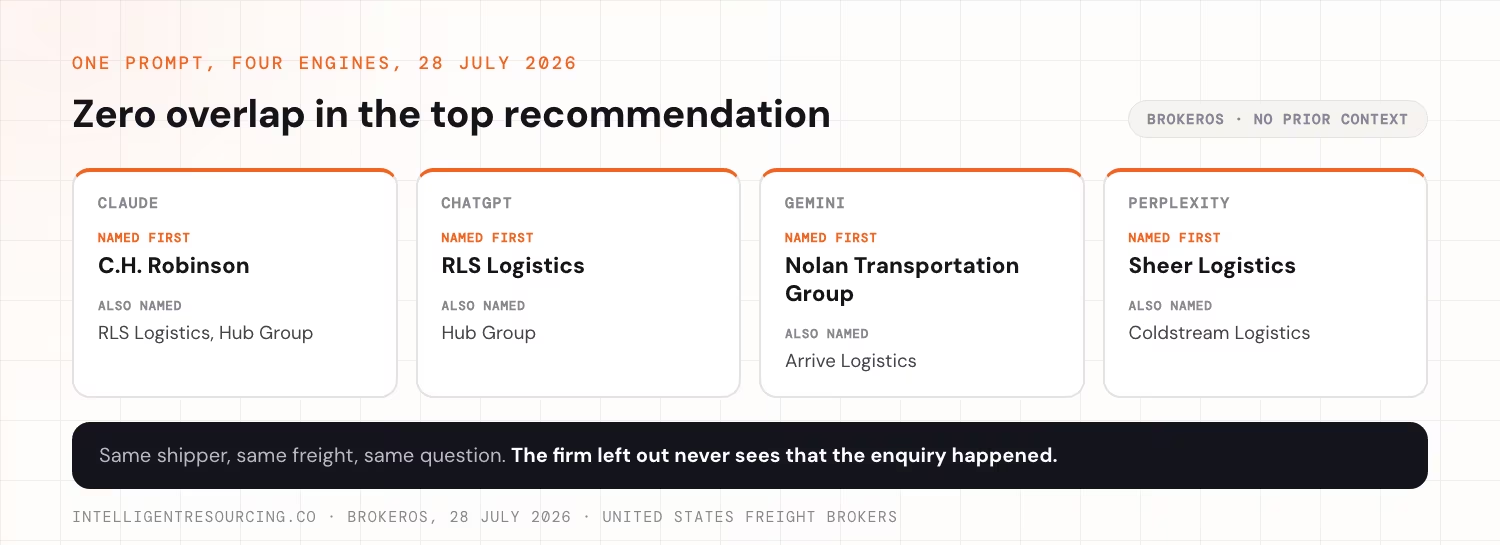
A shipper who asks ChatGPT, Gemini or Perplexity for a forwarder gets a short list of names, and that list changes from engine to engine. BrokerOS ran one freight prompt across 4 engines on 28 July 2026, with no prior context and no hints about who was asking. Claude led with C.H. Robinson, ChatGPT with RLS Logistics, Gemini with Nolan Transportation Group and Perplexity with Sheer Logistics. Same shipper, same freight, same question, and zero overlap in the top recommendation. That test covered United States freight brokers rather than forwarders, but the mechanism is identical: the firm left out never sees the question.
Take 1 realistic prompt:
"We import furniture from Ho Chi Minh City into Melbourne, about 6 cubic metres a month. Which forwarders run less-than-container-load (LCL) on that lane and clear customs?"
The engine reads 4 separate needs and looks for pages that meet each one.
| What the shipper asked | What the engine looks for | What a brochure site offers |
|---|---|---|
| Ho Chi Minh City to Melbourne | A page that names the lane | "Worldwide coverage" |
| LCL, 6 cubic metres a month | Consolidation service and schedule | A general sea freight page |
| Furniture | Cargo handling and fumigation rules | Nothing on cargo type |
| Customs clearance | A licensed broker and named process | A logo in the footer |
The firms named are the ones whose pages match the most rows. Size helps, but a clear corridor page gives a smaller forwarder a real chance.
The same logic explains why manufacturers go missing too.
Which Sources Fill the Answer First?
Four kinds of source fill a freight answer first: global networks, self-published "top" lists, quote platforms and trade directories.
Ship4wd, a digital forwarder serving small United States and Canadian shippers, published a list of top freight forwarders for 2026 in April 2026 and lists itself in first position, ahead of Kuehne+Nagel, DHL Global Forwarding and DSV. The piece frames each entry by what it is best at rather than as a strict ranking, but an engine lifting the list still reads Ship4wd at the top of it.
| Source | Why engines use it | What an Australian forwarder controls |
|---|---|---|
| Global networks | Named across press and trade media | Little on the generic prompt |
| Self-published "top" lists | A clean, dated list of named firms | Whether it publishes honest lane guides |
| Digital quote platforms | Prices and lanes in plain view | Whether it lists there |
| Trade directories | Third-party proof of a licence or membership | Whether its profile is current |
None of these sources is the forwarder's own website. When your site says less about your lanes than a directory does, the engine lets someone else describe your market. Taking that ground back starts with content built for AI citation.
Why Do Lane-Level Questions Change the Answer?
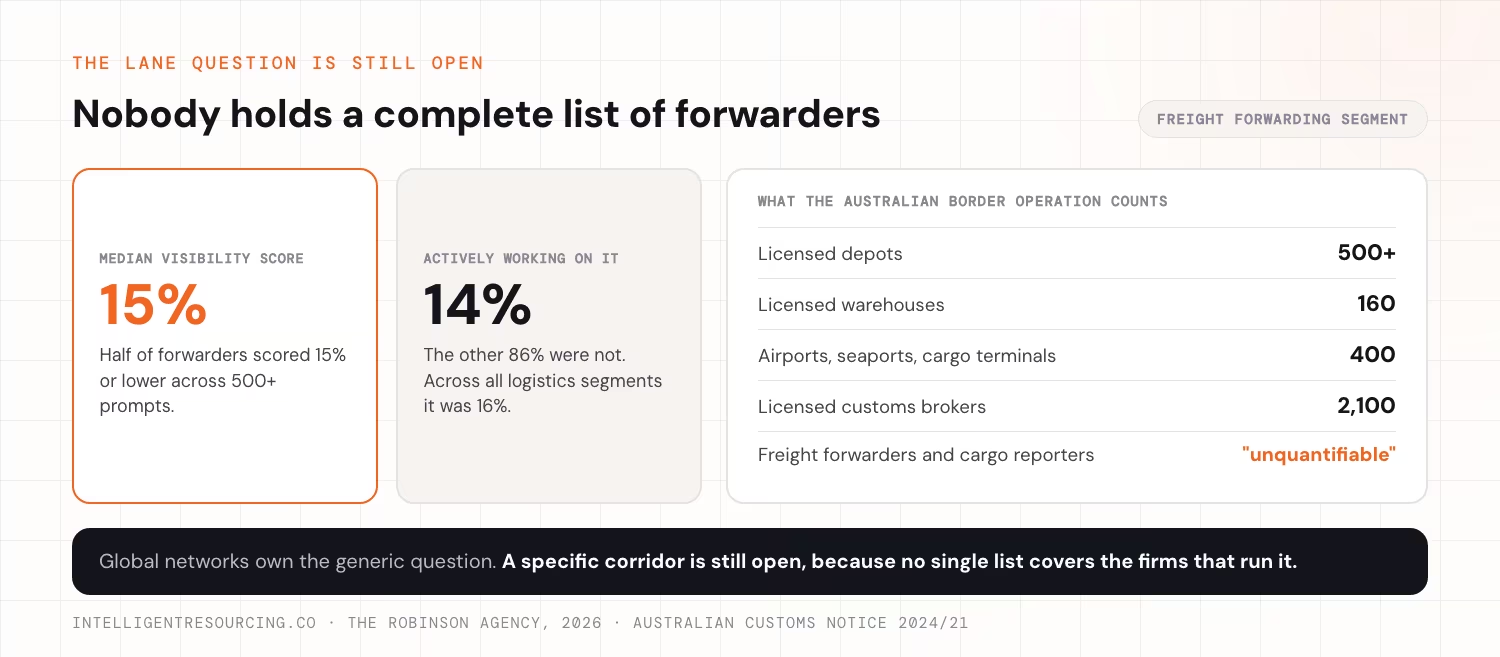
A lane-level question shrinks the field to firms that state the lane. Australian Customs Notice 2024/21 describes a supply chain that takes in over 500 licensed depots, 160 licensed warehouses, 400 airports, seaports and cargo terminals, 2,100 licensed brokers and, in its own word, an "unquantifiable" number of freight forwarders and cargo reporters. Nobody holds a complete list. Global networks own the generic question, but a specific lane is still open.
The generic question is a long game
"Best freight forwarder in Australia" pulls in firms with years of press and global scale. Spending the first 6 months there buys activity without a position.
The lane, cargo and customs question is open
Specific questions have fewer good answers on the web. In 2026, The Robinson Agency, a logistics marketing firm, scored 127 logistics companies on more than 500 prompts across ChatGPT, Gemini, Perplexity and Google AI Overviews. For the freight forwarding segment it found:
- A median score of 15%. Half the forwarders scored 15% or lower.
- Only 14% actively working on AI search. That is the forwarding figure; across all logistics segments it was 16%.
- Read it as a direction. The index is the agency's own scoring method, so re-test on your own Australian lanes before relying on it.
Intelligent Resourcing has seen one brand be the most-cited name in its own category and absent from the next one. Same site, same authority. For a forwarder, each lane behaves like its own small category.
Why Can't AI Quote Your Quote Page?
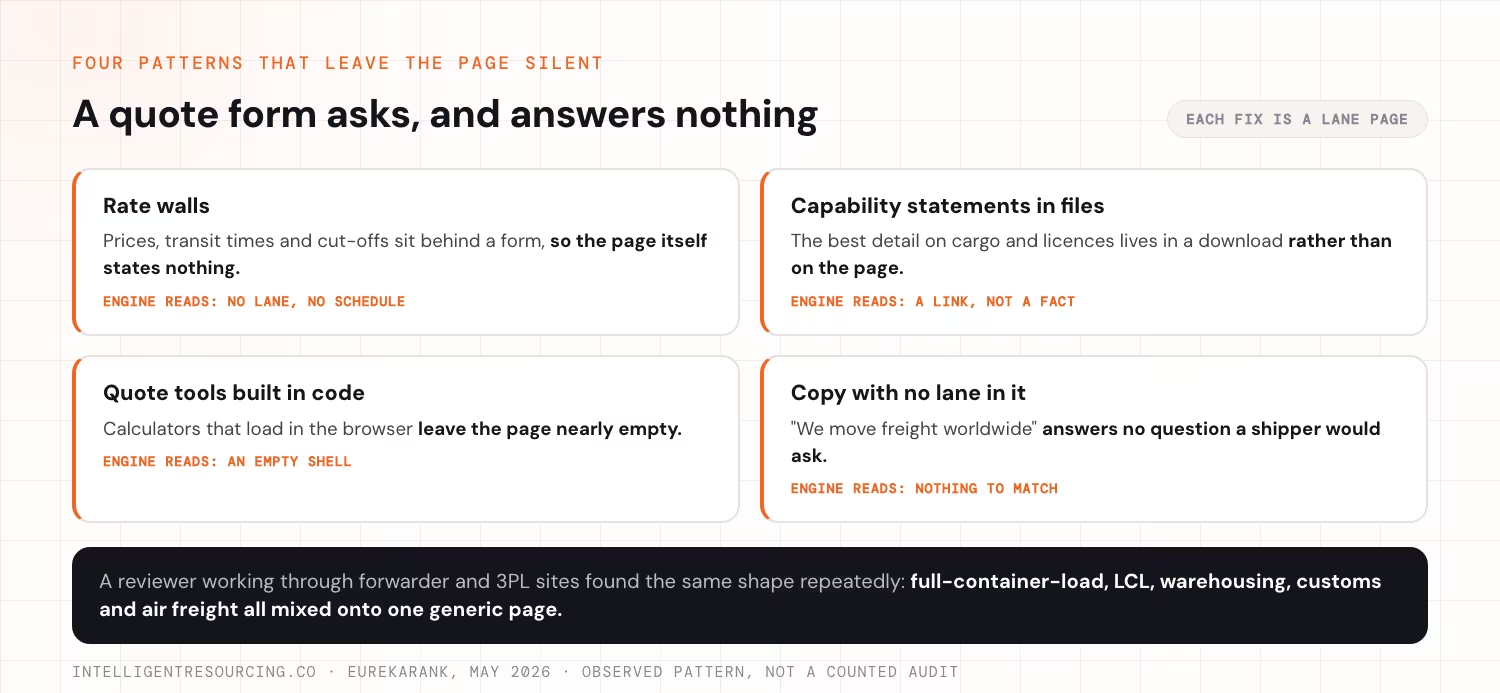
A quote-request page asks the shipper for details and gives the engine nothing back. Eurekarank, a search agency, published a review in May 2026 after working through multiple freight forwarder and third-party logistics (3PL) sites across Latin America, and reported that the same problems came up constantly. First on its list: everything on a single page, with full-container-load, LCL, warehousing, customs, air freight and ground transport all mixed together, so engines had no way to tell which service leads. It is a practitioner's pattern rather than a counted audit, and it matches what the structural problem looks like from the outside.
4 patterns keep an engine from quoting a forwarder:
- Rate walls. Prices, transit times and cut-offs sit behind a form, so the page states nothing.
- Capability statements in files. The best detail on cargo and licences lives in a download rather than on the page.
- Quote tools built in code. Calculators that load in the browser leave the page nearly empty.
- Copy with no lane in it. "We move freight worldwide" answers no question a shipper would ask.
Each fix is a lane page. It states 5 things plainly:
| What the page states | Example for 1 lane |
|---|---|
| Corridor | Ho Chi Minh City to Melbourne |
| Modes | LCL and full-container-load sea freight |
| Typical cargo | Furniture and homewares |
| Transit time | Port-to-door days, given as a range |
| Customs | Who clears the goods, and under which licence |
See how to structure pages for citation for the layout engines lift most easily.
How Do You Test Your Own Lanes?
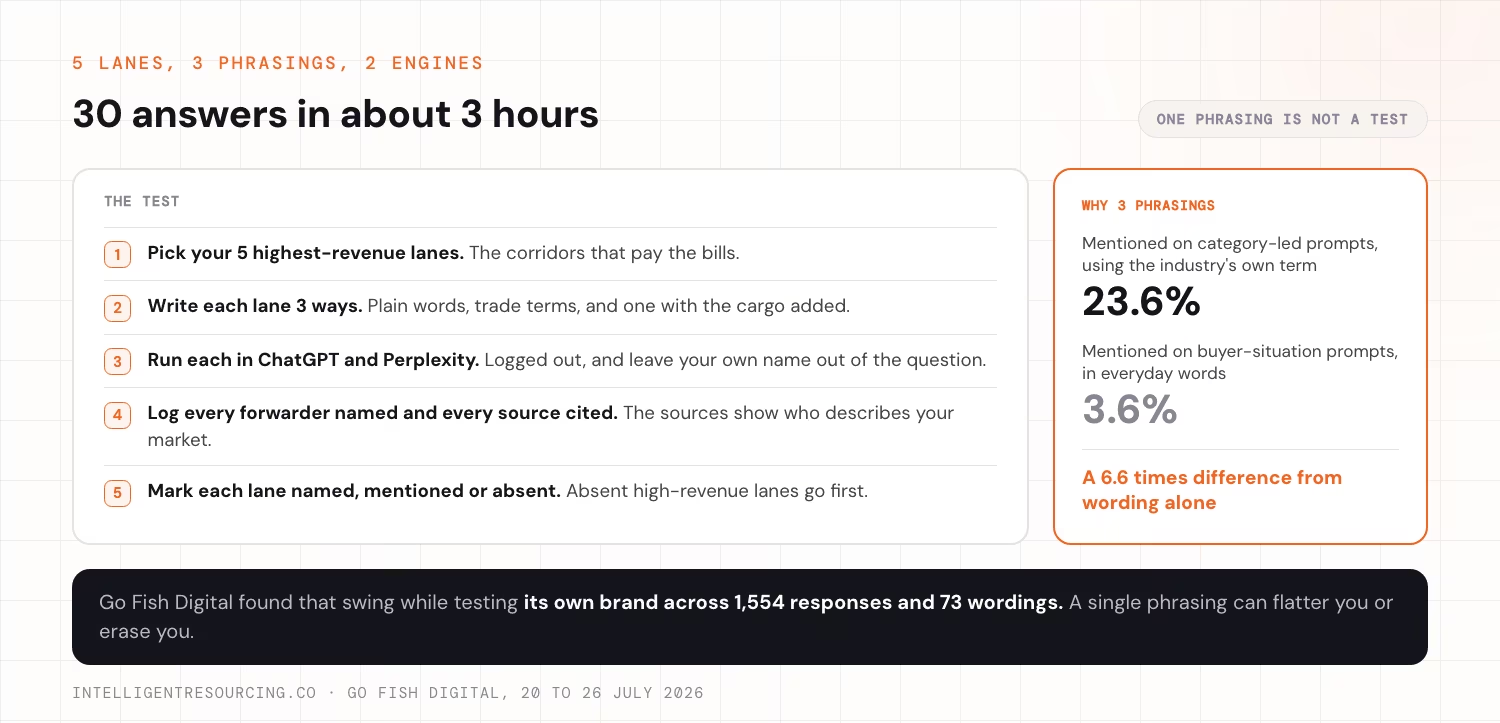
A forwarder can test its own visibility in one afternoon with 5 lanes, 3 phrasings each and 2 engines.
Phrasing is not a detail. Go Fish Digital ran 1,554 AI responses across 73 prompt wordings between 20 and 26 July 2026, testing its own brand. It was mentioned in 23.6% of category-led prompts, where the question used the industry's own term, but only 3.6% of full buyer-situation prompts, where someone described their problem in everyday words. That is a 6.6 times difference from wording alone. One phrasing is not a test.
- Pick your 5 highest-revenue lanes. Use the corridors that pay the bills.
- Write each lane 3 ways. Use plain words, trade terms, and a version with the cargo added.
- Run each prompt in ChatGPT and Perplexity. Stay logged out and leave your firm's name out of the question.
- Log every forwarder named and every source cited. The sources show who describes your market.
- Mark each lane as named, mentioned or absent. Absent high-revenue lanes go first.
That gives you 30 answers in about 3 hours. A fuller citation gap audit adds more engines and a scoring method.
What Does Getting Named Take?
Getting named on your own lanes takes 1 page per lane and cargo type. Each page gives direct answers, backed by proof an engine can check elsewhere.
Proof off your own site matters too. Ahrefs studied 75,000 brands in May 2025 and found branded web mentions had the strongest link to Google AI Overview visibility, at a correlation of 0.664, well ahead of backlinks at 0.218. For a forwarder, that means trade press, association listings and customer case studies, not a link-building programme.
Intelligent Resourcing maps the questions shippers ask and builds those answer pages. Each month, it tracks which of ChatGPT, Gemini and Google AI Overviews name your firm.
Start with the lanes that failed your test. The method sits in how generative engine optimisation works. It treats each corridor as its own answer to earn.
Content Creation
Run the 5-lane test with us, and see which corridors name your firm and which name someone else.
FAQs
Do freight forwarders need AI visibility if most work comes from referrals?
Yes, because referrals now get checked. A shipper who hears your name from a peer can ask ChatGPT to compare you with 2 or 3 others. If the engine cannot describe your lanes, a rival with clearer pages joins the shortlist.
Why does ChatGPT name global forwarders instead of local ones?
ChatGPT names global forwarders on generic questions because their names appear across press, trade media and ranking lists. On a specific lane or cargo type, that edge shrinks. A local forwarder with a clear corridor page then gets a real chance.
Can a small forwarder be named ahead of a global network?
A small forwarder can be named ahead of a global network on a narrow question. Lane, cargo and compliance prompts reward the firm whose page answers the exact need. Start there, and leave the generic prompt for later.
Does a customs broker face the same problem as a forwarder?
A customs broker faces the same problem in a different form. Shippers ask about duty, free trade agreement claims and specific goods. A broker whose site names those goods, agreements and its licence gives an engine something to cite.
How often should a forwarder re-test its lanes?
A forwarder should re-test its top lanes every month. AI answers shift as engines update and competitors publish new pages. A monthly check of the same 15 prompts shows which new pages are picked up and which lanes have slipped.