

Why Does the Same Plan Work Differently in Each Industry?
A generative engine optimisation plan works differently in each industry. That is because AI tools pull answers from different kinds of sites in each field. Tinuiti and Profound tracked 7 AI tools across 9 buying categories in early 2026. The basics are the same for software as a service and for freight, but the rivals are not.
The same pattern explains why manufacturers go missing while their distributors get named.
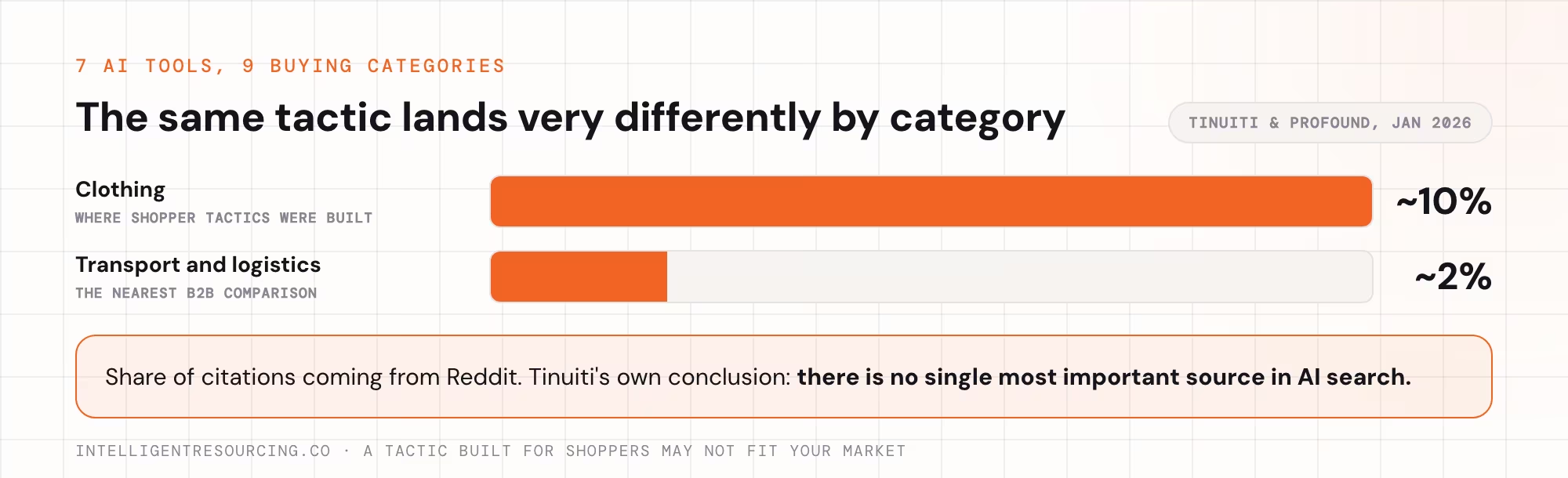
Tinuiti found no single most important source across its categories, and Reddit's share in January 2026 shows how much they differ:
- Clothing: about 10% of AI citations came from Reddit.
- Transport and logistics: about 2% came from Reddit.
- The lesson for B2B firms: a tactic built for shoppers may not fit your market.
What Did We Find When We Tested 6 B2B Niches?
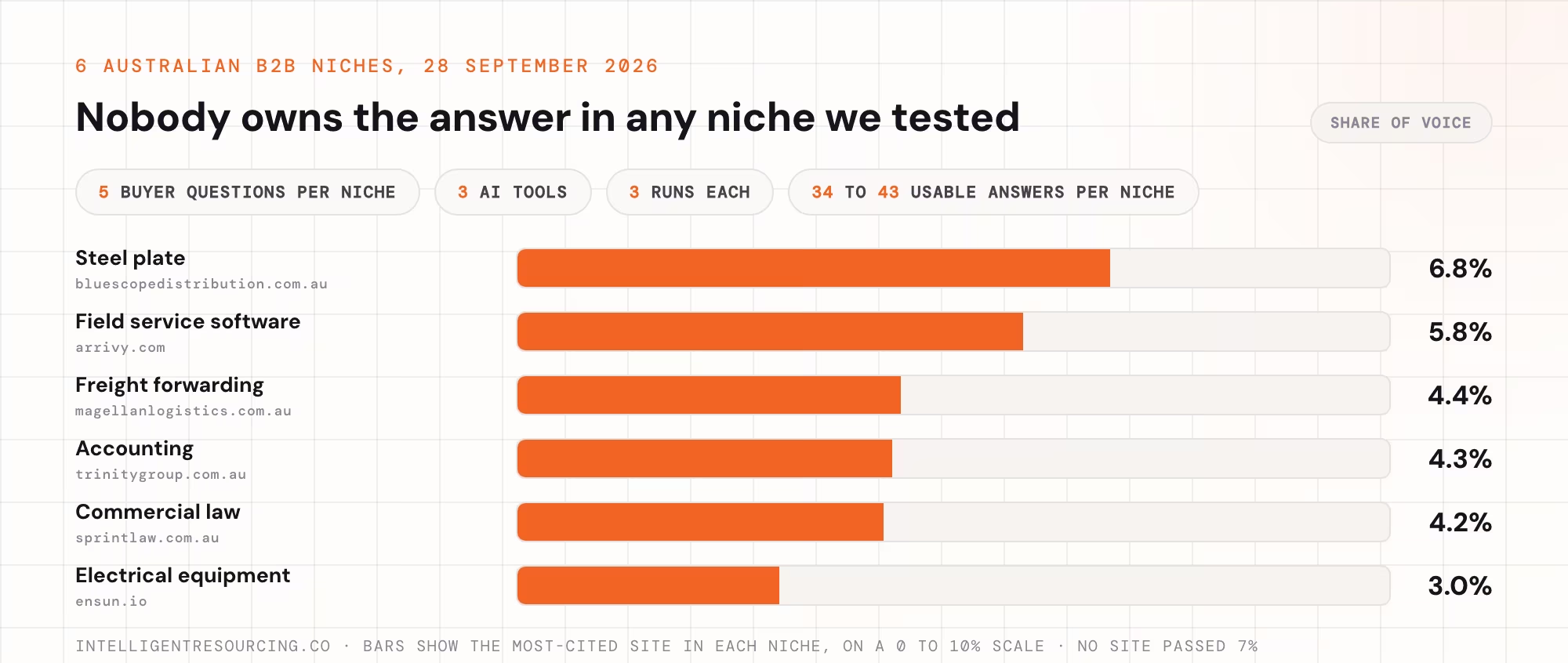
AI answers were spread across many sites in every niche. But the type of site that got cited most changed from niche to niche. On 28 September 2026, we used our own system to ask 5 buyer questions per niche. Each question ran 3 times on ChatGPT, Gemini and Google AI Overviews, for Australian buyers.
That gave 34 to 43 usable answers per niche, because Google AI Overviews did not return an answer on some runs. We then measured share of voice. That is each site's share of all the sites named or cited in those answers.
| Niche | Most-cited site | Top site's share | Top 3 sites' share |
|---|---|---|---|
| Steel plate | bluescopedistribution.com.au | 6.8% | 18.2% |
| Field service software | arrivy.com | 5.8% | 14.1% |
| Freight forwarding | magellanlogistics.com.au | 4.4% | 10.6% |
| Accounting | trinitygroup.com.au | 4.3% | 10.3% |
| Commercial law | sprintlaw.com.au | 4.2% | 11.9% |
| Electrical equipment | ensun.io | 3.0% | 8.6% |
No site took a large share of the answers in any niche. Being a big brand did not mean a firm got named. That means generative engine optimisation can work in each of these fields. You just need to know which kind of site you are competing with.
Other research found the same thing. Yext looked at 6.8 million AI citations between July and August 2025. Listings made up 52.6% of healthcare citations, while first-party websites made up 47.6% in retail. Its industries sold to shoppers, but the split still shows that AI tools cite different kinds of sources in each field.
Who Does B2B SaaS Compete With in AI Answers?
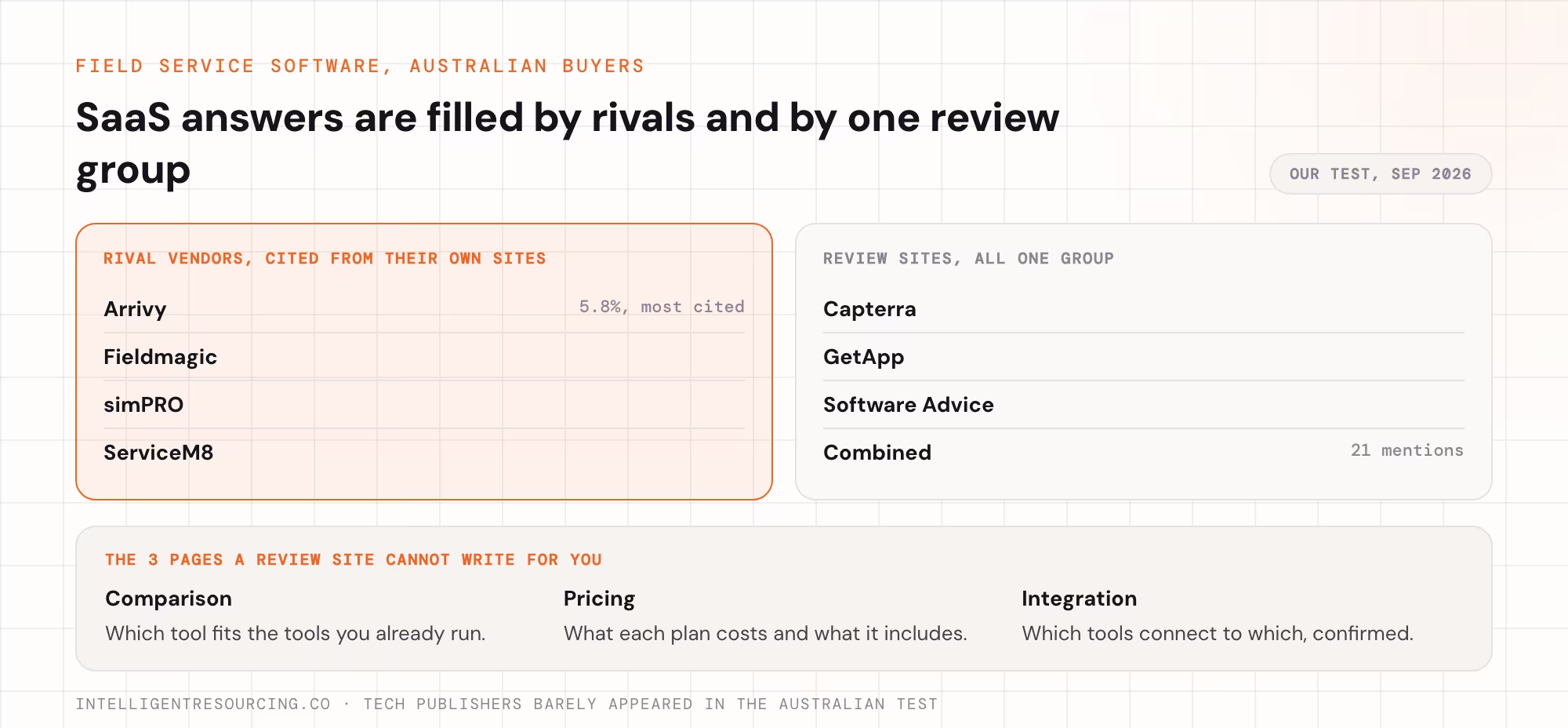
In our field service software test, B2B SaaS competed mostly with other software firms and with review sites. Rival vendors such as Arrivy, Fieldmagic, simPRO and ServiceM8 were cited from their own sites. Capterra, GetApp and Software Advice, which all belong to the same review group, added 21 mentions between them.
Tech publishers barely appeared in our Australian test. That is not what Goodie found in its study of 58.6 million citations. There, TechRadar held 8.86% of citations for customer relationship management (CRM) and sales software.
Our post on why B2B SaaS firms go missing from AI search cites a Foundation and AirOps study. In it, G2 dropped out of the top 15 sources on category questions. In our Australian test, review sites did show up on those questions, so the rivals can change by market and niche.
SaaS firms that do well tend to publish 3 page types that review sites cannot write for them:
- Comparison pages that answer "which tool fits with the tools I already use".
- Pricing pages that say what each plan costs and what it includes.
- Integration pages that confirm which tools connect to which.
Our guide to GEO for B2B SaaS covers which comparison and pricing fixes to make first.
Who Do Manufacturing, Freight and Professional Services Compete With?
Manufacturing, freight and professional services each faced a different set of rivals in our test. Even inside manufacturing, the rivals changed from 1 niche to the next.
- Steel plate: distributors and steel processors such as BlueScope Distribution and Calibre Steel led. Their top 3 sites took 18.2%, more than in any other niche.
- Electrical equipment: supplier directories, market research sites and local makers and suppliers shared the answers.
- Freight forwarding: local forwarders' own sites led, while government sites such as the Australian Border Force answered the customs questions.
- Accounting: small firms' own sites, software vendors such as Xero and CPA Australia filled the answers.
- Commercial law: online legal firms such as Sprintlaw and LegalVision led. Lawyers Weekly and the ranking sites Legal500 and Chambers were cited almost as often.
Walker Sands also found that professional services brands struggle to get cited. Its benchmark of 828 enterprise B2B companies from April 2026 ranked them last of 14 technology industries, with publishers and other outside sources cited in their place.
An AI tool can also name one firm while citing pages from others. In our freight test, ChatGPT and Gemini named Mainfreight, a global network, in 5 of 6 runs on the best forwarders. Yet the most-cited pages came from smaller local firms.
Our guide to GEO for professional services firms sets out the steps for consultancies and other advisory firms.
How Can You Check Who You Compete With This Month?
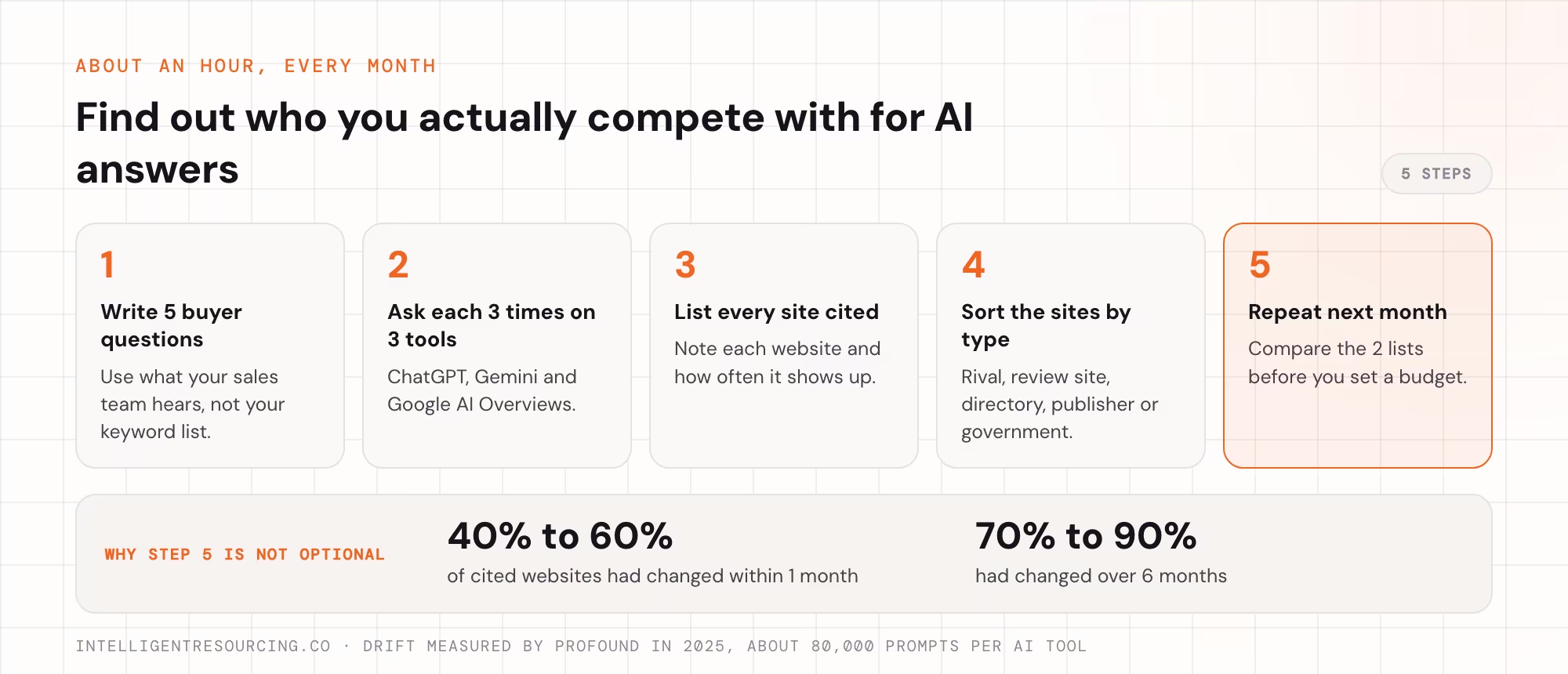
You can check who you compete with in about an hour, using 5 buyer questions and 3 AI tools. Ask each question 3 times on each tool, then list every site that gets named or cited. The sites that keep coming up are the ones you compete with for AI answers, even if they are not your usual rivals.
- Write 5 buyer questions. Use the questions your sales team hears, rather than your keyword list.
- Ask each question 3 times on 3 AI tools. ChatGPT, Gemini and Google AI Overviews cover the main AI tools buyers use.
- List every site that gets cited. Note each website and how often it shows up.
- Sort the sites by type. Mark each one as a rival, a review site, a directory, a publisher or a government site.
- Repeat next month. Compare the 2 lists before you set a budget.
The type that shows up most tells you where to start. It also tells you what kind of content built for AI citation to write.
The repeat step matters because sources change fast. Profound measured how fast cited sources change in 2025, using about 80,000 prompts for each AI tool:
- Within 1 month, 40% to 60% of the cited websites had changed.
- Over 6 months, 70% to 90% had changed.
Our own test ran on a single day, so our table shows one moment only. Your monthly checks will give you a clearer view.
Where Should Your Business Start?
Start with the type of site that fills most of your niche's answers, because each type needs a different first step. Here is where to start for each type we found:
- Rival vendors or firms: publish clearer comparison, cost and fit pages than they do.
- Review sites and directories: claim and complete your profiles, then ask clients for reviews.
- Distributors: publish the product, price and stock facts that distributors copy.
- Publishers and rankings: give editors facts and a named expert they can quote.
- Government sites: answer the buying questions those sites leave out, and link to their rules.
Buyers are already using AI to build their shortlists. G2's July 2026 Buyer Behavior Report found 82% of software buyers had sourced recommendations from an AI chatbot in the past 24 months.
A plan built for another industry will aim at the wrong rivals, so check your own niche before you spend. Then see how answer engine optimisation works in practice.
Content Creation
Run the 5 question check on your own buyer questions, then see which sites already hold the answers you want to win.
FAQs
Is GEO for SaaS harder than GEO for manufacturers?
It depends on the niche. In our test, SaaS firms competed with rival vendors and review sites that already publish lots of comparison content. Steel plate makers competed with their own distributors, so they needed to publish clear product facts on their own sites.
Why do directories and review sites get cited instead of my firm?
AI tools cite the pages that answer a question most directly. Directories and review sites list many firms side by side, which suits "who is best" questions. A firm gets cited by answering the cost and fit questions those sites leave open.
Does a professional services firm need a different GEO plan from a SaaS company?
Yes, mostly in who it competes with. A SaaS firm faces rival vendors and review sites, so it starts with comparison and pricing pages. An accounting or law firm faces small rivals' sites, online firms and ranking sites. So it starts with cost pages and directory entries.
How many questions do I need to check who I compete with?
Five buyer questions, asked 3 times on 3 AI tools, give you about 45 answers. That is enough for a first check. Ask the same set again a month later, because AI citations change fast and 1 check can mislead you.
Do the rivals stay the same over time?
No. Profound found that 40% to 60% of cited websites changed within a month. A site that gets cited often today may not be cited next quarter, so repeat the check each month.