

What Does It Mean to Be "Missing" From an AI Search Answer?
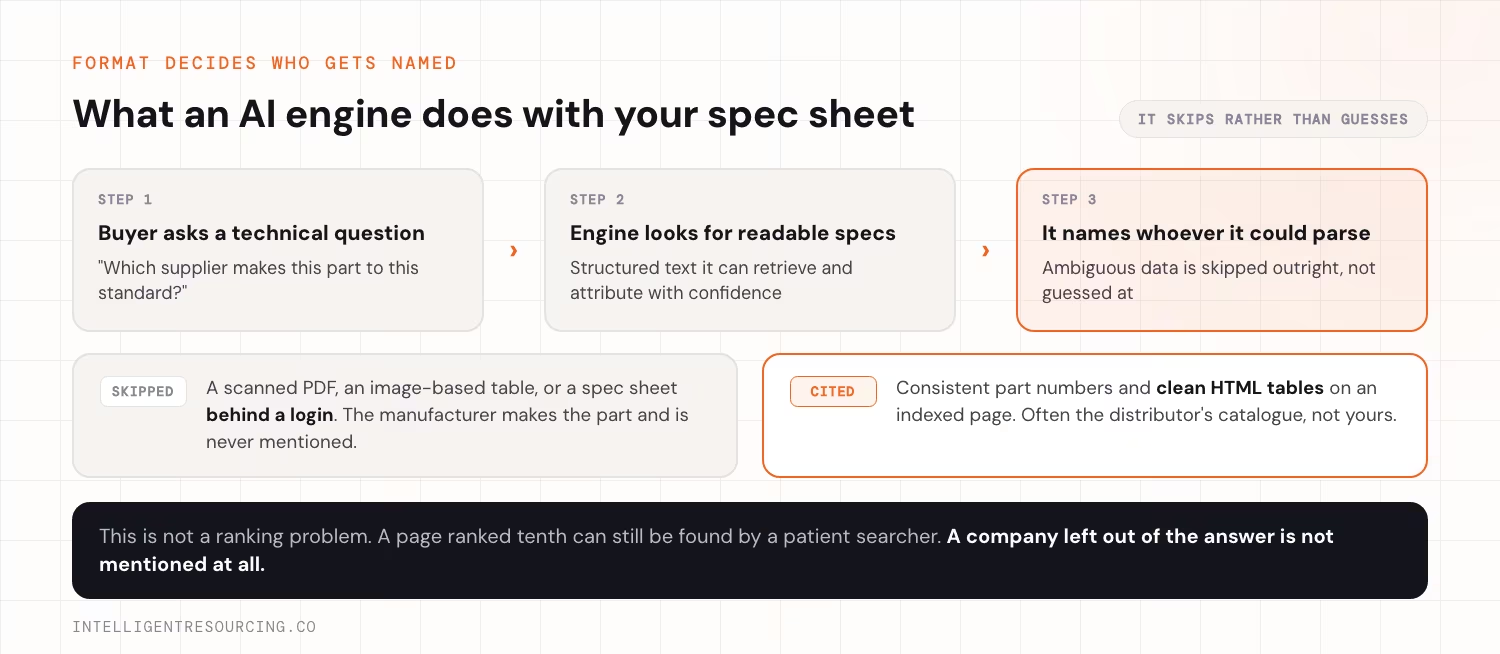
Being missing means an AI engine answered a buyer's question and did not name your company, even though you make exactly what they asked for. The buyer never sees a ranked list to scroll past. They see one answer. It names only a small number of sources.
This is a different kind of absence to a low Google ranking:
- A page ranked tenth can still be found by a patient searcher.
- A company left out of an AI answer is not ranked low. It is not mentioned at all, in the one place the buyer is now looking.
A Hackett Group study of procurement executives found 64% expect generative AI to fundamentally change how their teams operate within the next 5 years. Piloting more than doubled in a year, from 23% of procurement teams to 49%. Procurement is moving fast toward using these tools to build shortlists before a request ever reaches a manager. A company absent from that shortlist does not get a second look.
Understanding the difference between answer engine optimisation (AEO), generative engine optimisation (GEO) and traditional search engine optimisation makes it easier to see why visibility in AI-generated answers needs a different approach to conventional search work.
Why Are Manufacturers Being Left Out More Than Other Industries?
Manufacturers are being left out more than most sectors because their critical content sits in formats an AI engine cannot parse. A scanned PDF, an image-based table or a spec sheet locked behind a login is invisible to a system built to read structured text.
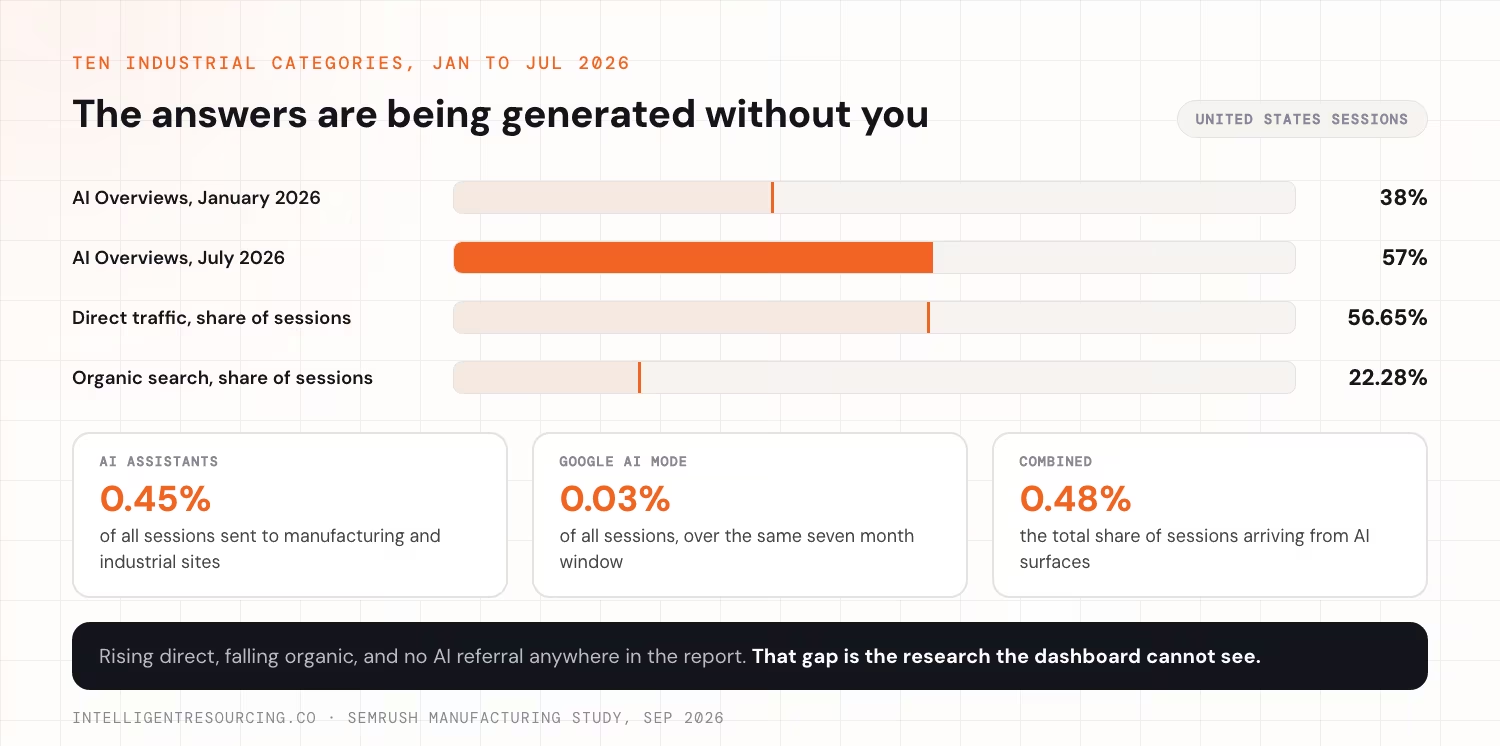
The scale of this gap is now measurable. A Semrush study published in September 2026, covered by PPC Land, tracked ten industrial categories in the United States from January to July 2026. AI Overviews grew from 38% of search volume to 57% across that keyword set. Over the same window, AI assistants at 0.45% and Google's AI Mode at 0.03% sent a combined 0.48% of all sessions to manufacturing and industrial sites.
That is not a traffic problem alone. It is a sourcing problem, since the AI answer is often built before a request for quote (RFQ) ever reaches a human.
Why Do Distributors and Marketplaces Get Cited Instead of the Manufacturer?
Distributors and marketplaces often get cited instead of the manufacturer because their catalogues are simply easier for an AI engine to read. A distributor site with consistent part numbers, clean tables and thousands of indexed listings gives an engine more to retrieve than a manufacturer's own PDF-heavy product page.
This is not a reflection of who actually makes the part. It is a reflection of whose data an engine could parse without guessing. An engine skips ambiguous data entirely rather than risk citing something wrong.
What tips the balance toward the distributor:
- Consistent part numbers the engine can match across queries
- Clean HTML tables instead of scanned or image-based specs
- Thousands of indexed listings giving the engine more surface area to retrieve from
The fix belongs to the manufacturer, not the distributor. Publish the specification once, in structured form, on your own site, and that becomes the version an engine has the least reason to second-guess.
Why Doesn't a Strong Reputation or Distributor Network Protect You?
A strong reputation does not protect you because AI engines do not read relationships. Decades of trust built through trade shows, referrals and a loyal distributor network carry no weight here. A system that only reads what is written and cited online cannot see any of it.
This is the exact failure mode of what some in the industry call the "whisper economy": manufacturers whose business runs on relationships rather than published content. That model worked when a rep's phone call could win the order. It does not survive a buyer who opens ChatGPT before they open their contacts list.
The uncomfortable part is that reputation and AI visibility are now separate systems entirely. A well-regarded supplier with thin digital content can lose to a less-known rival with better documentation. The documentation wins.
Why Don't Website Analytics Show This Problem Happening?
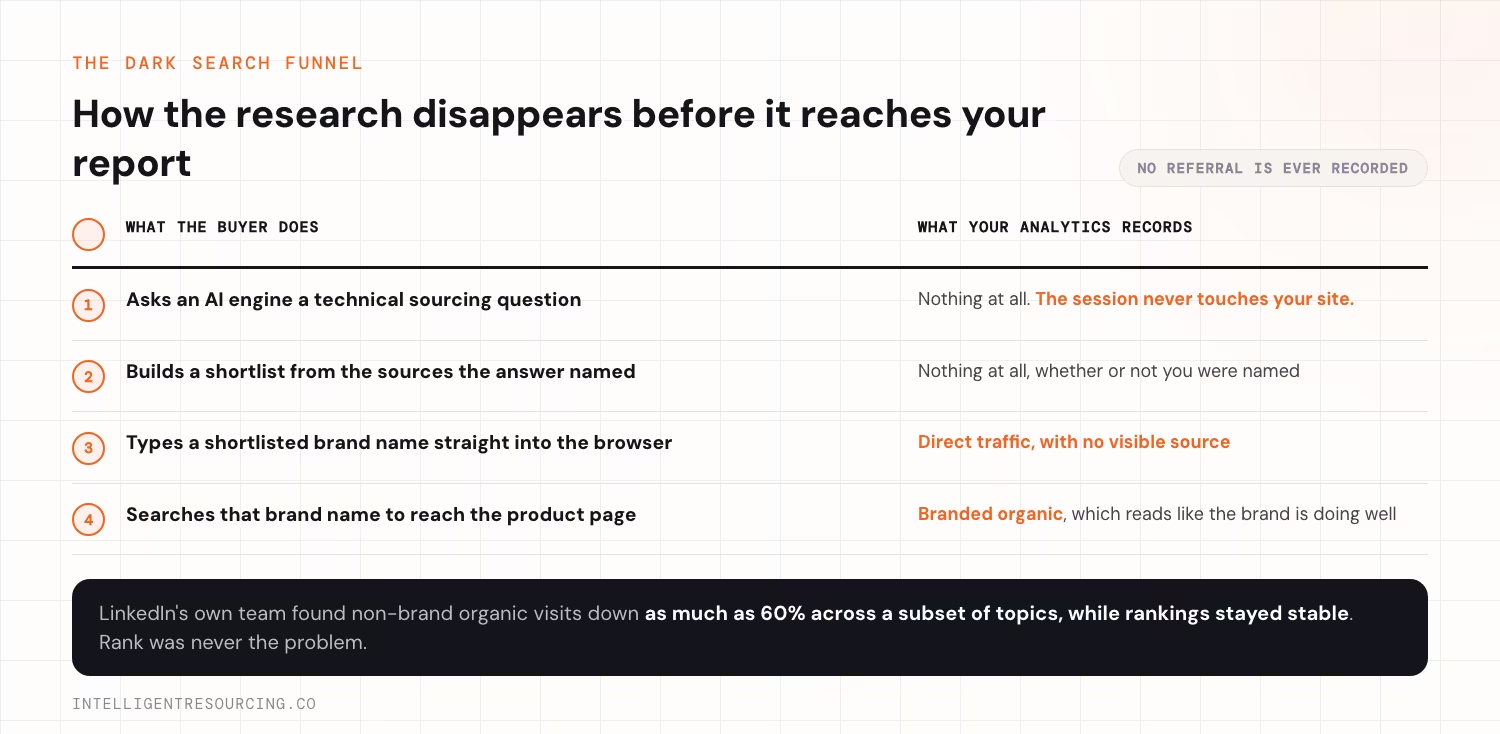
Website analytics rarely show this problem. AI-influenced research shows up as direct or branded traffic, not as a referral link. A buyer who builds a shortlist inside an AI tool often finishes by typing a brand name straight into the browser. Analytics records that as direct traffic, with no visible source.
This effect has a name in the data: the "dark SEO funnel". The same Semrush manufacturing study found direct traffic at 56.65% of sessions and organic search at just 22.28%, with direct share rising as organic share fell, and no AI referral ever appearing in the reports.
The AI research happened. The dashboard just cannot see it.
This pattern is not unique to manufacturing. LinkedIn's own marketing team published internal data in early 2026, reported by Search Engine Land: across a subset of topics, non-brand organic visits fell by as much as 60% even while rankings stayed stable.
Rank was never the problem. Being the source an engine chose to cite was.
What Happens to a Business That Stays Invisible in AI Search?
A business that stays invisible in AI search loses deals it never gets the chance to bid on. The shortlist forms before the RFQ lands. A supplier the AI never names is not on it, no matter how strong the product or the price would have been.
Over time this compounds, because AI engines need machine-readable evidence they can retrieve and cite. Our guide to GEO for manufacturers covers how industrial content is ranked and cited, including what to prioritise when critical specifications still live only in PDFs.
Closing the Awareness Gap
The manufacturers losing the most ground are not the ones with weak products. They are the ones whose best technical data an AI engine simply cannot read. Fixing that starts with an honest audit of where your specifications actually live today.
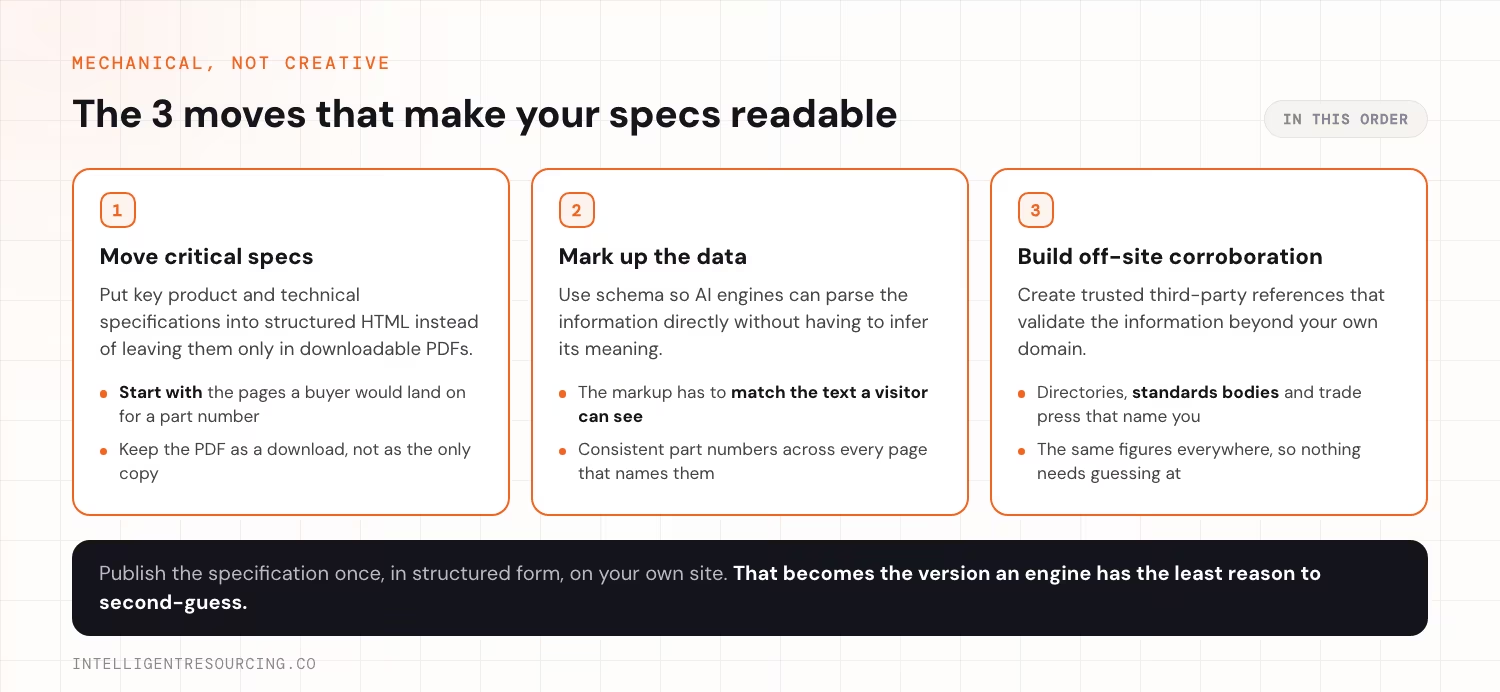
Once you know the scale of the gap, the fix is mechanical, not creative:
| Action | What to do |
|---|---|
| Move critical specs | Put key product and technical specifications into structured HTML instead of leaving them only in downloadable PDFs. |
| Mark up the data | Use schema so AI engines can parse the information directly without having to infer its meaning. |
| Build off-site corroboration | Create trusted third-party references that validate the information beyond your own domain. |
If your product information is buried in PDFs, unstructured pages or unsupported by third-party evidence, AI engines may be missing the details buyers rely on when comparing suppliers. A free visibility audit shows how your key product pages appear to AI engines, where citation gaps exist, and which changes would make your technical content easier to retrieve, interpret and reference.
Content Creation
Find out how your key product pages appear to an AI engine, where the citation gaps are, and which changes make your technical content easier to retrieve.
FAQs
Why are manufacturers missing from ChatGPT and AI search results?
Manufacturers are missing because their critical product data, specifications, certifications and application details, often sits in PDFs and image-based catalogues that AI engines cannot parse reliably. An engine skips ambiguous data rather than risk citing it incorrectly, so the content is left out of the answer entirely.
Does a good industry reputation help a manufacturer show up in AI search?
No. AI engines only read what is written, structured and published online. A manufacturer with strong trade relationships and thin digital content can be outcited by a less established competitor whose specifications are published in clean, structured form.
How do I know if my company is missing from AI search answers?
Ask an AI engine the kind of technical question a buyer would ask about your product category and see who it names. Standard web analytics will not reliably show this gap, since AI-influenced research often appears as direct or branded traffic rather than a clear referral.
Why do distributor or marketplace pages get cited instead of the manufacturer's own site?
Distributor and marketplace pages are frequently cited instead because their catalogues are cleaner and more consistently structured than many manufacturers' own product pages. Publishing your own specifications in structured form on your own site is the direct fix.
What is the first step to fixing AI search invisibility for a manufacturer?
Audit where your critical specifications currently live and whether an AI engine can actually read them. Moving specs from PDF-only downloads into structured HTML on the product page is usually the highest-value first move, before any broader content programme.