
Why Does ChatGPT Know Your Brand but Skip It in Category Answers?
A founder at a business-to-business (B2B) software as a service (SaaS) company asks ChatGPT for the best tools in their category. ChatGPT returns 3 competitors and leaves their product out, yet describes it well when asked by name. That gap in artificial intelligence (AI) search has 4 common causes, and the rules for getting cited by AI sit underneath all 4. Each one needs a different fix in your content strategy for AI answers.
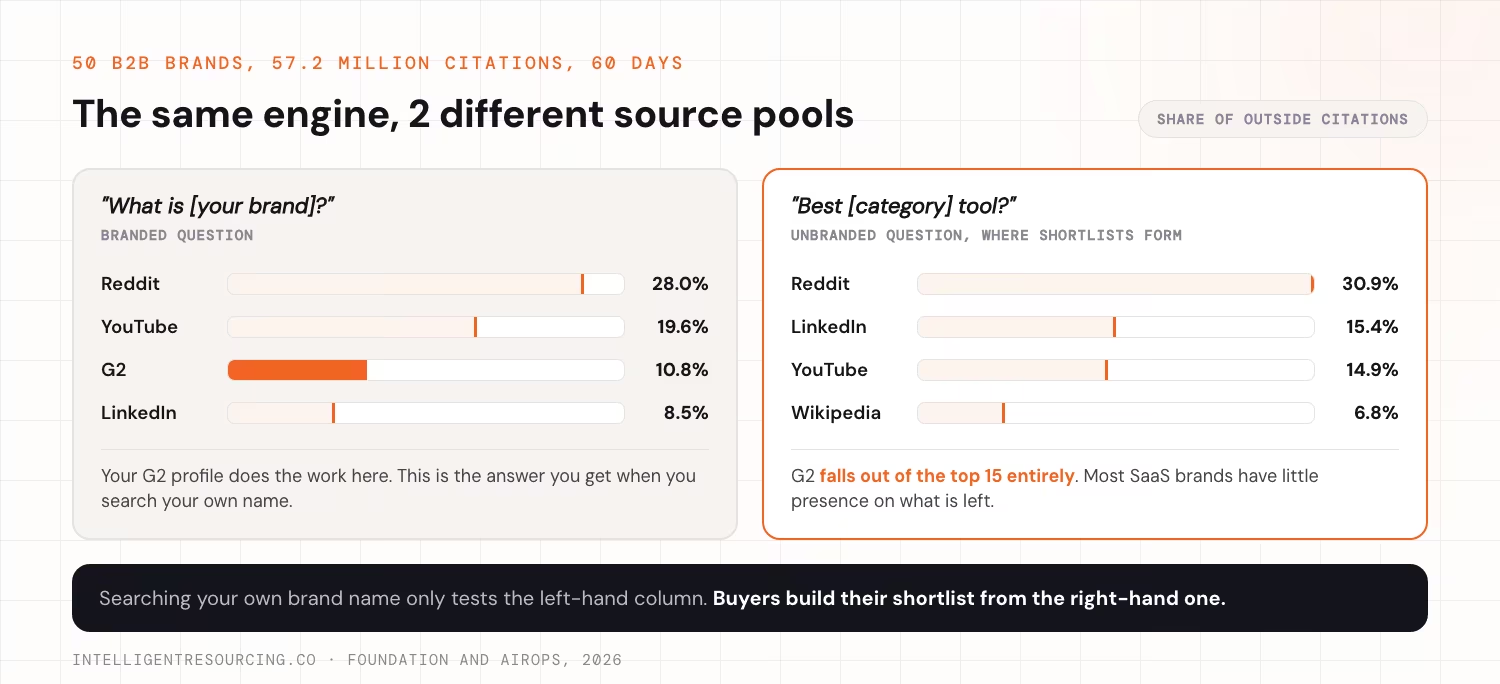
ChatGPT picks different sources for different kinds of questions. When a buyer types your product name, review sites and your own pages shape the answer. When the buyer asks for the best tool in your category, the engine leans on forums, LinkedIn and Wikipedia. Most SaaS brands have little presence there.
A Foundation and AirOps study of SaaS citation patterns tracked 50 B2B brands across 7 verticals and 57.2 million citations over 60 days. It found the source mix changes sharply by question type.
| Question type | Top outside sources |
|---|---|
| Branded, "what is [brand]" | Reddit 28.0%, YouTube 19.6%, G2 10.8%, LinkedIn 8.5% |
| Unbranded, "best [category] tool" | Reddit 30.9%, LinkedIn 15.4%, YouTube 14.9%, Wikipedia 6.8%, with G2 outside the top 15 |
Searching your own brand name only tests the branded answer, where your G2 profile does the work. Buyers build their shortlist from the unbranded one. Our guide to how SaaS comparison pages earn citations covers the pages that compete there, including why interactive pricing calculators and other JavaScript-rendered content often go unseen by AI crawlers entirely.
Is Domain Authority the Reason AI Engines Overlook SaaS Sites?
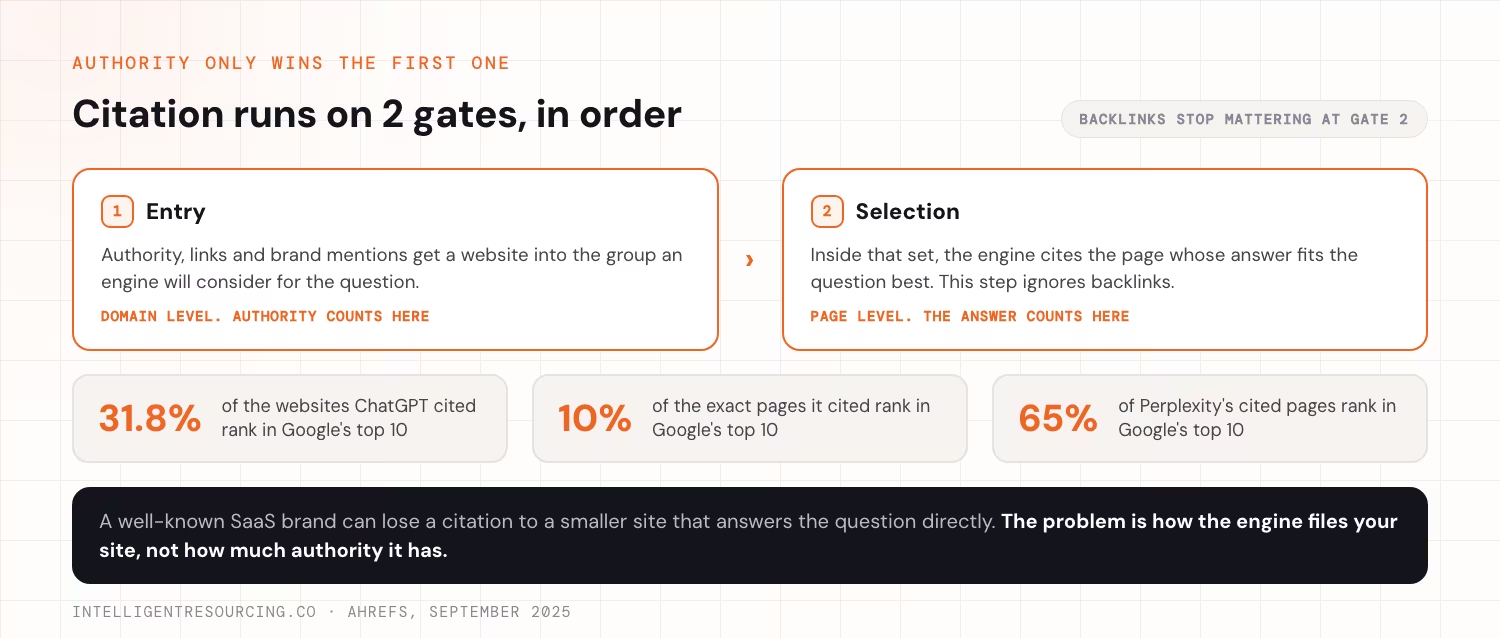
Mostly not, because authority only decides whether a site gets considered for a question. The engine then cites the page that answers that exact question best, and that step ignores backlinks. Ahrefs found ChatGPT cites top-ranking websites about 3 times more often than top-ranking pages.
Getting cited runs on 2 gates, in order:
- Entry. Authority, links and brand mentions get a website into the group an engine considers.
- Selection. Inside that set, the engine cites the page whose answer fits the question best.
Ahrefs' September 2025 study of short searches, run across about 3,311 keywords, found 31.8% of the websites ChatGPT cited ranked in Google's top 10. Only 10% of the exact pages it cited did. Perplexity was different, with 65% of its cited pages in Google's top 10.
Authority still matters at the first gate, because a new website with few links may never get considered. It cannot win the second gate, though. A well-known SaaS brand can lose a citation to a smaller site that answers the question directly. So the real problem is how the engine files your site, more than how much authority it has.
That second gate is where content built for AI answers does its work.
Why Do SaaS Product Pages Miss the Questions Buyers Actually Ask?
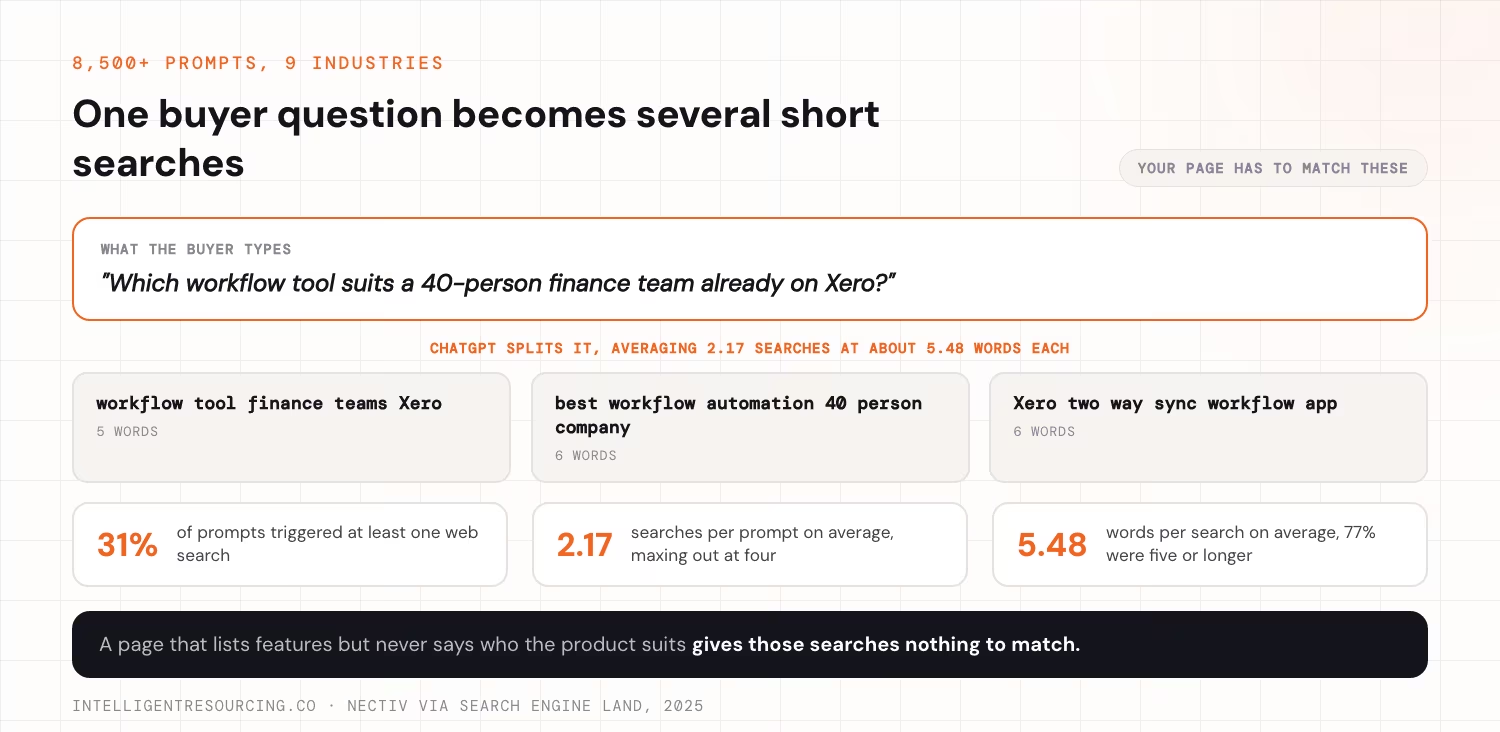
Product pages describe features in the vendor's words. Buyers ask AI engines full questions that include team size, current tools and budget. ChatGPT then splits each question into shorter searches. If a page lists features but never says who the product suits, those searches find nothing to match.
Search Engine Land reported a 2025 Nectiv study of more than 8,500 prompts across 9 industries. ChatGPT searched the web for 31% of them, and when it did, it ran an average of 2.17 searches per prompt, each about 5.48 words long.
| What the product page says | What the buyer asks |
|---|---|
| "AI-powered workflow automation" | "Which workflow tool suits a 40-person finance team already on Xero?" |
| "Enterprise-grade security" | "Which project tool meets Australian privacy rules for health clinics?" |
| "Powerful integrations" | "Does this tool sync both ways with MYOB?" |
The fix is to collect real buyer questions, not keywords. Pull the exact phrasing from sales calls, demo notes and support tickets. Then answer it on the page in plain sentences.
Curious which engines name your competitors instead of you? We will run your first 10 prompts free, so you know before the next budget round. See where your brand stands.
How Can a SaaS Team Check Its Own AI Visibility This Month?
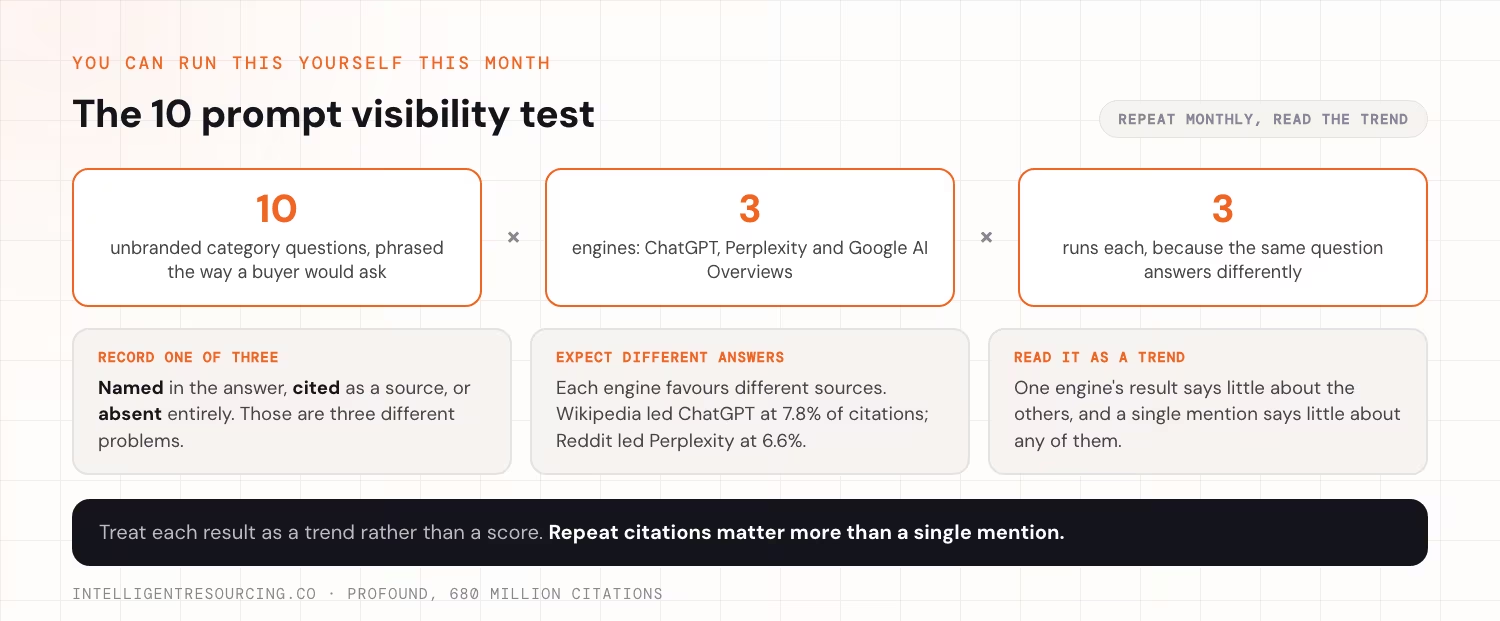
Run 10 unbranded category questions through ChatGPT, Perplexity and Google AI Overviews, 3 times each. Record whether your brand is named, cited as a source or absent, and repeat the test monthly. Each engine favours different sources, so one engine's result says little about the others.
Profound's analysis of 680 million citations covered August 2024 to June 2025. Wikipedia was ChatGPT's top source at 7.8% of citations, and Reddit led Perplexity at 6.6%. Match what you see to its likely cause:
| What you see | Likely cause | Where to fix |
|---|---|---|
| Named on brand questions, absent on category questions | Different sources for each question type | Category answers, plus presence on that engine's sources |
| Your page is a source, but competitors get named | The page covers the topic, not the question | Say who the product is for |
| Present in AI Overviews, absent in ChatGPT | Likely JavaScript rendering | Serve key pages as plain HTML |
| Absent everywhere, despite strong rankings | Pages do not match buyer questions | Pages built on buyer phrasing |
Treat each result as a trend rather than a score. The same question can get different answers each time, so repeat citations matter more than a single mention.
Content Creation
See where your brand stands on the category questions your buyers actually ask, before the next budget round.
FAQs
Why doesn't ChatGPT mention my SaaS product when buyers ask for the category?
ChatGPT picks different sources for category questions. It leans on forums, LinkedIn and Wikipedia, so a well-known SaaS brand can still miss the shortlist.
Does a high domain rating guarantee AI citations for a SaaS site?
No. Authority helps a site get considered. The engine then cites the page with the best answer, so a smaller site with a clearer answer can win.
Can ChatGPT read a SaaS website built as a single-page app?
Often not. ChatGPT's crawler reads only the raw page code and skips JavaScript, matching what Vercel's December 2024 crawler traffic study found across major AI crawlers. Check the page source for your headline text if you are unsure.
Do G2 reviews help a SaaS brand appear in AI answers?
They help on branded questions, where G2 had 10.8% of outside citations in the Foundation and AirOps study. On unbranded questions, G2 fell out of the top 15.
How often should a SaaS team test its AI visibility?
Monthly works for most teams. Ask the same 10 category questions 3 times each in ChatGPT, Perplexity and Google AI Overviews. Then track the trend.