

What Does Answer Engine Optimisation Mean Here?
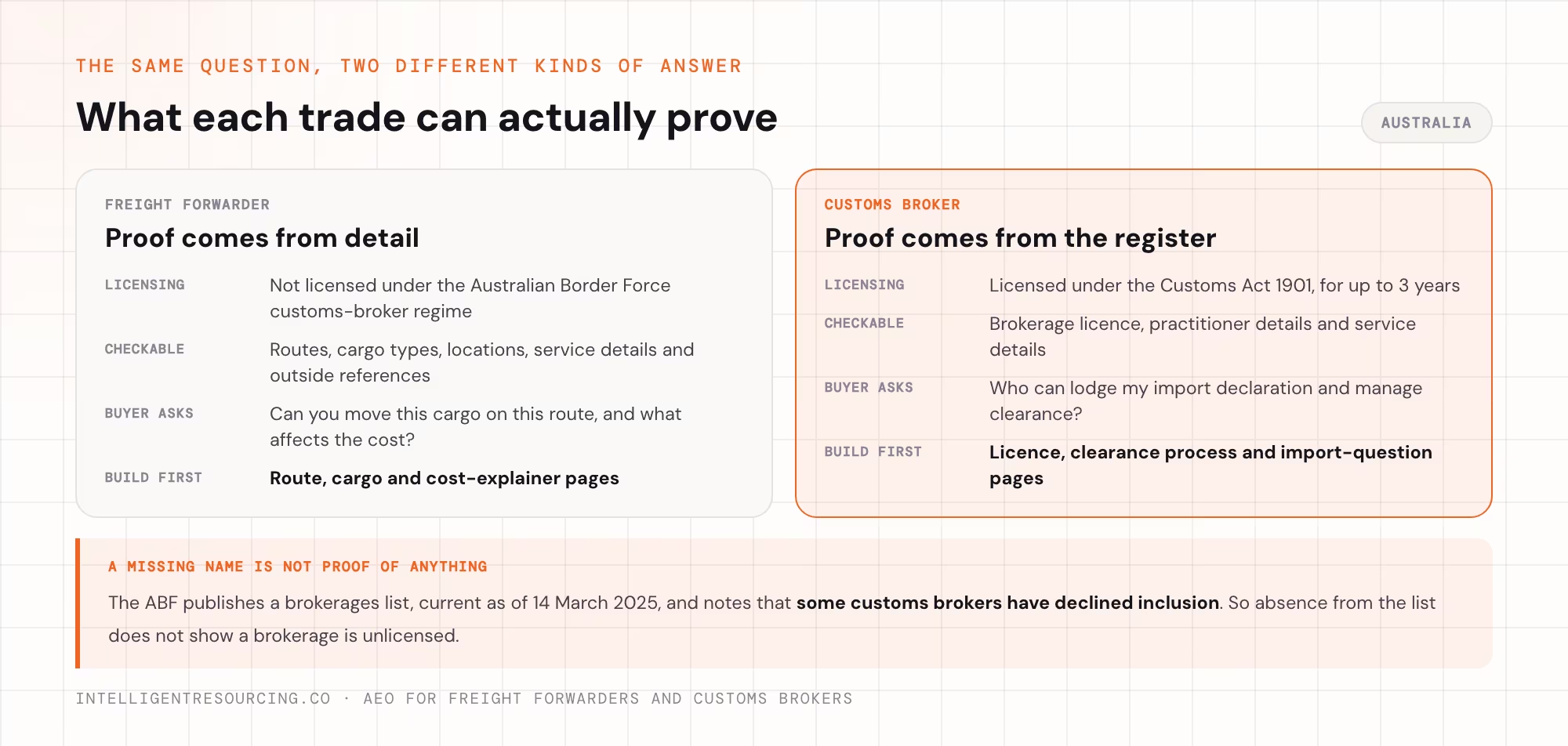
Answer engine optimisation (AEO) means improving what an AI tool can find when a shipper asks it about a freight or customs provider. The two groups need different proof. The Australian Border Force (ABF) licenses customs brokers. Freight forwarding does not fall under the same licence regime.
One naming note first. In customs, AEO already stands for Authorised Economic Operator, the status Australia grants through its Trusted Trader programme, as our checklist for freight websites explains. In this guide, AEO means answer engine optimisation. When an agency pitches "AEO" to a brokerage, ask which one it means.
The ABF recognises three types of customs broker licence: corporate, sole trader and nominee. Each applicant must be a fit and proper person with approved study and industry experience. A licence is granted for up to three years, and all licences expire on 30 June at three-year intervals.
That gives customs brokerages a public record anyone can check. Freight forwarders rely more on clear service details and outside proof to show what they handle.
What Should a Customs Broker Publish to Be Named?
A customs broker should make its business name, licence status, clearance process and common import details easy to check.
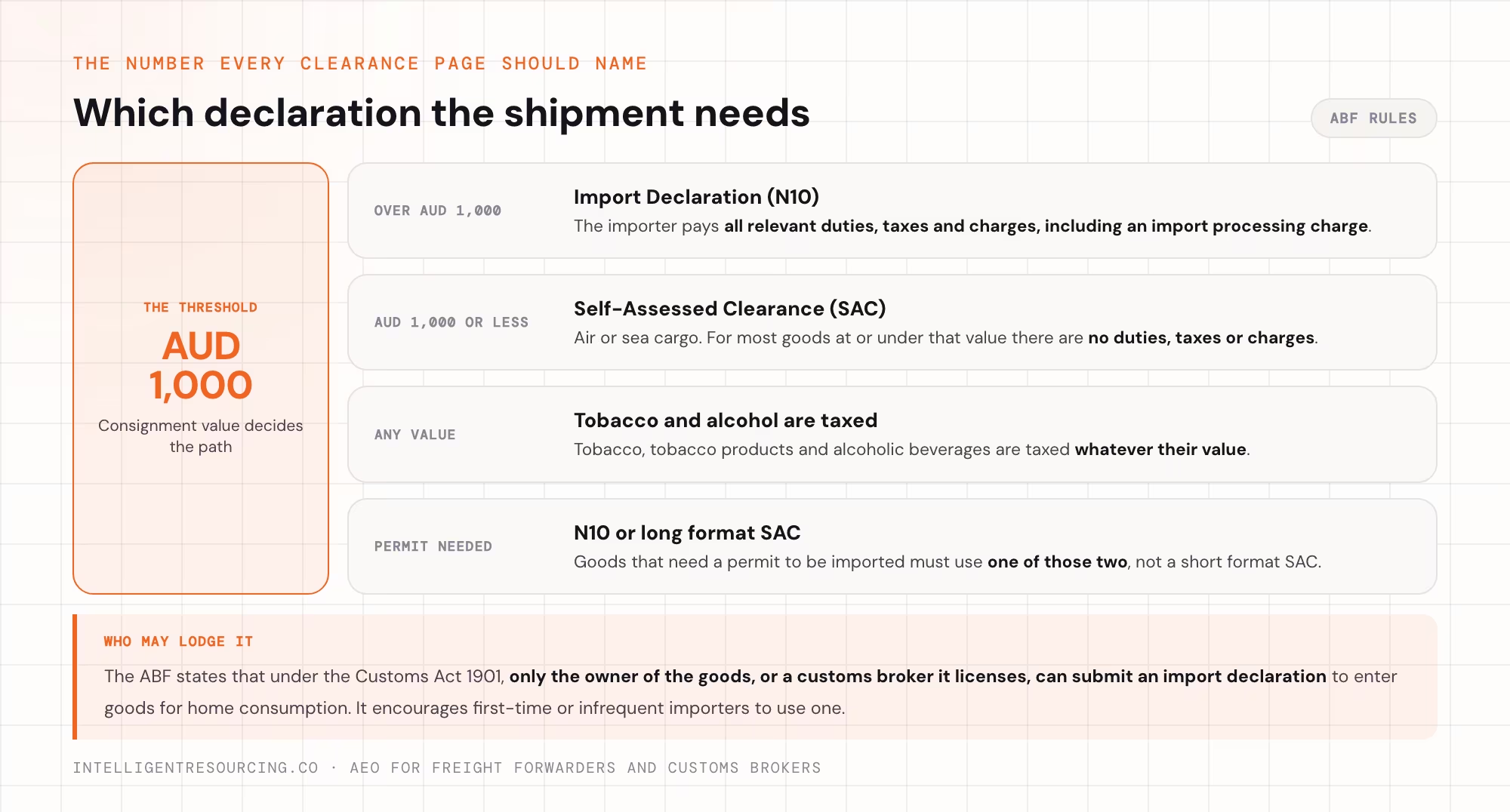
The ABF states that under the Customs Act 1901 only the owner of goods, or a customs broker it licenses, can submit an import declaration to enter goods for home consumption.
The ABF also publishes a public list of customs brokerages. That list is current as of 14 March 2025, and it notes that some customs brokers have declined inclusion. So a missing name does not prove a brokerage is unlicensed.
Make these 5 items clear on the firm's own site:
- Licence status. Use the correct legal entity name, stated once in plain text.
- The same business details everywhere. If the brokerage is on the ABF list, match those details on the website and in directories.
- The clearance process. Explain each step, from collecting documents to the import declaration and release.
- Common import issues. Cover tariff classification, duty and GST, missing documents and border holds, within the firm's expertise.
- Named practitioners. A corporate brokerage must employ nominee brokers to lodge declarations, so naming them shows how the firm is set up.
Keep each claim the same everywhere and easy to check. Repeating "licensed customs broker" on every page adds nothing.
What Should a Brokerage's Clearance Page Say?
A clearance page should answer the questions an importer asks before handing over a shipment: which declaration it needs, what it will pay, what documents to send and what can hold it up. Most brokerage sites describe the service in general terms. A page that answers these questions gives an AI tool a clear passage to quote.
The value of the shipment sets the starting point. Under the ABF's rules, goods worth more than AUD 1,000 need a full Import Declaration (N10), and the importer pays all relevant duties, taxes and charges, including an import processing charge.
Air or sea cargo worth AUD 1,000 or less uses a Self-Assessed Clearance (SAC) declaration. For most goods at or under that value there are no duties, taxes or charges, though tobacco, tobacco products and alcoholic beverages are taxed whatever their value. Goods that need a permit must use an N10 or a long format SAC declaration.
A clearance page built around these rules might cover:
| Section | What it tells the importer |
|---|---|
| Which declaration you need | N10 for goods over AUD 1,000, SAC for air or sea cargo at or under AUD 1,000, and when a permit changes that |
| What you will pay | Duty, GST and the import processing charge, plus the brokerage's own fee |
| What to send us | The documents the brokerage needs before it can lodge, and when it needs them |
| What can slow release | Missing documents, permits not yet issued, tariff classification questions and border holds |
| Who does what | Which steps the brokerage handles and which stay with the importer |
Three habits make the page easier to trust and to quote:
- Name the threshold and the rule. Write "goods over AUD 1,000 need an Import Declaration (N10)", not "larger shipments need more paperwork".
- Separate government charges from your fee. Importers want to know what goes to the government and what goes to the broker.
- Date the page. Thresholds and charges change, so show when the page was last checked against ABF guidance.
The ABF itself encourages first-time or infrequent importers to use a licensed customs broker. A page that explains the process plainly shows why that advice holds, and which broker the importer should call.
Write the opening in the importer's words. For example: "Importing goods worth more than AUD 1,000? You need a full Import Declaration (N10), and we can lodge it for you. Here is what we need from you, what you will pay and how long release usually takes." That one passage answers the question an importer is likely to type into an AI tool.
What Should a Freight Forwarder Publish to Be Named?
A freight forwarder should publish what shippers need to decide whether it can handle a shipment. Routes, cargo types, transport modes, Incoterms and cost drivers help more than claims such as "worldwide coverage".
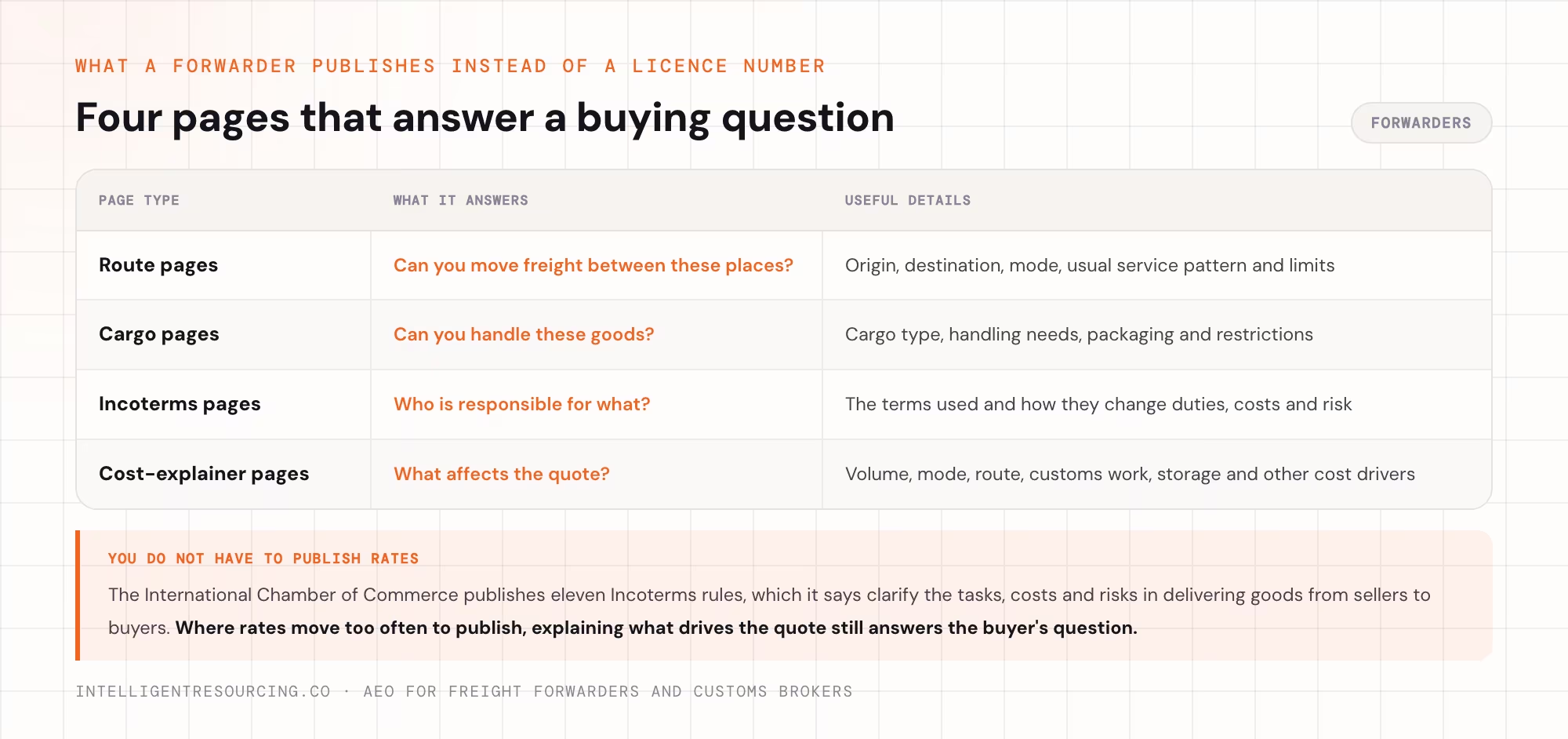
Incoterms show why. The International Chamber of Commerce publishes eleven Incoterms rules, which it says clarify the tasks, costs and risks involved in delivering goods from sellers to buyers.
A forwarder does not need to copy them. It should explain how the terms it uses affect its service.
For example, under EXW (Ex Works) the buyer takes on almost all costs and risks from the seller's premises. Under DDP (Delivered Duty Paid) the seller carries them to the buyer's door, import duty included. A page that says which terms the forwarder quotes on, and what that means for the shipper's costs, answers a real buying question.
| Page type | What it answers | Useful details |
|---|---|---|
| Route pages | Can you move freight between these places? | Origin, destination, mode, usual service pattern and limits |
| Cargo pages | Can you handle these goods? | Cargo type, handling needs, packaging and restrictions |
| Incoterms pages | Who is responsible for what? | The terms used and how they change duties, costs and risk |
| Cost-explainer pages | What affects the quote? | Volume, mode, route, customs work, storage and other cost drivers |
A forwarder does not need to publish fixed rates when rates change often. Explaining what drives the price still answers the buyer's question.
Specific route, cargo and customs questions test these pages better than a broad "best freight forwarder" query, as covered in freight forwarders missing from AI search.
How Should a Logistics Firm Choose an AEO Provider?
A logistics firm should choose an AEO provider on proof it can check. Ask for a logistics case study, the questions and engines tracked, the price and the work covered. It is the same checkable proof this guide asks of a forwarder, and the wider tests are set out in our guide to choosing an AEO agency.
| Ask for | Why it matters |
|---|---|
| A logistics case study with named results | Shows the provider has helped a freight or customs brand, not only other industries |
| The shipper questions and engines tracked | Shows what will be measured and how often |
| A price range, with currency and GST | Lets the firm compare proposals on the same terms |
| The scope of work | Separates content, technical fixes and tracking from local SEO and paid ads |
Ask whether the provider will check customs and licence claims against ABF guidance before anything goes live. A wrong threshold or licence claim on a brokerage page is worse than no page at all, because it can mislead importers and the AI tools that quote it.
Under Australian Consumer Law the Australian Competition and Consumer Commission says it can require a business to back up claims about its products or services, so a provider's results should come with evidence.
How we chose the providers. We reviewed providers on their own pages on 5 October 2026 and checked them again on 9 October 2026. We only include claims we could confirm there. We left out two providers whose AI search claims we could not confirm, and an overseas provider whose site was down on 9 October 2026.
Which Australian Agencies Do AEO for Logistics Firms?
Two Australian providers publish generative engine optimisation (GEO) services that fit logistics firms: Digilari Media and Intelligent Resourcing. We list them in alphabetical order.
Digilari Media
Digilari's logistics marketing page says it works with 3PLs, freight forwarders, warehousing providers, transport tech and supply chain businesses. Its own pages list Brisbane and Melbourne.
GEO sits in its service navigation, directly above SEO. Google Ads management and conversion rate optimisation sit alongside them.
Best for: a freight, third-party logistics (3PL) or industrial business-to-business (B2B) firm that wants AI search as part of wider digital marketing.
Limitation: the logistics page's own body copy names SEO, paid ads and inbound content, not GEO. Its featured project is a search result for Elite Liquid Waste, a waste business rather than a freight or customs client, reported as a 42.2% increase in organic traffic. We found no logistics case study with AI visibility results on its logistics or GEO pages on 9 October 2026.
Intelligent Resourcing
An Australian AEO and GEO practice with published pricing. Intelligent Resourcing works on AI search visibility and does not replace an SEO or paid ads provider. It tracks which buyer questions name a company, which rivals appear and which sources the answers draw on.
Its pricing starts with a Strategic Blueprint, a one-off audit at AUD $2,500 + GST, then Cited-Core from AUD $3,200 a month + GST for ongoing work.
Best for: a forwarder or customs broker with sound digital basics that wants AI visibility checked and tracked on its own.
Limitation: it does not replace local SEO, paid ads or a web build agency, and its GEO pages show no named freight case study.
For how content, technical access and tracking fit together, see generative engine optimisation.
How Should a Forwarder Measure AEO Progress?
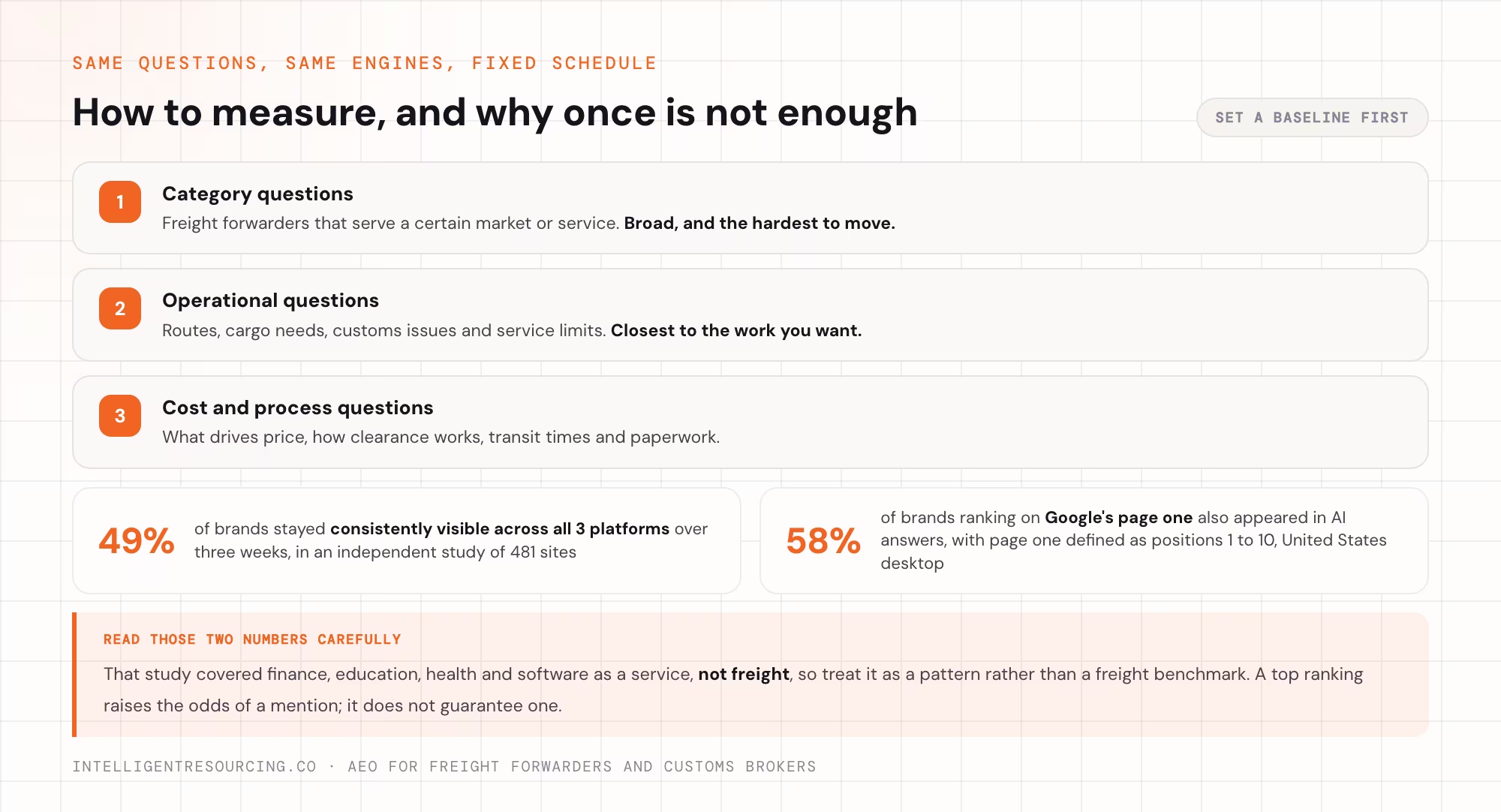
A forwarder should track the same shipper questions in the same AI engines on a fixed schedule. Record whether the firm is named, cited or absent, and which rivals keep appearing.
An independent volatility study of 481 sites, published on The Free Coalition, found that only 49% of brands stayed consistently visible across all 3 platforms over three weeks. It tracked ChatGPT, Perplexity and Google AI Overviews. The sites were in finance, education, health and software as a service, not freight, so treat it as a pattern, not a freight benchmark.
The same study found 58% of brands that ranked on Google's page one also appeared in AI answers. It defined page one as positions 1 to 10 in United States desktop results. A top ranking raises the odds of a mention but does not guarantee one, so measure search and AI visibility separately.
Build the question set around three types of shipper question:
- Category questions. For example, freight forwarders that serve a certain market or service.
- Operational questions. Routes, cargo needs, customs issues and service limits.
- Cost and process questions. What drives price, how clearance works, transit times and paperwork.
Do not assume one type will improve faster than another. Set the baseline first, then compare repeat readings. A customs brokerage should give clearance and licence questions their own slice of the set, because they test whether AI tools can confirm its status.
Before signing with an agency, ask which questions and engines it will track. Ask how it will record any change to the engines it uses.
See Which Questions Already Name Your Firm
Which shipper questions already name your firm, a rival or neither? A cross-engine baseline answers that before you decide what to change. Check your AI search visibility
Content Creation
FAQs
What is AEO for freight forwarders?
AEO improves how a freight forwarder shows up when buyers use AI tools to research providers. For freight firms, that usually means making routes, cargo types, service details, cost drivers and proof easier to find and check.
Do customs brokers need a licence to be named by AI?
Australian law requires a licence to work as a customs broker. An AI tool does not need one to mention a firm. A licence gives an outside record that backs up the firm's status. The ABF list is optional, so a missing name alone does not mean a broker is unlicensed.
Which licence types does the ABF recognise for customs brokers?
The ABF recognises three: corporate, sole trader and nominee. A corporate brokerage must employ nominee brokers to lodge declarations. Each licence is granted for up to three years.
Should freight forwarders publish their prices?
Publish fixed rates only when they stay accurate enough to help. Where rates change often, explain what sets the quote, such as mode, route, shipment size, storage and customs work.
What declaration does a shipment worth over AUD 1,000 need?
Goods worth more than AUD 1,000 need a full Import Declaration (N10), and the importer pays duties, taxes and an import processing charge. Air or sea cargo worth AUD 1,000 or less uses a Self-Assessed Clearance (SAC) declaration instead. A licensed customs broker can lodge either on the importer's behalf.