

What Does This Checklist Cover That Lane Pages Do Not?
This checklist for generative engine optimisation (GEO) covers what artificial intelligence (AI) engines need beyond your lane pages. It has 4 parts: access, proof, compliance answers and fresh facts. Our guide to forwarders missing from AI search covers lane pages and the lane test.
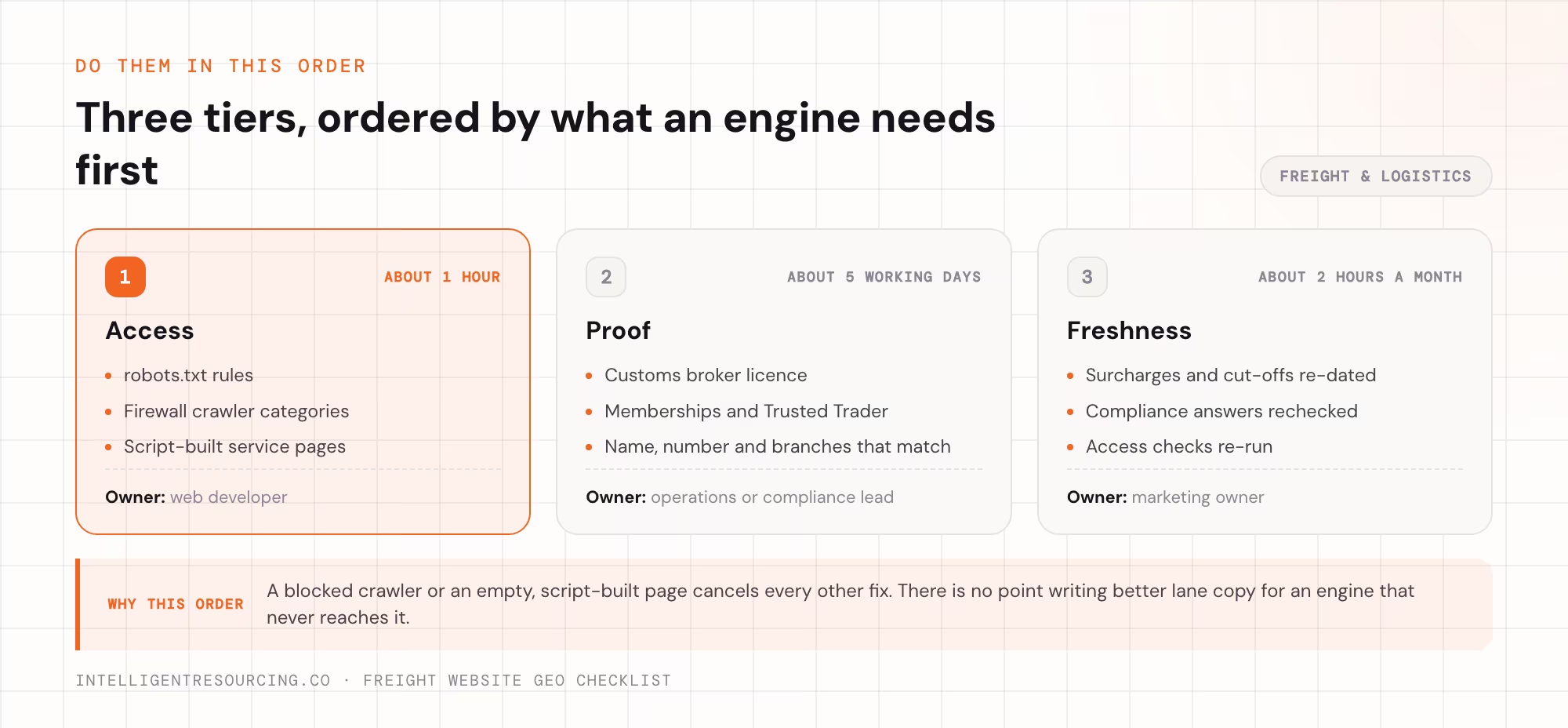
The checks fall into 3 tiers, ordered by what an engine needs first.
| Tier | Time | What gets checked | Usual owner |
|---|---|---|---|
| First hour | About 1 hour | Crawler rules, firewall settings, script-built pages | Web developer |
| First week | About 5 working days | Licences, memberships, business details, page openings | Operations or compliance lead |
| Every month | About 2 hours | Surcharges, cut-offs, compliance answers, crawler re-check | Marketing owner |
A naming trap comes first. The Australian Border Force (ABF) says it has negotiated 13 signed mutual recognition arrangements since 2016, each built on the customs meaning of Authorised Economic Operator (AEO).
| Term | Meaning in customs | Meaning in marketing |
|---|---|---|
| AEO | Authorised Economic Operator, the status behind Australian Trusted Trader | Answer engine optimisation, a close cousin of GEO |
A broker who hears "AEO" from a marketer thinks of border accreditation, so this checklist says GEO.
Which Checks Can a Forwarder Finish in the First Hour?
A forwarder can finish the access checks in about 1 hour with its web developer. These checks decide whether ChatGPT, Perplexity and Claude can read the site at all. A blocked or empty page cannot be cited, however good its lane content is, so this tier comes first.
| Check | What to look for | Why it matters |
|---|---|---|
| robots.txt file | Rules that block GPTBot, OAI-SearchBot, PerplexityBot or ClaudeBot | A rule left by an old plugin can shut out every engine |
| Firewall settings | AI crawler categories set to block | A clean robots.txt file does not prove crawlers get through |
| Page source of service and contact pages | Service lists that appear only after scripts run | Crawlers that skip JavaScript see a blank page |
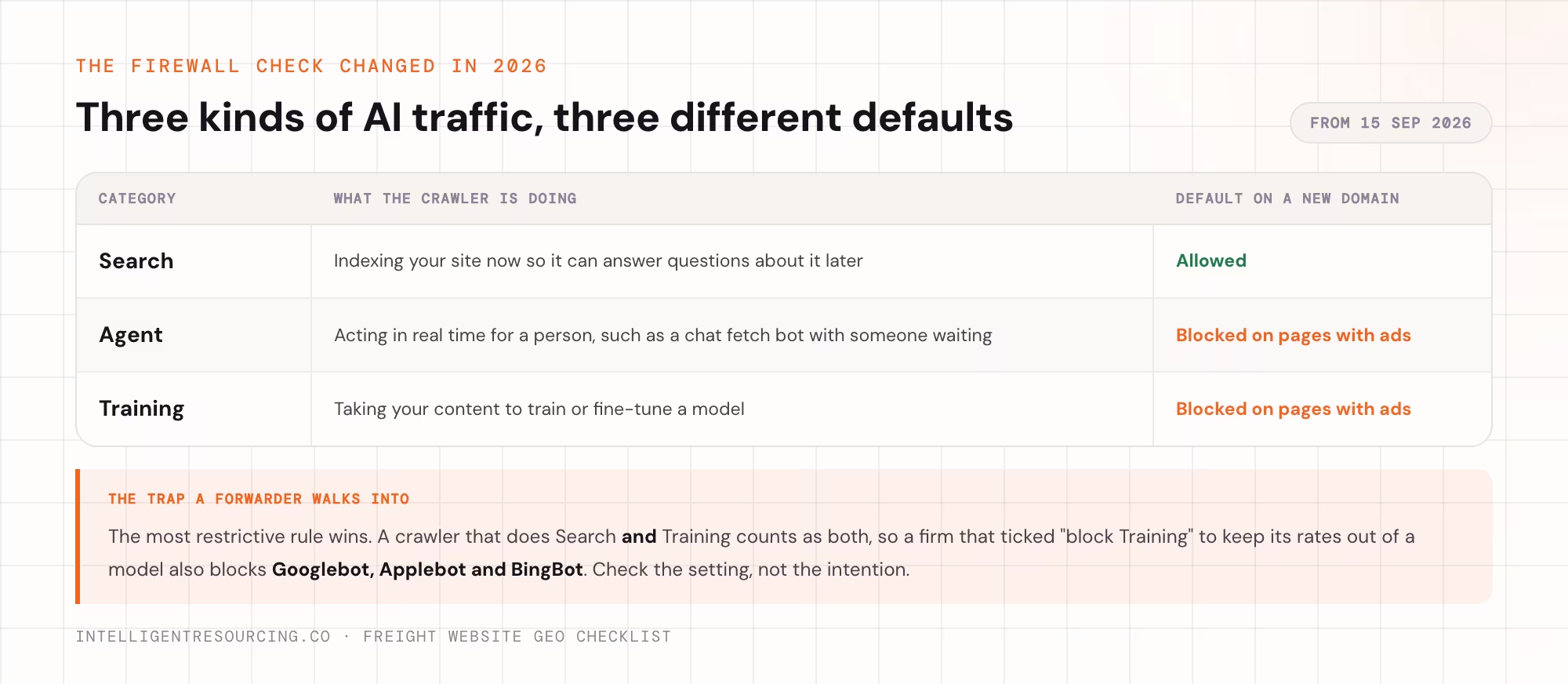
The firewall check changed in 2026, so a setting you reviewed last year may no longer mean what you think. Cloudflare now sorts AI traffic into 3 uses: Search, Agent and Training. Search builds an index to answer questions later, Agent acts in real time for a person, and Training absorbs content into a model.
From 15 September 2026, for all new domains onboarding to Cloudflare, Training and Agent are blocked by default on pages that display ads, while Search stays allowed by default. Owners can opt out in their security settings.
One trap sits inside that change. Cloudflare applies the most restrictive rule that fits a crawler, so multi-purpose crawlers that do both Search and Training, such as Googlebot, Applebot and BingBot, are blocked for anyone who has chosen to block Training. A forwarder that ticked "block AI bots" to keep its rates out of a model may have blocked Google as well.
Then check the page source. In December 2024, Vercel's analysis of AI crawlers found that the crawlers behind ChatGPT, Claude and Perplexity did not run JavaScript, while Gemini and AppleBot did. Open your service page, view the source, and look for your lane list and phone number in the HTML rather than in a script.
Log each result as the baseline for the monthly re-check.
Which Checks Take a Week of Records Work?
The week tier makes every claim on the site checkable. An engine comparing 2 forwarders looks for facts it can check elsewhere: a licence, a membership, an address. Gather those records first, then publish them as plain text near the top of key pages.
Licences and memberships
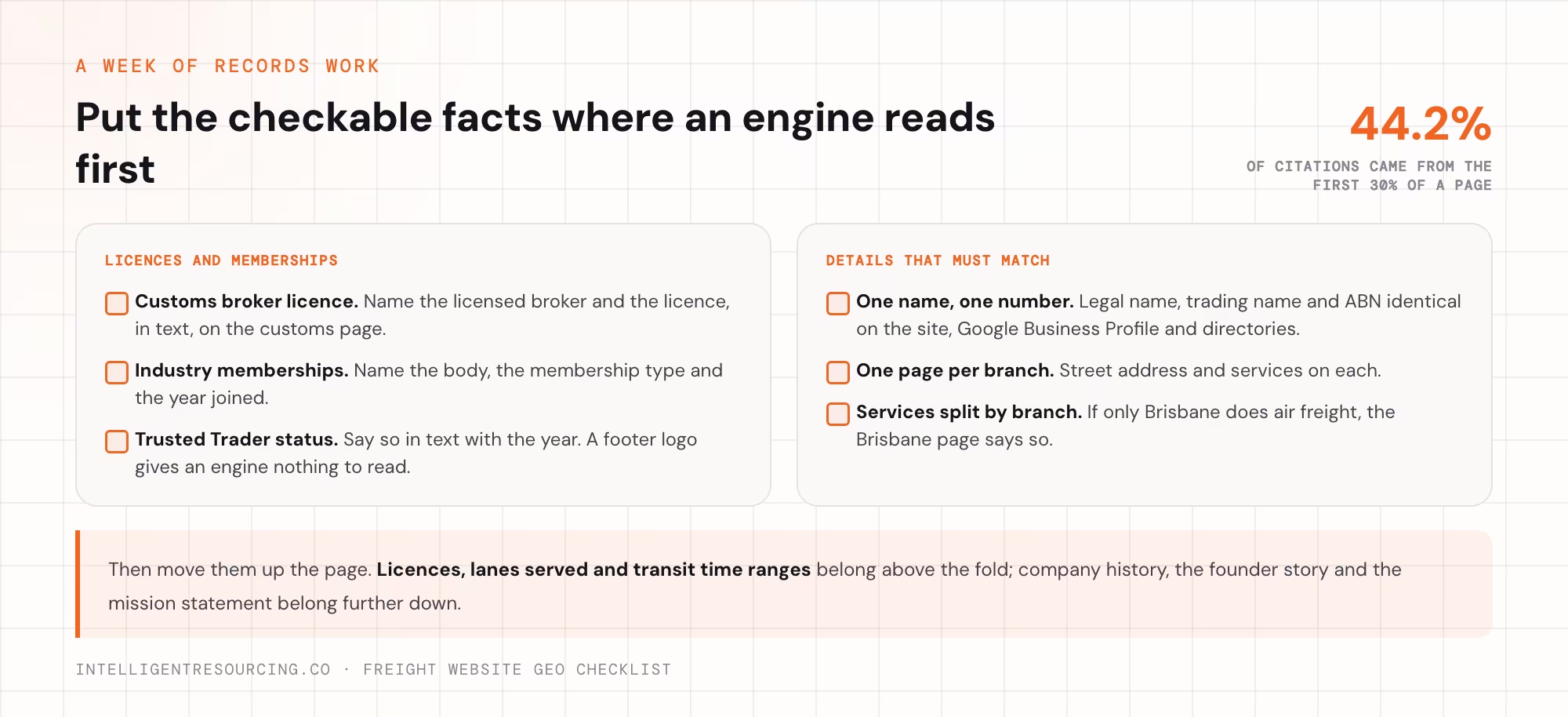
- Customs broker licence. Name the licensed broker and licence, in text, on the customs page.
- Industry memberships. List bodies such as the Australian Federation of International Forwarders (AFIF), with membership type and year joined.
- Trusted Trader status. If accredited, say so in text with the year. A footer logo gives an engine nothing to read.
Business details that must match
- Same name and number everywhere. Your legal name, trading name and Australian Business Number (ABN) match on the site, Google Business Profile and directories.
- 1 page per branch. Each branch page lists its street address and services.
- Services split by branch. If Melbourne handles less-than-container-load (LCL) shipments and Brisbane handles only air freight, each page says so.
Manufacturers face the same matching test with part numbers, as our GEO checklist for manufacturing websites shows.
The top third of each key page
Search Engine Land reported on Kevin Indig's analysis of 1.2 million AI answers and 18,012 verified citations. It found that 44.2% of citations came from the first 30% of a page, 31.1% from the middle and 24.7% from the final third, with a sharp drop near the footer. The study covered ChatGPT only, but the fix is cheap.
| Move to the top of service pages | Move further down |
|---|---|
| Licences and memberships | Company history |
| Lanes served | Founder story |
| Transit time ranges | General mission statements |
Which Compliance Questions Should a Freight Website Answer?
A freight website should answer the compliance questions shippers face before they book: permits, treatments, documents and duty. Each answer needs a named government source and a last-checked date. A clear, sourced answer gives an engine a passage it can quote.
Biosecurity is the clearest case. The Department of Agriculture, Fisheries and Forestry runs the Biosecurity Import Conditions system (BICON). Its import permit page gives 3 facts a shipper needs before booking:
- Importing without a required permit is an offence. It is a criminal offence under section 186 of the Biosecurity Act 2015 to bring in goods that require an import permit without one.
- It cannot be fixed on arrival. The Act does not allow a permit to be issued for goods already brought into Australian territory.
- The service charter sets 2 clocks. 90% of standard, category 1 applications get a decision within 20 business days, and non-standard, category 2 to 5 applications within 40, counted from payment and a completed application.
| Shipper's question | Source to point to | What your page states |
|---|---|---|
| Does my cargo need a biosecurity permit? | BICON | The goods you handle that usually need one, and the lead time |
| Can I claim a free trade agreement rate? | The agreement's official text | Which agreements your brokers file claims under |
| Do you move dangerous goods? | Your own acceptance policy | The classes you accept and the ones you refuse |
Link to the source instead of copying rules that change. Clear answers with sources sit at the heart of generative engine optimisation.
Which Checks Become a Monthly Habit?
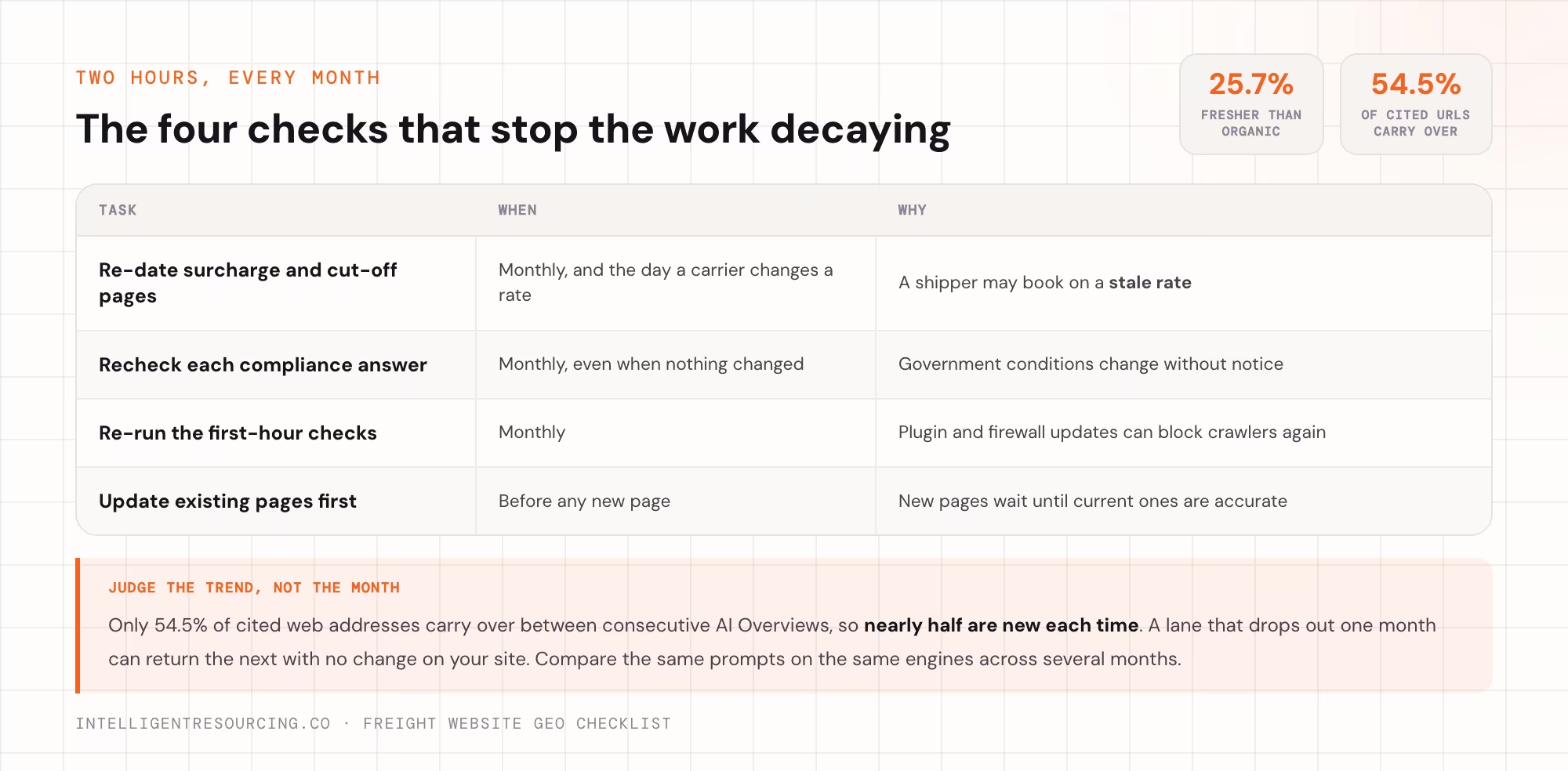
The monthly checks keep facts that change up to date: surcharges, cut-offs, peak-season notes and the compliance answers above. An Ahrefs study of 17 million citations found AI assistants cite newer pages than organic search does, averaging 1,064 days against 1,432, or 25.7% fresher.
Google's AI Overviews were the exception, while ChatGPT followed the pattern, so add a visible date.
| Task | When | Why |
|---|---|---|
| Re-date surcharge and cut-off pages | Monthly, and on the day a carrier changes a rate | A shipper may book on a stale rate |
| Recheck each compliance answer | Monthly, even when nothing changed | Government conditions change without notice |
| Re-run the first-hour checks | Monthly | Plugin and firewall updates can block crawlers again |
| Update existing pages first | Before any new page | New pages wait until current ones are accurate |
Keeping a short list of accurate pages current is the core of a content strategy built around buyer questions.
Should a Forwarder Build a Page for Every Port Pair?
No. A forwarder should build pages only for the lanes that earn its revenue, not for every port pair a script can generate. Engines cite the passage that answers the question, so a grid of near-identical pages adds upkeep without adding answers.
The research points the same way. Aggarwal and colleagues tested ways to make pages show up more in AI answers, in a study accepted to KDD 2024, the Knowledge Discovery and Data Mining conference. The results:
- Evidence worked. Citing sources, adding quotations and adding statistics raised visibility by up to 40% on the study's measures.
- Keyword stuffing did not. The old search engine optimisation (SEO) trick offered little to no improvement, and scored below the unoptimised baseline on one measure.
- Small edits counted. The methods that won changed little on the page.
That is why every compliance answer above carries its source. A do-it-yourself citation gap audit shows which existing pages already earn mentions.
How Does a Forwarder Know the Checklist Worked?
The checklist is working when more of your lane prompts name your firm than in the baseline run. Compare the same prompts on the same engines, month against month, and judge the trend across several months.
A single month can mislead. Ahrefs tracked more than 43,000 keywords in AI Overviews over a month and found that only 54.5% of cited URLs overlap between consecutive responses, so nearly half are new from one capture to the next. A lane that drops out one month can return the next without any change on your site.
Use the lane prompts from the companion guide as your question set.
| When | What to run |
|---|---|
| Before the first-hour checks | The full prompt set, as a baseline |
| 8 weeks after the week tier | The same prompts on the same engines |
| Every month after that | The same prompts, counting your share on each lane |
Content Creation
Intelligent Resourcing tracks which AI engines name your firm on your shippers' questions, lane by lane, every month. If the first report finds no gap worth fixing, we will say so.
FAQs
How far ahead should a shipper apply for a biosecurity import permit?
The department's service charter is that 90% of standard, category 1 applications get a decision within 20 business days, and non-standard applications within 40, counted from payment and a completed application. A forwarder's page should state those lead times beside the goods it handles, so a shipper can plan the booking date around the permit.
Should a forwarder allow AI crawlers through Cloudflare?
If a forwarder wants to be named in AI answers, it should let Search crawlers through. Agent and Training are separate decisions, and blocking Training also blocks multi-purpose crawlers such as Googlebot. Make each choice on purpose.
Does Australian Trusted Trader status help a forwarder appear in AI answers?
As of October 2026, we found no public test showing Trusted Trader status alone raises AI citations. List it anyway, in plain text with the accreditation year. It is a checkable fact, unlike a bare claim of compliance.
How often should a logistics company update surcharge and cut-off pages?
A logistics company should check surcharge and cut-off pages every month, and on the day a carrier changes them. Each page should show a "verified as of" date.
What does AEO mean to a customs broker?
To a customs broker, AEO means Authorised Economic Operator, the status behind Australian Trusted Trader. In marketing, AEO means answer engine optimisation, a close cousin of GEO. When an agency says AEO, ask which one it means.