

What Should Every Proposal Include?
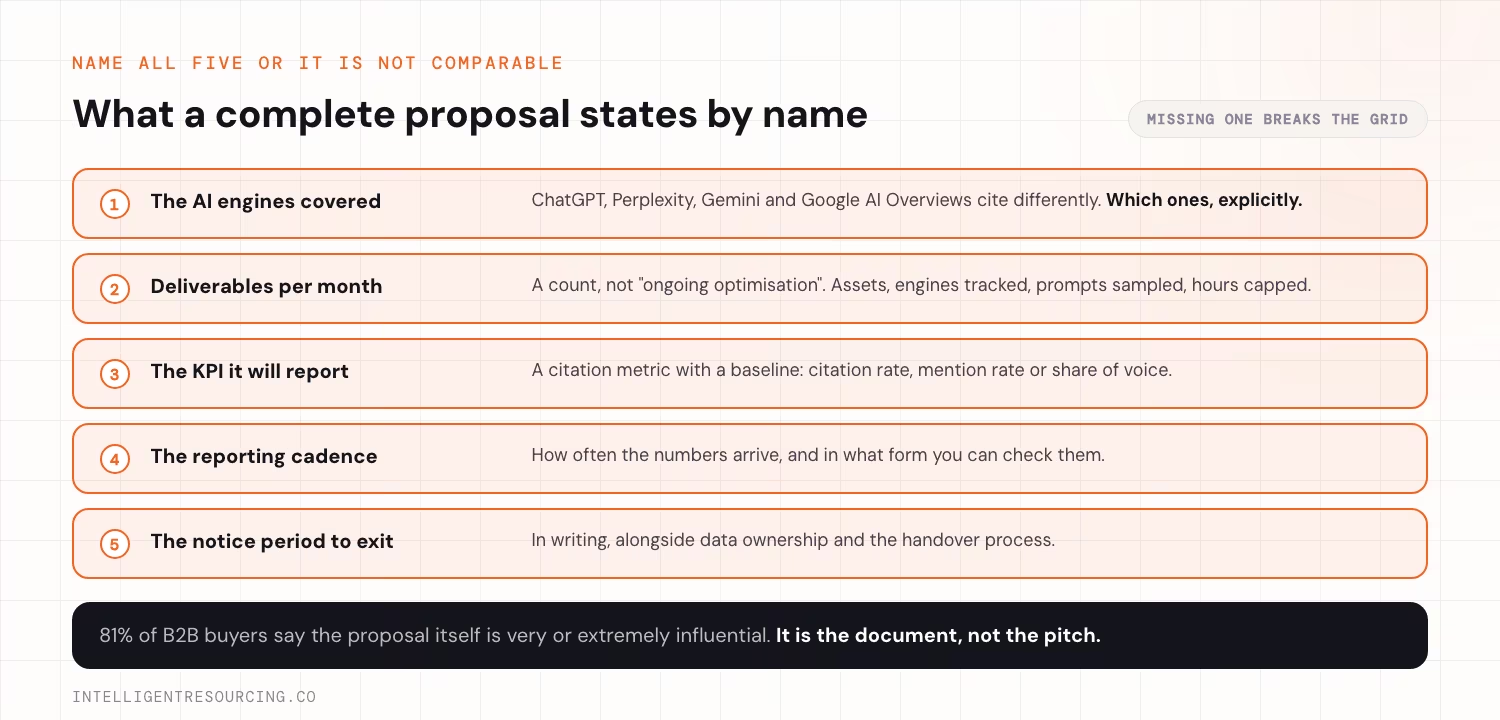
A complete answer engine optimisation (AEO) proposal states five things by name: the artificial intelligence (AI) engines covered, the deliverables per month, the key performance indicator (KPI) it will report, the reporting cadence, and the notice period to exit. Miss any one of these and you cannot compare the proposal to another.
A vendor's proposal is one of the most influential parts of the buying decision. A July 2025 Responsive survey of 350 business-to-business (B2B) buyers involved in vendor selection, reported by MarketingProfs, found 81% say a vendor's proposal response is very or extremely influential on their decision. The same research puts industry expertise and pricing structure among the top factors in picking a winner. A proposal that is vague on either one is asking to be scored down.
The same standards around evidence, scope and commercial fit should shape how you choose an AEO agency before proposals even reach the comparison stage.
How Do You Compare Pricing Across Different AEO Proposals?
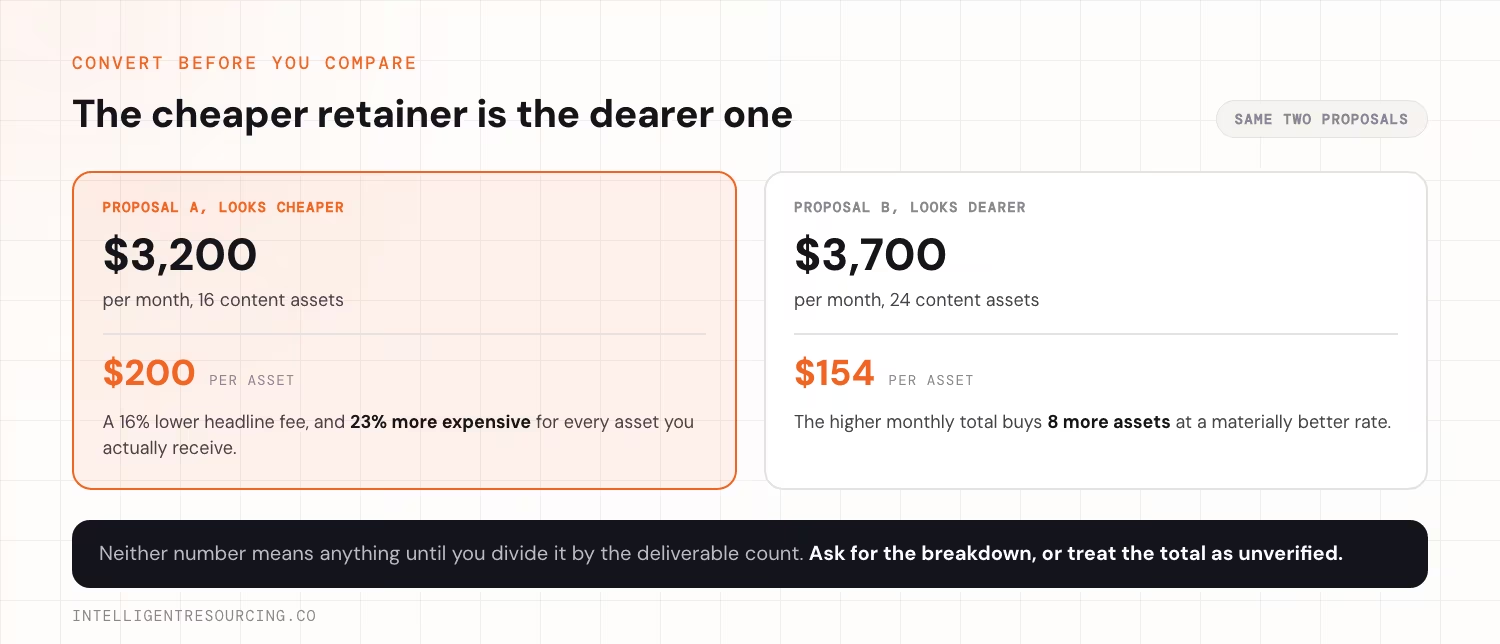
Compare pricing by converting every proposal to a cost per deliverable, not a monthly total. A $3,200 retainer covering 16 assets and a $3,700 retainer covering 24 assets look about 16% apart on the headline. Per asset they are $200 and roughly $154, so the cheaper-looking proposal is actually the more expensive one, by about 23%.
Ask each agency for a simple breakdown: cost per content asset, cost per engine tracked, and cost per hour of billed technical work. If an agency will not break its fee down this way, treat the total as unverified.
Vague pricing is not a small issue either. The Setup Marketing Relationship Survey found 40% of clients are likely to switch agency partners within the next six months, which is the evidence one Australian agency leader used when calling for more transparency in client-agency relationships (eCommerceNews Australia, May 2025). A proposal that resists a line-item breakdown now is unlikely to become transparent once you have signed.
Poorly defined scope can turn seemingly competitive pricing into hidden costs within an AEO retainer once reporting, technical work or additional deliverables fall outside the quoted fee.
What Scope and Deliverables Should Be Spelled Out Before You Sign?
A proposal's scope section should name a number for everything. How many content assets per month, how many engines tracked, how many prompts sampled, and how many hours of technical work included. "Ongoing optimisation" is not a scope. It is a placeholder for a number nobody wrote down.
This matters because vague scope is where cost overruns start. A 2025 SayAnchor survey of 273 United States marketing agency leaders found unbilled scope creep costs the average agency $1,000 to $5,000 a month, and that 78% of agencies rarely or only sometimes charge clients for the extra work once it starts.
That cost does not vanish. It shows up later as a renegotiated retainer or a quietly reduced deliverable count.
Ask for the scope in writing, broken into monthly deliverables. If two proposals both promise "content and technical optimisation" for a similar fee, but only one lists an asset count, engine list and hours cap, that is not a close call. The one with numbers is the comparable proposal.
How Do You Score Multiple Proposals on the Same Criteria?
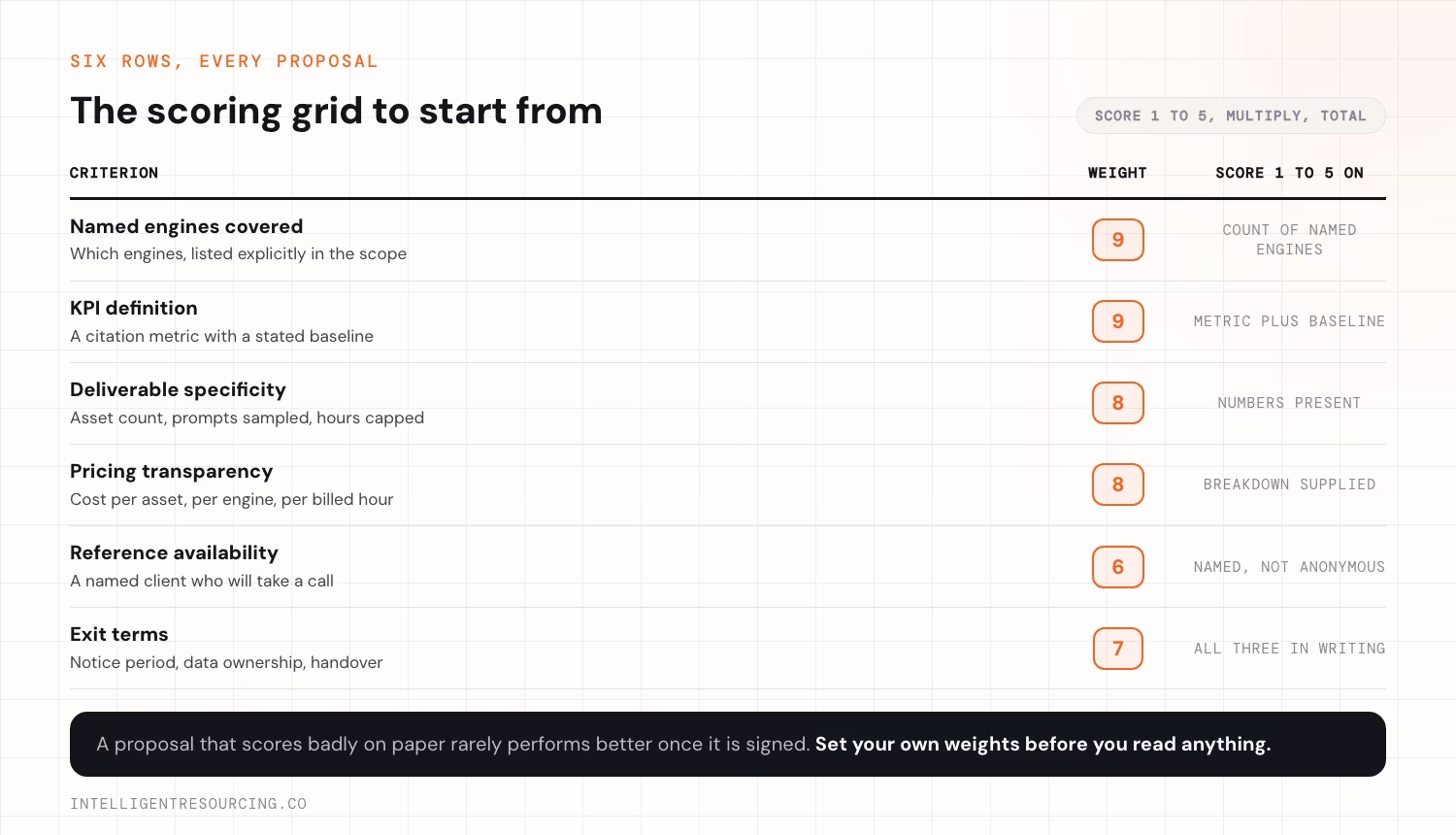
Score proposals with a simple weighted grid. List five to six criteria. Assign each a weight out of 10. Rate every proposal against the same list.
This turns a subjective read into a number you can defend to a colleague or a board.
Use these six rows as a starting point: named engines covered, KPI definition, deliverable specificity, pricing transparency, reference availability, and exit terms. Score each proposal 1 to 5 per row, multiply by your chosen weight, and total the columns. The highest score is not always the right answer, but a proposal that scores badly on paper rarely performs better once it is signed.
A free AEO visibility audit gives you a measurable baseline for citation rate, mention rate and share of voice, which makes it easier to judge what each proposal is actually promising to improve.
What Contract Terms Protect You If the Agency Underperforms?
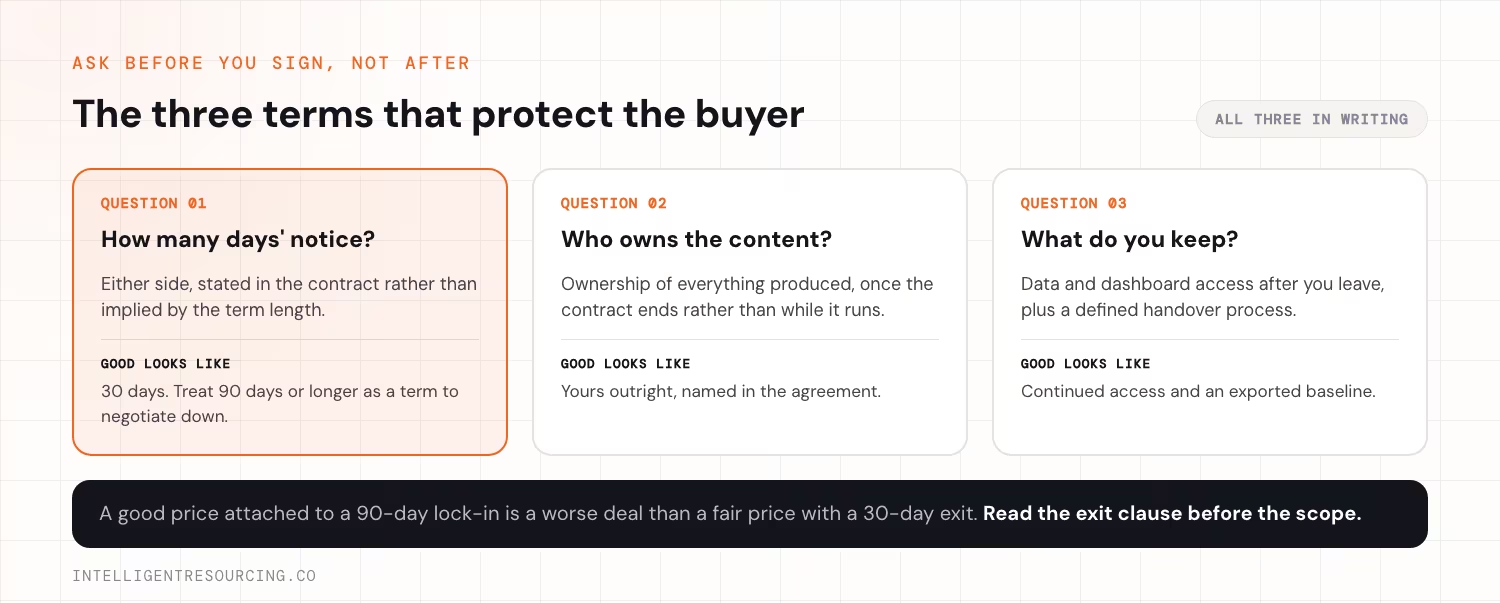
Three contract terms protect you specifically: a notice period you can live with, clear ownership of the content and data produced, and a defined handover process if you leave. Miss any one of these and the agency holds more leverage than you do once you have signed.
Agency retainers have traditionally run on a 12-month term with a 90-day termination notice. Many now run shorter, but the notice period is still negotiable and rarely offered generously up front. A good price attached to a 90-day lock-in is a worse deal than a fair price with a 30-day exit.
Ask three direct questions before you sign: who owns the content once the contract ends, what data or dashboard access you keep, and how many days' notice either side must give. A proposal that answers all three in writing is rare enough that it is itself a positive signal.
What Red Flags Appear in a Weak AEO Proposal?
A proposal fails scrutiny when it cannot name the engines covered, defines success only as "improved visibility", or bundles every deliverable into one number with no breakdown available on request. Each of these is a sign the agency has not built a repeatable process, only a sales deck.
| Red flag | What it looks like in the proposal |
|---|---|
| No named engines | No mention of ChatGPT, Gemini, Perplexity or Google AI Overviews anywhere in the scope. |
| A vanity KPI | Claims such as "improve AI visibility" or "boost your online presence" with no citation rate, mention rate or share of voice attached. |
| A bundled fee with no breakdown | One total price with no per-asset or per-engine cost available when asked. |
| No notice period stated | The contract term is named, but the exit clause is missing or vague. |
| No named reference | No client is available to confirm the reported results by phone. |
Two or more of these together is the signal to walk, not the price alone. A narrow candidate list makes this worse.
A 2019 Institute for Public Relations study, reported by O'Dwyer's, found 64% of buyers usually identified only two to five agency candidates during a selection process, and 54% said their briefs did not include a budget. The habit is old and it has not gone away. Widen the shortlist before you narrow the scoring grid.
Agencies that already publish dated citation proof in public, such as those in our list of ChatGPT citation agencies, are a reasonable place to start that wider search.
Closing the Comparison
The buyer who scores proposals on the same grid, checks pricing per deliverable, and reads the exit clause before signing avoids the two most common AEO mistakes. Paying for a vague retainer. Being unable to leave one that underperforms. Build the grid first, score every proposal against it, then negotiate from the one with the clearest numbers, not the one with the smoothest pitch.
Our own Content Strategy work is built to hand you exactly this. A named engine list, a per-asset cost, a defined KPI and a stated notice period, all in writing before you sign anything.
Content Creation
Get a free AEO visibility audit and a measurable baseline for citation rate, mention rate and share of voice, so you can judge what each proposal is actually promising to improve.
FAQs
What should be in an AEO proposal?
A complete AEO proposal names the AI engines covered and states monthly deliverables with a count. It defines the KPI as a citation metric, such as citation rate or share of voice, and sets a reporting cadence. It also states the notice period to exit. Missing any of these makes the proposal hard to compare against another.
Is there a template for comparing AEO proposals?
Yes. Build a simple grid with rows for named engines, KPI definition, deliverable count, price per deliverable, reference availability and exit terms. Score every proposal against the same rows, from 1 to 5, rather than reading each document in isolation.
Why do AEO proposal prices vary so much between agencies?
Prices vary because agencies bundle different amounts of work into similar-looking monthly fees. A $3,200 retainer covering 16 assets works out at $200 an asset, while a $3,700 retainer covering 24 assets is roughly $154. The higher headline fee is the better rate, which you only see once you convert both to cost per deliverable.
How long should an AEO contract's notice period be?
There is no fixed standard, but a 30-day notice period is common and reasonable for a monthly retainer. Treat a 90-day or longer lock-in as a term to negotiate down, especially if the proposal has not yet proven results.
Should I always get more than one AEO proposal before signing?
Yes. Most buyers who compare only two or three vendors narrow their options too early to find the best fit. Widen the shortlist first, then apply the same scoring grid to every proposal that comes back.