

What In-House AEO Implementation Actually Requires
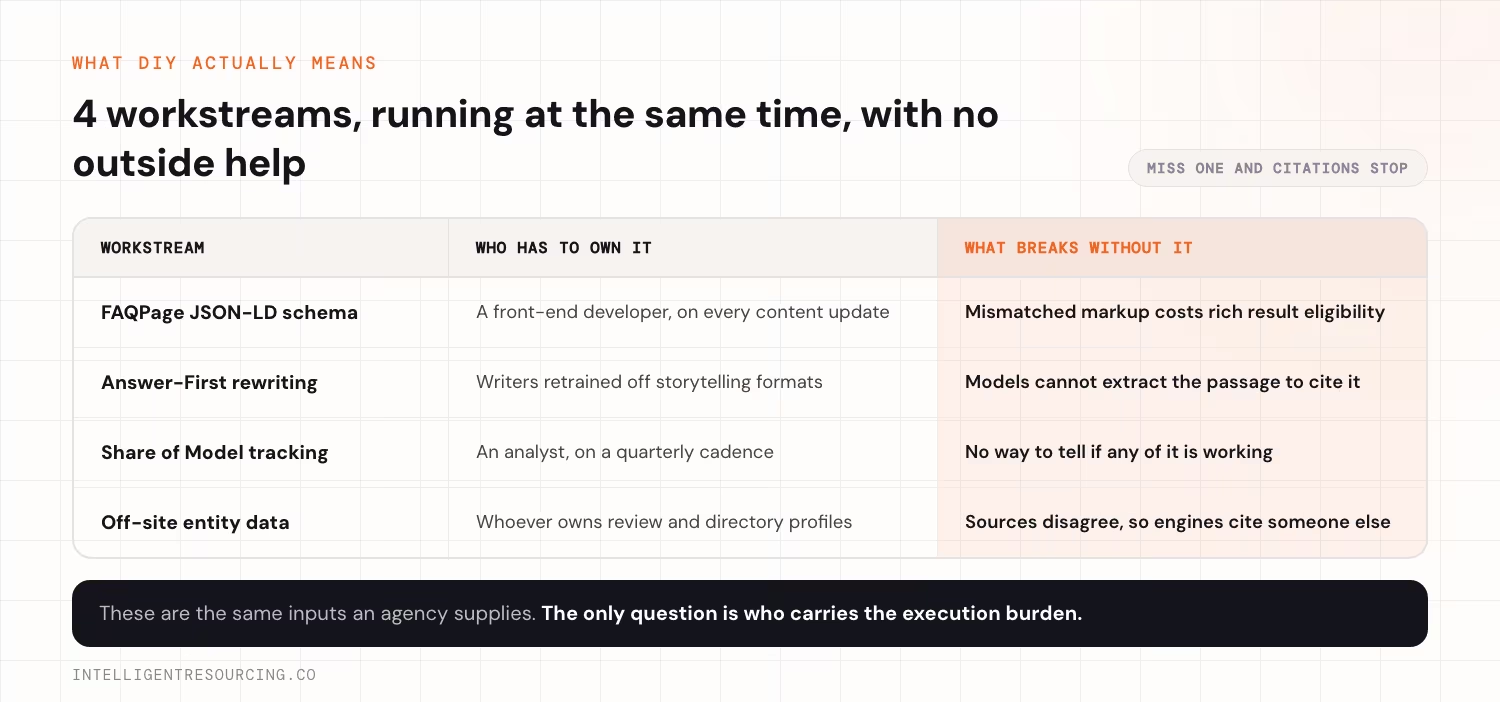
Doing Answer Engine Optimisation yourself means running 4 workstreams at once with no outside help. Developers write and validate FAQPage JSON-LD schema. Writers retrofit the existing content library to Answer-First structure. Analysts measure Share of Model each quarter. Someone keeps off-site entity data consistent.
SparkToro's 2026 research found that 68% of United States Google searches end without a click. Internal teams therefore have to shift their focus from driving traffic to earning a citation inside the AI answer itself.
The Answer-First Writing Requirement
In-house writers have to drop traditional storytelling introductions and format every H2 as a direct buyer question. Every section opens with a standalone answer of 40 to 60 words. That strict format is what lets a generative model extract the passage on its own and cite the brand.
The Technical Schema Requirement
Internal developers have to manage JSON-LD structured data and update the hidden schema whenever the visible text changes. Google's structured data guidelines are explicit: your structured data must be a true representation of the page content. A mismatch can trigger a manual action, and the page then loses eligibility to appear as a rich result.
The Off-Site Entity Requirement
AI engines build an understanding of a brand from sources the brand does not own. Review profiles, directory listings and trade coverage all feed that picture. When those records disagree with the website, the engine has no settled answer to cite.
Why Internal Content Teams Fail at AEO
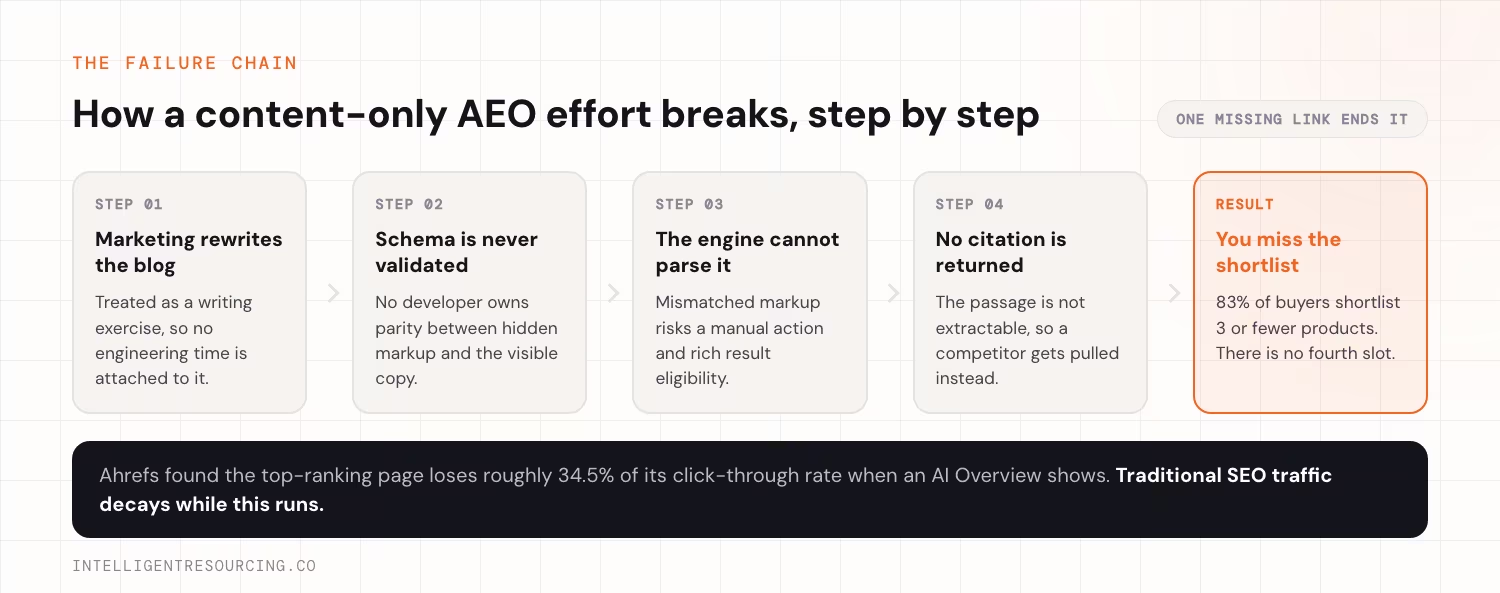
Internal content teams fail at Answer Engine Optimisation because they treat it as a writing exercise rather than a data architecture problem. A marketing department rewriting blog posts with no developer validating schema parity leaves the engine unable to parse the page.
The TrustRadius 2026 B2B Buying Disconnect report, based on 1,862 technology buyers and 444 vendors, found that 63% of buyers used AI during their purchase journey and 83% shortlisted 3 or fewer products. A brand that is not extractable does not reach a shortlist that short.
Ahrefs found in 2025, across 300,000 keywords, that the top-ranking page loses roughly 34.5% of its click-through rate when a Google AI Overview is present. Teams relying purely on traditional SEO traffic watch those metrics decay, because they have no technical capacity to move content into the format generative engines need.
Is Your Internal Team Equipped for DIY?
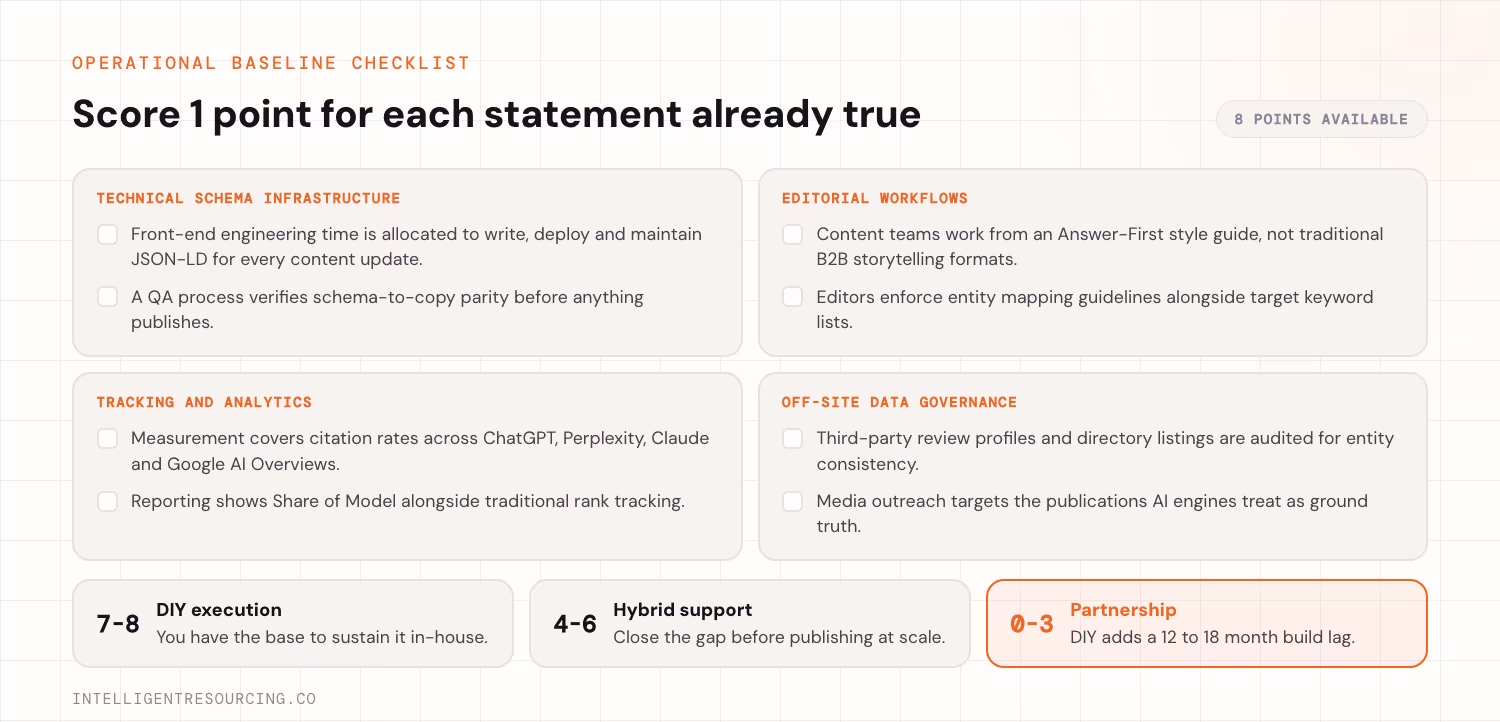
Before committing to DIY, audit whether your current setup can support technical, editorial and analytical execution at the same time. Score one point for each statement that is already true.
Operational Baseline Checklist
- Technical schema infrastructure
- Front-end engineering time is explicitly allocated to write, deploy and maintain JSON-LD markup for every content update.
- A QA process exists to verify schema-to-copy parity before anything publishes.
- Editorial workflows
- Content teams work from an Answer-First style guide rather than traditional B2B storytelling formats.
- Editors enforce entity mapping guidelines alongside target keyword lists.
- Tracking and analytics
- Measurement covers brand citation rates across ChatGPT, Perplexity, Claude and Google AI Overviews.
- Reporting shows Share of Model alongside traditional rank tracking.
- Off-site data governance
- Third-party review profiles and directory listings are audited for entity consistency.
- Media outreach targets the publications that AI engines treat as ground truth.
Diagnostic Verdict
| Checked items | Readiness level | Recommended path |
|---|---|---|
| 7 to 8 | High | DIY execution. Proceed in-house. You have the technical and analytical base to sustain it. |
| 4 to 6 | Moderate | Hybrid support. Close the specific gap, usually engineering time or tracking, before publishing at scale. |
| 0 to 3 | Low | Partnership. DIY here introduces a 12 to 18 month build lag, and competitors take the citations first. |
If you scored 7 or 8, the next step is finding where your current content falls short. The DIY AI citation gap audit sets out how to find missing visibility, prioritise pages and lift citation potential without hiring anyone. If you scored lower and want to check the symptoms first, the signs an AEO programme needs outside help cover what failure looks like at month 6.
Critical Buyer Questions on AEO Implementation
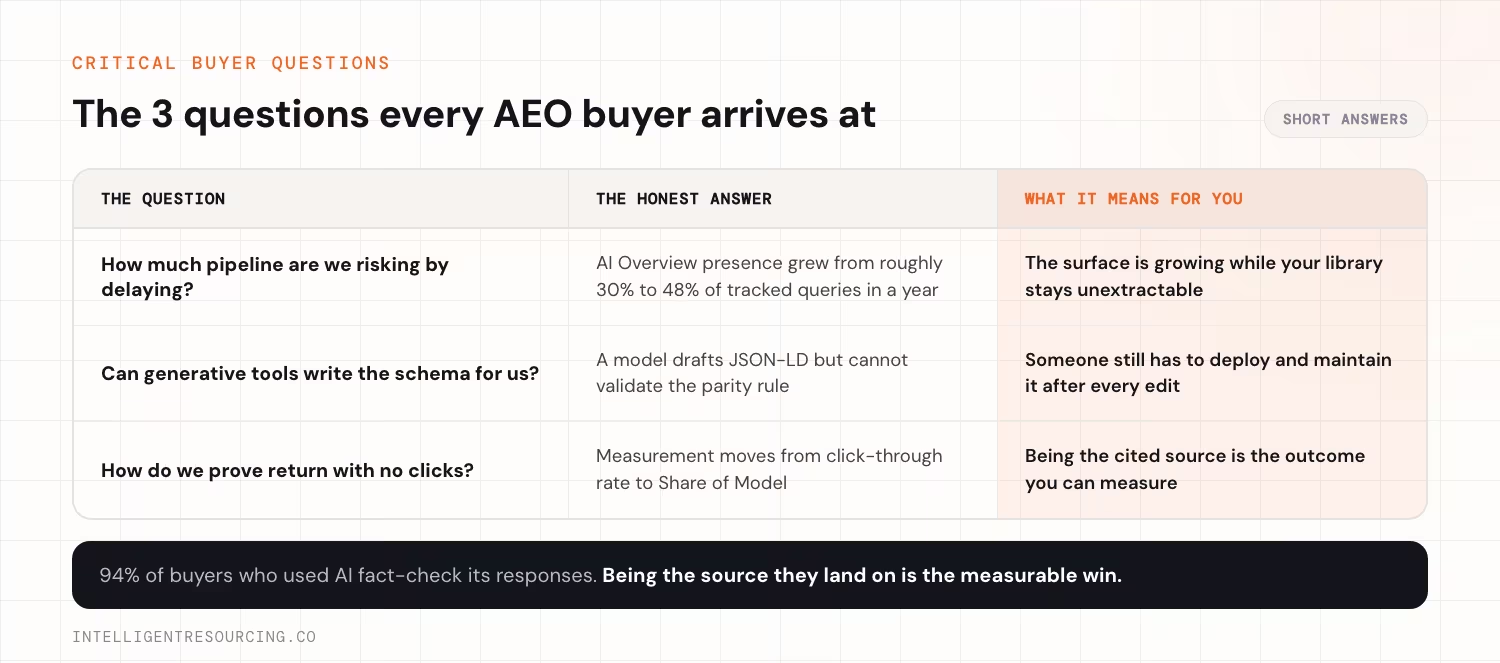
Buyers weighing Answer Engine Optimisation keep arriving at the same 3 questions. They concern timing, whether generative tools can do the work, and how to prove a return with no clicks to count.
How Much Pipeline Are We Risking by Delaying AEO?
BrightEdge tracking found AI Overview presence grew from roughly 30% to 48% of tracked queries in a single year, a 58% increase. The surface is expanding while most content libraries stay unextractable.
Buyers asking Perplexity, Claude or Google for a vendor shortlist only see the brands that structured for extraction. Delaying AEO hands top-of-funnel consideration to faster competitors.
Can We Use Generative AI Tools to Write the Content and Build the Schema?
A model will draft raw JSON-LD, but it cannot validate the parity rule that search engines apply. If the hidden schema and the visible page text disagree, the rich result is suppressed. Someone has to deploy, validate and maintain the mapping after every edit.
That is the part teams underestimate. Drafting schema is cheap. Keeping schema true to the page through months of editorial revision is the actual job.
How Do We Prove Return if AI Engines Send No Clicks?
Measurement moves from click-through rate to Share of Model: how often your brand is sourced as the answer across engines during evaluation. The same TrustRadius research found that 94% of buyers who used AI fact-check its responses at least some of the time. Being the source they land on is the measurable outcome, and it happens before any click exists to attribute.
How an Agency Studio Executes AEO
An agency treats Answer Engine Optimisation as an engineering exercise. It maps target topic clusters, writes to strict entity density rules, and deploys validated FAQPage schema at the same time rather than months later. Knowing how to choose an AEO agency helps separate content agencies from studios that can actually ship this architecture.
Pipeline360's 2025 State of B2B Pipeline Growth report, based on more than 500 B2B revenue leaders, found that nearly three-quarters of marketers said their sales cycles have increased by 2 months or more. Holding Share of Voice across ChatGPT and Perplexity means the buyer meets the brand repeatedly across a longer journey. The generative engine optimisation service runs that as a five phase engine: audit, map, build, monitor, optimise.
Content Creation
Intelligent Resourcing starts every AEO engagement with an audit of existing content against the same 4 capability areas above, then returns a prioritised fix list before any new content is commissioned. If you scored 6 or below, that audit is the cheapest next step.
FAQs
How do I know if my existing SEO programme is ready for AEO?
A strong SEO foundation helps, but readiness depends on something else. Can your content be extracted, understood and trusted by AI systems? That needs structured answers, entity clarity, supporting evidence and valid schema. Rankings alone do not confirm any of those.
Can a company train its existing marketing team to manage AEO?
Yes, but AEO needs content, technical and analytics capabilities working together. A company can build that internally when it has the resources, clear ownership and the time to maintain the system. The common failure is assigning it to content alone with no engineering time attached.
How long does an AEO strategy remain effective before it needs updating?
AEO needs continuous optimisation, because AI search behaviour, competitor visibility and retrieval patterns keep changing. Regular Share of Model tracking and content updates are what hold citation visibility in place. Treating it as a one-off project is why programmes decay.
What happens if competitors optimise for AEO before my company does?
Competitors that establish citation visibility earlier build stronger authority signals. That makes them more likely to appear in later AI recommendations, comparisons and buyer research. The advantage compounds, which is why the build lag matters more than the build cost.
How should companies measure whether AEO is improving revenue?
Measure Share of Model visibility, AI citations, AI referral traffic, assisted conversions and branded demand. Traditional metrics such as rankings and clicks miss most of what AEO changes, because the buyer often never clicks at all.