

What Does a Content Automation Agency Actually Do for a B2B Marketing Team?
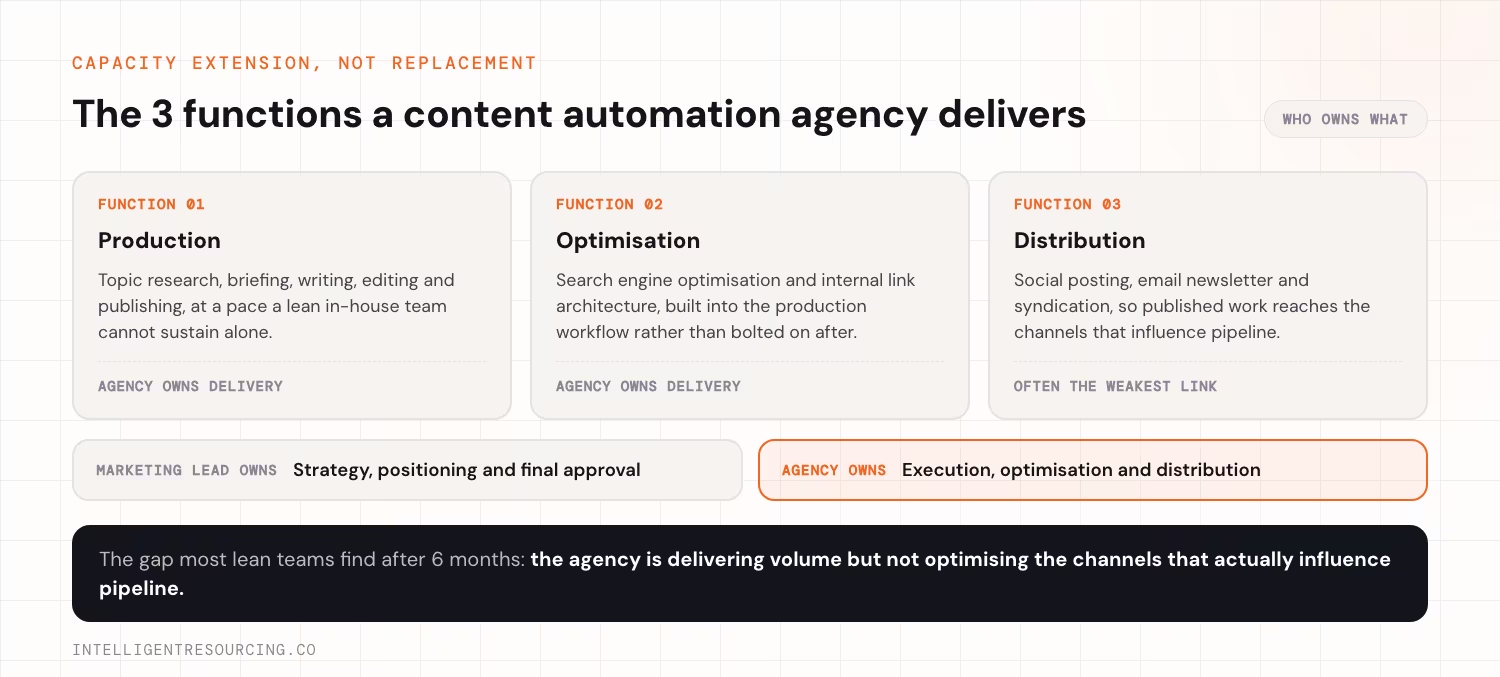
A B2B content automation agency handles topic research, production, publishing, and distribution. It works at a pace a lean in-house team cannot sustain alone. The core function is capacity extension, not replacement. The agency owns execution; the marketing team owns strategy, positioning, and approval. Most agencies also handle search engine optimisation (SEO) and internal link architecture as part of the production workflow.
The Content Marketing Institute's 2025 B2B research found the same shape. Most B2B marketers with a dedicated content team, 54%, say that team is small, at two to five people. Limited capacity at this scale is the structural reason these agencies exist. A B2B content automation model built around a 3-function scope gives a lean team clear boundaries: the agency owns execution; the marketing lead owns positioning and final approval.
The 3 Core Functions a B2B Content Automation Agency Delivers
Most B2B content agencies handle 3 functions: production (writing, editing, and publishing), optimisation (SEO and internal linking strategy), and distribution (social posting, email newsletter, and syndication). The division between these 3 functions decides whether the agency works as a tactical vendor or a strategic partner.
The gap most lean teams discover after 6 months: their agency is delivering production volume but not optimising for the distribution channels that actually influence pipeline.
What Automation Adds to Traditional Content Production
Content automation accelerates the research and briefing stages, not just writing. Modern B2B content agencies use AI to cluster topics and find question gaps in competitor content. It also generates structured briefs and flags weak pages for refresh. The output is still written and reviewed by subject matter experts, but the briefing cycle compresses from days to hours.
For a 2 to 3 person marketing team, that gain in briefing speed is the difference between 4 articles per month and 15, without hiring a full-time content manager.
What Should You Look For When Evaluating a Content Automation Agency?
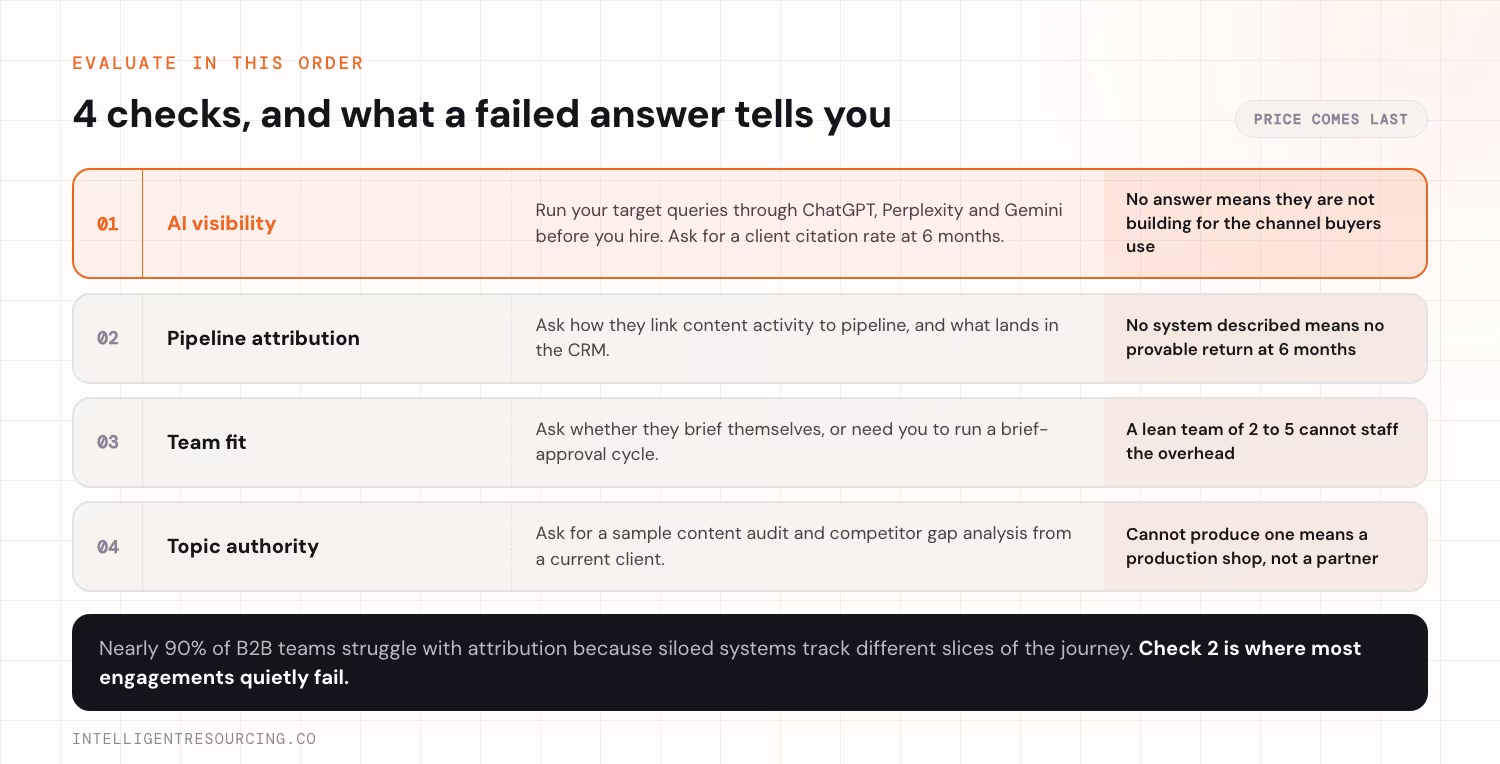
Evaluate a B2B content automation agency on 4 criteria. Topic authority and research depth. AI visibility capability, meaning whether their content appears in ChatGPT and Perplexity responses. Pipeline attribution, meaning whether they can track which content influenced deals. And team fit, meaning whether they work within your approval process without adding management overhead.
Most evaluation frameworks focus on price, turnaround speed, and publishing volume. Those criteria miss the 3 factors that decide whether the engagement produces measurable pipeline. The underlying problem is usually plumbing. Knecht Strategies reported in 2026 that nearly 90% of B2B teams struggle with attribution, because siloed systems track different slices of the buyer journey. The answer engine optimisation (AEO) agency evaluation guide covers the specific questions to ask before signing, including questions on AI citation tracking and attribution records.
Content Strategy and Topic Authority
The first check is whether the agency builds a topic cluster strategy or fills a brief list. Agencies that work from a content audit, a competitor gap analysis, and a keyword cluster plan build authority faster than agencies that write on request.
Ask for a sample content audit from a current client. If the agency cannot produce one, it is a production shop, not a strategic partner.
AI Visibility and Citation Capability
The second check is whether the agency's content appears in AI model responses. Run your target queries through ChatGPT, Perplexity, and Gemini before you hire. Ask the agency to show their current clients' citation rate after 6 months.
Agencies that cannot answer this question are not building for the research channel B2B buyers now use to shortlist vendors.
Pipeline Attribution and Measurement Systems
The third check is attribution. Ask how the agency links content activity to pipeline. Volume agencies measure traffic and domain authority growth. Answer Engineering agencies track AI citation rate, branded search lift, and content-influenced deals in the customer relationship management (CRM) system.
If the agency cannot describe their attribution system in the first conversation, the engagement will not produce provable return on investment (ROI) after 6 months.
What Is the Difference Between a Content Volume Agency and an Answer Engineering Agency?
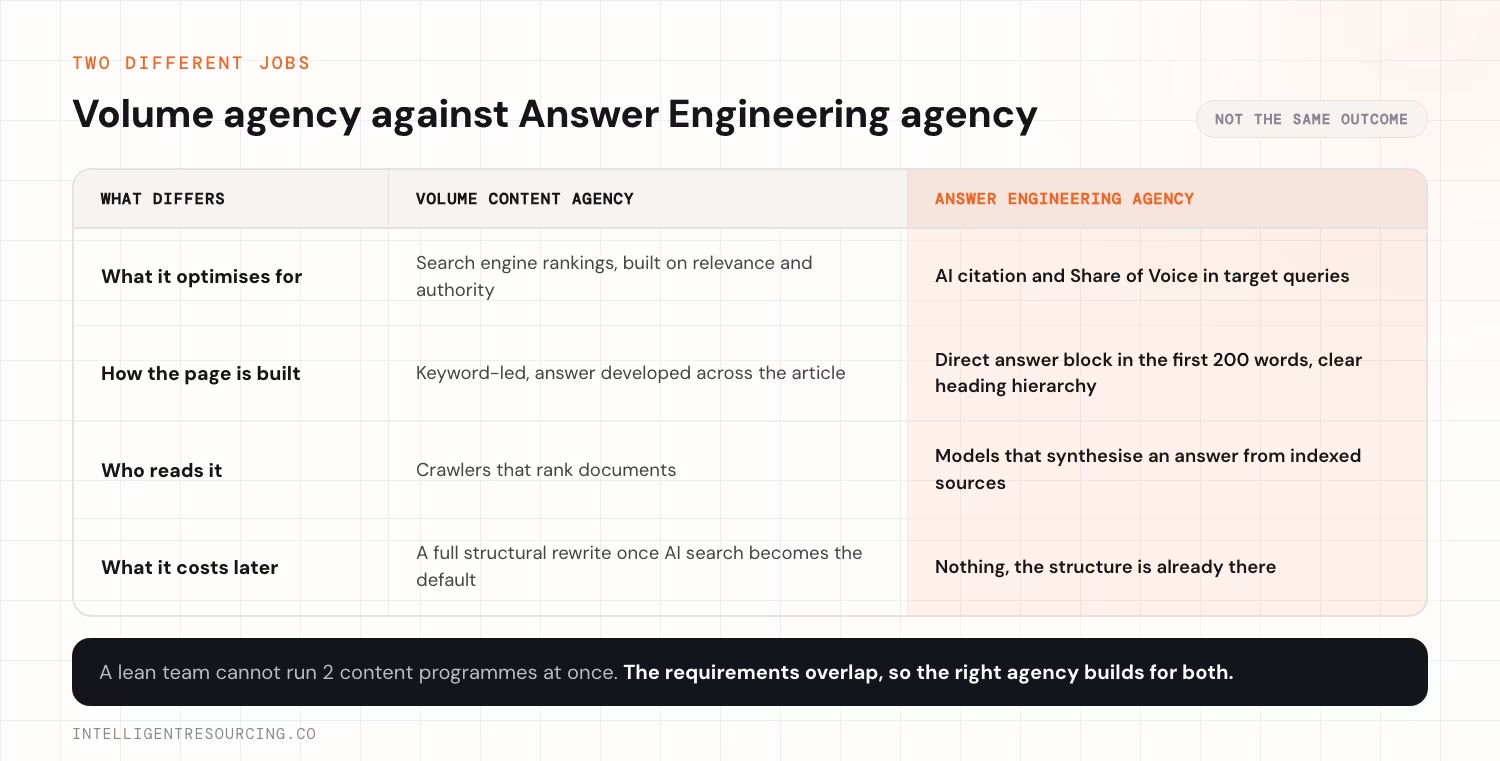
A content volume agency produces blog posts at scale to build topical authority and organic traffic. An Answer Engineering agency structures content to be cited by AI models. The output format, measurement criteria, and editorial rules are different. Volume agencies optimise for search engine rankings; Answer Engineering agencies optimise for AI citation and Share of Voice in target queries.
The TrustRadius 2026 B2B Buying Disconnect report surveyed 1,862 technology buyers and 444 vendors. It found 63% of buyers used AI during their purchase journey, and 83% shortlisted 3 or fewer products. For content to influence buyers already researching in ChatGPT and Perplexity, it has to appear in AI responses before the first sales touchpoint. A shortlist that short leaves no room for a fourth option. That requirement changes the entire content brief.
From Content Automation to Answer Engineering
Traditional content automation focused on volume: more articles, faster briefs, consistent publishing cadence. That model produces results in search engines that rank documents by relevance and authority.
AI search works differently. ChatGPT, Perplexity, and Gemini do not rank documents. They synthesise answers from sources they have already indexed and deemed credible. Getting cited in an AI answer needs a different structure: a direct answer block in the first 200 words, a clear heading hierarchy, and a defined entity footprint. The generative engine optimisation architecture applies those 3 structural requirements to every article Intelligent Resourcing produces, which is what separates it from a standard content automation brief.
Why This Distinction Matters for Lean B2B Teams Specifically
Lean marketing teams with 2 to 5 people cannot afford to run 2 content programmes simultaneously: one for organic search and one for AI citation. The right agency integrates both.
An Answer Engineering agency produces content that does both. It ranks in traditional search and earns citations in AI search, because the structural requirements overlap: direct answer blocks, clear headings, authoritative sourcing, and internal links AI crawlers can follow.
Volume agencies that skip this standard leave you a full rewrite, as AI search becomes the default research channel.
Which Content Automation Agencies Work Best for Lean B2B Marketing Teams?
The best content automation agencies for lean B2B teams handle strategy, production, and measurement without requiring a dedicated internal content manager to supervise them. Look for agencies that deliver a content audit, a topic cluster map, and an AI citation baseline in the first 30 days. Pricing and volume commitments are secondary to the quality of that onboarding.
A note on method: this guide compares agency models against those criteria rather than ranking named vendors. Intelligent Resourcing publishes it, and appears below as one of the 4 models rather than as a scored winner. For named agencies assessed independently, see the Australian market report linked at the end of this section.
Semrush's 2026 survey polled 519 United States B2B professionals who already use AI tools at work. Of those, 66% regularly use AI to research products, vendors, or solutions for their job. Agencies that have not built AI citation into how they work are aiming at a research channel that no longer matches how B2B decisions start.
How to Compare Content Automation Agencies for a Lean B2B Team
| Agency type | Management overhead | Attribution | AI citation | Pricing model |
|---|---|---|---|---|
| Volume content agency | High: brief-approval cycle required | Traffic and domain authority only | Not measured | Per word or per article |
| Full-service content agency | Medium: account management layer | Traffic and some CRM | Inconsistent | Retainer |
| Answer Engineering agency | Low: strategy-led briefing | AI citation rate and pipeline influence | Core deliverable | Project or retainer |
| In-house hire | Very high: full management overhead | Depends on tooling | Depends on skill set | Salary and overhead |
The in-house versus agency guide maps the 4 management overhead factors that shift when a lean team moves from hiring internally to contracting externally, applied to the same criteria above.
Intelligent Resourcing Answer Engineering
Intelligent Resourcing builds Answer Engineering programmes for lean B2B marketing teams as part of its AEO and GEO track. The model installs a Share of Voice baseline before the first article publishes. It builds a topic cluster strategy in the first 30 days. It then produces GEO-structured content aimed at citations in ChatGPT, Perplexity, and Gemini.
When Intelligent Resourcing implements GEO content architecture for a B2B client, the baseline measurement comes first. Target queries run across ChatGPT, Perplexity, and Gemini before a single article publishes. The starting citation rate is a recorded number, not an estimate. The published engagement minimum is six months, because citation authority compounds rather than switching on. On the published client proof, Kynection reached first position for AI Search Share of Voice in its category within 30 days of deployment.
The best AEO agencies in Australia report includes independent assessments of each agency's citation rate and onboarding model, covering the same selection criteria above for the Australian B2B market.
How Do You Measure a Content Automation Agency's Results Before and After You Hire Them?
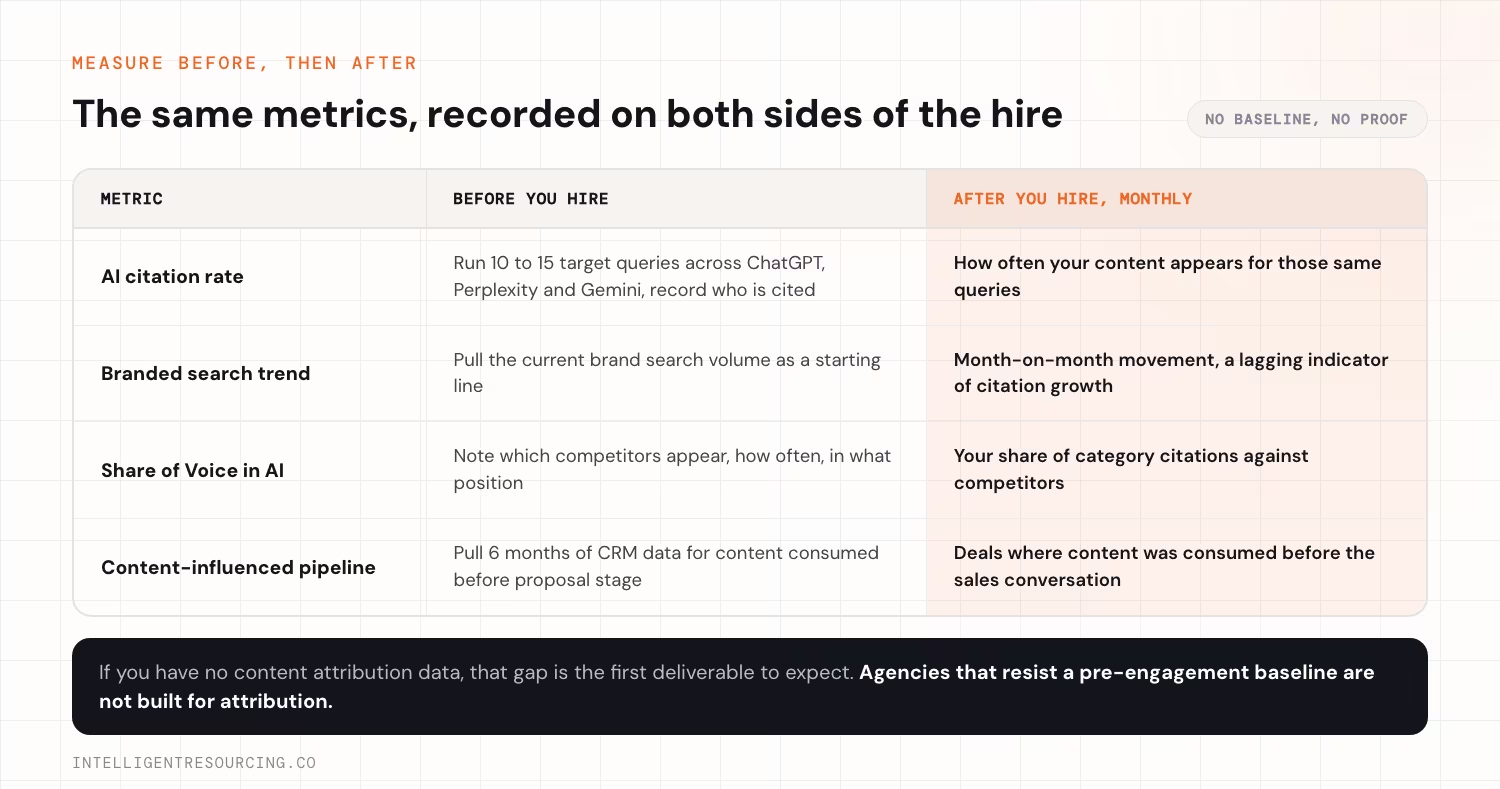
Measure a content automation agency on 3 baselines before you hire. Your current AI citation rate in target queries. Your branded search volume trend. And your content-influenced pipeline share in the CRM. After hiring, track those same 3 metrics monthly. Agencies that resist establishing a pre-engagement baseline are not built for attribution.
HubSpot's marketing statistics report that over 41% of marketers measure the success of their content marketing strategy through sales. Most B2B teams lack the attribution infrastructure to connect specific content pieces to revenue before an agency engagement begins. Setting that baseline at the start is what separates an accountable engagement from an open-ended retainer.
Before You Hire: Establish a Measurement Baseline
Run 10 to 15 of your target buyer queries through ChatGPT, Perplexity, and Gemini. Record which of your competitors are cited, how often, and in what position. That is your AI citation baseline.
Also pull your last 6 months of CRM data to identify what content, if any, was consumed before a deal reached proposal stage. If you have no content attribution data, that gap becomes the first deliverable you should expect from any agency you hire.
After You Hire: What a Good Measurement System Tracks
A good content agency tracks and reports at least 4 metrics once work begins:
- AI citation rate: how often your content appears in ChatGPT, Perplexity, and Gemini responses for target queries
- Branded search trend: month-over-month movement in brand name searches, which is a lagging indicator of AI citation growth
- Share of Voice in AI: percentage of AI citations in your category that reference your domain versus competitors
- Content-influenced pipeline: deals where a content piece was consumed before the sales conversation began
Agencies that report only traffic and domain authority measure the wrong thing, for a B2B team where pipeline matters more than awareness.
Content Creation
If your content is not appearing in ChatGPT, Perplexity, or Gemini when buyers search for what you do, you are not competing in the channel where most B2B research now begins. Intelligent Resourcing's Answer Engineering service installs a Share of Voice baseline before the first article publishes, then tracks AI citation movement monthly. That gives a lean marketing team a way to judge whether the investment is working.
FAQs
What is a B2B content automation agency?
A B2B content automation agency handles topic research, briefing, writing, publishing, and optimisation at a pace an in-house team cannot sustain. They add capacity rather than replace your strategy. The marketing team keeps positioning, messaging, and approval. The agency owns delivery, SEO, and distribution.
What is the difference between content automation and Answer Engineering?
Content automation focuses on publishing volume. More articles, consistent cadence, faster briefing cycles. Answer Engineering focuses on AI citation. It structures content so ChatGPT, Perplexity, and Gemini extract and cite it when answering buyer queries. Volume and citation are not the same outcome. An Answer Engineering agency builds for search rankings and AI citation at once.
How much does a B2B content automation agency cost?
B2B content automation agencies price on output, retainer, or project basis. Output pricing commonly runs from USD $150 to $800 per article, depending on research depth and word count. Full-service retainers commonly start around USD $3,000 per month for lean team models. These are indicative ranges rather than published rates, so confirm them directly. For a published comparison, Intelligent Resourcing's Answer Engineering retainers start from AUD $3,200 per month plus GST, on a six month minimum. A one-off Strategic Blueprint starts from AUD $2,500 plus GST.
How long does it take to see results from a content automation agency?
Volume agencies show traffic and ranking movement within 4 to 8 weeks. Answer Engineering agencies show AI citation movement within 8 to 12 weeks, with pipeline attribution visible in the CRM within 4 to 6 months. The timeline depends on how fast the baseline is set, and how fast the agency builds authority in the target cluster.
What metrics should a lean B2B marketing team track after hiring a content agency?
Track 4 metrics monthly: AI citation rate, branded search trend, Share of Voice in AI, and content-influenced pipeline. AI citation rate is how often your content appears in ChatGPT, Perplexity, and Gemini for target queries. Share of Voice in AI is your domain versus competitors in AI responses for category queries. Agencies reporting only on traffic are measuring the wrong channel for a team where pipeline is the priority.