

What Is Content Automation in B2B?
Content automation uses software and AI to perform content tasks with minimal human input, and it splits into two modes. The first moves pre-written content through pipelines: scheduling, distribution, repurposing. The second helps create the content itself: research synthesis, drafting, structuring. B2B teams use both to publish faster without adding writers.
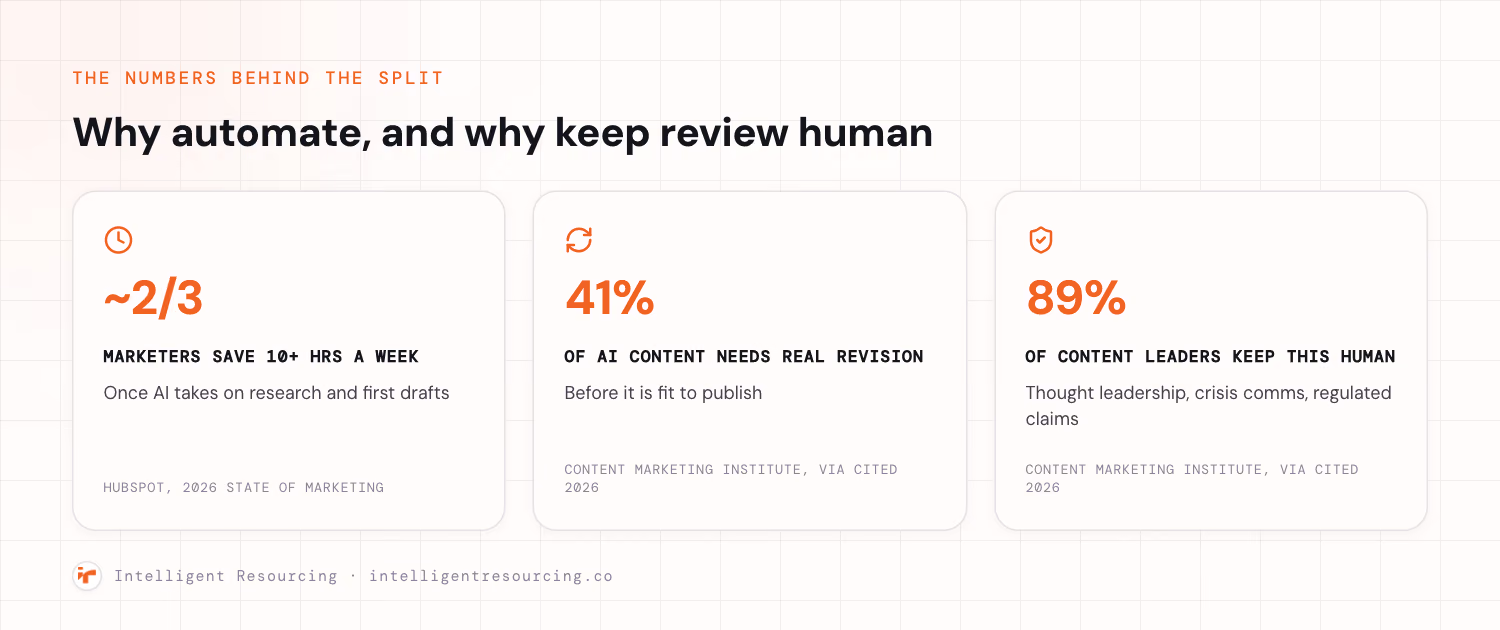
Pipeline automation improves how content automation ships, while creation automation changes how it is made. Adobe frames automation as expanding what specialist teams can produce rather than replacing writers, and HubSpot's 2026 State of Marketing data backs that up in practical terms: roughly two-thirds of marketers say AI now saves their team 10 or more hours a week once it takes on research and first drafts. B2B software evaluation increasingly begins inside AI tools like ChatGPT and Perplexity, per Omnibound's 2026 analysis, so the aim is content that answer engines quote.
What Should You Automate to Get Cited, and What Stays Human?
The rule is simple: automate high-volume, structured work, and keep original insight and judgment human. Product descriptions, benchmark tables, and first drafts suit automation, while thought leadership, crisis communications, and regulated claims do not. The Decision Matrix above sets the split.
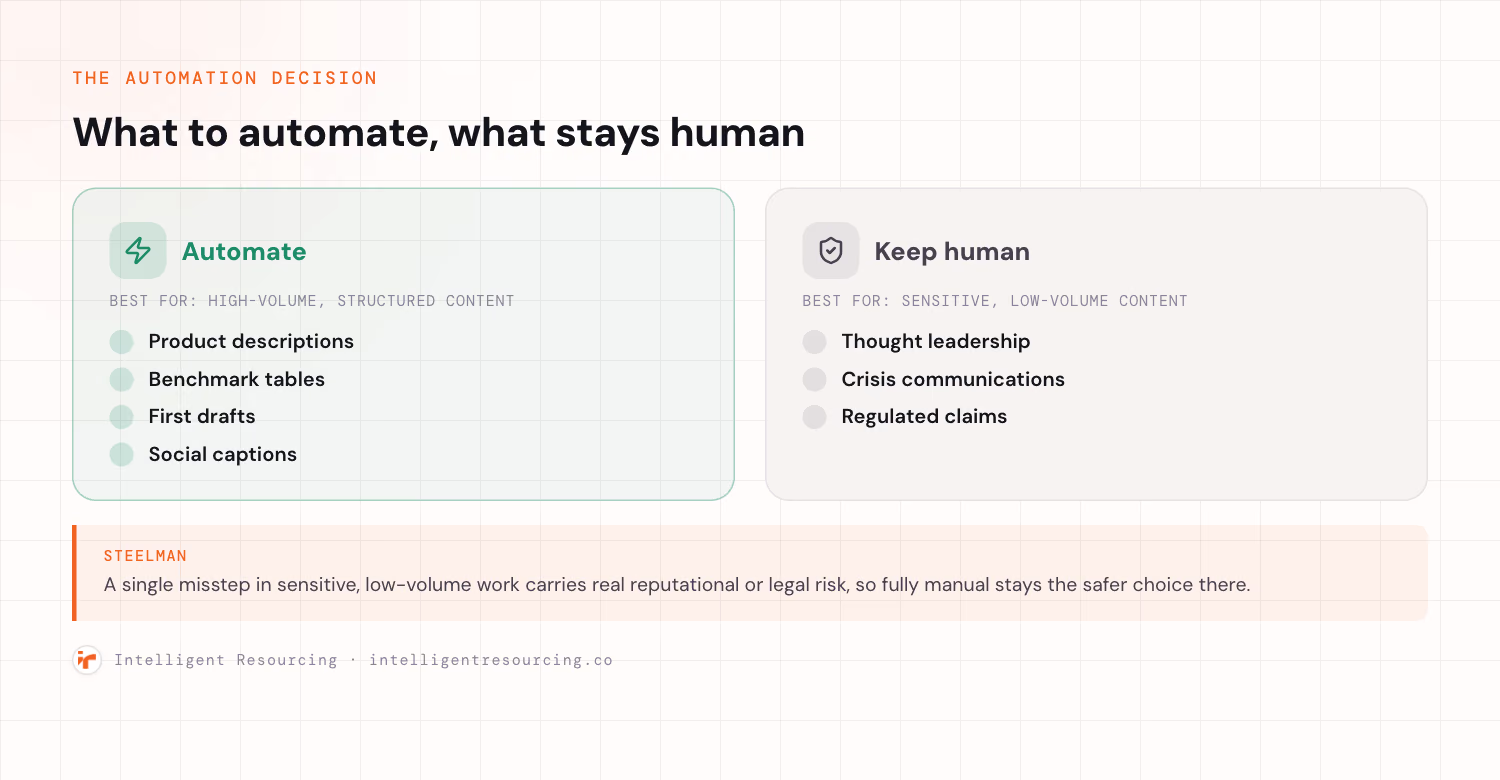
Fully manual production keeps a valid use case, since sensitive, low-volume work like regulated claims stays human. Content Marketing Institute research, cited by Cited's 2026 analysis, found that 41% of AI-generated content needs significant revision before it is publishable, which is exactly why volume without review is a genuine risk rather than a shortcut.
Which Content Types Are Safe to Automate?
Structured, repeatable formats are safe to automate. Product descriptions scale across a catalogue in minutes, social captions repurpose from a single draft, and benchmark tables generate from a dataset. FAQ blocks are built from question mining, and first drafts return in minutes rather than a day.
Each format saves real time, and the benefits of automating marketing content are mostly time and consistency gains that compound as the catalogue of automated formats grows.
Where Does Automation Break B2B Content?
Content automation usually fails through brand-voice drift, fabricated claims and weak integrations. These problems compound: poor inputs create generic or inaccurate outputs, and content that adds no original value gives answer engines little reason to retrieve or cite it.
| Failure Point | What Causes It | What Happens to the Content |
|---|---|---|
| Brand-voice drift | Models rely on generic prompts, outdated examples or inconsistent brand guidance. | The writing sounds interchangeable with competitors and loses the expertise, tone and positioning that make the brand distinctive. |
| Fabricated statistics | The system drafts from incomplete, unverified or stale source material. | Unsupported figures and false claims reduce trust and create legal, editorial and reputational risk. |
| Integration gaps | Research, data, drafting and publishing tools do not share live information reliably. | The workflow reuses old inputs, misses recent evidence or publishes content from an incomplete dataset. |
Why Human Review Is Essential
Human review is the control layer that automation cannot replace. Editors verify statistics, correct context, protect brand voice and decide whether the content contributes genuine information gain. Automation can accelerate production, but a human reviewer determines whether the final page is accurate, distinctive and credible enough to earn citations.
How Do You Automate Original, Data-Driven Content That Gets Cited?
Automate the collection, analysis and publication of proprietary data rather than using AI to summarise information that already exists elsewhere. Original findings give answer engines a reason to cite the source, while automation makes the research repeatable and faster to publish.
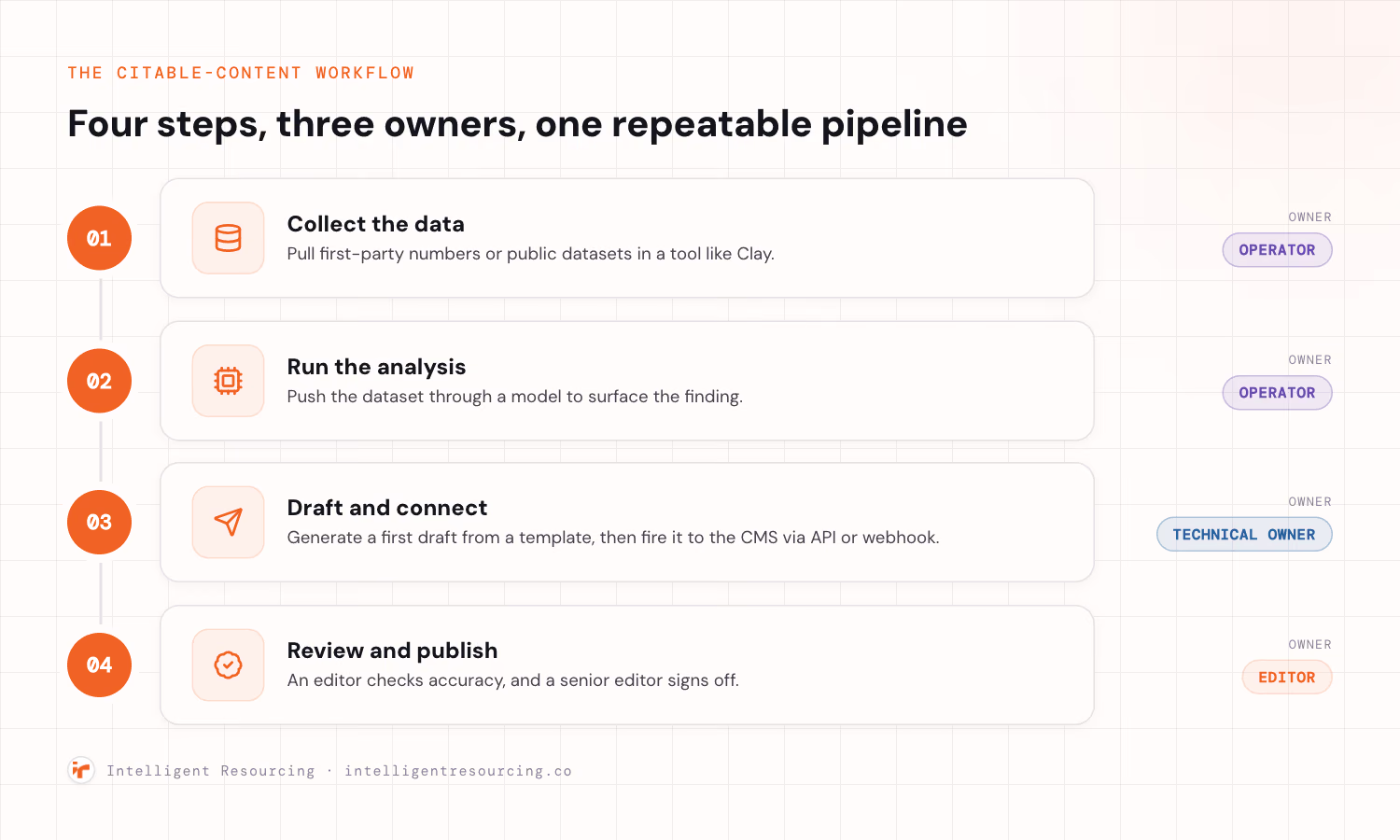
A repeatable AI content generation workflow runs in four steps:
- Collect the data: Pull first-party numbers or public datasets in a tool like Clay.
- Run the analysis: Push the dataset through a model to surface the finding.
- Draft and connect: Generate a first draft from a template, then fire it to the CMS via API or webhook.
- Review and publish: An editor checks accuracy, and a senior editor signs off.
The workflow needs three clear owners: an operator responsible for the data, an editor responsible for accuracy and brand voice, and a technical owner responsible for integrations. Without this accountability, failed connections can quietly introduce incomplete or stale information into published content.
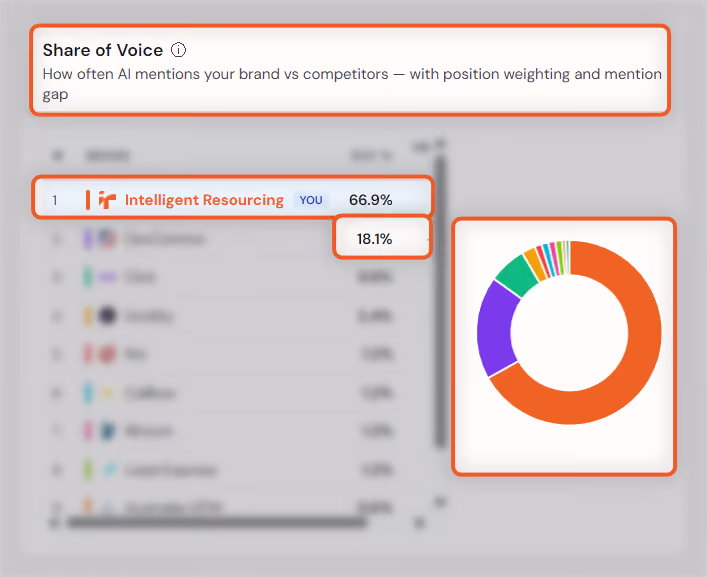
Intelligent Resourcing's AEO tracker shows what this produces when the full pipeline runs at scale. Across the Clay workflow query cluster, tracked across ChatGPT, Perplexity, Gemini, Grok and Google AI Overview, intelligentresourcing.co holds 66.9% share of answer, ahead of the nearest competitor at 18.1% (source: Intelligent Resourcing AEO Tracker, 29 Jul 2026).
These results connect directly to the workflow described above: proprietary tracking data is analysed, converted into benchmark-led content, structured with clear entities and schema, then published consistently across the query cluster.
The benchmark is not separate from the content automation process. It is the output of it. Automation creates speed and consistency, while proprietary data gives answer engines something original to retrieve and cite.
Original data only earns citations when answer engines can find, interpret and verify it. Intelligent Resourcing's generative engine optimisation service combines proprietary research, answer-first content structure and schema to turn unique findings into sources AI platforms can retrieve and cite.
Which Tools Build a B2B Content Automation and Data Stack?
A B2B content automation stack has four layers. Generation drafts and repurposes content, data and enrichment sources and structures original data, orchestration connects the steps into a workflow, and structured data makes the output machine-readable. Most teams already own generation; the gaps tend to be data, orchestration, and schema.
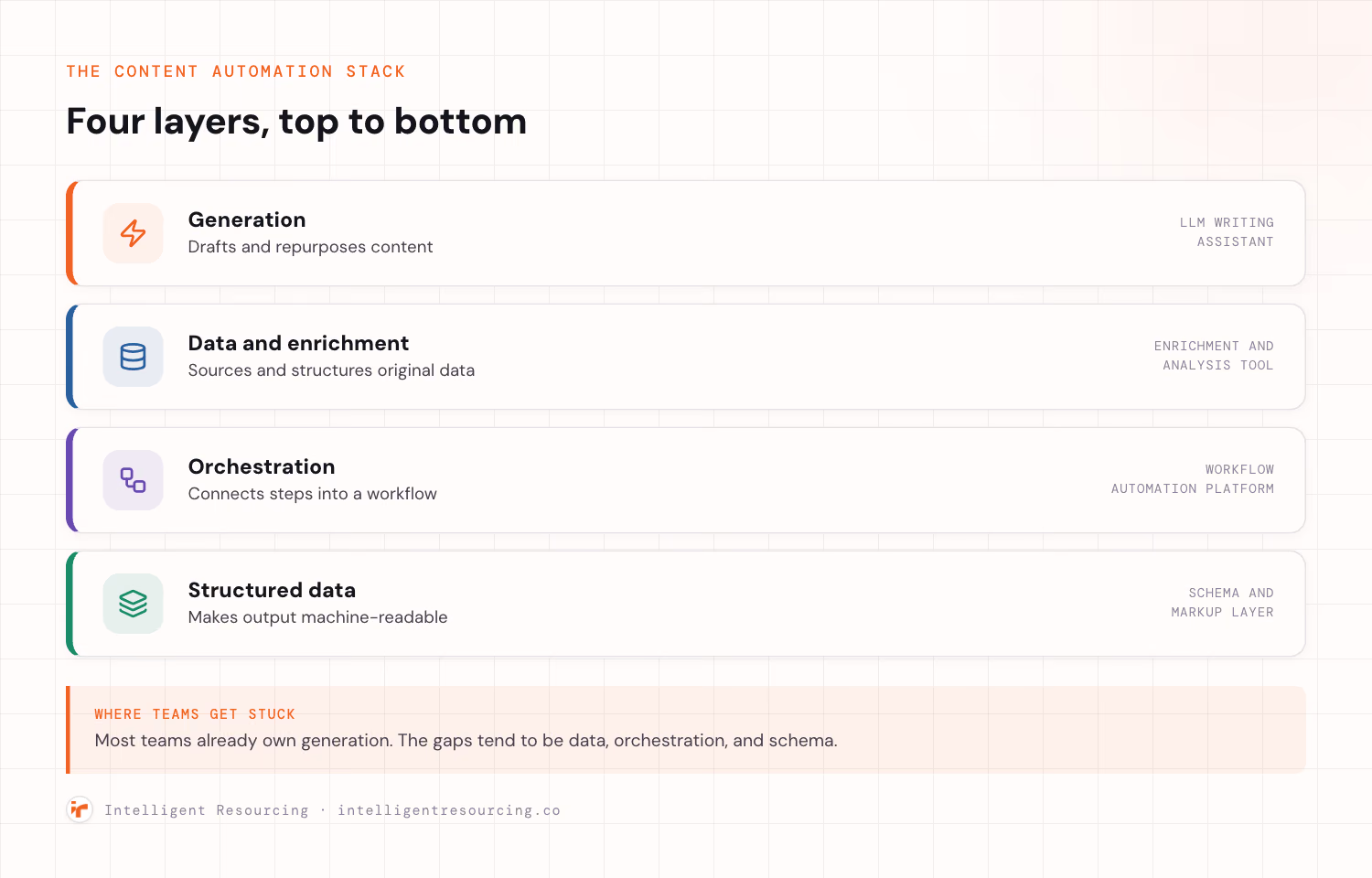
| Stack Layer | What It Does | Example Category |
|---|---|---|
| Generation | Drafts and repurposes content | LLM writing assistant |
| Data and enrichment | Sources and structures original data | Enrichment and analysis tool |
| Orchestration | Connects steps into a workflow | Workflow automation platform |
| Structured data | Makes output machine-readable | Schema and markup layer |
Pricing spans a wide band, as of mid-2026, LLM writing assistants run from free tiers to about 60 dollars per seat monthly, enrichment tools bill by credit, and workflow platforms sit in the mid hundreds. Integration is often where the stack struggles most, so choose content automation tools that share data cleanly rather than ones that simply do more.
How Does Structured Data Make Automated Content Citable?
Structured data tells AI systems what a page means, not just what it says. Schema markup and clean entity structure raise citation odds because answer engines match structured meaning to a query faster than they parse prose, and FAQPage and Article schema expose your answers directly.
FAQPage schema exposes each question and answer as a discrete, extractable unit, while Article schema labels the author, date, and topic. Both follow the parity rule: schema must mirror the on-page text exactly, because inconsistent entity data causes AI systems to down-rank a source. Pair schema markup for AI citation with a plan to structure content for AI citation; this is a build-team flag, not only a writing task.
What Does B2B Content Automation That Earns Citations Look Like?
It looks like a pattern, not a tool: original data, plus structure, plus velocity, earns citations and links. A team publishes a proprietary benchmark, marks it up with schema, and ships it on a repeatable pipeline, and answer engines cite the number.
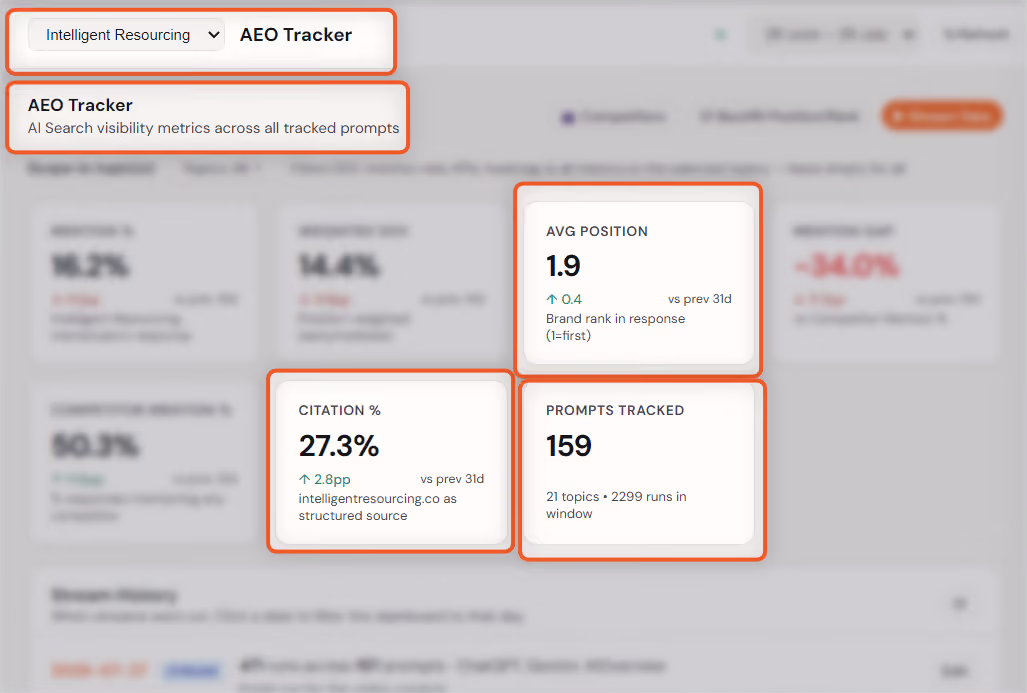
At programme scale, the same compounding applies across a full content set. Intelligent Resourcing's AEO tracker covers 159 active prompts and 2,299 total query executions across ChatGPT, Perplexity, Gemini, and Google AI Overview. Across that prompt set, intelligentresourcing.co holds a 27.3% citation rate, meaning more than 1 in 4 AI responses that mention IR name it explicitly as the source, with an average mention rank of 1.9 (source: Intelligent Resourcing AEO Tracker, 29 Jul 2026).
Those numbers reflect the same pipeline described in this article applied to Intelligent Resourcing's own content programme: structured pages, original benchmarks, schema markup, and the citation rate is the output, not the input.
Content Creation
Automation without originality and structure will not earn citations. Speed only creates an advantage when it is applied to proprietary data, expert review and machine-readable content. Intelligent Resourcing builds the workflows that connect those elements, from data collection and analysis to drafting, review and publication.
FAQs
What Is Content Automation in B2B Marketing?
Content automation in B2B marketing is software and AI performing content tasks with minimal human input. It covers pipeline work like scheduling and distribution, and creation work like drafting. HubSpot's 2026 State of Marketing report found that roughly two-thirds of marketers now save 10 or more hours a week using AI tools for this kind of work.
Does Automated Content Still Get Cited by AI Search Engines?
Yes, with one condition. AI search engines retrieve original, structured, entity-clear content and skip thin summaries. Omnibound's 2026 analysis found that software evaluation increasingly starts inside AI tools, so publish original data and mark it up rather than restating what already exists elsewhere.
What Content Should B2B Teams Never Fully Automate?
Never fully automate thought leadership, crisis communications, or regulated claims, since these carry brand and legal risk that only human judgment manages. Content Marketing Institute research, via Cited's 2026 analysis, found that 89% of content leaders keep this work human-led.
What Tools Do You Need for B2B Content Automation?
You need four stack layers: generation, data and enrichment, orchestration, and structured data. Generation drafts, enrichment sources data, orchestration connects the steps, and schema makes output machine-readable. Integration is usually the main barrier teams run into when connecting these layers together.
How Does Schema Markup Help Automated Content Get Cited?
Schema markup exposes your answers in a format AI systems extract cleanly. FAQPage and Article schema mirror the on-page answer, so an answer engine can lift it without parsing the full page, and schema has to match the visible text exactly for that trust to hold.