
How does Claude AI select sources for citations?
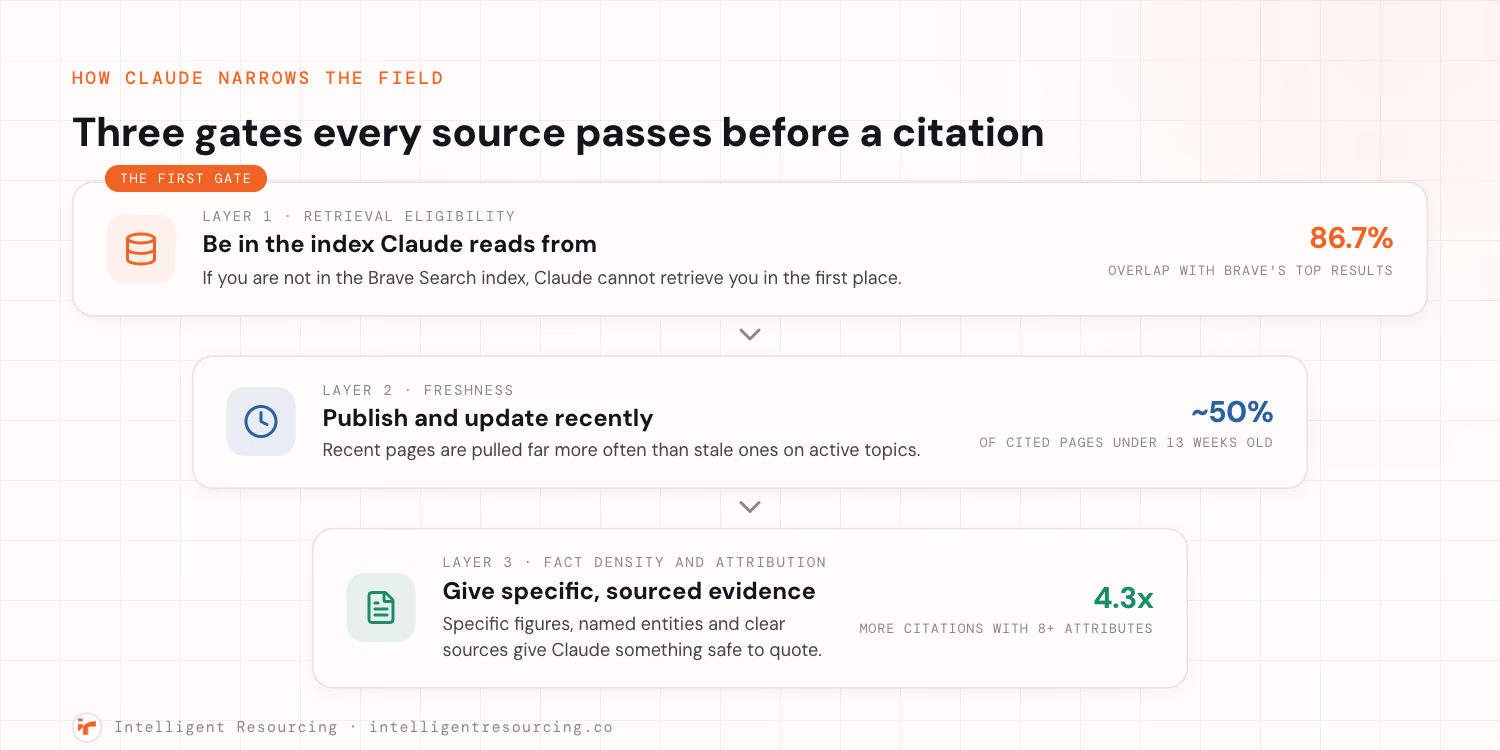
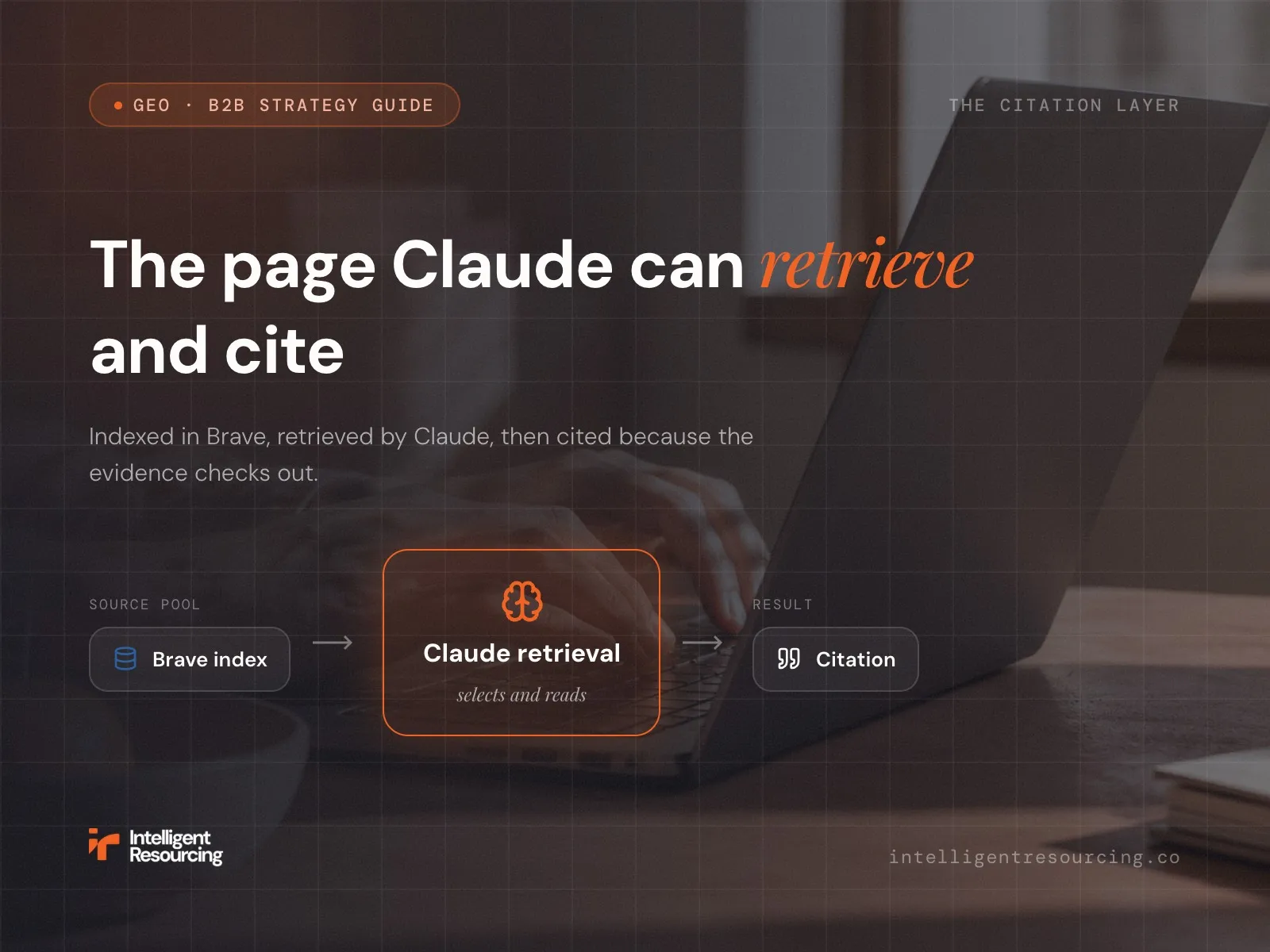
Claude selects sources through retrieval, not ranking. When web search is on, it pulls candidate pages from the Brave Search index and favours whatever is fresh, fact-dense and clearly attributed, while pages missing from Brave never enter the pool at all. That makes Brave indexing the first gate any page has to clear before it can be cited.
- Layer 1, retrieval eligibility: Claude draws live search candidates from the Brave Search index rather than relying on Google rankings alone. Profound found an 86.7% overlap between Claude citations and Brave's top organic results. ClaudeBot supports longer-term corpus discovery, while Claude-User and BraveBot support live retrieval.
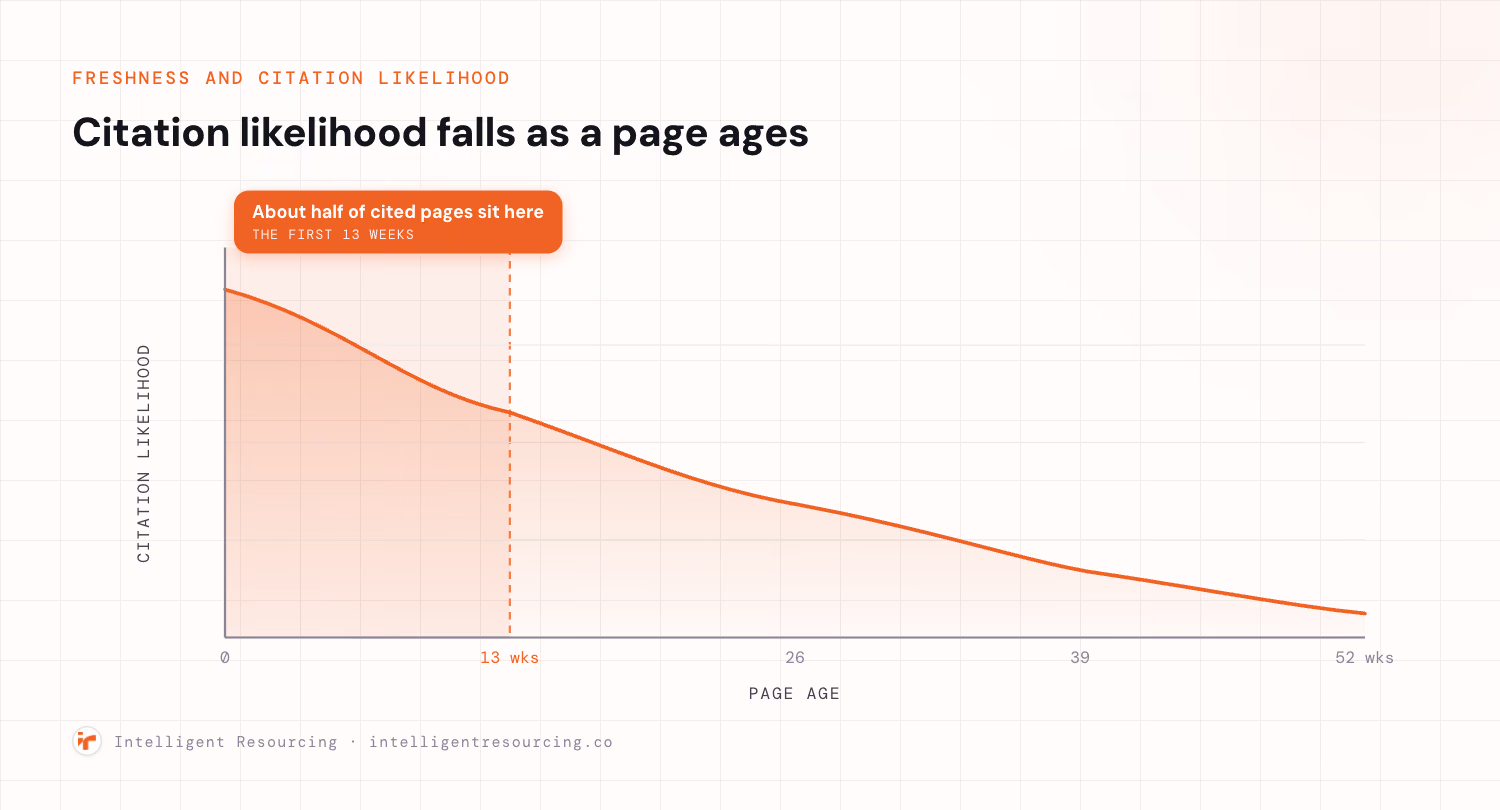
- Layer 2, freshness: recent pages are more likely to surface than stale ones. Erlin's research found that roughly half of Claude-cited pages were less than thirteen weeks old, which makes regular updates an important retrieval signal.
- Layer 3, fact density and attribution: Claude favours pages containing specific figures, named entities, clear sources and direct claims. General or promotional copy gives the model less evidence to verify and fewer extractable passages to cite.
Two crawlers control your eligibility, alongside Brave's own indexer:
| Crawler | Role | Why it matters |
|---|---|---|
| ClaudeBot | Collects content for Claude's training corpus over time. | Supports long-term brand and entity recognition. |
| Claude-User | Retrieves live content when a user asks Claude to search the web. | Enables real-time access to your page during a query. |
| BraveBot | Crawls and indexes pages for Brave Search. | If Brave has not indexed the page, Claude cannot retrieve it through live search. |
How do you get your content discoverable in Claude and Brave Search?
Discoverability starts with crawler access, indexable pages and key answers available in the page's initial HTML. Anthropic uses Claude-User for user-directed retrieval and Claude-SearchBot to improve search results, while ClaudeBot is associated with model training. Brave also operates its own search crawler, but it does not publish a distinct BraveBot user agent.
Use this checklist in order:
- Check search visibility: run a site:yourdomain.com search in Brave and compare the indexed URLs with your priority pages.
- Request a Brave refresh: use Brave's URL submission tool when an important page is missing or needs to be recrawled.
- Allow Claude retrieval: keep Claude-User and Claude-SearchBot accessible in robots.txt. Allow ClaudeBot separately when you also want the content eligible for potential model-training use.
- Keep pages conventionally crawlable: Brave states that pages unavailable to Googlebot will not be crawled by its search crawler, so avoid blocking essential content from standard search crawlers.
- Serve key answers in HTML: make direct answers, evidence and entity details available without requiring complex client-side rendering, which reduces the risk that retrieval systems hit an incomplete page.
- Test the rendered output: review priority pages with JavaScript disabled and inspect server logs to confirm that Anthropic's retrieval agents can reach them.
A practical robots.txt baseline is:
User-agent: Claude-User
Allow: /
User-agent: Claude-SearchBot
Allow: /
User-agent: ClaudeBot
Allow: /
The work of getting AI crawlers to access your best content should cover crawler rules, server rendering, internal discovery and log verification as one technical workflow. These controls form the discoverability layer of generative engine optimisation, where access comes first, followed by extractable answers, evidence and third-party authority.
How Should You Structure B2B Content to Get Cited in Claude?
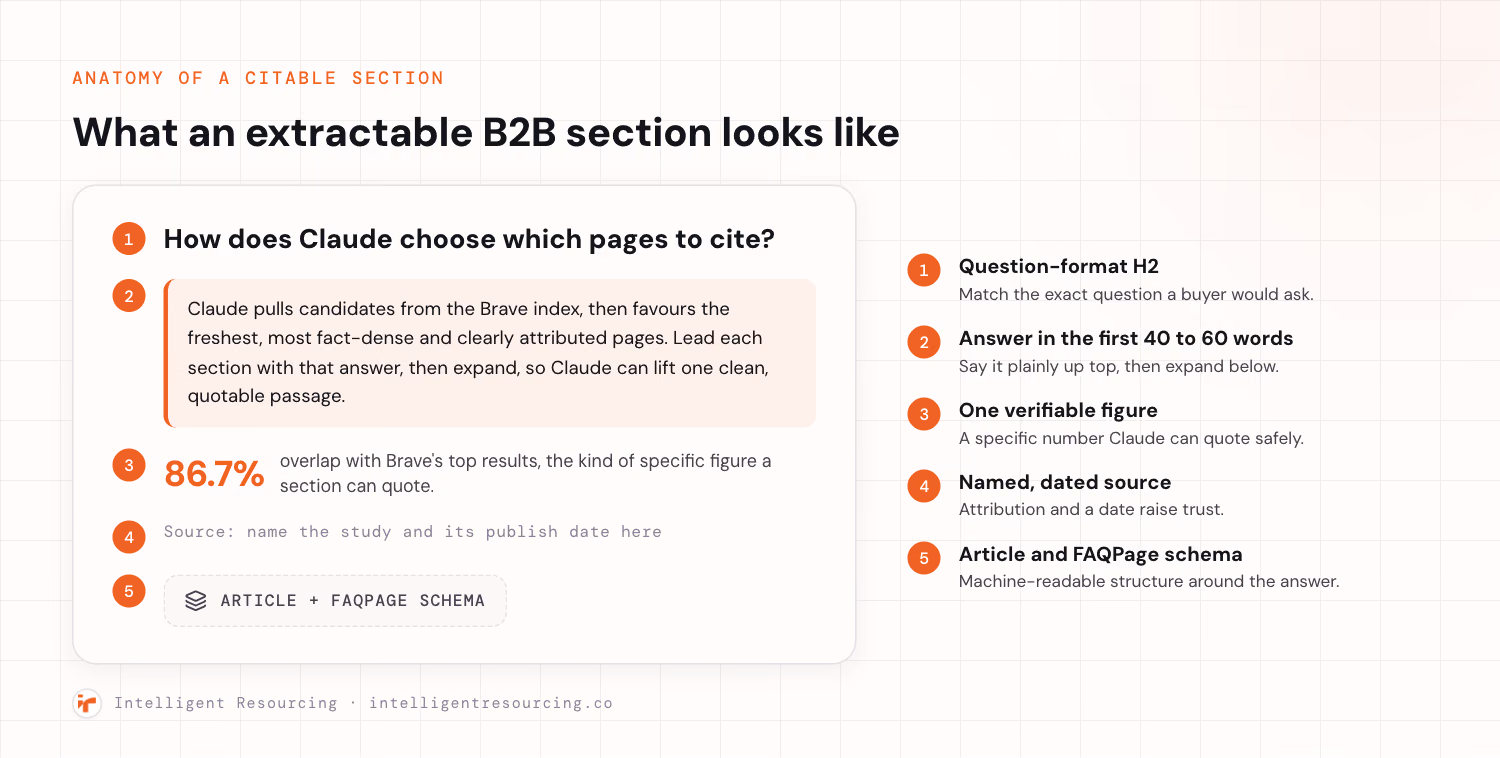
Structure each section as a self-contained answer that Claude can understand without relying on the rest of the page. Use question-led headings, open with a concise response, then support the claim with named entities, specific evidence and clear source attribution.
- Use question-format H2s: mirror the way buyers phrase prompts so each section maps to a distinct information need.
- Front-load the answer: place the main conclusion in the first 40 to 60 words rather than delaying it until the end.
- Add verifiable detail: include dates, figures, named organisations and direct source attribution instead of broad promotional claims.
- Keep passages self-contained: each section should explain the subject, claim and evidence clearly enough to be extracted on its own.
- Identify the author: use a named, credentialed author and consistent Person and Article entity details.
- Add structured data carefully: implementing schema markup for AI citation can help machines identify the article, author and question-and-answer relationships, provided the markup matches the visible page exactly.
In Growth Memo's analysis of 18,012 verified ChatGPT citations, 44.2% came from the opening 30% of a page, and Claude's passage-based retrieval makes the same logic apply: your best answer cannot sit in the conclusion. Write extractable blocks of 134 to 167 words, each under a question-format H2 that mirrors a real query.
Evidence density compounds this: the same Erlin data found pages with eight or more verifiable attributes earned 4.3 times more citations. The academic record backs the pattern up, too. Princeton's GEO study found that combining techniques like citing sources and adding statistics can lift content visibility in generative engines by up to 40%. Pair that structure with Article, Person and FAQPage schema so the markup reinforces the prose.
How do you build the third-party authority Claude trusts?
Build third-party authority by making your brand consistently verifiable across independent sources, not by relying on claims published only on your own website. When Claude uses web search, it draws on live sources and presents citations that users can inspect, so consistent external corroboration makes your claims easier to verify.
Focus on four areas:
- Earn specific reviews: build accurate profiles on relevant platforms such as G2, Capterra, Clutch or Google Business Profile, using reviews that describe the work delivered and the outcome achieved.
- Contribute expert commentary: place attributable insights from named specialists in credible industry publications, podcasts and research-led articles.
- Participate in trusted communities: add useful, non-promotional expertise to relevant Reddit discussions, professional forums and YouTube content.
- Keep entity details consistent: use the same brand name, service descriptions, locations and expert profiles across owned and third-party pages.
Start with an AI Citation Footprint audit that maps where your brand is mentioned, which claims are independently supported and which trusted sources already appear for your priority prompts. Then concentrate on earning evidence-led inclusion in those publications rather than chasing mentions for volume alone.
How do you measure Claude citations, and where does it break down?
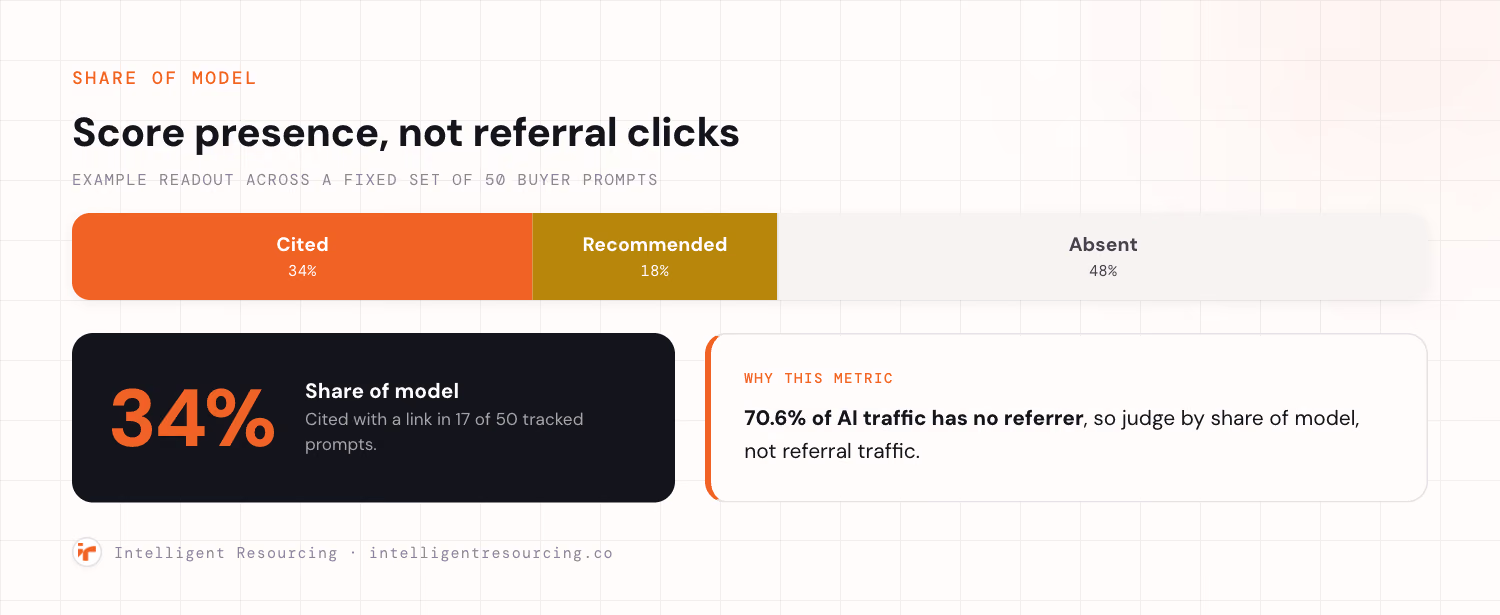
Measure Claude citations manually, because rank trackers cannot see them: build a prompt set of 20 to 50 buyer questions, run them through Claude monthly with web search on, and record each result as cited, recommended or absent. Divide citations by prompts run and that percentage is your share of model.
Attribution breaks down after the click, too. The Digital Bloom found that 70.6% of AI traffic arrives with no referrer, so your analytics will systematically undercount Claude's impact. Judge progress by share of model, not by referral traffic.
Anchor every improvement claim to a baseline: unstructured pages earn near-zero citations, while a restructured, well-sourced page reaches a measurable share of model, which is a large relative gain either way you cut it. State the baseline, the result and the delta every time you report progress.
Make Your B2B Content the Source Claude Cites
Claude visibility is an editorial and technical discipline, not a one-off: it compounds once discoverability, structure and third-party authority work together. Allow the crawlers, serve answers server-side, structure extractable passages, then earn corroboration from sites Claude already trusts. Do this consistently and your best pages become the source Claude names.
Book a call with our team and see how our generative engine optimisation work makes your best content the source Claude cites.
Content Creation
Intelligent Resourcing rebuilds your highest-intent pages for Brave discoverability and answer-first extraction, then tracks your share of model on a fixed prompt set. Book a call to map your Claude citation gaps.
FAQs
Does Claude always search the web before it cites a source?
No. Claude only retrieves live when web search is enabled or a query needs fresh data; otherwise it answers from training data. That means optimising for two paths at once: feed the Brave retrieval path for live citations, and build long-term entity authority so training data recognises your brand too.
How long does it take to get cited in Claude?
Technical fixes and content restructuring typically show citation movement within 60 to 90 days, while third-party authority compounds more slowly, over 6 to 12 months. The thirteen-week freshness pattern explains the early window: recent, well-structured pages surface first, and durable authority then holds the citation over time.
Should you allow or block ClaudeBot and BraveBot?
Allow both if you want citations. ClaudeBot feeds Claude's training data over time, while BraveBot feeds the live retrieval that powers web answers, and blocking either removes you from that citation path entirely. There is no upside to blocking them for a B2B brand seeking Claude visibility.
Does domain authority matter for Claude citations?
Domain traffic is a strong predictor for AI citations generally: SE Ranking's analysis of Google's AI Mode found a SHAP value of 0.63 for domain traffic, the highest factor tested, though that study covers Google's AI Mode rather than Claude directly. For Claude specifically, its mid-market citation distribution means B2B brands can earn citations without Wikipedia-level authority. Focus on Brave discoverability, extractable answers and third-party corroboration.
Can you pay to get cited in Claude?
No. Anthropic offers no paid placement in Claude citations; they are earned through source authority, accuracy and Brave discoverability, with no shortcut and no ad slot available. The only route is verifiable, well-structured content that Claude can retrieve and trust, so fundamentals win here, not budget.