

How Does Grok Source Information for Real-Time Answers?
Grok sources answers through xAI Live Search, which blends public X posts with open-web search and then attaches citations to the response. That citations attribute returns by default, but Grok, not the publisher, decides when to cite a source inline, so the visible trail is not always complete. With Live Search off, Grok answers from training data alone.
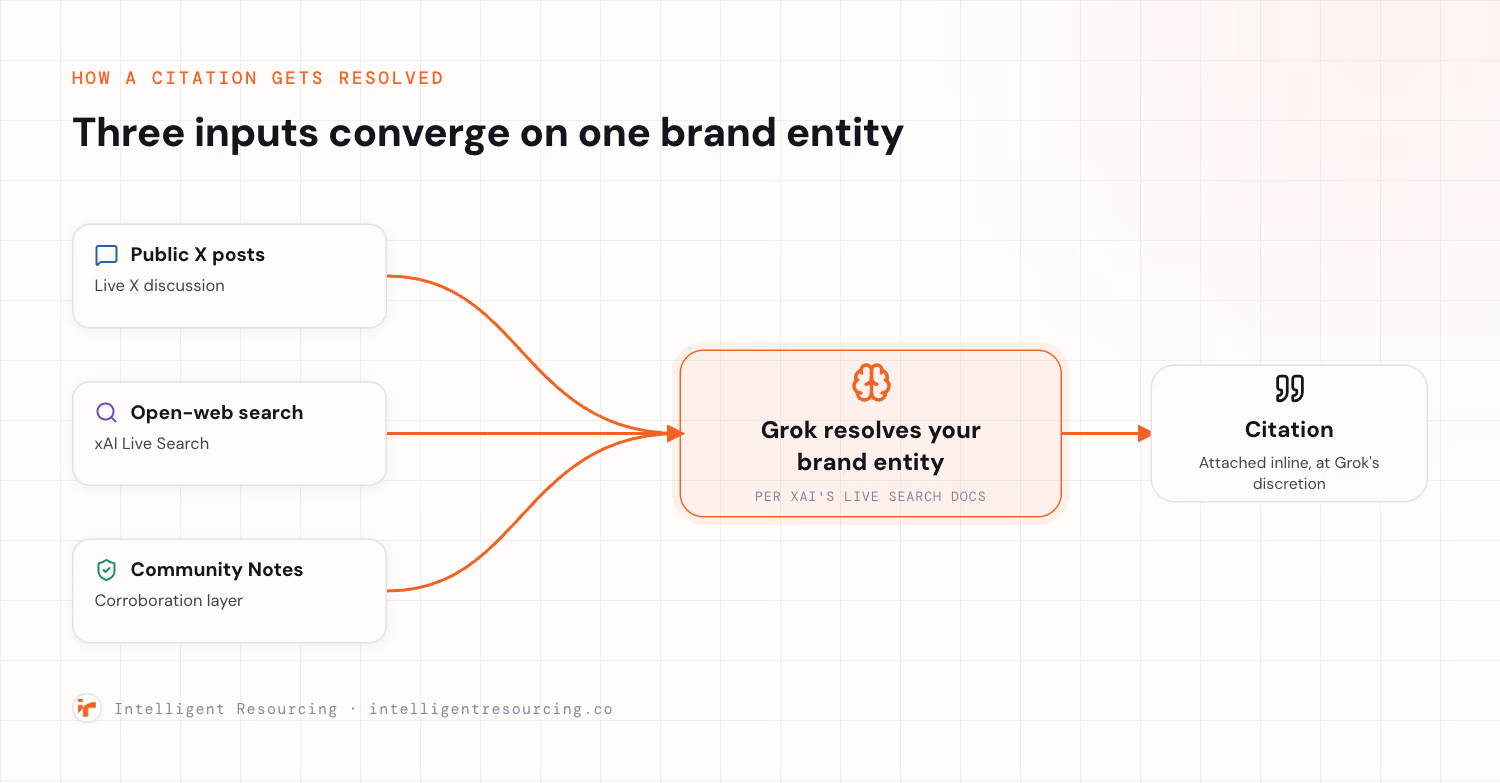
Live Search is Grok's real-time retrieval layer, querying X and the open web together, and Grok's citations attribute returns every source it encounters by default, per xAI's own 2026 developer documentation. Because the model decides which of those sources to cite inline, publishers cannot force an inline citation; the only lever available is making the page easy to cite in the first place.
Freshness sits behind a toggle, and the risk of getting it wrong is real. Research from Graziano Stefanelli documents Grok producing failures on civic, electoral, and conflict-related claims when reliable, fresh sourcing isn't available, which is the practical consequence of losing the Live Search layer. Live citations depend on Live Search staying active, and that is the first risk in any Grok plan.
Ranking still matters for B2B teams, because open-web search feeds Grok directly while live X discussion adds a second, faster path, and Grok uses both to resolve your brand entity. Treating the two as inputs to one answer is what defines answer engine optimisation.
How Does Grok Choose Which X Posts to Cite?
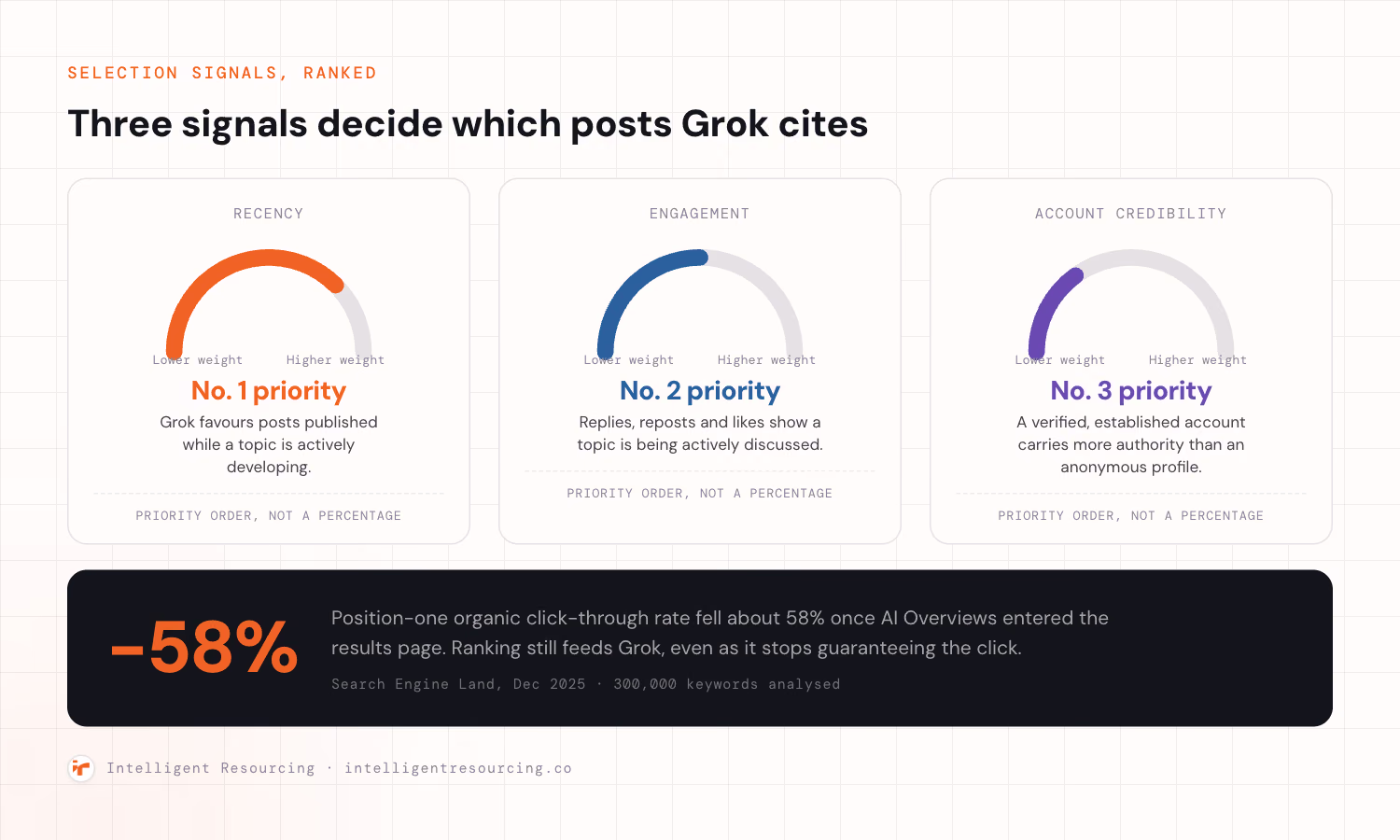
Grok favours sources being actively discussed on X right now, leaning on the social graph over the link graph, with recency, engagement, and account credibility acting as the main selection signals; Community Notes then adds a corroboration layer on top. Since xAI publishes no ranking formula, treat any citation-mix figures as directional rather than guaranteed.
Classic SEO ranks the link graph, but Grok favours live-X and community sources over pages that merely rank, per Voctos' 2026 analysis, and the delta is the signal source, not the page itself: fresh discussion beats accumulated backlinks here.
Three signals drive selection.
| Priority | Selection Signal | How It Affects Grok Citations |
|---|---|---|
| 1 | Recency | Grok favours posts published while a topic is actively developing, so newer posts can carry more weight than older content. |
| 2 | Engagement | Replies, reposts and likes indicate momentum and help show that a topic is being actively discussed. |
| 3 | Account credibility | A verified, established account carries more authority than an anonymous or inactive profile. |
| Corroboration layer | Community Notes | Community Notes can reduce the credibility of contested claims, regardless of how recent or engaging the post is. |
The citation mix skews toward social platforms over standard web pages: community threads on Reddit, video discussion on YouTube, and conversation on Facebook all show up more than a typical search-ranked page would predict. Since xAI publishes no ranking formula of its own, treat this pattern as directional rather than a guaranteed mix.
Risk concentrates in exactly this gap: citations do not fire when Live Search is off, and they weaken when your X account is unverified or inactive, because an inactive account gives Grok little to resolve. That combination is the real risk B2B brands need to manage.
How Do B2B Brands Get Cited by Grok on X?
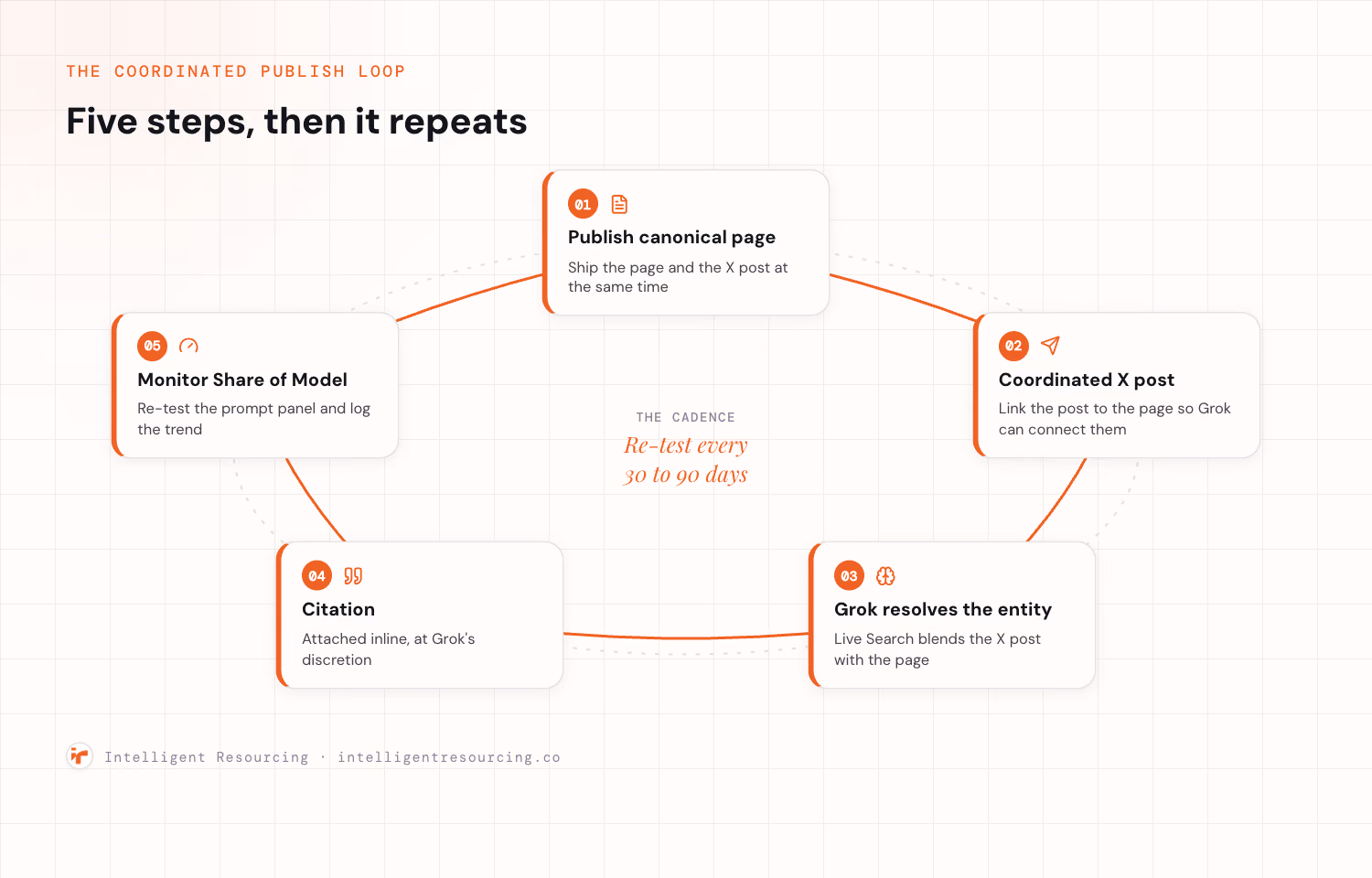
B2B brands get cited by coordinating page and post: ship the canonical page and X post together, verify the account and match the bio, lead every section with a clear answer, add schema and a named author, prioritise topics your buyers discuss now, and rank first, because Grok also draws on search.
- Ship the page and X post together: publish the canonical page and post to X at once, and link the post to the page, so Grok's Live Search can resolve the entity.
- Verify the brand account: match the bio to your site and regions, since a verified handle anchors your brand entity.
- Lead every page and section with an answer: open with a short, self-contained response so Grok extracts clean passages faster.
- Add Article and FAQPage schema: pair a named, credentialed author with schema markup for AI citation and a clear approach to structuring content for AI citation, so Grok can identify the source, extract the answer and verify the entity more easily.
- Prioritise live B2B topics: pick subjects your buyers discuss now, because live conversation is the trigger for citation.
- Rank first: Grok also draws on ranked content, and Search Engine Land reported AI Overviews cut position-one click-through rate by about 58% based on a December 2025 analysis of 300,000 keywords, so ranking still feeds the model even as it stops guaranteeing the click.
What Content Gets Cited by Grok for B2B Software and Services?
Grok cites B2B content that is extractable, entity-dense, and verifiable, favouring comparison tables, direct-answer paragraphs, and community-validated posts. For B2B software, that means vendor comparison pages, pricing explainers, and how-to workflows with named tools, and naming the platforms, metrics, and dates in every paragraph is what makes that content usable.
Extractable beats eloquent: a vendor comparison page hands Grok a clean table, a pricing explainer answers one direct question, and a how-to workflow names the exact tools rather than describing them generically. According to Mack Grenfell of Trakkr, Grok citations are live relevance-and-recency selections, not backlink-driven.
To improve Grok citation potential in Australia and APAC, combine regional relevance, timely X activity and entity-rich content that gives the model clear facts to verify.
- Use the AU/APAC angle: Australian buyers discuss vendors in local X threads, and regional timing affects what Grok sees as current.
- Coordinate page and post timing: publish the canonical page alongside live X activity when your buyers are already discussing the topic.
- Increase entity density: name specific platforms such as HubSpot, Clay and xAI, and include clear dates, metrics and sources.
- Give Grok verifiable details: concrete entities and evidence are easier to retrieve and cite than vague, generic copy.
- Apply LLM SEO principles: combine entity-rich writing with question mining so each section answers a real search or prompt pattern, drawing on LLM SEO fundamentals.
How Do You Monitor B2B Brand Mentions and Citations in Grok?
Monitor Grok citations by running a fixed prompt set, logging whether your brand and URL appear, and tracking Share of Model over time: build a baseline with 20 to 50 prompts, then re-test every 30 to 90 days, treating citations as a distribution channel measured like earned media rather than a backlink count.
Build a simple tracker first, using these columns: prompt, platform, date tested, brand mentioned, URL cited, competitor cited, source type, content gap, and action, with one row per prompt to keep it clean.
Set a Share of Model baseline next by selecting 20 to 50 high-intent prompts, running each one in Grok, and recording a citation, a mention, or an absence for each; divide citations by prompts tested, and re-test every 30 to 90 days.
Trakkr's 2026 framing treats Grok citations as earned media, which means the trend matters more than any single count. Track competitor citations in the same sheet, since each competitor citation marks a content gap, and tag time-sensitive findings as of the month tested.
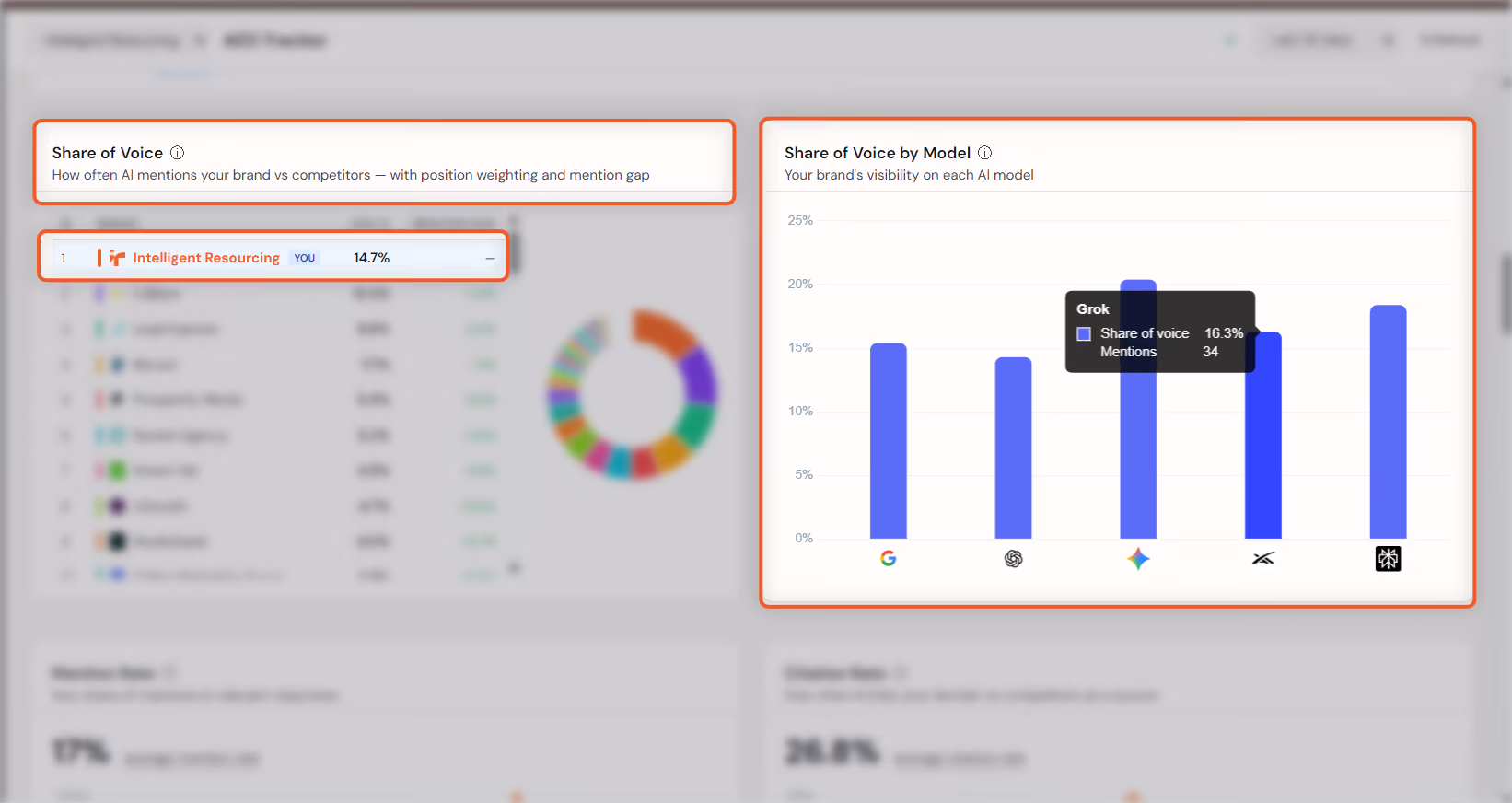
Intelligent Resourcing's own AEO tracker breaks SoV by engine rather than blending it into one number, because Grok, ChatGPT, Gemini, and AI Overviews weigh their sources differently, and a blended average hides where you are winning and where you are not.
As of 30 July 2026, based on the previous 28 days, Intelligent Resourcing holds 16.3% SoV on Grok specifically, from 34 Grok mentions, above its overall category SoV of 14.7% across all engines. Overall citation rate across the full prompt set: 26.8% (source: Intelligent Resourcing AEO Tracker, 30 Jul 2026). The Grok figure does not appear inside a blended average; it appears as a discrete bar. That separation is the measurement the section above describes: prompt by prompt, engine by engine, trend over trend. A single aggregate number would have buried it.
Make Your B2B Brand Citable in Grok
Grok visibility follows one coordinated strategy: ship the canonical page and X post together, verify the account and add schema, lead with entity-dense, extractable answers, and rank the page while feeding the live conversation. That is the whole play.
Content Creation
Intelligent Resourcing pairs answer engine optimisation with a coordinated X plan, then maps your prompt set and page roadmap so Grok has a citable source to draw on.
FAQs
Does Grok Cite Sources for B2B Queries?
Yes, when Live Search is on. Grok returns a citations attribute by default through xAI's tools, though the model decides when to attach citations inline, so the visible trail is not always complete. For B2B queries, expect citations when your topic is live and Live Search is active.
How Does Grok's Live Search Decide What Is Fresh Enough to Cite?
Grok's real-time X feed can surface posts within minutes and favours sources being actively discussed right now, but that freshness sits behind the Live Search toggle: with Live Search off, Grok answers from training data instead. A live X conversation is the fastest route to a fresh citation.
Do I Need an Active X Account to Get Cited by Grok?
A verified, active X presence is the single highest-impact step available, because Grok leans on the social graph to resolve entities. A coordinated X post linking to your canonical page is the practical minimum; without it, you rely on web search alone, which is slower and less certain for B2B.
How Is Getting Cited by Grok Different From ChatGPT or Perplexity?
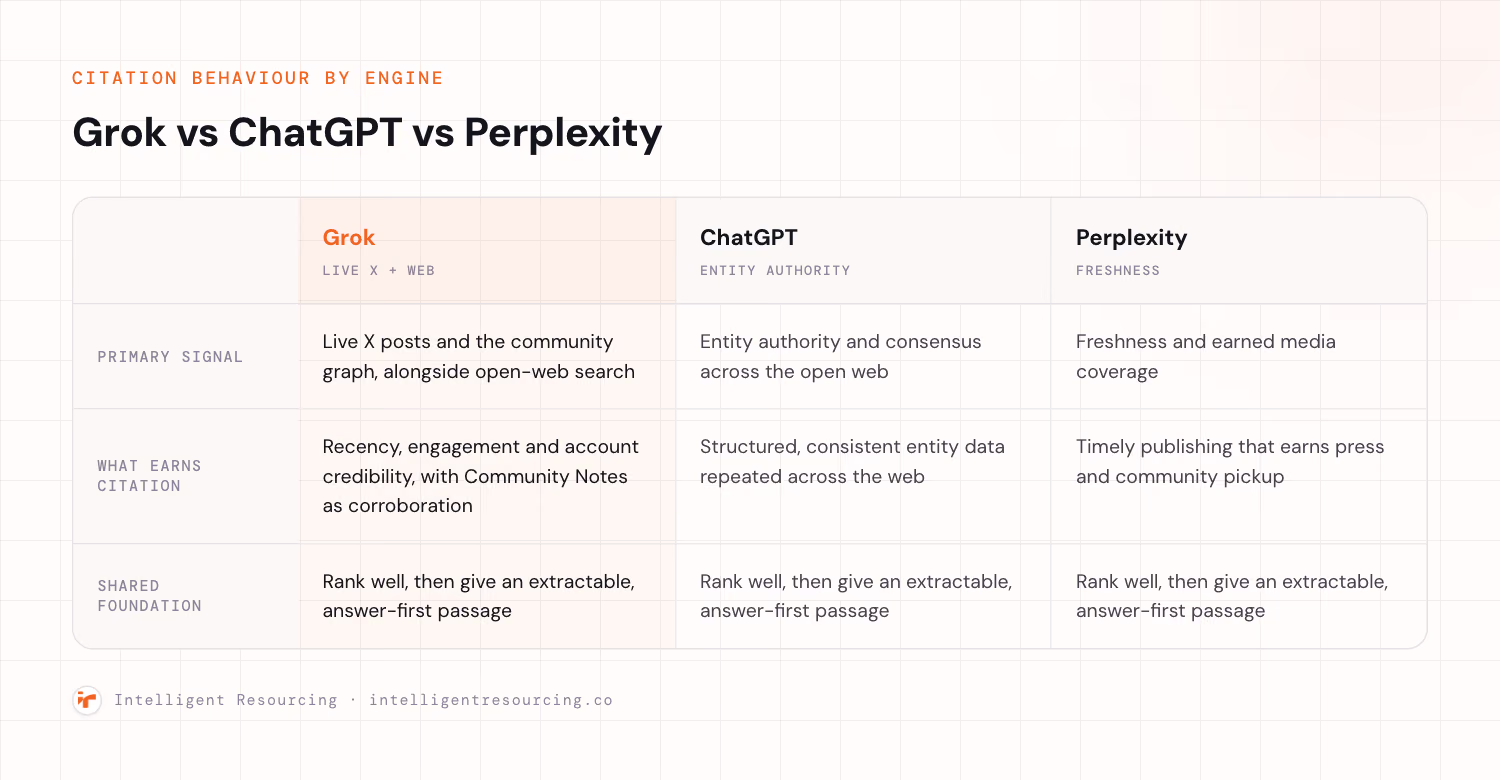
Grok looks at live X and community discussion, ChatGPT weighs entity authority and web consensus, and Perplexity favours freshness and earned media, but the shared foundation is the same everywhere: rank well, then give an extractable answer.
How Do I Track Whether Grok Is Citing My B2B Brand?
Run a fixed set of 20 to 50 prompts, log whether your brand and URL appear, and calculate Share of Model from the results, re-testing every 30 to 90 days. Log competitor citations to find content gaps, and treat the trend like earned media, not a backlink count.