

What Does iEnhance Actually Offer?
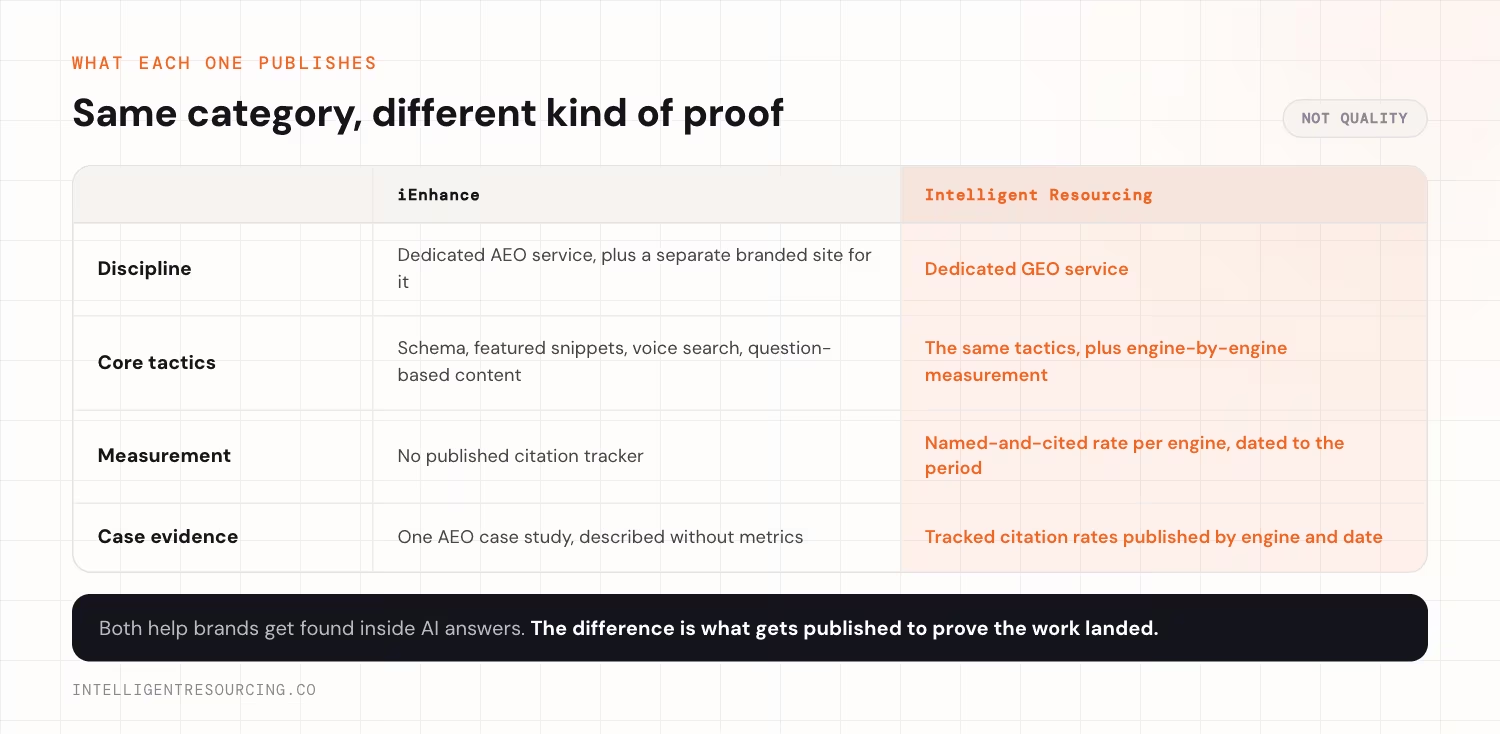
iEnhance runs a dedicated AEO service from Noosa Heads, sold as a named offering on its main site, alongside a separate branded property, Answer Engine Experts, built for that discipline on its own. AEO also sits inside the agency's existing Digital Strategy Auditing Service, running alongside SEO and general site health rather than as a fully separate product line.
That work sits on top of more than 20 years of Sunshine Coast digital marketing history. The agency describes itself as a 20 year industry leader in SEO, SEM and web design, carries a Google Partner badge, and has specialised in real estate digital strategy since 2007. Named clients include Noosa Council and Moving Software, alongside real estate, tourism, technology and trades brands. Its stated client base reaches Australia wide, including Melbourne and Sydney.
Two details are worth pulling out.
- AEO sits inside the existing audit method, not next to it. A client already gets an AEO review and an AI Solutions Healthcheck as part of the standard Digital Strategy Auditing Service.
- The reach claim cuts against a purely local read. iEnhance markets a client base well beyond the Sunshine Coast, even though its published content strategy still centres on local search intent.
Intelligent Resourcing runs generative engine optimisation as its own dedicated service. GEO is not a replacement for AEO tactics: schema markup, featured snippets and voice search still matter on their own. GEO adds a measurement layer on top of that work, in line with published guidance on structuring content for AI citation.
Both services sit in the same broad category: helping brands earn visibility inside AI-generated answers. Where they differ is what gets published to prove the work is landing.
Do the Published Tactics Cover What Drives Citations?
iEnhance's published AEO tactics are schema markup, featured snippet targeting, voice search optimisation and question-based content mapping. These are standard, well-established AEO practices.
Two pieces of third-party research are worth noting against that list.
- SE Ranking's analysis of 129,000 domains found that sites with more than 32,000 referring domains were 3.5 times more likely to be cited by ChatGPT than sites with 200 or fewer. That factor sits outside the published tactic list.
- A meta-analysis by Cyrus Shepard on Zyppy Signal, published in May 2026 and covering 54 studies, ranked URL accessibility and existing search rank ahead of schema markup as citation predictors.
Neither point means the listed tactics are wrong. They are standard practice. But they suggest a tactic list alone may not show the full picture of what drives citations. A buyer comparing providers should ask which factors each one actually measures, not just which tactics each one lists.
Where the Two Models Differ Most: Measurement
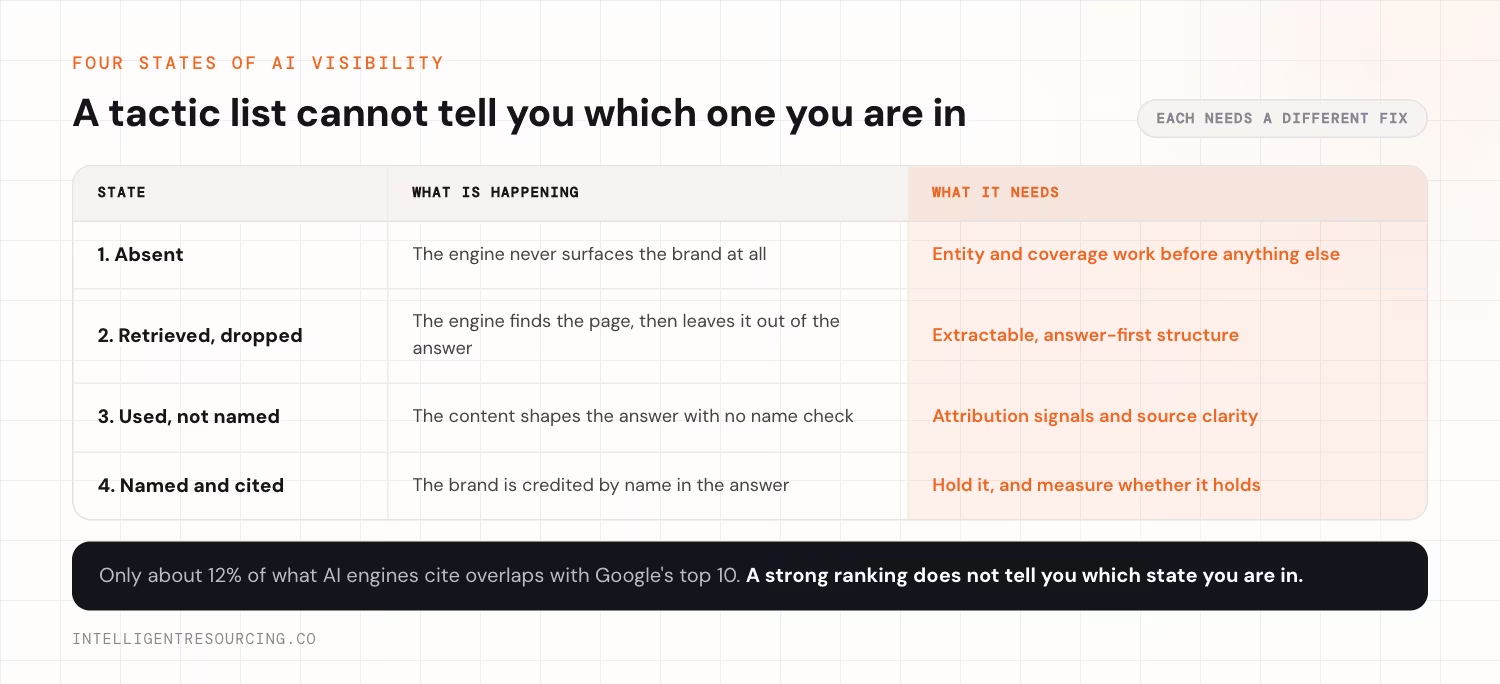
This is the clearest point of difference. iEnhance publishes no method for tracking which AI engines name, drop or cite a brand. AI visibility breaks into at least 4 distinct states:
- Absent from an engine's answers entirely.
- Retrieved by the engine, then dropped from the final answer.
- Used in the answer without a name check.
- Properly cited by name.
Each state needs a different fix, not one generic AEO pass. Nothing on iEnhance's site indicates which state a client sits in at any given time.
Intelligent Resourcing's GEO service tracks a brand's named and cited rate across ChatGPT, Gemini, Google's AI Overview and Copilot, with every result dated to its tracking period. That gives a client a dated answer to which state applies, engine by engine, rather than an assumption based on tactics alone.
This gap matters because of how AI search behaves. Ahrefs' Brand Radar research, covering 15,000 prompts, found only about 12% overlap between what AI engines cite and what ranks in Google's top 10. A strong Google ranking does not guarantee a brand clears the retrieved-then-dropped or used-without-a-name-check states above.
Click behaviour has shifted too. Pew Research found that users click a traditional link only 8% of the time once an AI summary appears, against 15% without one, and click through to a cited source barely 1% of the time. Ranking without being named or cited is edging closer to no visibility at all.
What Published Evidence Does Each Side Offer?
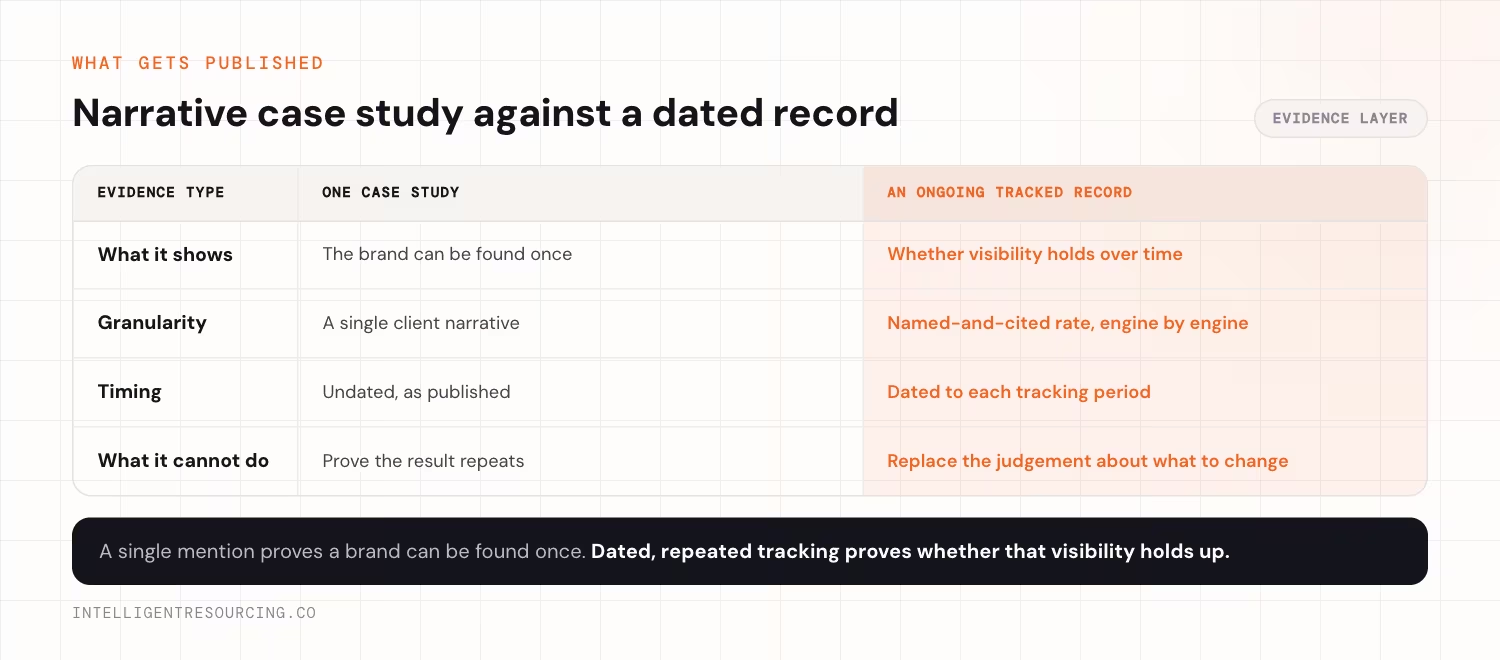
iEnhance credits one AEO case study on its published service page: Moving Software, a B2B software company in the moving industry. The page describes improved visibility and authority for industry-specific searches. It publishes no citation rate, ranking or traffic numbers to quantify that result.
Intelligent Resourcing publishes tracked citation rates by engine, dated to the tracking period, as its evidence layer. That replaces a single narrative case study with an ongoing record.
This is the same logic behind citation velocity. A single mention proves a brand can be found once. Dated, repeated tracking proves whether that visibility holds up over time.
Which Model Fits Your Business?
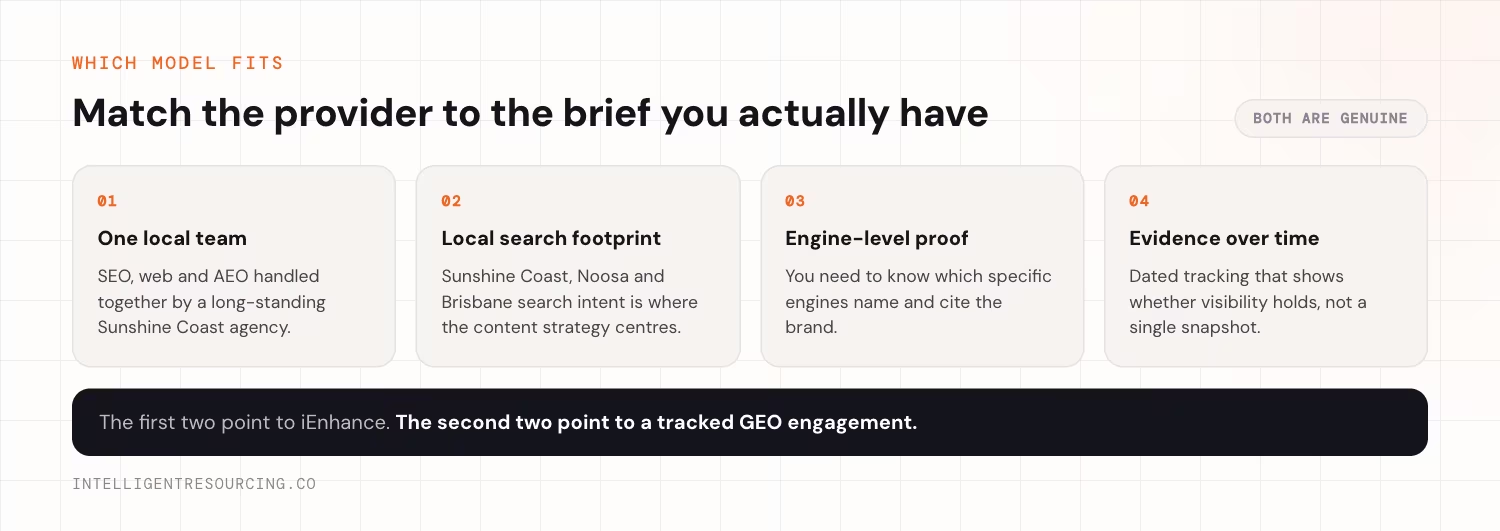
| Buyer need | Better fit |
|---|---|
| SEO, web and AEO from one long-standing local team | iEnhance |
| A Sunshine Coast, Noosa or Brisbane search footprint | iEnhance |
| AI citation work with tracked, engine-level proof | Intelligent Resourcing |
| Dated evidence of whether visibility holds over time | Intelligent Resourcing |
iEnhance suits a business that wants SEO, web and AEO handled by one long-standing local team, with real sector history and a named case study behind it. Intelligent Resourcing fits a different brief: a buyer who wants to know, with dated evidence, whether AI engines are actually naming and citing the brand, not just whether AEO tactics have been applied.
For a wider view of how other providers compare, see the roundup of GEO and AEO agencies in Australia.
Comparisons
Intelligent Resourcing tracks named-and-cited rates across ChatGPT, Gemini, Google's AI Overview and Copilot, dated to each tracking period. Book a strategy session to see that tracking run against your own accounts.
FAQs
Is iEnhance only useful for Sunshine Coast businesses?
No, but its published content strategy focuses heavily on Sunshine Coast, Noosa and Brisbane search intent, and it states a client base reaching Melbourne and Sydney. A business outside Queensland should ask how the agency's method transfers to a different local market.
Does iEnhance track which AI engines cite a brand?
Nothing on iEnhance's site describes an AI citation tracker or engine-by-engine reporting. Its published AEO work centres on schema markup, featured snippets and voice search rather than measured citation rates.
Does iEnhance have a published case study for its AEO work?
Yes, one: Moving Software, a B2B software company in the moving industry. iEnhance credits the work with improved visibility and authority for industry-specific searches. It publishes no citation rate, ranking or traffic numbers to back that claim.
What is the real difference between AEO and GEO in this comparison?
AEO, as iEnhance runs it, optimises content to get cited by AI engines using established tactics such as schema markup and featured snippets. GEO, as Intelligent Resourcing runs it, adds a measurement layer on top of similar tactics, tracking by engine and by date whether a brand is actually named and cited.
Can a business use iEnhance for AEO tactics and add citation tracking separately?
Yes. Some buyers run AEO content work with one provider and citation tracking as a separate layer. The trade-off is coordination between 2 providers working from separate data sets, rather than one service that ties tactics to a measured result.
Is Intelligent Resourcing a better fit than iEnhance for every buyer?
No. A buyer whose main need is local Sunshine Coast SEO and AEO under one roof, backed by two decades of local history, gets a genuine fit from iEnhance that Intelligent Resourcing does not offer.