

What Has Megantic Built in 15-Plus Years of Ecommerce Search?
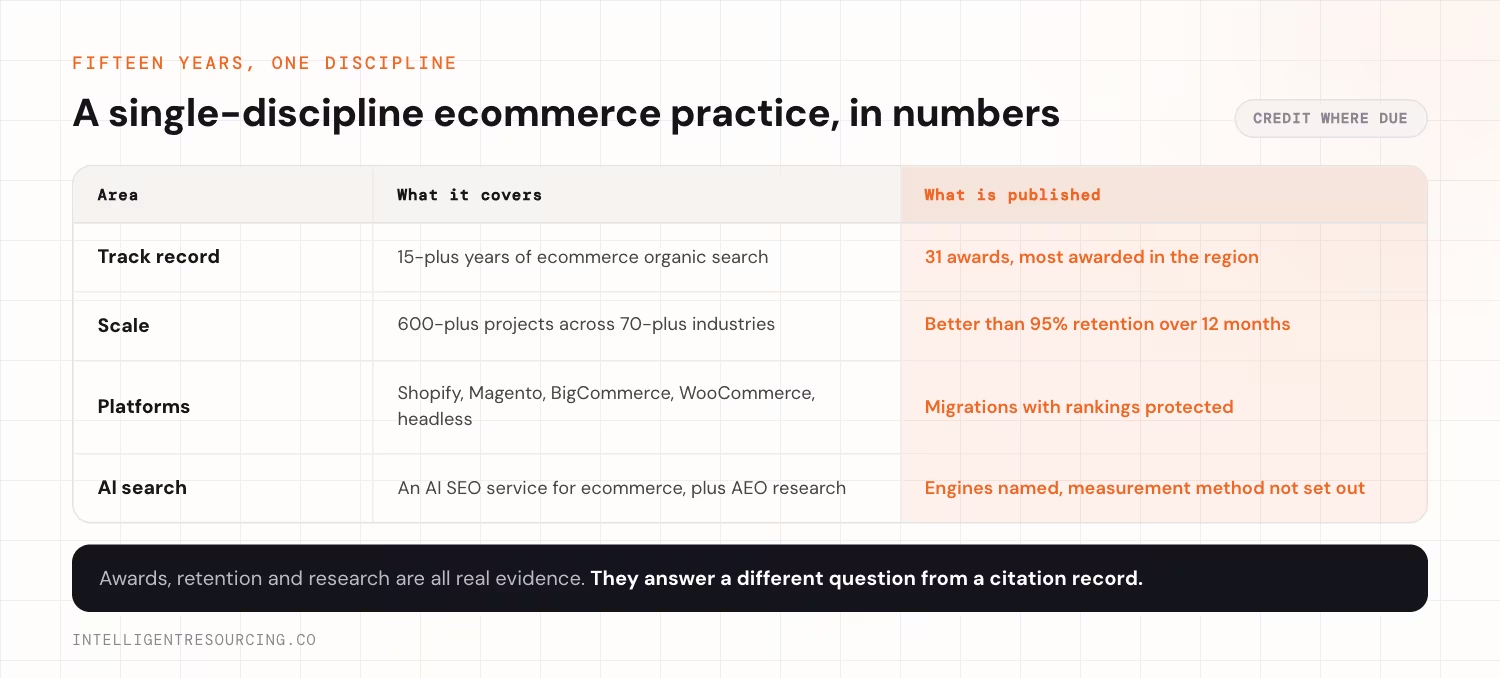
Megantic built a single-discipline practice around ecommerce organic search. Its own site reports 31 industry awards and the title of most awarded agency in the region, including Best Global eCommerce Agency for a third consecutive year. It lists more than 600 completed projects across 70-plus industries, better than 95% client retention over 12 months, and 15-plus years of organic search experience, with offices in Melbourne, the United Kingdom and Canada. It sits among the AEO agencies in Australia worth knowing about.
What it covers:
- Technical SEO: crawl optimisation, site architecture, URL and category structure
- Keyword research and category page strategy, including enterprise and local search
- SEO migrations across Shopify, Magento, BigCommerce, WooCommerce, Neto, Commercetools, Shopline and headless builds
- Growth and protection work on established organic positions
- An AI SEO service for ecommerce, sold as its own line
What it does not cover:
- Google Ads or any paid media
- Social media management
- Web builds or development
Its clients are consumer product retailers: fashion, furniture, footwear, professional workwear. The expansion into the United Kingdom and Canada took the same specialism into new markets rather than widening the service.
What Does Megantic's AI Search Work Actually Cover?
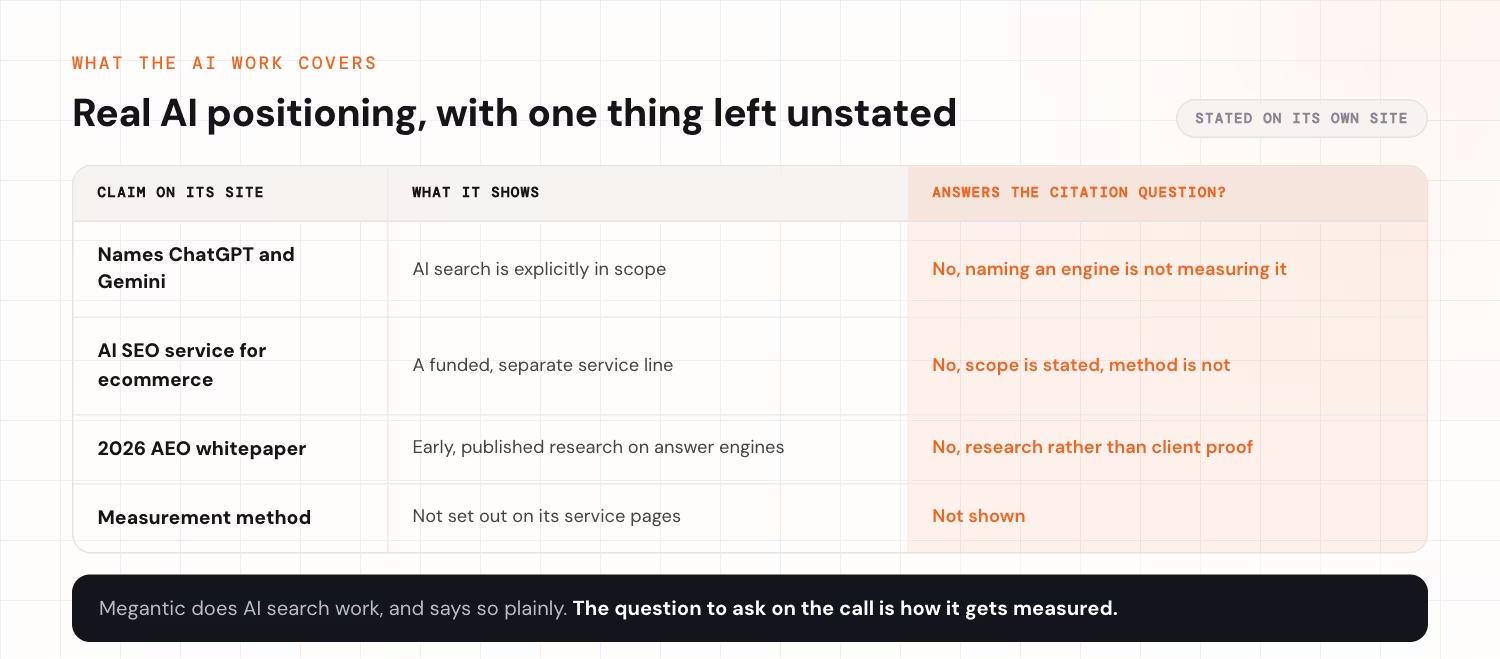
More than a lot of comparison pages give it credit for. Megantic's own site states that large language models like ChatGPT and Gemini have changed how people search, it sells AI SEO for ecommerce as a named service, and it publishes AEO research including a 2026 whitepaper on how answer engines are reshaping shopping and a report on the state of AI and commerce. That is a genuine position, taken early, and it deserves saying.
What its published service pages do not set out is the measurement. There is no stated method for how AI visibility gets checked, which engines get checked, how often, or what a client sees at the end of a month. Testimonials reference monthly reports, but no AI-specific metric is described. Choosing between the two disciplines is really an SEO retainer versus GEO retainer question rather than a quality one.
That is the gap worth asking about on a sales call, and it is a fair question to put to any agency selling AEO, this one included.
What Happens When a Retailer Relies on Organic Rankings Alone?
| Month | Activity | Result |
|---|---|---|
| 1 | Market research and keyword mapping | Opportunities identified |
| 2 to 3 | Category pages optimised, backlinks built | Rankings begin to improve |
| 4 to 6 | Ongoing optimisation and reporting | Organic traffic measurably up |
| End of month 6 | AI citation check | No record either way, because nothing measured it |
The rankings gain is real. The problem is that nothing in that retainer produces an answer on AI citation, so a retailer six months in still cannot say whether an AI engine names the brand.
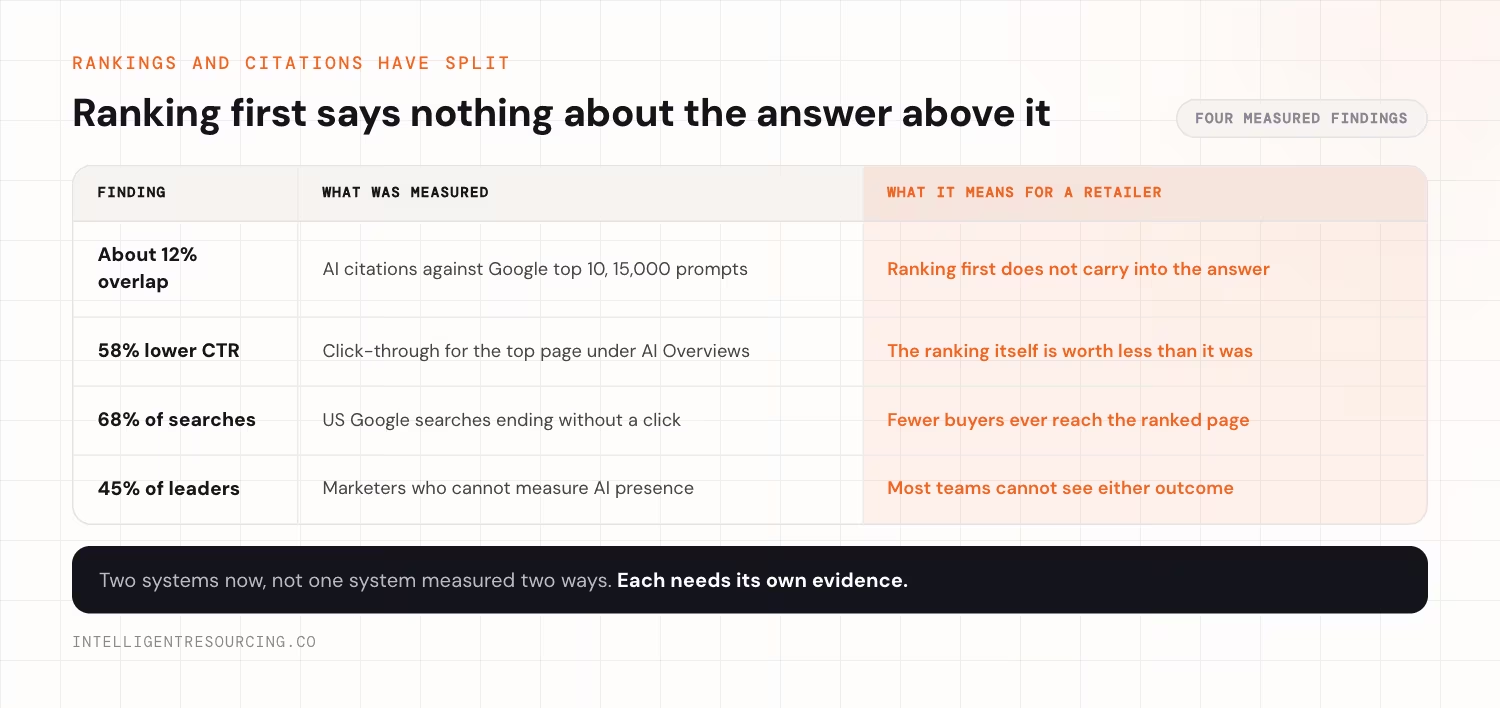
The pressure on the ranking itself is well documented. Ahrefs' updated analysis found AI Overviews cut click-through rate for the top-ranking page by 58%, up from the 34.5% it first measured. SparkToro puts 68% of US Google searches as ending without a click at all in early 2026. Ranking first is worth less than it was, and it says nothing about the answer sitting above it.
Most teams cannot see the gap either way. Semrush's 2026 AI Visibility Index, built on 126 million AI search prompts, found 45% of marketing leaders cannot measure their brand's presence in AI answers at all.
How Does Intelligent Resourcing's Content Strategy Service Work?
Content Strategy builds the citation architecture for AI search, or generative engine optimisation (GEO), that decides whether an AI engine names a brand in its answer. That means entity consistency across published content, category positioning against competitors, and depth on the specific questions an engine is answering rather than the keywords a person types.
The part that separates it from a broader retainer is the reporting. The tracker covers ChatGPT, Gemini, Google's AI Overview and Copilot, and reports a named-versus-cited split dated to each tracking period. A brand can be retrieved by an engine and left out of the answer, or used in the answer without a name check. Only a citation record distinguishes those from being properly cited.
Only about 12% of the links AI assistants cite also rank in Google's top 10 for the same question, on Ahrefs' analysis of 15,000 prompts. Rankings and citations are two systems now, not one system measured two ways. The original GEO research paper found structured, source-grounded content earns measurably more consistent citations, though knowing whether that landed still requires measuring it per engine.
Which Model Fits Your Business?
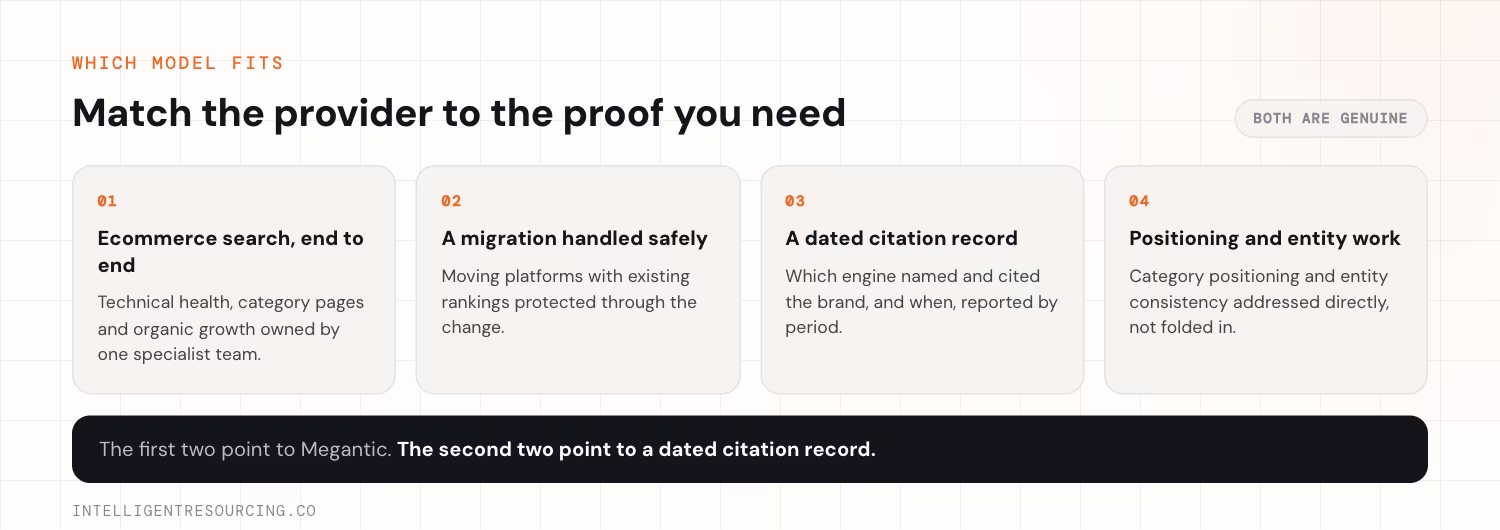
| Buyer need | Better fit |
|---|---|
| Ecommerce organic search owned end to end by one specialist team | Megantic |
| A platform migration with rankings protected through the move | Megantic |
| A dated, engine-by-engine record of whether the brand is cited | Intelligent Resourcing |
| Category positioning and entity consistency addressed directly | Intelligent Resourcing |
Being straight about the limits is more useful than pretending they are not there. Intelligent Resourcing does not cover organic SEO, technical audits or paid media, and it does not do platform migrations, web development or content marketing at scale. GEO work also takes months to show in citation results, the same way organic SEO takes months to show in rankings. If any of that describes the primary need, Megantic or another specialist is the honest recommendation.
A retailer can also run both. The two services address different layers of discovery, so they compete for attention rather than for the same budget line. If the need is narrower than an ongoing retainer, a one-off AI citation audit is the cheaper place to start.
Comparisons
A ranking report tells you where a page sits. It does not tell you whether an AI engine mentioned the brand when a buyer asked. Get in touch to see how the tracking reads against your own accounts.
FAQs
Does ranking well on Google guarantee a brand gets cited by AI engines?
No. Ahrefs' analysis of 15,000 prompts found only about 12% overlap between AI citations and Google's top 10 results for the same question. A page can rank first organically and still be absent from the answer an AI engine gives a buyer.
Does Megantic do AI search work?
Yes. Its site names ChatGPT and Gemini, it sells an AI SEO service for ecommerce, and it publishes AEO research including a 2026 whitepaper on answer engines and shopping. What its published service pages do not set out is how AI visibility gets measured or reported, which is worth asking about directly.
What does Intelligent Resourcing do that Megantic does not?
It reports a named-versus-cited split by engine and by date, across ChatGPT, Gemini, Google's AI Overview and Copilot. That is a citation record rather than a ranking report, and it is the thing a buyer cannot infer from organic performance.
Can a retailer use Megantic and Intelligent Resourcing at the same time?
Yes. Megantic runs the ecommerce organic search work, and Content Strategy adds a separate record of whether AI engines are naming the brand. The two address different layers of discovery.
How long does it take to see results with either?
Megantic's ranking improvements typically show over 3 to 6 months after research and optimisation. GEO work moves on a similar timeline, since engines need time to recrawl and reweight the content that establishes citation. Neither is a 30-day fix.
What happens to the work if an engagement ends?
If a Megantic retainer ends, rankings already achieved remain but new optimisation stops. If a Content Strategy engagement ends, the citation architecture already published stays live, though it stops being maintained against category shifts and new competitors entering the same answers.