

What Does Sentius's GSO Page Cover?
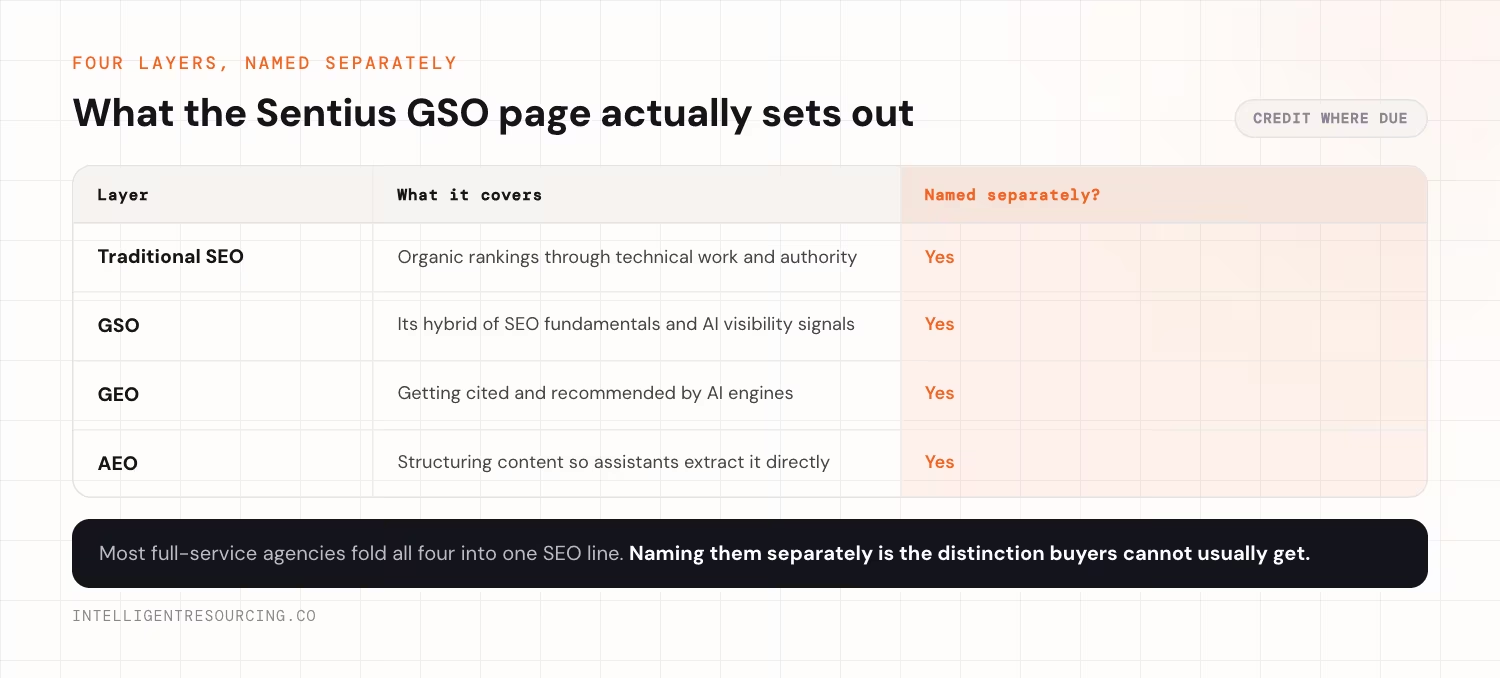
Sentius's GSO service page breaks AI search into four interconnected layers, each with its own named workstream: traditional SEO for organic rankings, GSO as its hybrid approach, GEO for getting cited and recommended by AI engines, and AEO for structuring content so assistants extract it directly.
The listed deliverables are specific: citation monitoring across ChatGPT, Perplexity, Gemini and Copilot, competitor citation gap analysis, FAQ schema and featured snippet targeting, knowledge graph optimisation, and digital PR for brand mentions.
That is a more structured position than most full-service agencies take. Naming GEO and AEO as separate layers, rather than folding both into an SEO retainer, is the distinction most buyers cannot get a straight answer on. Sentius gives it.
Structure is not the same as specifics, though. The three questions below are not invented for this comparison. Each is something the page itself raises and then leaves open, and the same test applies to any provider selling this work, including the one publishing this article. It is the same check behind why competitors get cited instead.
The 3 Questions, and Where Each Provider Stands
Question 1: What is the actual citation number?
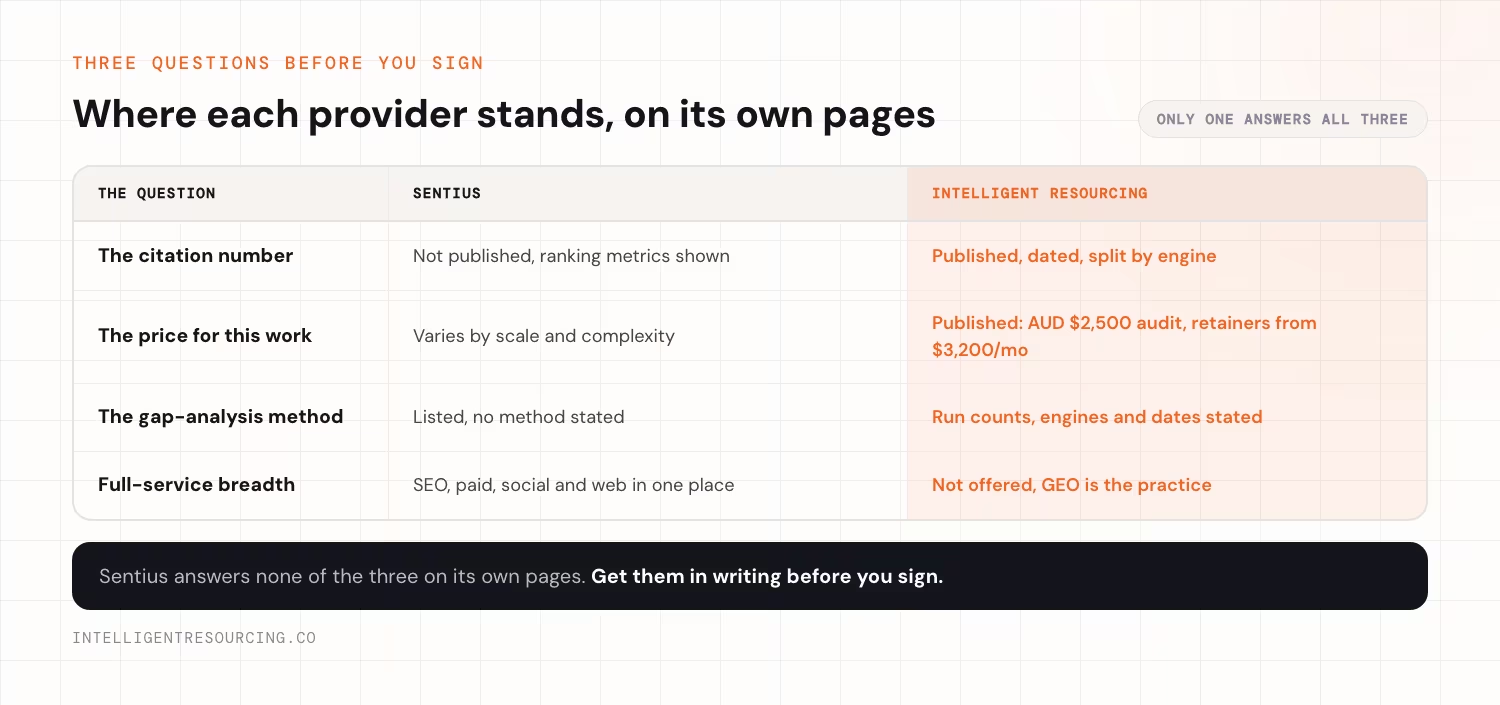
Sentius's published "GSO First 6 Months" panel reports 152 keywords reaching page one, an average position improvement of 14 places, from 37.5 to 21.7, and 2.97 million search impressions over six months. Every one of those is an organic ranking metric. No citation rate, share of voice figure or named-and-cited percentage appears, on any engine, despite citation monitoring being listed on the same page.
That matters because ranking and citation have come apart as measurements. Ahrefs' analysis of 15,000 prompts found only about 12% overlap between the links AI assistants cite and Google's top 10 for the same question. SparkToro puts 68% of US Google searches as ending without a click at all in early 2026.
Intelligent Resourcing publishes the other kind of number. The tracked Kynection engagement holds 23.28% AI share of voice across 408 matched buyer prompts and 9,308 runs, first among 41 tracked domains in its category, with the next competitor at 6.02%, as of 4 September 2026.
Question 2: What does the work cost?
Sentius states that pricing ranges based on scale and technical complexity, with no anchor figure on the page. A buyer cannot self-qualify against a budget without a sales conversation.
Intelligent Resourcing does publish one, and prices AEO and GEO separately from its GTM Engineering line: a Strategic Blueprint citation audit at AUD $2,500 + GST one-off, then Cited-Core retainers from AUD $3,200 a month and Cited-Scale from AUD $3,700 a month, both + GST. On this question the two are not in the same position. With Sentius, ask for a written figure against a named scope before committing. If the need is narrower than a retainer, a one-off citation audit is the cheaper place to start with either provider.
Question 3: How is gap analysis measured?
Competitor citation gap analysis, framed as who AI engines are recommending instead of you, is listed as a line item under Sentius's citation building workstream. No frequency, engine list, sample size or reporting format sits near that claim. A buyer cannot tell whether it runs monthly or once, across one engine or four, or whether the output is a report, a call or a line in a summary.
Intelligent Resourcing states the method alongside the finding. Every reading carries its run count, its prompt count, the engines covered and the date it was taken, so a claim and the work that produced it travel together.
What Does a Bundled GSO Report Show, and Not Show?

The gap is easy to miss, because a bundled report looks complete. Rankings hold, impressions climb, schema deploys correctly, and the service description mentions citation monitoring. A buyer reasonably assumes the citation question is answered somewhere in the relationship.
| Month | What a bundled report typically shows | What it does not answer |
|---|---|---|
| 1 to 2 | Baseline audit, schema and technical fixes deployed | The starting citation number, or the price against a named scope |
| 3 to 4 | Keyword rankings climbing, impressions up | Whether the climb changed what any AI engine says |
| 5 to 6 | A six-month results panel delivered | A share of voice figure, or how gap analysis was run |
| Ongoing | Monthly reports repeat the same ranking metrics | The same questions, still open |
Schema will not close it on its own. Ahrefs tested 1,885 pages that added JSON-LD schema against 4,000 controls and found no meaningful citation uplift on any platform. Cyrus Shepard's meta-analysis for Zyppy, synthesising 54 sources, ranks crawlability and search rank as the strongest predictors of citation, which makes ranking work necessary rather than sufficient. Neither finding says schema or rankings are wasted. Both say they get a page considered, not cited.
Which Model Fits Your Business?
| Buyer need | Better fit |
|---|---|
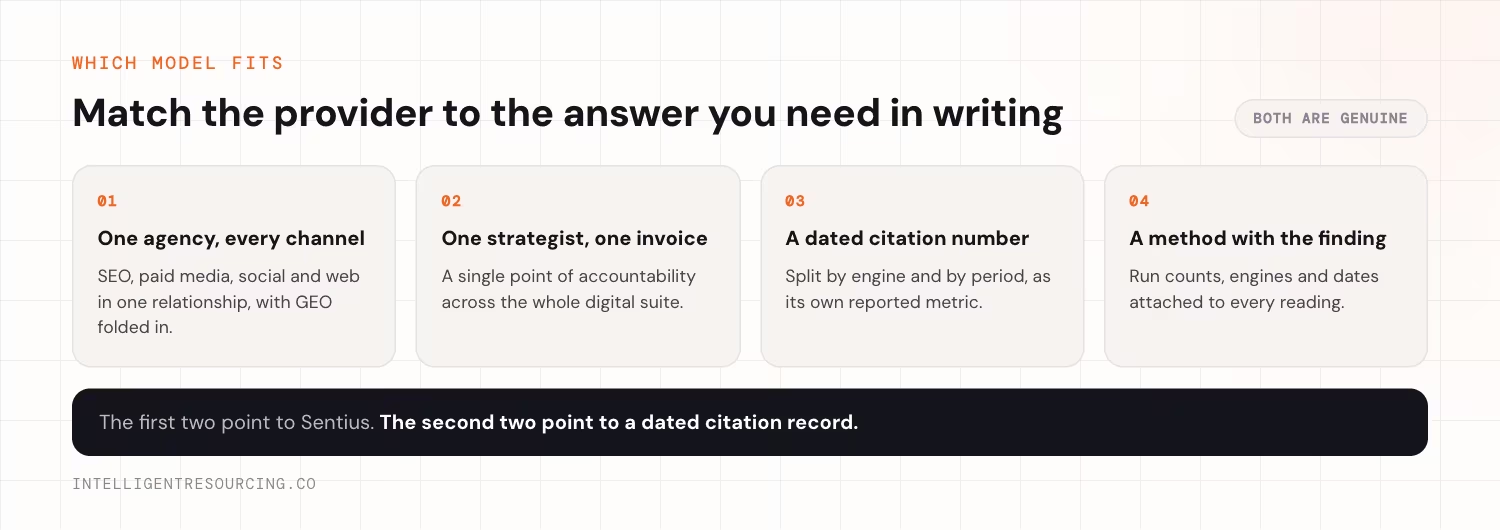
| SEO, paid media, social and web under one agency, GEO included | Sentius |
| One strategist and one invoice across every channel | Sentius |
| A dated citation number, split by engine, as its own reported metric | Intelligent Resourcing |
| A stated method attached to every competitor or gap finding | Intelligent Resourcing |
A marketing team already running Sentius for a broader digital suite should request the citation figure and the gap-analysis method in writing before renewing, and a price against a named scope from either provider. A team accountable for AI visibility as its own line should weigh which questions it needs answered on the page rather than on a call.
If neither fits, our roundup of AEO agencies in Australia covers a wider set of specialists.
Comparisons
A described service and a measured one read the same on a page. The difference shows up when you ask for the number, the scope and the method in writing. Get in touch to see how the tracking reads against your own accounts.
FAQs
Does Sentius offer generative engine optimisation?
Yes. Its GSO framework names GEO and AEO as dedicated layers alongside traditional SEO, and lists citation monitoring across ChatGPT, Perplexity, Gemini and Copilot, competitor citation gap analysis, knowledge graph optimisation and digital PR as deliverables.
Does Sentius publish a citation number or a gap-analysis method?
Not as of this article's publication. Its public results panel reports keyword rankings, average position improvement and search impressions, and competitor citation gap analysis is listed as a deliverable with no frequency, engine list or reporting format stated.
What does GEO work cost with either provider?
Sentius does not publish one; it states pricing varies by scale and technical complexity. Intelligent Resourcing prices AEO and GEO separately from GTM Engineering: AUD $2,500 + GST for a one-off Strategic Blueprint audit, then retainers from AUD $3,200 a month. Ask for a written price against a named scope either way.
Does schema markup get a brand cited by an AI engine?
Not on its own. Ahrefs tested 1,885 pages that added JSON-LD schema against 4,000 controls and found no meaningful uplift in citations. Schema helps an engine parse a page correctly once it is already a candidate. It does not put an unfamiliar brand into the candidate pool.
What three questions should I ask any GEO provider before signing?
Ask for the current citation number, dated and named by engine. Ask for a price against a named scope rather than a range. Ask exactly how any competitor or gap analysis was measured, including run counts, engines and dates. A provider that cannot answer in writing is asking to be judged on description rather than evidence.