

What Does "Traditional" B2B Prospecting Actually Look Like?
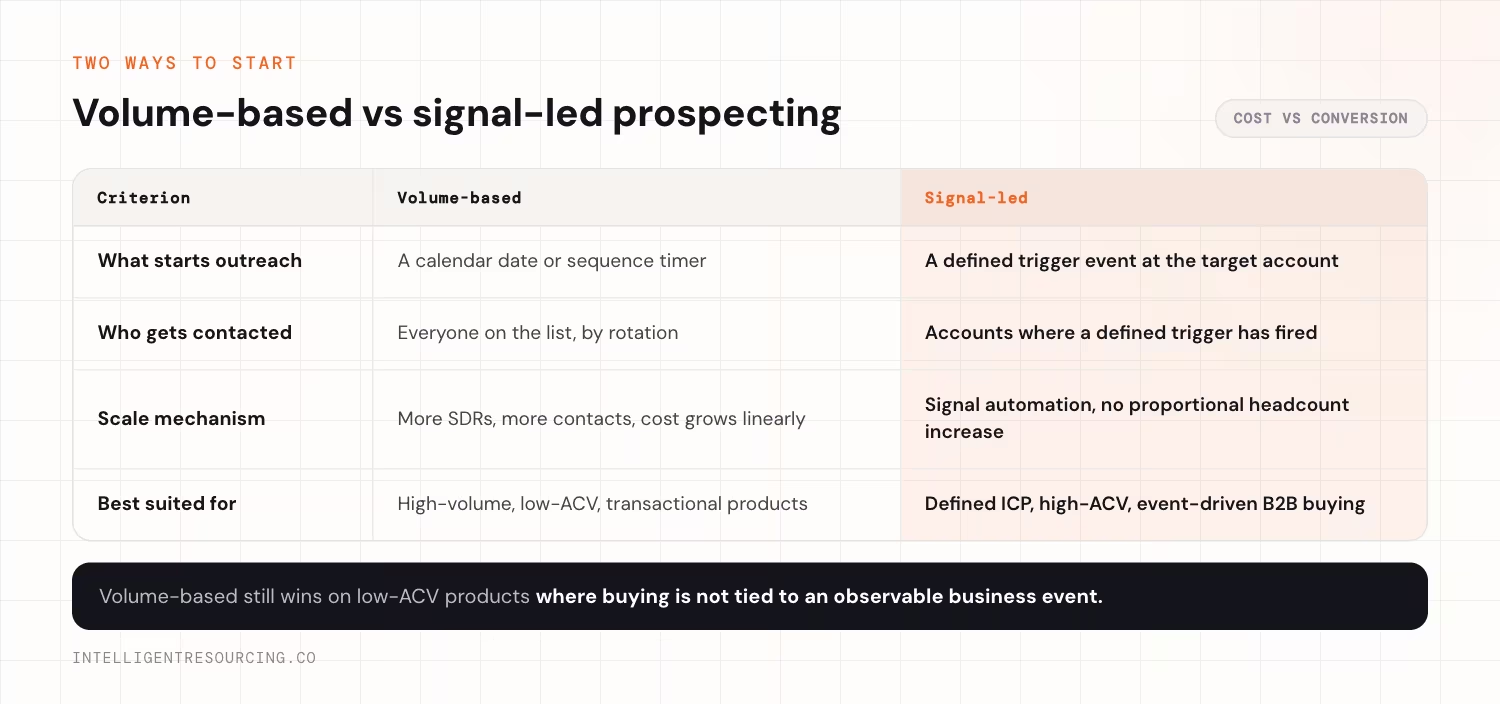
Traditional B2B prospecting means building a list of ICP-fit contacts, loading them into a sequence tool, and running a multi-touch cadence at volume. The conversion assumption is simple: reach enough people and a fixed percentage will always be ready to buy. At low volume and in less-saturated markets, the model works. At scale, in 2026, it breaks.
The 4 components of a traditional prospecting programme
| Component | What it looks like in practice |
|---|---|
| List building | ICP filter applied to a contact database (Apollo, ZoomInfo, Lusha), export contacts, import to CRM |
| Sequence | 6 to 10 touch cadence: cold email, LinkedIn connection request, follow-up emails, cold call |
| Volume target | SDRs hit X activities per day as the primary performance metric |
| Measurement | Open rates, reply rates, meetings booked, reported weekly |
The model was designed for a different market:
- Email inboxes were less saturated and cold outreach was still novel
- Contact databases were more accurate and less recycled across vendors
- Buyers had not yet developed the pattern recognition to filter cold contact on sight
6sense's B2B Buyer Experience report found that 94% of buying groups had already ranked their preferred vendors before making first contact with a seller, meaning most cold outreach lands after the shortlist is already set.
Why Do Bought Lead Lists Produce Diminishing Returns?
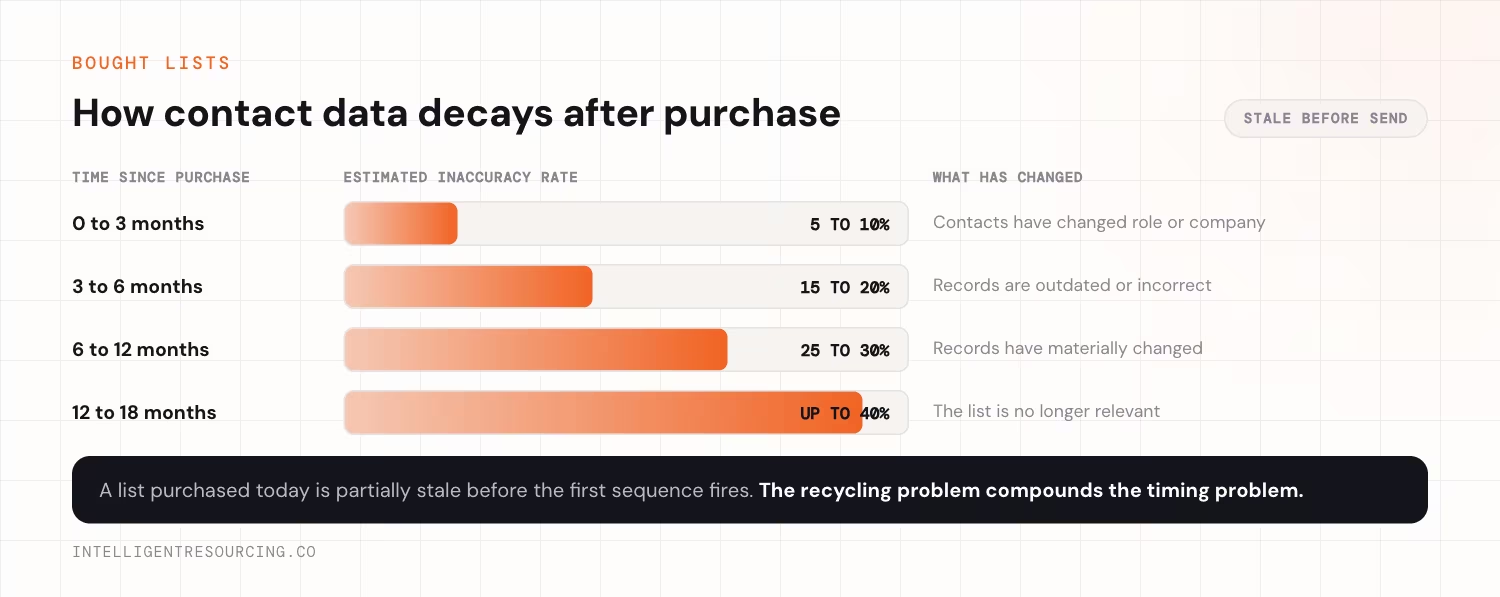
Bought lead lists decay faster than most teams account for. Contact data becomes materially inaccurate within 12 to 18 months as job changes, role shifts, and company restructures alter a significant portion of any list. A list purchased today is partially stale before the first sequence fires, and the recycling problem compounds the timing problem.
How contact data decays over time:
| Time since purchase | Estimated inaccuracy rate |
|---|---|
| 0 to 3 months | 5 to 10% of contacts have changed role or company |
| 3 to 6 months | 15 to 20% of records are outdated or incorrect |
| 6 to 12 months | 25 to 30% of records have materially changed |
| 12 to 18 months | Up to 40% of the list is no longer relevant |
D&B's NetProspex analysis of 223 million B2B marketing records found 71% contain material gaps and inaccuracies, meaning most lists have quality problems before a single sequence fires. LinkedIn's Economic Graph research shows professionals today are on pace to hold twice as many jobs as those who entered the workforce 15 years ago, the same workforce mobility that makes contact data obsolete so quickly.
The recycling problem
The same contact populations circulate across multiple database vendors simultaneously. A company appearing in Apollo, ZoomInfo, and Lusha has already received hundreds of cold sequences from every team targeting the same ICP. The list is not just old. It is exhausted.
What bulk outreach does to deliverability
- High bounce rates from stale contacts damage sender domain reputation
- Spam filter algorithms penalise high-volume sending from domains with poor engagement signals
- Once flagged, all outreach from that domain is affected, including to warm prospects who already know the company
Mailgun's deliverability research shows a bounce rate above 2% starts to damage sender domain reputation. Even a small spike from a stale list can trigger filtering that affects all outreach from that domain, including to warm prospects who already know the business.
What Is the Real Cost of Manual Prospecting at Scale?
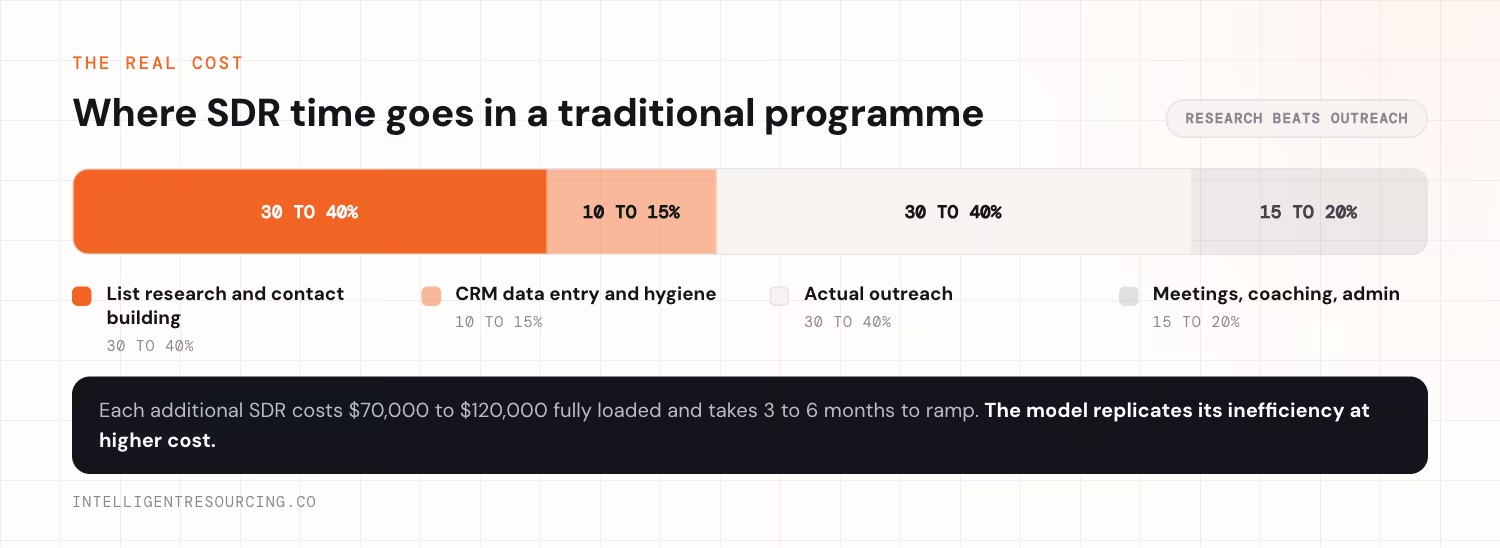
The real cost of manual prospecting is not tool spend. It is the gap between research effort and outreach relevance. Analysis of 30,000+ prospecting emails found 87% of buyers say the emails they receive do not address a relevant challenge facing their business, which means the manual research model compounds cost without closing the relevance gap.
Where SDR time goes in a traditional programme:
| Activity | Estimated time allocation |
|---|---|
| List research and contact building | 30 to 40% |
| CRM data entry and hygiene | 10 to 15% |
| Actual outreach (emails, calls, LinkedIn) | 30 to 40% |
| Internal meetings, coaching, admin | 15 to 20% |
The compounding cost problem
To double pipeline from a traditional programme, the team needs double the outreach activity. That means double the SDRs. Each additional SDR:
- Takes 3 to 6 months to ramp to full productivity
- Costs $70,000 to $120,000 fully loaded per year (salary, tools, management overhead)
- Produces the same diminishing reply rates the current team already experiences
The model does not compound. It replicates its own inefficiencies at higher cost. Signal-led prospecting changes this by reducing the volume of contacts needed and increasing conversion per contact.
Why Does Volume-Based Outreach Train Buyers to Ignore Outreach?
High-frequency cold outreach has conditioned B2B buyers to treat unsolicited contact as noise by default. Cold email reply rates across most B2B industries have dropped below 3% and continue to fall. The cause is not a deliverability problem. It is a credibility problem caused by volume-first programmes reaching buyers with generic messages at the wrong moment.
What a typical B2B decision-maker receives weekly:
| Outreach type | Estimated weekly volume |
|---|---|
| Cold emails | 50 to 150+ |
| LinkedIn connection requests with pitch | 20 to 40 |
| LinkedIn InMails | 10 to 20 |
| Cold calls to direct line or mobile | 5 to 15 |
A 2026 analysis of 28 million+ cold emails found the average rep has to send 344 cold emails to land 1 meeting, meaning each decision-maker inbox absorbs hundreds of similar approaches from multiple teams simultaneously.
What buyers actually do with it:
- Delete cold emails on sight when the subject line matches a known cold-email pattern
- Decline or ignore connection requests when the profile reads as a salesperson
- Screen or reject calls from unrecognised numbers
- Read InMails but not reply, because the timing has no relevance to what they are currently doing
How buyers identify cold outreach in under 2 seconds
Buyers no longer read cold emails to decide whether they are relevant. They scan for pattern signals: subject line structure, opening line conventions, call-to-action format. These patterns mark the message as cold outreach before the content is processed. The format itself triggers the filter.
What breaks through the filter
The only consistent way past a buyer's cold-outreach filter: reach them at a moment when the content is directly relevant to something that just changed in their business. A message about sales infrastructure sent the week a new VP of Sales joins a target account is not cold outreach to that buyer. It is timely. The relevance is not manufactured. The timing made it real.
That requires knowing what just changed. The volume-based model has no mechanism to track it.
Woodpecker's cold email research found the median reply rate across campaigns is 1.5%, meaning the average volume-based programme needs to reach hundreds of contacts to produce a handful of replies, most of which are not sales conversations.
What Does a Prospecting Model That Actually Scales Require?
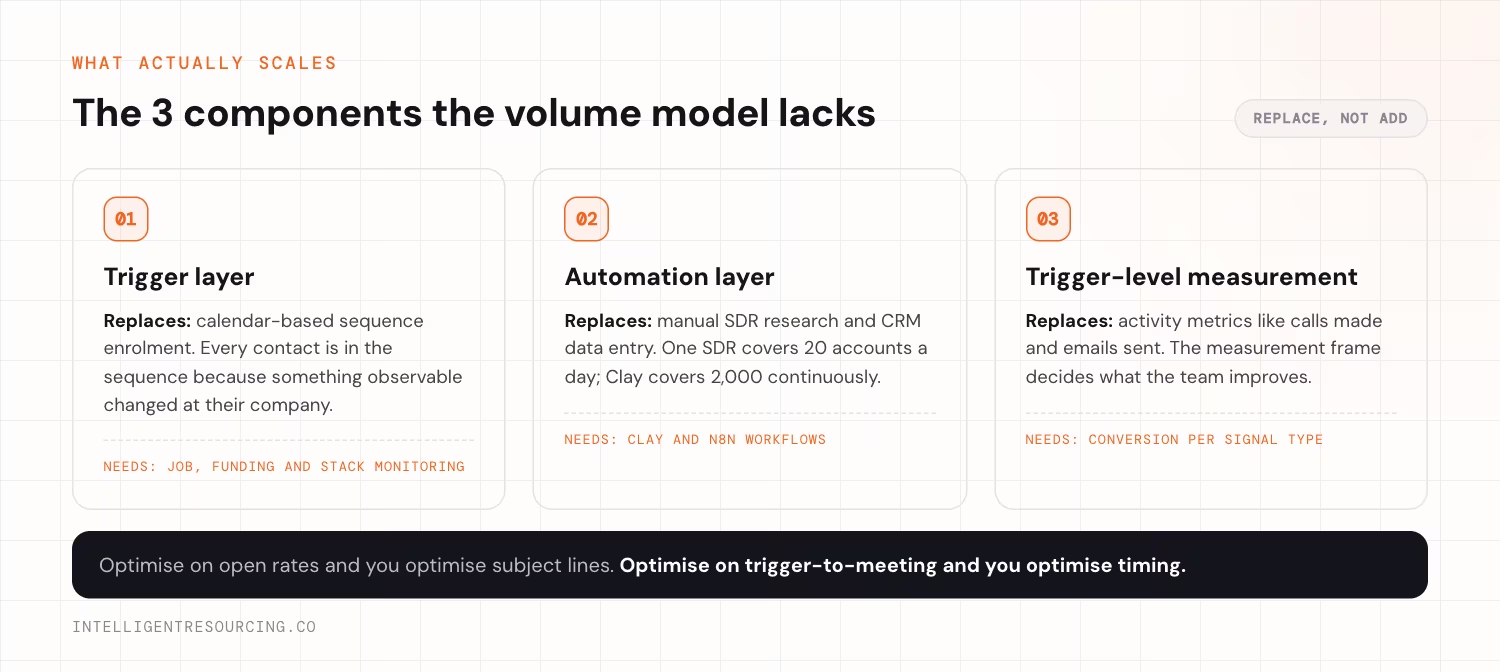
A prospecting model that scales requires 3 things the volume-based model does not have: a trigger layer that identifies when a prospect enters a buying window, an automation layer that routes the signal to the correct sequence without manual research at each step, and measurement that tracks conversion at the trigger level rather than the activity level.
The 3 components of a scalable prospecting model:
| Component | What it replaces | What it requires |
|---|---|---|
| Trigger layer | Calendar-based sequence enrolment | Signal monitoring: job changes, funding events, tech stack shifts |
| Automation layer | Manual SDR research and CRM data entry | Clay and n8n workflows that enrich and route without human steps at each stage |
| Trigger-level measurement | Activity metrics (calls made, emails sent) | Conversion rate per signal type, per ICP segment, per sequence |
Trigger layer
Without a defined trigger, the sequence fires based on time, which means it fires regardless of whether the prospect has any reason to buy right now. The trigger layer removes timing randomness from the programme entirely. Every contact in the sequence is there because something observable changed at their company.
Automation layer
The research burden is what makes traditional prospecting unsustainable. An SDR manually researching 20 accounts per day to find signal events is doing work that Clay can do continuously across 2,000 accounts. Automating signal detection and record enrichment returns SDR time to outreach: the only activity that generates pipeline.
Trigger-level measurement
Activity metrics measure effort. Trigger-level conversion data measures what actually works. A programme optimised on open rates will optimise for subject lines. A programme optimised on "conversion rate from job-change trigger to booked meeting" will optimise for timing, sequence structure, and signal quality. The measurement frame determines what the team improves.
RAIN Group buyer research across 488 buyers responsible for $4.2 billion in purchases found 82% accept meetings with sellers who proactively reach out. The consistent factor in accepted meetings is relevance and timing, not volume or persistence.
Prospecting
Intelligent Resourcing designs and installs signal-led revenue systems for B2B teams across Australia. We build the ICP definition, signal taxonomy, and Clay, HubSpot and n8n stack, then hand ownership over. The system runs after we leave.
FAQs
Why is cold email reply rate dropping every year?
Cold email reply rates are dropping because inboxes are more saturated, buyers have developed stronger pattern recognition for cold outreach formats, and spam filters have become better at identifying mass sending behaviour. The volume-first model has saturated the channel it depends on. The answer is not better subject lines. It is reaching buyers at moments when the content is specifically relevant to something that just changed in their business.
What is wrong with buying a lead list?
The core problem is that a purchased list gives names, not timing. It identifies who might buy in theory, not when they are likely to act. Most contacts on that list are not in a buying window when outreach lands. The list also decays: job changes, role shifts, and company restructures make a significant portion of any bought list inaccurate within 12 to 18 months of purchase. The data is partially stale at the moment of purchase.
How many SDRs does it take to scale traditional outbound?
Always more than you currently have. That is the structural problem. Traditional prospecting scales headcount, not efficiency. To double pipeline from a volume-based programme, the team needs double the outreach activity, which means double the SDRs. Signal-led prospecting changes this by increasing the conversion rate per contact rather than the number of contacts. The same team produces more pipeline without a proportional headcount increase.
What is the first step to moving away from volume-based prospecting?
The first step is defining a signal taxonomy before touching any tooling. A signal taxonomy names the specific events that reliably precede a purchase decision for your ICP: which job changes open a buying window, which funding stages trigger a vendor evaluation, which tech stack shifts signal an adjacent need. Without a defined taxonomy, any signal-monitoring tool produces noise. With one, the automation layer has a clear brief. The ICP definition and signal taxonomy are the foundation every other part of the system is built on.