

What Did a Human List-Builder Actually Do Each Week?
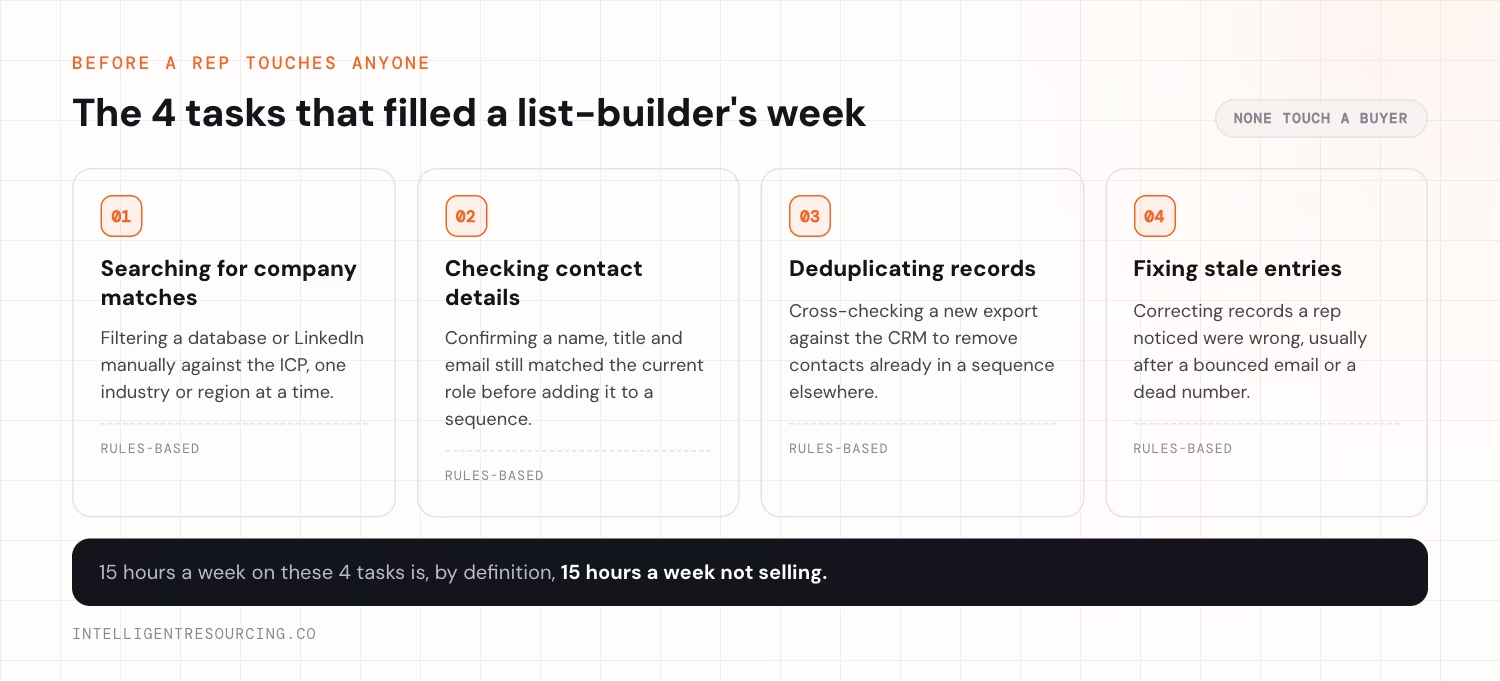
A human list-builder spent most of the week on manual, rules-based research: searching for company matches, checking contact details, deduplicating records and updating entries that had gone stale. HubSpot's 2024 Sales Trends Report surveyed 1,400+ sales professionals and found reps spend only 2 hours a day actually selling and about 1 hour a day on admin. The rest of their time is lost to exactly this kind of research.
In practice, the week looked the same at most companies. A typical list-building week involved:
- Searching for company matches: filtering a database or LinkedIn manually against the ICP, one industry or region at a time
- Checking contact details: confirming a name, title and email still matched the current role before adding it to a sequence
- Deduplicating records: cross-checking a new export against the CRM to remove contacts already in a sequence elsewhere
- Fixing stale entries: flagging or correcting records a rep noticed were wrong, usually after a bounced email or a dead number
None of that work touched a buyer. All of it had to happen before a rep could touch one. Salesforce's 2026 State of Sales report found reps spend 60% of their time on non-selling tasks, the same pattern list-building work fed into. A list-builder who spent 15 hours a week on those 4 tasks was, by definition, spending 15 hours a week not selling.
Why the old model stopped scaling, and what replaced it, is the wider story B2B trends in AI prospecting tells. This section stays on the job itself, not the trend behind it.
Which List-Building Tasks Does AI Take Over First?
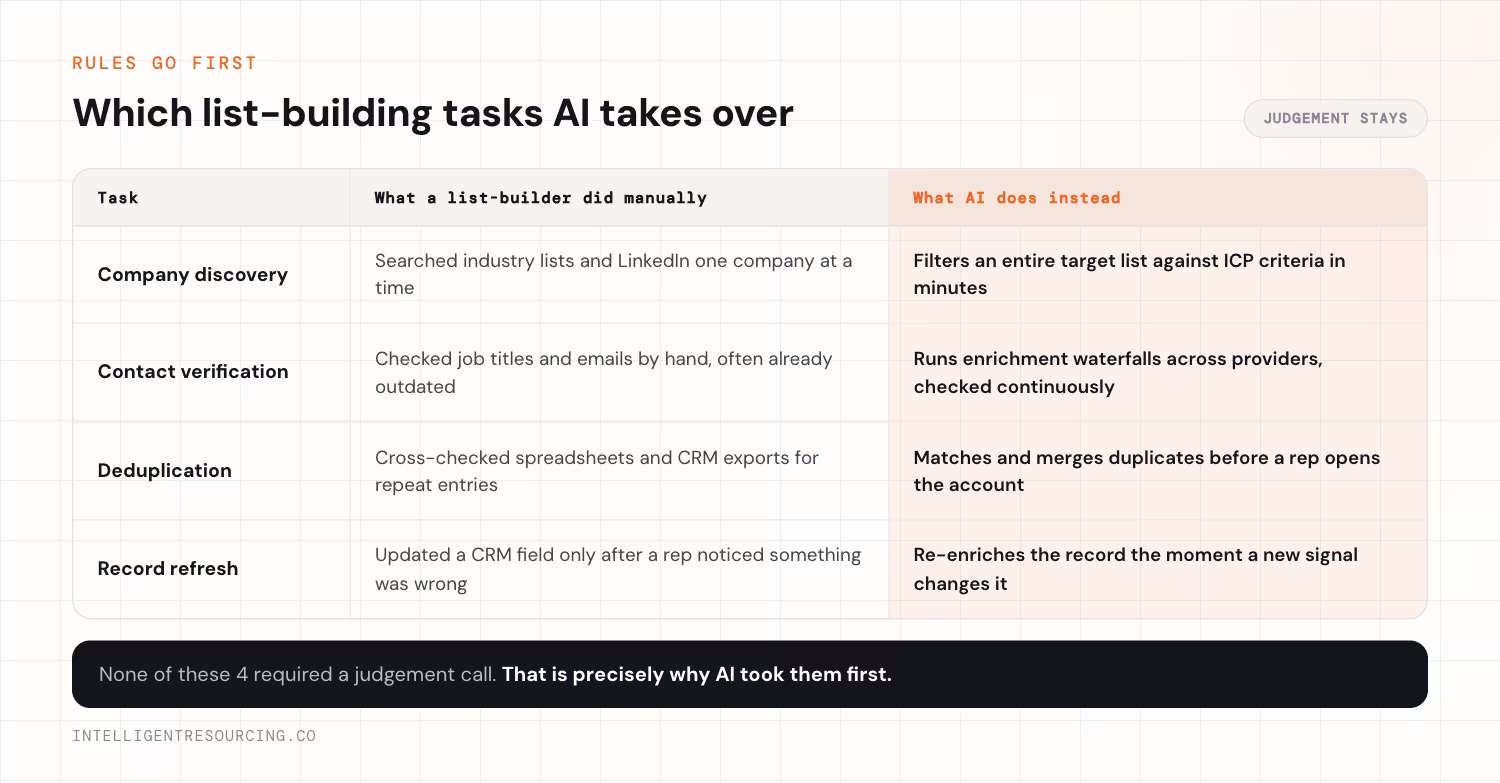
AI takes over discovery, verification, deduplication and refresh first, because each of those tasks runs on fixed rules rather than judgement. Orum's 2026 sales development report, surveying 300 sales professionals, found teams already use AI for research, enrichment and list-building, though few yet use it to improve the conversations that create pipeline.
That split matters. AI does not take over a list-builder's whole job in one move. It takes the rules-based half first and leaves the judgement half for later.
| Task | What a list-builder did manually | What AI does instead |
|---|---|---|
| Company discovery | Searched industry lists and LinkedIn one company at a time | Filters an entire target list against ICP criteria in minutes |
| Contact verification | Checked job titles and emails by hand, often already outdated | Runs enrichment waterfalls across multiple providers, checked continuously |
| Deduplication | Cross-checked spreadsheets and CRM exports for repeat entries | Matches and merges duplicate records before a rep opens the account |
| Record refresh | Updated a CRM field only after a rep noticed something was wrong | Re-enriches the record the moment a new signal changes it |
Each row removes a task that a list-builder used to do by hand and replaces it with a rule a system checks continuously. Enrichment waterfalls check each data provider in sequence until they find the most current record. That is what makes continuous verification possible, instead of a one-off check at the start of a campaign. Teams building this layer themselves, instead of buying it as a service, can see the components in Build Your Own ABM Stack.
None of these 4 tasks required a judgement call. That is precisely why AI took them first, and why the tasks still left over are the ones that do.
What Can AI Prospecting See That a Manual List Misses?
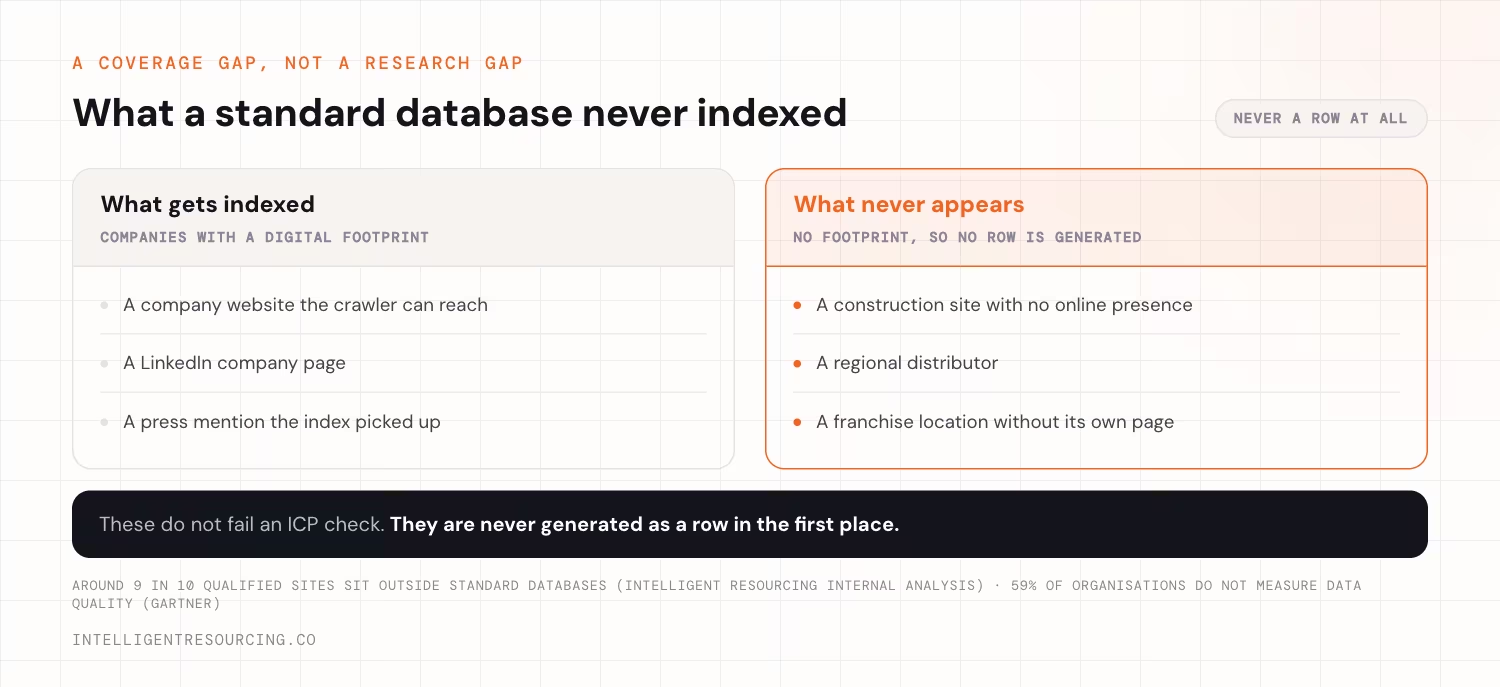
AI-driven prospecting sees accounts that never surface on a manually built list, because standard databases mostly index companies with a strong digital footprint. Intelligent Resourcing's own analysis found that around 9 in 10 qualified sites sit outside standard databases entirely, invisible to a list-builder working from the same sources everyone else uses.
A list-builder working from a standard database can only find what that database indexed. A construction site, a regional distributor or a franchise location without a LinkedIn presence does not fail a qualification check. It never appears in the list in the first place. That is not a research gap a more careful list-builder can close by working harder; it is a coverage gap in the source itself.
Most organisations cannot even see how big that gap is. Gartner's data quality research found that 59% of organisations do not measure data quality at all. Poor data quality costs organisations at least $12.9 million a year on average (Gartner, 2020). A list-builder inherits that blind spot by default, because nobody upstream is measuring what the database is missing.
The gap shows up differently depending on the source a list-builder is working from:
- A standard commercial database indexes companies primarily through a digital footprint: a website, a LinkedIn company page, a press mention.
- A construction site, a regional distributor or a franchise location without that footprint does not fail an ICP check. It is simply never generated as a row in the first place.
- A signal-led system monitoring accounts directly, rather than relying on a single indexed source, picks up hiring activity, tender wins and tech stack changes that a static database was never built to surface.
That last distinction is the difference between a bigger list and a more complete one. Agentic Signal Listening covers how that continuous monitoring works in practice.
Most teams do not know how much of their addressable market sits outside their CRM until someone finds it for them. Intelligent Resourcing builds the signal layer that surfaces those accounts and installs it on your own stack, through GTM engineering lead generation.
Where Does the List-Builder's Job Go, and Where Does It Still Win?
The list-builder's job moves from building lists to reviewing flagged accounts and owning the judgement calls AI cannot make alone. 6sense's State of the BDR 2025 surveyed 262 BDRs. It found AI is enhancing, not replacing, the BDR role, with 79% of BDR teams growing or holding size steady over the past year.
Where the Role Moves Next
The list-builder who used to spend the week searching and verifying now spends it differently. They review accounts a system has already flagged, decide which ones merit a personal approach, and handle the accounts too complex for a rule to qualify alone. A GTM engineer builds and maintains that flagging logic. What a GTM engineer builds covers that role directly.
6sense also found that buyers typically do not engage with a seller until 69% through their own buying journey. A list-builder spending less time searching and more time reviewing signals is better placed to catch that engagement window than one still building the list by hand.
In practice, that means the job changes shape rather than shrinking. A former list-builder now opens a dashboard of flagged accounts each morning, not a spreadsheet. They decide which 5 or 6 warrant a personal message today. Then they spend the recovered hours on exactly the accounts a rules-based system escalates but cannot close alone.
Where Manual List-Building Still Wins
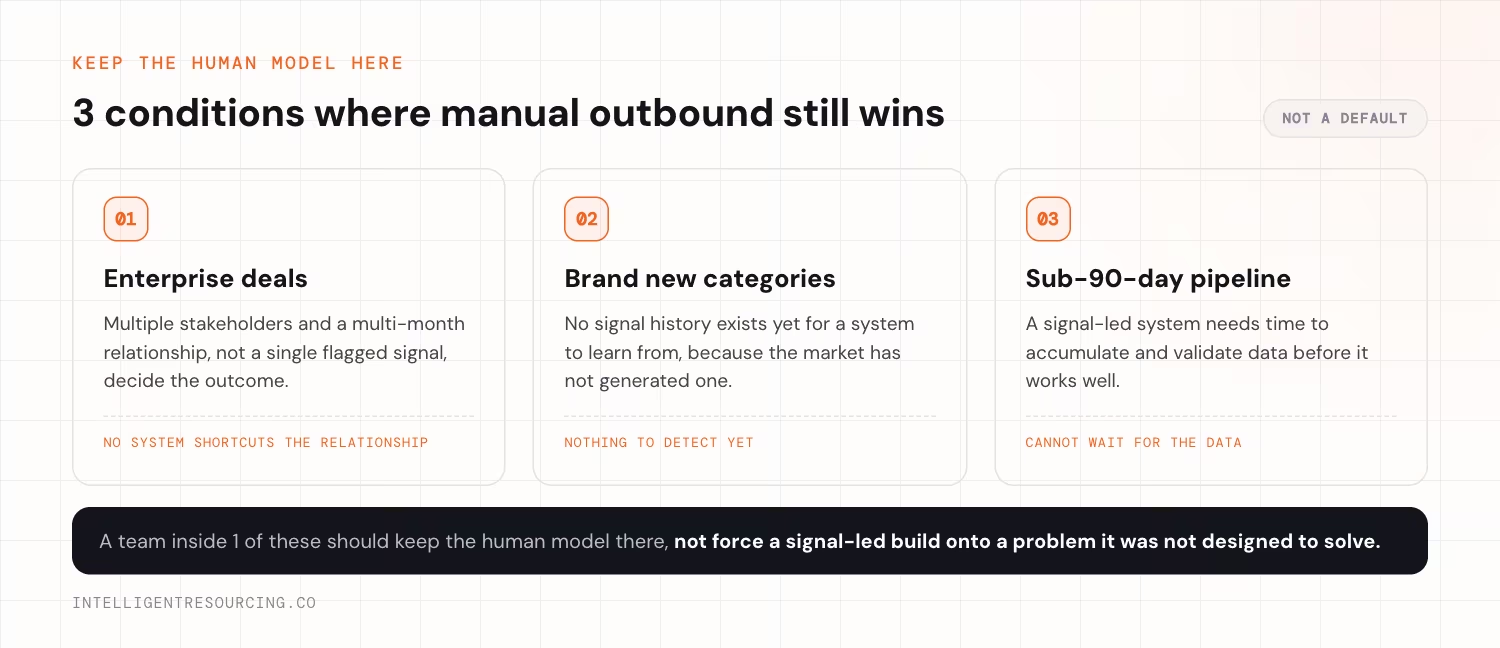
Human outbound still wins for enterprise deals, new categories and pipelines that must close inside 90 days. Enterprise deals involve multiple stakeholders and a relationship built over months, and no system can shortcut that, no matter how well it finds the account. New categories have no signal history yet for a system to detect, because the market has not generated one. Pipelines needing to close inside 90 days cannot wait for a signal-led system to accumulate the data it needs to work well.
None of those 3 cases means the manual model wins by default. They mean something narrower: a specific set of conditions still favours it. A team operating inside 1 of them should not expect an AI-driven list to outperform a human working the account directly.
| Condition | Why manual outbound still wins |
|---|---|
| Enterprise deals | Multiple stakeholders and a multi-month relationship, not a single flagged signal, decide the outcome |
| Brand new categories | No signal history exists yet for a system to learn from |
| Sub-90-day pipeline | A signal-led system needs time to accumulate and validate data before it works well |
A team inside 1 of those 3 conditions should keep the human model there, not force a signal-led build onto a situation it was not designed to solve. The Intelligent Prospecting Playbook explains why signal-led prospecting outperforms volume outbound, and how that stops the pipeline decay a manually built list cannot avoid.
Prospecting
Intelligent Resourcing builds the signal layer that surfaces the accounts a standard database never indexed, then installs it on your own stack. We deliver the ICP definition, the signal taxonomy and the Clay, HubSpot and n8n build, then hand ownership over.
FAQs
What does a human list-builder do that AI now does instead?
A human list-builder used to spend most of the week on company discovery, contact verification, deduplication and record refresh. AI now runs each of those tasks continuously, because none of them require a judgement call.
Does AI prospecting replace SDRs and BDRs entirely?
No. 6sense's State of the BDR 2025 Research Report found AI is enhancing, not replacing, the BDR role. 79% of BDR teams grew or held size steady over the past year. The role changes from building lists to reviewing flagged accounts.
What data can AI prospecting find that manual databases can't?
Around 9 in 10 qualified sites sit outside standard databases entirely, because those databases index primarily companies with a strong digital footprint. Signal-led systems that monitor accounts directly close part of that coverage gap.
Is manual list-building ever still the right choice?
Yes. Human outbound still wins for enterprise deals, new categories and pipelines that must close inside 90 days. Each of those situations needs a relationship or a judgement call that a rules-based system cannot supply yet.
How is this different from signal-based prospecting?
Signal-based prospecting decides when to contact an account. This is about who, or what, builds the underlying list in the first place. The 2 questions are related but not the same, and a team can adopt one without the other.