

Here's What Each Agency Actually Built
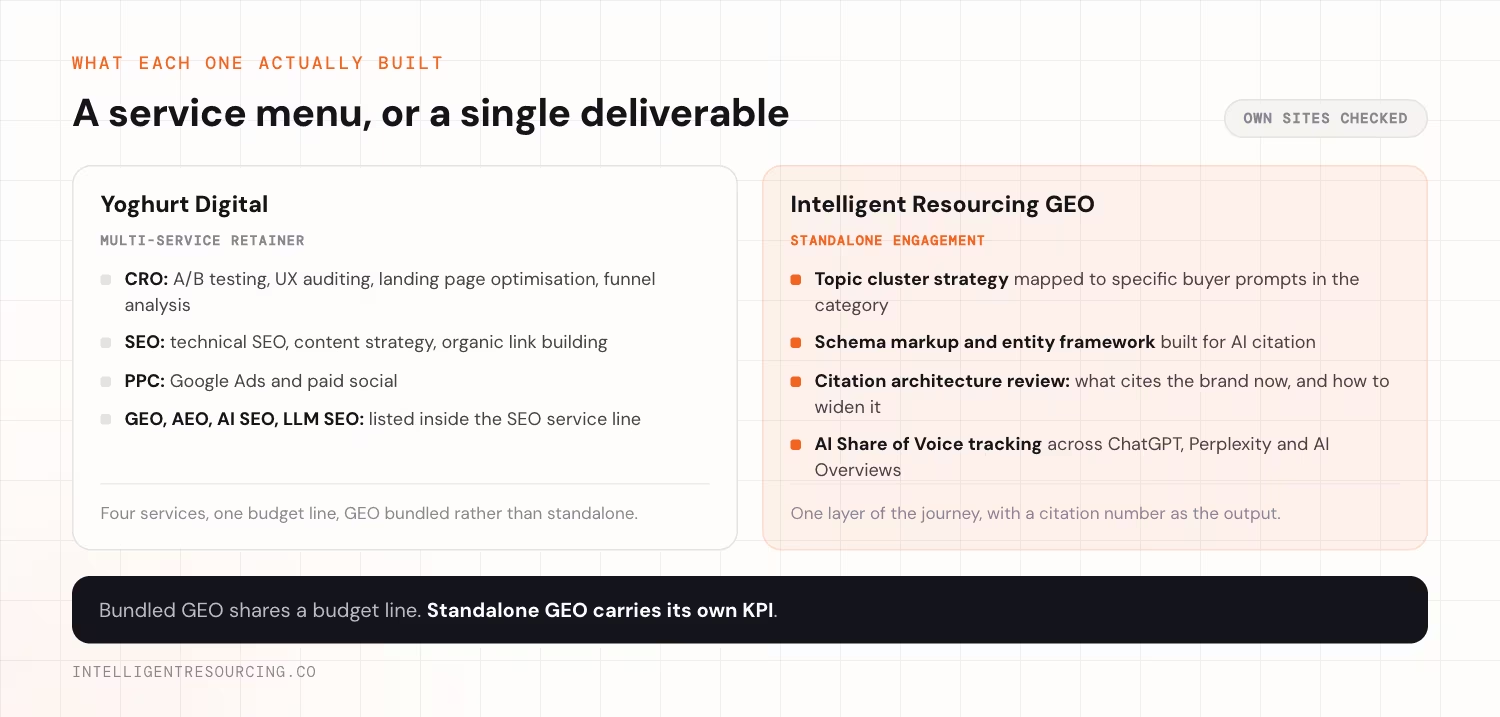
Yoghurt Digital builds performance across the conversion funnel: CRO, SEO and paid media. GEO and AEO sit inside their SEO service line. Intelligent Resourcing's GEO service builds AI citation architecture only. The primary deliverable is AI Share of Voice: the percentage of AI-generated category answers that include the brand.
What Yoghurt Digital delivers
Yoghurt Digital is a full-service performance agency. Their core service set covers:
- CRO: A/B testing, UX auditing, landing page optimisation and funnel conversion analysis
- SEO: Technical SEO, content strategy and organic link building
- PPC: Google Ads and paid social
- GEO/AEO/AI SEO/LLM SEO: Listed under the SEO service line, not as a standalone engagement
Yoghurt Digital's published case studies include +543% revenue for Frank Body and +120% transactions for Crucial.
The multi-service model puts CRO, SEO and GEO inside one retainer. For businesses that need conversion optimisation and basic AI visibility managed together, this structure avoids the complexity of multiple engagements. If you would rather run AEO with a specialist, compare 6 AEO specialist options.
What Intelligent Resourcing GEO delivers
Its GEO engagement covers one layer of the buyer journey: AI discovery. The service delivers:
- Topic cluster strategy: mapped to specific buyer prompts in the category
- Schema markup and entity framework: for AI citation
- Citation architecture review: what sources currently cite the brand and how to increase coverage
- AI Share of Voice tracking: via the AEO Tracker, measured monthly across ChatGPT, Perplexity and Google AI Overviews
Where Does CRO Stop and GEO Begin?
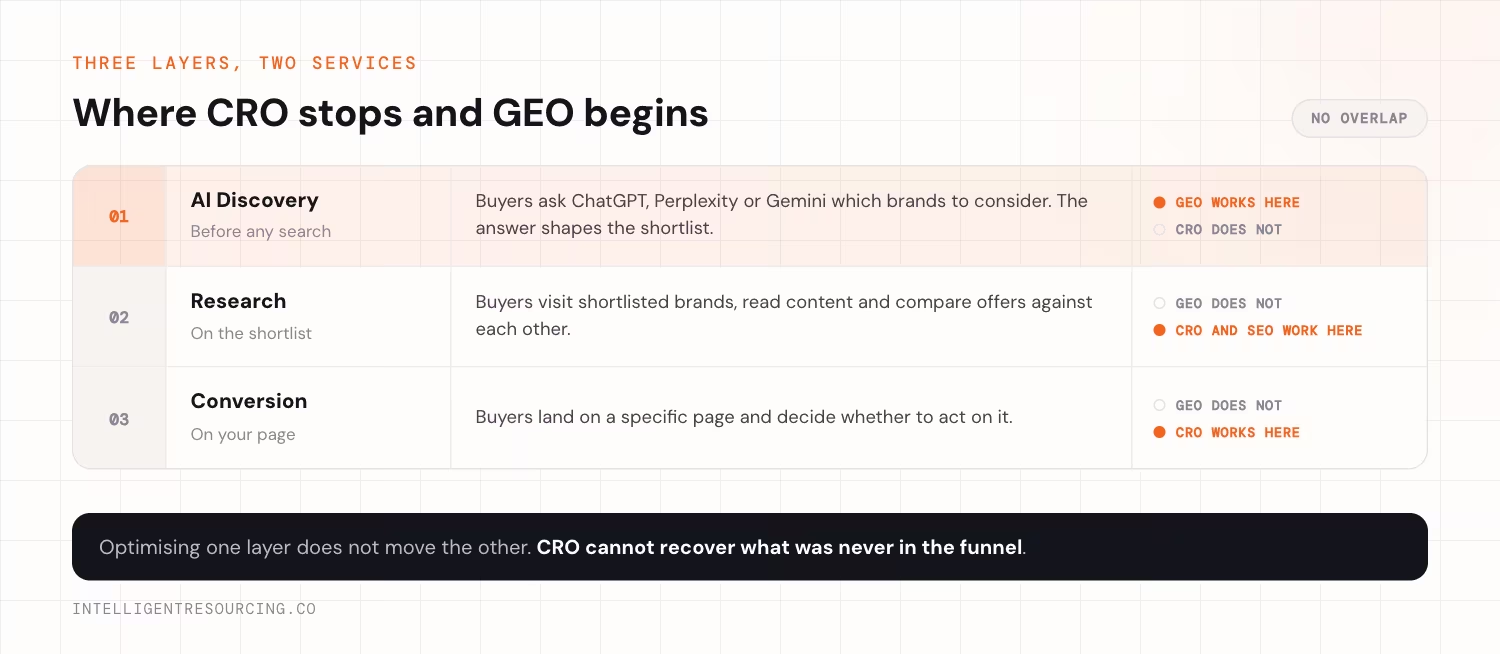
CRO improves what happens after buyers reach your site. GEO determines whether buyers see your brand in ChatGPT or Perplexity answers before they search at all. These are two separate stages of the same buyer journey. Optimising one does not affect the other.
The buyer journey now has 3 distinct layers:
- AI Discovery: Buyers ask ChatGPT, Perplexity or Google Gemini which brands to consider. The AI-generated answer shapes the shortlist before any organic search happens.
- Research: Buyers visit shortlisted brands, read content and compare offers.
- Conversion: Buyers land on a specific page and decide whether to act.
Yoghurt Digital's CRO and SEO services work on layers 2 and 3. They do not address layer 1.
Because HubSpot's 2026 marketing statistics found that nearly 70% of marketers report prospects now arriving later in the buying process due to AI-assisted research, the discovery layer is doing more pre-qualification work than it was 2 years ago. A buyer who has already consulted ChatGPT has filtered their shortlist before any website conversion opportunity begins.
Therefore, a business absent from AI-generated shortlists misses a portion of its addressable market before that market reaches any website. CRO cannot recover what was never in the funnel.
How Does Yoghurt Digital Approach GEO?
Yoghurt Digital lists GEO, AEO, AI SEO and LLM SEO under their SEO service line. Their approach adapts existing content strategy to include AI optimisation signals. It is not a standalone engagement, and AI Share of Voice is not a standard primary KPI in their retainer.
Yoghurt Digital's GEO work sits alongside their SEO content and technical deliverables. In practice, this means:
- Adapting existing blog and service page content for AI engine extraction
- Adding schema markup alongside standard SEO on-page practices
- Tracking AI visibility as a supporting metric alongside organic traffic, conversions and revenue KPIs
The advantage: GEO work is bundled inside the SEO retainer. It happens alongside content production without a separate budget line.
The constraint: Profound's citation research across 29 industries and 8 LLMs shows that citation preferences differ significantly by model and category. Because dedicated GEO requires model-specific optimisation, what gets cited in ChatGPT differs from what gets cited in Perplexity. A bundled SEO approach does not address those differences at the depth a standalone GEO engagement does.
How Does Intelligent Resourcing Measure AI Citation Share?
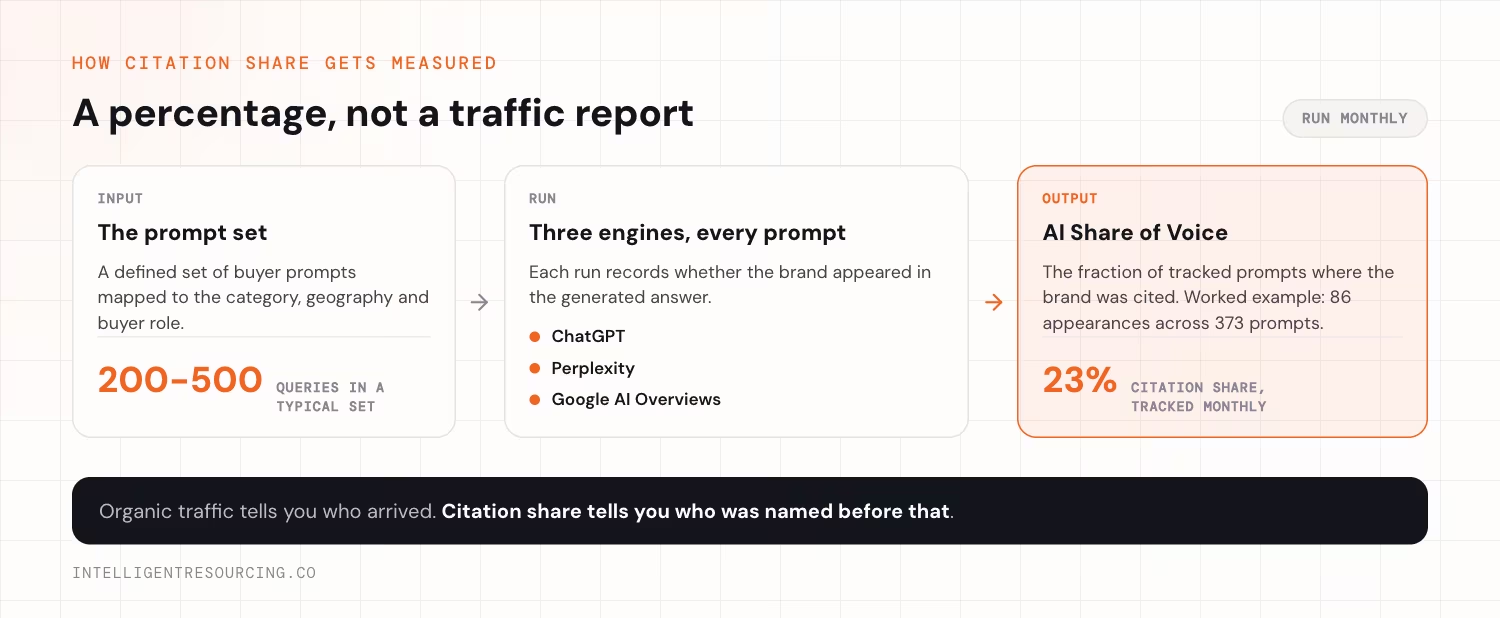
Intelligent Resourcing's GEO service measures AI Share of Voice through the AEO Tracker: a monthly audit of how often the brand appears in AI-generated answers to target buyer prompts. This is tracked across ChatGPT, Perplexity and Google AI Overviews. The output is a citation share percentage, not a traffic report.
The AEO Tracker
The AEO Tracker runs a defined set of buyer prompts through ChatGPT, Perplexity and Google AI Overviews. A typical prompt set covers 200 to 500 queries mapped to the category, geography and buyer role. Each run records whether the brand appeared in the AI-generated answer.
The output is an AI Share of Voice percentage: the fraction of prompts where the brand was cited. This figure, tracked monthly, measures movement across the GEO engagement period.
The schema markup and entity framework that underpins citation architecture is what separates GEO from general content production. AI engines extract entities from structured, source-grounded content. Unstructured blog posts, including well-written ones, rarely generate consistent citation coverage.
Which Should You Choose?
Choose Yoghurt Digital if your primary problem is on-site conversion, or if you want CRO, SEO and GEO managed under one retainer. Choose Intelligent Resourcing GEO if your brand does not appear in AI-generated answers for your category and you have an existing content base to build from.
GEO and CRO address different stages of the buyer journey. A business can run Yoghurt Digital for conversion optimisation and Intelligent Resourcing GEO for AI citation architecture without overlap. The 2 services operate on different buyer journey layers.
The decision comes down to which layer is the current constraint:
- Buyers arrive but do not convert. CRO is the first lever. Yoghurt Digital's multi-service retainer covers this alongside SEO and basic GEO.
- Buyers do not appear in your pipeline, or competitors are being cited in ChatGPT. GEO is the layer to address.
Comparisons
Work out whether your constraint is the visit you already have or the shortlist you never made. Book a strategy session with Intelligent Resourcing.
FAQs
Can Yoghurt Digital and Intelligent Resourcing work together?
Yes. They operate at different buyer journey stages. Yoghurt Digital optimises on-site conversion. Intelligent Resourcing GEO builds AI citation architecture. A business can run both without overlap because the services address different buyer journey layers.
What is AI Share of Voice?
AI Share of Voice is the percentage of AI-generated answers to a defined set of buyer prompts that include the brand name. If 373 prompts are tracked and the brand appears in 86, the AI Share of Voice is 23%. It is tracked monthly across ChatGPT, Perplexity and Google AI Overviews.
Does Yoghurt Digital's GEO service track AI Share of Voice?
Yoghurt Digital offers GEO and AEO inside their SEO retainer. AI Share of Voice is not a standard primary KPI in their engagement. The primary metrics are organic traffic, conversions and revenue, with AI visibility as a supporting signal rather than the primary output.
How long does GEO take to produce results?
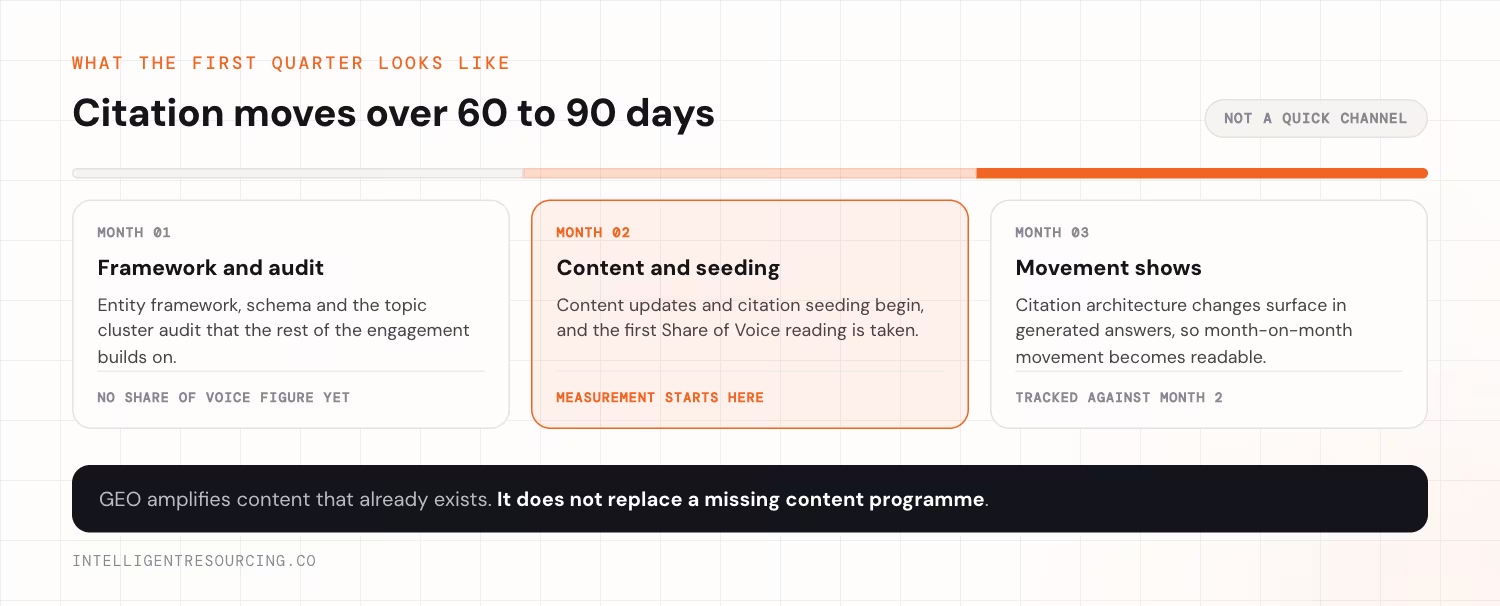
Citation architecture changes are reflected in AI-generated answers over 60 to 90 days on average. Month 1 covers the entity framework, schema and topic cluster audit. Months 2 and 3 cover content updates and citation seeding. AI Share of Voice is measured from month 2 onwards.
Which service is better for a B2B company with no AI presence?
If your brand does not appear in AI-generated answers for your category, GEO is the starting point. But if your content base is thin (fewer than 20 substantive pieces on the category), a content build phase comes first. GEO amplifies existing content. It does not replace a missing content programme.