

The most effective account-based marketing examples are not memorable campaigns. They are repeatable plays in which a verified buying signal triggers a specific sales action against a defined account. Intelligent Resourcing builds and runs this model around signal routing, clear ownership and account-level pipeline measurement, so teams can copy the mechanism that created revenue rather than the creative surface of the campaign.
Most ABM roundups focus on famous brands, adverts and creative concepts, but leave out the trigger that made the campaign commercially useful. This guide breaks nine examples into the elements a mid-market team can apply: the account focus, buying signal, activation play, sales action and pipeline outcome.
Across case data from ZoomInfo, Directive, Foundry and Cognism, the pattern is consistent: pipeline followed the signal, not the campaign. These plays sit inside a broader account-based go-to-market motion. When your account list is already defined, the next step is to connect the signals you collect to the sales actions they should trigger.
What makes an account-based marketing example worth copying
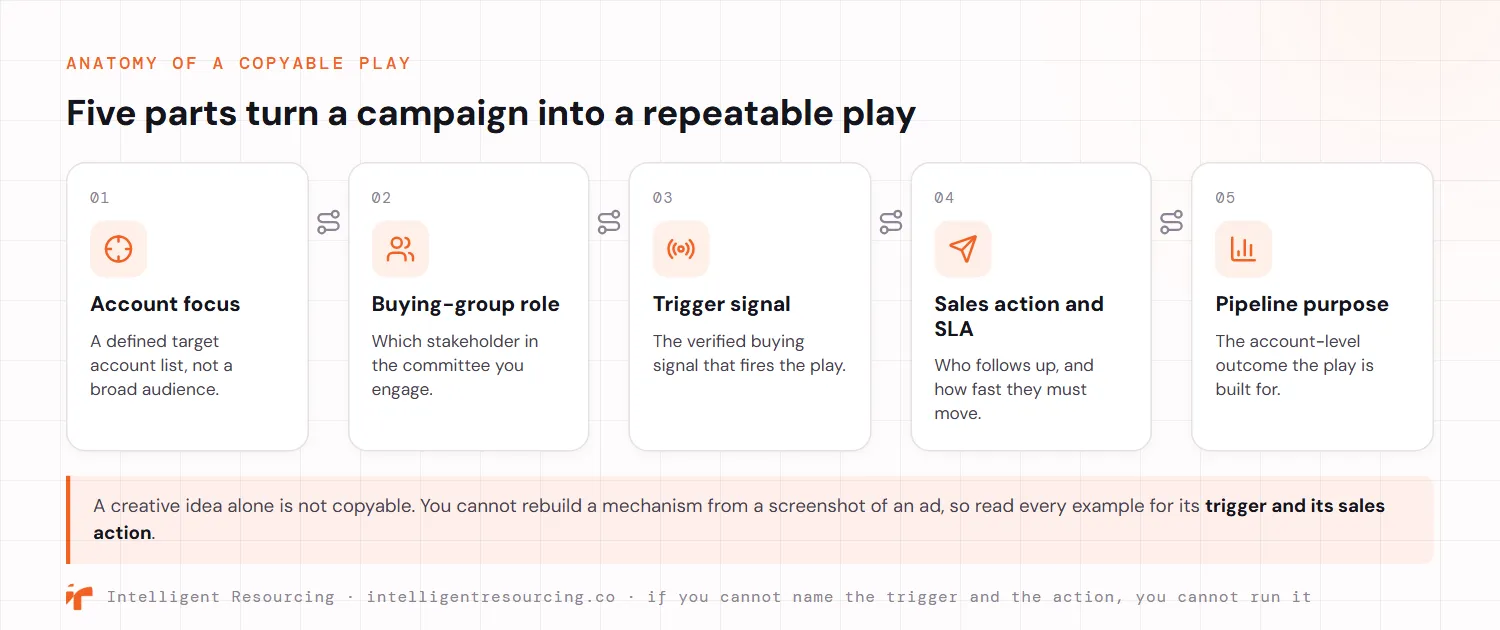
A copyable ABM example shows five things: the account focus, the buying-group role, the trigger signal, the sales action, and the pipeline purpose. A creative idea alone is not copyable; you cannot rebuild a mechanism from a screenshot of an ad.
Signal-triggered plays are the line between activity and pipeline, and they sit at the centre of signal-based marketing. A play fires when an account signals intent, which means the follow-up lands while interest is live. Most examples report a vanity metric and skip the follow-up. A signal-based selling motion picks up the account once the play fires.
Read every example through the right-hand column: if you cannot name the trigger and the sales action, you cannot run it.
| Weak ABM example | Copyable signal-triggered play |
|---|---|
| Describes a creative campaign | Names the trigger signal |
| Reports a vanity metric | Reports account-level pipeline |
| No sales follow-up defined | Defines the sales action and SLA |
| Broad audience | Defined target account list |
The 9 signal-triggered ABM plays at a glance
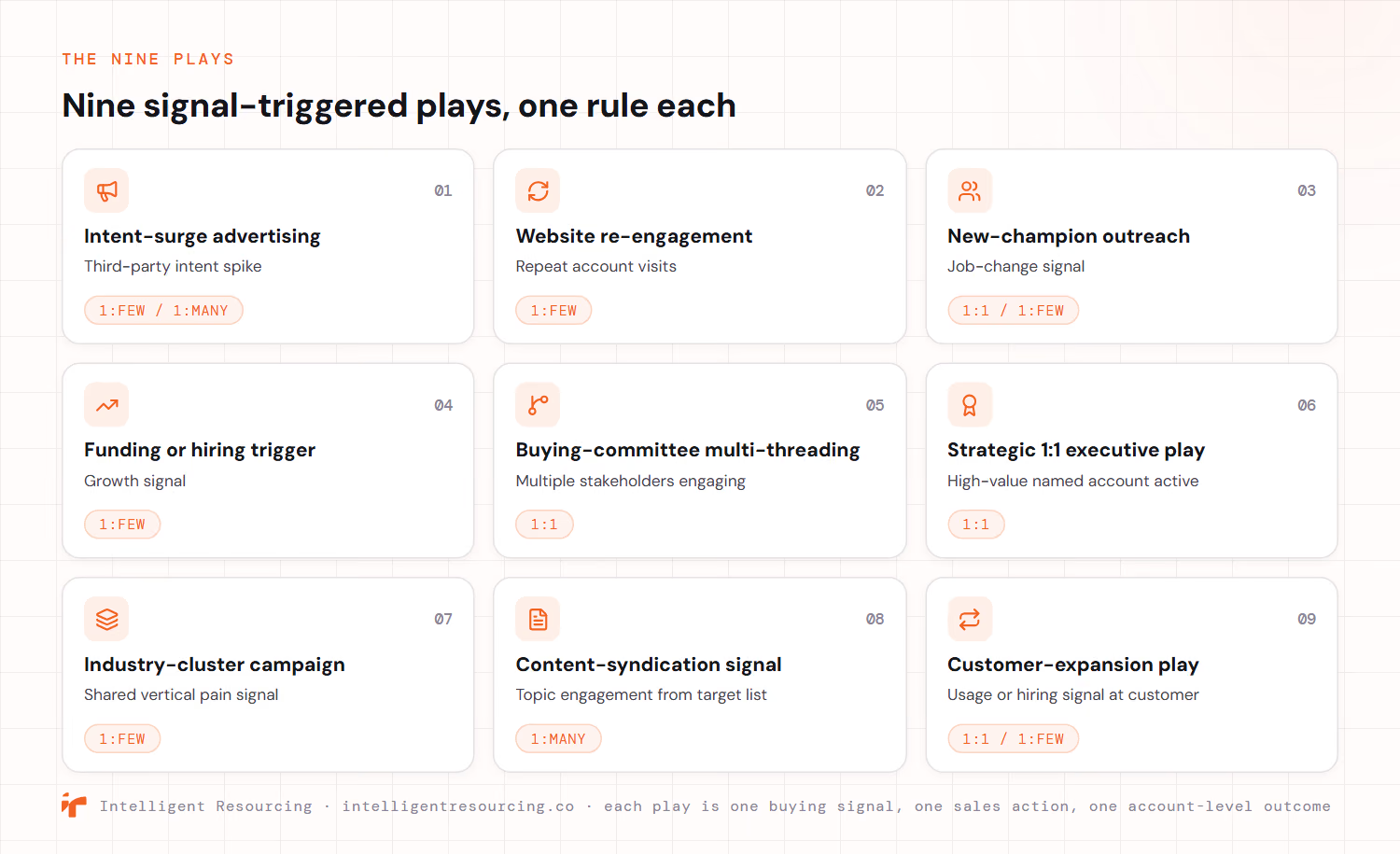
Every one of the nine plays follows one rule: a specific buying signal triggers a specific sales action against a defined account list. The table maps each play to its trigger, tier, and pipeline pattern.
| Play | Trigger signal | ABM tier | Pipeline outcome pattern |
|---|---|---|---|
| Intent-surge advertising | Third-party intent spike | 1:few / 1:many | Higher CTR on best-fit accounts |
| Website re-engagement | Repeat account visits | 1:few | Faster SDR follow-up, more meetings |
| New-champion outreach | Job-change signal | 1:1 / 1:few | Warm entry to a fresh decision-maker |
| Funding or hiring trigger | Growth signal | 1:few | Timely expansion or net-new play |
| Buying-committee multi-threading | Multiple stakeholders engaging | 1:1 | Higher win rate, deal protection |
| Strategic 1:1 executive play | High-value named account active | 1:1 | Executive meetings on large deals |
| Industry-cluster campaign | Shared vertical pain signal | 1:few | Consistent multichannel pipeline lift |
| Content-syndication signal | Topic-level engagement from TAL | 1:many | Qualified account-level signals |
| Customer-expansion play | Usage or hiring signal at customer | 1:1 / 1:few | Upsell and cross-sell pipeline |
The same logic scales from one account to hundreds; the question is which tier your list and capacity can support. Teams short on that capacity often bring one in. The choice between an account-based marketing agency and an in-house build turns on who owns the data.
9 signal-triggered ABM plays that booked pipeline
Each play uses the same skeleton: the trigger, how it runs, the signal it creates, the sales action and SLA, and the proof.
Intent-surge advertising play
| Element | Detail |
|---|---|
| Trigger | A third-party intent spike on a category topic. |
| Play | Serve ads only to in-market accounts through programmatic display and LinkedIn. |
| Signal created | Ad engagement is routed to the SDR queue. |
| Sales action | The SDR follows up within one business day. |
| Proof | ZoomInfo’s case study quotes Chase Arvanitis, CreditXpert’s Director of Performance Marketing, reporting nearly 50% higher click-through than its usual programmatic channels. |
| Commercial implication | A lean team can use the same budget more efficiently by focusing spend on accounts already showing intent. |
Website re-engagement play
| Element | Detail |
|---|---|
| Trigger | Repeat visits from an account already on your target list. |
| Play | De-anonymise the visit, personalise the page and alert the account owner. |
| Signal created | A real-time intent alert tied to a known account. |
| Sales action | The AE follows up within hours with a meeting-first message. |
| Proof | Foundry’s 2023 case study reports that Clearwave shortened its sales cycle by roughly 20% after syncing CRM audiences into its ABM programme and activating intent alerts. |
| Commercial implication | The same pipeline closes sooner because sales acts while account interest is still active. |
New-champion (job-change) outreach play
| Element | Detail |
|---|---|
| Trigger | A job-change alert inside a target account. |
| Play | Launch a job-change nurture using benchmarking content and SDR outreach. |
| Signal created | A warm entry to a new buyer who may be reassessing or rebuilding their technology stack. |
| Sales action | The SDR starts a sequence referencing the role change within a few days. |
| Proof | Cognism’s 2025 playbook groups accounts by signal and uses a dedicated job-joiner nurture for this trigger, creating a repeatable pattern for signal-based outreach. |
| Commercial implication | The team can follow a departing champion into a second account and open a new opportunity while the relationship is still warm. |
Funding or hiring trigger play
| Element | Detail |
|---|---|
| Trigger | A funding round or a surge in hiring. |
| Play | Launch a timely one-to-few campaign tied to the company’s growth event. |
| Signal created | A time-sensitive buying window shaped by new budget, expansion pressure or operational urgency. |
| Sales action | An AE and SDR pair engages the account within the same week. |
| Proof | Funding and hiring activity are established growth signals because they often indicate new budget, team expansion and a greater need for supporting systems or services. |
| Commercial implication | Acting within days gives the team an advantage over competitors that respond after the growth event has already passed. |
Buying-committee multi-threading play
| Element | Detail |
|---|---|
| Trigger | Several stakeholders from the same target account engage within a short period. |
| Play | Map the economic buyer, champion, technical evaluator and procurement contact, then engage each role with tailored messaging. |
| Signal created | Wider buying-committee coverage rather than dependence on a single contact. |
| Sales action | Each rep owns a specific stakeholder relationship against a defined coverage SLA. |
| Proof | B2B buying committees often include six to ten stakeholders across several functions, making single-threaded opportunities vulnerable to delays or personnel changes. |
| Commercial implication | Multi-threading protects the deal, improves internal alignment and reduces the risk of one departing champion stalling the opportunity. |
Strategic one-to-one executive play
| Element | Detail |
|---|---|
| Trigger | A high-value named account shows readiness across several aligned buying signals. |
| Play | Build a bespoke microsite, coordinate executive-to-executive outreach and use selective direct mail for the account. |
| Signal created | Senior-level engagement around a strategically important opportunity. |
| Sales action | An executive sponsor works to secure a senior meeting within the quarter. |
| Proof | CXL’s 2022 analysis reports that LiveRamp generated more than US$50 million in annual revenue from a tightly focused programme involving 15 named accounts. |
| Commercial implication | One-to-one ABM economics are most effective when reserved for roughly 10 to 25 accounts with sufficiently high potential value. |
Industry-cluster one-to-few play
| Element | Detail |
|---|---|
| Trigger | A shared industry problem appears across a small group of similar target accounts. |
| Play | Coordinate email, advertising and website personalisation around the common issue, then tailor the execution for each account. |
| Signal created | Consistent multichannel engagement across a defined vertical cluster. |
| Sales action | A dedicated pod follows up with each account according to a per-account SLA. |
| Proof | ZoomInfo’s case study reports that Impartner achieved a 12% quarter-on-quarter pipeline increase and US$130,000 in influenced pipeline from three target accounts. |
| Commercial implication | The team can capture much of the impact of one-to-one ABM without carrying the same production cost for every account. |
Content-syndication signal play
| Element | Detail |
|---|---|
| Trigger | An account on the target list engages with content on a relevant topic. |
| Play | Treat the content interaction as an account-level signal and route it into an orchestrated outreach sequence. |
| Signal created | A qualified intent marker tied to the account rather than only to an individual lead. |
| Sales action | The account owner engages the wider account within the agreed SLA. |
| Proof | G2’s 2023 case study reports that BetterCloud combined G2 Buyer Intent with RollWorks account data to prioritise in-market accounts and increased influenced deal size by 81%. |
| Commercial implication | Prioritising account-level signal quality produces stronger pipeline outcomes than optimising for raw lead volume. |
Customer-expansion signal play
| Element | Detail |
|---|---|
| Trigger | Usage growth, hiring activity or another expansion signal appears inside an existing customer account. |
| Play | Engage new buyers and business units using proof of value already achieved with the customer. |
| Signal created | A credible expansion opportunity supported by existing adoption and commercial evidence. |
| Sales action | The account manager and AE work together to pursue the opportunity within the quarter. |
| Proof | Demandbase’s 2022 case study reports that SAP Concur used intent-signal data to prioritise existing accounts showing upsell and cross-sell signals, and increased closed-won revenue by 52% within three to four months of consistent account-based targeting. |
| Commercial implication | Expansion opportunities can be more efficient than net-new acquisition because trust, usage history and proof of value already exist. |
The buying signals worth triggering an ABM play on
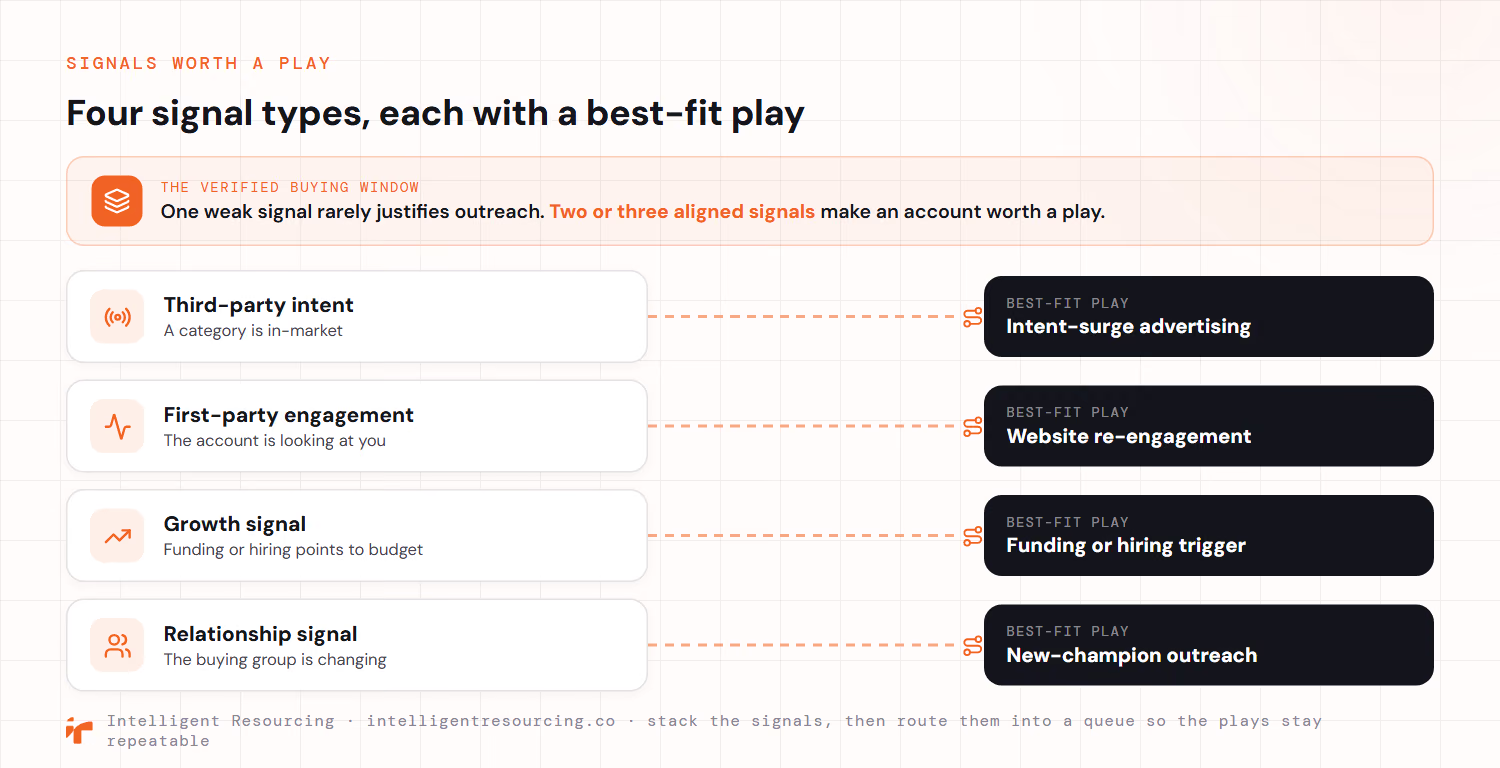
Not every signal deserves a play, and the rule that separates noise from pipeline is multi-signal confirmation, what we call a Verified Buying Window: one weak signal rarely justifies outreach, but two or three aligned signals do. It is the gap most roundups skip, so catalogue your buying signals first. Four types matter:
- Third-party intent shows a category is in-market.
- First-party engagement shows the account is looking at you.
- Growth signals point to budget and urgency.
- Relationship signals show the buying group is changing.
The discipline is stacking them, which Cognism calls signal stacking, and speed: Directive frames the goal as speed-to-signal in hours, because a stale signal is no signal. Route your B2B buying signals into a queue and the plays become repeatable.
| Signal type | Example source | Best-fit play |
|---|---|---|
| Third-party intent | Bombora, G2 | Intent-surge advertising |
| First-party engagement | Website, content | Website re-engagement |
| Growth signal | Funding, hiring | Funding or hiring trigger |
| Relationship signal | Job change, champion move | New-champion outreach |
Which means the account to call today shows two of these at once, not just a profile fit. A fuller catalogue of B2B buying signals shows which triggers carry weight and which do not.
How to measure whether a signal-triggered play booked pipeline
Measure at the account level, not by lead volume, because the point of ABM is that a named account moved, not that a form was filled. Separate leading indicators, which show the play is working, from lagging indicators, which show it booked revenue.
Leading indicators surface early: buying-committee coverage, speed-to-signal, and meeting rate from marketing-qualified accounts. Lagging indicators confirm the result: pipeline from target accounts, pipeline velocity against a non-ABM baseline, win rate, and expansion. The trap is double-counting influenced pipeline, where every touch claims the same deal. Strict account-level attribution is the fix, and a core output of disciplined GTM engineering.
| Leading indicator | Lagging indicator |
|---|---|
| Buying-committee coverage % | Pipeline from target accounts |
| Speed-to-signal (hours) | Pipeline velocity vs baseline |
| Meeting rate from MQAs | Win rate and average deal size |
Which means you report one leading and one lagging number per play, so you can cut a play early rather than defend it at year-end.
Which signal-triggered ABM play fits your situation
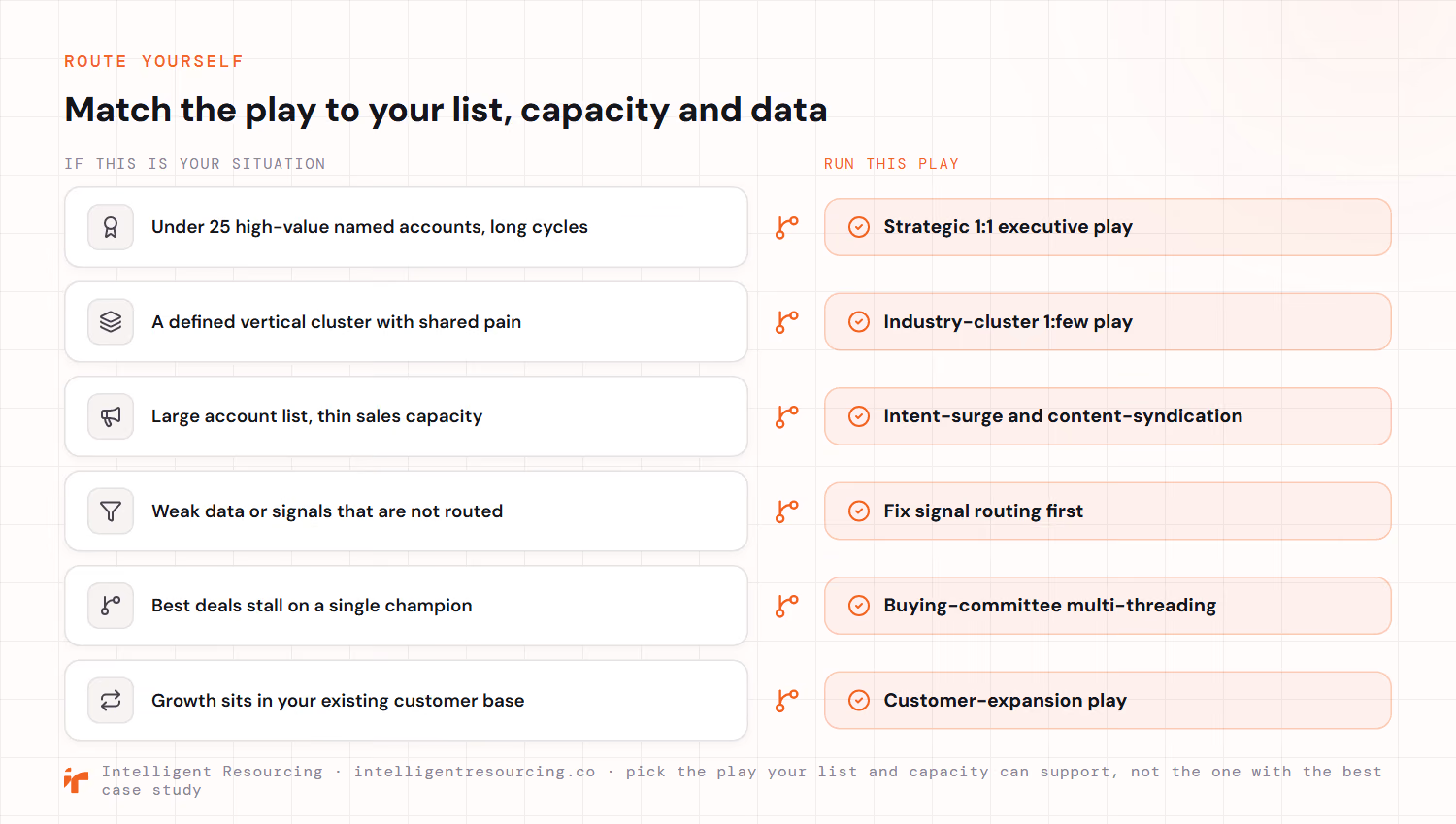
Pick the play that matches your account list, capacity, and data, not the one with the best case study. Route yourself.
- If you have fewer than 25 high-value named accounts with long cycles, run the strategic 1:1 executive play.
- If you have a defined vertical cluster with shared pain, run the industry-cluster 1:few play.
- If you have a large target account list but thin sales capacity, run intent-surge advertising and the content-syndication signal play.
- If your data foundation is weak or your signals are not routed, fix signal routing before scaling any play.
- If your best deals stall on a single champion, run buying-committee multi-threading.
- If your growth sits in your existing base, run the customer-expansion signal play.
Build a signal-triggered ABM engine with Intelligent Resourcing
The through-line across all nine examples is simple: pipeline followed the signal, not the creative. CreditXpert, Clearwave, LiveRamp, Impartner, SAP Concur, and BetterCloud did not win because their campaigns were clever. They won because a specific trigger told sales which account to engage and when, and the follow-up landed while intent was live. Copy the mechanism: name the trigger, define the sales action and SLA, and measure pipeline at the account level. That is what every roundup leaves out, and what decides whether ABM produces activity or revenue.
Running ABM on stale signals and unrouted lists costs you the deals that were live this month: the intent spike your reps never saw, the champion who moved without a follow-up, the funding round a competitor acted on first.
If you want plays that fire on real signals, go-to-market engineering is how we build and run them on your own stack. Get in touch to design your first three.
GTM Engineering
We build and run a signal-triggered ABM motion on your own stack: signal routing, clear sales SLAs, and account-level pipeline measurement, so the follow-up lands while intent is live.
FAQs
What is a signal-triggered account-based marketing example?
A signal-triggered ABM example is a play launched off a specific buying signal, with a defined sales action and an account-level outcome. It differs from a generic brand campaign because the trigger, not a calendar date, starts the work: an intent spike, a repeat website visit, or a job change tells sales which account to engage and when.
Which buying signals are worth triggering an ABM play on?
Four types carry most of the weight: third-party intent from tools like Bombora and G2, first-party engagement on your site and content, growth signals such as funding and hiring, and relationship signals such as job changes. No single weak signal justifies outreach on its own. The multi-signal confirmation rule applies: two or three aligned signals make an account worth a play.
How many accounts should a signal-triggered ABM play target?
Match the count to the tier. A 1:1 play suits roughly 10 to 25 named accounts, where bespoke work pays off. A 1:few play covers about 50 to 100 accounts grouped by shared pain. A 1:many play reaches hundreds or more and leans on automation and intent data to stay personal at scale. Your sales capacity, not your ambition, sets the ceiling.
How do you know if an ABM play actually booked pipeline?
Measure at the account level. Track pipeline created in target accounts, pipeline velocity against a non-ABM baseline, and win rate on engaged accounts. Avoid vanity metrics like impressions, and do not double-count influenced pipeline across every touch. If you cannot attribute a deal to a specific account and signal, you cannot claim the play booked it.
Do signal-triggered ABM plays work for small teams?
Yes. Intent-triggered automation and content syndication let lean teams run plays without a dedicated ABM org, because the signal does the targeting work a large team would otherwise do by hand. CreditXpert is the pattern here: a small team ran an intent-triggered advertising play rather than building a large ABM function. Start with one or two automated plays, then add headcount.