

What Does This Checklist Actually Score?
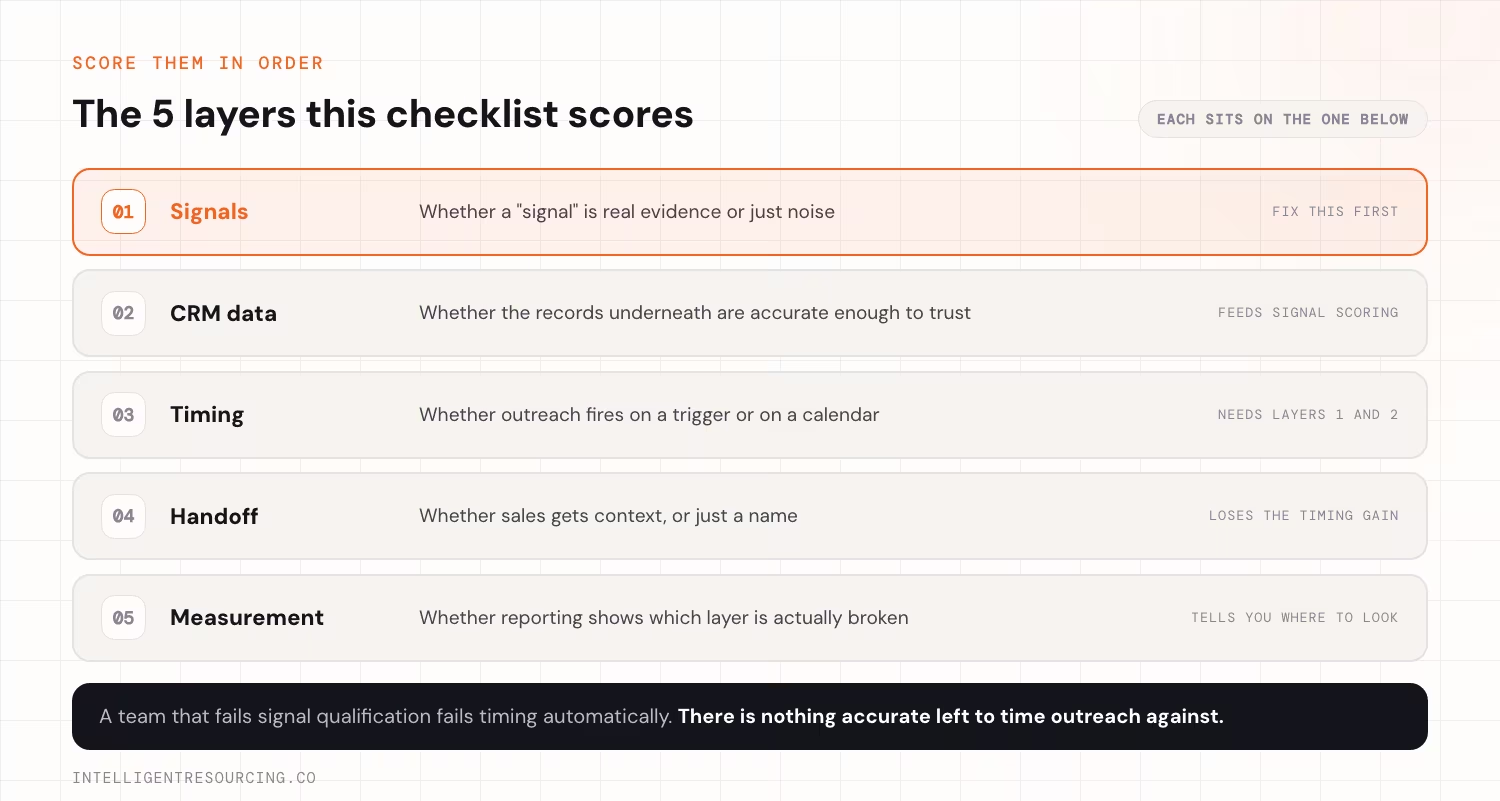
This checklist scores 5 connected layers, and each one sits on top of the layer below it. A clean CRM behind a broken handoff still produces lost pipeline, which is why the layers get scored together rather than one at a time.
| Layer | What it tests |
|---|---|
| 1. Signals | Whether a "signal" is real evidence or just noise |
| 2. CRM data | Whether the records underneath are accurate enough to trust |
| 3. Timing | Whether outreach fires on a trigger or on a calendar |
| 4. Handoff | Whether sales gets context, or just a name |
| 5. Measurement | Whether reporting shows which layer is actually broken |
This diagnostic sits downstream of the broader shift covered in the intelligent prospecting playbook: signal detection only pays off once every layer behind it is scored too.
Are Your Buying Signals Actually Qualified?
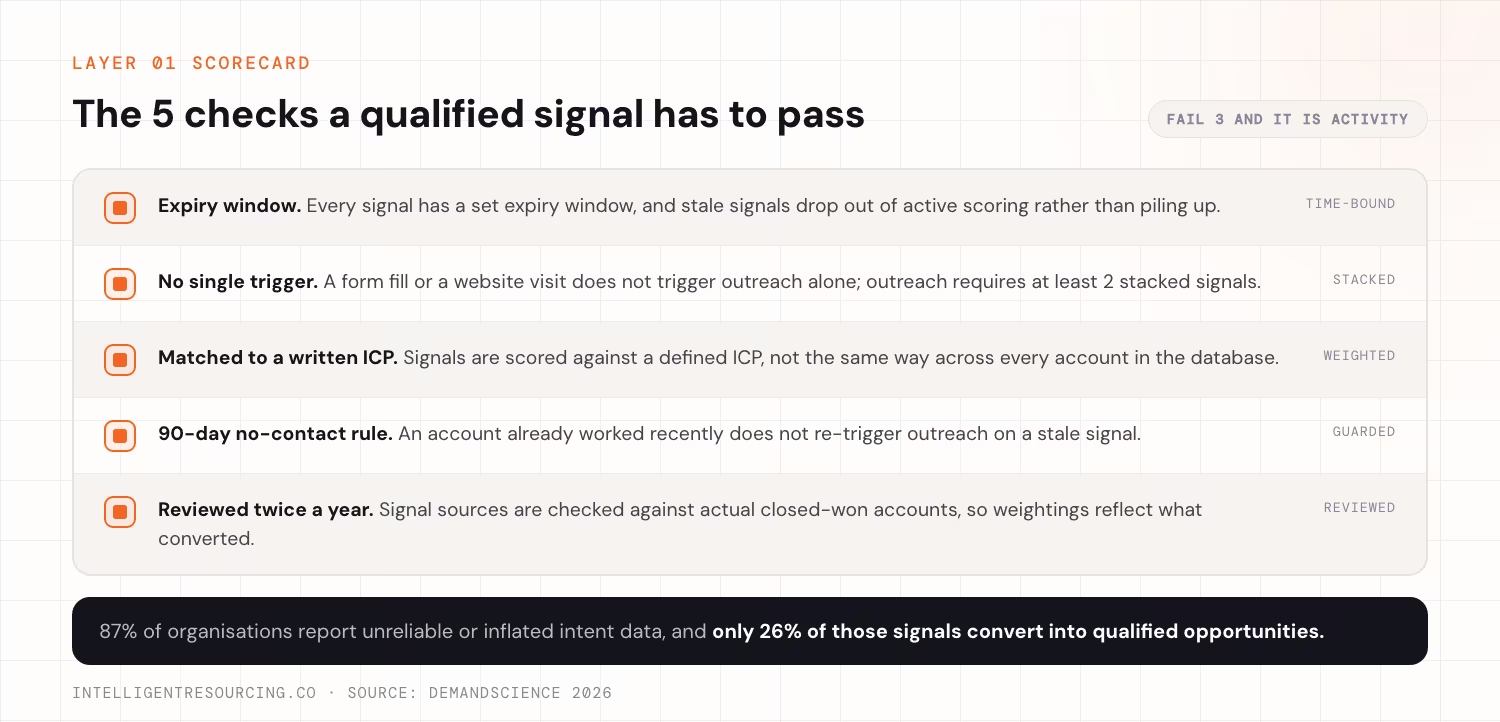
A qualified signal is stacked, weighted and time-bound evidence that an account is actively evaluating, not a single data point treated as proof.
DemandScience's 2026 performance marketing survey of 750 senior marketing leaders found that 87% report their intent data produces unreliable or inflated signals. Only 26% of those signals convert into qualified opportunities.
The same stacking logic drives practical lead scoring workflows, which score intent, ICP fit and enrichment confidence together rather than trusting any single input.
Score your signal layer against these 5 checks:
- Every signal has a set expiry window, and stale signals drop out of active scoring rather than piling up.
- No single signal (a form fill, a website visit) triggers outreach on its own; outreach requires at least 2 stacked signals.
- Signals are matched against a written ICP definition, not scored the same way across every account in the database.
- A 90-day no-contact rule exists, so an account already worked recently does not re-trigger outreach on a stale signal.
- Signal sources are reviewed at least twice a year against actual closed-won accounts, so weightings reflect what has converted, not what looked promising.
A team failing 3 or more of these checks is creating activity, not a Verified Buying Window. Book a Signal Audit and apply this checklist to your own pipeline in 30 minutes, not a spreadsheet.
Is Your CRM Data Decaying Faster Than You Can Enrich It?
CRM data decay weakens every layer built on top of it. Signal scoring, routing rules and reporting all inherit whatever accuracy the records underneath carry.
Validity's State of CRM Data Management found that 24% of CRM admins say less than half of their data is accurate and complete.
Score your data layer against these 4 checks:
- Enrichment runs on a fixed schedule (weekly or monthly), not only when a rep manually flags a record as wrong.
- A named owner owns data quality, rather than data hygiene being left to the whole team.
- Waterfall enrichment is in place, checking multiple providers in sequence rather than trusting a single source.
- Duplicate records are merged automatically, not left for a rep to notice during a call.
Teams passing fewer than 3 of these checks are building signal scores and routing rules on top of records that are wrong more often than they are right.
Fix the data before you fix the outreach. Feed a signal-led system decaying CRM data and you get the same false positives you were trying to escape. See how signal-led lead generation works once the data underneath it is actually clean.
Is Outreach Triggered by Timing or by Calendar?
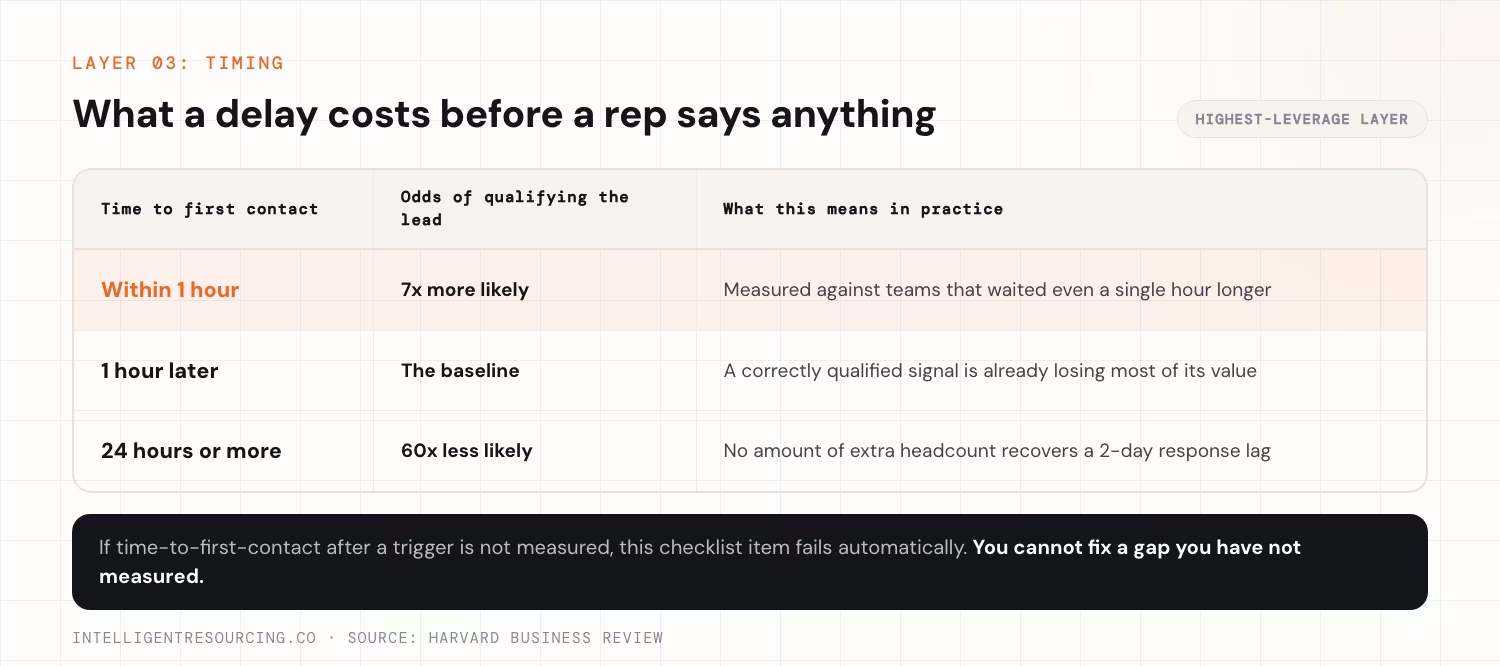
Outreach timing is the single highest-leverage layer in this checklist, because a correctly qualified signal is worthless if a rep responds to it 2 days later.
Harvard Business Review's lead response analysis is widely cited on this point. Companies contacting a lead within an hour were 7 times more likely to have a meaningful conversation with a decision-maker. That is measured against companies that waited even a single hour longer. Companies that waited 24 hours or more were 60 times less likely to qualify the lead at all.
Score your timing layer against these 4 checks:
- Time from signal detection to first outreach is measured and reported weekly, not estimated.
- Outreach fires within hours of a confirmed trigger, not on the next scheduled sequence date.
- No static list is blasted on a fixed cadence regardless of whether any account shows a live signal.
- Reps are alerted the moment a trigger fires, rather than discovering it during a routine pipeline review.
If time-to-first-contact after a trigger is not currently measured, this checklist item automatically fails. You cannot fix a gap you have not measured.
Does Your Handoff Give Sales Context, or Just a Name?
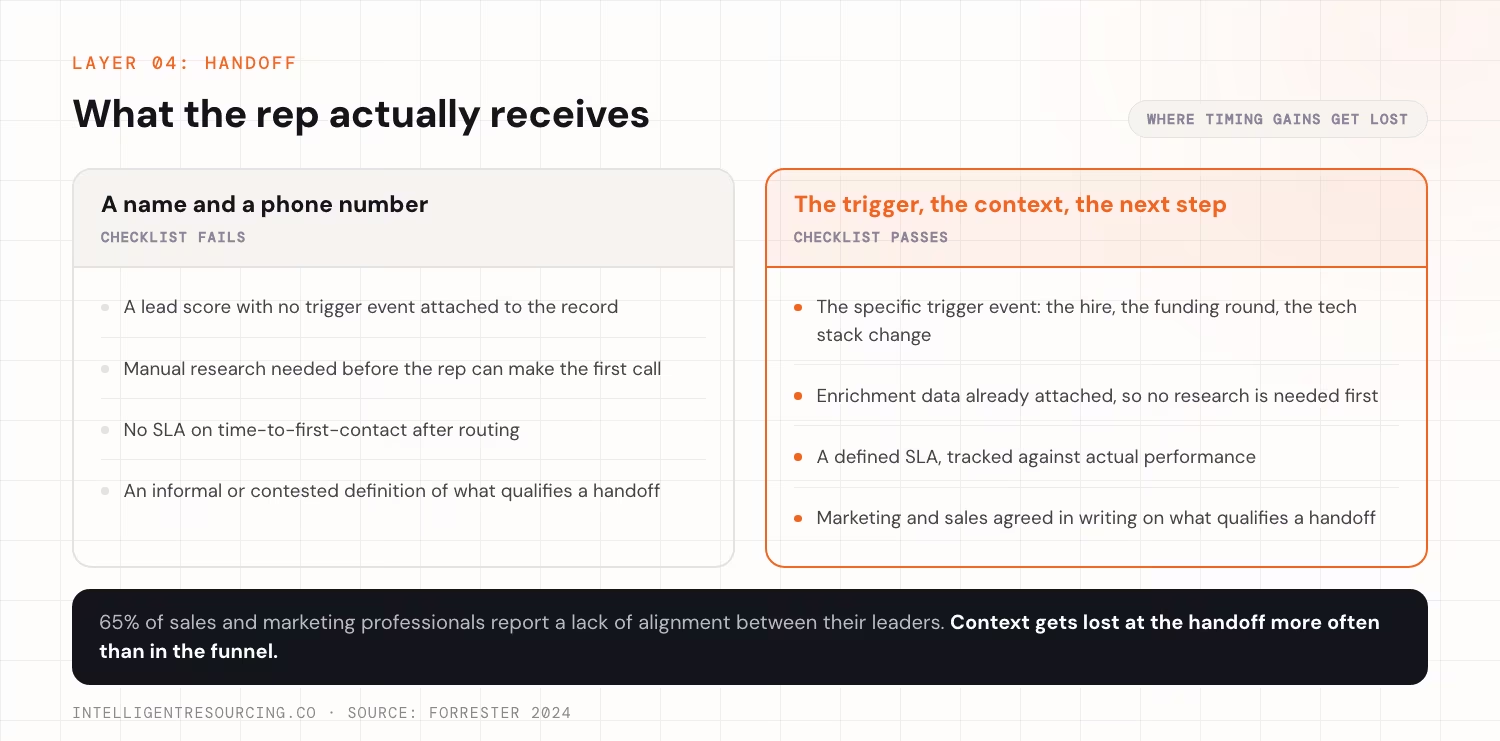
A handoff that passes a name and a phone number, without the trigger event and supporting context, forces the rep to rebuild the story from scratch. That is where most of the timing advantage from the previous section gets lost.
Forrester's 2024 alignment survey found that 65% of sales and marketing professionals report a lack of alignment between their organisation's sales and marketing leaders.
A routing model that carries context, not just a score, is what closes that gap.
Score your handoff layer against these 4 checks:
- The rep sees the specific trigger event (the hire, the funding round, the tech stack change) attached to the record, not just a lead score.
- No manual research is required before the first call; enrichment data is already attached to the account.
- A defined SLA exists for time-to-first-contact after routing, and it is tracked against actual performance.
- Marketing and sales agree in writing on what qualifies a handoff, rather than working from an informal or contested definition.
A team that scores well on signals, data and timing but fails this section is still losing the deal, just later in the process than it used to.
How Do You Know the System Is Actually Working?
Measurement that blends signal-led and volume-led activity into one number hides exactly where the system is failing.
Dreamdata's 2026 research found that 81% of the B2B customer journey now happens outside the sales pipeline, up from 70% the year before. A reporting model that only starts counting at pipeline entry is therefore measuring the smaller half of the buyer's actual journey.
Score your measurement layer against these 4 checks:
- Conversion rate is tracked separately by signal type, not as one blended pipeline number.
- Pipeline volatility (quarter-to-quarter swings in coverage) is tracked as its own metric, not inferred from whether quota was hit.
- Reporting separates signal-led activity from leftover volume-based outreach still running alongside it.
- Someone reviews these numbers on a fixed schedule and can move the budget based on what they show.
A checklist you never re-run is a one-time audit, not a system. Most teams score well on 1 or 2 of these 5 layers and assume the rest are fine, which is exactly how a leak stays hidden. Explore Agentic Signal Listening and let Intelligent Resourcing audit all 5 at once, so you know exactly where the gaps are.
Score yourself honestly against all 5 sections before moving to the next step. None of this works if signals, workflows and playbooks are treated as 5 separate fixes instead of one connected system. See the operational model behind it for how they fit together.
Lead Generation
Scoring all 5 layers at once is what tells you which one is actually draining pipeline. Intelligent Resourcing audits signal quality, CRM data hygiene, outreach timing, handoff context and measurement against a single standard, then hands you the score and the order to fix them in.
FAQs
What should a B2B lead generation strategy checklist actually measure?
It should measure 5 layers in sequence: signal qualification, CRM data accuracy, outreach timing, sales handoff quality and separated conversion reporting. A checklist that skips straight to outreach tactics, without checking signal quality and data hygiene first, will get the leaking layer wrong.
How often should we run a pipeline audit?
Run the full checklist at least twice a year, and re-run the signal and data sections quarterly, since those 2 layers decay fastest. A system that passed 6 months ago can fail today if signal sources have not been reviewed against recent closed-won accounts.
What is the difference between a lead generation checklist and a CRM audit?
A CRM audit checks 1 layer: data accuracy and completeness. A lead generation strategy checklist checks the CRM as 1 of 5 connected layers, alongside signal qualification, outreach timing, handoff quality and measurement. A clean CRM sitting behind a broken handoff still produces lost pipeline.
Do we need a signal-led system before this checklist is useful?
No. The checklist works for any team, including one still running a manual, volume-based model. A volume-based team will simply fail more sections, which is the point: it shows exactly which layer to fix first rather than adding more headcount to a broken model.
What's the first thing to fix if we fail most of this checklist?
Fix signal qualification first. Every other layer depends on it: accurate timing and a useful handoff are both meaningless if the signal triggering them was never actually qualified in the first place.