
There is no single best tool for every team. The right choice depends on what job you need the software to do: prospecting, enrichment, CRM management, website visitor tracking, workflow automation, chat qualification, or outbound sending.
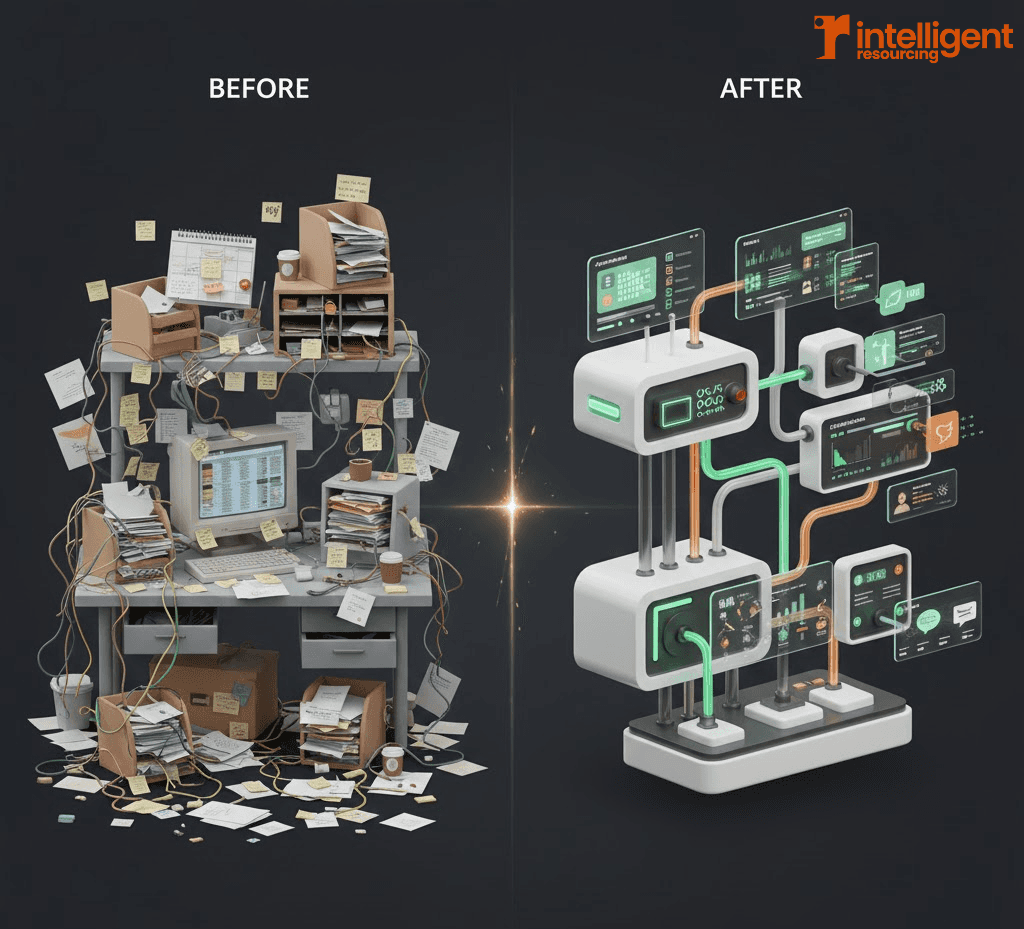
Most growth teams are currently "over-tooled" but "under-connected." They have a database for prospecting, a CRM for storage, and a platform for outreach, but they still struggle with low conversion rates.
The reality is that most B2B companies do not have a software shortage; they have a system problem. To win in the current market, your tech stack must do more than just store names. It needs to automate five distinct "jobs":
The Intelligence Layer: Finding who fits (Data & Enrichment).
The Intent Layer: Identifying who is ready (Signals & Website Tracking).
The Source of Truth: Managing the relationship (CRM).
The Orchestration Layer: Moving data between tools (Automation/API).
The Activation Layer: Starting the conversation (Outbound & Chat).

Redefining the 2026 B2B Lead Gen Stack
B2B lead generation tools are no longer just "digital phone books." They are the infrastructure of your GTM engine. Whether it's HubSpot for management, Apollo for discovery, or Clay for signal-led research, the goal is the same: Identifying qualified buyers and helping your team act before the window of opportunity closes.
Best B2B lead generation tools in Australia
To fix the "System Problem," you must first understand which specific gap each tool fills. In 2026, high-growth teams no longer buy software for the sake of features; they buy them to own a specific "job" within their revenue engine.
The following table breaks down the leading platforms by their primary role and the specific "job" they are best suited to handle in a modern, signal-based stack.
Tool | Best for | Main role |
Clay | Signal-led prospecting | Enrichment, research, and workflow-led lead generation |
n8n | Custom workflow automation | Connects tools, lead data, and internal processes |
Apollo | Outbound prospecting | Contact discovery, enrichment, and outreach |
ZoomInfo | Enterprise sales teams | B2B data, buyer signals, and account intelligence |
HubSpot | CRM-led growth teams | Lead capture, CRM, lead management, and automation |
Cognism | Compliance-focused teams | Sales intelligence and compliance-led B2B data |
LinkedIn Sales Navigator | Relationship-led selling | Prospect research, targeting, and outreach support |
Dealfront Leadfeeder | Website-led demand generation | Visitor identification and account tracking |
Drift | High-intent website conversion | Chat, qualification, and meeting booking |
Zapier | Simple lead routing | App-to-app automation and routing logic |
Smartlead | Cold email infrastructure | Mailbox scaling, warm-up, and outbound sending |
PhantomBuster | Public-web signal capture | Prospecting automation and intent-style signal collection |
Breakdown of each tool
Clay
Clay is best for teams that want to build lead generation around signals, enrichment, and workflow logic rather than static contact lists. Clay says its platform gives users access to 150+ premium data sources and AI research agents, and its inbound enrichment use cases focus on enriching leads with company size, job titles, tech stack, and intent-style signals before syncing them to a CRM.
In practice, that makes Clay a strong fit for teams that want to score, enrich, and route leads with more control. It is less of a simple contact database and more of a working layer for revenue operations, prospect research, and action-led workflows.
n8n
n8n is best for teams that want more flexible automation across their lead generation stack. n8n’s lead management automation pages focus on connecting form tools, verification services, and CRMs, while its lead-generation workflow library is built around automating lead discovery, enrichment, and contact handling.
This makes n8n especially useful for technical teams or RevOps users who want to design more tailored workflows. It is less about buying data and more about moving signals, records, and actions between systems in the right order.
Apollo
Apollo is best for teams that want a combined prospecting and outreach platform. Apollo describes itself as an AI sales platform for prospecting, lead generation, and deal automation, and its lead generation product page centres on finding verified contacts, scoring prospects, automating outreach, and syncing to a CRM.
That makes Apollo a practical option for businesses that want database access and outbound execution in one place. It is especially relevant when the main problem is building prospect lists and starting outreach quickly, rather than designing complex multi-step workflows.
ZoomInfo
ZoomInfo is best for larger teams that want account intelligence, contact data, and buyer-signal visibility together. ZoomInfo’s own prospecting pages define sales prospecting tools around identifying buyers, verifying contact information, and tracking buying signals, while its GTM tooling pages position the platform around contact data, firmographics, technographics, and buyer intent in one system.
For that reason, ZoomInfo is strongest when the team needs more than a contact list. It suits businesses that want broader account intelligence and more structured prioritisation across a larger go-to-market motion.
HubSpot
HubSpot is best for companies that want lead generation connected directly to CRM, lead management, and reporting. HubSpot’s lead capture software page says it funnels lead data into the CRM, while its lead management pages focus on capturing, qualifying, nurturing, assigning, and tracking prospects through automation.
That makes HubSpot a strong fit for businesses that want a central system rather than a collection of separate point solutions. It is not the most specialist outbound tool on this list, but it is one of the clearest choices for CRM-led lead generation.
Cognism
Cognism is best for teams that want a stronger compliance story around B2B data. Cognism’s compliance pages position the company as a globally compliant sales intelligence provider, and its comparison pages repeatedly emphasise GDPR and CCPA compliance plus notified database and do-not-call screening.
That does not mean compliance becomes automatic just because a vendor makes the claim. It does mean Cognism is likely to appeal to businesses where the shortlist is shaped by data governance, privacy expectations, and outbound risk control as much as by raw volume.
LinkedIn Sales Navigator
LinkedIn Sales Navigator is best for relationship-led prospecting and account research. LinkedIn’s product pages highlight advanced search filters, AI-driven insights, CRM integrations, InMail, and faster access to the right buyers. LinkedIn also says Sales Navigator helps users target prospects with 50+ filters and trusted LinkedIn data.
This makes Sales Navigator a useful complement to a broader lead generation stack. It is particularly helpful when the sales motion depends on stakeholder research, account mapping, and warmer prospecting rather than pure list building.
Dealfront Leadfeeder
Dealfront Leadfeeder is best for companies that already get relevant traffic to their website and want to know which businesses are visiting. Dealfront says Leadfeeder identifies website visitors and turns them into sales prospects, and its FAQ content explains that it uses first-party website data to identify companies that visit the site.
That makes it useful for account-level visibility and prioritisation. It is not a replacement for named contact data, but it is a strong option when website intent matters and you want earlier visibility into interested accounts.
Drift
Salesloft’s Drift chat is best for high-intent pages where real-time engagement matters. Salesloft’s Drift Chat Agent page says the product can engage visitors, qualify leads, and book meetings in real time, while the broader Drift platform page says it is designed to convert website visitors into a pipeline with more qualified leads.
That makes Drift most useful when the business already has site traffic with buying intent. In that situation, chat and fast qualification can reduce friction between interest and booked meetings.
Zapier
Zapier is best for simpler lead routing and app-to-app automation. Zapier’s Lead Router page says it can route leads to thousands of apps from one routing decision, and its help documentation says Lead Router can automatically assign incoming leads to your sales team based on rules you set. It also notes that the product is in open beta.
That makes Zapier useful when the lead generation problem is operational rather than strategic. If the challenge is passing leads to the right person, triggering follow-up, or syncing tools without custom development, Zapier is one of the clearest options.
Smartlead
Smartlead is best for businesses that already know who they want to contact and need stronger outbound sending infrastructure. Smartlead says its cold email tool supports unlimited mailboxes, automated warmups, multi-channel infrastructure, and a unified inbox, while its warmup pages focus on improving inbox placement.
That means Smartlead is less about finding leads and more about executing cold outreach reliably once targeting is clear. It fits later in the stack than a CRM or data provider.
PhantomBuster
PhantomBuster is best for teams that want public-web prospecting automations and fresh signal capture. PhantomBuster’s homepage positions the product around tracking intent data signals, lead insights, and company intelligence, while its lead prioritisation pages talk about AI scoring and real-time buying signals.
This makes PhantomBuster a useful specialist tool rather than a full lead generation system. It is most relevant when the team wants niche prospecting workflows or fresher public-web signals feeding into a broader process.
Best tools by use case
Use Case | Recommended Tool | Core Value Proposition |
Signal-Led Generation | Clay | Combines enrichment, AI research, and 75+ data providers into one operating layer. |
Database Prospecting | Apollo | A consolidated platform for verified contacts, prospect scoring, and outreach. |
Enterprise Intelligence | ZoomInfo | Deep account intelligence, buying signals, and massive enterprise data coverage. |
CRM-Led Growth | HubSpot | Seamlessly connects lead capture and automation directly to the central CRM. |
Compliance & GDPR | Cognism | The gold standard for compliant, high-quality mobile data in restricted markets. |
Social Selling | LinkedIn Sales Nav | Built for deep account research, intent filters, and direct platform outreach. |
Visitor Identification | Dealfront (Leadfeeder) | Turns anonymous website traffic into actionable first-party company data. |
Conversational Leads | Drift | Real-time chat designed to qualify visitors and book meetings instantly. |
Workflow Logic | n8n / Zapier | The "glue" that routes data—n8n for technical flexibility, Zapier for speed. |
Cold Email Scale | Smartlead | Specialised in mailbox infrastructure, warm-ups, and deliverability at scale. |
Strategy Over Software: Why Systems Win
The most common mistake in 2026 is equating "more software" with "more revenue." A tool stack is simply a list of monthly expenses; a signal-based system is a connected engine that transforms raw data into timing, timing into action, and action into pipeline.
Tools execute logic, but they do not create strategy. To scale, you must move beyond "activity" and focus on relevance.
The Role vs. The Result
On their own, tools are static. When connected, they are dynamic.
Data Platforms (e.g., Apollo/ZoomInfo): Give you records, but not readiness.
CRM (e.g., Salesforce/HubSpot): Gives you structure, but not movement.
Outreach Tools (e.g., Salesloft/Outreach): Give you execution, but not context.
Growth happens when these tools are orchestrated to detect intent, enrich context, and trigger the right action at the exact moment a buying window opens.
Anatomy of a High-Performance Combination: Clay + n8n
To move beyond "activity" and toward "intent," you need two distinct layers working together. This combination is the gold standard for signal-based teams:
Layer | Tool | The Job |
Intelligence | Clay | Acts as the Signal & Enrichment layer. It gathers context and turns raw data into a "Why now?" reason to reach out. |
Orchestration | n8n | Acts as the Logic & Routing layer. It connects the workflow, applies your business rules, and ensures the next step happens automatically. |
The Bottom Line
It isn’t about building for complexity; it’s about building for clarity. When each tool has a clear job, your output stops being "more emails" and starts being stronger pipeline potential.
For the practical example of how this works: Automated B2B Lead Generation with Clay & n8n
For more reading:
FAQs
What is signal-based lead generation?
It is a go-to-market approach that prioritises timing over static lists. Instead of contacting everyone in your ICP, you track "signals" (hiring, funding, tech changes) to reach out exactly when a verified buying window opens.
Why is ICP not enough on its own?
ICP helps you understand who fits your offer, but it does not tell you when they are most likely to buy. Signal-based lead generation adds the timing layer that static targeting misses.
What are examples of useful buying signals?
Useful signals include leadership hires, team expansion, technology changes, funding activity, repeated visits to commercial pages, CRM reactivation, and multi-stakeholder engagement from the same account.
What is the difference between a tool stack and a signal-based system?
A tool stack is just a collection of software. A signal-based system connects those tools through clear logic so data becomes timing, timing becomes action, and action becomes pipeline.
Why is Clay + n8n a strong combination?
Clay works well as the signal and enrichment layer, while n8n works well as the orchestration and routing layer. Together, they show how the right tool combination can support a practical signal-based model.
Should we build this in-house or buy help?
If strategic control matters most, build internally. If speed matters most, get outside support. For many teams, the strongest answer is a hybrid model where experts help build the system but the business keeps control of its signal logic and CRM feedback loop.
Related Articles:
8 Illicium Alternatives for B2B Growth
What Does an AI Content Generation Workflow Look Like
Robots.txt vs llms.txt: How to Get AI to Crawl Your Best Content