

Who Actually Lands on Megantic's Page
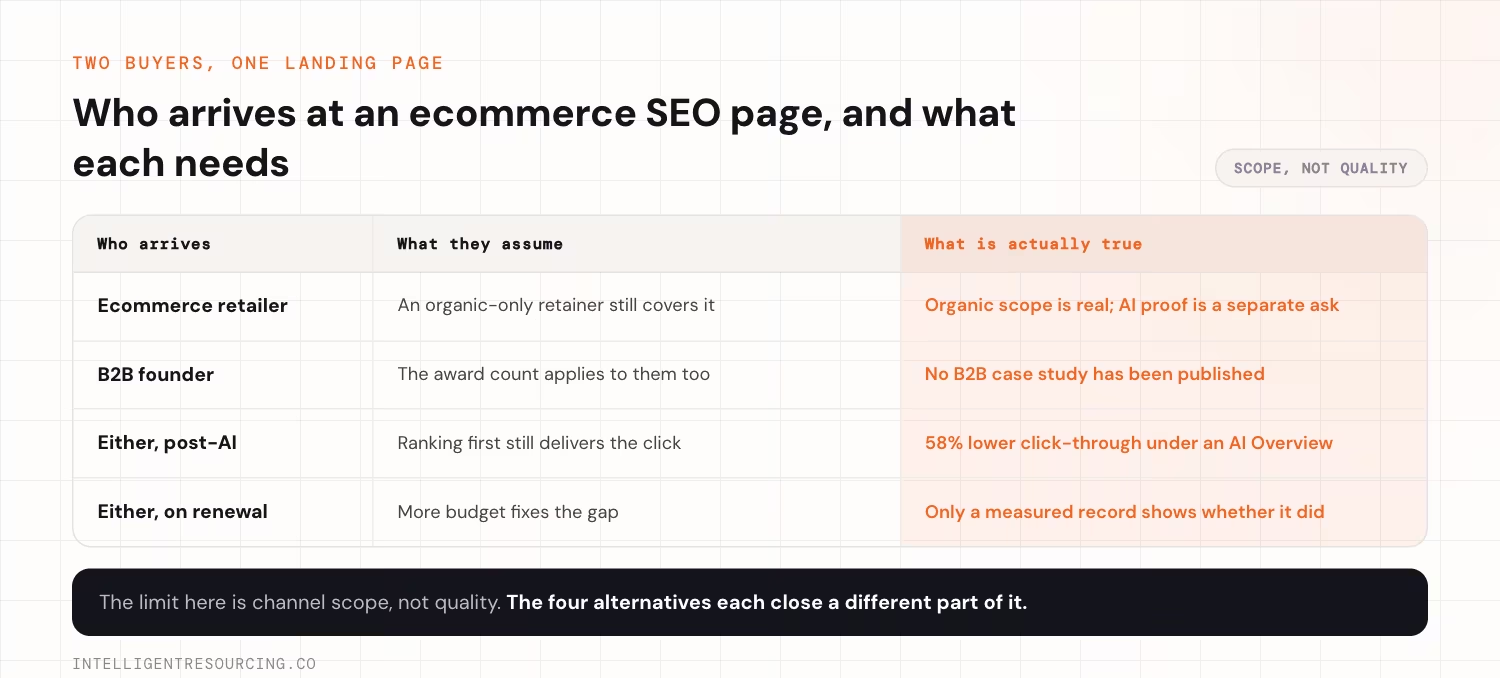
Megantic serves ecommerce product retailers. Every named client on its own site sells online, and its method fixes product category structure and site architecture, a problem only a retailer has.
A B2B founder sometimes finds it anyway, while searching something like "top digital growth agencies", reads the award count and assumes it applies. It does not. Megantic has never published a B2B case study, and a catalogue-architecture method has no answer for a services company's buying cycle.
An ecommerce retailer's question is narrower: is an organic-only, premium-priced model still the right scope? Ahrefs now measures a 58% lower click-through rate when an AI Overview sits above the top organic result, up sharply from the 34.5% it first recorded. SparkToro puts 68% of US Google searches as ending with no click at all in early 2026.
For a retainer built entirely on organic rankings, that lowers the return even when the rankings hold steady. The full side-by-side sits in Megantic vs Intelligent Resourcing.
What Should You Evaluate in an Alternative to Megantic?
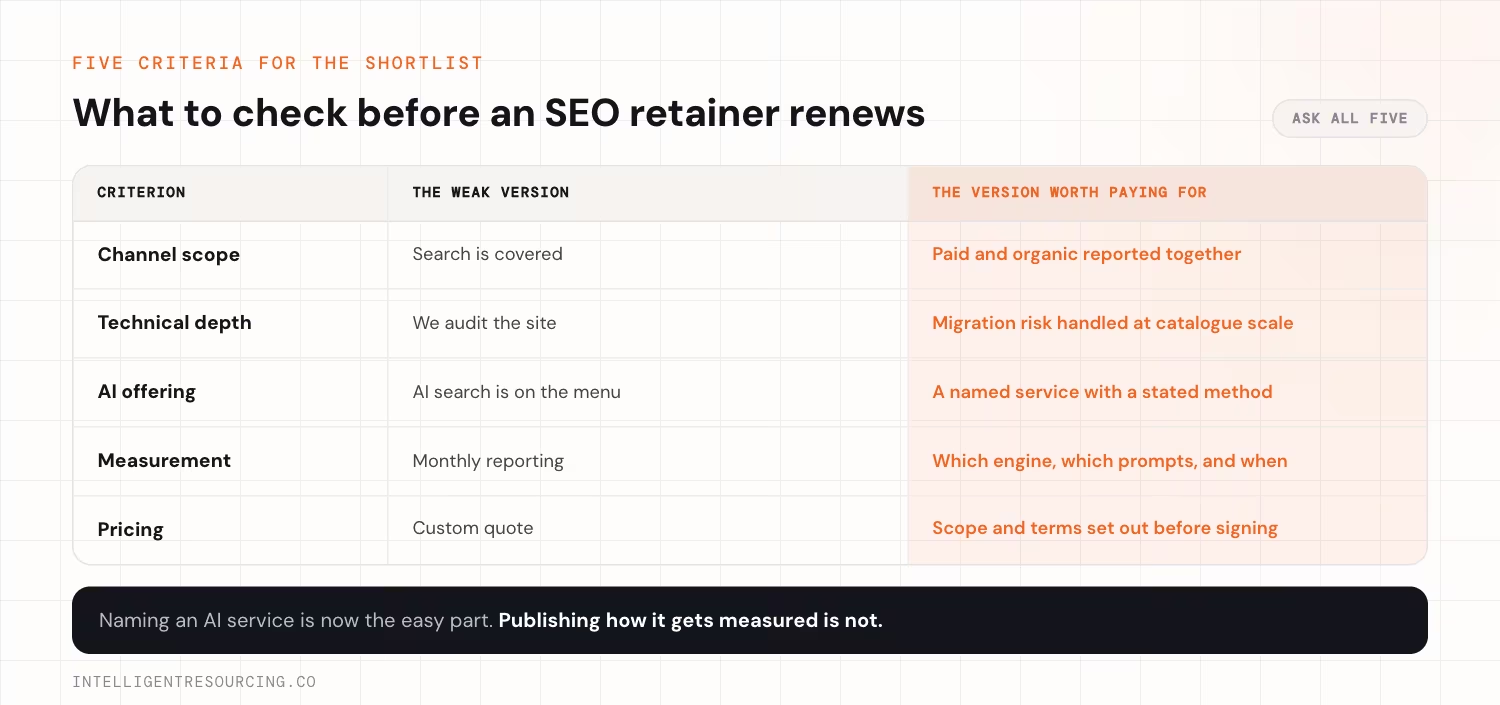
Five criteria decide the shortlist below.
Channel scope. Megantic runs organic search only. The other four all include paid media in the same engagement.
Catalogue scale and technical depth. A large catalogue with migration risk needs a deeper audit than a mid-market storefront. OuterBox and Megantic both operate at that end.
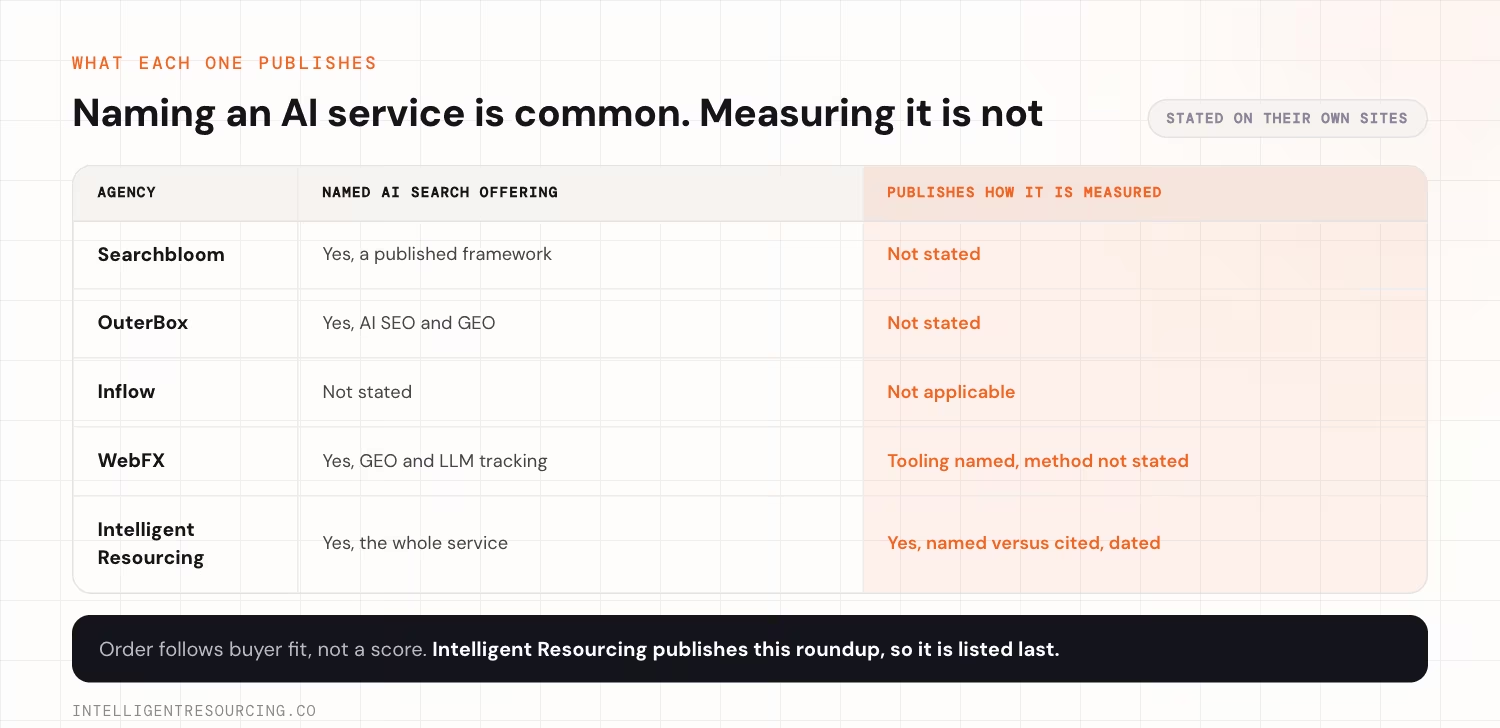
Whether the AI offering is named, and whether it is measured. These are two different questions. Searchbloom, OuterBox and WebFX all name an AI search service. What none of them publishes is the method: which engines get checked, how often, and what a client sees at the end of a month. That is the SEO retainer versus GEO retainer distinction in practice.
Buyer type fit. All four are built primarily for retailers, though OuterBox and WebFX also serve B2B. Intelligent Resourcing works with both, on the citation layer only.
Pricing transparency. None of the agencies here publish a fixed price list. A custom quote is standard, not a red flag specific to Megantic.
The 5 Alternatives, Side by Side
| Criteria | Searchbloom | OuterBox | Inflow | WebFX | Intelligent Resourcing |
|---|---|---|---|---|---|
| Buyer type | Ecommerce retailers | Ecommerce and B2B | Ecommerce and lead generation | Any vertical | Ecommerce and B2B, citation layer only |
| Channel scope | SEO, paid, conversion | SEO, web design, paid, GEO | SEO, paid, CRO, email | SEO, content, email, paid, CRO | AI citation tracking only |
| Paid media | Yes | Yes | Yes | Yes | No |
| Named AI search offering | Yes, a published framework | Yes, AI SEO and GEO | Not stated | Yes, GEO and LLM tracking | Yes, the whole service |
| Publishes how it is measured | Not stated | Not stated | Not applicable | Tooling named, method not stated | Yes, named versus cited, dated |
| Best for | Unified search and paid | Enterprise ecommerce | Mid-market ecommerce | Full service breadth | A dated citation record |
This table compares scope, not quality. The Intelligent Resourcing row is a different kind of service rather than a weaker version of the other four. It does not run organic SEO, technical audits or paid campaigns, and it can run alongside any agency here.
1. Searchbloom
Searchbloom is a South Jordan, Utah agency founded in 2014 and led by founder and chief executive Cody C. Jensen, per its own entity map. It publishes named frameworks for each discipline it runs: one for core search, one for paid, one for conversion work, and MERIT for AI search. It reports better than 95% client retention and holds Google Ads Partner and Microsoft Bing Partner status.
Where it closes Megantic's gap: paid search sits in the same account as organic, reported together rather than split across two vendors.
Best fit: paid and organic currently run as separate teams with no shared attribution.
Weaker fit: an Australian retailer needing same-timezone account management. One honest limitation: Searchbloom publishes its own best-agency guide and ranks itself first, though the bias is disclosed.
2. OuterBox
Founded in 2004 and headquartered in Akron, Ohio, OuterBox reports a 300-plus person US-based team and more than 1,000 client partnerships across 20-plus years. It names AI SEO and generative engine optimisation among its services, alongside web design, paid media and marketplace work.
Where it closes Megantic's gap: web design and paid media sit inside the same engagement, and the AI work is named rather than folded into an SEO retainer.
Best fit: a large catalogue with technical debt, or a migration underway, where you want the AI work named as its own line.
Weaker fit: an SME retailer needing a mid-market price point. OuterBox and Megantic sit at similar premium levels, and neither publishes pricing or a measurement method for the AI work.
3. Inflow
Inflow was founded in 2007, with offices in Denver and Tampa, per its own site. It covers SEO, paid search, paid social, conversion rate optimisation, analytics and email, and it works with ecommerce brands and lead-generation businesses. It positions direct access to its most senior strategists as the differentiator, rather than routing clients through account managers.
Where it closes Megantic's gap: paid media and conversion work run inside the same engagement as SEO, with senior attention across all three.
Best fit: an established brand past startup stage but below Megantic's typical retainer size, wanting SEO, paid and CRO run together by one team.
Weaker fit: no AI search offering is stated on its site, so a buyer whose priority is AI visibility is asking for something outside the published scope. Its client base is primarily US.
4. WebFX
WebFX was founded in 1995 in Pennsylvania and reports 750 experts on staff, per its own about page. It runs organic search, paid search and social, content, email, web design, local search and marketplace work, tracked through its own RevenueCloudFX platform. It also names generative engine optimisation, ChatGPT optimisation, and AI and LLM visibility tracking through its OmniSEO tool.
Where it closes Megantic's gap: every channel under one retainer and one report, with AI visibility tracking named as part of the stack rather than added on request.
Best fit: having one agency across every channel matters more than deep ecommerce specialism does, and you want AI visibility tooling included.
Weaker fit: less senior attention per channel than a specialist gives. The AI tooling is named, but the reporting method behind it is not published, so ask what a client actually sees each month.
5. Intelligent Resourcing
Intelligent Resourcing runs a Content Strategy service built around generative engine optimisation, or GEO. It reports whether an AI engine names and cites a brand, across ChatGPT, Gemini, Google's AI Overview and Copilot, dated to each tracking period. It works with consumer product brands and B2B companies, on that layer only.
Where it closes Megantic's gap: Megantic does real AI search work and says so on its own site, naming ChatGPT and Gemini and publishing answer engine optimisation research. What its service pages do not set out is the measurement. A brand can be retrieved by an engine and dropped from the answer, or used without a name check. Only a citation record separates those from being properly cited.
Best fit: organic rankings already hold up, through Megantic or another agency, and the gap is a dated answer on AI citation specifically.
Weaker fit: you need organic SEO, technical audits, paid media or catalogue architecture. None of that is in scope. This pairs alongside any agency on this list rather than replacing one.
What Does Moving From Megantic Actually Require?
Your rankings belong to your domain, not to the agency. Positions, indexed pages and authority stay with the site once an engagement ends. The real risk is work continuity, not ranking ownership.
If a migration or link-building campaign is mid-cycle, finish it first or negotiate a documented handover before the new agency starts. Request a full exit pack before the engagement closes: a keyword ranking export with position history, a technical audit, a backlink export, and any open redirect maps. A professional agency provides this on request.
If you are moving to a paid-inclusive model, budget for paid spend as additive. It sits alongside the retainer, not inside it.
Adding a citation-tracking service is not a like-for-like switch either way. It goes on top of an SEO retainer rather than replacing one. For a wider view of how this field gets judged, see the roundup of Google AI Overviews agencies.
Which Alternative Fits Your Growth Constraint?
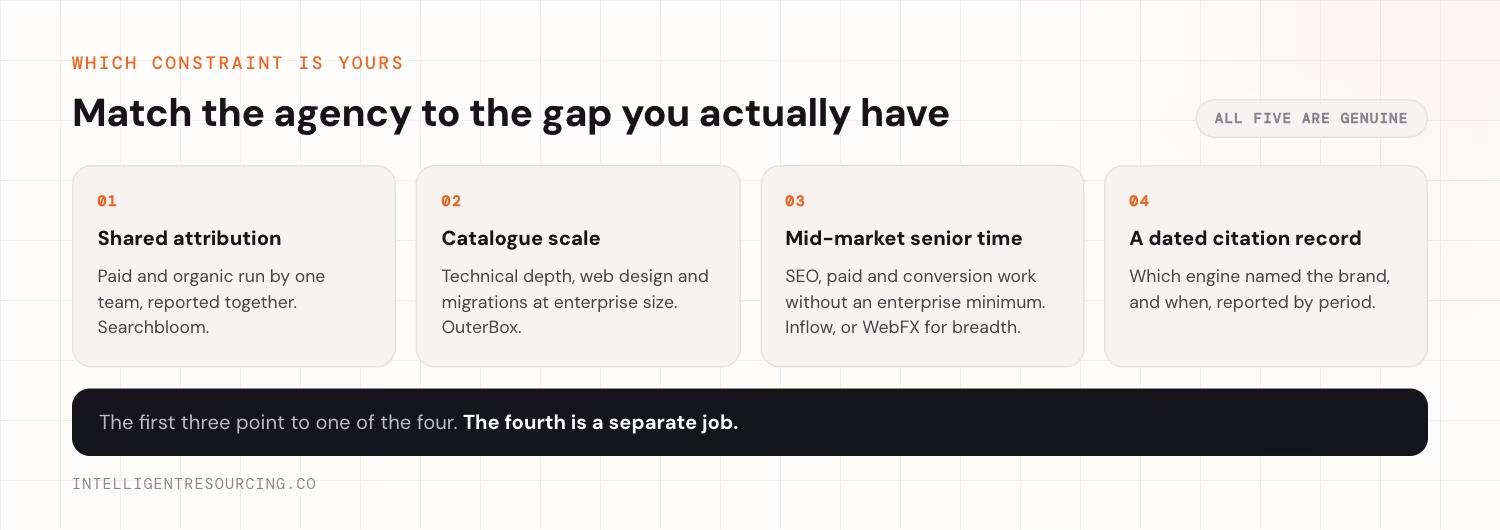
- Searchbloom unifies search and paid for retailers who want shared attribution, with a named framework per discipline.
- OuterBox runs enterprise-scale technical work and web design for large catalogues, with AI SEO named as its own service.
- Inflow gives mid-market brands senior strategist access across SEO, paid and CRO, without an enterprise minimum.
- WebFX covers every channel under one retainer, with its own LLM visibility tooling, for a business that wants breadth over specialism.
- Megantic remains the right call for an ecommerce retailer whose main channel is organic search.
- Intelligent Resourcing answers a different question: whether an AI engine cites the brand at all, dated and by engine.
Comparisons
Four of the five agencies above will tell you AI search is covered. Fewer will tell you which engine named your brand last month, or show you the record. Get in touch to see how the tracking reads against your own accounts.
FAQs
How long does it take to see results after switching ecommerce SEO agencies?
Most technical changes take 8 to 12 weeks to show in rankings, since search engines need time to recrawl and reindex affected pages. Content and link-building work compounds slower, often 4 to 6 months. Any agency promising ranking movement inside 30 days is measuring the wrong thing.
Do these alternatives actually do AI search work?
Three of the four do. Searchbloom publishes a named AI search framework, OuterBox names AI SEO and GEO among its services, and WebFX names GEO plus its own LLM visibility tracking. Inflow does not state an AI offering. What none of them publishes is the measurement method behind it.
What should be in the contract before signing with any Megantic alternative?
Check the notice period required to exit. Confirm who owns the work product if the engagement ends, and whether reporting access continues during a transition. A written exit clause protects the next 12 months, not just the next agency.
What red flags suggest an agency's case studies overstate their results?
Watch for figures with no stated date range, revenue claims attributed to SEO alone with no control for paid media running at the same time, and case studies that never name the client or the evidence type.
Can a retailer use an ecommerce SEO agency and a citation specialist at the same time?
Yes. Organic search and AI citation are different disciplines. A retailer can run an agency like Megantic or Searchbloom for organic search and add a dedicated citation record on top. The two engagements do not overlap.
Why is Intelligent Resourcing listed last?
Because Intelligent Resourcing publishes this roundup. The order reflects buyer fit and that disclosure, not a score against the other agencies.