

Why Do Buyers Look Past Sentius?
Buyers look past Sentius because AI search visibility became a reported metric in 2026, not because Sentius changed. B2B buyers increasingly research vendors through AI engines before contacting a sales team, and who gets named in that answer now sits alongside Google ranking as something a board asks about.
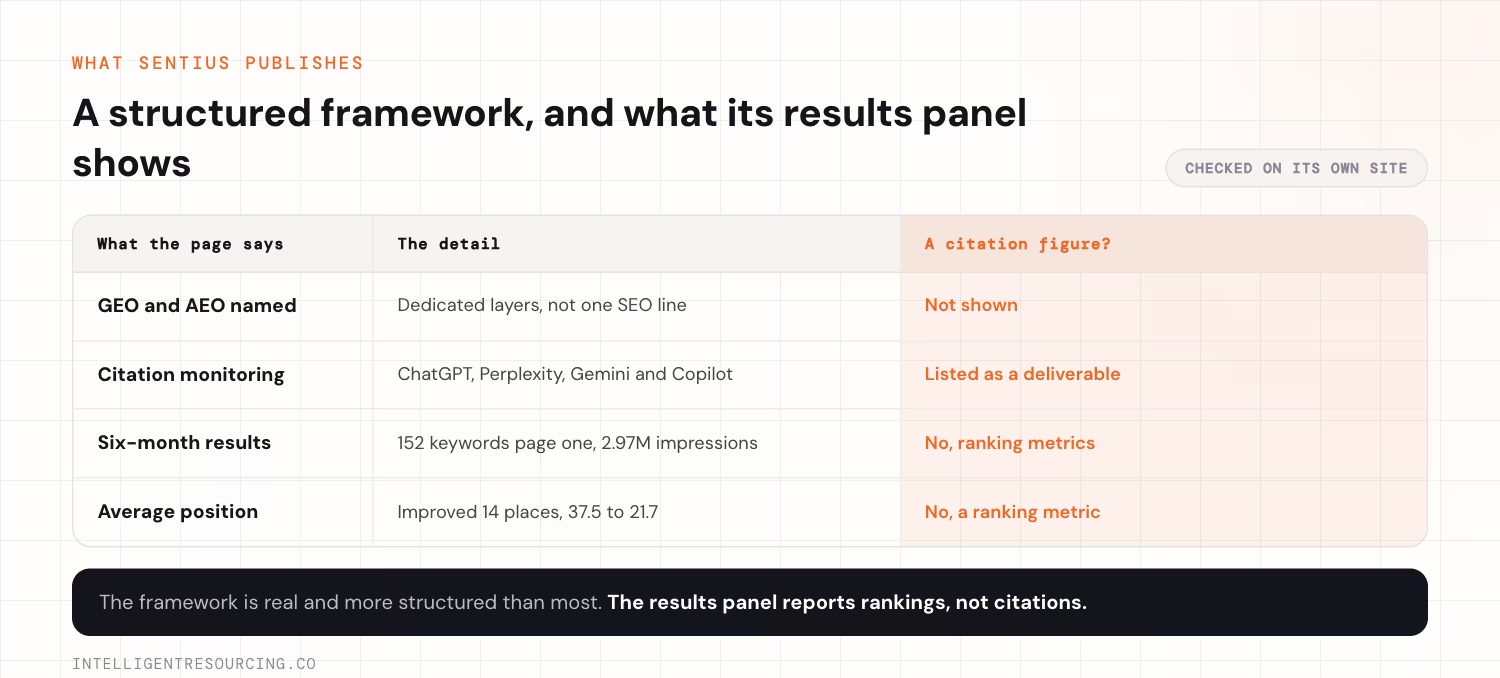
Sentius has built a structured response to that. Its GSO service page names GEO and AEO as dedicated layers alongside traditional SEO, and lists monthly citation monitoring across ChatGPT, Perplexity, Gemini and Copilot as a deliverable. That is more structure than most full-service agencies offer.
The gap is what the page evidences. Its published "GSO First 6 Months" panel reports 152 keywords reaching page one, a 14-place average position improvement and 2.97 million search impressions. All organic ranking metrics, no citation figure on any engine. The full breakdown sits in Sentius vs Intelligent Resourcing.
The same question applies to every alternative below, and to the agency publishing this page.
How Should You Evaluate Any Sentius Alternative?
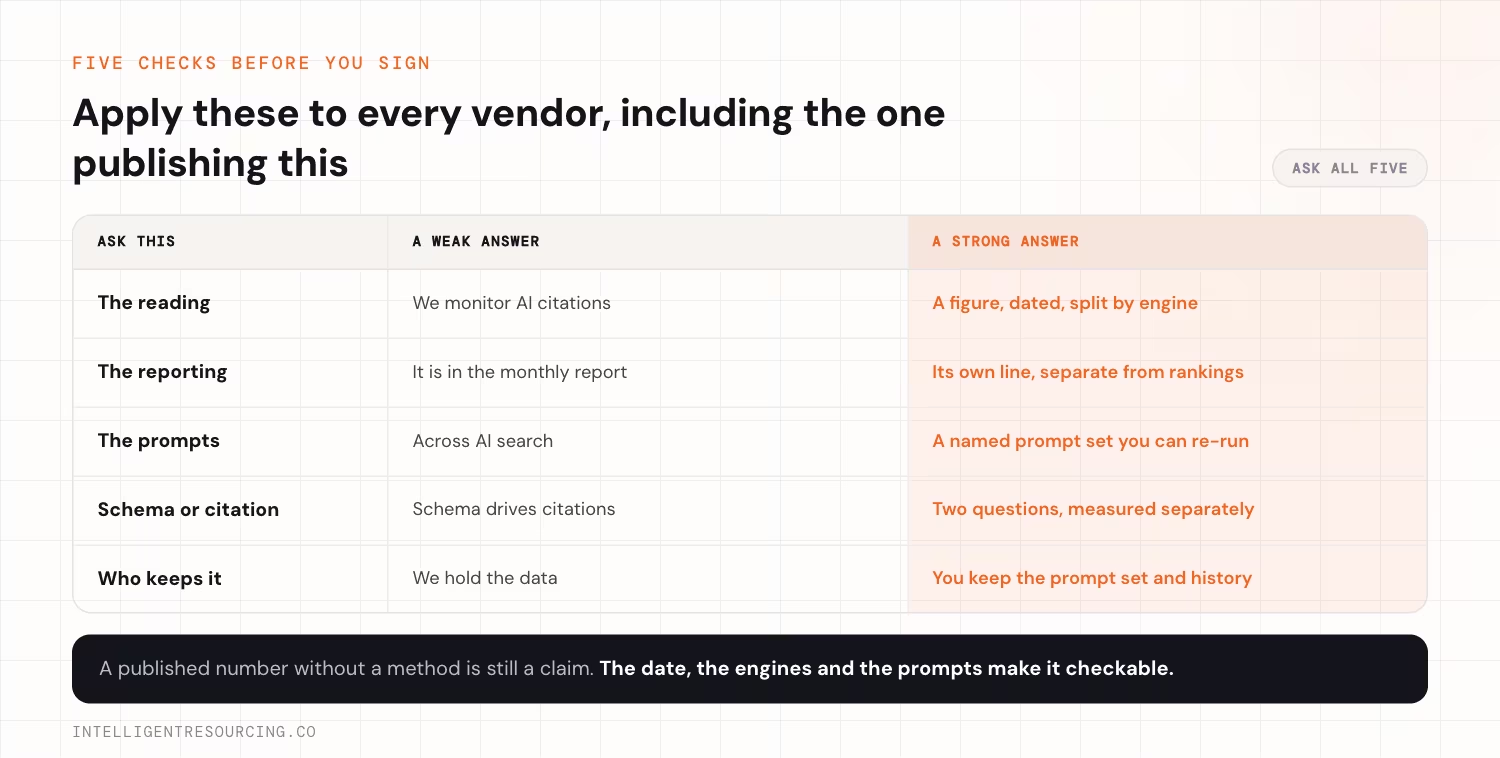
Five checkable criteria, applied to every vendor on this list including Intelligent Resourcing.
- Ask for a dated, cross-engine citation reading, naming the engines tracked and the date measured. A provider that describes monitoring but cannot produce this is asking to be judged on process description.
- Confirm the figure is reported as its own line item, separate from ranking and traffic. A monthly report can claim citation monitoring while burying or omitting the citation number.
- Ask which prompts produced it. A share of voice figure without a prompt set is not re-checkable, and a roster change between readings makes two figures non-comparable.
- Separate the schema question from the citation question. Ahrefs tested 1,885 pages that added JSON-LD schema against 4,000 controls and found no meaningful citation uplift, so strength at one does not imply strength at the other.
- Confirm who keeps the tracked prompt set and citation history when an engagement ends. That determines whether you keep the evidence base or start again.
The 5 Alternatives, and What Each One Publishes
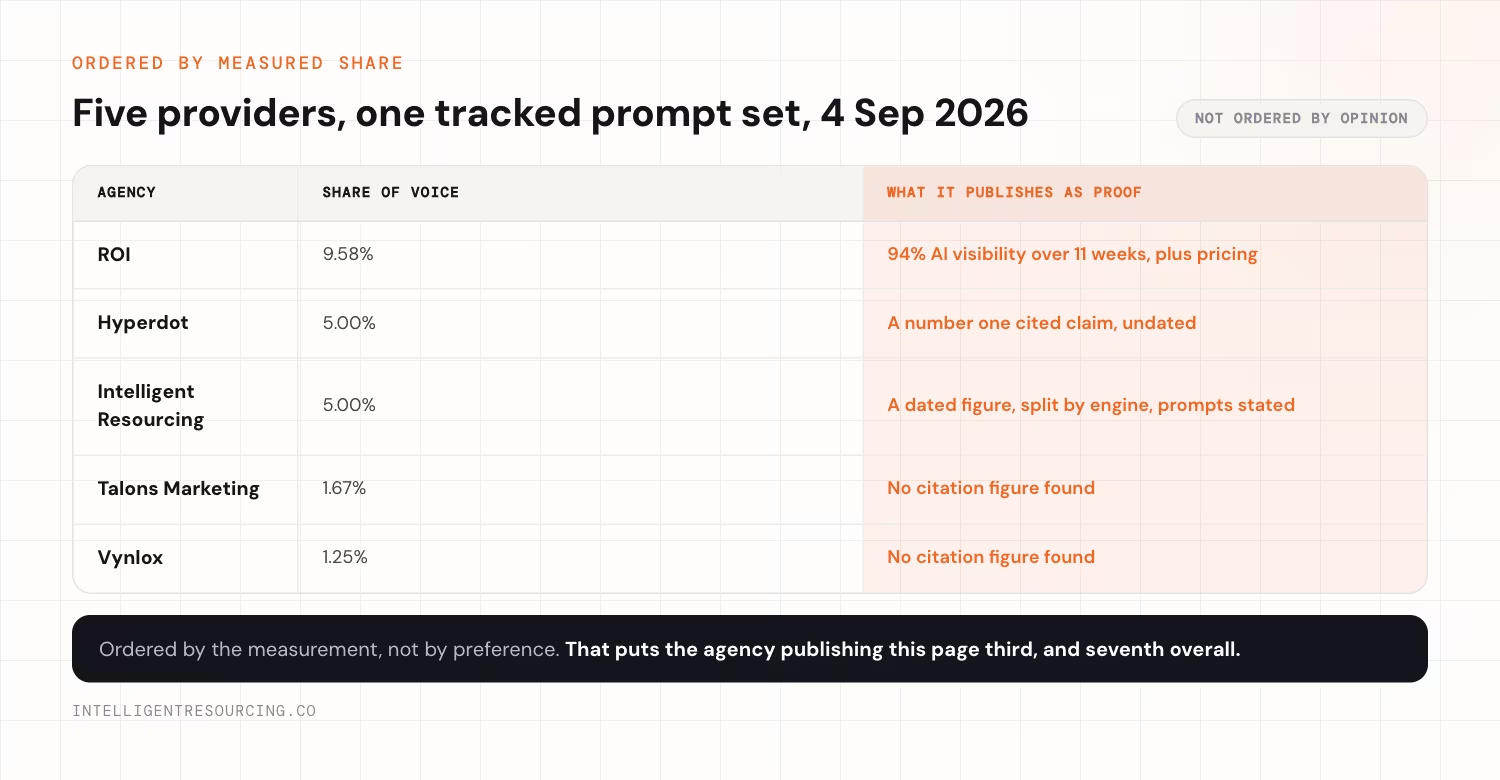
The table below orders five providers by measured share of voice on an "AEO agencies in Australia" prompt set, tracked across 189 runs on 4 September 2026. The ordering is by that measurement rather than by editorial preference, which is why the agency publishing this article appears third rather than first.
| Agency | Share of voice, 4 Sep 2026 | What it publishes as proof |
|---|---|---|
| ROI | 9.58% | A 94% AI visibility case study over 11 weeks, plus pricing from $1,500 a month |
| Hyperdot | 5.00% | A client claim of number one cited across Australia and New Zealand |
| Intelligent Resourcing | 5.00% | A dated share of voice figure, split by engine, with the prompt set stated |
| Talons Marketing | 1.67% | No citation figure found on its own site |
| Vynlox | 1.25% | No citation figure found on its own site |
Across the full tracked field of 28 domains, Prosperity Media leads at 24.17%, with Rocket Agency at 10%. Intelligent Resourcing sits seventh.
1. ROI
ROI is a Camberwell, Melbourne agency running answer engine optimisation alongside SEO, Google Ads, social and conversion work. It frames the shift from ranking to citation frequency directly, and markets AI visibility as a tracked metric rather than an SEO add-on.
It publishes more than most in this category: a case study citing 94% AI visibility growth over 11 weeks, pricing from $1,500 a month with no lock-in contracts, and full-funnel attribution reporting. It names Perplexity and ChatGPT as engines it tracks.
What it does not publish: a date, an engine split or a prompt set behind the 94% figure, which makes it a movement claim rather than a re-checkable reading. It leads this group on measured share.
2. Hyperdot
Hyperdot is a Sydney agency founded in 2016, with a Panama City office and a Miami office listed as opening. It describes itself as AI-first across AI SEO, GEO and AEO, and names ChatGPT, Gemini, Perplexity, Claude and Google AI Overviews.
It publishes a client claim of number one cited across Australia and New Zealand by ChatGPT, Gemini and Perplexity, alongside knowledge graph work and what it calls algorithmic signal engineering.
What it does not publish: a date, a prompt set or a method behind the number one claim. A superlative without those is not re-checkable by a buyer.
3. Intelligent Resourcing
Intelligent Resourcing runs generative engine optimisation as its whole practice rather than a service line. It reports a named-versus-cited split across ChatGPT, Gemini, Google's AI Overview and Copilot, dated to each tracking period, with the prompt set and run count stated alongside every reading.
Checkable proof, including the unflattering part: 5.00% share of voice on the AEO agencies in Australia prompt set, 12 mentions across 189 runs, third in this group and seventh across 28 tracked domains, on 4 September 2026. Prosperity Media leads that field at 24.17%.
What it does not cover: general SEO, paid media, social or web build, and bulk schema deployment across a very large catalogue at the speed a dedicated schema specialist offers.
4. Talons Marketing
Talons Marketing is an Australian agency pairing SEO with answer engine optimisation, aimed at startups and growing businesses rather than large enterprise accounts. It appears in the tracked prompt set at 1.67%, so AI engines do associate it with this category.
What it does not publish: a citation figure. Its site did not return service detail when checked for this article, so ask directly for scope and for any AI visibility reading before committing budget.
5. Vynlox
Vynlox is a Bella Vista, New South Wales agency describing itself as a web development and lead generation firm, with AEO bundled into a managed website and SEO offer rather than run as a standalone tracked discipline. It appears in the tracked set at 1.25%.
What it does not publish: a citation figure, or AEO reporting separate from the bundled retainer. Best suited to a small business wanting one lower-cost retainer rather than a dedicated GEO practice.
Which Path Fits Your Buying Situation?
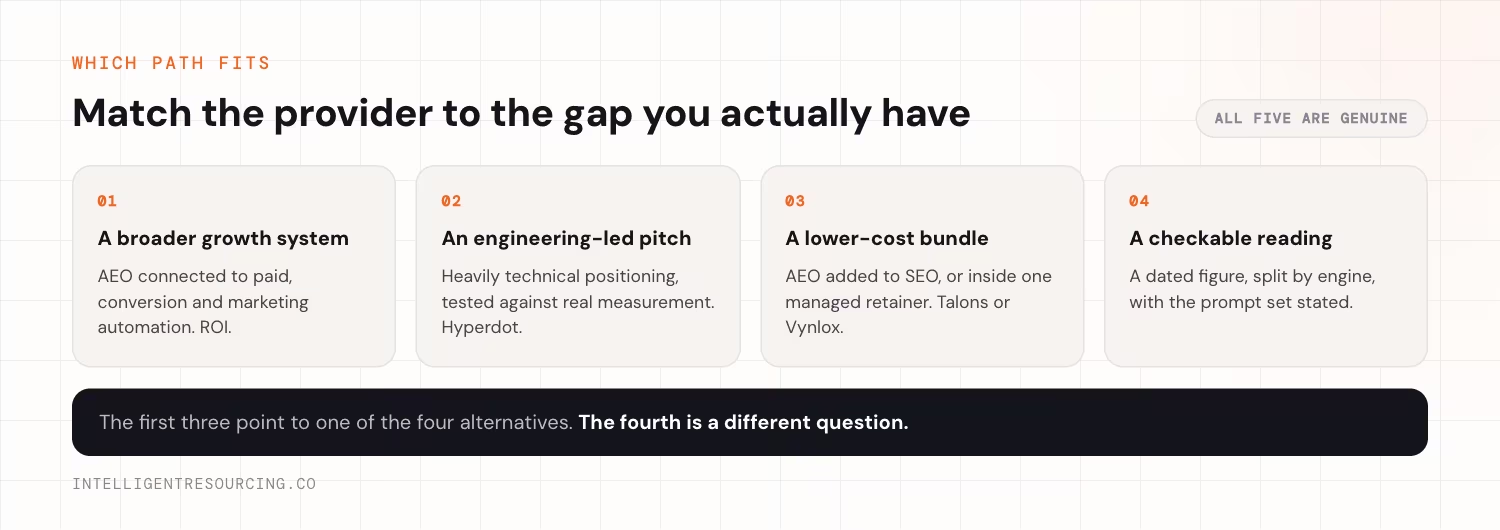
| Buyer need | Better fit |
|---|---|
| AEO connected to a broader growth, paid and conversion system | ROI |
| A heavily engineering-branded pitch, tested against real measurement | Hyperdot |
| A dated, per-engine citation reading with the prompt set stated | Intelligent Resourcing |
| AEO added to SEO without enterprise pricing or overhead | Talons Marketing |
| One bundled, lower-cost website and SEO retainer | Vynlox |
If your gap is a measured citation number rather than bundled positioning, the next step is a cross-engine audit against your own prompt set rather than another agency pitch. If it is schema depth, keep the schema work and add tracking alongside it. The two disciplines answer different questions and are not mutually exclusive.
For a wider view of how this category gets judged, see our roundup of AEO agencies in Australia, or the reasoning behind why competitors get cited instead.
Comparisons
Every provider on this page will tell you AI visibility matters. Fewer will hand you a number with a date, an engine split and the prompts that produced it. Get in touch for a cross-engine citation audit against your own tracked prompts.
FAQs
Is Sentius a GEO or AEO specialist agency?
Sentius names GEO and AEO as dedicated layers inside its GSO framework, alongside traditional SEO, paid media and creative. Its stated deliverables include monthly citation monitoring across ChatGPT, Perplexity, Gemini and Copilot. As of this article's publication, no citation number or dated reading appears on its site.
Do any of these alternatives publish a citation number?
Two publish something. Hyperdot publishes a client claim of number one cited across Australia and New Zealand. ROI publishes a 94% AI visibility figure over 11 weeks. Neither states the date, the engines split out, or the prompt set, which is what makes a figure re-checkable.
Why does Intelligent Resourcing rank itself third rather than first?
Because the ordering follows the measured share of voice on the tracked prompt set, and that reading puts Intelligent Resourcing at 5.00%, behind ROI at 9.58% and level with Hyperdot. Publishing a number that is not flattering is the point of publishing one.
What is the difference between schema automation and AI citation tracking?
Schema automation adds structured code to help a system parse a page. Citation tracking measures whether an engine actually names a brand in response to a defined prompt set. Ahrefs found no meaningful citation uplift from adding schema across 1,885 tested pages, so a provider strong at one is not automatically strong at the other.
How do I check a provider's AI citation claims before hiring them?
Ask for a dated, cross-engine reading naming the engines tracked, the prompt set and the measurement date. A provider with no published number is asking to be judged on positioning. A provider with a number but no method is asking you to take it on trust.
How long does it take to see AI citation results?
Tactical movement typically shows within one to three months of tracked work starting. Structural gains in cross-engine share of voice generally take three to six months of consistent tracking and content shipped against a defined prompt set.