
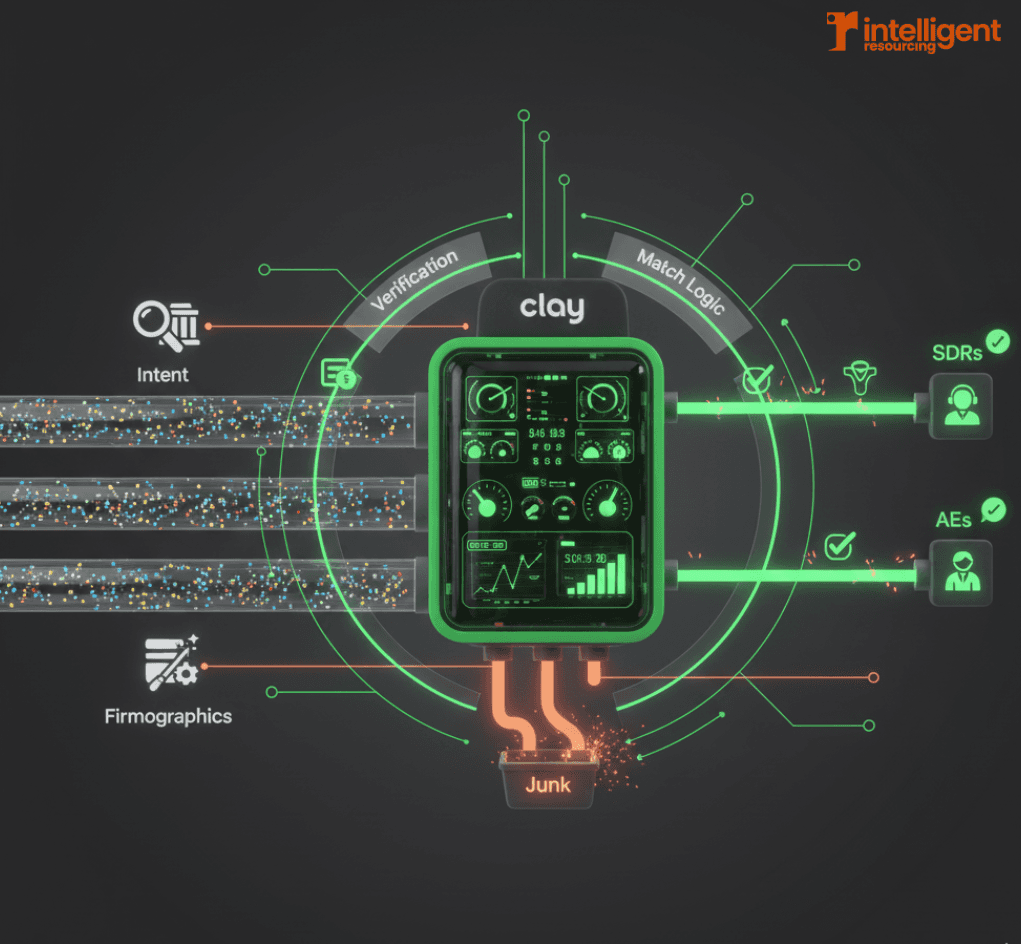
CRM lead scores often feel like a checkbox set them once, then wonder why nothing meaningful happens. But in fast-moving GTM environments, static point systems fall short. Signals change daily. Buying intent spikes and vanishes. SDRs miss hand-raisers hidden under arbitrary score thresholds.
If you want faster response, cleaner routing, and higher-quality pipeline, lead scoring must evolve. In this guide, we’ll show how Clay lead scoring workflows turn scoring into a real-time signal-routing system. No more waiting for batch updates or hoping CRM logic catches what matters.
For teams building signal-driven GTM systems, this is how scoring drives action, not confusion.

Why Traditional Lead Scoring Fails GTM Teams
Most scoring models in CRM platforms were built for a slower era of monthly reviews, static ICP definitions, and assumptions over signals. As a result:
Scores go stale fast
Logic lives only inside the CRM
Real buying signals go unrecognised
When the system doesn’t react to what’s happening in real time, opportunities are lost. Traditional CRM scoring is not only delayed, it’s disconnected.
Modern teams need lead scores that update as signals change, and that route high-intent prospects to the right person, instantly.
This is especially critical when operating within a signal-driven GTM system, where velocity and precision matter more than arbitrary point totals.
What Real-Time Lead Scoring Actually Means
Scoring That Updates as Signals Change
Signal-driven scoring reflects the actual behaviour and characteristics of your leads not assumptions.
Clay can ingest and respond to:
Intent data from platforms like G2, Bombora, or Clearbit
Firmographic changes, such as new funding, headcount growth, or tech adoption
Lifecycle events from your CRM, including MQL stage, sales activity, or form fills
This lets your score evolve in real time as a lead becomes more qualified.
Why Real-Time Scoring Beats Batch Updates
HubSpot found that responding to a lead within 5 minutes increases conversion rates by 900% (HubSpot, 2024).
If your system updates scores weekly or even hourly, you're already behind. Real-time logic ensures:
Faster SDR response times
Fewer missed high-intent signals
More accurate routing, as context is fresh
Batch logic creates lag. Real-time scoring creates action.
Designing Live Scoring Logic in Clay
Combining Multiple Signal Types
Clay workflows can score leads based on multiple inputs, such as:
Intent signals: tech installs, buying activity, job postings
ICP fit: role, company size, geography, funding stage
Enrichment confidence: how reliable each data source is
This layered approach reduces false positives and builds scoring from real-time truth, not gut feel. Learn more about signal-based marketing strategies to understand how these signals drive revenue.
Weighted vs Conditional Scoring
Clay supports two common scoring logic types:
Weighted models: Assign points for different attributes, e.g. +20 for ICP match, +30 for intent spike
Pass/fail logic: Qualify leads only if multiple conditions are true, e.g. must have intent and verified role and no CRM record
Use weighted scoring when granularity helps prioritisation. Use conditional logic when clear qualification is required.
Avoiding Over-Scoring
One of the biggest risks is trying to score everything. More rules often create noise.
Instead, focus on signals that actually drive buying decisions. Keep models focused and intentional score only what matters for routing.
Routing Based on Intent Signals
Defining “Sales-Ready” in Clay
Rather than relying on a generic MQL threshold, Clay allows you to define readiness based on combinations of signals:
Intent + role match + verified email
Lifecycle stage + enrichment source confidence
Territory + buying signals
This ensures only true sales-ready leads are passed to humans.
Routing to the Right Team
Once qualified, Clay routes leads using:
Team structure: SDR vs AE
Motion type: inbound vs outbound
Ownership logic: territory, account manager, or previous contact
These assignments happen instantly, with the logic living in Clay not buried in CRM workflows. For GTM teams building complex automation, explore our Clay & n8n API workflows guide.
Preventing Premature Routing
Not every lead is ready just because a few signals fire. Clay enforces verification gates to confirm accuracy before routing.
To learn how verification gates improve system reliability, explore Build Stable Systems with Clay Automation Best Practices.
Real-Time Alerts for GTM Teams
When Alerts Should Fire
Clay alerts are tied to scoring events, not schedules. Common triggers include:
High-intent signal spikes
Re-engagement after dormancy
Re-qualification after enrichment update
This allows GTM teams to strike when interest is high, not when the CRM gets around to it.
Where Alerts Should Go
Clay supports real-time alerts to multiple destinations:
Slack: direct messages or deal alerts
CRM tasks: auto-assign based on signal logic
Email: for executive alerts or partner teams
Alert delivery can mirror routing to ensure no lead is left waiting.
Avoiding Alert Fatigue
The risk with real-time alerts is overload. Clay avoids this by:
Using confidence thresholds
Suppressing duplicate alerts
Triggering alerts only on meaningful signal shifts
This means your team hears from the system when it matters not every time someone views a pricing page.
Building Your ICP Qualification Framework in Clay
Translating ICP Logic Into Workflow Rules
Your ICP should define who gets scored and routed. Clay translates your ICP into:
Firmographic filters: company size, industry, location
Role relevance: job titles, seniority, buying power
Buying signals: committee makeup, past engagement
These criteria live inside workflows, so they’re applied consistently across every entry point.
Maintaining ICP Consistency Across Systems
Clay acts as the single source of scoring truth, feeding structured data to:
CRM
Outbound platforms
Routing and enrichment systems
For an upstream view on list building, check out Build Signal-Based Lists With Clay Prospecting for SaaS. Understanding how to properly leverage GTM engineering tools ensures your entire stack works cohesively.
Example: A Real-Time Lead Scoring and Routing Workflow
This isn’t a tutorial it’s a repeatable pattern used by high-performing GTM teams:
Signal Ingestion
Funding round detected via Crunchbase.ICP Qualification
Company size and role match verified in Clay.Live Scoring Updates
+30 for funding, +20 for ICP match, +10 for verified email.Verification Gates
Check email validity and CRM deduplication.Routing Decision
Score crosses 60. Assigned to SDR based on territory.Alert Generation
Slack alert sent with link to Smartlead sequence.
This entire process can be completed in under 30 seconds. For end-to-end outbound automation, see how teams use Clay + Smartlead integration.
Common Lead Scoring Mistakes (and How Clay Fixes Them)
Scoring without routing logic: Leads score high but sit unassigned.
Batch scoring delays: Opportunities missed while scores catch up.
Overloading SDRs with low-quality alerts: Confidence gating solves this.
Letting CRM logic override signal context: Clay keeps the score live and external to CRM bloat.
How Lead Scoring Fits Into a Scalable Clay GTM System
Clay is not just a scoring engine, it's the decision layer of your GTM system. With real-time scoring:
Outbound workflows prioritise the right accounts
Inbound response becomes faster and smarter
CRM data stays clean and intentional
As explained in Scale With Clay GTM Workflows: Build Reliable Systems, scoring is not the goal routing is.
Lead Scoring Is a Routing Problem
The best lead score in the world means nothing if it doesn’t drive action. With Clay, scoring is a live system, designed to route the right lead to the right person at the right time.
Forget static points and slow CRM rules. If it’s not real-time, it’s not lead scoring, it's just lag.
Rethinking your GTM workflows?
FAQs: Clay Lead Scoring Workflows
What makes Clay scoring different from CRM scoring?
Clay uses real-time signal updates and flexible logic, unlike static CRM rules or batch updates.
Can I route based on a combination of signals?
Yes Clay supports compound logic (e.g. ICP + intent + verified email) to define sales-ready leads.
How are alerts delivered in Clay?
Alerts can be sent to Slack, email, or as CRM tasks, all based on your workflow logic.
What if my SDRs are overwhelmed with alerts?
Use confidence thresholds and suppression logic to minimise noise and only surface actionable leads.
Is this compatible with existing CRM models?
Yes Clay can push scores into CRM, but the real logic lives outside, ensuring consistency and speed.
Does Clay support lead re-scoring over time?
Absolutely. Scoring updates automatically as new signals arrive or change.
Rethinking Your GTM Workflows?
Stop losing revenue to outdated scoring systems.
At Intelligent Resourcing, we don't just advise on lead scoring, we build the entire workflow architecture that makes it work. From Clay automation to signal-driven routing, we help GTM teams turn messy processes into revenue engines.
What You Get:
✓ Custom Clay workflows tailored to your ICP and signal priorities
✓ Real-time routing logic that eliminates manual handoffs
✓ Alert systems that surface only what matters
✓ Full CRM integration without losing velocity or control
✓ Ongoing optimisation as your signals and markets evolve
Whether you're an early-stage SaaS company validating your first automated workflows or a scaling revenue team drowning in tool sprawl, we've built these systems dozens of times.
Related Resources & Pages
Continue exploring how to build complete, signal-driven GTM systems:
Core GTM Engineering Resources
7 Reasons Why Companies Hire A GTM Engineer: Cost vs headcount analysis
Best B2B Lead Generation Alternatives: Tools, Agencies, Intelligent Resourcing Models
AI Lead Generation Services in Australia (2026): Tools Tactics ROI for Signal-Led Growth