

How Does LLM SEO Differ Across Engines?
LLM SEO differs by which engines name a brand and which merely cite it as a source. A page built to win citations on one engine can perform badly on another, because each engine rewards a different signal, which is exactly the gap generative engine optimisation work has to close.
Across the five engines B2B buyers actually use, the split looks like this:
- ChatGPT names and cites from a small number of pages, so 1 strong page can outperform a dozen thin ones on a wide site.
- Gemini pulls from a wide set of sources but rarely names the brand, so appearing in the source list does not mean a buyer sees the company name.
- Grok tends to do both, naming and citing in the same answer more often than the engines that lean one way or the other.
- Google AI Overview cites heavily while rarely naming, so a high citation count there can still mean close to zero brand recall.
- Perplexity cites only 3 to 4 sources per answer, well below the other 4 engines, so each one it does cite carries more relative weight.
Ranking well doesn't fix this either. Moz's Tom Capper found, in a study of nearly 40,000 queries, that 88% of Google AI Mode's citations never showed up in the usual top 10 search results. A page can rank poorly on Google and still get cited by Google AI Mode, or rank first and get skipped entirely.
For more on how each engine picks what to cite, see the AI citation baseline guide. This article covers a different question: once you are cited, does the engine actually say your name.
Why Doesn't Getting Cited Always Mean Getting Named?
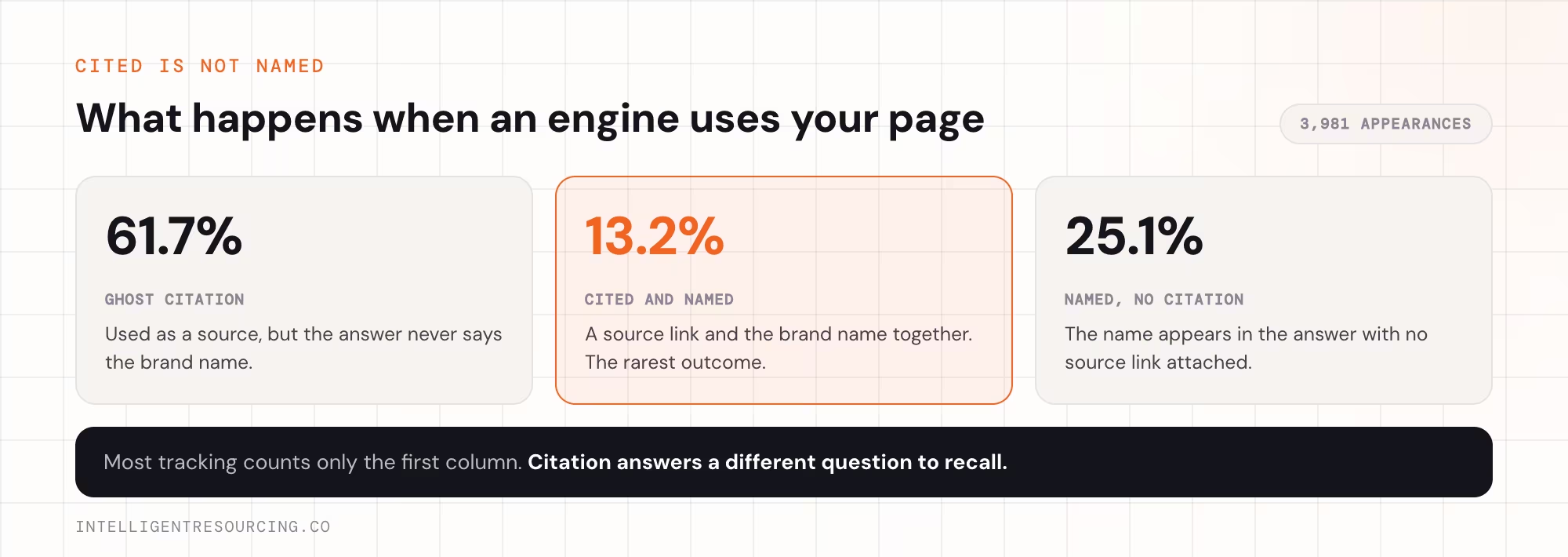
Being cited and being named are 2 different outcomes, and most GEO tracking only measures the first one. A citation means an engine uses a page as a source. A mention means the engine said the brand name in the answer text a buyer actually reads.
A 2026 domain-appearances study of 3,981 appearances across ChatGPT, Google AI Overviews, Gemini and Google AI Mode, run by Semrush with Kevin Indig, split the results into 3 groups:
- 61.7% were ghost citations: the engine used the page as a source but never said the brand name in the answer text.
- 13.2% were both cited and named: a source link plus the brand name in the same answer, the strongest outcome and the rarest.
- 25.1% were named without a citation: the brand appeared in the answer text with no source link attached at all.
That gap matters commercially. A buyer reading a ChatGPT or Grok answer that names a brand walks away with a company to look up. A buyer reading a Gemini or Google AI Overview ghost citation walks away with no name attached. A competitor named further down the list gets the recall the first brand's content actually earned.
Our own numbers show the same split. As of 15 September 2026, across 198 tracked buyer prompts and 6,900 runs, intelligentresourcing.co is cited in 26.1% of tracked answers and named in 17.3%, at an average mention rank of 1.63. The citation rate is the flattering number. The mention rate is the one tied to whether a buyer can repeat the name afterwards.
A rising citation count, if you only track one engine, can mislead you. Citation count answers "did the engine use my content." Mention rate answers "did the buyer learn my name." Track both, per engine.
Which Engines Name You, Cite You, or Both?
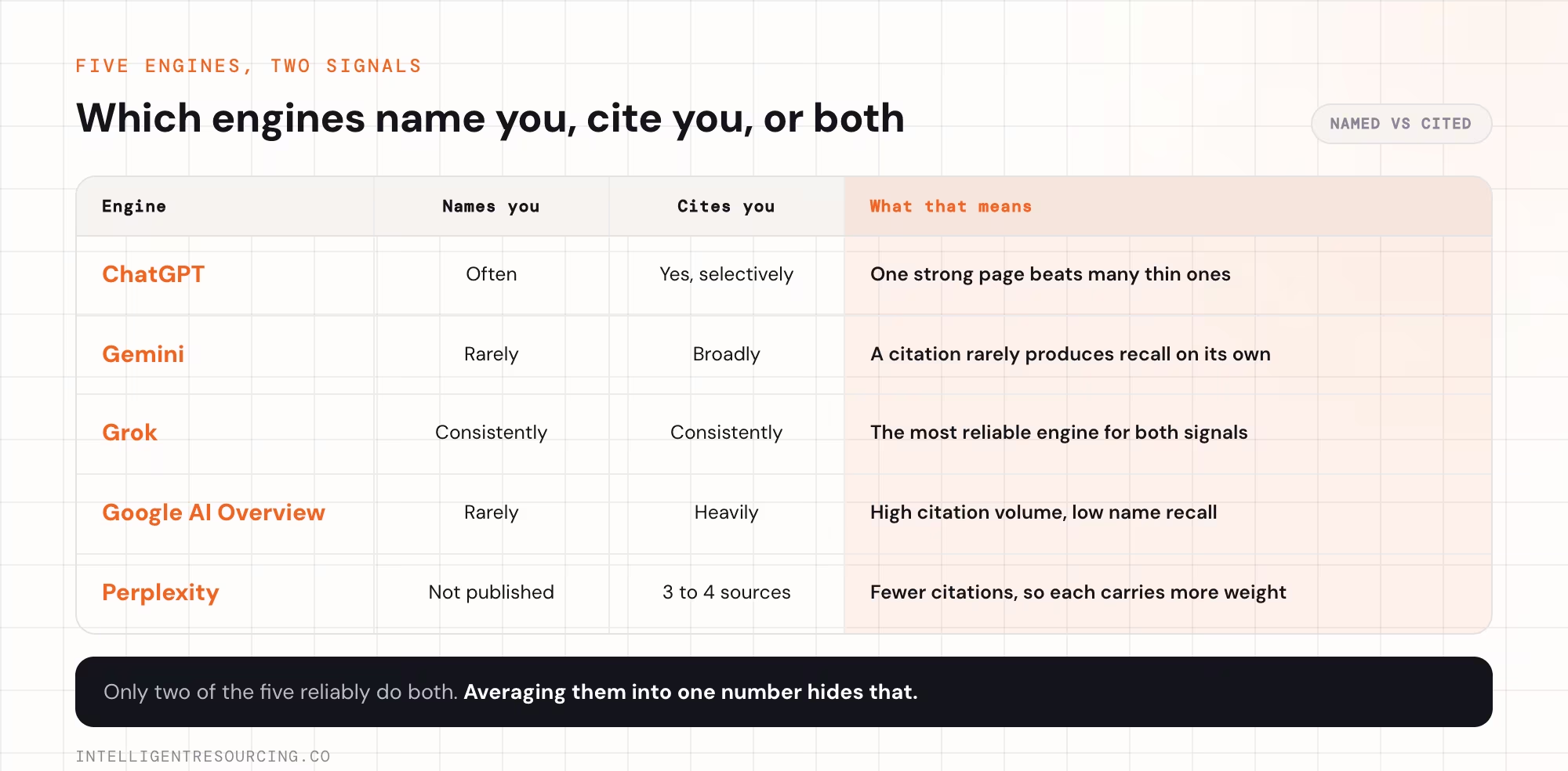
The split isn't even across engines. Averaging it into 1 number across all engines hides which ones are actually worth chasing first. ChatGPT and Grok name what they cite. Gemini and Google AI Overview cite far more than they name. Perplexity cites fewer sources per answer than any of them.
The full breakdown sits in the Decision Matrix at the top of this article. Perplexity isn't broken out with the same naming data as the other 4 engines, but it cites only 3 to 4 sources per answer, so each 1 carries more weight than a citation from Gemini.
Being cited and being named aren't the same thing. Seeing where your brand actually stands starts with tracking across all 5 engines at once, not guessing which one matters most.
Which Engine Should You Prioritise First?
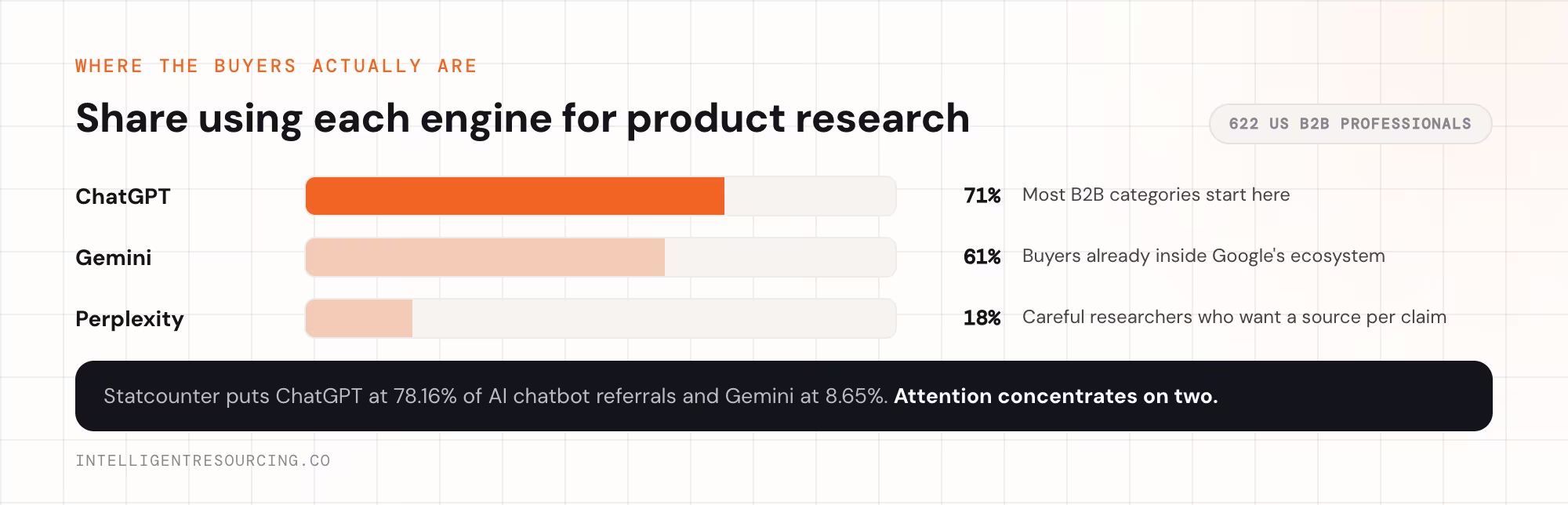
Prioritise the engine your actual buyers use most, not the engine easiest to optimise for. ChatGPT reaches the largest share of B2B researchers. Perplexity matters more for buyers who research carefully and want a source for every claim.
A July 2026 Semrush survey of over 600 US business professionals, where the underlying data covers it, ranked by product-research share:
| Rank | Engine | Used for product research | Prioritise first if |
|---|---|---|---|
| 1 | ChatGPT | 71% | You sell into most B2B categories |
| 2 | Gemini | 61% | Your buyers already live inside Google's ecosystem |
| 3 | Perplexity | 18% | Your buyers research carefully and want a source for every claim, cybersecurity and compliance especially |
| N/A | Grok | Not tracked in buyer-survey data | Your buyers are active on X and need the most reliably named answer |
| N/A | Google AI Overview | Not a separate app, so it isn't measured the same way | Your goal is citation volume inside Google Search itself, not app-based recall |
Grok and Google AI Overview don't show up in these surveys the way the other 3 do: Grok because most tracking tools, including Statcounter below, can't measure its traffic from links, and Google AI Overview because it's a feature inside Google Search rather than an app someone chooses to open.
Statcounter's March 2026 traffic data placed ChatGPT at 78.16% of AI chatbot referrals and Gemini at 8.65%. Attention concentrates on 2 engines even though 5 are worth tracking.
The ranking above is a starting point, not a rule. Run a tracked baseline across the engines your buyers actually use before committing budget to any 1, so priority reflects where your specific buyer base sits, not a generic average. That baseline is what separates a real content strategy from a content calendar guessing which engine matters this quarter.
Where Do You Go Deeper on Each Engine?
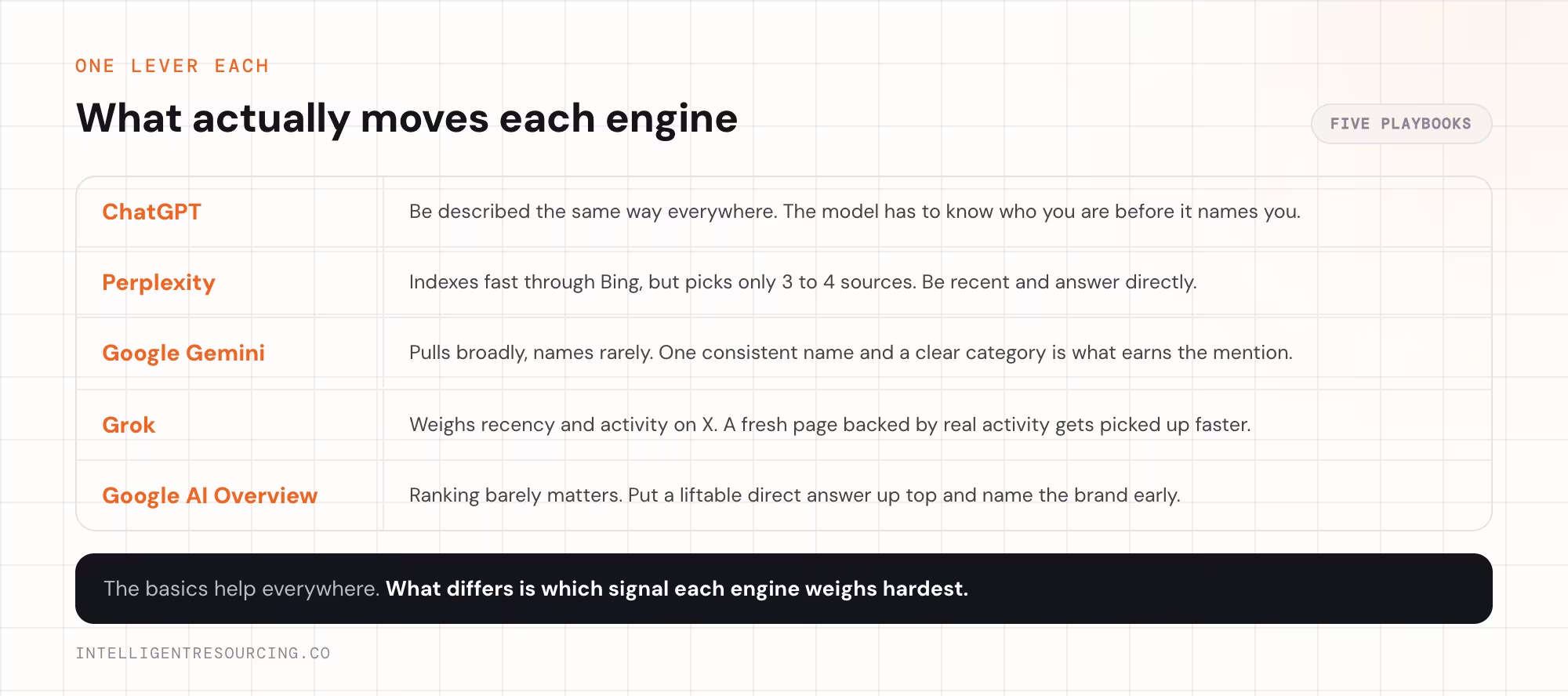
Each engine has its own playbook covering the mechanics this article does not repeat: what to build, in what order, for that engine's specific retrieval model.
ChatGPT: being recognisable and already known to the model
ChatGPT relies heavily on what it already learned before it launched. Being described the same way everywhere, your site, Wikipedia, Crunchbase and other directories, matters more than how much you publish. One clear, well-built page can beat a dozen thin ones, because the model has to know who you are before it will mention you. See how to get cited in ChatGPT.
Perplexity: fast indexing, but few sources picked
Perplexity finds new pages almost instantly through Bing, instead of waiting for a training update. But it only picks 3 to 4 sources per answer. Being found quickly isn't enough on its own. You have to be one of the few sources it trusts. Being recent and giving a clear, direct answer matters more than being a big, well-known site. See how to get cited in Perplexity.
Google Gemini: being clearly identifiable and easy to quote
Gemini pulls from a wide range of sources for its answers. But it rarely says the brand name behind what it cites, unless it's completely clear who you are. Using the same name everywhere and being clear about what category you're in both help. Only then does it say your name instead of just linking to you. See get cited in Google Gemini.
Grok: how current and how active you are on X
Grok cares a lot about how recent your content is and how active you are on X. A fresh page backed by real activity on X gets picked up faster than an old, quiet one. That focus on real-time activity is also why Grok tends to name and cite in the same answer rather than leaning one way. See get cited by Grok on X.
Google AI Overview: easy-to-lift answers matter more than ranking
88% of Google AI Overview's citations come from pages that aren't in the usual top 10 search results. Ranking well doesn't matter much here. What matters is whether your answer is easy to lift and reuse. Put a direct answer near the top, keep the structure clear, and name your brand in the first few sentences. See get cited in Google AI Overviews.
For measuring naming versus citing across several engines at once, see the cross-engine citation audit.
Content Creation
Citation count tells you an engine used your content. It does not tell you whether the buyer learned your name. Intelligent Resourcing builds a tracked baseline that measures naming and citation separately, engine by engine, so budget goes where your buyers actually are.
FAQs
How does LLM SEO differ across ChatGPT, Gemini and Perplexity?
ChatGPT names and cites from a small set of strong pages. Gemini grounds answers broadly but rarely names any single source. Perplexity cites only 3 to 4 sources per answer, so each one carries more weight.
Does getting cited by an AI engine mean it names your brand?
Not reliably. A 2026 Semrush study found 61.7% of AI citations never named the brand, and only 13.2% achieved both together. Citation and naming need separate tracking.
Which AI engine should a B2B brand prioritise first?
ChatGPT for most B2B categories, since it reaches the largest share of professional researchers. Cybersecurity and compliance buyers skew more heavily toward Perplexity than the general ranking suggests.
Do the same GEO tactics work across every engine?
No. Some basics help everywhere, being clearly identifiable, giving direct answers, and citing sources consistently, but each engine weighs them differently. Structured data behind the scenes helps more with Gemini and Google AI Overview. Perplexity and Grok care more about how fresh your content is.
Does Intelligent Resourcing optimise for one engine or all of them?
Engines get tracked together, not one at a time. A single-engine result hides which engines actually reach a buyer base, so Intelligent Resourcing builds a tracked baseline across the engines a client's buyers use before prioritising budget toward any 1.