

What Does Each LLM SEO Price Tier Actually Buy?
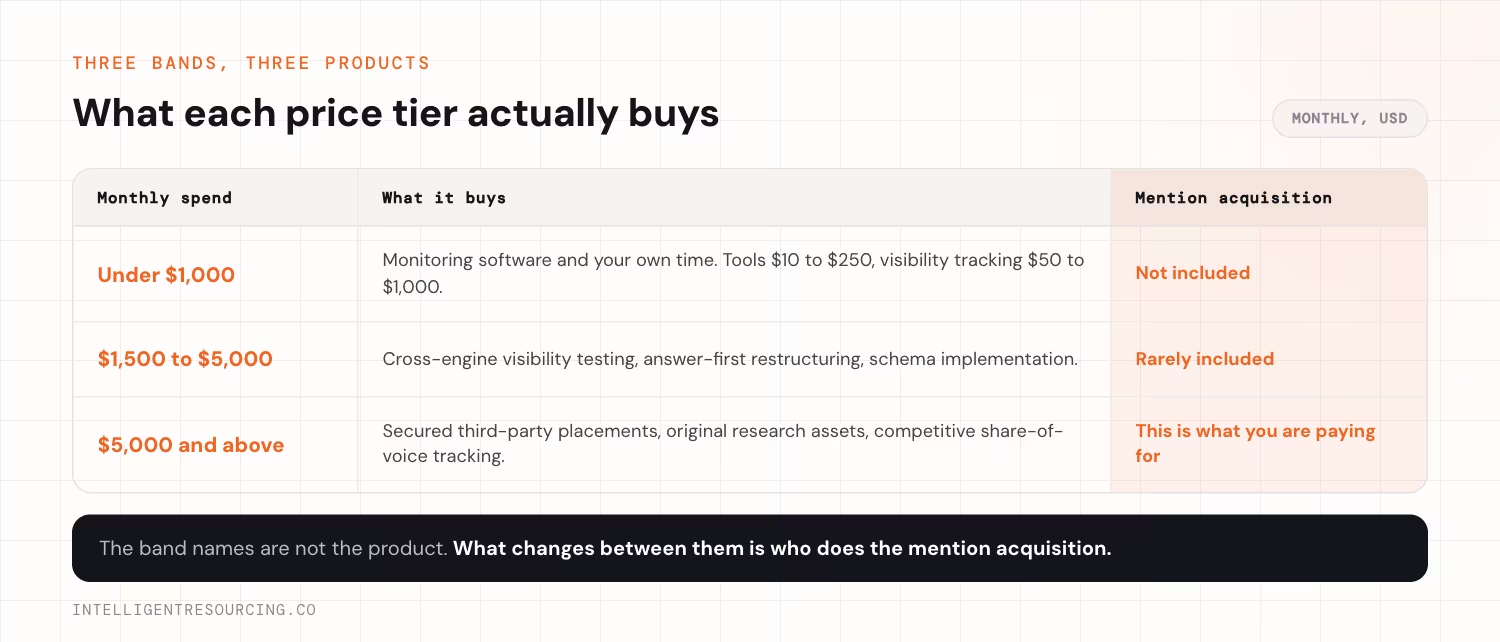
Price bands buy three different things: tools alone, a foundational programme, or active brand-authority building. WebFX's 2026 pricing guide breaks the agency side into bands by company size, from USD 1,500 to USD 5,000 a month for small businesses up to USD 25,000 to USD 50,000 and beyond at enterprise scale.
| Monthly spend | What it buys |
|---|---|
| Under USD 1,000 | AI visibility monitoring software and your own time. Basic AI SEO tools run USD 10 to USD 250, dedicated visibility tracking USD 50 to USD 1,000. No third-party mention acquisition. |
| USD 1,500 to USD 5,000 | Cross-engine visibility testing, answer-first content restructuring on a handful of pages, and schema implementation. |
| USD 5,000 and above | Active brand-authority building: secured third-party placements, original research assets, and competitive share-of-voice tracking against named rivals. |
A quote below USD 1,500 a month that promises full coverage of ChatGPT, Gemini and Google AI Overviews is usually missing the mention-acquisition layer. Not delivering it less efficiently. Missing it. Structuring content for AI citation covers what the restructuring work in the middle band actually involves.
Why Does LLM SEO Cost More Than Keyword-Led SEO?
Because citation work is structurally different labour, not the same work under a new name. GoodFirms found that 37% of agencies that raised prices in 2025 to 2026 named GEO and AEO services as the reason, and that this work is commonly billed apart from an existing SEO retainer at USD 900 or more a month.
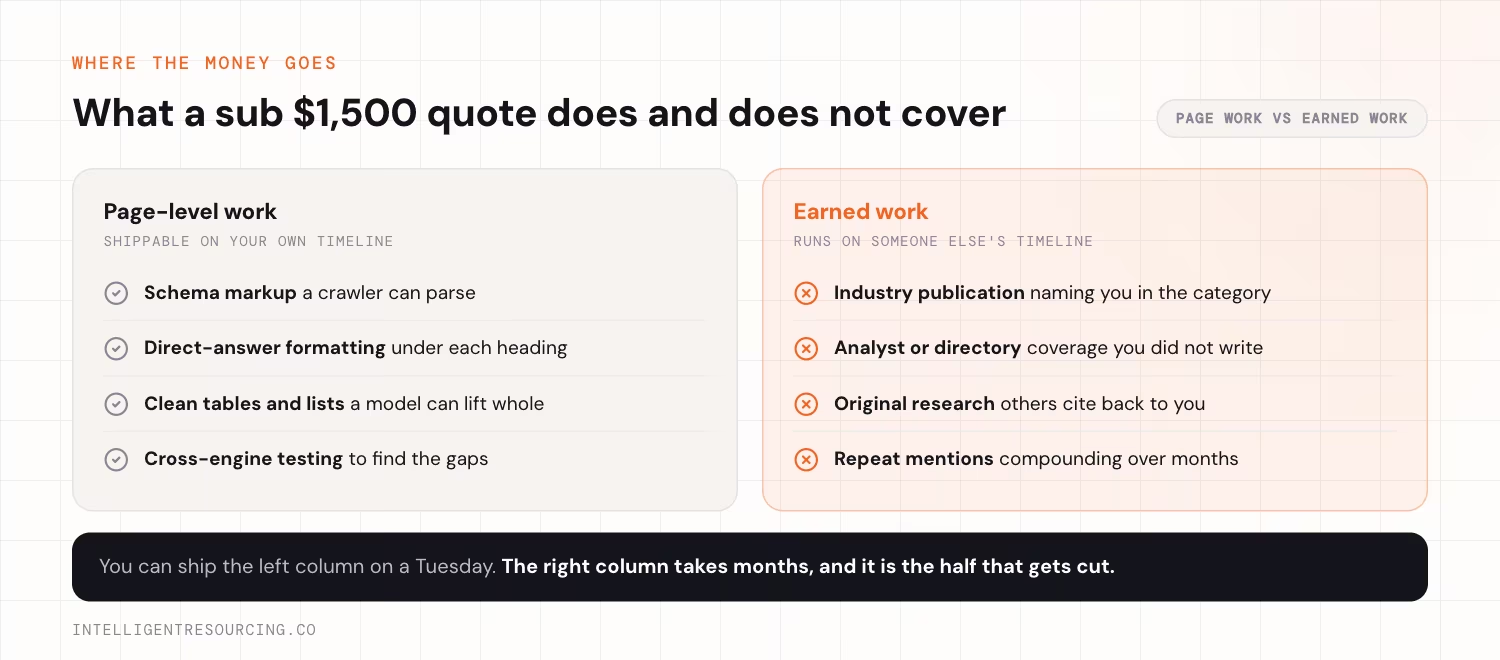
A keyword-led retainer optimises for a ranking position on a results page. Citation-engineered content does three things that ranking-focused work skips:
- Answers the question directly, in a format a model can lift whole
- Carries schema a crawler can parse, meaning the code that tells a machine what a page is actually about
- Earns a third-party mention across the open web, because mentions, not links alone, shape who a model names
That third layer is the expensive one, and it is worth understanding why.
Schema and answer formatting are page-level jobs. Someone edits your site, and the work is done. Mention acquisition is not a page-level job. It means getting an industry publication, an analyst or a review site to name you, on their own timeline and by their own editorial standards. You cannot ship it on a Tuesday. You can only earn it, repeatedly, over months.
That is labour an agency cannot automate away, which is why every published pricing source treats it as the highest-cost part of the work. It is also the first thing dropped when a package needs to hit a low headline price. If a quote does not mention it, assume the quote does not cover it.
Why Do Published LLM SEO Price Ranges Disagree So Much?
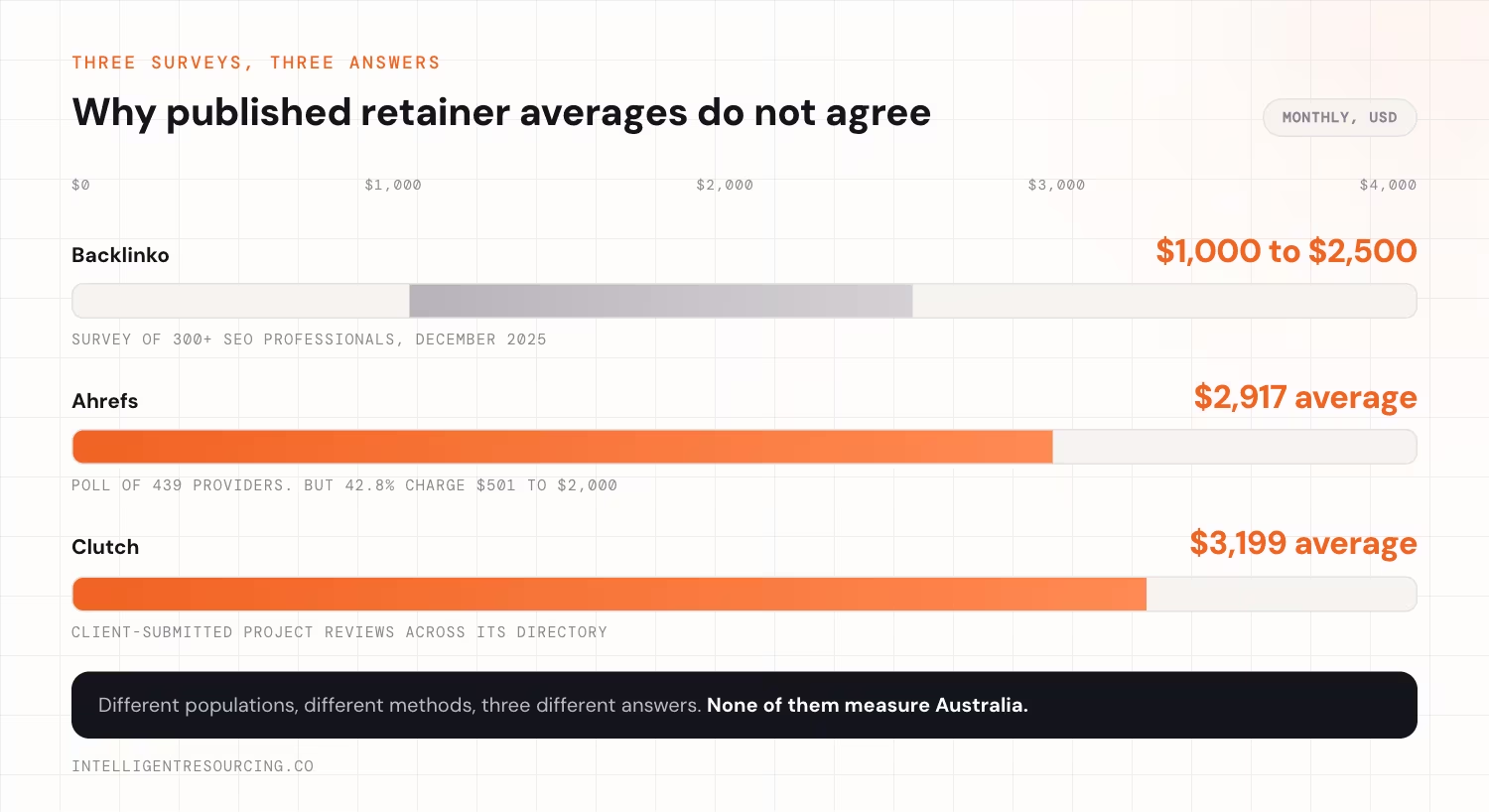
Because the sources measure different populations, using different methods. Almost none of them measure Australia at all.
Three credible surveys give three different answers for a typical monthly retainer:
| Source | Typical monthly retainer | What the number is based on |
|---|---|---|
| Backlinko, updated December 2025 | USD 1,000 to USD 2,500 | A survey of more than 300 SEO professionals |
| Ahrefs | USD 2,917 average | A poll of 439 SEO service providers |
| Clutch | USD 3,199 average | Client-submitted project reviews across its directory |
The Ahrefs number carries its own warning label. The average lands at USD 2,917. But the most common bracket respondents reported was USD 501 to USD 1,000, and 42.8% charged between USD 501 and USD 2,000. A handful of enterprise retainers pull the mean far above what most buyers pay. An average is the wrong statistic for a market this skewed.
Two more things are worth knowing before you use any of these figures. Most come from providers describing their own rate cards, not from independent measurement. Clutch's client-review data is the partial exception. And all of them are quoted in United States dollars against a mostly United States sample. Treat them as a rough guide, not as a benchmark for an Australian budget.
When Is DIY Enough, and When Does It Stop Being Enough?
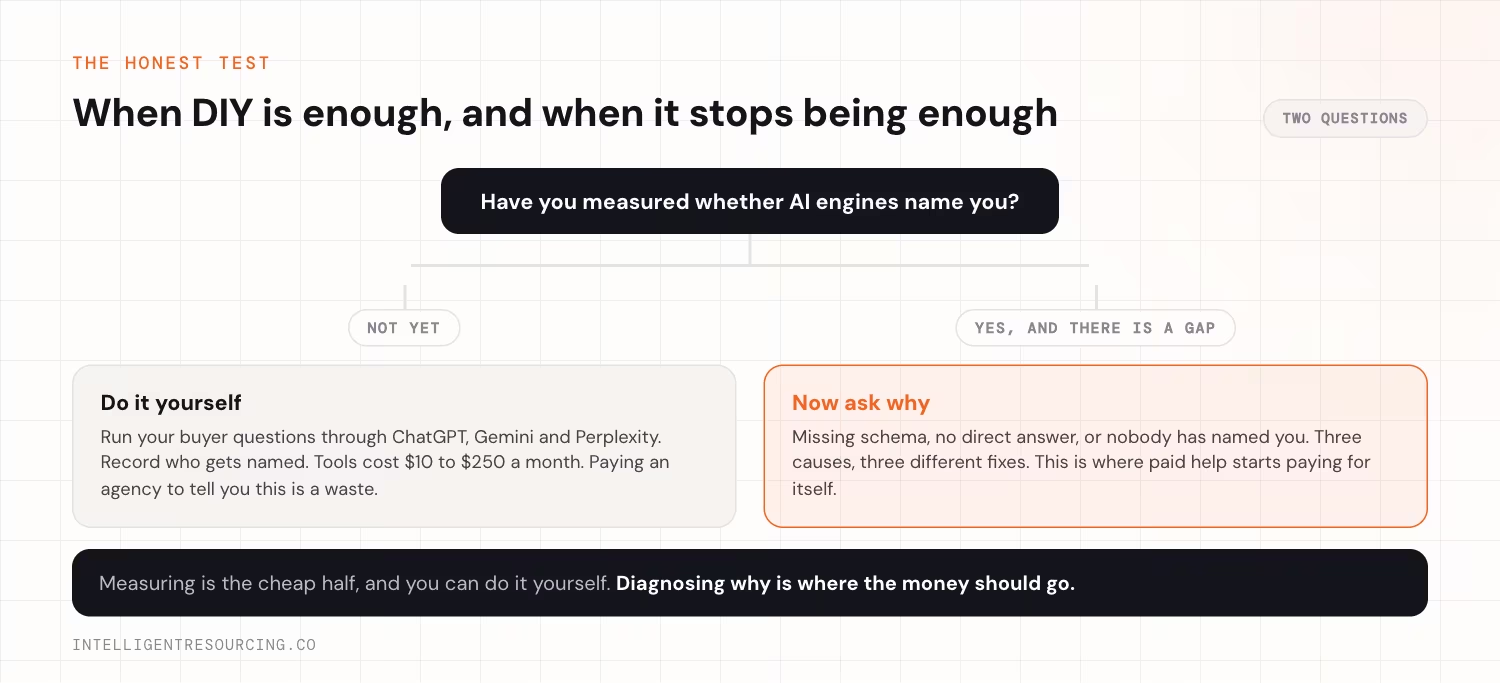
DIY is enough while the question is still "am I visible?" It stops being enough when the question becomes "why am I not?"
A tool subscription answers the first question well. You can run your buyer questions through ChatGPT, Gemini and Perplexity yourself. You can record which competitors get named. You can spot that you are absent from a category you should own. None of that needs an agency, and paying one to tell you is a waste.
The second question is where it gets harder. Knowing you are absent does not tell you which of three causes put you there. It might be missing schema. It might be a page that never answers the question directly. It might be that nobody on the open web has ever named you in that category. Each cause has a different fix, and fixing the wrong one costs a quarter.
So the honest test is this. If you have not measured yet, measure yourself first. If you have measured, know you have a gap, and cannot say why, that is the point where paid help starts paying for itself.
What Does Intelligent Resourcing's GEO Pricing Look Like?
Intelligent Resourcing's generative engine optimisation programme opens with a one-off Strategic Blueprint, then moves to a retainer. All prices are in Australian dollars.
| Tier | Price | What it covers |
|---|---|---|
| Strategic Blueprint | AUD 2,500 plus GST, one-off | Cross-engine citation audit and root-cause classification, before any retainer begins |
| Cited-Core | From AUD 3,200 plus GST a month | The standing citation-engineered programme |
| Cited-Scale | From AUD 3,700 plus GST a month | A larger-scope version of Cited-Core |
Root-cause classification is the part that does the work. The Blueprint sorts every missing citation into one of three causes: no schema, no third-party mention, or no direct-answer structure. It then hands over a ranked list of pages to fix first. A retainer bought without that step prices a fix for a problem nobody has located yet.
AEO pricing in Australia has the full package breakdown. It also sets these numbers against the wider Australian market, where AEO retainers more commonly run AUD 3,000 to AUD 15,000 a month. That narrower local range is the one to budget against. The global figures above are context.
What Should You Ask Before Signing an LLM SEO Contract?
Ask what the quote is diagnosing before it prices any fix. A retainer with no root-cause step attached is pricing guesswork.
Three questions separate a real programme from a relabelled retainer:
- What specifically changes about the content? Schema, structured question and answer blocks, entity work, against a standard SEO deliverable.
- How does citation get measured, and on which engines? Agreed before work starts, not reported afterwards.
- What is the minimum contract length? Citation compounding runs on months, not weeks.
A quote that cannot answer the first question in specific terms is very likely reselling existing SEO work. Traditional SEO versus LLM SEO sets out that split in full, and whether the label itself means anything covers the naming question directly.
Use the answers to those three questions, not the number at the bottom of the quote, to tell a real programme from a relabelled one.
Content Creation
You now know what separates a real programme from a relabelled retainer. The next step is finding out which of the three root causes is costing you citations. Book a GEO diagnostic call with Intelligent Resourcing and we will show you what the Strategic Blueprint would map for your category.
FAQs
How much does LLM SEO cost per month in Australia?
Published global ranges from WebFX put agency retainers at USD 1,500 to USD 50,000 a month, with tools from about USD 10. Those are United States figures. Intelligent Resourcing's Australian pricing starts at a one-off AUD 2,500 plus GST Strategic Blueprint, then from AUD 3,200 plus GST a month, and the wider Australian AEO market more commonly sits at AUD 3,000 to AUD 15,000 a month.
Is LLM SEO more expensive than traditional SEO?
Usually, yes. Backlinko's survey of more than 300 professionals put the average traditional retainer at USD 1,000 to USD 2,500 a month. GoodFirms found 37% of agencies raising prices in 2025 to 2026 did so specifically for GEO and AEO work, often billed separately at USD 900 or more a month on top of an existing retainer.
What is included in an LLM SEO retainer at each price tier?
Under USD 1,500 a month typically covers monitoring tools only. The USD 1,500 to USD 5,000 band adds cross-engine visibility testing, answer-first content and schema work. Above USD 5,000 a month, expect active third-party mention acquisition, original research assets and competitive share-of-voice tracking.
Can I do LLM SEO myself without an agency?
Yes, for measurement and basic content structure. A DIY programme costs very little and answers the early-stage question perfectly well. What is hard to do in-house is third-party mention acquisition at scale, which depends on editorial relationships most internal teams have not built.
Why do published LLM SEO prices vary so much?
Because the surveys measure different populations. Backlinko, Ahrefs and Clutch report typical retainers of USD 1,000 to 2,500, USD 2,917 and USD 3,199 respectively, using different methods and samples. Most figures come from providers describing their own rates, and almost none are Australia-specific.