

What Does This Add to the Question List?
Answer engine optimisation (AEO) buyers usually start with a question list. Our guide on how to choose an AEO agency already gives you the 8 questions to ask: measurement, methodology, off-site work, proof, platforms, timeline, commercials and references. This piece assumes you already have that list. It adds the part a list cannot give you: a pass or fail line for each answer, which 2 questions catch the most fakes, and what a dodge sounds like on a real call.
Vendor research has moved into the tools you are hiring an agency to win. A March 2026 G2 survey of 1,076 business-to-business (B2B) software buyers found 51% now start their research with an AI chatbot more often than with Google, and 69% chose a different vendor than they had planned based on what the chatbot told them. A confident answer to all 8 questions is worth nothing if you cannot tell a rehearsed one from a real one. A question list alone leaves that gap wide open.
How Do You Check Each Answer, Not Just Ask the Question?
Checking turns 8 open questions into a rubric. You can defend a rubric to a boss or a board. Each answer either meets a clear standard, or it does not. The table below sets that standard, question by question.
| Question | Pass line | Fail signal |
|---|---|---|
| Measurement | Names a fixed prompt set and a sample rate | Talks about "visibility" with no number attached |
| Methodology | Names entity work, schema and off-site proof, by name | Says "AI-optimised content" with nothing behind it |
| Off-site | Names real sites: review pages, industry media, forums | Waves at "authority building" |
| Proof | Shows a live dashboard on a real client, on the spot | Offers a screenshot or a static report |
| Platforms | Names ChatGPT, Perplexity, Gemini and Google AI Overviews by name | Says "AI search" as one vague label |
| Timeline | Gives a range in months, tied to your start point | Promises a result inside 30 days |
| Commercials | Puts price bands and exit terms in writing | Leaves scope changes verbal or vague |
| References | Names 2 clients with a before and after number | Offers unnamed case studies |
Intelligent Resourcing runs this same rubric on its own answer engine optimisation service, on a tracker any client can check before they sign, not after.
A Responsive study of 350 B2B buyers found the written response is the most important factor shaping a buying decision, cited by 81% of them, and that industry expertise carries significant weight for 52%, ahead of price at 49%. Checking against a rubric beats a gut feeling for the same reason: the substance of the answer moves the decision more than the confidence behind it.
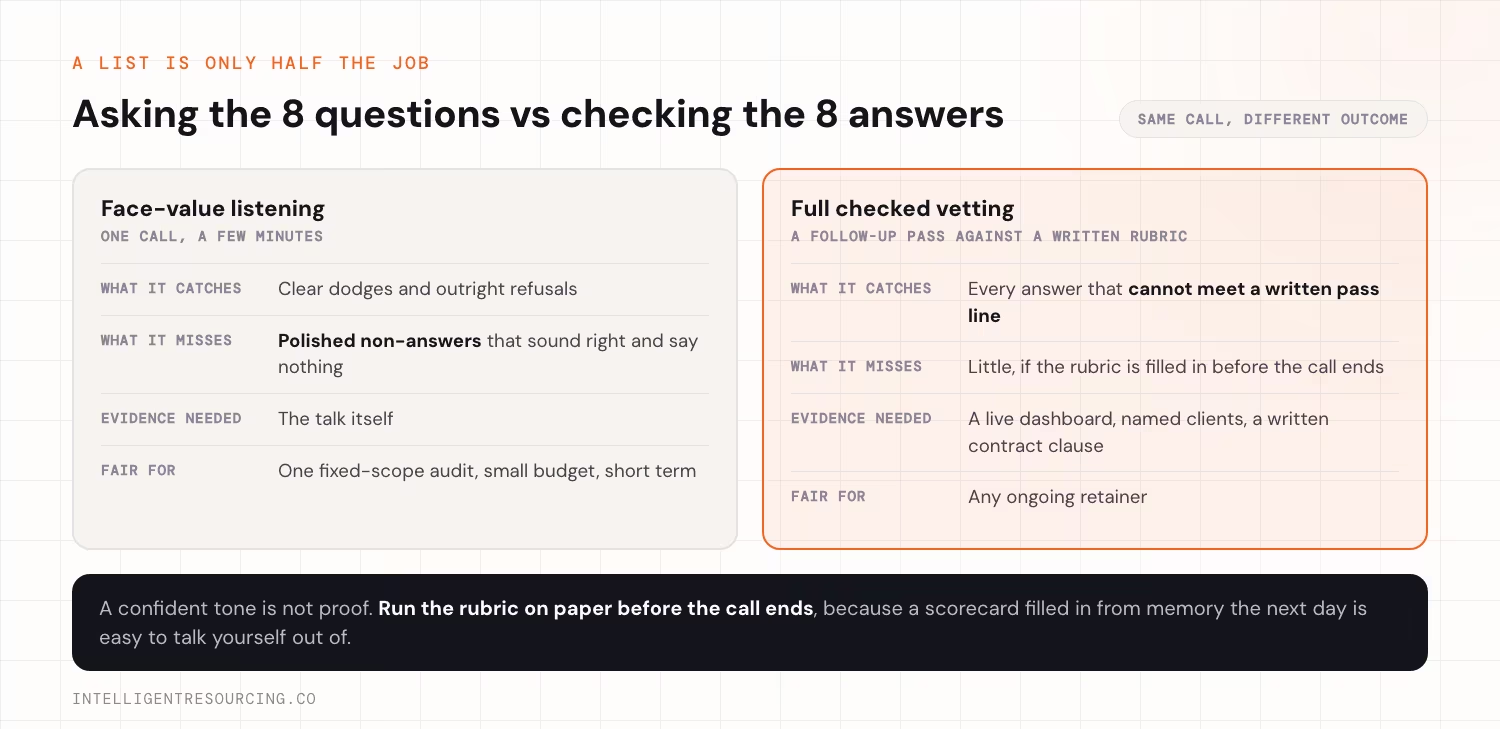
Run the rubric once, on paper, before the call ends. A scorecard filled in from memory the next day is easy to talk yourself out of.
Which 2 Questions Catch the Most Fake Specialists?
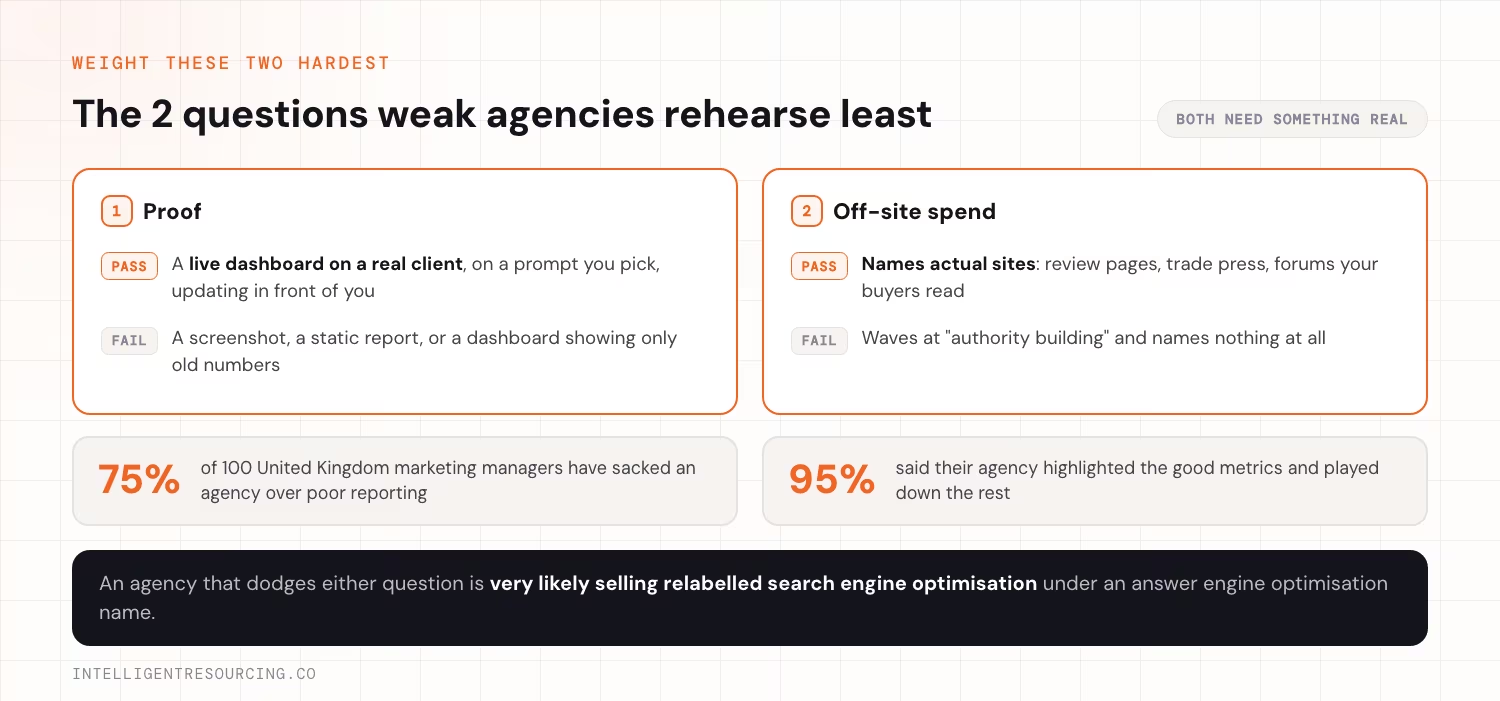
Proof and off-site spend are the 2 questions weak agencies rehearse least. Both need something real, not a confident tone. An agency that dodges either one is very likely selling relabelled search engine optimisation (SEO) under an AEO name.
Proof: the hardest question to fake
A 2025 OnePoll survey for Ask Bosco, run across 100 United Kingdom marketing managers, found 2 things worth acting on:
- 75% have sacked an agency over poor reporting.
- 95% said their agency highlighted the good metrics and played down the rest.
A live dashboard is the real test here. Ask for a query you can re-run yourself, on the call, not a slide made in advance. A dashboard that only shows old numbers is not a live one. It needs to update, in front of you, on a prompt you pick.
Off-site spend: the second-hardest
Off-site spend works the same way. Look for the gap between a real answer and a fake one:
- Real answer: names actual sites, review pages, trade press, forums your buyers read.
- Fake answer: waves at "authority building" and names nothing.
Cross-check any shortlist against agencies already proven on citation work, such as those in the best AEO agencies in Australia. A specialist worth hiring is usually already on that kind of list.
A third test that costs nothing
Ask an AI assistant the question a buyer would use to find an agency like the one you are checking, and see if they turn up in the answer. A discipline that works should be visible in the people selling it.
This is not a clean pass or fail. Many categories are still unsettled, and even a real specialist can be absent from one prompt on one day. Run it more than once before you read anything into it. But if an agency cannot point to a single prompt where they appear, ask why the thing they are selling you has not worked for them yet.
What Does a Red-Flag Answer Sound Like in Practice?
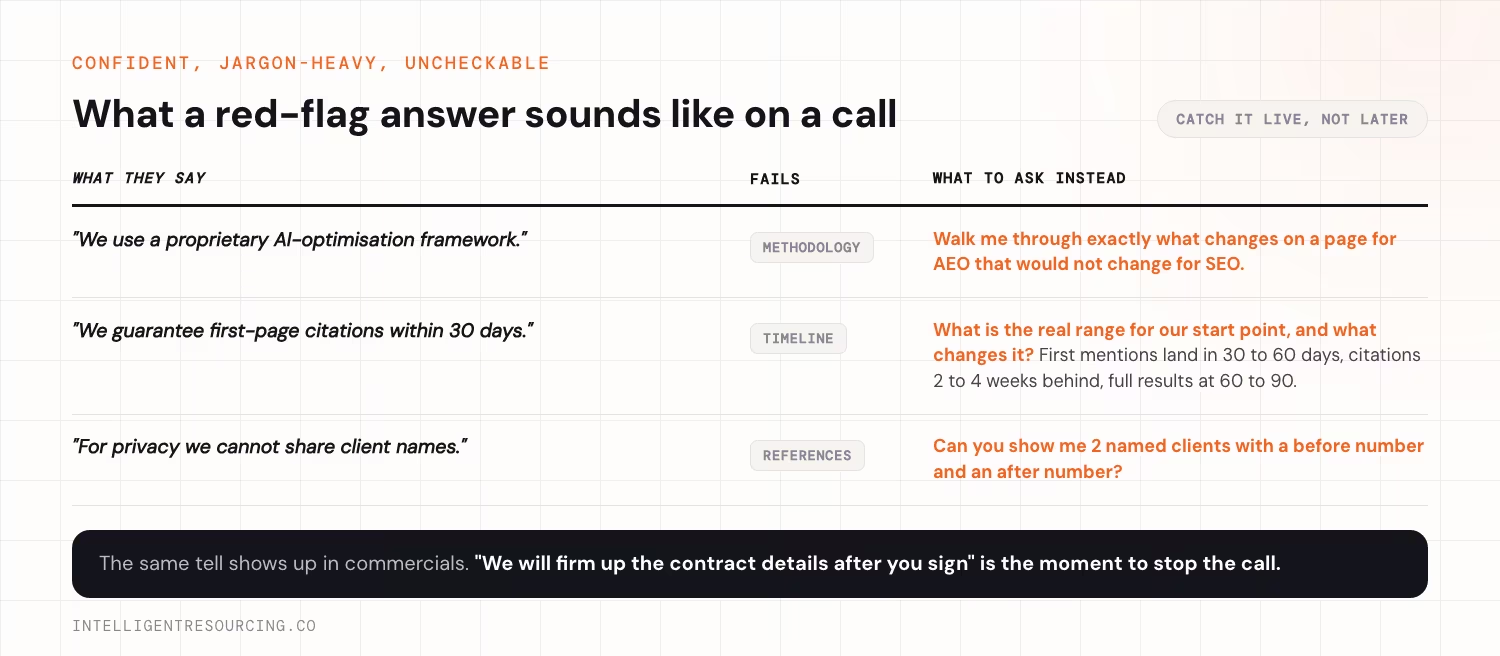
Red-flag answers share a pattern. They sound confident, use the right jargon, and give you nothing you can check. The 3 examples below show what that sounds like, next to the pass line it fails, so you can catch it live on a call.
- "We use a proprietary AI-optimisation framework." Fails Methodology, since it names no real method. Ask instead: "Walk me through exactly what changes on a page for AEO that would not change for SEO."
- "We guarantee first-page citations within 30 days." Fails Timeline. AirOps' own AEO tracking shows first mentions land in 30 to 60 days, citations follow 2 to 4 weeks after that, and full results take 60 to 90 days. A flat 30-day promise skips that gap. Ask instead: "What is the real range for our start point, and what changes it?"
- "For privacy we cannot share client names." Fails References. Ask instead: "Can you show me 2 named clients with a before number and an after number?"
The same tell shows up in commercials. A verbal promise that "we will firm up the contract details after you sign" is the moment to stop the call. Check the real terms against a contract terms and exit clauses checklist before you commit to anything.
When Should You Skip the Full Scorecard?
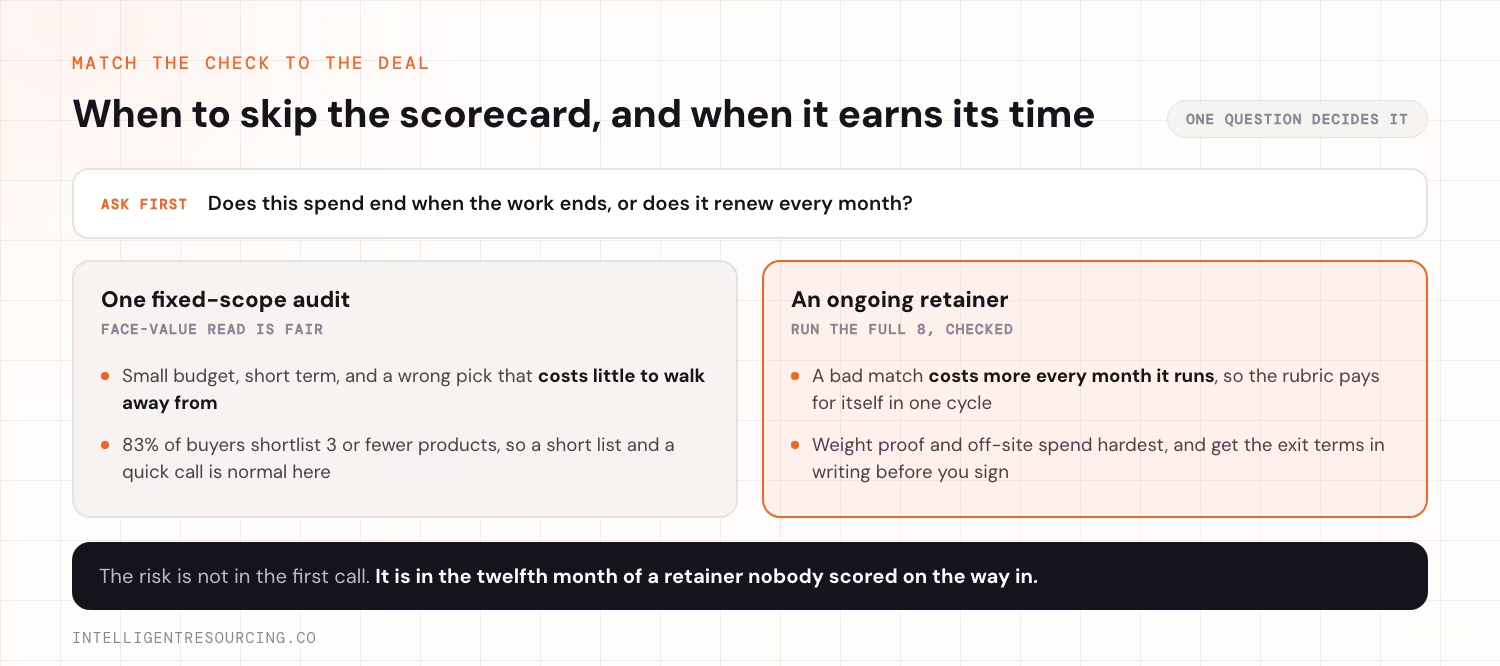
Skip it for one fixed-scope audit: small budget, short term, a wrong pick that costs little.
Run the full 8, checked, for anything that becomes an ongoing retainer. A bad match costs more every month it runs.
TrustRadius's 2026 B2B Buying Disconnect Report found 83% of buyers shortlisted 3 or fewer products. That is when a quick, face-value read is fair: a short list, a small call, low risk if it goes wrong. Once the same call becomes a 12-month retainer, the risk grows, and the full scorecard earns its time.
Check your next AEO agency call against this rubric before you sign, not after. Our generative engine optimisation work is built to be checked the same way, on numbers a client can open before they commit rather than after.
Content Creation
See what a programme looks like when the numbers are open before you sign, not after.
FAQs
Do I need to ask all 8 questions every time?
No. Ask all 8, checked, for any ongoing retainer. A single fixed-scope audit only needs a face-value read, since a wrong pick there costs little.
Which 2 questions should I weight the heaviest?
Proof and off-site spend. Both need something real, not a confident tone, and weak agencies rehearse them least.
What is a real timeline for AI citation results?
First mentions usually land in 30 to 60 days, with citations following 2 to 4 weeks after that. A promise of results inside 30 days is not a real timeline.
Should I ask for a live dashboard before signing?
Yes. A live dashboard on a real client, one you can re-run yourself, is the clearest proof an agency actually tracks citations. A static report or a screenshot is not the same standard.
How many client references should an AEO agency give me?
Ask for 2 named clients with a before and after number. Unnamed case studies do not meet that standard and are easy to fake.