

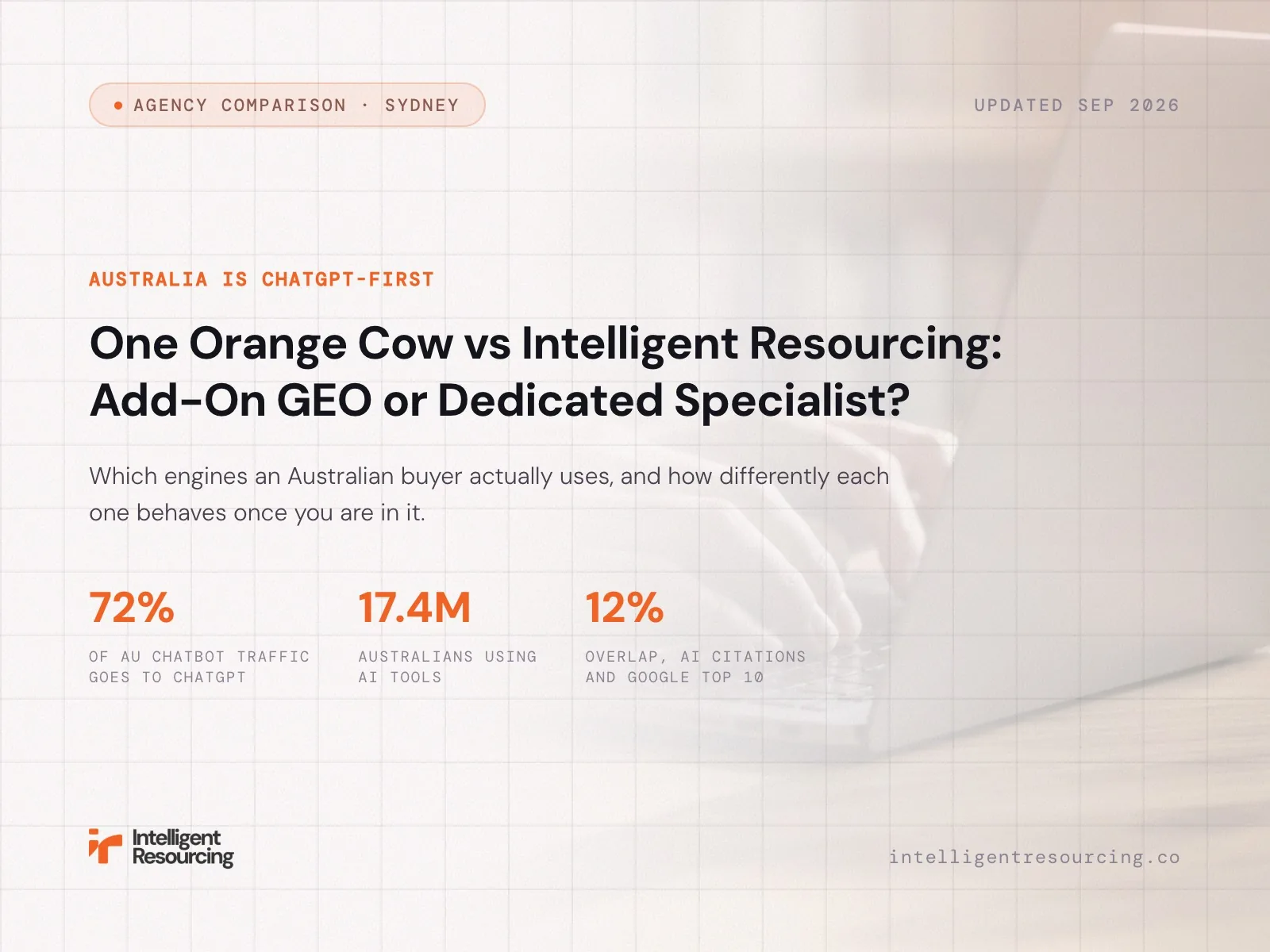
What Does One Orange Cow Actually Offer?
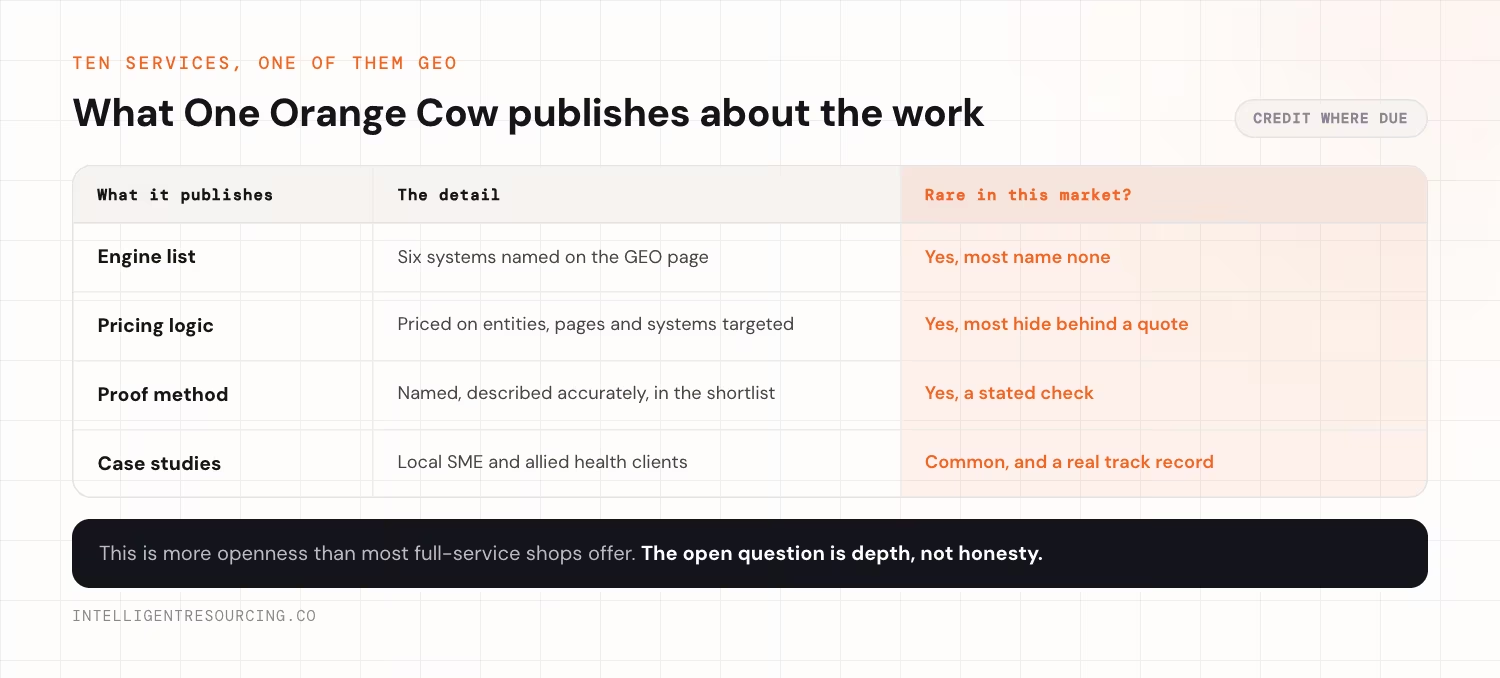
One Orange Cow is a Sydney agency on York Street, founded in 2013. It lists ten services: AI Search Visibility, SEO, Google Ads, AI Search Optimisation, answer engine optimisation, content marketing, generative engine optimisation, healthcare marketing, marketing management and website services.
Its GEO service page is more detailed than most. It names the six AI systems it targets. It describes a three-part check on commercial-intent prompts: whether the brand is named, whether the description is accurate, and whether the brand appears in shortlist-style answers. It sets out Organisation, Service, FAQ and SameAs schema as part of the technical work. And it states its pricing logic rather than hiding behind a quote call.
Its published case studies are local and allied health businesses. That is a genuine track record, for a particular kind of buyer.
The open question is depth. Does GEO get a dedicated team, or the hours left over from a team spread across nine other services? It is the same question worth asking of any full-service shop that treats AI visibility as one line item, including the one covered in our roundup of Impressive Digital alternatives. A business that has signed a bundled retainer and seen no movement usually ends up asking why a competitor gets cited instead.
How Does Intelligent Resourcing's Practice Work?
Intelligent Resourcing runs generative engine optimisation as the whole practice rather than one item on a menu. It is built around a single question: which engines name and cite a brand, and when.
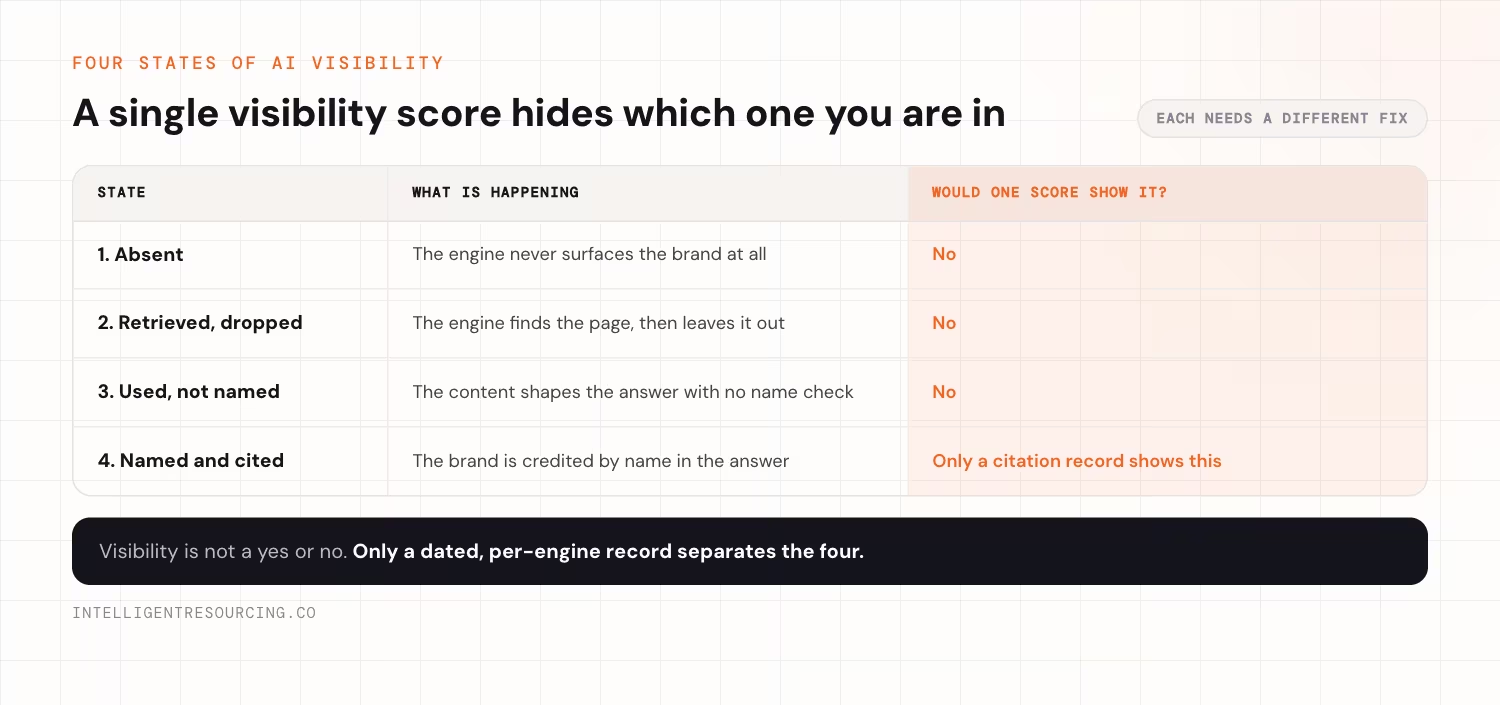
The tracker covers ChatGPT, Gemini, Google's AI Overview and Copilot, and reports a named-versus-cited split dated to each tracking period. That matters because visibility is not a yes or no. A brand can be absent from an engine entirely, retrieved and then dropped from the final answer, used in the answer without a name check, or properly cited. A single visibility score hides which of those four a business is actually in, and each one needs a different fix.
The published Kynection engagement is the worked example: 22.88% AI Share of Voice across 393 buyer prompts, first in its category as of August 2026, against a next competitor at 6.31%.
One thing Intelligent Resourcing does not publish is GEO pricing. Its published price list covers a separate service line. On that specific point, One Orange Cow gives a buyer more to work with.
Which AI Engines Actually Matter for an Australian Business?
Australia is a ChatGPT-first market by a wide margin. Statcounter's August 2026 data puts ChatGPT at 72.32% of Australian chatbot traffic, Google Gemini second at 10.59% and Microsoft Copilot third at 9.21%.
User counts tell the same story with different numbers. Telsyte's 2026 research puts the Australian AI user base past 17.4 million, or 77% of the population aged 16 and over, with 13.8 million using ChatGPT and 9.1 million using Gemini. Roy Morgan's March 2026 findings measure an average four-week period instead, and put ChatGPT at 10.5 million Australians, Gemini at 5 million and Copilot at 4 million.
The engines also behave differently from each other, which a flat target list does not capture. ChatGPT tends to name and cite together but pulls from few pages, so winning it usually means one strong page on a question rather than many thin ones. Gemini grounds answers on many sources but rarely names a brand outright. Google's AI Overview cites heavily and also rarely names.
Does Naming More Engines Mean Broader Coverage?
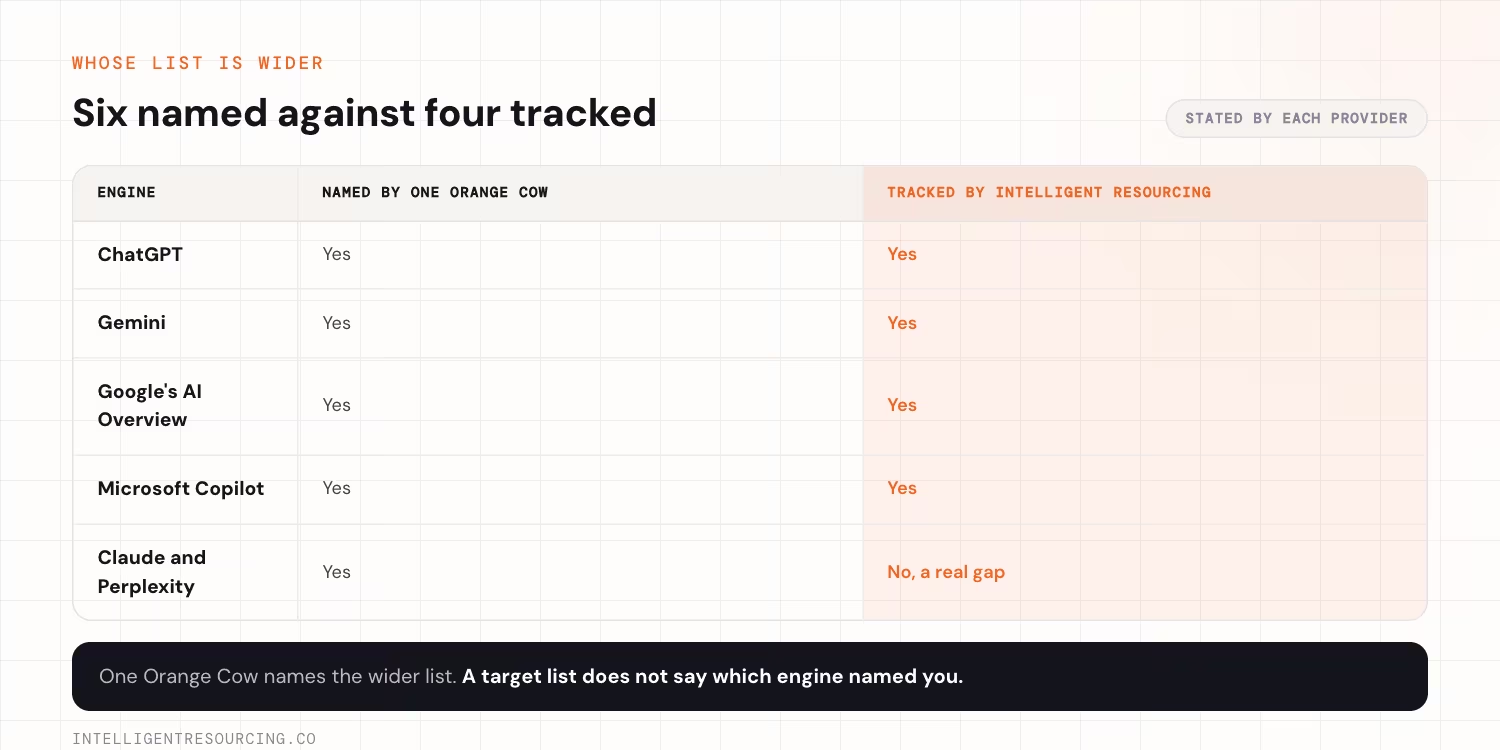
On the numbers, One Orange Cow's list is genuinely wider. It names six systems. Intelligent Resourcing tracks four, and all four sit inside that six. Claude and Perplexity are the two One Orange Cow names that Intelligent Resourcing does not track, and that is a real gap rather than something to paper over.
What a target list does not answer is what happened. Naming an engine says the work is aimed at it. It does not say whether the brand was named in an answer last month, or which engine did it.
That gap is measurable. Ahrefs' analysis of 15,000 prompts found only about 12% overlap between the links AI assistants cite and Google's top 10 for the same question. Being on a target list, or ranking well, does not carry into the answer on its own.
Structured data does not close it either. Building Organisation, Service, FAQ and SameAs schema, as One Orange Cow describes, is sound technical practice. Schema helps an engine parse a page correctly once that page is already a candidate for citation. It does not, by itself, put an unfamiliar brand into the candidate pool.
Who Should Choose Each Agency?
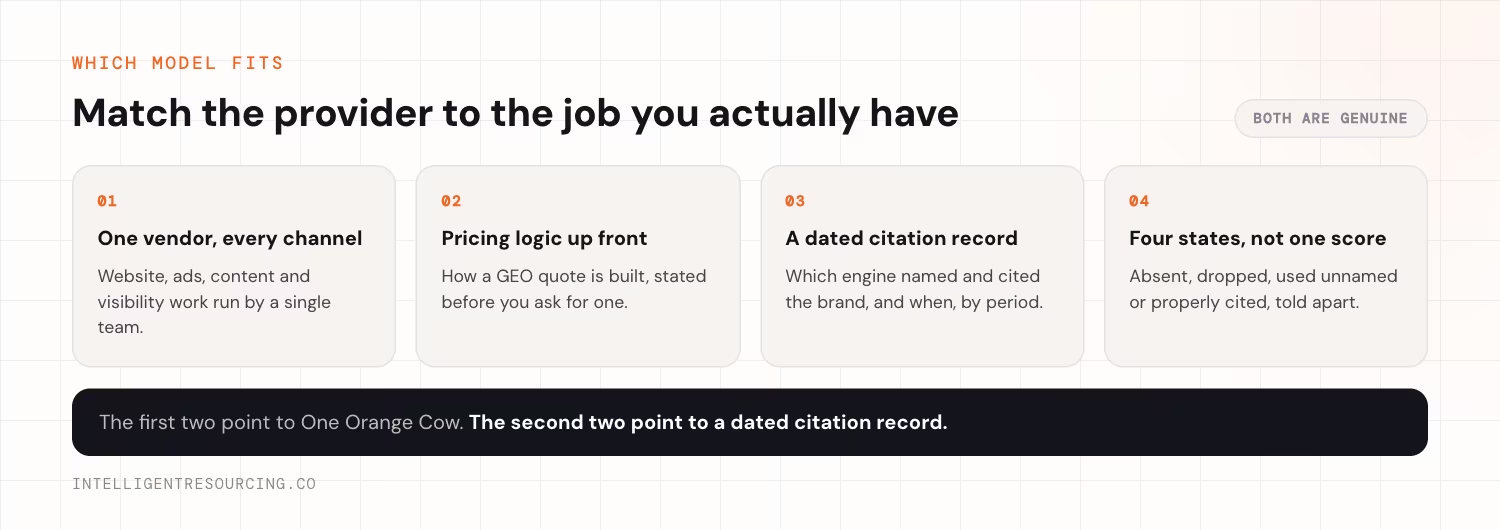
The two suit genuinely different buyers rather than splitting into better and worse.
Choose One Orange Cow if:
- You want one vendor handling your website, ads, content and AI visibility together.
- You are a local SME or allied health practice, which is where its published case studies sit.
- You want Claude or Perplexity covered specifically, or you want to see the pricing logic before asking for a quote.
Choose Intelligent Resourcing if:
- Your main gap is being absent or mis-described in AI answers, and you want that treated as its own discipline.
- You want a dated, engine-by-engine record of whether the brand was named and cited, rather than one blended number.
- You are a business-to-business team where the four tracked engines cover the buyers you care about.
Neither is wrong. It depends on whether AI visibility is the whole job or one part of a larger rebuild. If neither fits, our roundup of AEO agencies in Australia covers a wider set of specialists.
Comparisons
A target list of engines tells you where an agency is aiming. It does not tell you whether an AI engine named your brand when a buyer asked last month. Get in touch to see how the tracking reads against your own accounts.
FAQs
What is the main difference between One Orange Cow and Intelligent Resourcing?
One Orange Cow is a ten-service agency with generative engine optimisation as one offering. Intelligent Resourcing runs answer engine optimisation and GEO as a dedicated specialism. The practical difference is depth, and what each publishes to show the work landed.
How many AI engines does each agency cover?
One Orange Cow names six systems on its GEO page: ChatGPT, Claude, Perplexity, Gemini, Google's AI Overviews and Microsoft Copilot. Intelligent Resourcing tracks four: ChatGPT, Gemini, Google's AI Overview and Copilot. All four sit inside One Orange Cow's six, so its list is the wider one.
Which agency is more open about pricing?
One Orange Cow. It states that GEO is priced on the number of entities, the pages required to support them, and the number of AI systems targeted. Intelligent Resourcing does not publish GEO pricing, and its published price list covers a separate service line.
Does schema markup get a brand cited by an AI engine?
Not on its own. Schema helps an engine parse a page correctly once that page is already a candidate for citation. Earning a place in that candidate pool usually means answering a specific question that nothing else currently answers well.
Who should choose One Orange Cow instead?
A local SME or allied health business wanting one vendor for its website, ads and content, rather than a dedicated AI-visibility specialist. A buyer who specifically needs Claude or Perplexity covered should also weigh that list difference.
Can a business use both types of provider?
Some do. One team runs the web and ads work, another runs citation tracking and the content built to close specific answer gaps. The two disciplines do not have to come from the same vendor.