

Where GEO Sits in Impressive Digital's Service Menu
Impressive Digital's SEO delivery is genuinely strong. The gap shows up specifically around GEO: it's one line inside a broader menu, not a measured, standalone discipline.
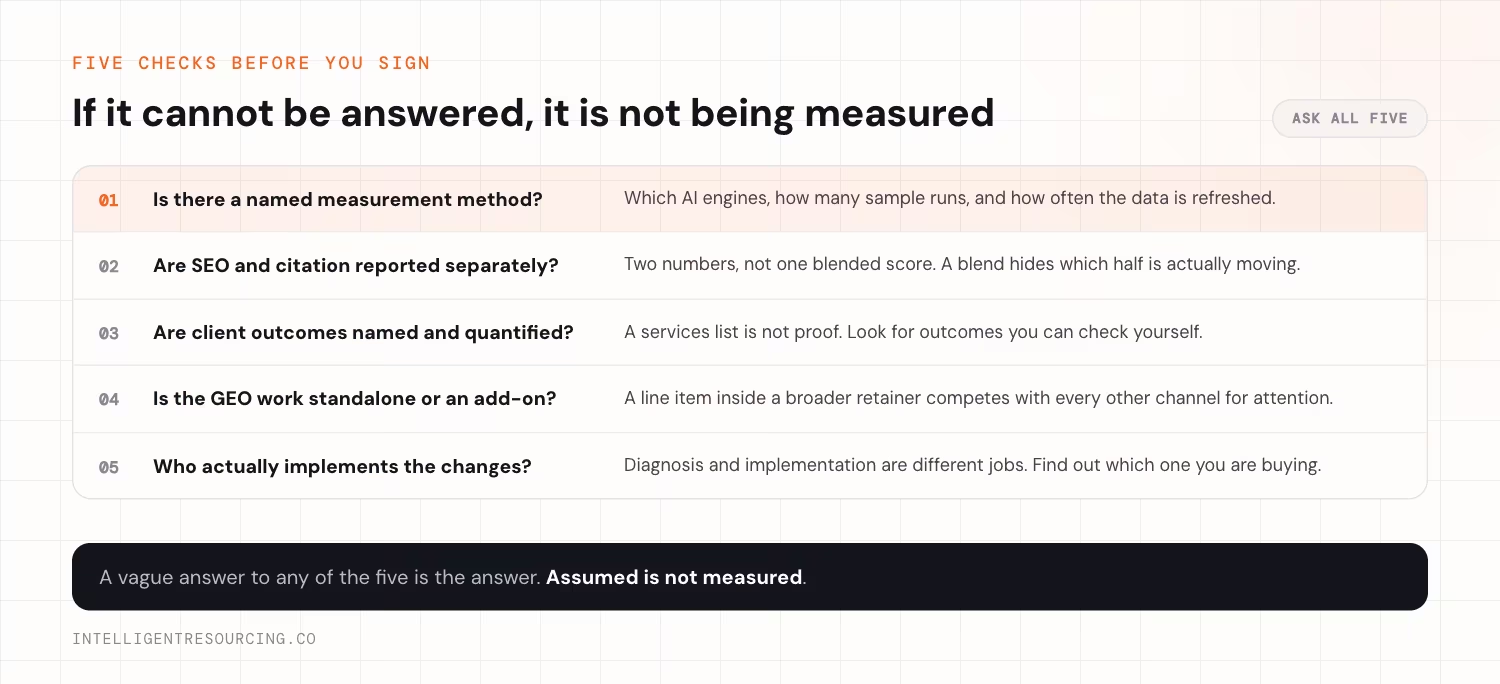
Buyers usually start looking elsewhere once they've asked a direct question and gotten a vague answer: which engines are we tracked on, how many prompts, how recent is the data. If GEO reporting can't answer that, it's not being measured, it's being assumed.
Moz's analysis of 40,000 queries found only 12% of AI Mode citations match a page's top-10 Google ranking. Rank and citation are separate signals, which is why folding GEO into a broader SEO menu leaves that gap unmeasured.
What to check before choosing an alternative:
- A named measurement method: which AI engines, how many sample runs, how often refreshed
- SEO and AI-citation results reported as two separate numbers, not blended into one score
- Named case studies or client outcomes, not just a services list
- Whether the AEO/GEO work is a standalone discipline or an add-on inside a broader retainer
- Who actually implements changes, not just who diagnoses them
ROI Growth Agency Runs a Structured FAQ System for AEO
ROI Growth Agency is a Melbourne agency founded in 2006, running its AEO product, ContextIQ, alongside its SEO line rather than as a separate vendor. ContextIQ's FAQ-content model follows the original Generative Engine Optimization research, which found structured content earns more consistent citations from generative engines.
Strengths:
- Twenty years as a Deloitte Fast 50-recognised growth agency, giving it a revenue-accountable reporting culture most FAQ-only vendors lack
- FAQ publishing is a legitimate way to build topical authority for citation, not a shortcut
The gap:
- FAQ content builds citation eligibility, but doesn't report how that citation breaks down by engine
Topical authority is a real lever in AI citation. Search Engine Land's analysis of 600,000+ AI citations found brands with deeper category coverage earn measurably more mentions across prompts, which is exactly what ContextIQ's FAQ model is built to do.
A buyer who wants a per-engine view needs a system built for that specifically, which is the main thing the ROI Growth Agency comparison walks through in full.
Bushnote Pairs Technical SEO With a Dedicated AEO Practice
Bushnote is a Sydney agency built specifically for answer-engine optimisation, pairing technical SEO work with a dedicated AEO practice rather than treating AI visibility as an add-on.
Strengths:
- Rated 4.9 out of 5 in an independent 2026 review of enterprise AI SEO agencies and tools, the top score in the comparison
- Genuine implementation depth for a buyer who has isolated AEO as the entire problem; the published methodology is rare in this category
The gap:
- The depth sits in implementation, not in ongoing, engine-by-engine measurement reporting
That gap is common industry-wide. GoodFirms' 2026 survey of marketers found only 14% currently track AI citations, even though most now name AI search optimisation as a core priority.
For buyers weighing this trade-off directly against Intelligent Resourcing's approach, the Bushnote comparison covers it in full.
Zib Digital Delivers AI-Augmented Generalist Service
Zib Digital has operated across Melbourne and Brisbane since 2009, working with over 800 businesses. It pairs senior strategists with AI-augmented execution across SEO, Google Ads, social and web.
Strengths:
- Every account keeps a senior strategist rather than handing work to junior staff, a real, differentiated commitment set out on its own service pages
The gap:
- "AI-augmented" describes how the agency delivers SEO work internally. It isn't a citation-tracking or AI-visibility measurement capability
That distinction matters industry-wide. EMARKETER's FAQ on GEO and AEO found measurement is the field's biggest gap, since teams used to Google Analytics dashboards often have no comparable visibility into AI search performance.
A buyer who wants an agency that uses AI to move faster gets that here, while a buyer who wants their own AI citations measured needs a different vendor, a distinction the Zib Digital comparison sets out fully.
Searchmaxxed's #1 AEO Ranking Comes From Sites It Owns
Searchmaxxed is ranked #1 for AEO and SEO across a network of "best agency" comparison sites, including bestgeoagencyaustralia.com.au and bestseocompaniesaustralia.com.au, scored on source usefulness, entity clarity and implementation depth.
What this actually is:
- Those ranking sites carry their own disclosure text stating they are owned and operated by Searchmaxxed. On Best Affordable SEO Companies in Australia, the site names itself as owned by Searchmaxxed and states Searchmaxxed may benefit commercially from reader enquiries
- The #1 position is a vendor ranking itself first on properties it owns and publishing that as though it were neutral. It is not third-party validation
This is exactly the kind of connection regulators expect disclosed. The FTC's endorsement and testimonial guides require that a material connection between an advertiser and the source of a favourable ranking be clearly disclosed, since it can affect how much weight a reader gives the result.
The gap:
- By the ranking sites' own admission, Searchmaxxed's public case studies contain no named, quantified client outcomes
A buyer evaluating Searchmaxxed should treat the #1 claim as marketing, not independent proof, and ask directly for verifiable client results before shortlisting.
Intelligent Resourcing Runs SEO and GEO as One System, Not Two
Intelligent Resourcing built its own AI-citation tracker as part of its Generative Engine Optimisation practice, covering four engines: ChatGPT, Gemini, Google's AI Overview and Copilot.
That split matters. Semrush's research on ghost citations found most AI citations link to a source without ever naming the brand, exactly the blind spot a blended score would hide.
Strengths:
- Splits results by branded versus non-branded rate, by service line, and by engine, since a blended score can hide one engine carrying the whole result
- Reports each service's results on its own number rather than blending them into one combined figure, a distinction reflected in the Kynection case study
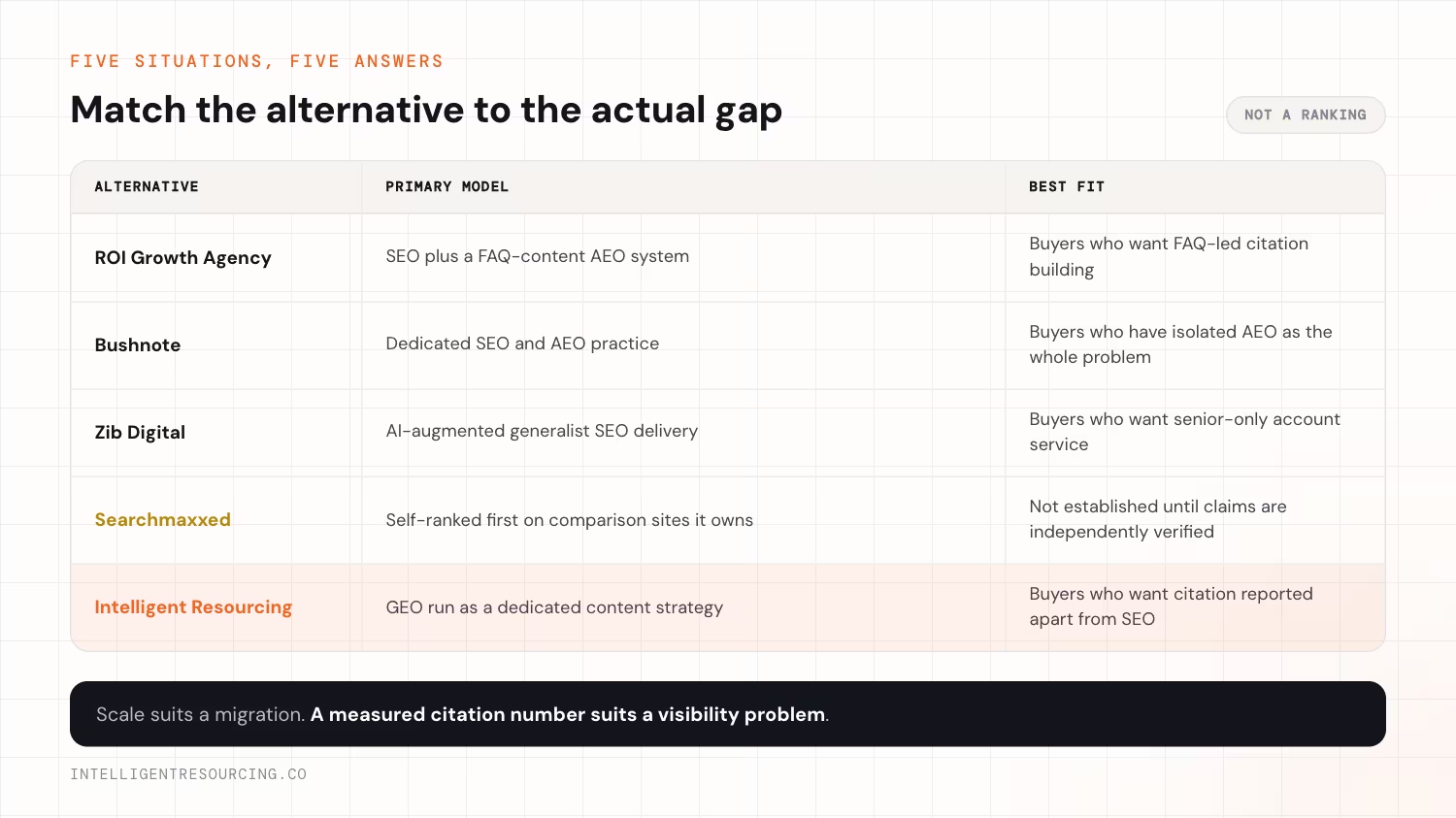
- Closes the gap the four alternatives above leave open: a published, per-engine GEO measurement system built as its own content strategy, not folded into an SEO retainer
Want to see where your brand currently stands in AI citations? Book a strategy session.
B2B Buyers Now Start Their Research With AI Chatbots, Not Google
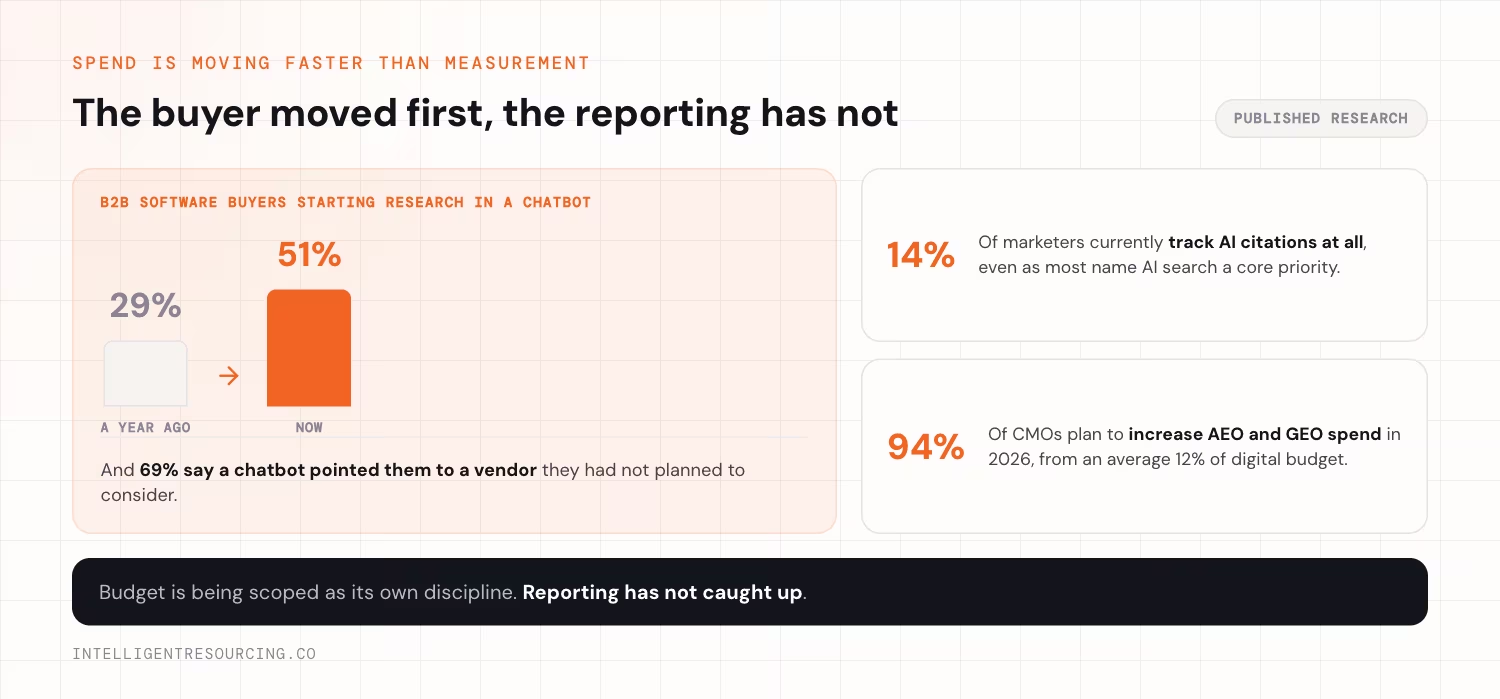
According to G2's 2026 AI Search Insight Report, 51% of B2B software buyers now start their research with an AI chatbot more often than with Google, up from 29% a year earlier. Sixty-nine percent say a chatbot pointed them toward a vendor they hadn't originally planned to consider.
That's the buyer behaviour a bundled SEO-plus-GEO retainer wasn't built to capture. If the AI chatbot conversation happens before a buyer ever runs a Google search, an agency that measures success by rankings alone is measuring the wrong moment.
UGC Platforms Already Out-Cite Most Agency Websites
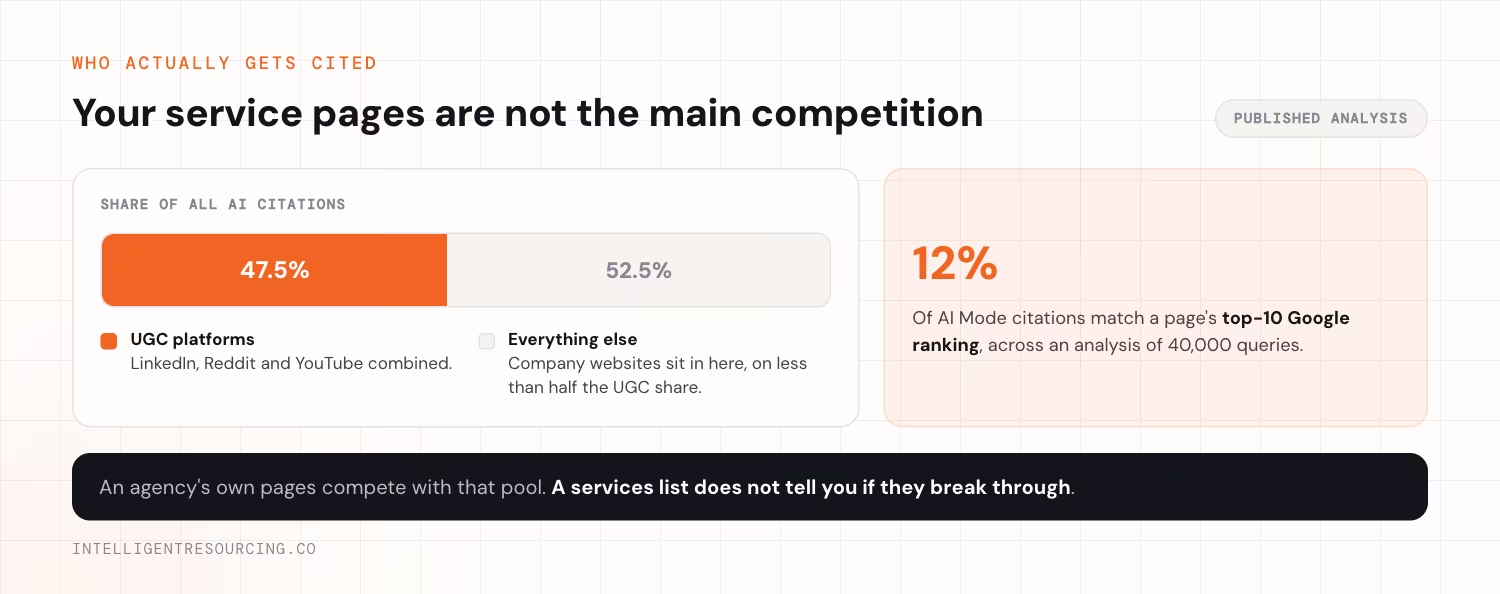
Meltwater's analysis of AI citations found that UGC platforms such as LinkedIn, Reddit and YouTube account for 47.5% of all AI citations, more than double the share going to company websites. An agency's own case studies and service pages compete with that pool, not just with rival agencies' pages.
That's one reason a published, per-engine citation tracker matters more than a services list. It shows whether an agency's content actually breaks through UGC-dominated citation pools, not just what the agency claims to do.
Enterprise Marketing Budgets Are Shifting Toward AEO and GEO
Conductor's 2026 CMO Investment Report found enterprises allocated an average of 12% of digital marketing budgets to AEO and GEO in 2025, and 94% of CMOs plan to increase that spend in 2026.
That budget shift is why the "one line item versus dedicated system" distinction running through this comparison matters. A growing share of marketing spend is now being scoped as its own discipline, not folded into an existing SEO retainer.
Comparisons
See where your brand currently stands in AI citations, engine by engine, before you shortlist an agency. Book a strategy session with Intelligent Resourcing.
FAQs
Is Impressive Digital good for B2B SaaS companies specifically?
Impressive Digital names B2B and SaaS positioning explicitly. It also has genuine multi-region migration experience, making it a reasonable fit for a SaaS company running a complex, multi-office SEO rebuild.
Does Impressive Digital track AI citations the way a dedicated AEO agency does?
No public claim to engine-level citation tracking has been found in Impressive Digital's positioning. GEO sits as one service inside a broader enterprise SEO menu.
What's the difference between GEO as a line item and a dedicated AI-visibility system?
A line item means GEO work happens alongside SEO, paid and other channels under one retainer, usually with one blended report. A dedicated system measures citation per engine and reports it separately from SEO performance.
When does Impressive Digital's enterprise scale matter more than specialisation?
It matters most during a multi-region website or SEO migration, where new pages typically take two to six months to reach page one. B Corp status and partner-tier credentials reduce coordination risk across several markets at once.
How is Intelligent Resourcing different from Impressive Digital's approach?
Intelligent Resourcing runs a dedicated multi-engine AI-citation tracker rather than folding GEO into a broader SEO retainer, and reports SEO and citation results as two separate numbers instead of one blended score.
What should a B2B buyer look for in an AI-visibility alternative?
Look for a published measurement method: which engines, how many runs, how recent. Also look for a clear split between branded and non-branded citation rates, not one blended number.