

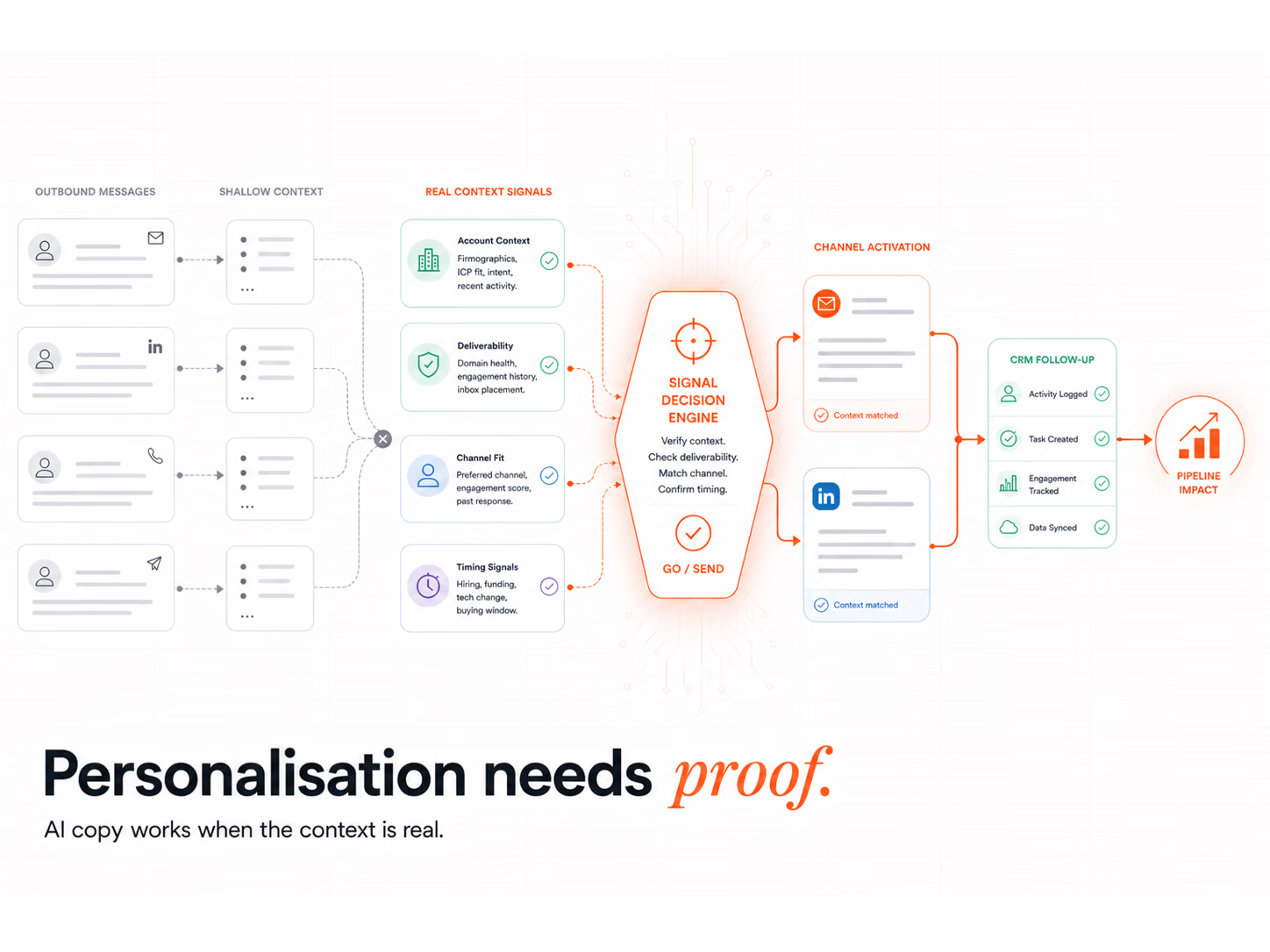
AI-powered personalisation in outbound has gone from exciting to excessive. Too many teams are relying on generic prompts, shallow data, and unchecked automation, resulting in off-brand messages, damaged domain reputations, and confused prospects.
The solution isn't to abandon AI. It is to design it as a trust system, layered on top of high-confidence signals, not guesswork.
In this guide, we'll show how to build personalised outreach with Clay that's structured, signal-driven, and safe to scale. This isn't about writing "better emails". It's about engineering a workflow that earns replies without risking deliverability or credibility.
If you're operating within a signal-driven GTM system, this is how AI personalisation becomes an asset, not a liability.
Why AI Personalisation Often Breaks Outbound
AI has made it easy to generate thousands of "personalised" messages. But too often, these emails feel robotic, irrelevant, or even factually wrong.
The most common issues include:
- Generic personalisation that adds no relevance.
- Overwriting tone and brand with uncontrolled AI copy.
- Activating emails without proper QA.
- Deliverability damage from poorly timed or unverified sends.
When these problems compound, reply rates drop and domain health suffers.
The root cause? Treating AI as a magic bullet, rather than a controlled output layer inside a structured system.
The data backs this up: the HubSpot State of Marketing 2026 (1,500+ B2B and B2C marketers worldwide) reports 93.2% of marketers saying personalised and segmented experiences led to more leads and purchases, while 86.4% of marketing teams are using AI in at least a few marketing areas. The asset is real. The discipline around it is what most teams are missing.
What "Personalised" Actually Means in Signal-Driven Outreach
Personalisation Based on Signals, Not Tokens
Tokens like "{{first_name}}" or "{{company}}" are not personalisation. They are placeholders.
Real personalisation reflects:
- Why this person is receiving this message.
- What signal triggered the outreach.
- How the message connects to their context.
With Clay, you're not just merging tags. You are building signal-based logic that decides when, why, and how a message is generated.
Relevance always beats novelty. A concise, accurate email with the right signal will outperform any quirky opener or over-personalised joke.
Where Clay Fits in the Personalisation Stack
Clay sits upstream as the data and decision layer. It determines:
- Who should be contacted.
- What signals qualify them.
- What enrichment fields can inform copy.
AI then becomes a layer on top of verified data, not a tool guessing in the dark.
Using Structured Data for AI Copywriting
Why Structured Inputs Matter
AI output is only as good as the inputs. Structured data ensures:
- Accuracy: factual details from enrichment sources.
- Relevance: messages align with the lead's context.
- Consistency: output follows brand tone and logic.
Poor input leads to hallucinations, errors, and brand damage.
Common Data Inputs for Personalised Copy
Clay can feed structured variables into prompts, such as:
- Role context: "Head of RevOps at Series B SaaS".
- Company signals: funding, hiring, product launches.
- Trigger events: tech installs, outbound engagement, CRM activity.
These inputs inform the AI without needing open-ended creativity.
Prompt Design Inside Clay
Clay allows prompt constraints that ensure brand-safe output:
- Tone control: instruct AI to be concise, consultative, or neutral.
- Length limits: prevent bloated or multi-paragraph outputs.
- Guardrails: ensure the AI never writes if key signals are missing.
For upstream list building that feeds these prompts, see our guide on building signal-based prospecting workflows.
Deliverability QA in Multi-Channel Outreach
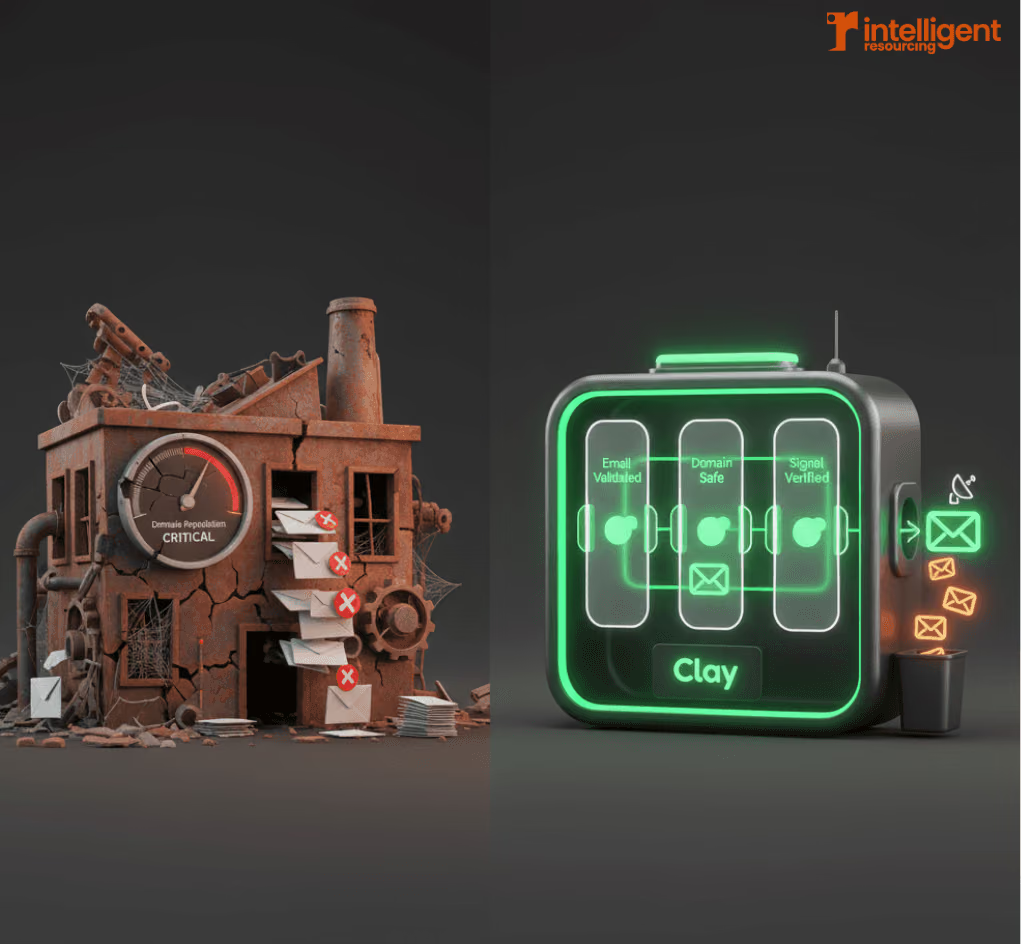
Most teams think of deliverability as an email or domain issue. In reality, it's a workflow design problem.
Common mistakes include:
- Sending unverified emails.
- Overloading sequences with low-quality contacts.
- Activating too soon or too often.
Clay solves this by enforcing gates before a message goes out.
Industry benchmarks show the stakes. The Sinch Mailgun State of Email Deliverability (1,100+ senders worldwide) found 78.5% of senders recognise deliverability as critical, yet 70% are not using Google Postmaster Tools, 53% do not monitor blocklists, and 39% rarely or never run list hygiene. Most deliverability damage is not a domain issue. It is a workflow gap.
Deliverability Gates Before Activation
Standard deliverability checks in Clay include:
- Email validation: using APIs to verify syntax and domain.
- Domain safety: ensuring the sender domain isn't near quota or blacklisted.
- Confidence thresholds: preventing low-certainty data from triggering sequences.
These steps make sure bad records don't become bounced emails.
Channel-Aware Personalisation
Clay supports different logic for each channel:
- Email: use full signal stack for personalisation.
- LinkedIn: simplify messaging, focus on job role and context.
- Phone or DM: generate intro scripts or talking points.
Each output is tailored but always based on controlled input.
For more on automation QA, visit our guide on Clay automation best practices.
Smartlead Sequencing and Fallback Logic
When Personalisation Should Fire
AI copy should only generate when signals are strong. Clay workflows check for:
- Verified email.
- Role and company match.
- Trigger signals with intent or context.
If any of these are missing, the system should not proceed with a personalised message.
Designing Safe Fallback Sequences
Not every lead will qualify for signal-rich outreach. In those cases:
- Use a neutral fallback sequence.
- Avoid referencing unverified attributes.
- Optionally pause the lead until more data is available.
This prevents messages like: "Congrats on your recent funding!" when there was none.
Coordinating Clay and Smartlead
Clay makes the decision. Smartlead executes it.
- Clay: decides if and when outreach happens.
- Smartlead: delivers the message, handles reply tracking.
This separation of logic ensures only qualified leads enter sequences, and content is ready to convert.
See the full workflow in our guide on Clay + Smartlead integration.
Example: A Safe AI-Personalised Outreach Workflow
This isn't theory. It is how modern teams scale trust-focused outbound.
- Signal ingestion. New ICP account with hiring spike in GTM roles.
- Data qualification. Role verified, company matched, no existing CRM record.
- Structured enrichment. Firmographics and role-level data added in Clay.
- AI copy generation. Prompt references job role, funding round, and relevant use case.
- Deliverability checks. Email verified, domain warm, quota healthy.
- Outbound activation. Message enters Smartlead sequence. Slack alert sent to SDR.
This pattern minimises risk and maximises relevance every time.
Common AI Outreach Mistakes (and How Clay Prevents Them)
- Over-personalising weak signals: Clay blocks low-confidence logic.
- Letting AI write without constraints: prompts are structured and consistent.
- Activating copy without QA: deliverability gates catch risks before send.
- Burning domains through volume: signal gating ensures only strong leads are contacted.
The Twilio 2025 State of Customer Engagement report (7,640 consumers and 637 business leaders across 18 countries) found 71% of consumers abandon experiences that feel irrelevant, while 88% are more likely to buy when engagement is personalised in real time. Brands using AI to tailor experiences report 75% increased customer spend. Clay automates the gating so this lift compounds instead of leaking into bounces.
How Personalised Outreach Fits Into a Scalable GTM System
Personalisation isn't where GTM strategy starts. It is where it shows up.
If your upstream workflows are weak, no amount of clever copy will help. Clay ensures:
- Signal-driven activation.
- Clean data feeding consistent prompts.
- Deliverability logic tied to pipeline hygiene.
To see how these pieces fit together, explore our comprehensive guide on GTM engineering workflows.
Personalisation Is a Trust System
Great outreach earns attention because it is relevant and respectful. Clay enables this by treating AI copy as the final mile of a much longer system.
If your outbound feels bloated, generic, or risky, don't blame the copy. Rethink the system behind it.
Can Clay write outbound copy using AI?
Yes, but only after signals are verified and structured. AI prompts are built inside Clay using reliable inputs.
How does Clay protect email deliverability?
Through email validation, confidence thresholds, and domain safeguards before activation.
What happens if data is missing?
Fallback sequences or delays prevent weak outreach from going live.
Can I personalise messages across multiple channels?
Absolutely. Clay supports channel-specific logic for email, LinkedIn, and more.
How does Clay integrate with tools like Smartlead?
Clay makes activation decisions and pushes qualified leads to Smartlead for execution.
Is this compatible with our CRM workflows?
Yes. Clay works upstream from your CRM to ensure only clean, verified leads are activated.
Clay Workflows
Book a 30-minute workflow audit with our GTM engineering team. We'll analyse your current setup, identify deliverability risks, and map a signal-driven workflow that turns intent into pipeline without damaging your domain reputation.
FAQs
Can Clay write outbound copy using AI?
Yes, but only after signals are verified and structured. AI prompts are built inside Clay using reliable inputs.
How does Clay protect email deliverability?
Through email validation, confidence thresholds, and domain safeguards before activation.
What happens if data is missing?
Fallback sequences or delays prevent weak outreach from going live.
Can I personalise messages across multiple channels?
Absolutely. Clay supports channel-specific logic for email, LinkedIn, and more.
How does Clay integrate with tools like Smartlead?
Clay makes activation decisions and pushes qualified leads to Smartlead for execution.
Is this compatible with our CRM workflows?
Yes. Clay works upstream from your CRM to ensure only clean, verified leads are activated.