


Do I Need to Stop Doing SEO to Do LLM SEO?
No. LLM SEO adds a layer rather than removing the fundamentals that make a site discoverable and credible.
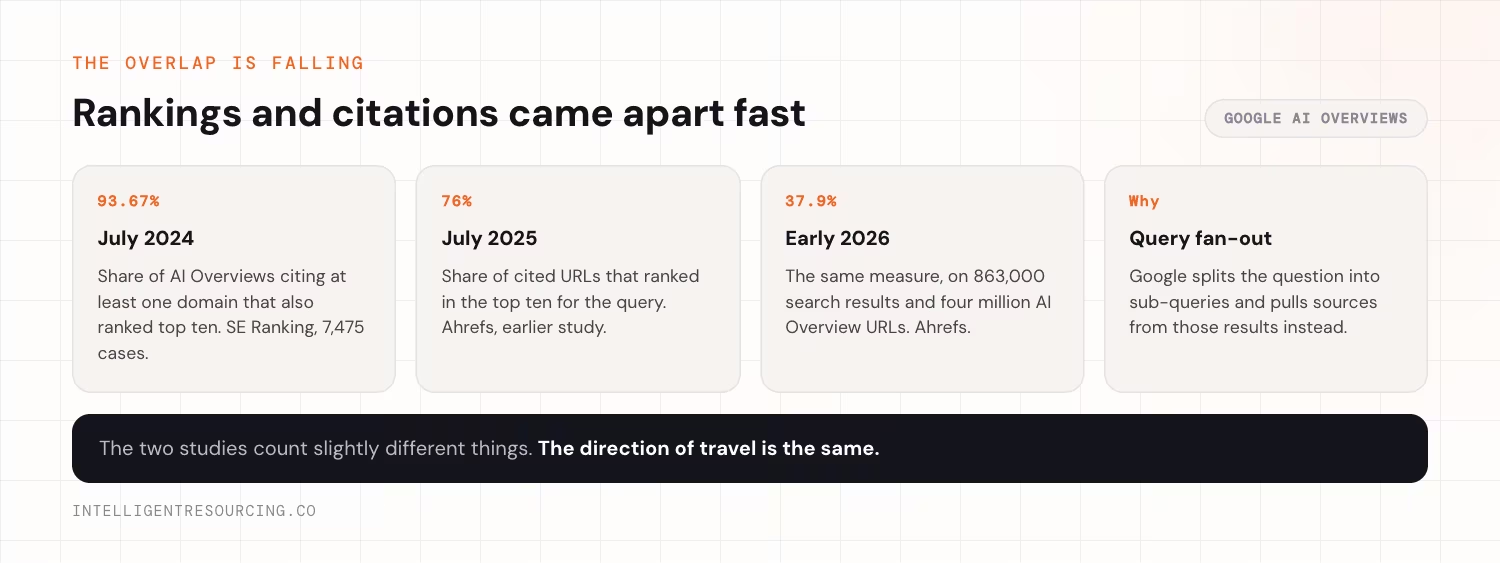
But the relationship between the two is looser than it was, and that is the part most advice misses. When SE Ranking studied Google AI Overviews in July 2024, 93.67% of the 7,475 cases it found linked to at least one domain that also ranked in the top ten. Near total overlap.
Ahrefs re-ran a comparable question on a much larger set in early 2026: 863,000 keyword results and four million AI Overview URLs. It found 37.9% of cited URLs ranked in the first ten blocks, down from around 76% in July 2025. The reason it gives is query fan-out. Google breaks the question into sub-queries and pulls sources from those results, where far fewer pages compete.
Those studies count slightly different things, so treat the pair as a direction rather than a clean before and after. The direction is consistent, and it has a practical consequence. Ranking still helps a page get considered. It no longer predicts whether the page gets used.
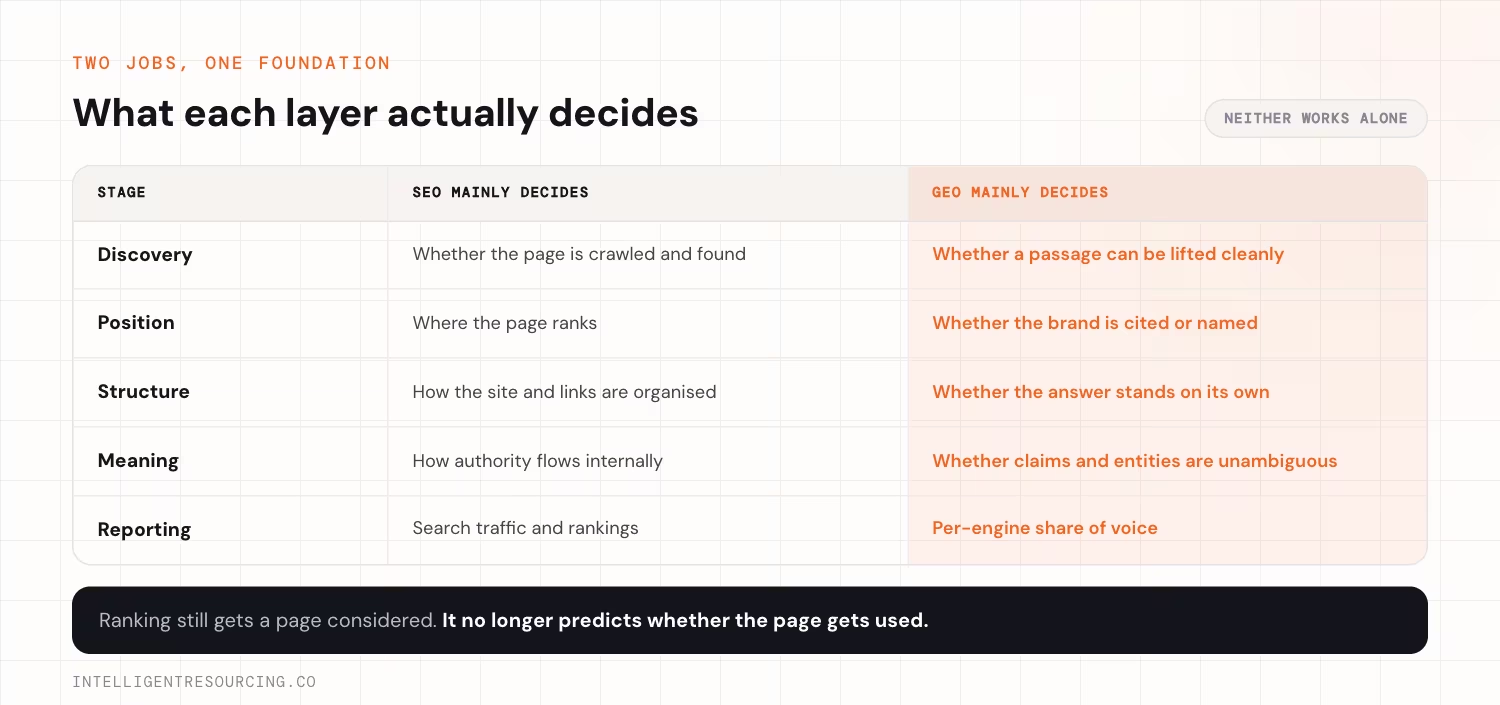
That is why the two layers need separate jobs and separate reporting:
| SEO mainly decides | GEO mainly decides |
|---|---|
| Whether the page is crawled and found | Whether a passage can be lifted cleanly |
| Where it ranks | Whether the brand is cited or named |
| How the site is structured | Whether the answer stands alone |
| How authority flows internally | Whether claims and entities are unambiguous |
| Search traffic and rankings | Per-engine share of voice |
Neither column works well on its own.
Why Does the SEO vs GEO Question Keep Coming Up?
Because a lot of people are now paid to raise it. Digiday reported in March 2026 that a cottage industry of GEO vendors had grown up over the previous year, with $227 million invested into AI visibility tracking tools and one executive fielding pitches every 24 to 28 hours.
The practitioners quoted in that piece were blunt about the replacement pitch. uSERP's Jeremy Moser told Digiday that "the 80/20 of GEO is simply just good traditional SEO," and that a vendor unwilling to say so is selling something else. Amsive's Lily Ray described agencies pitching businesses to fire their SEO team without understanding that SEO feeds most of the information those engines draw on.
The argument that keeps surfacing runs like this:
- Traditional SEO was built around rankings and clicks.
- AI answers change how information reaches a buyer.
- Therefore traditional SEO is obsolete.
The first two are true. They do not produce the third. Our guide to what a vendor label tells you covers how to test a pitch that leans on the acronym.
Which Layer Is Actually Broken?
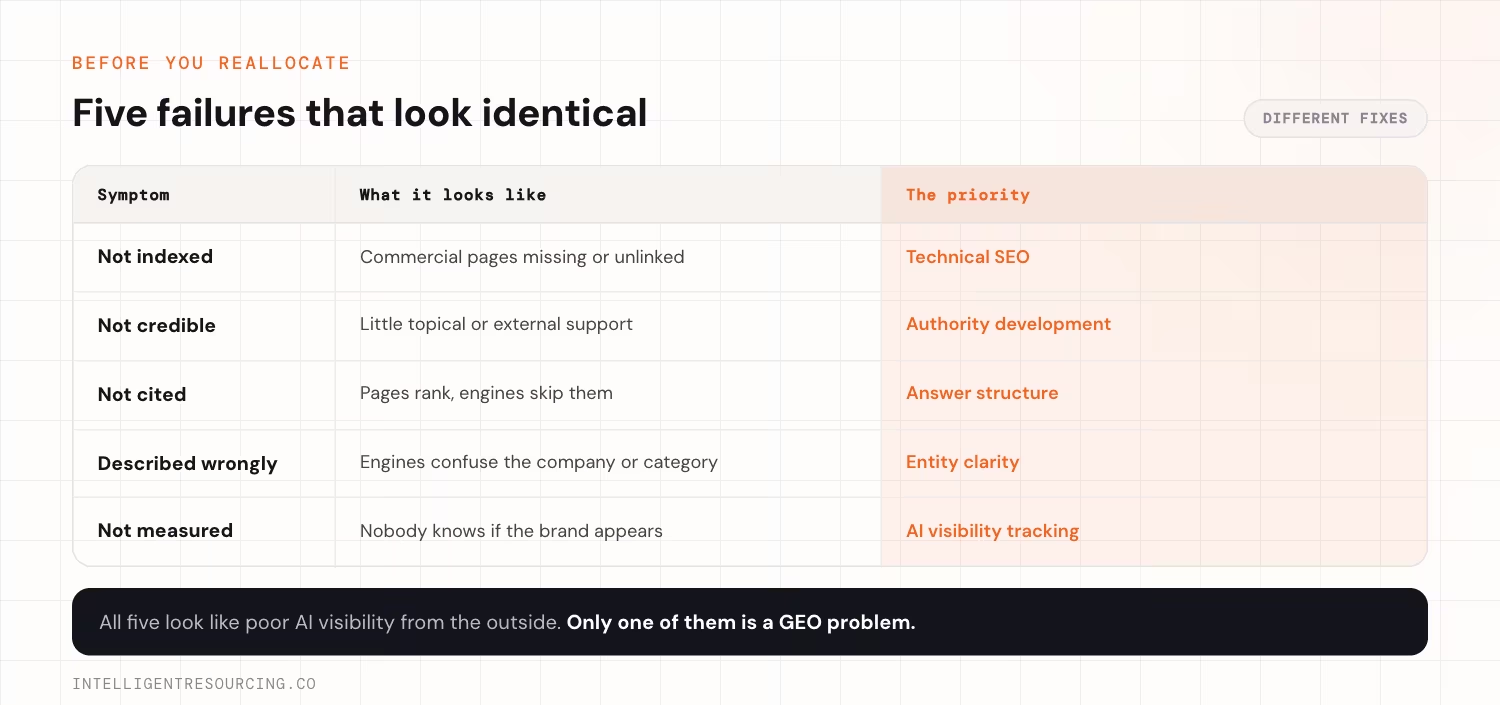
This is the question worth spending time on, because several different failures look identical from the outside. Low AI visibility can mean a crawl problem, an authority problem, a structure problem or a measurement problem, and each needs a different fix.
| If this is the symptom | The priority is |
|---|---|
| Important pages are not crawled or indexed reliably | Technical SEO |
| The site has little topical or external credibility | Authority development |
| Pages rank well but engines rarely cite them | Answer structure and citation work |
| Engines describe the company or category wrongly | Entity clarity |
| Nobody knows whether the brand appears at all | AI visibility measurement |
| Search and GEO output contradict each other | Shared entity and content governance |
Audit five things before moving any budget:
- Technical access: are the commercial pages crawlable, indexable and internally linked?
- Authority: is there enough credible topical and external support to be considered at all?
- Answer structure: does an important passage still make sense lifted out of the page?
- Entity consistency: are the organisation, services, authors and evidence described the same way everywhere?
- Measurement: do you know which engines, prompts and competitors you are tracking?
The second point is where most replacement pitches fall down. Our analysis of what backlinks contribute to AI citation sets out the two-gate version: referring domains help a page reach the pool an engine considers, and stop mattering much once it is in there. Related, our read on GEO and SEO pipeline speed found citations can appear within weeks, but only where authority already exists.
When Does Cutting SEO Spend Make Sense?
When a specific activity has stopped producing value, and the function it performed is still owned by someone.
Budgets are already moving, though not wholesale. Scribewise surveyed 205 United States executives and marketing managers, reported by Digiday, and found 55% had budget allocated to GEO, with 70% of those putting GEO at 11% to 20% of the total. The reporting describes mostly reallocation rather than new money. Scribewise is an agency in this market, so read it as a directional signal on behaviour rather than a market census.
Reallocation is fine. Removing a function without replacing it is not. The distinction:
| Reasonable to challenge | Function that still needs an owner |
|---|---|
| Monthly reports nobody opens | Performance measurement |
| Content written to hit a keyword quota | Real topic and demand coverage |
| Low-quality link acquisition | Credible authority development |
| Repetitive on-page edits with no measurable effect | Page quality and discoverability |
| Duplicated agency scope | Clear ownership across both layers |
Cut ineffective activity, not the job it was meant to do. Where the two layers overlap in practice is set out in our comparison of GEO retainer and SEO retainer.
How Do You Measure the Two Layers Separately?
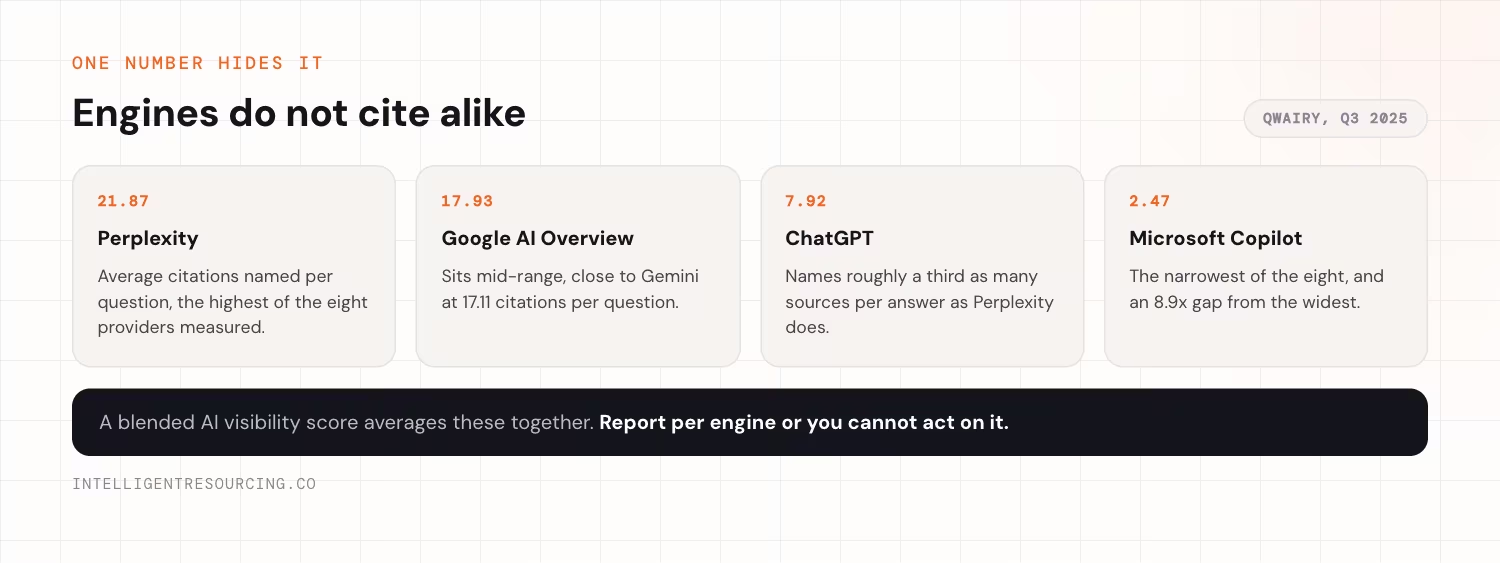
Against a fixed prompt set, per engine, repeated over time. One blended AI visibility number is close to useless, because the engines do not behave alike.
Qwairy analysed 118,101 AI answers and 669,065 citations across eight providers in the third quarter of 2025. Perplexity averaged 21.87 citations per question. ChatGPT averaged 7.92. Microsoft Copilot averaged 2.47. That is close to a ninefold spread in how many sources get named at all, before anyone asks whose sources they were.
A brand can therefore look healthy on a blended score while being absent from the one engine its buyers use. Reporting that survives scrutiny names four things:
- The engines, individually, not as one aggregate figure.
- The prompt set, held stable so periods can be compared.
- The run count, because a single pass through a prompt is noise.
- The baseline, dated, so improvement is measured against something.
Intelligent Resourcing's generative engine optimisation service publishes the engines it tracks and what the engagement reports, which is the same test any provider should pass.
Content Creation
Rankings and citations used to move together closely enough that one report answered both questions. They no longer do. Book a GEO diagnostic call with Intelligent Resourcing to find out which of the two layers is actually failing.
FAQs
Do I need to stop doing SEO to do LLM SEO?
No. LLM SEO adds citation and answer-engine work on top of the technical visibility, content quality and authority that SEO maintains. They target different outcomes but share enough discovery and trust infrastructure that treating them as a choice is an artificial one.
Is GEO replacing SEO in 2026?
No. GEO adds a visibility target rather than removing the old one. Sites still need to be crawlable, understandable and credible. GEO focuses on whether those pages and claims get selected when an engine synthesises an answer instead of listing results.
Does ranking well still get you cited?
Less reliably than it did. Ahrefs found 37.9% of AI Overview citations came from top-10 URLs in early 2026, down from about 76% in July 2025, which it attributes to Google pulling sources from sub-query results. Ranking still helps a page get considered. It no longer predicts the outcome.
Should I cut my SEO budget to fund GEO?
Not automatically. Judge activity by activity. Cutting unread reports, quota-driven content or duplicated supplier scope can be sensible. Cutting crawlability work or authority development to relabel the spend weakens the same foundation AI visibility depends on.
How should GEO performance be measured?
Against a defined prompt set, per engine, with a dated baseline and repeated runs. Useful metrics include citation rate, brand mention rate and AI share of voice. These sit beside conventional rankings and sessions rather than replacing them.
Does Intelligent Resourcing recommend replacing SEO with GEO?
No. GEO is treated as an added AI-search layer on a shared organic foundation. The aim is to keep the search functions that still produce value while adding answer-first content, entity work, citation engineering and measurement where the current programme does not cover them.