


Which Pages Need a Verifiable Credential?
Any page that gives tax, legal or engineering advice needs one. A wrong answer on these pages can cost a reader money, a legal right or a safe building. Google calls these Your Money or Your Life (YMYL) topics and expects more trust from them.
Google used a tax example when it added Experience to its quality framework. Google's December 2022 update says people filing a tax return want content from an accounting expert. The same post says its rater guidelines do not directly change rankings.
Let the question on the page decide:
- Accounting: answers on tax, structures and compliance need a named, registered practitioner.
- Law: legal information needs a lawyer with a current practising certificate, and complex matters need a named specialist.
- Engineering: structural, fire or geotechnical advice needs a registered or chartered engineer attached.
Firm news, careers pages and opinion pieces can skip it. Our guide to author and brand trust signals covers why engines favour claims they can confirm. This guide covers the steps.
Step 1: Find Each Adviser's Public Record
List every person named on an advice page, then find their entry on the right register. In Australia, a regulator or professional body keeps these records, and most are searchable by name.
The Tax Practitioners Board register lists every registered tax agent and Business Activity Statement (BAS) agent. Lawyers are recorded state by state.
The Victorian register of lawyers shows each lawyer's name and law practice. It can also show areas of practice and accredited specialisations.
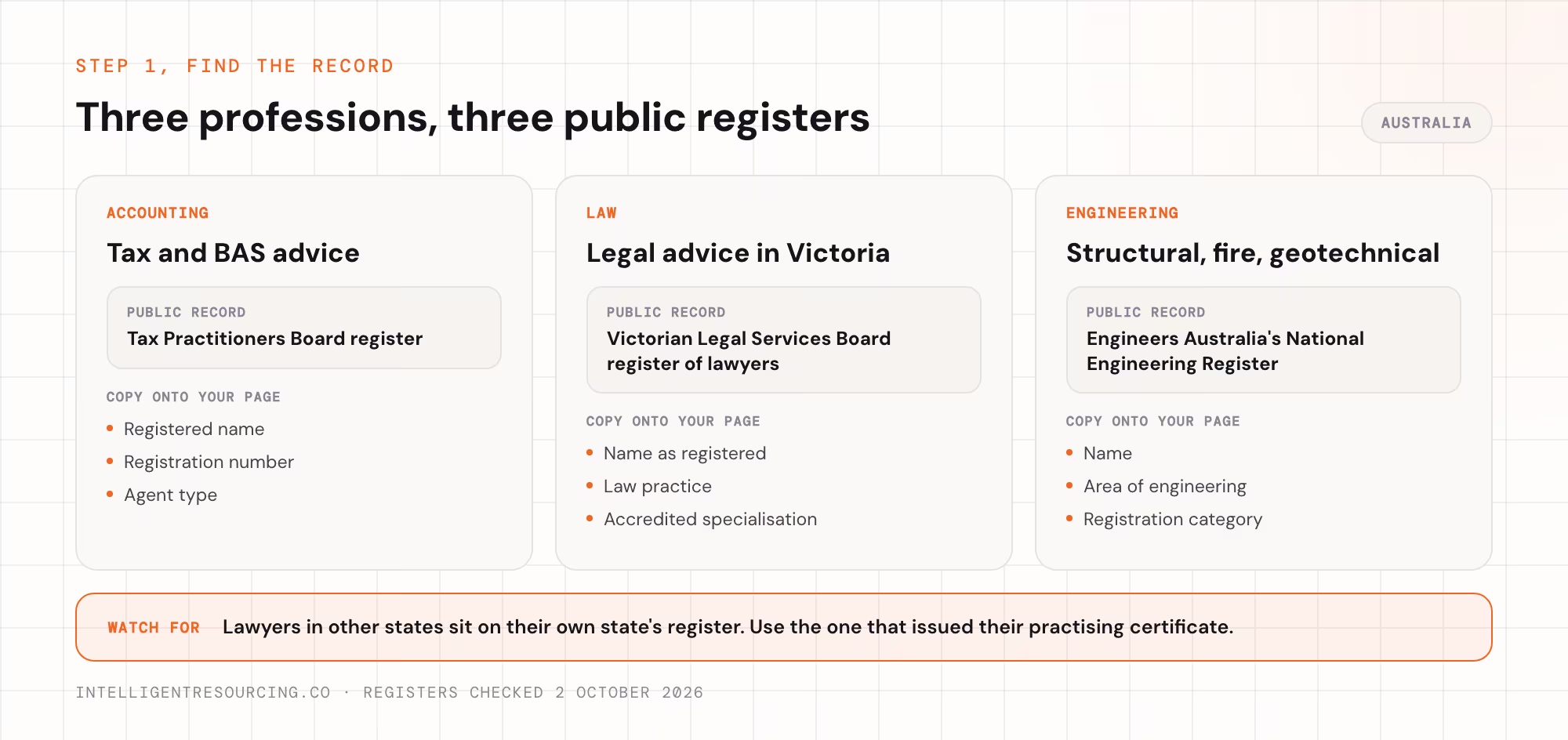
| Profession | Public record | Copy onto your page |
|---|---|---|
| Tax and BAS advice | Tax Practitioners Board register | Registered name, registration number and agent type |
| Legal advice in Victoria | Victorian Legal Services Board register of lawyers | Name as registered, law practice and any accredited specialisation |
| Engineering | Engineers Australia's National Engineering Register | Name, area of engineering and registration category |
Lawyers in other states sit on their own state's register. Use the one that issued their practising certificate.
Step 2: Match Every Detail Exactly
Copy the register entry exactly, down to the first name and firm name. Many registers sit behind search forms a crawler will not fill in. So your page has to carry the same facts the register holds, in the same form.
Access is tightening. The Tax Practitioners Board added a CAPTCHA step to practitioner contact details in April 2026, on a register it says handles around 1.5 million searches a year.
Small gaps break the match:
- Names: a partner listed as "Jim" on the website and "James" on the register gives two half-matches.
- Firm names: "Pty Ltd" in one place and a trading name in another does the same.
- Specialisations: "commercial law expert" on the site and "Commercial Litigation" on the register reads as two separate claims.
Then check that the byline leads somewhere. Google's helpful content guidance asks whether it is clear who created a page, and whether the byline leads to more about them. A linked author page with the same register details answers both.
Step 3: Rewrite the Credential Line Beside the Advice
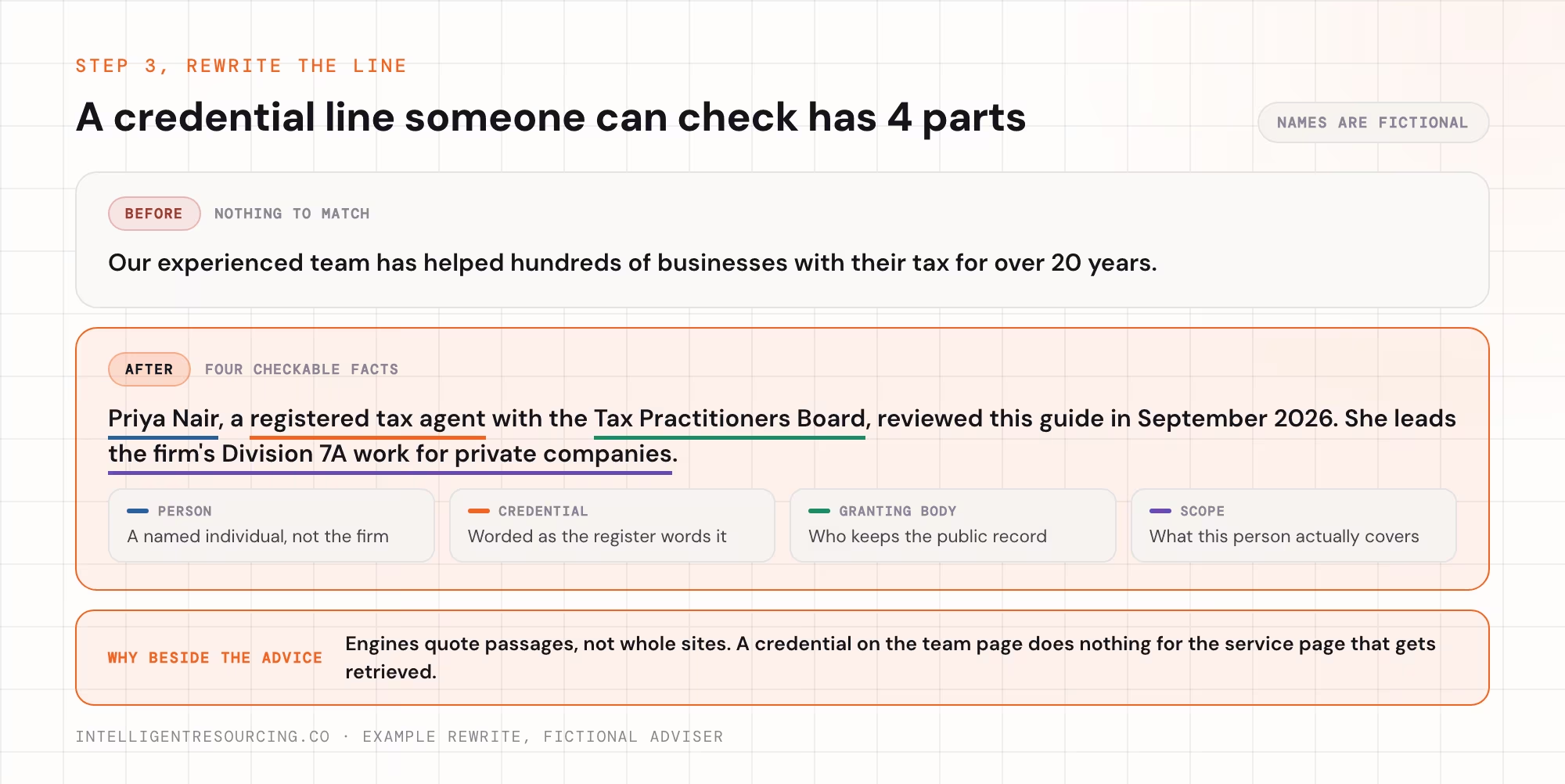
Write the credential as a fact someone can check, in the same section as the answer. Engines quote passages, not whole sites. A credential on the team page does nothing for the service page that gets retrieved.
Each rewrite below adds 4 things: a named person, a named credential, the body that granted it, and a scope. The names are fictional.
Accounting, before: Our experienced team has helped hundreds of businesses with their tax for over 20 years.
Accounting, after: Priya Nair, a registered tax agent with the Tax Practitioners Board, reviewed this guide in September 2026. She leads the firm's Division 7A work for private companies.
Law, before: Our leading lawyers are experts in every area of commercial law.
Law, after: Written by Tom Hale, an Accredited Specialist in Commercial Litigation (Law Institute of Victoria). He has run shareholder disputes in the Supreme Court of Victoria since 2014.
Engineering, before: Our engineers bring decades of structural experience to every project.
Engineering, after: Reviewed by Sam Okafor CPEng (Chartered Professional Engineer), registered in the civil area of the National Engineering Register. He signed off the retaining wall designs described here.
The National Engineering Register is searchable by name, area of engineering and location. That makes the registration category worth stating in full, not just the post-nominals.
Rolling the same lines out across every service page is part of generative engine optimisation, or GEO. Each line has to read the same on every page, or the pages start to contradict each other.
Step 4: Add Credential Markup That Matches the Byline
Add credential markup only after the visible line is right. Schema.org's credential type covers certifications and qualifications. Its recognizedBy property names the body behind the credential, the same job a register does.
{
  "@context": "https://schema.org",
  "@type": "Person",
  "name": "Priya Nair",
  "jobTitle": "Director, Tax Advisory",
  "hasCredential": {
    "@type": "EducationalOccupationalCredential",
    "name": "Registered tax agent",
    "credentialCategory": "Registration",
    "recognizedBy": {
      "@type": "Organization",
      "name": "Tax Practitioners Board"
    }
  }
}
Every value above matches the visible byline in Step 3. The Schema Parity rule explains how to keep markup and copy aligned. When a partner leaves or a registration lapses, change the byline and the markup in the same edit.
Step 5: Score Each Page and Set a Review Date
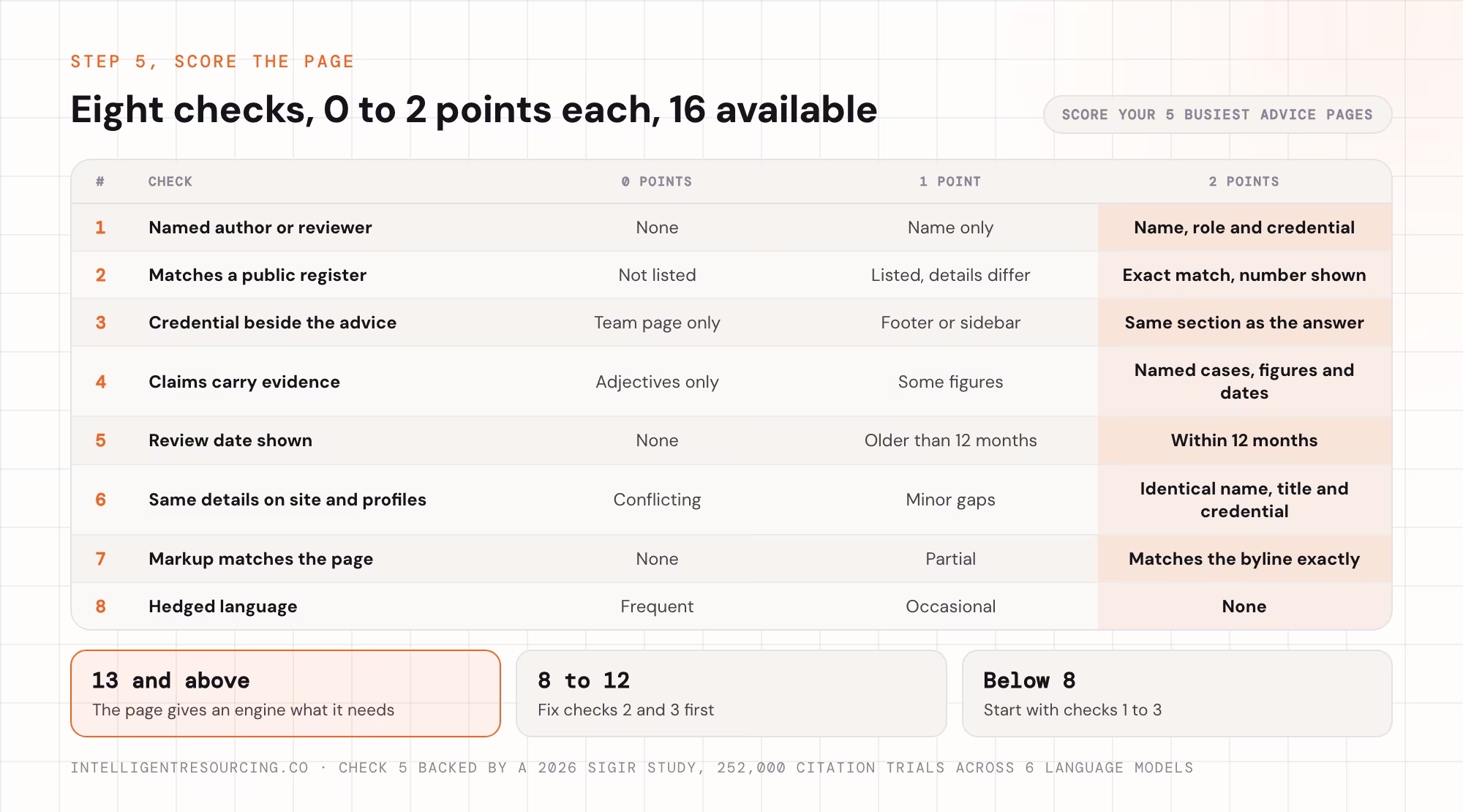
Score your 5 most visited advice pages on 8 checks, each worth 0, 1 or 2 points. A page scoring 13 or more gives an engine what it needs. Between 8 and 12, fix checks 2 and 3 first. Below 8, start with checks 1 to 3.
| # | Check | 0 points | 1 point | 2 points |
|---|---|---|---|---|
| 1 | Named author or reviewer | None | Name only | Name, role and credential |
| 2 | Matches a public register | Not listed | Listed, details differ | Exact match, number shown |
| 3 | Credential beside the advice | Team page only | Footer or sidebar | Same section as the answer |
| 4 | Claims carry evidence | Adjectives only | Some figures | Named cases, figures and dates |
| 5 | Review date shown | None | Older than 12 months | Within 12 months |
| 6 | Same details on site and profiles | Conflicting | Minor gaps | Identical name, title and credential |
| 7 | Markup matches the page | None | Partial | Matches the byline exactly |
| 8 | Hedged language | Frequent | Occasional | None |
Check 5 earns its place. A 2026 study in the proceedings of SIGIR (Special Interest Group on Information Retrieval), the main research conference for search, ran 252,000 controlled citation trials across 6 language models. A recent timestamp helped a page get cited first, consistently. Each trial put 2 pages in front of the model, so it measures which page wins after retrieval. Getting retrieved in the first place sits outside the test.
The scorecard is one diagnostic in a wider GEO plan for professional services. That plan also covers entity clarity, proof assets and prompt tracking.
Where Should a Firm Start This Week?
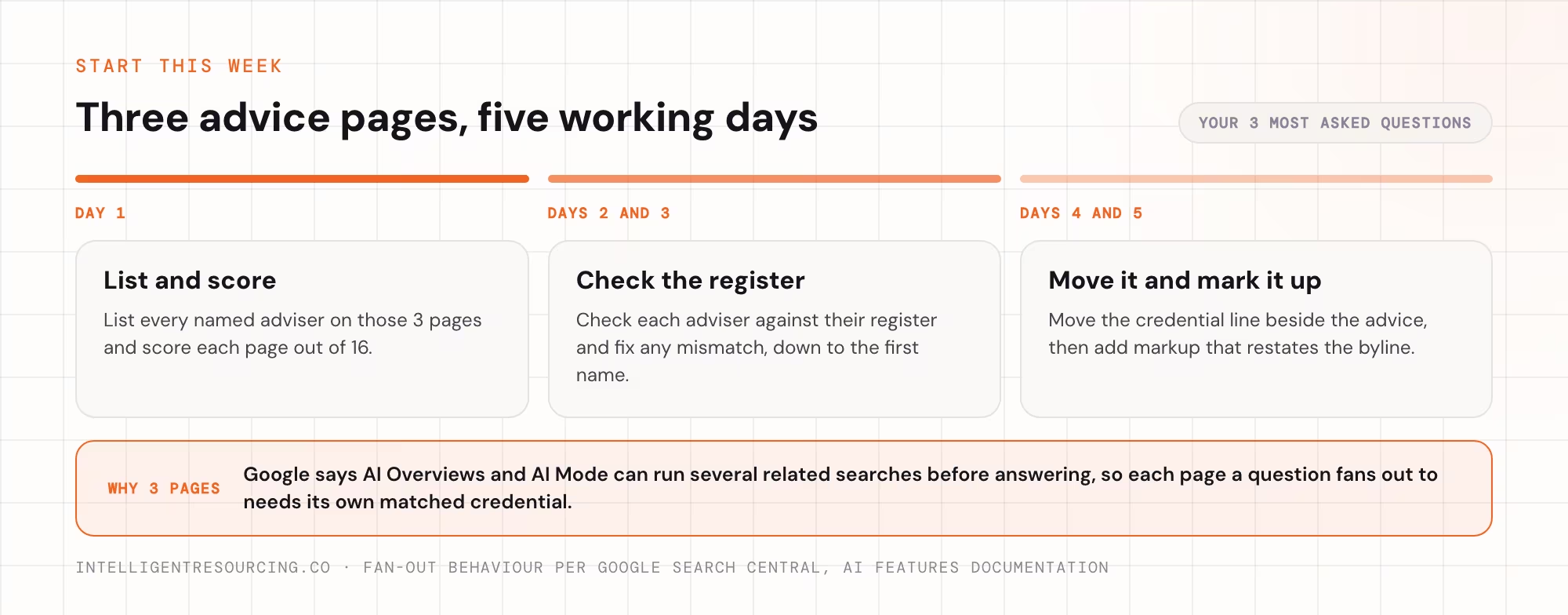
Start with the 3 advice pages that answer your buyers' most common questions. Google's documentation on its artificial intelligence (AI) features says AI Overviews and AI Mode can run several related searches before answering. Each page a question fans out to needs its own matched credential.
- Day 1: list every named adviser on those 3 pages and score each page.
- Days 2 and 3: check each adviser against their register and fix any mismatch.
- Days 4 and 5: move the credential line beside the advice, then add matching markup.
Content Creation
Book a call with Intelligent Resourcing to see which advice pages carry a verifiable credential and which to fix first.
FAQs
Do AI engines check professional registers directly?
There is no public evidence that engines query registers each time they answer. Many registers sit behind search forms that crawlers do not complete. The reliable approach is to restate the register details on your own page, exactly as the register shows them.
Does a firm-level accreditation count if no individual is named?
It helps, but it is weaker than a named person. Registers for tax agents, lawyers and engineers record individuals, so an engine has a person to match. A firm badge with no named practitioner leaves nothing to cross-check.
Can a junior staff member write content if a registered professional reviews it?
Yes, if the page says so plainly. Name the writer, then name the registered reviewer with their credential and the review date. The reviewer's credential is the one an engine can check.
How often should credential details be reviewed?
Review them at least every 12 months, and straight away when someone joins, leaves or renews a registration. Show the review date on each advice page.
What if an adviser is not on a public register?
Name the credential, the body that granted it and the year. If that body runs a public member directory, match its wording exactly. If there is no public record, keep the claim specific and dated.