

What Is the Core Difference Between WebProfits and Intelligent Resourcing?
WebProfits is a performance marketing firm with a 20-year track record, built to scale DTC and national brands through paid media and creative. Intelligent Resourcing builds and operates signal-led pipeline systems for B2B teams, in a category closer to GTM infrastructure than traditional agency work. Neither competes for the same problem.
WebProfits: performance marketing for DTC and national brands
WebProfits runs 1 integrated growth team across paid social, paid search, CRO, lifecycle and SEO/AEO. The operating model is deliberate: experienced marketers do the work rather than passing it to juniors, and delivery runs on a Quarterly Success Plan cadence. Its proof points are acquisition-shaped. WebProfits' figures show more than $500M in managed ad spend, with clients including Logitech and Aussie Broadband, and a DTC track record that includes taking SharkNinja from $5M to $52M in annual DTC revenue over 2 years.
WebProfits is not suited to pre-revenue businesses or those below $50K per month, where the job is still proving demand rather than scaling it.
Intelligent Resourcing: signal-led pipeline systems and GEO for B2B
Intelligent Resourcing builds the infrastructure that converts demand after it arrives. Its GTM engineering work starts with a signal layer that detects when a Verified Buying Window opens at a target account: a funding event, leadership change, tech-stack install, or comparison-page visit. Those signals are enriched and scored in Clay, then routed through a connected CRM so sales acts while intent is live, not weeks later when the window has closed.
The fit test is straightforward. A signal-led system suits B2B teams with a defined ICP and a sales motion ready to act on routed signals within hours. Teams still proving positioning or product-market fit are not ready for the infrastructure layer.
Its generative engine optimisation service is a standalone B2B visibility offer focused on how brands are understood, retrieved and cited across AI-assisted search.
GEO engineers the content, entity signals and answer structures that help a company appear when buyers use platforms such as ChatGPT, Gemini or Perplexity to research categories, compare providers or evaluate solutions. The goal is to improve visibility and authority within those AI-generated answers, not to operate as another layer of the GTM Engineering service.
How Do Performance Marketing and Signal-Led Systems Work Differently?
Performance marketing and signal-led systems are not competing philosophies. They operate at different layers of the funnel, and most growing businesses eventually need both. Understanding the difference matters for the buying decision: performance marketing scales what is already working at the front of the funnel, while a signal-led system converts what leaks at the back.
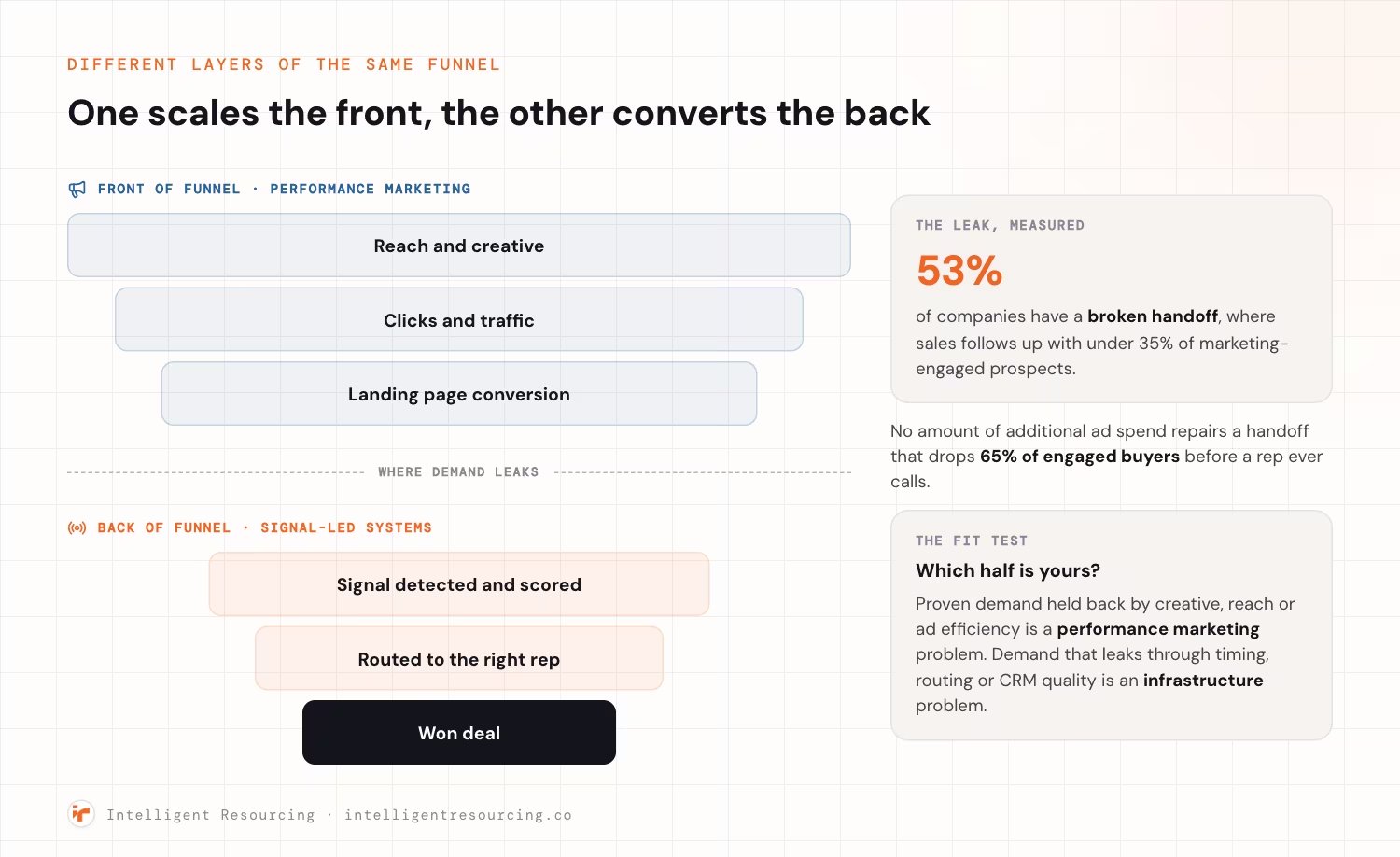
Performance marketing is demand capture and channel optimisation. It builds the creative, sets the bids, tests the landing pages, and optimises conversion so more of the available demand turns into clicks, leads and sales. Done at scale, it compounds: better creative reduces CPA, a lower CPA allows more spend, more spend generates more data, and better data produces smarter targeting.
Signal-led systems work on what happens after interest appears. They detect buying intent, qualify it against a target account list, time the outreach, route the record to the right rep, and manage the handoff so live intent is not wasted and the problem they solve is measurable. Influ2's 2025 alignment report found that 53% of companies experience a broken handoff, where sales follows up with less than 35% of marketing-engaged prospects. No amount of additional ad spend repairs a handoff that drops 65% of engaged buyers.
Performance marketing scales the front of the funnel, while a signal-led pipeline system is infrastructure that Intelligent Resourcing builds and operates, converting the demand that creative and channel work generates before it leaks through a broken handoff.
Which Growth Problem Is Each Firm Built to Solve?
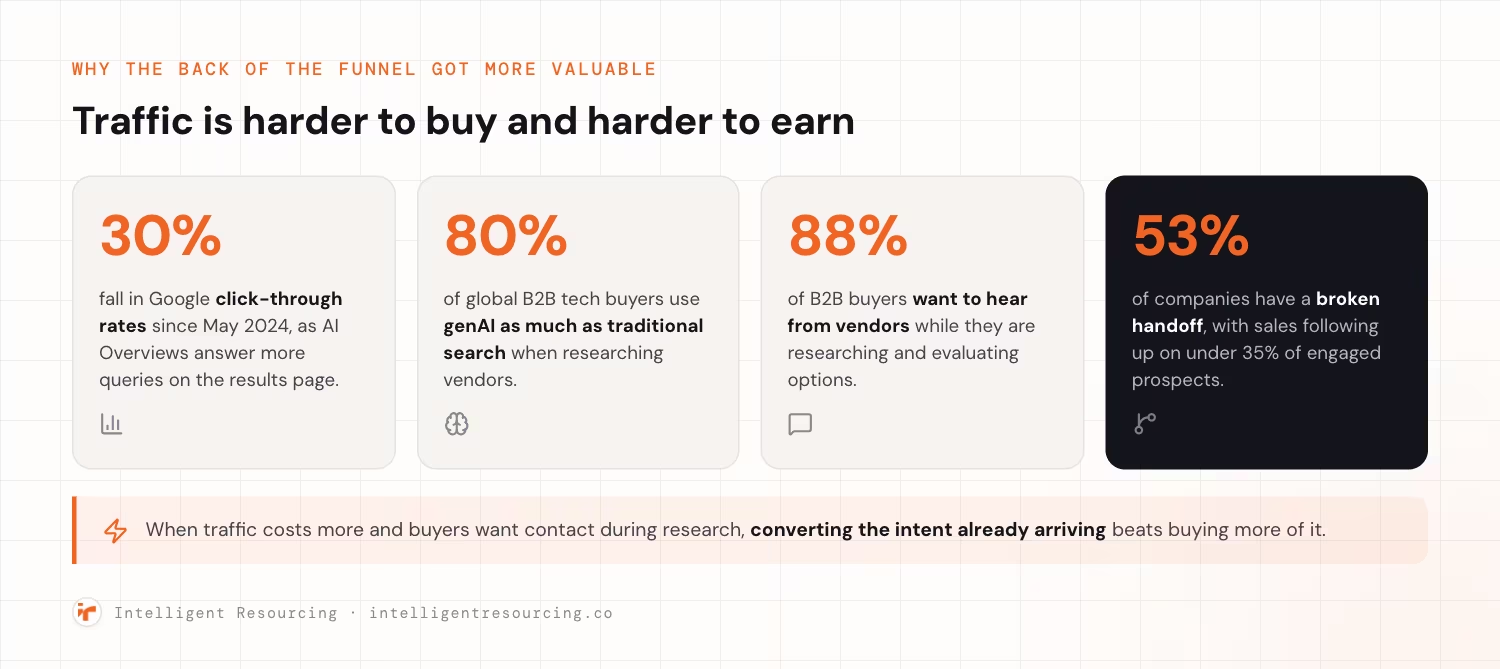
The fit question is not about which firm is better but which bottleneck is blocking growth. Sopro's B2B buyer research found that 88% of B2B buyers want to hear from vendors when researching and evaluating their options, which means timing is the variable that determines whether qualified demand converts or disappears to a faster competitor.
Where WebProfits fits
WebProfits fits DTC ecommerce brands at $100K to $500K per month and scaling past $1M, that have proven product-market fit and want creative firepower behind paid channels. It also fits national lead-gen brands in finance, insurance, utilities, education and real estate that need acquisition scale and managed channel execution.
The bottleneck test: if the business has proven demand and the constraint is creative quality, channel reach, or ad efficiency, that is a performance marketing problem. WebProfits is built for it.
Where Intelligent Resourcing fits
Intelligent Resourcing fits B2B teams with a defined ICP, longer or multi-stakeholder sales cycles, and existing demand that leaks through poor routing, slow follow-up, or messy CRM data. The readiness test matters: a signal-led system suits teams with an active sales motion ready to act on routed signals within hours. Teams still proving positioning or product-market fit are not ready for the infrastructure layer.
When demand already exists and the gap is converting it cleanly through the right reps at the right time, that is where a signal-led lead generation system pays for itself.
How Do WebProfits and Intelligent Resourcing Handle AEO Differently?
Both firms claim AEO as a capability, but the architecture behind that claim differs at every layer. WebProfits' AEO is 1 service: a content and visibility outcome inside a performance marketing retainer, with no signal routing attached. Intelligent Resourcing separates the same work into 2 services.
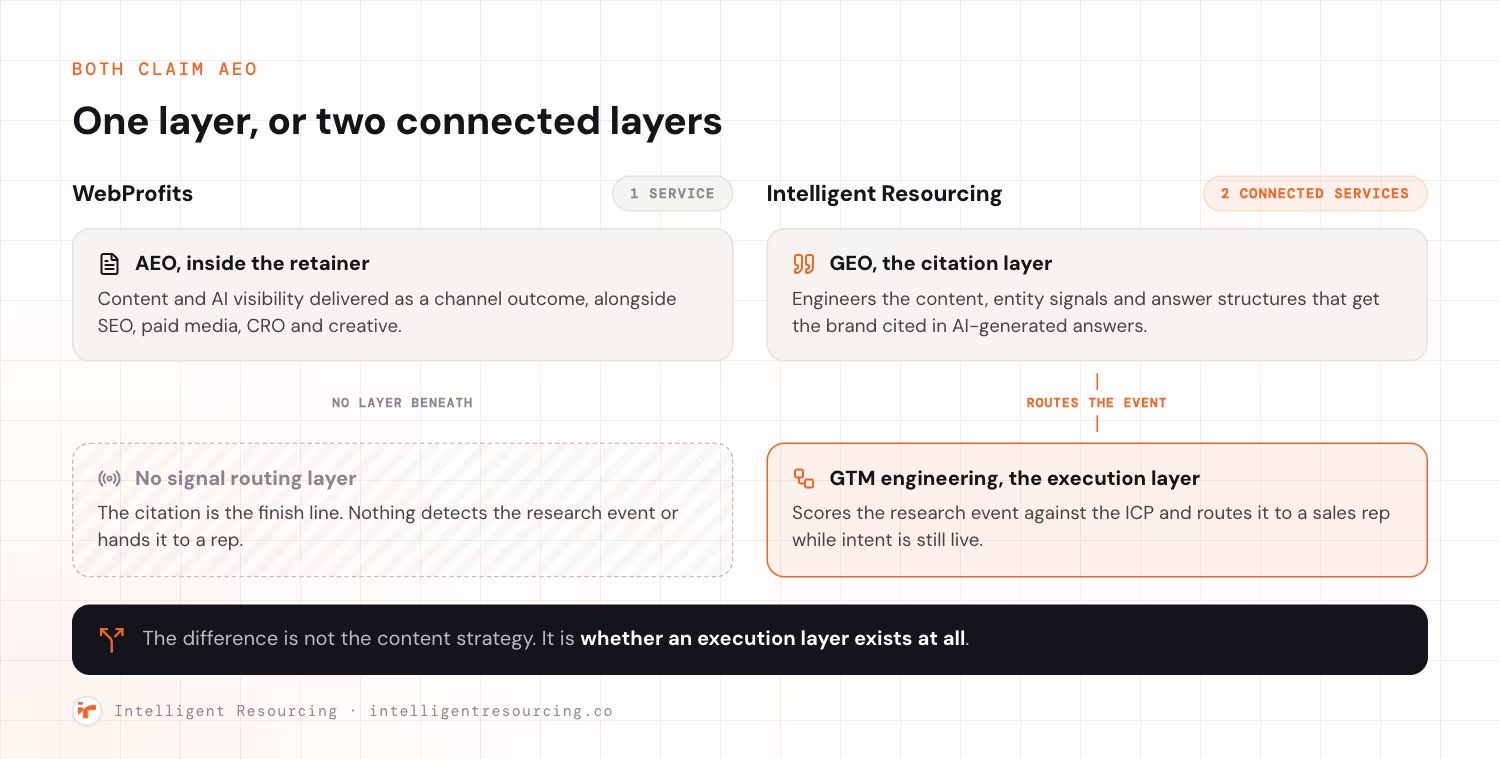
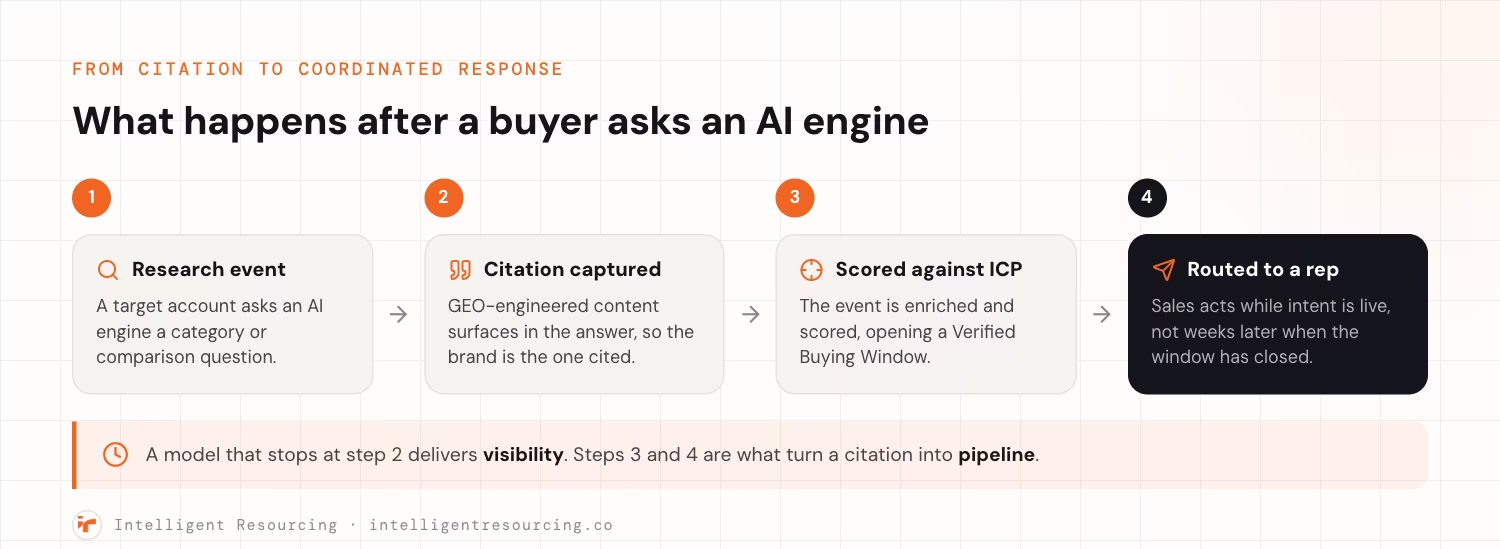
GEO is the content layer, engineering brand citations in ChatGPT, Perplexity, Gemini and Google AI Overviews. GTM engineering is the execution layer that activates when a target account's AI research event is detected: it scores the signal against the ICP and routes it to a sales rep while intent is live. The difference is not just the content strategy: it is whether an execution layer exists at all.
BrightEdge data shows Google click-through rates have declined nearly 30% since May 2024, as AI Overviews answer more queries on the results page. eMarketer research found that 80% of global B2B tech buyers use genAI as much as traditional search when researching vendors. Traffic is harder to buy and harder to earn, which raises the value of converting the intent already arriving rather than buying more of it.
WebProfits' AEO approach is traffic-shaped: the goal is for the brand to appear in AI-generated answers as a channel outcome. That is a legitimate objective, but WebProfits has not publicly claimed timing logic, signal detection, or account-level buying-window scoring triggered by AI search behaviour.
Intelligent Resourcing's generative engine optimisation work is pipeline-shaped. When a target account conducts AI research on a category or comparison query, that search event is detected as a buying signal, scored against the ICP, and routed to a sales rep while intent is live. The content surfacing in that AI answer is engineered to capture the citation and pass the signal to a sales workflow, rather than generate a page view.
GEO determines whether your brand gets cited when a buyer researches; GTM engineering determines whether that citation triggers a coordinated sales response before the buyer moves on. WebProfits' model covers only the citation layer, while Intelligent Resourcing covers both, running them as connected infrastructure rather than separate retainer line items.
For a B2B team evaluating which approach to invest in, the question is concrete: do you want AI visibility as a traffic metric, or a signal that triggers a coordinated sales response?
Where Do WebProfits and Intelligent Resourcing Fall Short?
Neither firm fits every growth problem. WebProfits offers broader performance marketing capability, while Intelligent Resourcing is more specialised around B2B GEO and GTM Engineering.
| Area | WebProfits may fall short | Intelligent Resourcing may fall short |
|---|---|---|
| GEO specialisation | AEO sits within a broader marketing offer | Dedicated GEO, but not a replacement for wider marketing execution |
| Paid media and creative | Strong capability | Does not run paid media or creative-led campaigns |
| GTM infrastructure | Not positioned around signals, CRM or routing | GTM Engineering requires a defined ICP and active sales motion |
| DTC acquisition | Strong fit | Less suited to consumer and DTC acquisition |
| Track record | 20-year history with recognised brands | Smaller public proof footprint and shorter tenure |
WebProfits offers greater breadth across performance marketing, while Intelligent Resourcing offers greater specialisation in B2B GEO, with GTM Engineering available separately for revenue infrastructure.
How Do Their Pricing and Engagement Models Compare?
WebProfits and Intelligent Resourcing price on different logic, and the commercial difference goes further than the monthly figure. The question is not which costs more but what the spend produces: ongoing campaign activity or a durable pipeline capability that Intelligent Resourcing builds and continues to operate.
WebProfits runs an audit-led, custom retainer model, with project bands reported at $5,000 to $10,000 and scope set by channels and ad spend. The spend continues for as long as campaigns need running. That is the right structure when ongoing creative execution and channel management are the job.
Intelligent Resourcing runs a system or plan-led build, where the value is what gets built and then operated by the GTM engineering team. The commercial difference is straightforward: retainer spend buys ongoing campaign activity, while a system build buys a pipeline capability that Intelligent Resourcing installs and continues to run, compounding as the signal layer improves.
Comparisons
Scale the channels if the bottleneck is reach. If the problem is routing failures, timing gaps, CRM leakage or broken handoffs, book a strategy session with Intelligent Resourcing's GTM engineering team. They map where your pipeline leaks before anything gets built.
FAQs
Which is better for a B2B business with a defined ICP and slow pipeline conversion?
Intelligent Resourcing. When the issue is qualification, timing, routing, or handoff quality, a signal-led system that builds Verified Buying Window logic into the sales workflow fixes the leak. More channel spend does not repair a broken handoff.
Which is better for a DTC ecommerce brand?
WebProfits. Its model is built for DTC brands with proven demand that want creative-led paid social, paid search, and lifecycle marketing to scale past $1M per month. Intelligent Resourcing does not run paid media and does not operate in the DTC consumer vertical.
What makes WebProfits' AEO different from Intelligent Resourcing's GEO?
WebProfits' AEO is a channel service: content and AI visibility as a traffic outcome, with no signal routing layer attached. Intelligent Resourcing operates 2 connected services: GEO engineers the brand citation in AI engines; GTM engineering detects when a target account's AI research event occurs and routes it to sales as a pipeline signal. Where WebProfits ends at visibility, Intelligent Resourcing continues from citation to coordinated sales response.
Can a business use both at the same time?
Yes. WebProfits handles channel execution and creative-led acquisition, while Intelligent Resourcing handles signal capture, scoring, routing, and CRM pipeline quality. If the funnel leaks at the back end, fixing the system first means channel investment compounds rather than leaks through a broken handoff.
What size business is Intelligent Resourcing suited to?
B2B teams with a defined ICP, an active sales motion, and existing demand that is not converting cleanly. Pre-revenue businesses and teams still proving product-market fit are not ready for a signal-led pipeline build. A working ICP and an outbound-capable sales team are the minimum conditions.