

What Do AI Search Engines Actually Recommend When a Founder Asks Who to Hire?
AI search engines can help founders identify recurring role categories, tools and service providers, but the output should be treated as a shortlist rather than a hiring decision. Recommendations vary by prompt, platform and available evidence, so the useful signal is where several answers overlap and whether that overlap matches the company's actual operating constraint.
A useful example comes from Answerability.ai. In May 2026, the company asked Grok who to hire for AI search. Grok's shortlist surfaced established full-service agencies but omitted Answerability.ai itself. That single test does not prove how every engine behaves, but it shows why AI recommendations should be verified rather than accepted as a complete view of the market.
Which Roles Do AI Search Engines Surface?
AI-generated hiring advice tends to reflect the problem described in the prompt. A founder asking about operational scale may see operations or systems roles, while a pipeline problem can surface GTM, RevOps or sales roles.
The founder should use AI to identify role categories, then test each recommendation against 3 questions:
- What is currently breaking? Identify the process, pipeline or management constraint.
- What must this hire own? Define the decisions and outcomes that need a human owner.
- Does the business need a headcount yet? Some repeatable research, enrichment and workflow tasks can be automated before a permanent hire is added.
When the constraint is building the systems behind the pipeline rather than simply adding more selling capacity, GTM engineering becomes a relevant option because it connects data, automation, CRM workflows and outreach around the revenue process.
Which Tools and Service Providers Do They Surface?
AI search can also surface named tools and providers alongside role recommendations. Clay, for example, may appear when the problem involves enrichment or list building, while agencies or specialist partners can surface when the prompt asks for outsourced execution.
Treat those names as candidates to investigate, not endorsements. Check each option against your funding stage, geography, existing systems, budget and operating constraint before it reaches the shortlist. AI can accelerate category discovery, but the final decision still requires commercial judgement.
Which Roles Should You Hire First After a Raise?
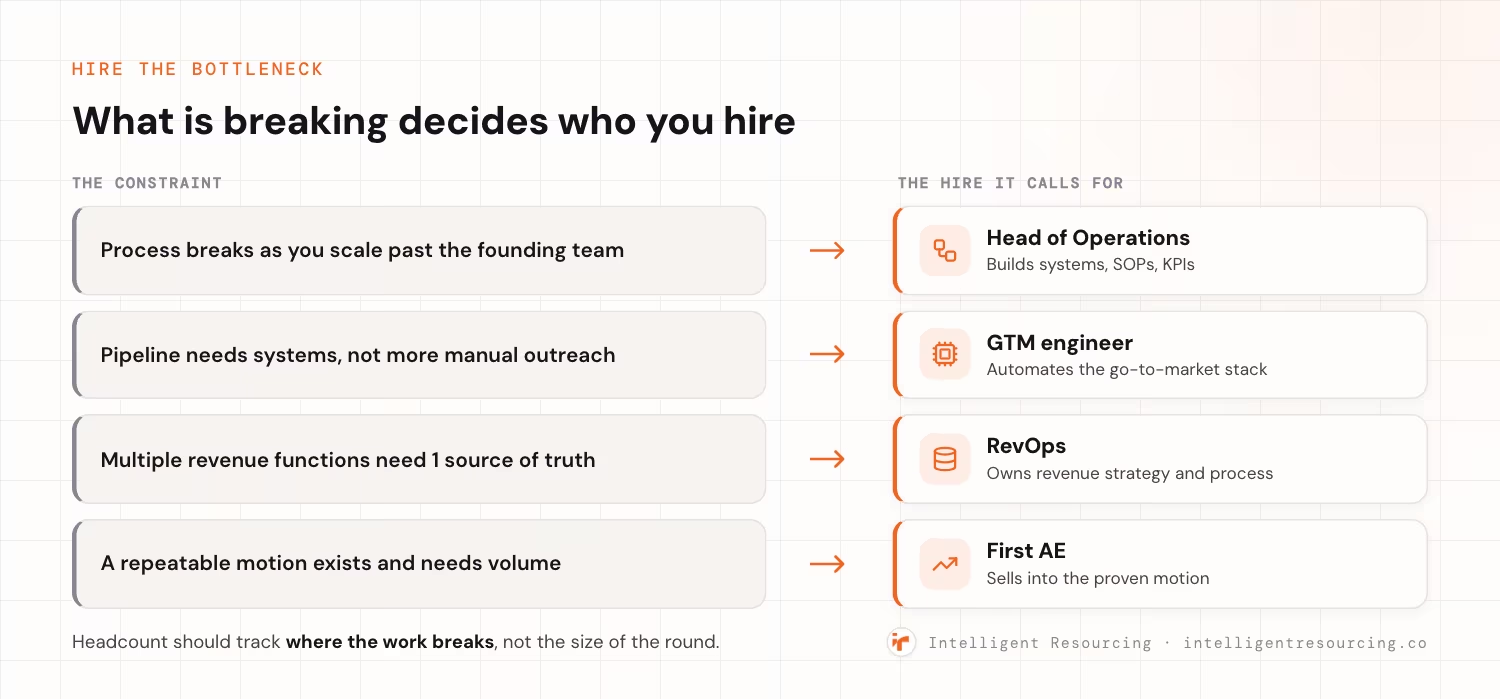
Hire the operating bottleneck, not the raise size. A systems or operations lead comes first. Go-to-market and revenue roles follow once the business can absorb what they bring in. Some roles you can defer with tooling. Headcount should track where the work breaks, not where the funding round implies you should be.
Fresh capital tempts founders to overhire. Treat hiring as an architecture decision, not a headcount milestone. The engines return a shortlist in minutes; a network-led search takes days to weeks. Speed is not the risk. Building headcount against the wrong constraint is.
Your first operational hire
The common first recommendation is a systems or operations hire. A Head of Operations or COO-type lead comes first. They build the SOPs, KPIs and workflows. Those systems make your next 10 hires productive.
This hire pays back through leverage. Founders become the bottleneck as the team grows. A Head of Operations sets the metrics and lets a new AE contribute in week 1.
GTM, RevOps, and revenue hires
These 3 roles get confused. A GTM engineer builds and automates the go-to-market stack. RevOps defines revenue strategy and process. A first AE sells. Hire the builder when the pipeline needs systems, not more manual outreach. Hire RevOps when several functions need 1 source of truth.
| Role | Function | Hire when |
|---|---|---|
| Head of Operations | Builds systems, SOPs, KPIs | Process breaks as you scale past the founding team |
| GTM engineer | Automates the go-to-market stack | Pipeline needs systems, not more manual outreach |
| RevOps | Owns revenue strategy and process | Multiple revenue functions need 1 source of truth |
| First AE | Sells | Repeatable motion exists and needs volume |
When AI tools can defer a hire
Some functions do not need a human yet, AI tooling covers customer discovery, list building and first-pass research. That defers the hire; it does not delete it, use tooling to buy time, then hire against the real bottleneck.
The throughput is the point. Perspective AI's 2026 research shows a solo founder can run 100 customer interviews in a week in 6 to 8 hours of founder time, using a 2-tool stack: Clay for list-building and Perspective AI for automated interviews. Tooling handles the mechanical work; it does not decide which segment to chase.
What Are the Best AI Recruiting and Talent-Acquisition Tools for Startups?
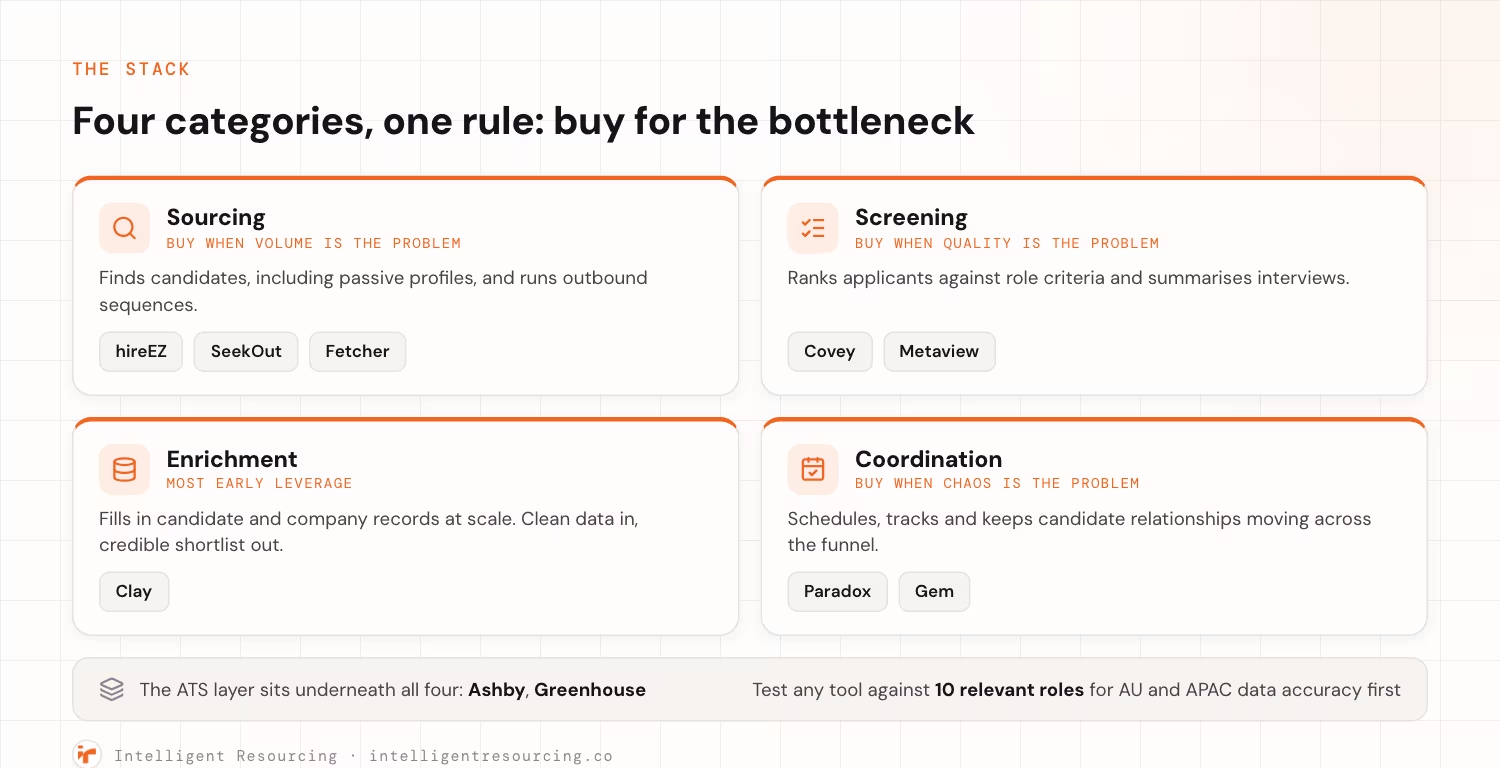
The best AI recruiting tools are split into 4 categories. Sourcing tools find candidates, screening tools rank them, enrichment tools fill in data, coordination tools schedule and track.
Stay vendor-neutral and evidence-led, the goal is not the longest stack. It is the smallest stack that clears your constraint. A 5-person team hiring 2 roles needs 1 accurate sourcing feed and a fast way to screen, not enterprise software.
AI sourcing and screening tools
AI recruiting tools now cover most of the mechanical funnel. Score each against your bottleneck.
- hireEZ surfaces passive candidates from public profiles.
- SeekOut ranks talent by skills and specific filters.
- Gem tracks candidate relationships across the funnel.
- Fetcher automates outbound sourcing sequences.
- Clay enriches candidate and company records at scale.
- Metaview transcribes and summarises interviews.
- Covey screens applicants against role criteria.
- Paradox schedules and coordinates through a chat assistant.
- Ashby and Greenhouse anchor the ATS layer underneath.
Enrichment gives founders the most early leverage. Clay is the list-building layer in the 2-tool discovery stack described above. The same logic applies to candidate sourcing: clean data in, credible shortlist out.
How to choose an AI recruiting tool
Use 1 decision rule, match the tool to your current bottleneck. If volume is the problem, buy sourcing. If quality is the problem, buy screening. If chaos is the problem, buy coordination. Then check data accuracy and CRM integration.
Data accuracy is the quiet failure point, tools built primarily for the US market can have thinner coverage across AU and APAC roles, especially outside major metro areas, so test performance against at least 10 relevant roles before committing.
The same selection principle applies when comparing B2B lead generation tools in Australia: assess data quality, market coverage, integrations and fit for the actual workflow rather than choosing the platform with the longest feature list.
How Do AI Search Engines Decide Who to Recommend?
AI search engines do not rank pages the way classic search does. They retrieve passages, verify entities, and cite sources they trust. The engine reads the web, lifts a quotable answer, and names the entities behind it. Recommendation follows trust, not backlinks alone.
AI Overviews on commercial searches grew 71% between November 2025 and April 2026, per Semrush's commercial-intent study of more than 600,000 keywords. Recommendation surfaces, not blue links, are increasingly where buying decisions start. If an engine cannot read and verify you, it cannot name you. That is the discipline behind generative engine optimisation, the same work as building AI visibility.
The 3 gates: retrieval, content, trust
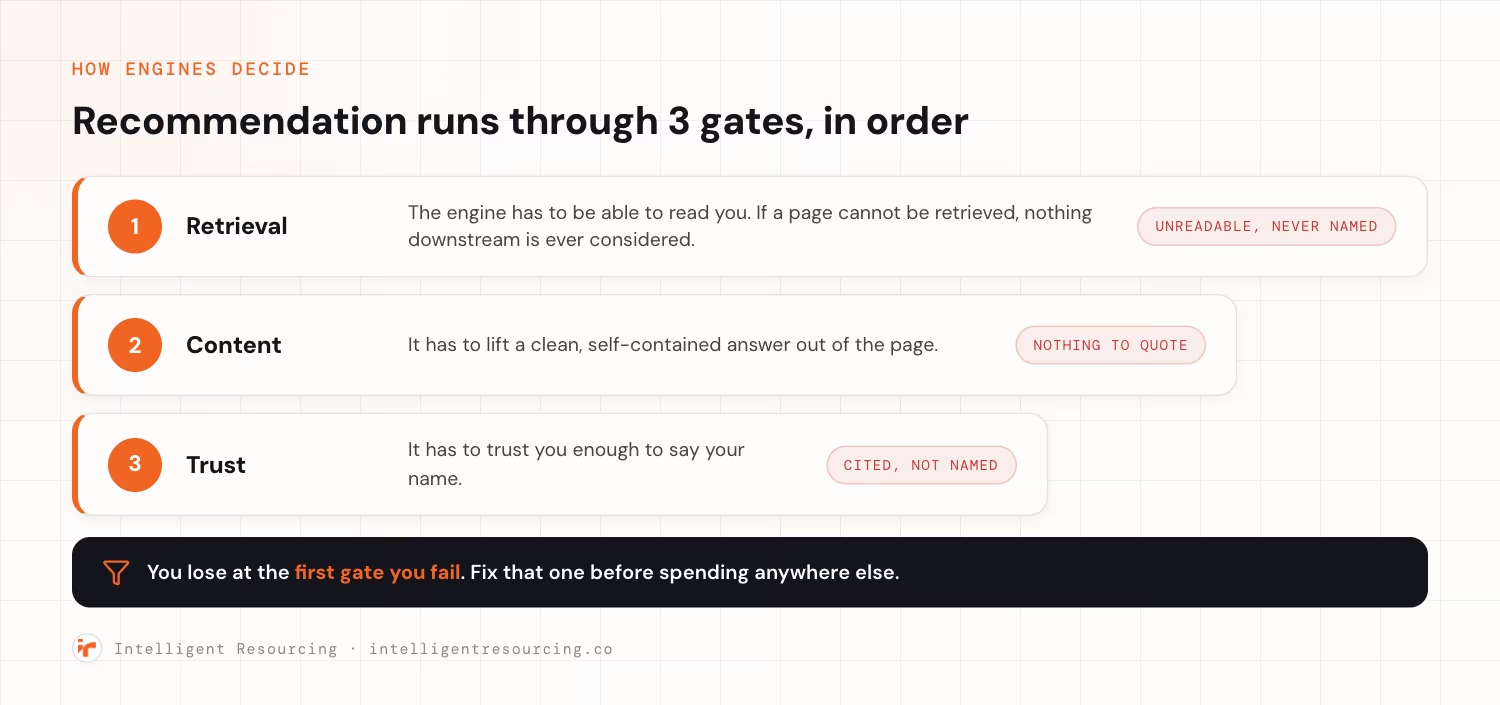
Recommendation runs through 3 gates. First, retrieval: the engine must read you. Second, content: it must lift a quotable answer. Third, trust: it must trust you enough to name you. You lose at the first gate you fail.
The sequence is strict: if a page cannot be retrieved, its content and authority signals never enter consideration. North Point Digital's framework for AI recommendations highlights 3 factors that strengthen recommendation readiness: a clearly verified identity, credible third-party corroboration and content that can be summarised into a clean, self-contained answer.
Where do AI recommendations get it wrong?
AI recommendations carry real failure modes. Engines lean toward incumbents through recency and social-proof bias. A single-run capture is a snapshot, not a longitudinal study. The output can be wrong. Oumi tested 4,326 AI Overview queries and found errors in 9% of answers, per the Search Engine Land analysis. Treat any named recommendation as a lead to verify, not a verdict. Cross-check every named role, tool and vendor before you act.
How Do You Get AI Search Engines to Recommend the Right Hire (or You)?
If you want engines to recommend you, make true things legible. You do not trick the model. You publish quotable answers, structure the page, and build trust signals engines can verify. Then you measure your presence and refresh it.
Publish content AI can quote
Give the engine something clean to lift. Put a 60 to 90 word summary at the top of the page. Structure the body with question-format headings. Add an FAQ and matching schema. Quotable beats are clever.
A self-contained answer block is easier for an AI system to interpret than a dense wall of prose. Clear headings, direct answers and verifiable named entities make each section easier to extract and attribute. Intelligent Resourcing's approach to structuring content for AI citation applies this principle by organising pages around concise, standalone answers supported by evidence.
Build external trust signals
Trust is earned off your own site. Engines resolve you as an entity through third-party corroboration. Keep profiles consistent. Claim directory listings. Build a review and Reddit presence. Add a knowledge-graph entry.
Answerability.ai ran the experiment publicly. It repositioned around a done-for-you offer, published the missing content page and strengthened trust signals through consistent profiles, third-party mentions and knowledge-graph work. It then committed to re-running the same Grok query after 90 days to see whether visibility changed.
That sequence matters: identify the failing gate, fix it, then re-test. The technical layer should support the same process, with schema markup for AI citation used to make key entities, authorship and page relationships clearer without contradicting the visible content.
Measure and refresh
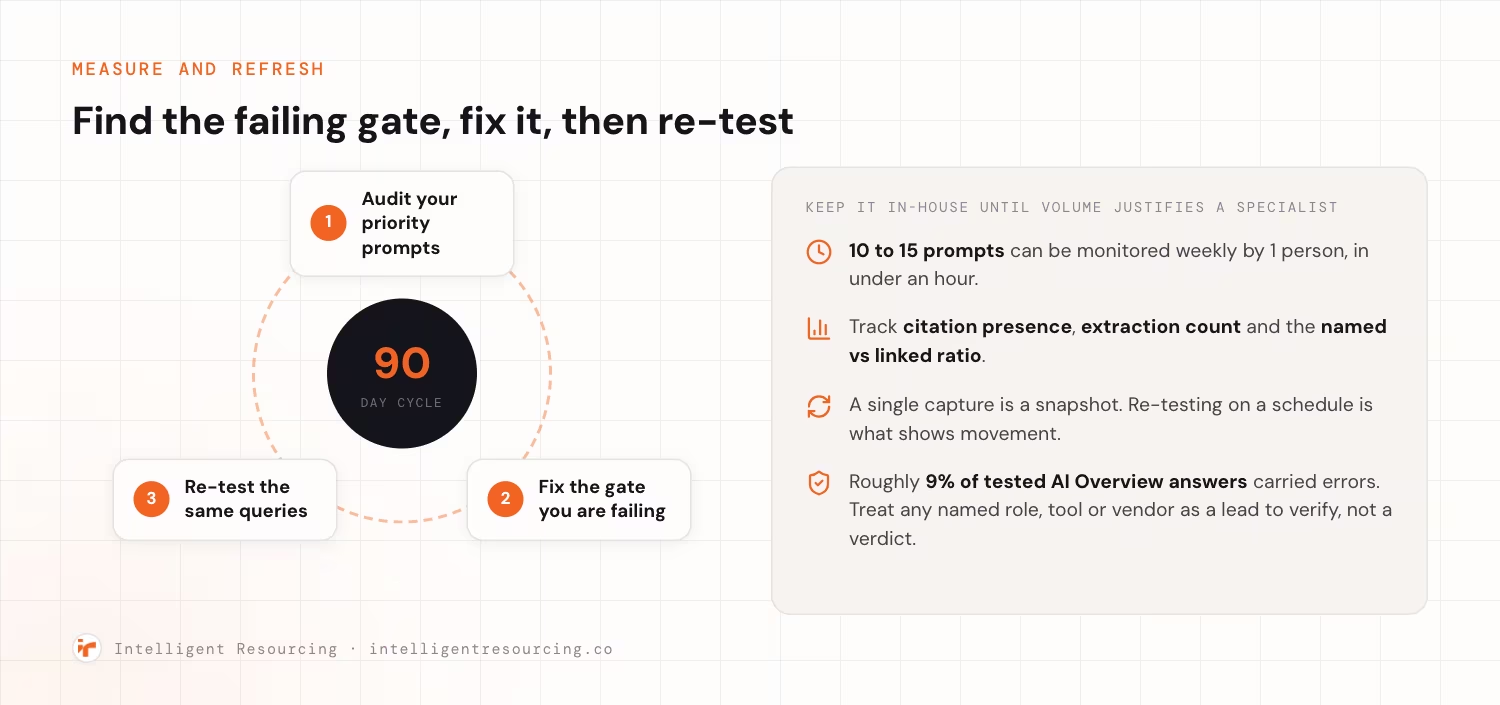
1 person can monitor 10 to 15 Google AI search prompts weekly in under an hour, per Seerly's AI search guide. Keep ownership in-house until query volume or competitive complexity justifies a specialist. Track citation presence, extraction count, and named vs linked ratio across your priority queries. Re-test on a 90-day schedule.
Content Creation
The engines already recommend someone for your category. Get your free GEO audit to see who, and which gate you are failing. We map your priority queries, fix the gate, and re-test on a schedule.
FAQs
Which AI is best for founders?
Founders use ChatGPT, Perplexity, Gemini and Grok for research and shortlisting. No single engine is best. Cross-checking several beats trusting one, because each carries different citation biases. ChatGPT leans on web consensus. Perplexity favours fresh sources. Run the same question across all 4.
Who should a startup hire first after funding?
The common first recommendation is a systems or operations hire, such as a Head of Operations or COO-type lead. Go-to-market and revenue roles follow. The right first hire tracks the operating bottleneck, not the raise size. Hire the person who removes the constraint blocking every other hire.
What are the best AI recruiting tools for startups?
Split the stack into sourcing, screening and enrichment, then name 1 tool per category. hireEZ sources candidates. Metaview screens interviews. Clay enriches records. The selection rule is simple. Match the tool to your bottleneck, and check its data accuracy for the AU and APAC market first.
Can AI replace a recruiter or a talent-acquisition hire?
No. AI tooling defers and compresses the mechanical work of sourcing, screening and coordination. It does not replace judgement on senior, confidential or culture-critical hires. Use tooling to run high-volume, low-risk stages faster. Keep a human on the decisions where culture fit matters.
How do I get my startup recommended by AI search engines?
Clear 3 gates. Be readable so engines can retrieve you. Be quotable so they can lift a clean answer. Be trusted so they name you, through consistent profiles and third-party corroboration. Answer engine optimisation is the discipline that does this work, then re-tests your priority queries.