

What Are the 4 Gates AI Systems Check Before Citing a Page?
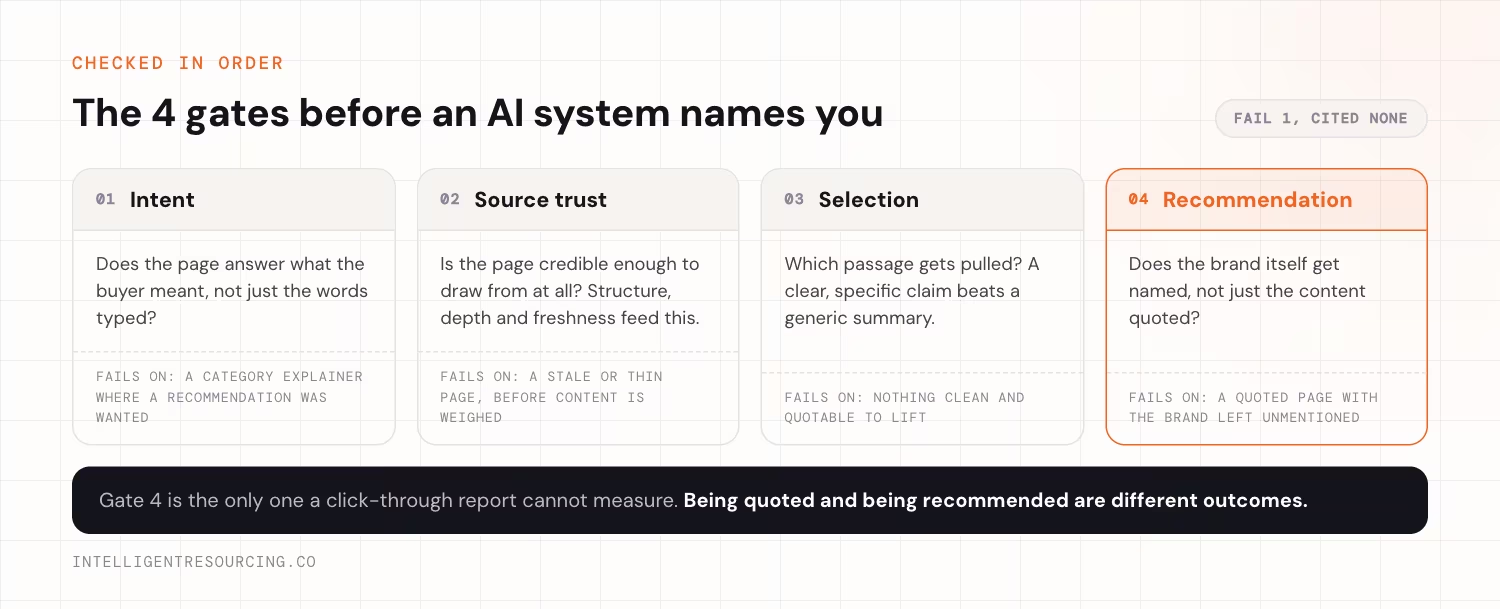
An AI system checks 4 things in order: intent, source authority, citation selection, then brand recommendation. Fail any 1 gate, and the page isn't cited, no matter how it does on the others. Google's own AI-features guidance confirms that meeting the technical baseline is not enough: "indexing and serving isn't guaranteed."
Gate 1: Intent
An AI system first checks whether the page answers what the buyer meant, not just the words they typed. A search for "CRM for a 10-person team" and a search for "CRM software" look similar. But they signal different intents: one wants a recommendation, the other wants a category explainer. A page built for the wrong intent fails here, no matter how well it is written.
Gate 2: Source Trust
Next, the system checks whether the page is a credible enough source to draw from at all. Structure, depth and freshness all feed this judgment. A well-organised, current page earns more trust than a stale or thin one, before its specific content gets weighed at all. This gate decides whether a page enters the citation pool in the first place.
Gate 3: Citation Selection
Once a page is trusted, the system chooses which specific passage to pull from it. It favours a clear, specific claim over a generic summary. A page can pass Gates 1 and 2 and still lose here, if nothing on it states a clean, quotable answer.
Gate 4: Brand Recommendation
The final gate decides whether the brand itself gets named, not just the content. This is the only gate a click-through report can't measure. A page can be quoted at length while the brand behind it goes unmentioned. A page can clear Gates 1 through 3 and still fail here.
Being quoted and being recommended by name are 2 different outcomes. AEO, GEO and LLMO Explained covers how the 3 disciplines split this work.
How Is AEO Different From Just Writing Good Content?
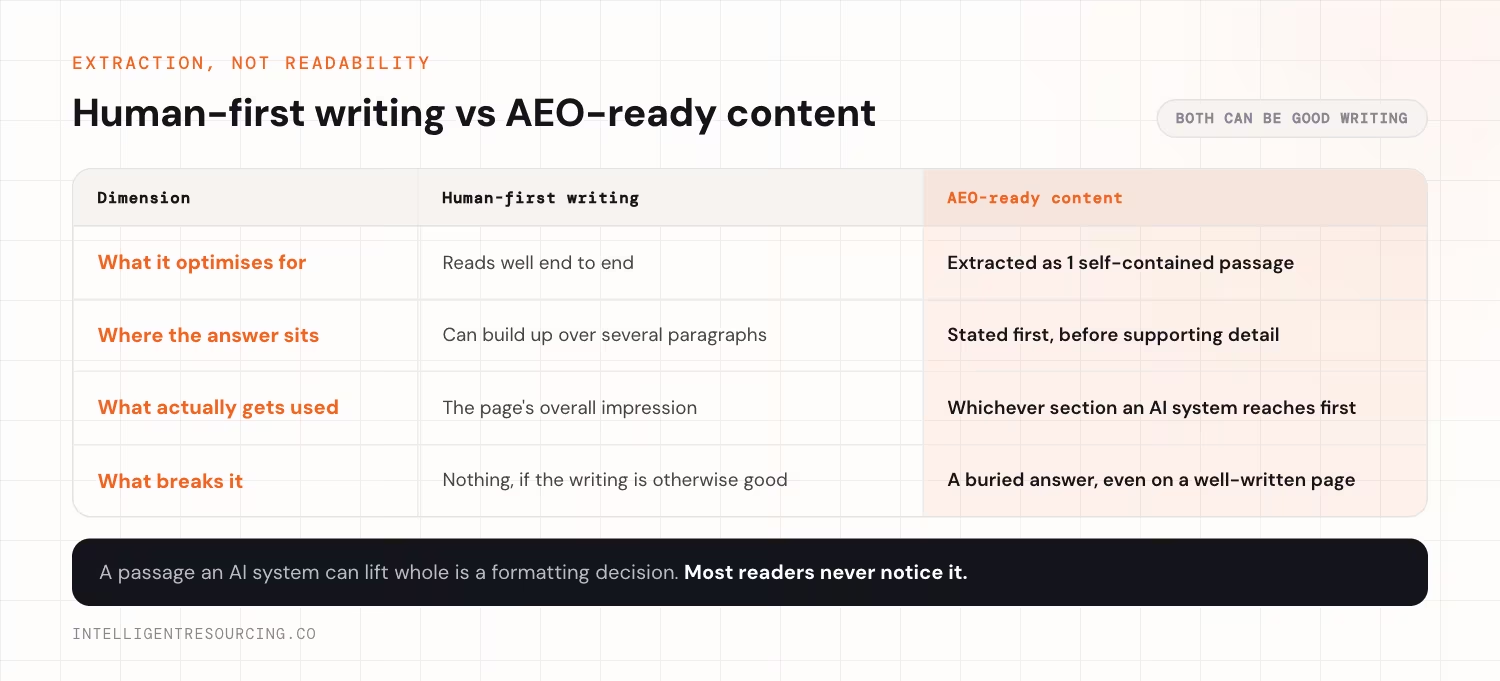
AEO targets machine extraction, not just human readability. Most readers never notice certain formatting choices, but those same choices can decide whether an AI system lifts a passage at all. PwC's AEO guidance frames this as content built to be "easy for AI to find, understand, and reuse," not just written well for a human.
| Dimension | Human-first writing | AEO-ready content |
|---|---|---|
| What it optimises for | Reads well end to end | Extracted as 1 self-contained passage |
| Where the answer sits | Can build up over several paragraphs | Stated first, before supporting detail |
| What actually gets used | The page's overall impression | Whichever section an AI system reaches first |
| What breaks it | Nothing, if the writing is otherwise good | A buried answer, even on an otherwise well-written page |
That's the part most teams miss.
What Makes Content Findable, Understandable and Reusable by AI?
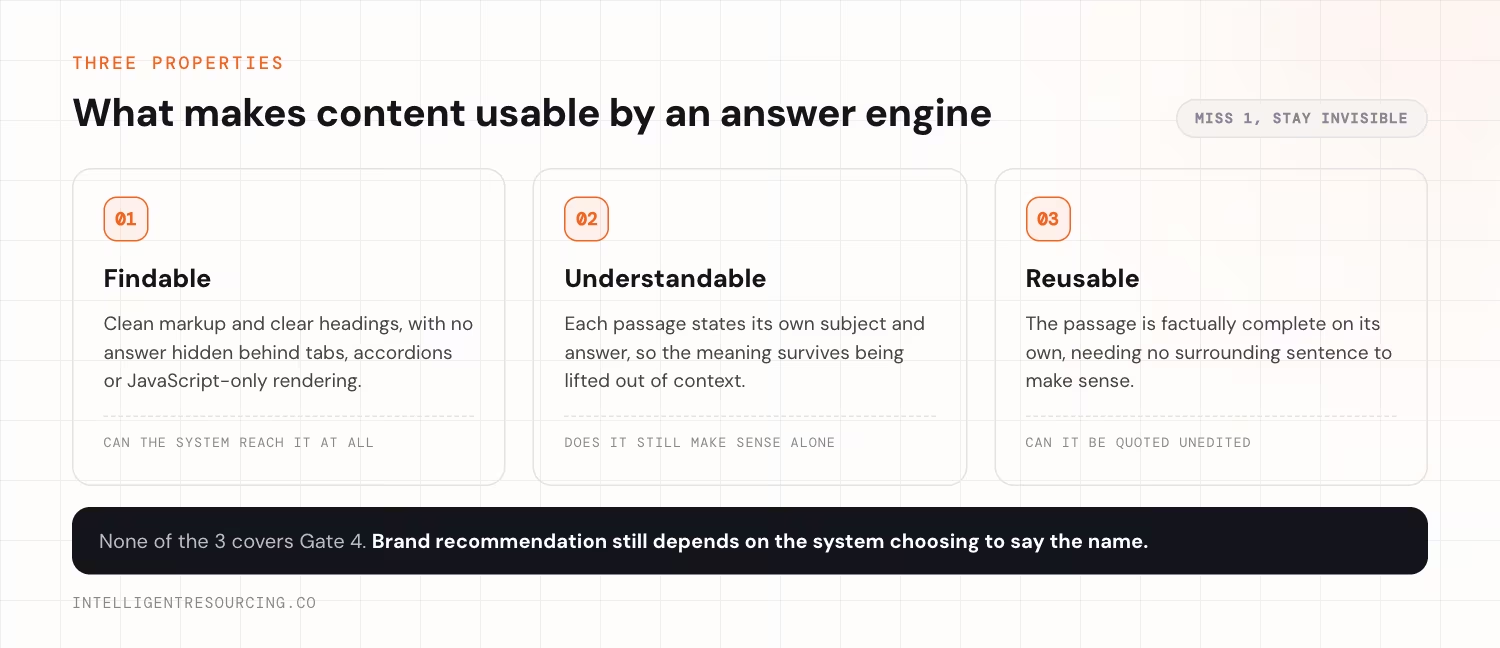
Content becomes AEO-ready in 3 specific ways, not through general quality. An AI system has to find it, understand it, then lift a passage without editing it further. Miss any 1 and the page stays invisible to an answer engine, no matter how well it ranks.
- Findable: clean markup and clear headings, with no answer hidden behind tabs, accordions or JavaScript-only rendering
- Understandable: each passage states its own subject and answer, so the meaning survives being lifted out of context
- Reusable: the passage is factually complete on its own, needing no surrounding sentence to make sense
None of the 3 covers Gate 4. Brand recommendation still depends on the AI system choosing to name the brand, not just lift a passage. KNWN's AEO, GEO and LLMO write-up makes a similar point: no universal AEO standard exists yet, so these 3 properties are a working framework, not an official spec.
Does AEO Replace Traditional SEO?
No. AEO adds a citation layer on top of SEO, it doesn't replace it: ranking and citation-selection run different checks, and a brand can rank well while still going unmentioned in an AI answer. Search Engine Journal's Ahrefs coverage found only 38% of pages cited in AI Overviews also rank in the top 10 organically.
SEO decides whether a page is even in the pool an AI system can find. It doesn't touch any of the 4 gates above. A page can rank first, clear Gates 1 through 3 on structure alone, and still fail Gate 4 if nothing on the page tells the AI system to say the brand's name outright. That's a citation gap an SEO report will never flag, because the page is ranking exactly as intended.
Is AEO the Same as SEO? covers the full relationship between the 2 disciplines.
Ranking says nothing about whether your brand gets named in the answer. Generative engine optimisation services are where that gap gets measured.
So How Does Answer Engine Optimisation Actually Work in Practice?
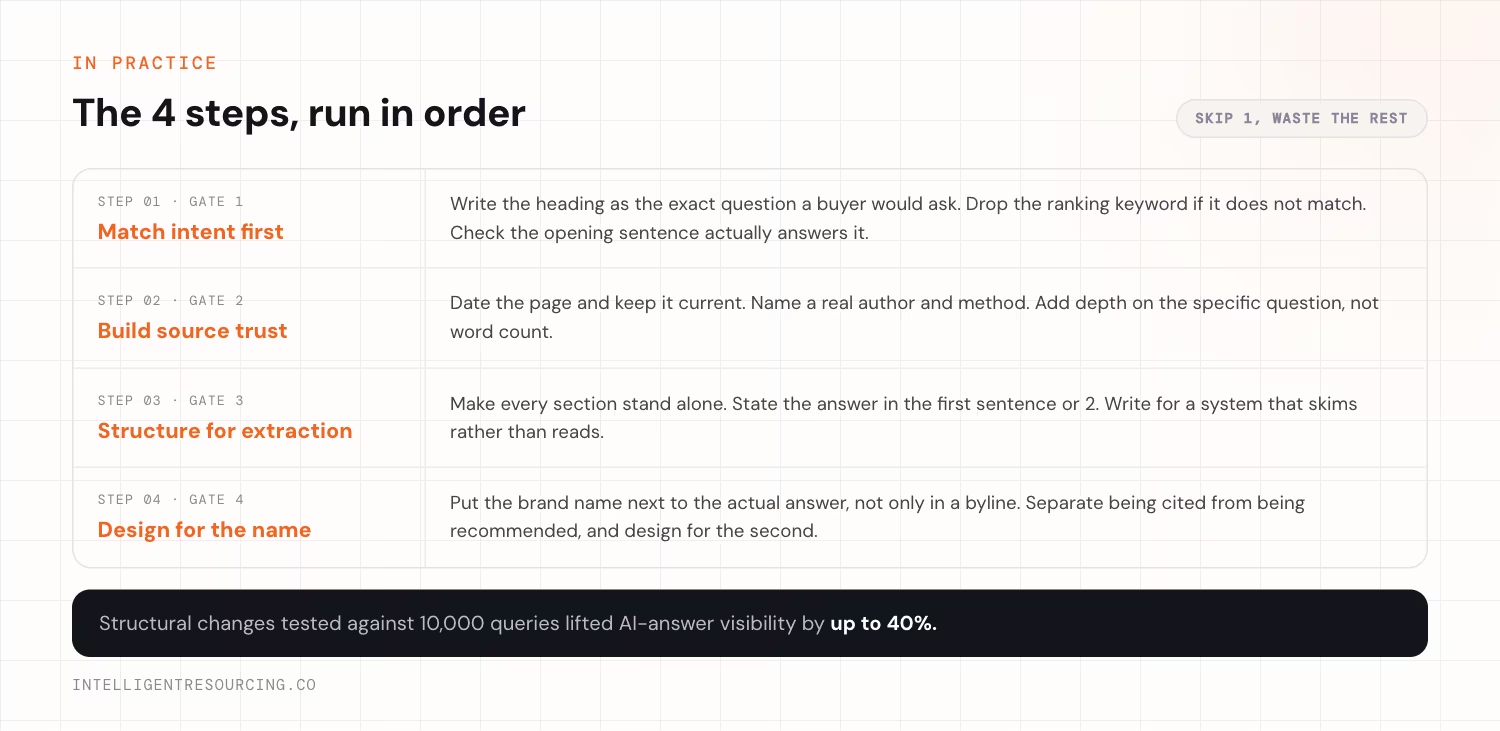
Answer Engine Optimisation runs as 4 steps: match the buyer intent, build source trust, structure for extraction, then earn the brand-name mention. Skip 1, and the rest goes to waste. An AI system checks all 4 gates in order before naming anyone.
Match Intent First
- Write the heading as the exact question a buyer would ask. A search for "best CRM for a 10-person sales team" wants a specific recommendation, not a general definition.
- Drop the ranking keyword if it doesn't match that question. Optimising for "CRM software" instead of the buyer's actual question serves the wrong intent.
- Check the opening sentence against the question. If the direct answer isn't there, the intent hasn't been matched yet.
Build Source Trust Next
- Date the page and keep it current. A page last touched in 2023 loses to one updated last month.
- Name a real author or method. A named author and a clear method behind the claims give an AI system something concrete to weigh.
- Add depth on the specific question, not just length. Trust comes from demonstrated expertise, not word count.
Structure for Extraction
- Make every section stand alone. Assume an AI system will lift it without the rest of the page attached.
- State the answer first. Put it in the first sentence or 2 of each section, before any supporting detail.
- Write for a system that skims. A system deciding what to quote rarely reads the whole page first.
Design for the Name, Not Just the Quote
- Put the brand name next to the actual answer. Not only in a byline or a footer.
- Separate being cited from being recommended. Only the second outcome moves a buyer, so design for that specifically.
- Give the AI system something concrete to attach the citation to. A named brand next to a clear answer earns the mention; the correct information alone doesn't.
Get all 4 right and a page becomes eligible to be named inside an AI answer. GEO for B2B SaaS shows this same structure applied to comparison and pricing content specifically. Get 1 wrong and the work behind it stays invisible.
None of this is guesswork. Princeton and Georgia Tech's GEO research tested structural changes against 10,000 real queries and found several techniques lifted AI-answer visibility by up to 40%.
Content Creation
A blended visibility score cannot tell you which of the 4 gates is failing. Intelligent Resourcing audits intent, source trust, selection and recommendation separately, so the fix targets the gate that is actually costing you the mention rather than a guess at schema or volume.
FAQs
What does "answer engine" mean in Answer Engine Optimisation?
A system that gives a direct answer instead of a list of links, like ChatGPT, Perplexity or Google AI Overviews. AEO gets a brand's content used inside that answer.
Can a page rank poorly and still get cited in an AI answer?
Yes. Citation runs on a separate gate from ranking. A weak Google ranking can still get cited if it passes the intent, authority and selection checks.
Does AEO only apply to featured snippets?
No. Snippets are 1 surface AEO can win. The same structure also works for AI chat answers, voice assistants and AI Overviews.
How long does AEO structural work take to show results?
Structural fixes can affect citation within weeks of a crawl. Consistent citation across engines takes longer, since each one re-checks on its own schedule.
Is AEO the same service as GEO at Intelligent Resourcing?
No. Intelligent Resourcing delivers AEO as part of Content Strategy through GEO, not as a separate service line. GEO tracks and measures the same structural work that passes the citation gates.