

What Does It Mean for an Engineering Consultancy to Be "Missing" From AI Search?
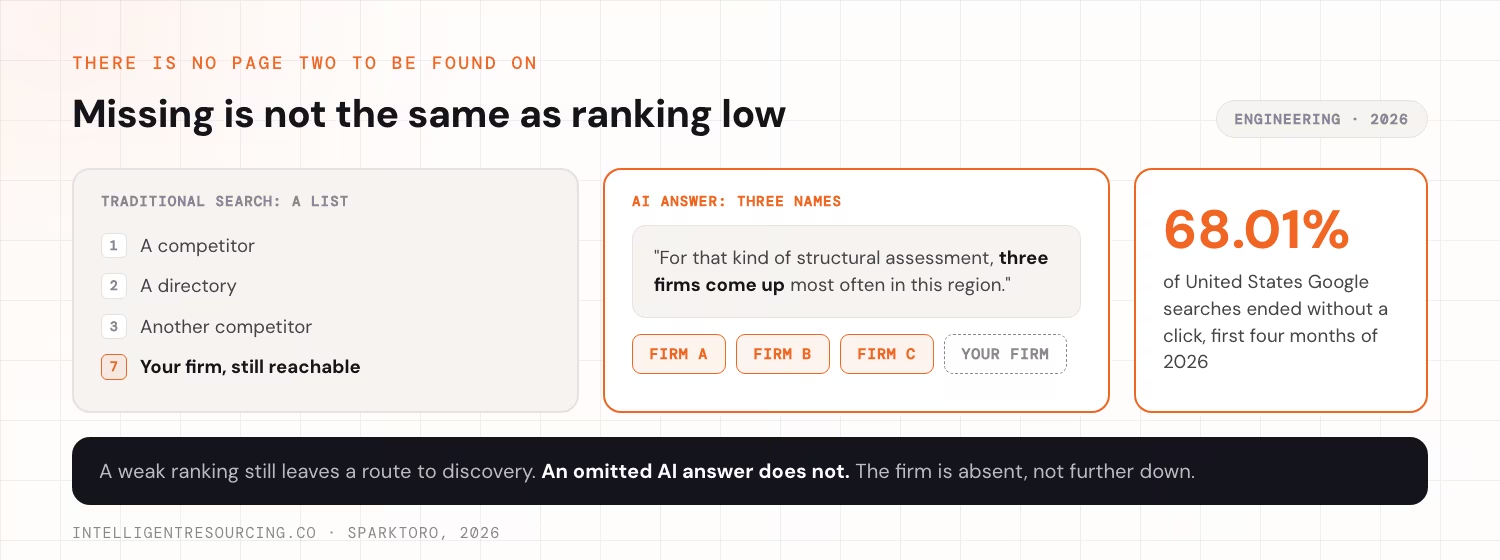
Being missing from AI search means a prospective client asked about a technical capability your firm provides, and the AI answer did not name it. Unlike traditional search, there is no ranked list to scroll through, only a short answer naming a small set of cited firms. If yours is not in that answer, it does not reach that evaluation.
A SparkToro study of United States search behaviour found that 68.01% of Google searches ended without a click in the first four months of 2026, measured on Similarweb panel data. When the answer arrives directly, a firm not named in it never enters the buyer's consideration at all.
That matters because the answer shapes the shortlist before the first phone call. If three firms are named and yours is not, your project history and technical expertise never enter that evaluation. A weak Google ranking still leaves a route to discovery. An omitted AI result does not. The consultancy is absent from the answer rather than simply appearing further down a page.
For facilities directors, procurement teams and project owners using AI as an early research tool, that makes visibility part of the first filtering stage. If your firm is missing there, its expertise never reaches the point where a buyer can assess it. Understanding how answer engine optimisation works explains why some firms are named and others are not.
How Do Clients Actually Find an Engineering Consultancy?
Engineering client acquisition has run on relationships for decades, not web presence. That habit never anticipated a buyer who starts the evaluation inside an AI tool.
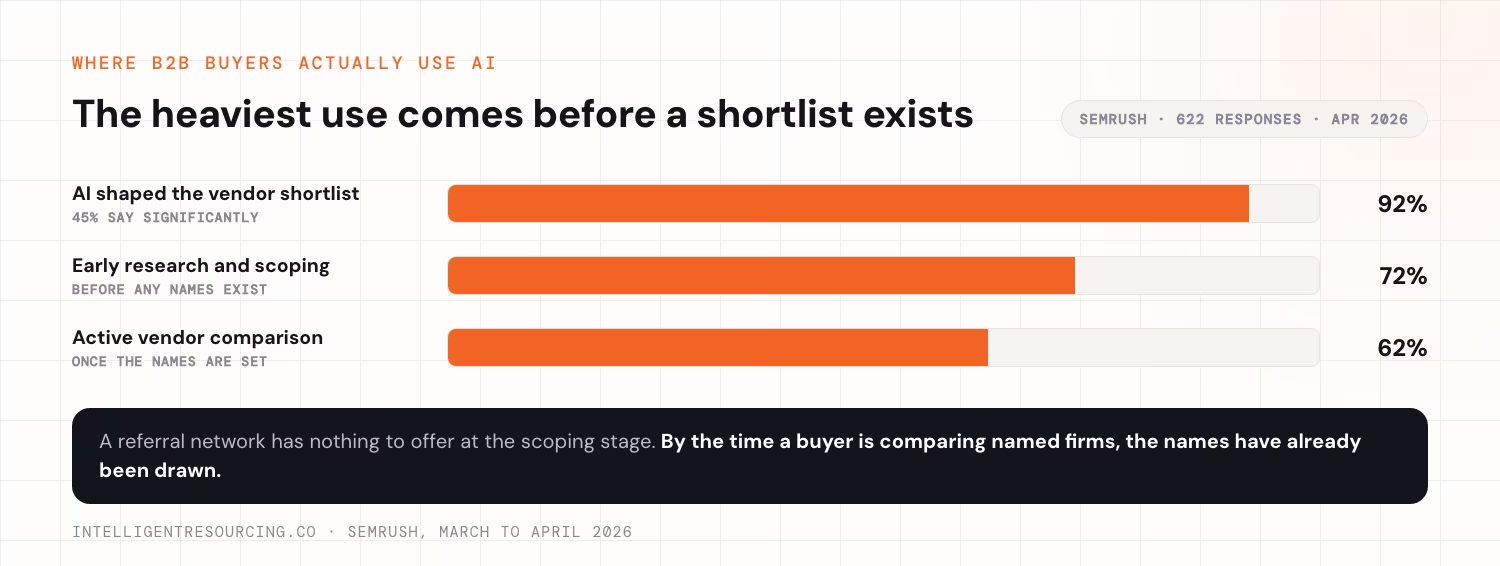
Semrush surveyed 643 United States B2B professionals in March and April 2026, keeping 622 valid responses after a quality check. It found 92% say AI has shaped their vendor shortlist, and 45% say it did so significantly. The stage where AI is used most is the earliest one: 72% use it during early research, scoping the category or defining what they need, ahead of 62% who use it for active vendor comparison.
That ordering is the part worth sitting with. The heaviest AI use happens before a shortlist exists, which is exactly the moment a referral network has nothing to offer. By the time a buyer is comparing named vendors, the set of names has already been drawn.
Engineering consulting built an entire industry around trust earned slowly, one project at a time. Firms never had to publish their expertise anywhere an algorithm could read, because the algorithm was never part of the decision. The habits that built a strong practice are not the habits that make a firm visible to a system reading the open web. A firm can be excellent at the work and still be structurally invisible to the tool now shaping who gets asked to bid.
Why Doesn't Technical Excellence Automatically Make a Firm Citable?
Technical excellence does not make a firm citable unless the evidence is published in a form an AI engine can retrieve. Two firms can deliver identical work to identical standards. If only one publishes structured documentation of the outcome, that is the firm an engine has evidence to recommend. The gap is not capability. It is documented proof.
| Where the expertise lives | What AI can use |
|---|---|
| Client proposals | Little or no public evidence |
| Archived project files | Nothing unless the outcome is published |
| Senior engineers' experience | Not directly retrievable |
| Completed projects | Limited value without public documentation |
| Published case studies and project descriptions | Citable evidence tied to a capability |
Ranking well is no longer a shelter either. Ahrefs compared 300,000 keywords, half with an AI Overview present and half without, and found on December 2025 data that the presence of an AI Overview correlated with a 58% lower average clickthrough rate for the top-ranking page. Its earlier April 2025 run of the same study put that figure at 34.5%, so the effect has grown sharply, not settled. A high-ranking page that is not cited still loses that traffic to the answer above it.
Two firms can deliver the same work to the same standard. If only one publishes the outcome clearly, that is the firm an AI engine has evidence to cite.
What Do AI Engines Actually Look For in an Engineering Consultancy?
AI engines look for named, specific and consistent signals. A general claim of experience gives an engine nothing to attach. A credential, a named project type, a specific client sector or a documented outcome gives it something it can retrieve and quote. The difference between a citable firm and an invisible one is specificity, not capability.
- A credential such as a professional engineering licence or industry-body membership reads as a verifiable fact
- A named project type, client sector or outcome reads as evidence an engine can attach a claim to
- Consistency across the firm's website, directories and press is what lets an engine treat a claim as trustworthy, not merely present
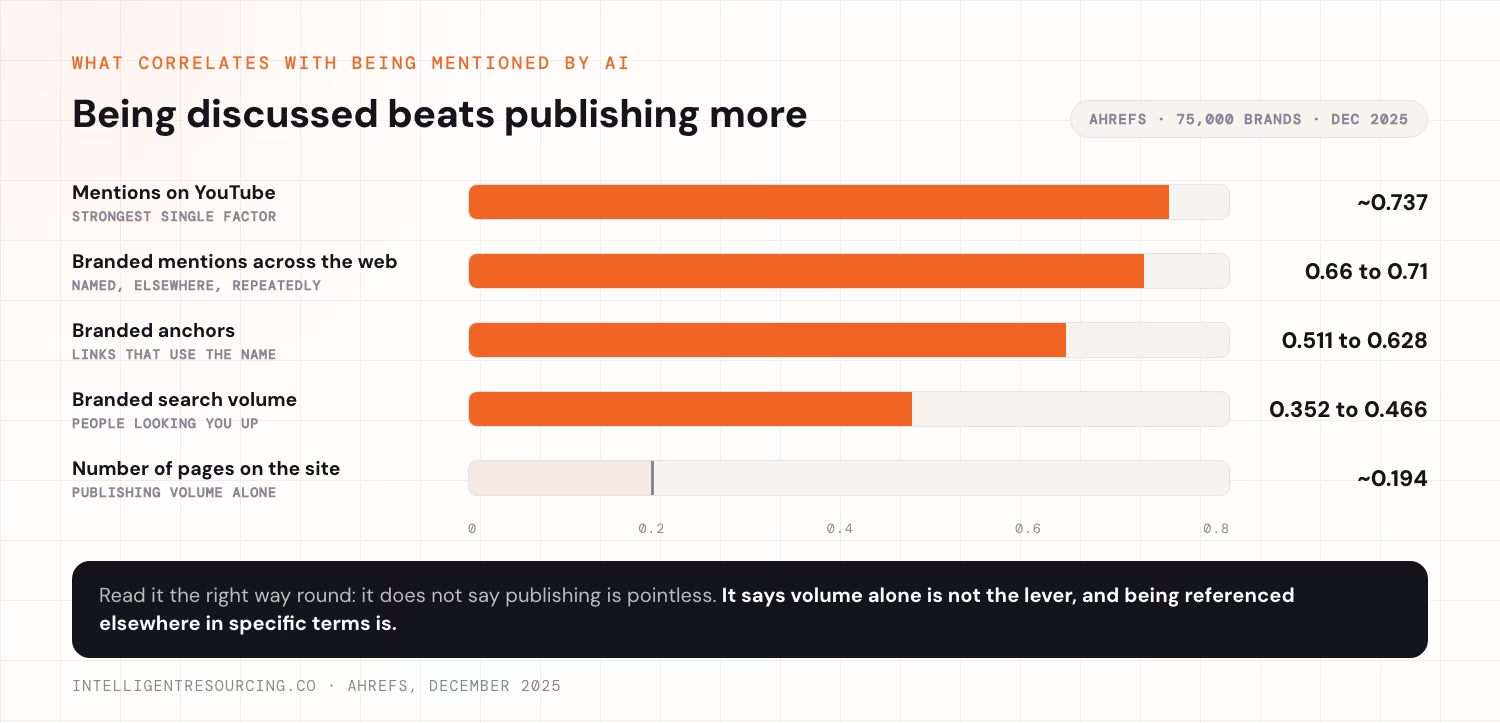
That third point has the most evidence behind it. Ahrefs studied 75,000 brands in December 2025 and measured what correlates with being mentioned in ChatGPT, Google AI Mode and AI Overviews. Branded mentions across the web correlated at 0.66 to 0.71, and mentions on YouTube correlated strongest of all at about 0.737. The number of pages on a site correlated at about 0.194, which is close to nothing.
Read that the right way round. It does not say publishing is pointless. It says volume alone is not the lever, and being referenced elsewhere, in specific terms, is. For an engineering consultancy that has spent twenty years accumulating real credentials and real project outcomes, that is an unusually favourable finding: the raw material already exists.
A firm that only says "decades of experience across multiple sectors" gives an engine nothing to attach that claim to. A firm that names its structural assessment work on a specific bridge type, in a specific region, gives an engine something it can actually retrieve. That retrievable detail is the whole difference.
Why Are the Stakes Rising Faster Than Most Firms Realise?
The stakes are rising because AI adoption is accelerating on both sides of the transaction at once. More than half of engineering firms now report investing in dedicated AI-focused talent, and expectations for AI's positive business impact are described as overwhelming, based on the American Council of Engineering Companies Q1 2026 survey of 628 member-firm executives.
The business case for getting this right is not theoretical. The 2026 Professional Services Maturity Benchmark, a survey of 509 professional services organisations representing more than 245,000 employees, reports three things worth reading together:
- Generative AI now features in 27.1% of professional services projects, up from 19.3% in 2024, a rise of roughly 40%.
- Industry-wide earnings before interest, taxes, depreciation and amortisation (EBITDA) sat at 9.9% in 2025, against a five-year average of 13.8%.
- The gap between high-performing firms and the rest is compounding, in the benchmark's own words, rather than widening gradually.
Most of that adoption curve is about internal productivity. Almost none of it is firms checking whether their own expertise is visible to the same technology their clients now use to research suppliers. That gap, between using AI internally and being found by AI externally, is where the real exposure sits.
A firm can be a sophisticated user of AI tools on the inside and still be completely invisible to the same class of tool from the outside. Those are two separate projects, and most firms have only started the first one.
What Changes Once a Firm Fixes This?
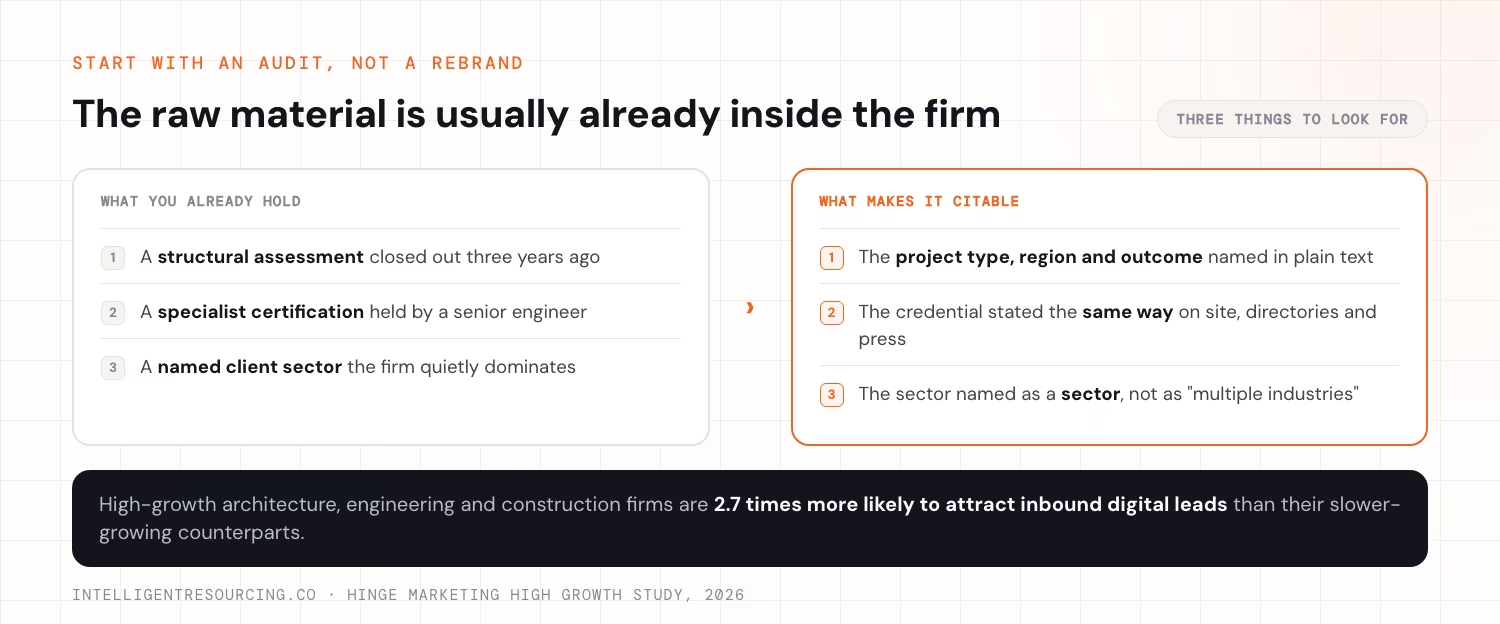
The fix is not a rebrand, and it is not a content marketing campaign in the traditional sense either. It starts with an honest audit of what technical proof already exists, and whether any of it is published anywhere an AI engine could retrieve it.
Most firms find the gap is smaller than expected once they look. A structural assessment closed out three years ago. A specialist certification held by a senior engineer. A named client sector the firm quietly dominates.
These often already exist inside the firm. They were simply never written up as citable, structured content. Turning what already exists into something an engine can retrieve is faster and cheaper than most firms expect.
There is a measurable difference between the firms that have done it and the firms that have not. Hinge Marketing's 2026 High Growth Study, architecture, engineering and construction (AEC) edition found high-growth firms are 2.7 times more likely to attract inbound digital leads than their slower-growing counterparts. The firms already publishing structured proof are drawing buyers in. The rest wait for the next referral.
Our approach to generative engine optimisation covers how engines decide what to cite, and the same mechanics apply to a consultancy's project record as to anything else.
The Test That Actually Tells You Where You Stand
Twenty years of referrals and a strong technical reputation answer a different question than the one an AI engine is asking. The engine only asks whether it can find, and check, evidence of the work.
Run the test yourself. Ask ChatGPT or Perplexity the kind of question a prospective client would ask about your specific technical capability, and see whose name comes back. If it is not yours, the gap is not your track record. It is what that track record looks like from outside the firm. A free AEO visibility audit runs that test across the engines and hands back a baseline you can measure against.
Content Creation
Run the test across the engines your clients use, and get a baseline for where your project record actually shows up.
FAQs
Why are engineering consultancies invisible in AI search results?
Because their strongest evidence of technical capability, past projects, credentials and case outcomes, rarely exists as published, structured content online. An AI engine can only cite what has been written down somewhere it can read. Most of an engineering firm's best work stays inside proposal documents and client relationships.
Does a strong referral network protect an engineering firm from this problem?
No. A referral network built over years carries no weight with an AI engine, which only reads what is published and structured online. A newer, less established competitor with clearer published project data and credentials can be cited ahead of a far more experienced firm.
What kind of content helps an engineering consultancy get cited by AI?
Named, specific content works best: named project types, named client sectors, named outcomes, and consistent professional credentials across the firm's website, directories and press. General statements about "decades of experience" give an AI engine nothing concrete to retrieve or cite. Volume is not the lever; Ahrefs found the number of pages on a site barely correlates with AI visibility at all.
How can an engineering consultancy check if it is missing from AI search?
Ask an AI engine the kind of question a prospective client would ask about a specific technical capability, and see which firms get named. Standard website analytics will not reliably show this gap, since there is no missed click to notice, only an answer the firm never sees.
Is this AI visibility problem specific to smaller engineering firms?
No. Firm size is not the deciding factor. A large, well-regarded consultancy with thin published project data can be just as invisible as a small one. AI engines respond to what is citable online, not to reputation or headcount.