

ABM and inbound marketing serve two different pipeline conditions. Inbound is usually the stronger choice when your addressable market is large and deal values are relatively modest. ABM is better suited to a smaller, clearly defined group of high-value accounts. Most mid-market B2B organisations should use inbound to generate demand and buying signals, then apply ABM to the accounts with the strongest fit and intent.
Intelligent Resourcing treats the ABM versus inbound debate as a pipeline allocation decision, not a contest between two marketing philosophies. The practical question is which approach deserves the next pound of budget based on your total addressable market, average contract value and the complexity of your buying committee.
Inbound allows prospective buyers to discover your business through search, content, social media and other demand-generation channels. ABM reverses that direction. Your sales and marketing teams identify a defined list of target accounts, then coordinate personalised activity around the stakeholders involved in each purchasing decision.
The decision can be simplified:
- Choose inbound first when your market is broad, your average deal value is lower and you need scalable demand generation.
- Choose ABM first when only a limited number of organisations can buy from you and each opportunity justifies deeper account-level investment.
- Run both together when inbound can reveal which accounts are showing intent and ABM can concentrate resources on converting them.
ABM vs Inbound Marketing: The Core Difference
The core difference between ABM and inbound marketing is who initiates the relationship. Inbound attracts a broad audience and allows buyers to identify themselves. Account-based marketing starts with a defined list of high-value accounts, then coordinates sales and marketing activity around the people involved in each buying decision.
ABM concentrates sales and marketing on a defined set of high-value accounts, with personalised, multi-threaded outreach aimed at the whole buying committee, not one contact. Inbound pulls a broad audience toward you through content, SEO, and organic reach, and stays anonymous until it self-identifies. As Swapnil Biswas frames it, if the account chose the moment of contact it is inbound, and if your team chose the account it is ABM.
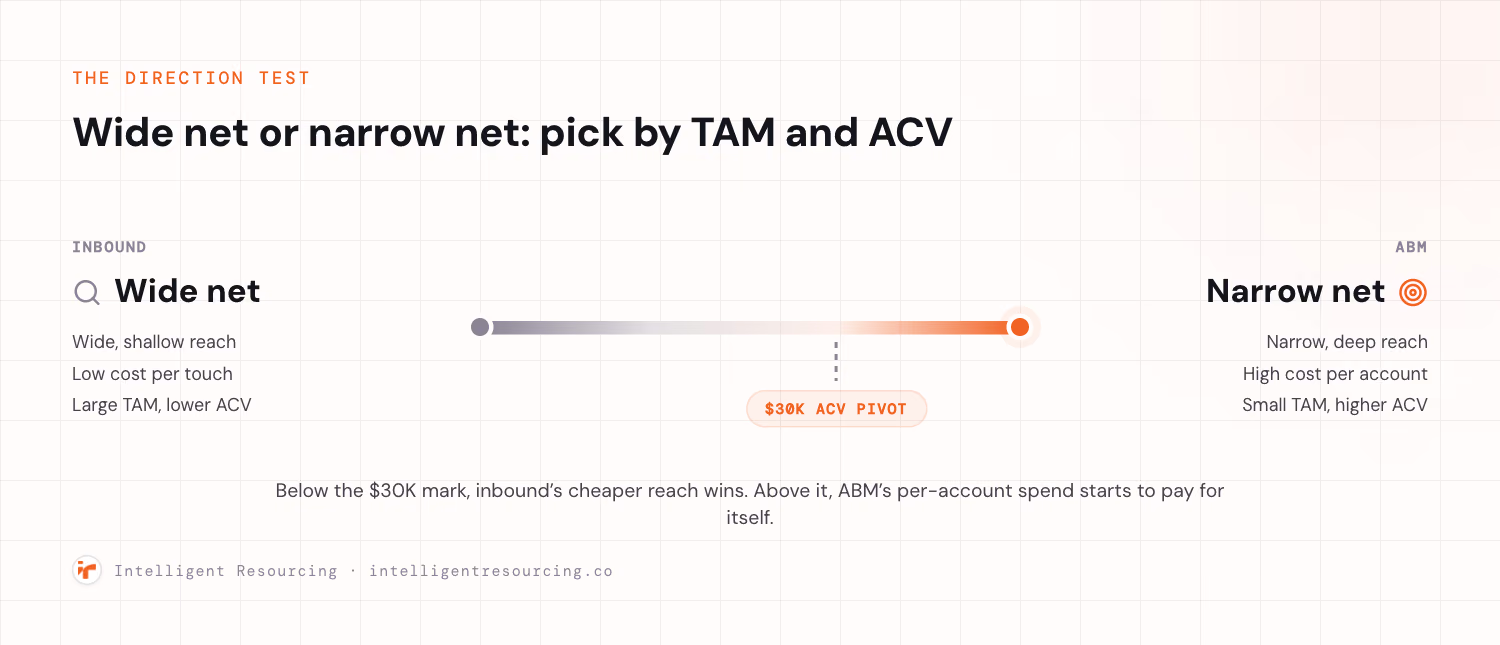
Wide Net vs Narrow Net: The Direction Test
Inbound operates as a wide, relatively shallow motion. It can reach a large audience at a lower cost per interaction, but the business has limited control over which companies enter the funnel.
ABM operates as a narrow, deeper motion. It requires more investment per account because the content, targeting and outreach are more personalised. In return, teams can focus their resources on organisations with stronger commercial fit and greater revenue potential.
This distinction changes how each motion should be funded, managed and measured.
| Dimension | Inbound marketing | ABM |
|---|---|---|
| Direction | They find you | You pick them |
| Net | Wide and shallow | Narrow and deep |
| Unit of focus | The individual lead | The account and its buying committee |
| Typical tactics | SEO, content, organic social, webinars, gated assets | Targeted ads, personalised pages, 1:1 outbound, custom content |
| Cost model | Low cost per touch, high volume | High cost per account, low volume |
| Best fit | Large TAM, lower ACV, self-serve | Small TAM, high ACV, committee-driven |
| Common failure | Volume of poor-fit leads sales ignores | Spend on accounts that never buy |
Inbound optimises for discovery and scale while ABM optimises for precision and account depth. The right choice depends on whether your market is broad and difficult to name, or concentrated enough for your team to identify and pursue the accounts most likely to buy.
What Are the Pros and Cons of ABM and Inbound Marketing?
Inbound marketing is stronger for scale, discoverability and lower-cost demand generation, while ABM is stronger for precision, high-value opportunities and buying-committee engagement. The main risk with inbound is generating more leads than sales can use, whereas the main risk with ABM is investing heavily in accounts that lack fit, intent or awareness.
| Approach | Where It Works Best | Main Advantages | Main Risks |
|---|---|---|---|
| Inbound marketing | Large addressable markets, lower deal values and buyers who actively research solutions | Scales efficiently, compounds over time and captures demand that cannot always be predicted | Limited control over lead quality, slower in small markets and can overwhelm sales with poor-fit enquiries |
| Account-based marketing | Smaller, identifiable markets, higher-value deals and committee-led buying decisions | Improves relevance, supports deeper engagement and aligns sales and marketing around priority accounts | Higher cost per account, dependent on accurate selection and weak when target accounts lack awareness or buying intent |
When to Use ABM vs Inbound Marketing in B2B
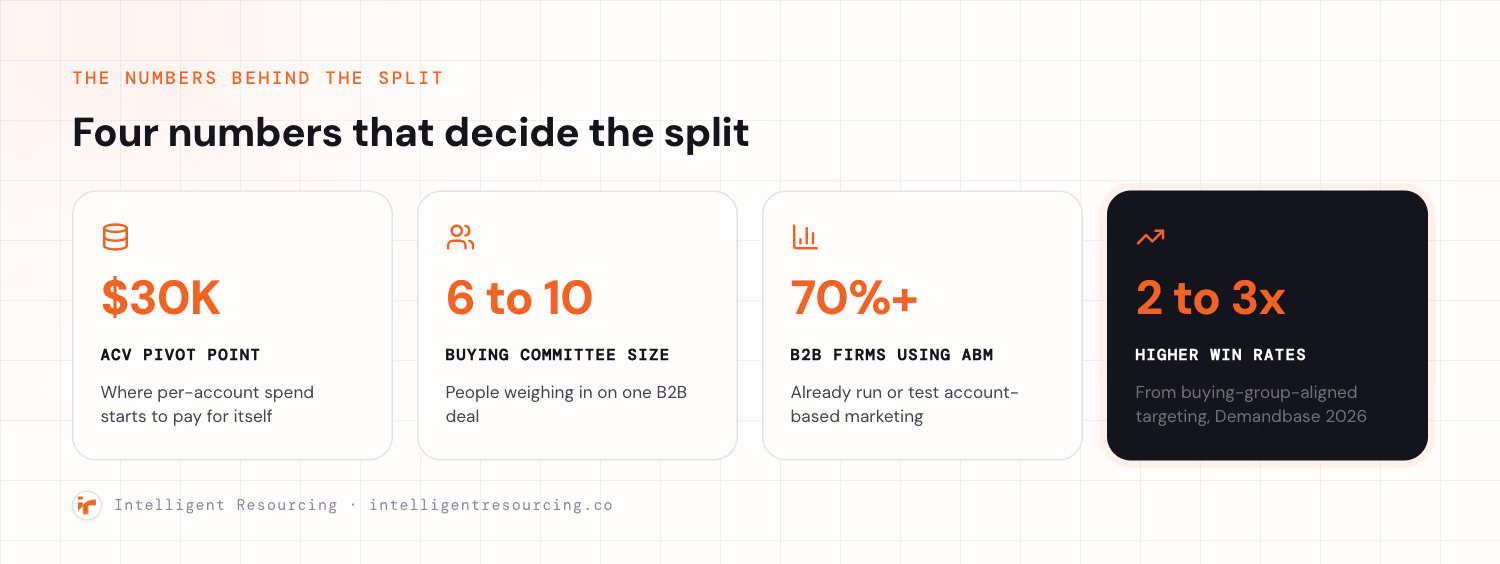
The choice tracks three variables: how big your market is, how knowable it is, and how large each deal is. Independent scans find that modern B2B buying decisions involve six to ten people, and over 70% of B2B companies already use or test ABM, so when that many stakeholders must agree, precision beats spray.
When to Lead With Inbound
Lead with inbound when your TAM is too large to hand-select, your ACV is lower, the motion is self-serve, and you are early enough to need signal and awareness before you can build a target list.
When to Lead With ABM
Lead with ABM when your market is small and knowable, your ACV is high, and deals are committee-driven, or for enterprise expansion where precision beats volume. If you can list every account that could be bought on one spreadsheet, sell to that list by name.
Match your situation to the table below.
| Company situation | Lead with | Why |
|---|---|---|
| Large TAM, lower ACV | Inbound | You cannot name your buyers yet; you need signal and awareness |
| Tiny TAM, very high ACV | ABM | Only a few accounts can ever buy; hand-select from day one |
| Growth stage, mixed ACV | Inbound first, then layer ABM | Let inbound surface warm accounts, then concentrate on them |
| Enterprise or expansion | ABM | Committee-driven, high-value deals reward precision |
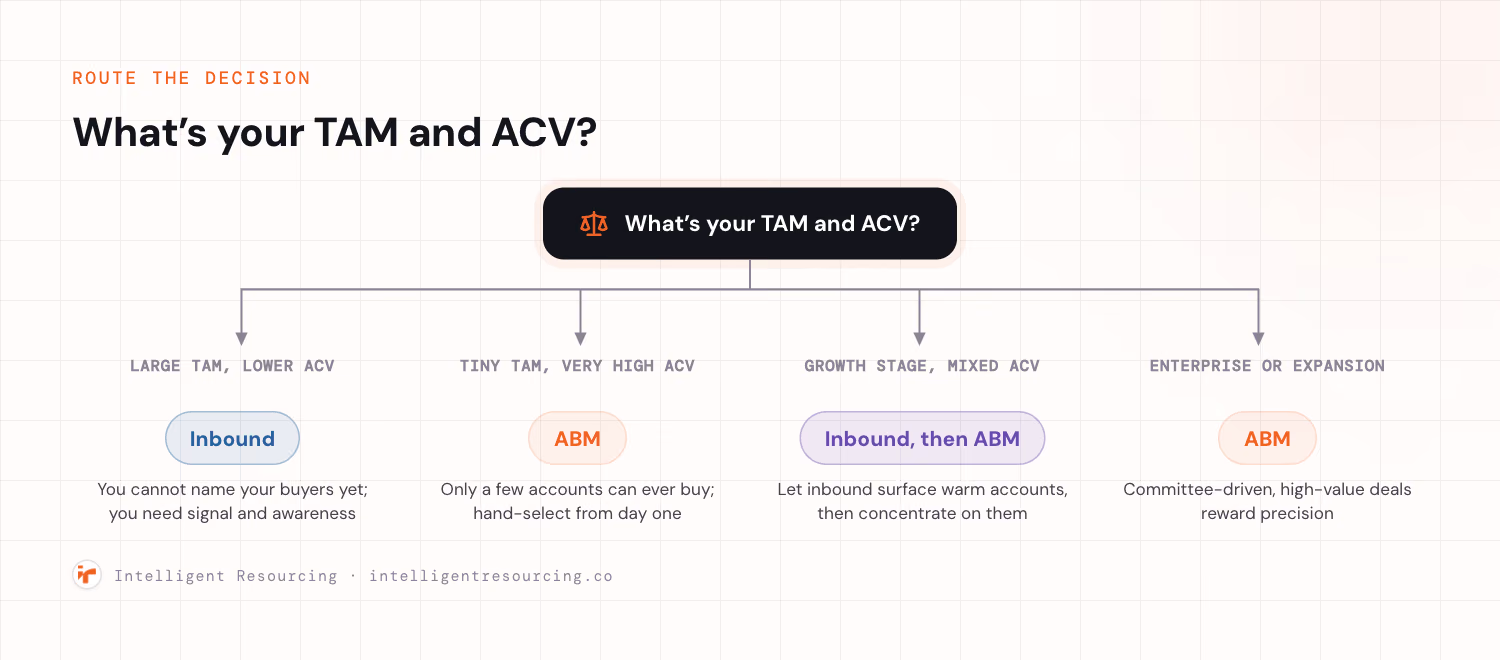
Once average deal value clears the $30K mark, per-account spend starts to pay for itself; below it, inbound's cheaper reach wins. With six to ten people weighing in, the enterprise rows reward the multi-threading ABM is built for.
How to Run ABM and Inbound Marketing Together
Treat these as halves of one program, because each is weaker alone: inbound without ABM produces a busy funnel that never concentrates; ABM without inbound produces cold outreach into a vacuum. Run together, they pay: aligning marketing and sales around buying groups lifts win rates two to three times, per Demandbase's 2026 ABM benchmark of 1,452 companies, and ABM accounts typically close at a larger average deal size than non-ABM accounts. Two enablers make it real: one shared account view, and message intensity set by the B2B buying signals each account throws off.
The Inbound-to-ABM Loop
The operating model is a loop, not a toggle:
- Inbound casts the net: content, SEO, and organic reach build awareness across the whole market.
- Inbound signals feed selection: content consumption, pricing-page visits, and demo requests reveal which logos are warming.
- ABM concentrates on warmed accounts with personalised content and multi-threaded outreach.
- ABM converts what inbound started, because the personalisation lands as relevance, not noise.
- Closed accounts feed the next cycle through stories, proof, and referrals.
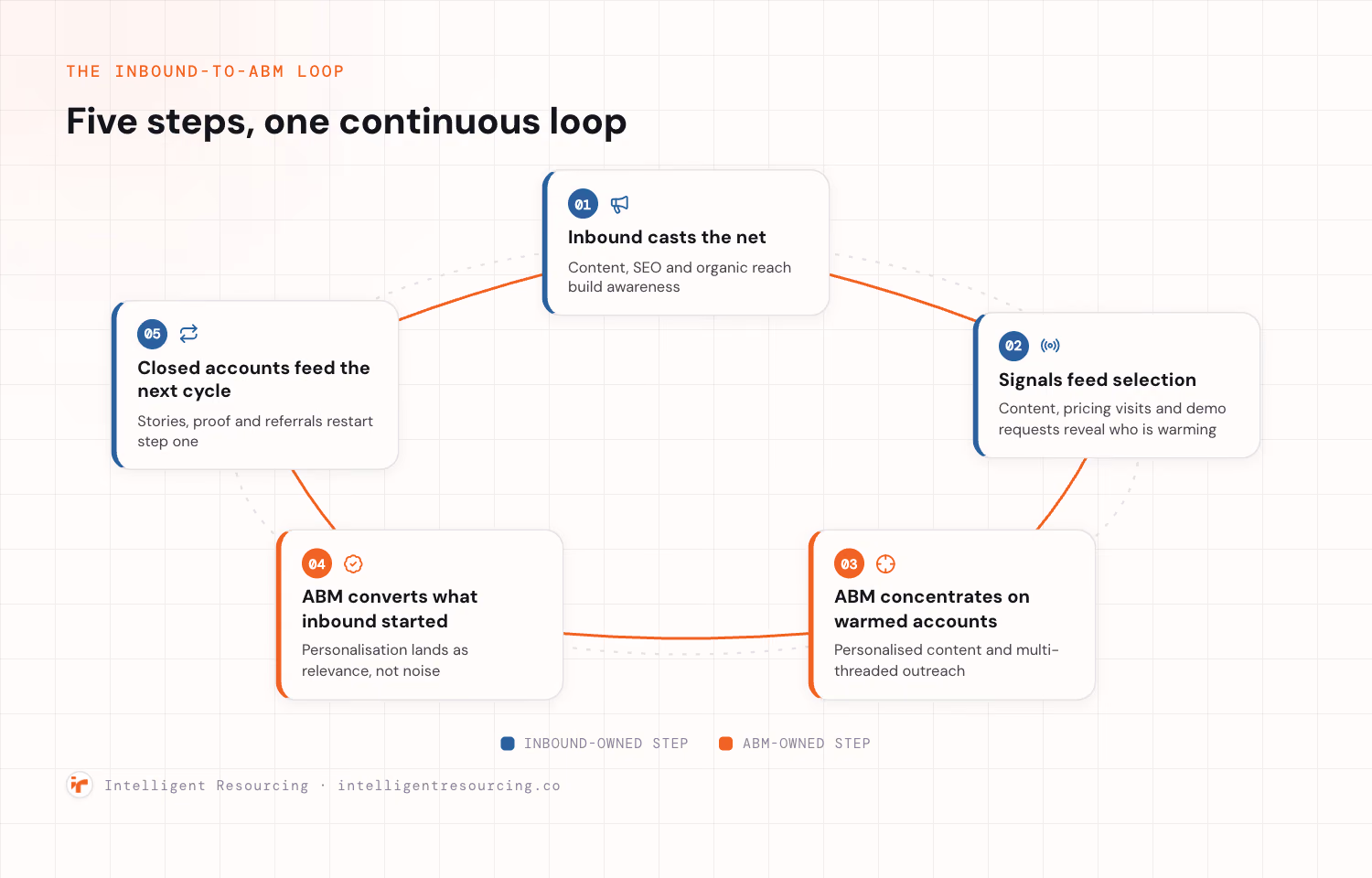
Run them as one loop and the accounts most worth winning get a named play instead of slipping back into anonymous traffic.
Sharing One Account View Across Sales and Marketing
Inbound engagement data and the ABM target list must live in one system, or account selection becomes guesswork. Agree a shared definition of a target account and of engagement, and give one owner the handoff. Without it, marketing celebrates MQLs while sales quietly reworks the list.
The Transition Point: From Inbound Lead to ABM Account
The switch from lead to account is not a lead score on its own; it is fit plus account-level intent. The trigger is the moment a good-fit account, one that matches your ICP, shows buying-committee-level engagement rather than a single form fill. This is where lead scoring and signal-based marketing start routing spend.
Signals That a Lead Has Become an Account Play
Watch for multiple contacts from one account engaging, high-intent visits to pricing and product pages, repeat consumption across roles, and a strong ICP match on firmographics. One form fill is not the trigger, promote on fit without intent and you spend too early; promote on volume without fit and you waste personalisation.
How to Hand Off Without a Jarring Restart
Escalate intensity gradually so the buyer never feels restarted between two machines: warm accounts get personalisation, cold ones keep getting awareness, and messaging stays continuous from anonymous, to identified, to named target.
Use this checklist to decide when an account has earned per-account spend.
| Signal | Stays inbound | Promote to ABM account |
|---|---|---|
| Contacts engaged per account | Single contact | Three or more across roles |
| Intent depth | Top-of-funnel content | Pricing or product-page visits |
| ICP fit | Partial or unknown | Strong firmographic match |
| Deal potential | Below ACV threshold | At or above ACV threshold |
Read it as an AND, not an OR: when fit and multi-contact intent line up, the account has earned per-account spend; until then, it stays in nurture.
KPIs for a Hybrid Inbound and ABM Pipeline
Measure each motion on its own terms, then the handoff. Judging ABM on raw lead volume, or inbound on account penetration, is the classic error that keeps sales and marketing arguing past each other.
Inbound KPIs vs ABM KPIs
Inbound answers to reach and efficiency: organic traffic, form fills, MQLs, and cost per lead. ABM answers to depth inside the list: target-account penetration, engagement, opportunities from the named list, win rate versus non-target accounts, and deal velocity.
Shared Pipeline Metrics for the Hybrid
The metrics that prove the loop works sit between the two: pipeline and revenue influenced, the count of inbound-sourced accounts promoted to ABM, and blended cost per opportunity. The promotion count tells you the two are actually feeding each other.
Here is the split, motion by motion.
| Motion | Primary KPIs | What it proves |
|---|---|---|
| Inbound | Organic traffic, MQLs, cost per lead | Reach and top-of-funnel efficiency |
| ABM | Account penetration, opportunities per named account, win rate vs non-target | Depth and quality inside the list |
| Shared (hybrid) | Pipeline influenced, inbound-to-ABM promotions, blended cost per opportunity | The handoff and the loop are working |
Each row measures what that motion is built to do. Watch the handoff metric, because that is the number that tells you the hybrid is real.
Which Approach Is Right for Your Situation
Match one line to your situation and act on it.
- If your TAM is large and your ACV is low, lead with inbound and layer ABM only on the accounts that engage.
- If only a few hundred accounts can ever buy you and deals are high-value, lead with ABM from day one.
- If you are growth-stage with mixed ACV, run inbound first and use its signals to select your ABM list.
- If the market already knows you but you are not concentrating on the best logos, add ABM on top of inbound.
- If your target accounts do not recognise you yet, warm them with inbound and brand before any cold ABM outreach.
Found your line? If you are in the growth-stage, mixed-ACV case, instrument your inbound signals before you spend on named accounts, because the signal layer is what makes your ABM list a selection, not a guess. That is the build we scope first with clients.
Build a B2B Pipeline That Runs Both
Stop choosing between ABM and inbound and start sequencing them: lead with the motion your market size and deal value call for, use inbound signals to select the accounts worth naming, and use ABM to convert what inbound has warmed. The teams that win share one list, one definition of engagement, and one scoreboard across both motions. Put your own TAM and deal value against the situation-routing lines and decide which motion funds first.
Leave the two motions on separate dashboards and the cost is concrete: your best accounts slip through the inbound net unnoticed, and your ABM budget burns on cold accounts that never knew you existed. If that is happening now, book a call with Intelligent Resourcing and we will design the inbound-to-ABM loop for your pipeline: shared account view, promotion triggers, and the KPI split.
Comparisons
Intelligent Resourcing designs the shared account view, sets the promotion triggers between inbound and ABM, and builds the KPI split so your best accounts stop slipping through the net.
FAQs
What Is ABM in B2B Marketing, and How Is It Different From Inbound?
ABM concentrates sales and marketing on a named list of high-value accounts, reaching the whole buying committee with personalised outreach. Inbound attracts a broad audience through content and search. The test: if the account chose the moment of contact it is inbound; if your team chose the account, it is ABM.
Can ABM Replace Inbound Marketing?
Rarely as a clean replacement. A one-to-many ABM tier can cover some top-of-funnel inbound, but you lose the cheap, compounding reach that ranking content provides for months. Full replacement only makes sense when your market is tiny and completely knowable.
Should a B2B Startup Start With ABM or Inbound Marketing?
Most early-stage startups lead with inbound, because they need awareness and market signal before they can build a credible target list. The exception: if you sell very high-ACV deals into a tiny, named market, ABM from day one is rational.
When Should a Lead Move From Inbound Nurture to an ABM Account Plan?
When strong ICP fit lines up with multi-contact, high-intent account engagement, not when a single form fill trips a lead score. Look for three or more contacts from one account, visits to pricing or product pages, and repeat consumption across roles.
How Do You Measure a Hybrid ABM and Inbound Strategy?
Measure each motion on its own terms, then the handoff. Judge inbound on reach and volume, ABM on account engagement and win rate versus non-target accounts, and the hybrid on pipeline influenced and inbound-to-ABM promotions. The mistake is cross-applying the wrong scoreboard.
Is ABM Worth It for Lower-Value B2B Deals?
Usually not for high-touch one-to-one or one-to-few ABM, where the cost per account outruns the return. For lower-ACV business, favour inbound's cheap, scalable reach, or a light one-to-many ABM layer that adds targeting without the per-account expense.