

What's the Difference Between Account-Based Selling and Account-Based Marketing?
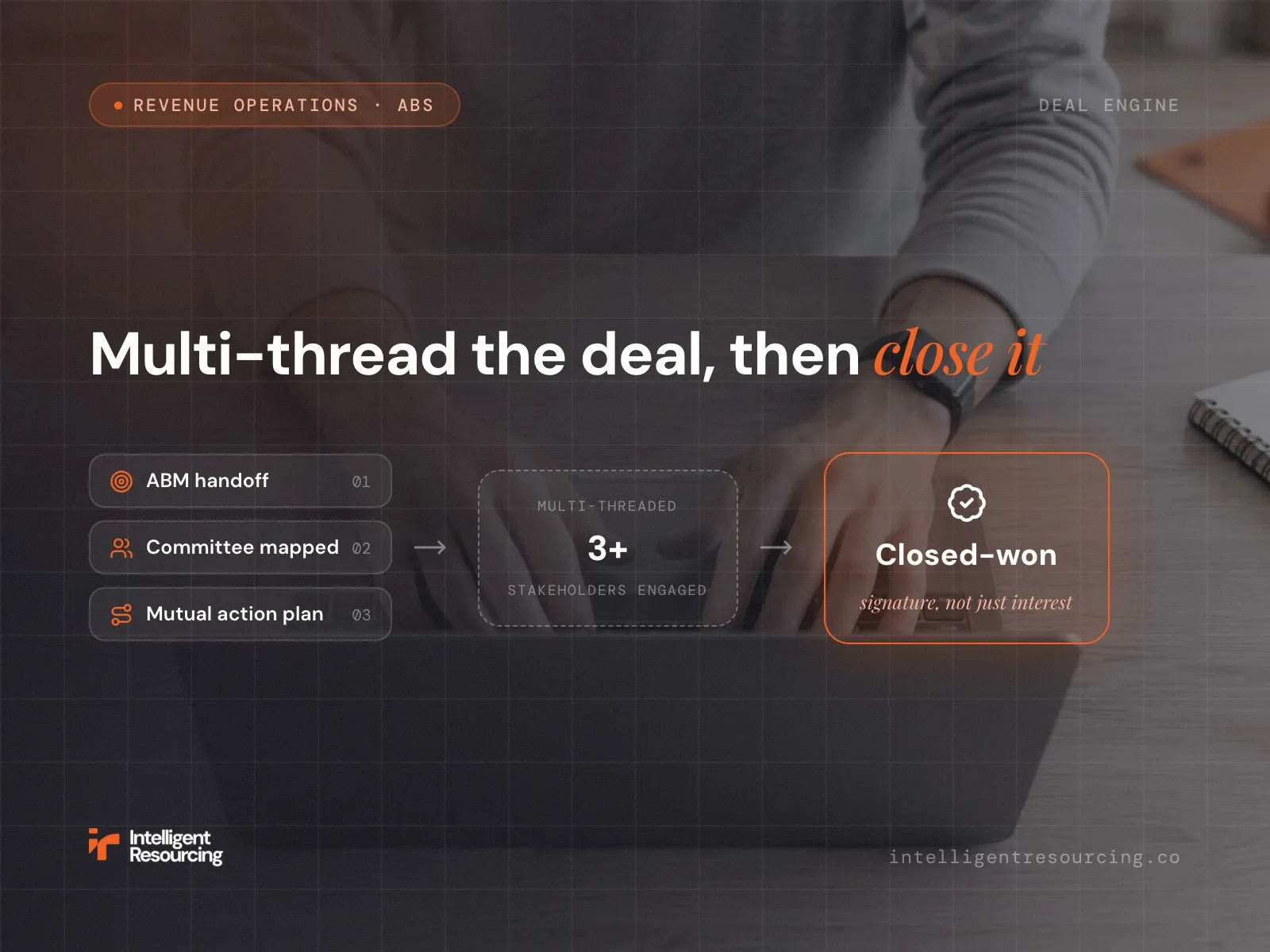
Account-based marketing generates and warms named target accounts while account-based selling converts those accounts into revenue. ABM runs personalised campaigns and builds intent and ABS runs multi-threaded deals and closes them. They are two halves of one motion, not competitors. Marketing hands warmed accounts to sales, and sales turns them into signed contracts.
Think of ABM and ABS as one revenue motion, split across two teams. Marketing owns awareness inside named accounts and sales owns conversion.
Account-based marketing programmes report 77% revenue growth, alongside 84% pipeline growth, per Momentum ITSMA's 2023 benchmark. The programmes that grow treat selling as the second half, not an afterthought.
ABM measures account engagement and pipeline created while ABS measures win rate, revenue per account, and deal velocity.
When Is ABM Enough on Its Own?
- For low-ACV: high-volume programmes, a human seller is not economical. Personalised campaigns can carry the account to purchase.
- For high-ACV: multi-stakeholder deals require more than account engagement because campaigns alone rarely move complex buying groups to a decision. Account-based selling adds the human layer by multi-threading the committee, building the business case with key stakeholders and creating alignment around the path to purchase. This is where an account-based GTM system earns its return by turning account interest into measurable pipeline and closed revenue.
How Do You Turn ABM Targets Into Closed Revenue With Account-Based Selling?
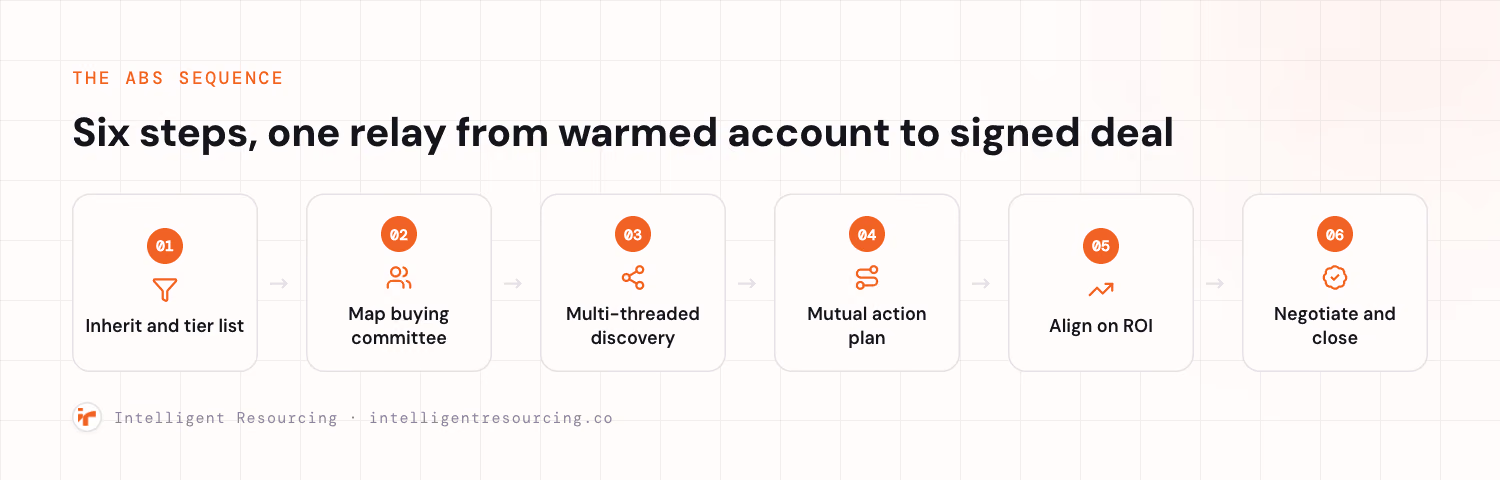
You turn ABM targets into revenue with a repeatable sequence: inherit the ABM target list and tier it, map the buying committee, run multi-threaded discovery, build a mutual action plan, align on the business case and ROI, and then negotiate and close. Each step moves a warmed account closer to signature.
The sequence is a relay, not a funnel. Each step hands the deal on with a clear trigger.
- Inherit the ABM target list and tier it. Do not build a parallel list. LinkedIn's B2B Institute found only 16% overlap between the accounts marketing targets and the accounts sales targets in its Circles of Doom research. Tier the shared list by revenue potential and fit.
- Map the buying committee. Complex B2B purchases rarely involve one decision-maker. Enterprise deals often include multiple stakeholders across commercial, technical and operational roles, so identify each person's influence, priorities and likely objections before progressing the opportunity.
- Run multi-threaded discovery. Build relationships across the account rather than relying on a single champion. Priorities change, internal sponsors leave and deals can stall when all knowledge sits with one contact.
- Build a mutual action plan. Create a shared roadmap with the buyer that defines decision steps, responsibilities, timelines and success criteria. This keeps momentum visible for everyone involved.
- Align on the business case and ROI. Translate the solution into commercial outcomes by connecting the investment to measurable business impact, operational improvements or financial metrics the buyer already values.
- Negotiate and close. Protect value before discussing price by tying the solution back to the agreed business case. Strong account-based selling trades concessions for commitments rather than giving discounts without a clear path to signature.
This is a Revenue Operations Studio motion in practice. In a LinkedIn-sponsored piece on Harvard Business Review, LinkedIn's Global VP of Sales Solutions Alyssa Merwin argued that a deep-sales approach drives faster deal cycles and higher win rates. Depth beats volume once the deal is high-value.
How Do Sales and Marketing Align for Account-Based Selling?
Alignment in account-based selling works when it is treated as an operating system rather than a recurring meeting. Sales and marketing need one shared target-account list, a defined ICP, agreed account tiers, clear handoff triggers and measurable SLAs. Signals determine when an account moves into active sales engagement, while closed-loop feedback improves targeting over time.
Alignment fails when it remains a principle rather than a mechanism. The following framework turns alignment into an operating process:
| Alignment Area | What Sales and Marketing Need to Do | Why It Matters |
|---|---|---|
| Shared ICP and account list | Agree on the ideal customer profile, target account criteria, buying triggers and disqualifiers. Build one tiered account list instead of separate marketing and sales spreadsheets. | Prevents teams from pursuing different accounts and ensures resources focus on the highest-value opportunities. |
| Account tiers and prioritisation | Rank accounts based on revenue potential, strategic fit and buying signals. | Ensures effort matches opportunity value rather than treating every account equally. |
| Handoff triggers and SLAs | Define when an account moves from marketing engagement to active sales outreach. Use account-level signals rather than individual lead scores alone, and set response timelines. | Creates clear ownership of the handoff and ensures sales acts while buying intent is still active. |
| Closed-loop feedback | Sales shares which accounts progress, stall or convert. Marketing uses this feedback to refine targeting, messaging and account tiers. | Improves the quality of future campaigns and makes the ABM system smarter over time. |
| Shared measurement | Track both engagement metrics and revenue outcomes against the same account list. | Prevents the misalignment where marketing reports activity while sales measures pipeline and revenue separately. |
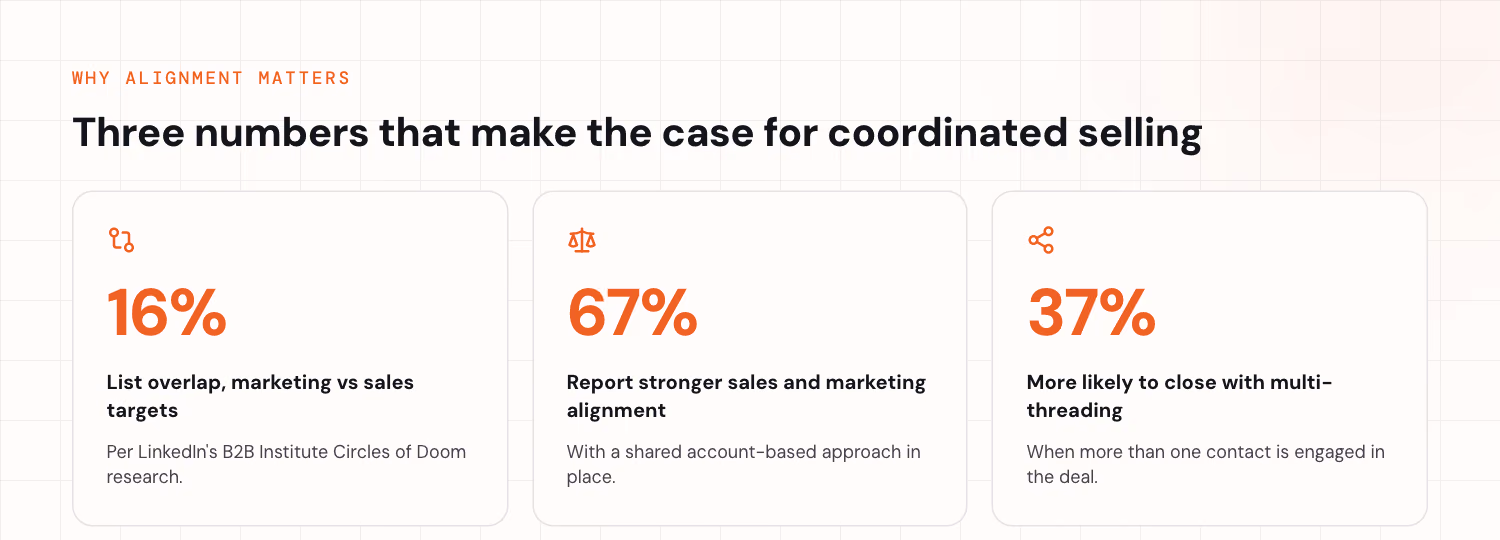
Alignment is worth the effort. 67% of B2B organisations report stronger sales and marketing alignment from account-based approaches, according to Highspot's 2023 report citing Demand Gen Report data. Stronger alignment improves not only communication, but also who acts, when they act and how opportunities progress.
This is also where GTM engineering supports execution by connecting signals, CRM workflows and revenue processes into one operating system, preventing the gaps where most account-based programmes lose momentum.
What Closing Tactics Work for High-Value Account-Based Deals?
High-value account-based deals close when sales teams create alignment, reduce risk and help the buying committee reach a confident decision. The strongest account-based selling motions combine relationship depth, commercial justification and process control rather than relying on pressure or discounts.
Use these tactics together because each one removes a different barrier to purchase:
- Multi-thread the buying committee: build relationships across decision-makers, influencers, technical stakeholders and budget owners instead of depending on one champion. Multiple relationships protect the deal when priorities change or a key contact leaves.
- Secure executive sponsorship: engage senior stakeholders who can influence budget, strategy and final approval. Executive alignment helps remove internal blockers and creates momentum for complex purchases.
- Run a mutual action plan: agree on decision steps, responsibilities, timelines and success criteria with the buyer. A shared plan keeps the deal moving and prevents opportunities from stalling without clear ownership.
- Build a tailored business case: move beyond generic presentations by connecting your solution to the account's specific challenges, operational goals and commercial outcomes. Buyers need a reason they can defend internally.
- Model the ROI: translate the investment into measurable business impact by linking the solution to financial outcomes, efficiency gains or strategic priorities the buyer already tracks.
- Enable your champion: give your internal advocate the proof points, data and messaging they need to influence other stakeholders when you are not in the room.
- Clear procurement early: start conversations around security, legal requirements, implementation and purchasing processes before the final approval stage to avoid late-stage delays.
- Time the deal around commercial triggers: identify renewal dates, budget cycles, leadership changes or operational events that create a natural reason for the account to evaluate change.
- Cover every channel the buyer uses: maintain consistent engagement across relevant online and offline touchpoints. 84% of B2B buyers say it matters that sellers operate across multiple online and offline channels, according to Hokodo's 2025 research.
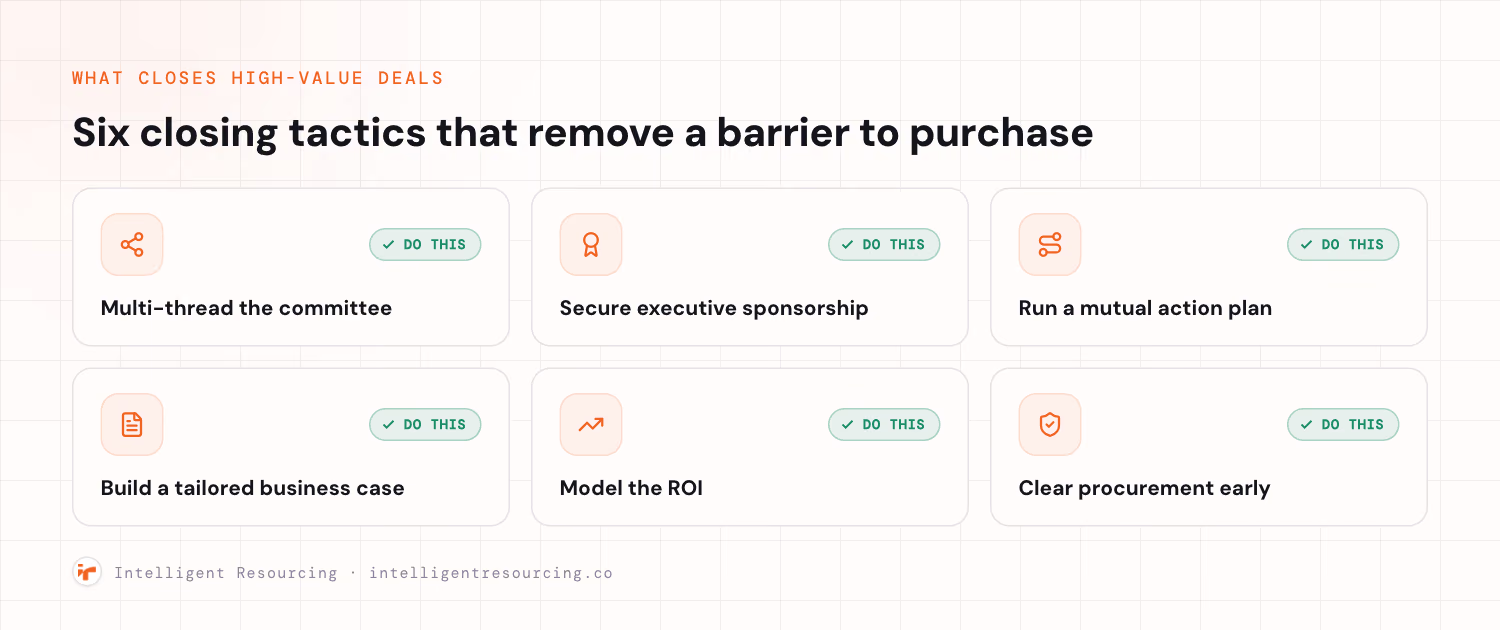
Coverage beats pressure in account-based selling. Each tactic reduces a potential reason for delay and helps move the buying committee from interest to a signed decision.
How Do You Handle Negotiation and Committee Objections in Enterprise ABS?
Enterprise account-based selling objections are handled by aligning the buying committee early, proving business value before discussing price and addressing each stakeholder's risk before it becomes a deal blocker.
Multi-threading is the foundation because enterprise purchases rarely depend on one person. Engage the economic buyer, champion and potential blockers throughout the process, as deals are 37% more likely to close when more than one contact is involved, according to Outreach's 2025 research.
Common objections require a targeted response:
- No urgency: connect the decision to a business trigger and quantify the cost of waiting.
- Incumbent lock-in: understand renewal timing and show the value of changing providers.
- Budget freeze: align the purchase with planning cycles or introduce phased implementation.
- Risk aversion: reduce uncertainty with proof points, references and a clear rollout plan.
Timing also determines success. Even a strong ABS motion can fail when an account is locked into an existing contract or has no active buying trigger, so teams should validate renewal windows and account signals before investing significant sales effort.
How Do You Measure Account-Based Selling Success?
Account-based selling success is measured by revenue outcomes, not activity volume. The core metrics are win rate, deal velocity, average deal size, account penetration and revenue per account, supported by leading indicators such as stakeholder coverage, engagement depth and buying committee involvement.
The strongest ABS measurement combines early signals with final outcomes. Leading indicators show whether a deal is progressing, while lagging indicators confirm whether the account converted into revenue. Tracking both prevents teams from confusing account activity with commercial impact.
Key metrics include:
- Win rate: shows whether the sales motion is converting priority accounts effectively.
- Deal velocity: measures how quickly accounts move from engagement to closed revenue.
- Revenue per account: shows whether account selection and tiering are producing higher-value opportunities.
- Stakeholder coverage: reveals whether the team has built enough relationships across the buying committee.
- Pipeline progression: connects account engagement to actual commercial movement.
ABM programmes typically show measurable gains in account engagement and MQL-to-SAL conversion well before revenue outcomes catch up, which is why leading indicators matter in the interim.
In one Intelligent Resourcing Revenue Operations Studio implementation, a 40-person Australian SaaS sales team increased the win rate on tier-one accounts from a typical B2B benchmark of around 20% to 31% within two quarters. That represents an 11-point lift, or roughly a 55% relative improvement, by improving account coverage and sales alignment.
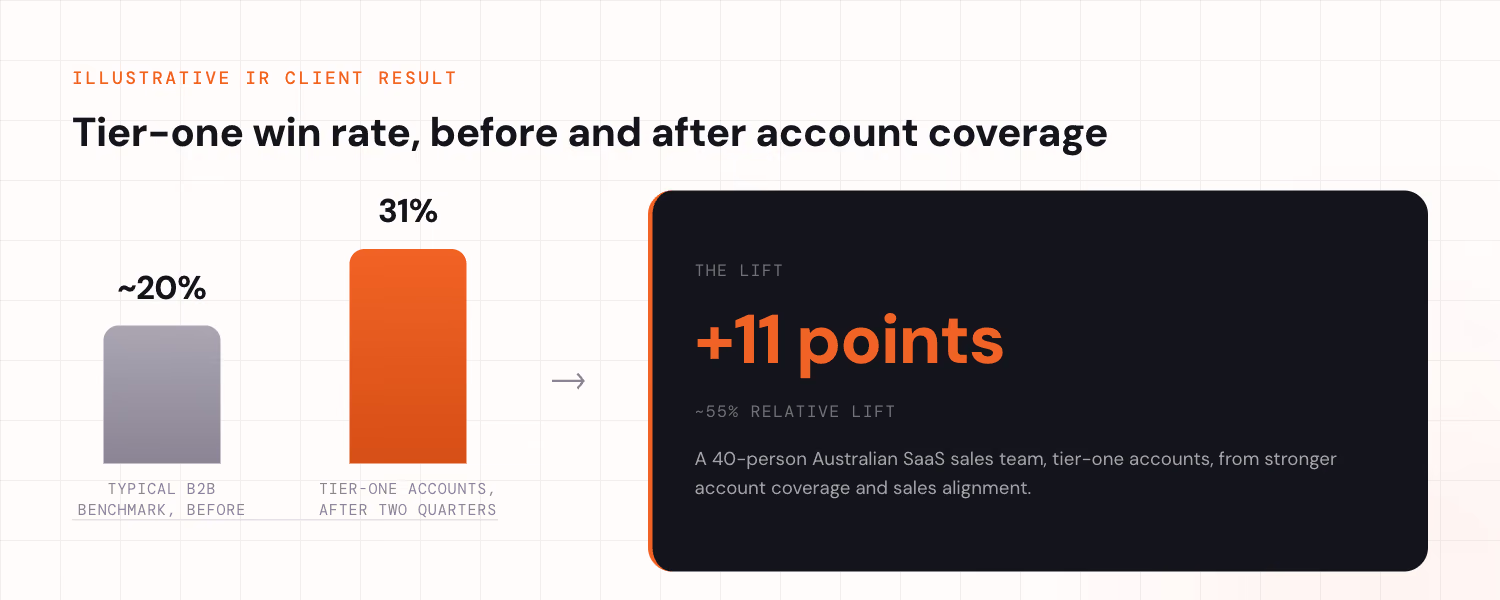
The principle is simple: better account coverage improves the leading indicators that eventually drive closed revenue.
Build Your Account-Based Revenue Engine
An ABM target list creates opportunity, but revenue comes from the systems that turn the right accounts into active conversations and closed deals.
Intelligent Resourcing builds signal-led revenue systems that connect account intelligence, B2B lead generation and GTM engineering into one operating motion, helping teams prioritise the accounts that matter, activate the right buying signals and create multi-threaded sales processes that move complex deals forward.
GTM Engineering
Intelligent Resourcing reviews your current ABM motion, maps the buying committee on your priority accounts and builds the multi-threaded sales process that moves them to signature, on your own CRM and sales stack.
FAQs
Is Account-Based Selling Only for Enterprise Companies?
No. Account-based selling suits any team selling high-value, multi-stakeholder deals, not only enterprises. A 30-person software company with six-figure contracts qualifies. The trigger is deal complexity and contract value, not headcount. Once a purchase needs several stakeholders and real budget, the account-based motion pays for itself.
What Deal Size Makes Account-Based Selling Worth It?
As a rule of thumb, the economics hold above roughly $10K in annual contract value. Adjust for sales-cycle length and existing category demand. The mechanism is simple: high-touch selling costs real money, so the contract value must justify the effort. Below that threshold, automated campaigns usually win.
Who Owns Account-Based Selling, Sales or Marketing?
Account-based selling is sales-led and marketing-supported. Sales owns the number and the close. Marketing supplies intent, air cover and personalised content. Both run from one shared account list with agreed SLAs. Ownership sits with sales, but neither team hits the target alone.
How Long Does It Take to Close a High-Value Account With ABS?
Expect three to nine months for most enterprise deals, driven by sales-cycle length and committee size. Multi-threading and a mutual action plan shorten it. A single champion and a stalled procurement lengthen it. The cycle contracts when you engage the economic buyer early and hold dates against every step.
What Tools Do You Need for Account-Based Selling?
Four categories cover it: a CRM like HubSpot or Salesforce, intent and enrichment data from Clay or ZoomInfo, a sales engagement platform such as Outreach or Salesloft, and an ABM platform like Demandbase or 6sense. Start with the CRM and one data source. Avoid tech bloat, unused tools slow the team down.