

What Does Google Show for "SEO for Accountants" Today?
Google shows an AI Overview first, then the ranked links. We ran the search in Australian Google results on 9 October 2026 and read what it returned.
The AI Overview sat above every organic result. Its named sources included Kia Ora Digital, Search Marketing Group, Xero, Perth Digital Edge, TaxDome and Bambrick.
Here is the part worth noticing. Every one of those sources also appeared in the organic results below the summary. On this search, ranking and citation lined up rather than diverging.
| What a buyer sees | What decides it |
|---|---|
| The AI Overview at the top | Which pages the engine cites as sources |
| The ranked links below | Classic SEO: links, page quality, relevance |
This is one search, on one date, from our own check. AI Overviews change between users, places and runs, so treat it as an example rather than a trend. For what AI engines check on a firm's own site, our GEO checklist for accounting firm websites sets out 32 checks.
What Did That AI Overview Actually Tell Accountants to Do?
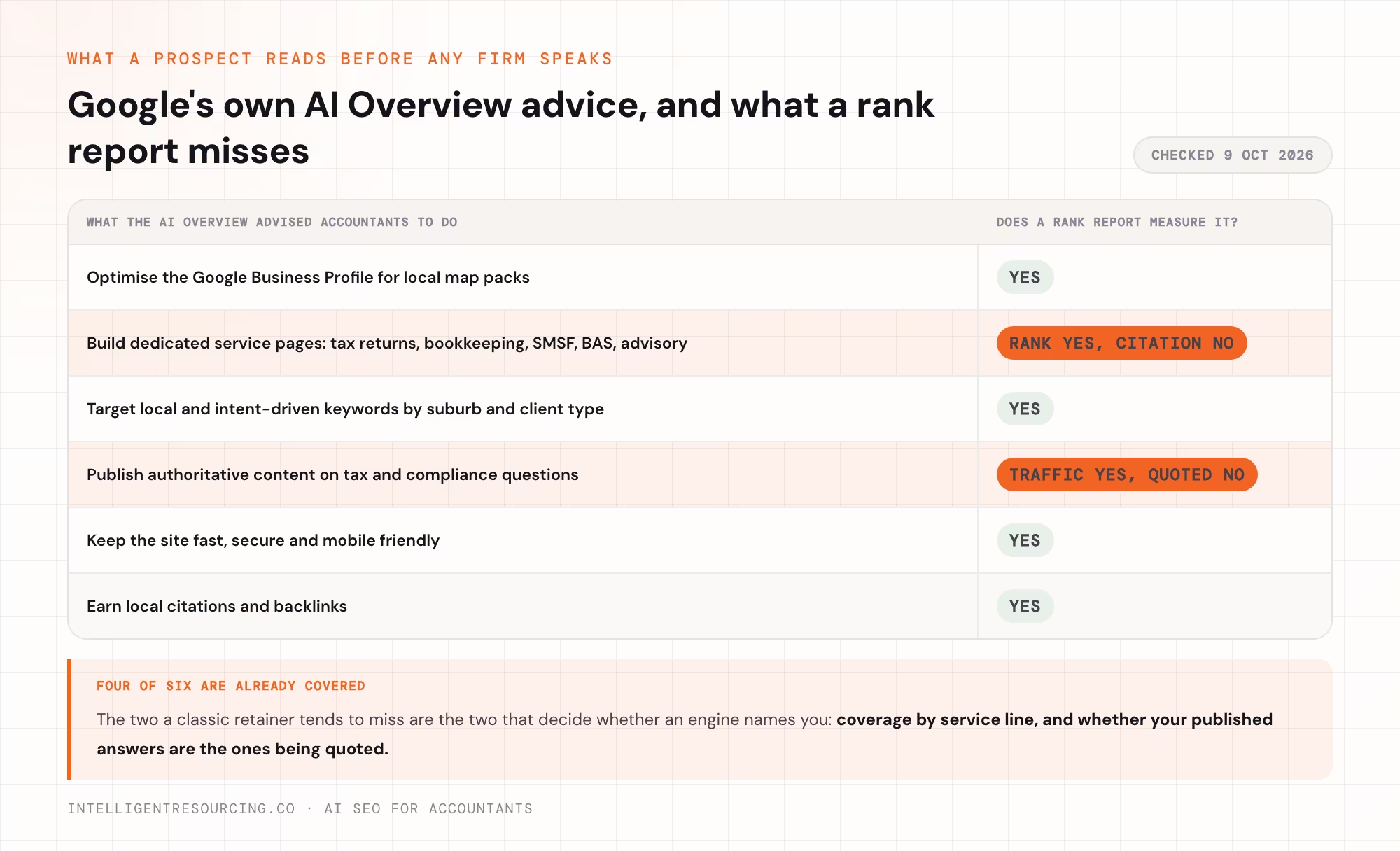
The summary gave six pieces of advice, which is useful on its own: it is what a prospective client reads before any firm gets a chance to speak.
| What the AI Overview advised | Can your current report measure it? |
|---|---|
| Optimise the Google Business Profile for local map packs and "accountant near me" | Yes, most SEO reports already track this |
| Build dedicated service pages for tax returns, bookkeeping, self-managed super fund (SMSF), business activity statement (BAS) preparation and business advisory | Partly: rank yes, citation by service line usually not |
| Target local and intent-driven keywords by suburb and client type | Yes |
| Publish authoritative content answering tax and compliance questions | Partly: traffic yes, whether an engine quoted it usually not |
| Keep the site technically healthy, fast, secure and mobile friendly | Yes |
| Earn local citations and backlinks | Yes |
Four of the six are things a classic SEO retainer already covers. The two it tends to miss are the two that decide whether an engine names you: coverage by service line, and whether your published answers are the ones being quoted.
What Changed Between Ranking on Google and Being Named by an AI Engine?
Google now answers most commercial searches with a written summary, not a list of links. That summary often names a firm before the reader reaches a single link.
Peec AI classified 500,000 prompts sampled from 13 to 20 April 2026 and published the study in May. It found AI Overviews on 88.5% of decision-stage prompts, against an 87% average across the sample.
Read that number with its limits. Peec says the dataset leans towards business prompts with clear buying intent and excludes navigational searches such as a brand name on its own, so it describes commercial searches rather than all of Google.
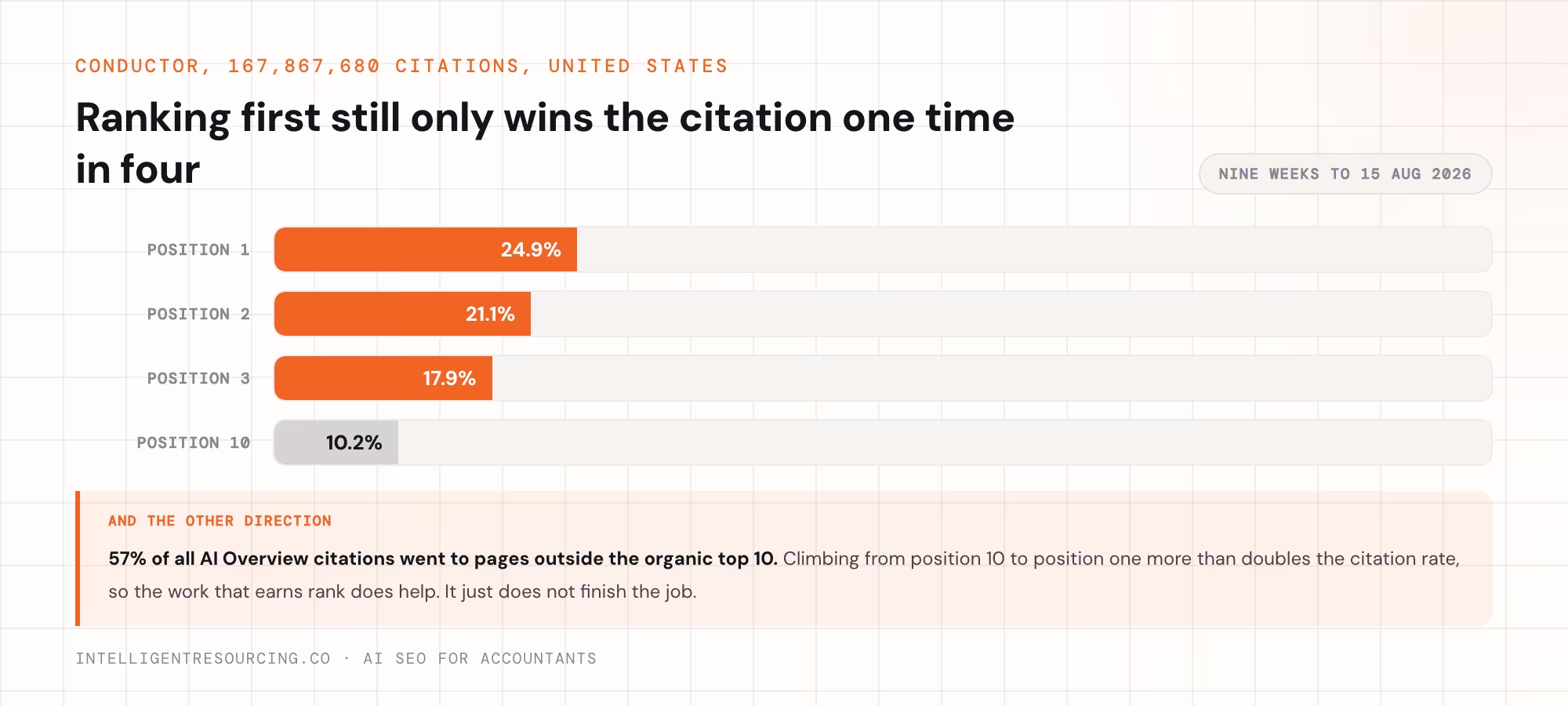
The overlap between the two contests is the part firms get wrong. Conductor pulled every AI Overview citation from United States Google searches over nine weeks to 15 August 2026, 167,867,680 of them, and compared each against the organic results on the same search.
A page in position one was cited 24.9% of the time, falling to 10.2% at position 10. Separately, 57% of all citations went to pages outside the organic top 10.
The fall is steady rather than sudden, which is why a rank report alone reads as reassuring:
| Organic position | Chance of an AI Overview citation |
|---|---|
| 1 | 24.9% |
| 2 | 21.1% |
| 3 | 17.9% |
| 10 | 10.2% |
Moving from position 10 to position one more than doubles the citation rate, so the work that earns rank does help. It just does not finish the job.
What changed, in short:
- Old signal: a high Google position predicted whether a buyer found your firm.
- New signal: whether the AI Overview names your firm predicts it instead.
- The overlap: on United States data, position one earns a citation about a quarter of the time, so the two signals move together only loosely.
That is the gap generative engine optimisation exists to close. It is about getting named inside the answer, not just linked beneath it.
What Should an Accounting Firm's SEO Report Show Now?
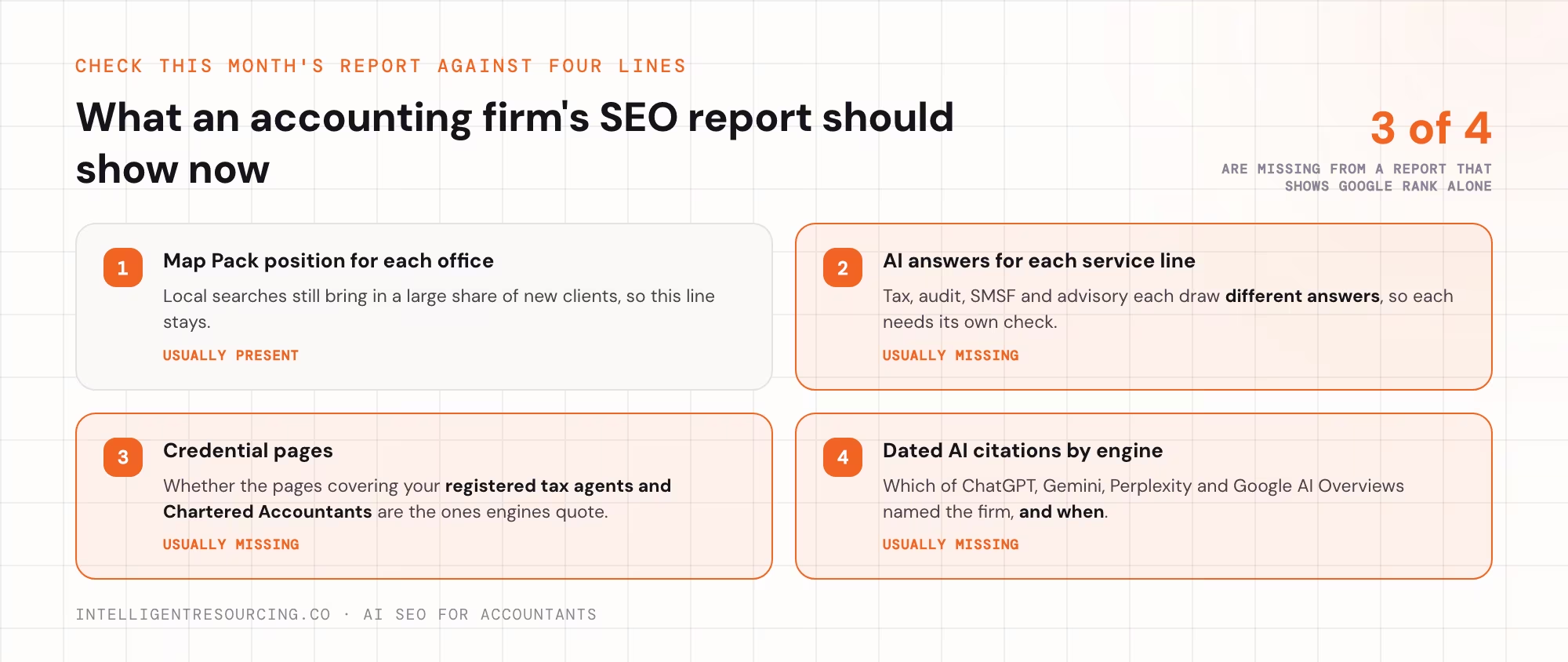
An accounting firm's SEO report should show where the firm is named, not just where it ranks. For a practice, that means four lines a general agency report often leaves out.
In Ravical's 2025 report, a survey of 500 senior decision-makers at UK accountancy firms, 64% of businesses were said to consult ChatGPT before seeking advice from their accountant. That is United Kingdom data reported by firm leaders rather than by the businesses themselves, so read it as a signal rather than an Australian measurement.
Check your current report for these four lines:
- Map Pack position for each office. Local searches still bring in a large share of new clients, so this stays.
- AI answers for each service line. Tax, audit, SMSF and advisory each draw different answers, and each needs its own check.
- Credential pages. Whether the pages covering your registered tax agents and Chartered Accountants (CA) are the ones AI engines quote.
- Dated AI citations by engine. Which of ChatGPT, Gemini, Perplexity and Google AI Overviews named the firm, and when.
The deliverables that carry across from SEO, and the ones that get added, are set out in our comparison of a GEO retainer and an SEO retainer.
What Should an Accounting Firm Check Before Signing an SEO Contract?
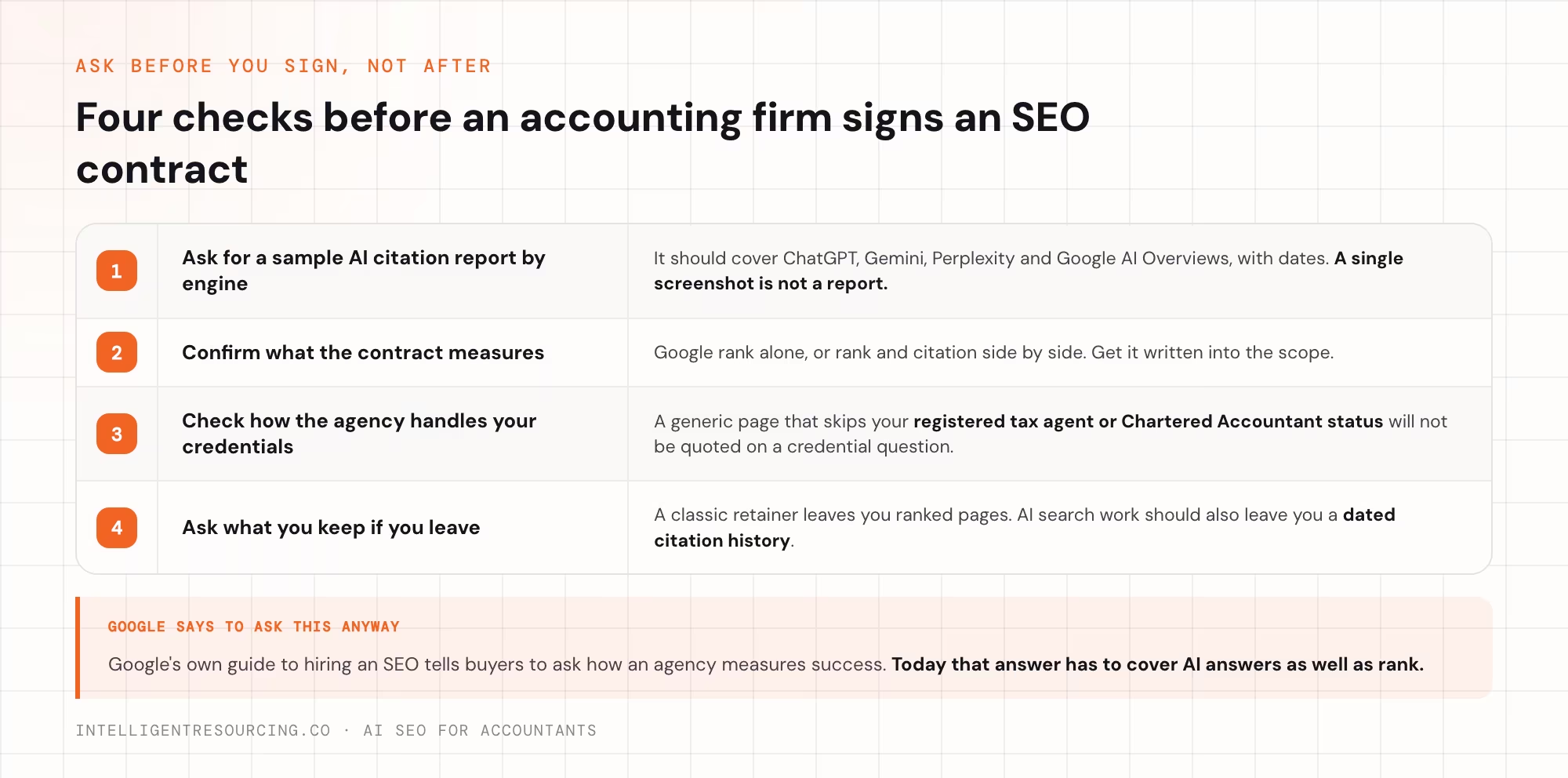
Ask any SEO agency how it will measure AI citations before you sign, not after. Google's own guide to hiring an SEO already tells buyers to ask how an agency measures success. Today that answer has to cover AI answers as well as rank.
Four checks before you sign:
- Ask for a sample AI citation report by engine. It should cover ChatGPT, Gemini, Perplexity and Google AI Overviews, with dates. A single screenshot is not a report.
- Confirm what the contract measures. Google rank alone, or rank and citation side by side.
- Check how the agency handles your credentials. A generic page that skips your registered tax agent or CA status will not be quoted on a credential question.
- Ask what you keep if you leave. A classic SEO retainer usually leaves you ranked pages. AI search work should also leave you a dated citation history.
For a quick way to test whether AI names your firm today, the 30-second check in our guide to getting named in AI answers runs in front of a partner.
Who Still Needs Classic SEO, and Who Needs AI Search Optimisation Too?
A firm that lives on local "near me" searches still needs classic SEO first. Google's guide to improving your local ranking says local results are mainly based on relevance, distance and popularity.
A complete Google Business Profile, reviews and links from other sites all feed those signals. A firm competing on broader service terms needs both rank and AI citations.
| Firm type | What it needs |
|---|---|
| Single-partner practice, one suburb | A strong Google Business Profile and a handful of local pages |
| Multi-service firm, broader terms such as "SMSF audit" | Classic SEO and dated AI citation tracking, run together |
This is where ranking and citation stop lining up, and where paying for classic SEO alone leaves a gap. Closing it is the job of a content strategy built for AI answers.
Content Creation
See which of your service lines AI engines name you for today, and which ones send buyers to a competitor instead.
FAQs
Does ranking for "SEO for accountants" mean an agency gets AI citations?
Not reliably. On the Australian search we checked on 9 October 2026, the AI Overview's named sources all also ranked on page one, so the two lined up. Conductor's wider United States data points the other way: a page in position one earns an AI Overview citation 24.9% of the time, and 57% of citations go to pages outside the organic top 10. Ranking helps, but it is a weak predictor.
Do AI Overviews show up for accounting searches in Australia?
Yes. Google showed an AI Overview above every organic result for "SEO for accountants" in Australian results when we checked on 9 October 2026. Peec AI's wider study found AI Overviews on 88.5% of decision-stage prompts in a sample weighted towards commercial searches.
How do I know if my current SEO agency tracks AI citations?
Ask for a dated report naming which AI engines mentioned your firm, and for which prompts. If your only report shows Google rank positions, your agency is not tracking it.
Should a one-suburb practice pay for AI search work?
Usually not first. A single-office practice depends on local searches, where Google ranks results mainly on relevance, distance and popularity. A strong Google Business Profile comes first. AI search work earns its cost once the firm competes for broader service terms.
What should an accounting firm's SEO report show each month?
Map Pack position for each office, AI answers for each service line, which credential pages get quoted, and dated AI citations by engine. A report that shows only Google rank is missing three of those four.