

How Should an Accounting Firm Use This Checklist?
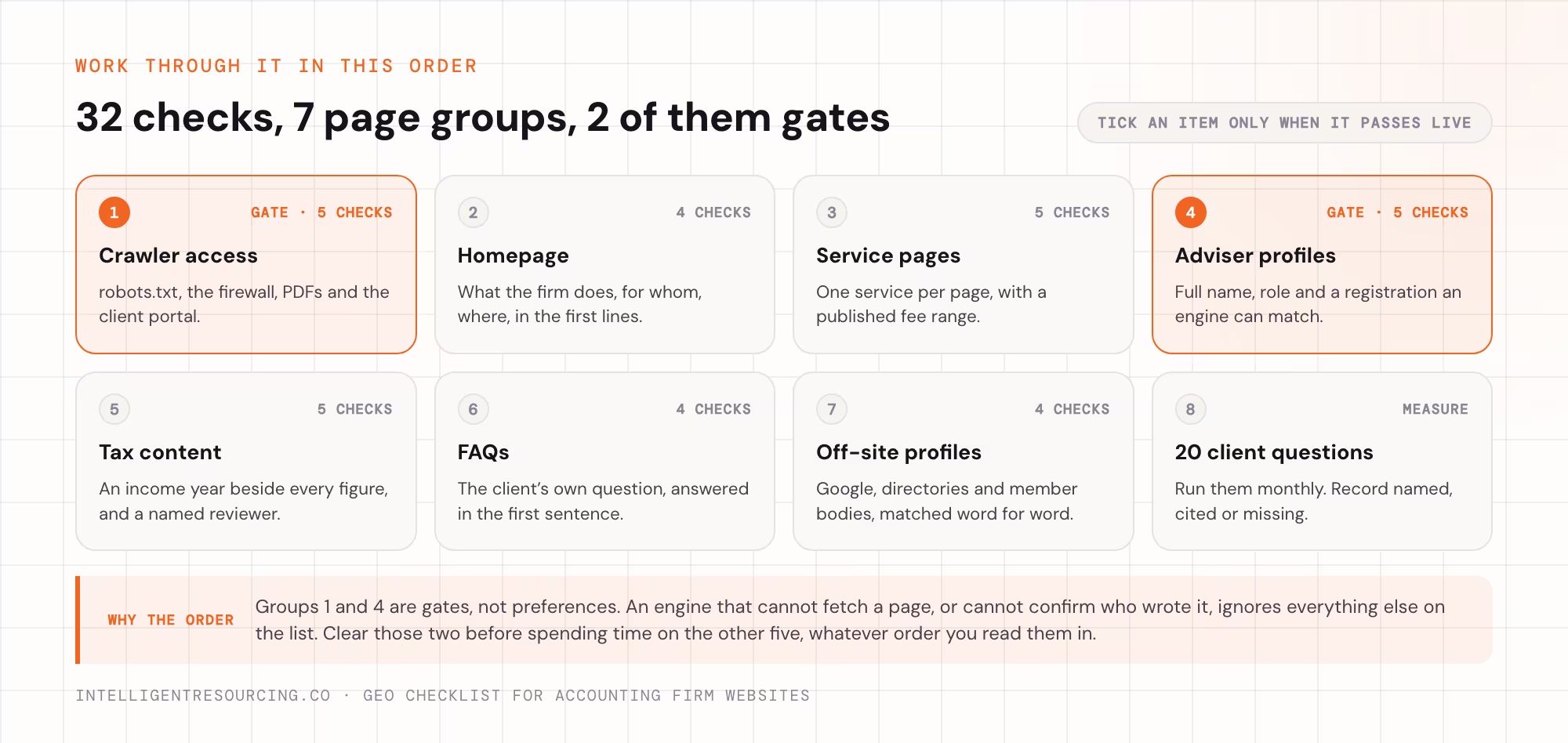
Work through this generative engine optimisation (GEO) checklist one group at a time, in order. Tick an item only when it passes on the live site. Order matters: crawler access and adviser identity come first, because an engine that can’t read a page or confirm who wrote it ignores the rest.
Each item has 2 parts. The "Why it matters" column says what to fix and why. The "How to check" column shows how to confirm it in under 5 minutes, usually with a browser and your firm’s registration details.
The list is written for Australian practices. It uses the Tax Practitioners Board, income years that start on 1 July and ABN Lookup, which gives free access to public Australian Business Number (ABN) information from the Australian Business Register. The same logic works in any market where accountants are registered.
This page goes deeper than a general audit. Our LLM SEO checklist tests any website in 4 stages. LLM SEO means SEO for large language models (LLMs), the AI behind tools like ChatGPT. This one applies the same thinking to the pages an accounting firm publishes.
Can AI Crawlers Reach Every Page of the Firm’s Site?
AI crawlers can only quote pages they are allowed to fetch. A practice site can block them without anyone at the firm knowing, often through security settings the IT provider set up years ago. Check access before you fix anything else.
| Check | Why it matters | How to check |
|---|---|---|
| Let AI search crawlers in through robots.txt | OpenAI’s crawler guide lists its search crawler and its training crawler separately. A firm can let clients find it in ChatGPT search while saying no to training. | Open yourdomain.com.au/robots.txt and search for each crawler’s name. |
| Make sure the firewall doesn’t block them | Practice IT providers often set security tools to turn away unknown bots with a 403 or 429 error. | Ask your IT provider for a log of bot responses over the last 30 days. |
| Keep key content out of PDFs | Fee schedules, tax guides and checklists locked in PDFs are harder to quote than the same text on a web page. | List every PDF linked from a service page and move the main points onto the page. |
| Keep public guides outside the client portal | The client portal should stay private, but tax guides for the public shouldn’t need a login. | Open each guide in a private browser window without logging in. |
| Keep the sitemap up to date | New service and adviser pages need a path crawlers can follow. | Check that every adviser profile appears in sitemap.xml. |
Does the Homepage Tell an Engine Exactly What the Firm Is?
The homepage should say, in its first 2 sentences, what the firm does, for whom and where. Engines match firms to questions such as "accountant for construction businesses in Geelong". A vague line about "trusted advisers" gives them nothing to match.
| Check | Why it matters | How to check |
|---|---|---|
| Name the services, clients and location in the first lines | "Tax and advisory accountants for trade businesses in Geelong and the Surf Coast" can be quoted. "Your trusted partner in growth" can’t. | Read the first 2 sentences aloud. Could a stranger repeat what the firm does? |
| Use the registered business name everywhere | The name on the homepage, footer, invoices and profiles should match the entity and trading names on the firm’s ABN record. | Look up the firm’s ABN and compare the names word for word. |
| Add organisation markup with the right type | Schema.org’s AccountingService type is a type of local business made for accounting practices. It sits under FinancialService. | Run the homepage through a structured data testing tool. Check the type and address match the footer. |
| Give each industry you serve its own page | A firm that serves medical practices, builders and farmers needs a page for each, because each is a different client question. | Count your industry pages against the industries named on the homepage. |
Do Service Pages Answer the Client’s Real Question, Including Price?
Each service page should answer one client question in its first paragraph. Then it should show what’s included, who delivers it and what it costs. Price matters more than most firms expect, because engines compare options when a client asks about cost.
| Check | Why it matters | How to check |
|---|---|---|
| Open with a direct answer | A company tax return page should say what the service is, who it suits and what the client gets, in 40 to 60 words. | Paste the first paragraph into a blank document. Does it make sense on its own? |
| Show a fee range or starting price | A 2026 study ran 252,000 paired comparisons across 6 large language models, changing one factor at a time. Explicit price information was one of the factors that consistently helped a page get cited first, though topical relevance and position in the list mattered more. | Search each service page for a dollar figure. |
| Say what’s included and what’s extra | "Includes lodgement, one review meeting and Australian Taxation Office (ATO) letters for 12 months" answers the next question before the client asks. | List what’s included as bullet points under the price. |
| Name the adviser who leads the service | The page should link to that person’s profile, with their registration shown there. | From each service page, click through to a named person. |
| Keep one service per page | A single page covering tax, bookkeeping, self-managed super funds (SMSFs) and payroll gives an engine 4 weak answers instead of 1 strong one. | Count the services on each page. |
One page per service also explains why a firm can be cited for one service and not another. Our guide to why accounting firms are invisible in AI search shows how each service line behaves differently.
Can an Engine Confirm Who Each Adviser Is?
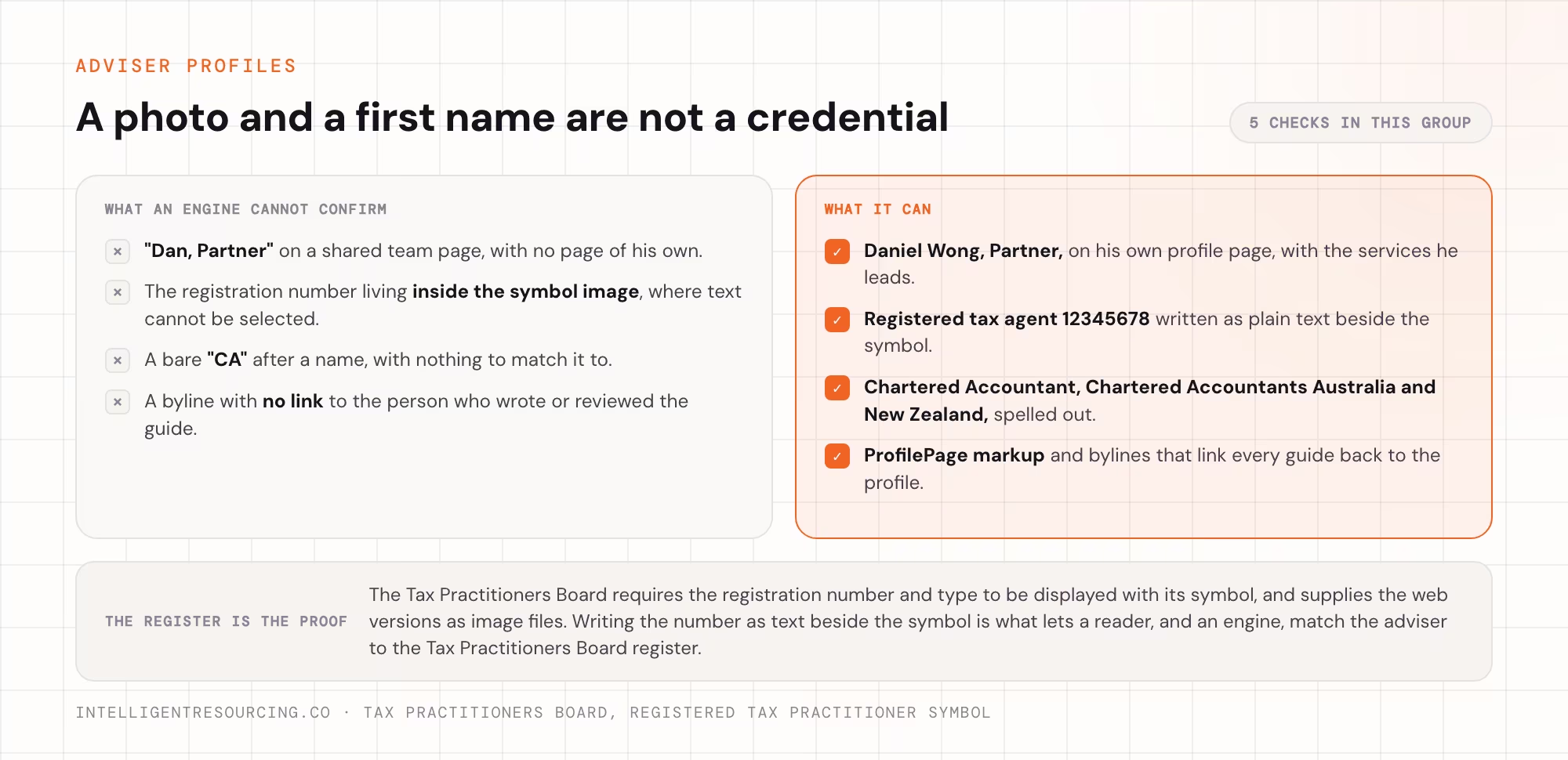
An engine can only confirm an adviser when the profile gives a full name, a role and a registration it can match to a public record. For Australian tax agents, that record is the Tax Practitioners Board register. A photo and a first name are not enough.
| Check | Why it matters | How to check |
|---|---|---|
| Give every adviser their own profile page | One page per person, with full name, role, credentials and the services they lead. | Check each named adviser has their own URL. |
| Write the registration number as text beside the symbol | The Tax Practitioners Board’s guide to the symbol says you must display your registration number and type with it, and that the web versions of the symbol are JPG and PNG images. An engine may not read text inside an image. | Highlight the text on the profile. Does the number highlight? |
| Write memberships in full | "Chartered Accountant, Chartered Accountants Australia and New Zealand" says more than a bare "CA". | Spell out every set of letters after a name the first time. |
| Mark up profiles as profile pages | Google’s ProfilePage markup tells engines a page is about one person, so articles can point their author to it. | Check each profile carries ProfilePage markup with the adviser’s name. |
| Link each adviser’s articles to their profile | Every guide they write or review should have a byline that links to their page. | Click 3 bylines and land on 3 profiles. |
Our guide on how to publish credentials for AI search goes step by step through matching each adviser to the register, with before-and-after examples.
Is Tax and Advice Content Sourced, Dated and Current?
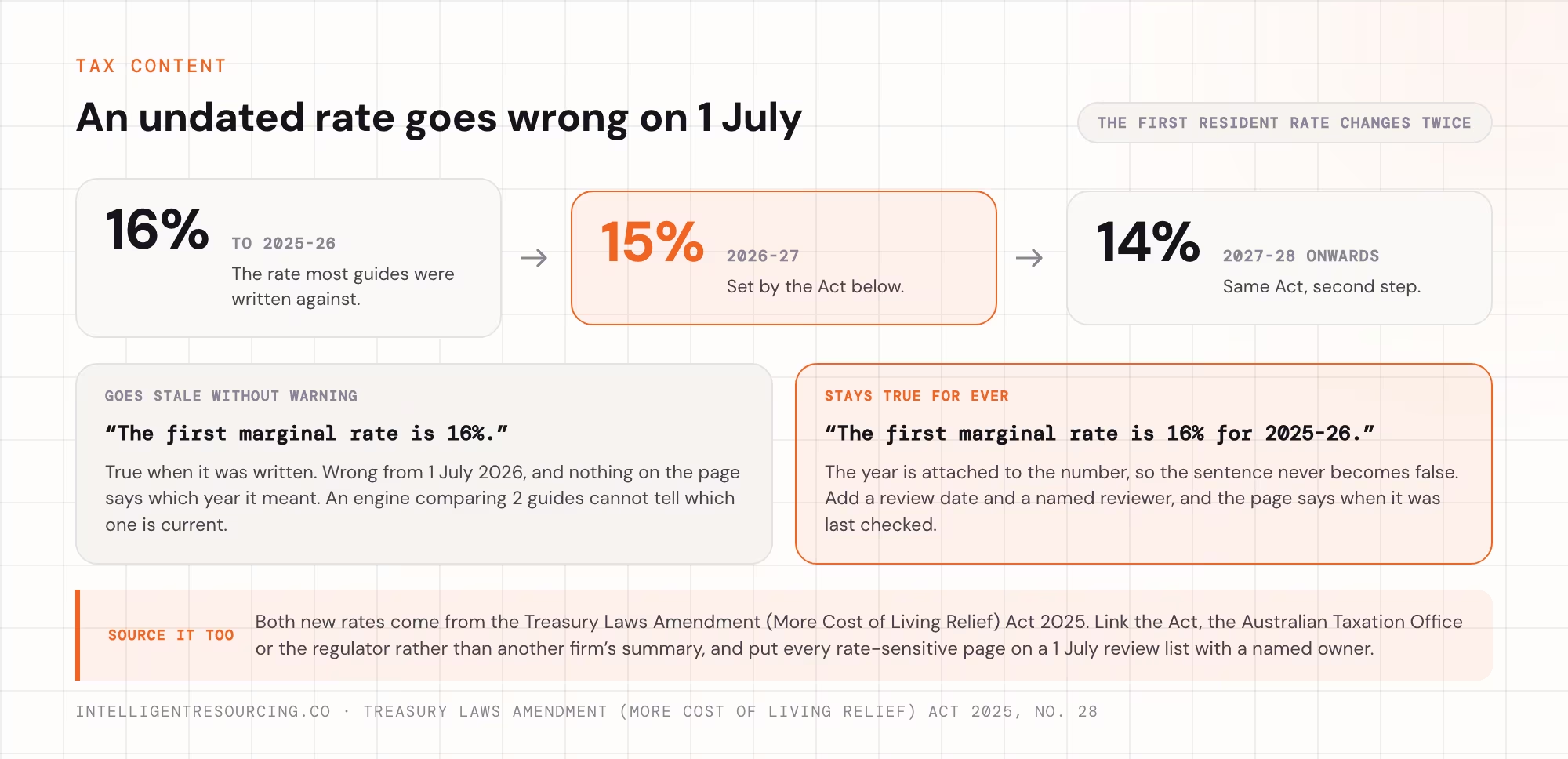
Tax content should name the income year for every figure, link the main source and show a review date. Rates, thresholds and caps change on 1 July, so a figure without a year goes wrong without warning. An engine comparing 2 pages can’t tell which figure is current unless the page says so.
| Check | Why it matters | How to check |
|---|---|---|
| Tie every figure to an income year | The Treasury Laws Amendment (More Cost of Living Relief) Act 2025 cuts the 16% resident tax rate to 15% for 2026-27 and 14% from 2027-28. A guide quoting the old rate without a year is now out of date. | Search each guide for a percentage. Is an income year beside it? |
| Cite the main source | Link the ATO, the law or the regulator. Another firm’s summary is a weak source. | Hover over each link in a tax guide. Does the address end in .gov.au? |
| Show a review date and a named reviewer | "Reviewed 1 July 2026 by Daniel Wong, registered tax agent" tells readers and engines the page is current. | Check the date shows on the visible page as well as in the code. |
| Mark up the dates and author | Google’s article markup guide lists the published date, the updated date and an author link as fields to use. | Check the updated date changes when the page is reviewed. |
| Book a 1 July review | Put every rate-sensitive page on a list you review after each federal budget and each new income year. | The list exists and has an owner. |
Are FAQ Pages Written for AI Answers Rather Than Rich Results?
FAQs still earn their place, because each question and answer is a ready-made passage an engine can quote. What has changed is the payoff. Google stopped showing FAQ drop-downs for most sites in 2023, so write FAQs for the answer itself.
| Check | Why it matters | How to check |
|---|---|---|
| Don’t expect FAQ drop-downs in Google | Google’s 2023 FAQ change limited them to well-known, authoritative government and health sites. Google says there is no need to remove leftover markup, because unused structured data causes no problems. | Don’t count FAQ drop-downs as a goal for the firm. |
| Use the exact questions clients ask | "Do I need to register for goods and services tax (GST) if I earn under $75,000?" beats "GST information". | Pull 10 questions from recent client emails and compare them with your FAQ headings. |
| Answer in the first sentence | Start with yes, no or the number, then explain. | Read only the first sentence of each answer. |
| Put FAQs on the service page they belong to | A GST question sits under the Business Activity Statement (BAS) service rather than a catch-all page. | Each service page carries 3 to 5 questions about that service. |
Do Off-Site Profiles Match the Website Word for Word?
Every profile outside the website should use the same firm name, address, phone number and adviser names as the site. Engines read business listings and directories alongside your own pages. A mismatch forces them to decide whether 2 records describe the same firm.
| Check | Why it matters | How to check |
|---|---|---|
| Match the Google Business Profile name to the real name | Google’s Business Profile guidelines say the name should reflect your real-world name, as used on your storefront, website and stationery. | Compare the profile name with the website footer, letter by letter. |
| Pick the right main category | "Accountant" or "Tax preparation service" should match your main service. | Read the category on the live profile. |
| Update professional body directories | Adviser names, firm names and addresses in member directories should match the profile pages. | Search for each adviser in their professional body’s directory. |
| Keep adviser changes in sync | When a partner leaves, update the website, Business Profile and every directory in the same week. | Keep a list of every profile, with a login owner for each. |
Keeping these records lined up is ongoing generative engine optimisation work, because one outdated listing can contradict a page that is otherwise correct.
How Does a Firm Know the Checklist Is Working?
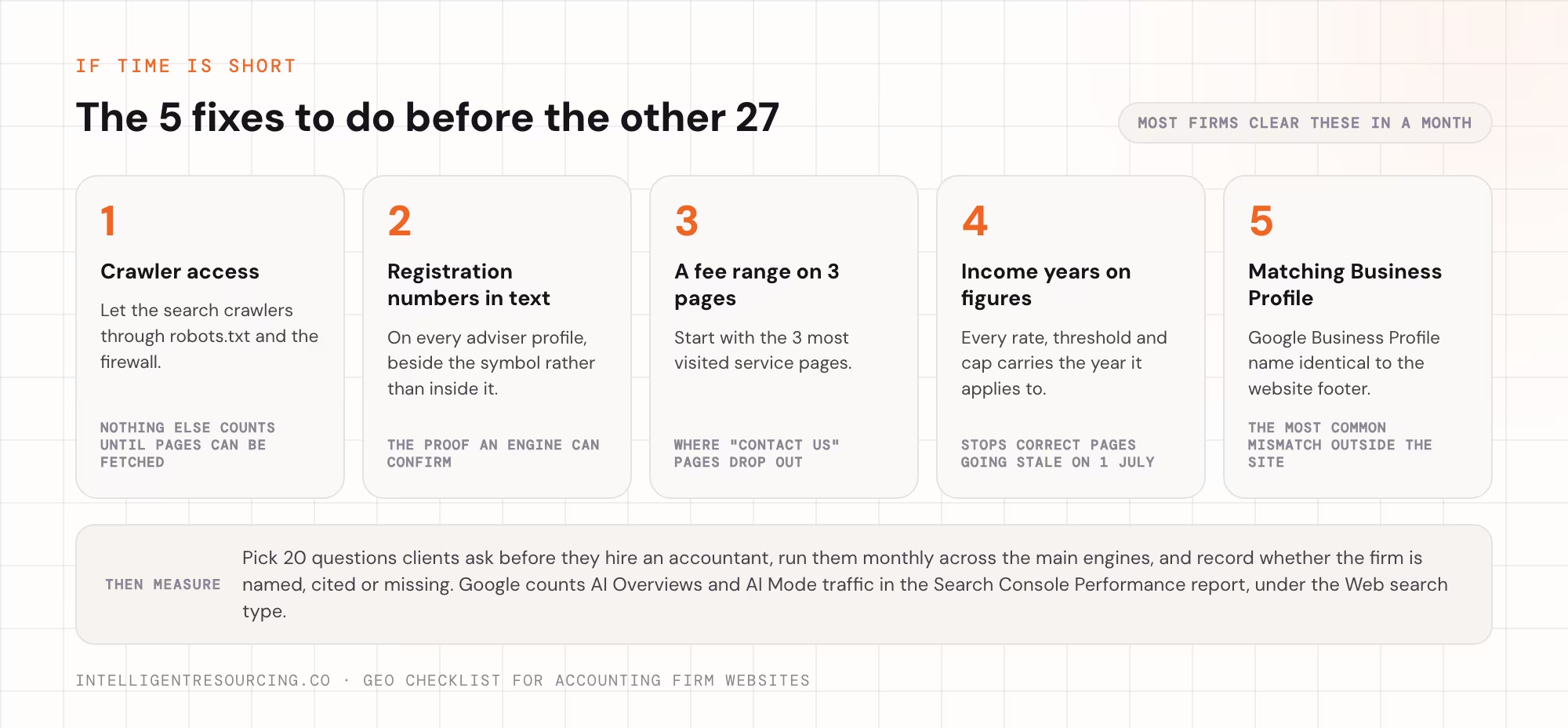
A firm knows the checklist is working when it shows up in AI answers to the client questions it chose at the start. Pick 20 questions clients ask before they hire an accountant. Run them every month across the main engines and record whether the firm is named, cited or missing.
Google gives you a second signal. Google’s guide to its AI features says sites appearing in AI Overviews and AI Mode are included in overall search traffic in Search Console, reported in the Performance report under the Web search type. The same guide says no special schema.org markup is needed to appear, so treat schema as a way to state facts clearly.
If time is short, do these 5 first:
- Crawler access. Nothing else counts until the pages can be fetched.
- Adviser profiles with registration numbers in text. This is the proof an engine can confirm.
- A fee range on the 3 most visited service pages. Cost questions are where "contact us" pages drop out.
- Income years beside every tax figure. This stops correct pages going stale on 1 July.
- A matching Google Business Profile name. It removes the most common mismatch outside the site.
Content Creation
Book a generative engine optimisation strategy call with Intelligent Resourcing. We’ll show you which client questions already bring up your firm, where the gaps are and which fixes matter most.
FAQs
How long does a GEO checklist take for an accounting firm website?
Checking a 10-page practice site against all 32 items takes 1 to 2 days. Fixes take longer, mostly because adviser profiles, fee ranges and tax guides need partner sign-off. Most firms finish the first 5 priority items within a month.
Should an accounting firm publish its fees if every job is quoted?
Yes, as a range or a starting price with clear inclusions. A range such as "individual returns from $220" still lets you quote the final job. A page with a price gives an engine something to compare, while "contact us for a quote" gives it nothing.
Does the registered tax practitioner symbol help AI engines?
It helps readers more than engines. The web versions of the symbol are image files, so an engine may not read the number inside them. Write the registration type and number in plain text beside the symbol so readers and engines can both match it to the register.
Do small suburban accounting practices need GEO?
Only once they want clients who research before they call. A practice that wins most work from walk-ins and "accountant near me" searches gets more from local SEO first. Advisory, business and specialist clients are the ones asking AI engines for recommendations.
Should FAQ markup be removed from accounting firm pages?
There’s no need. Google stopped showing FAQ drop-downs for most sites in 2023, but it says structured data that is not being used causes no problems. Keep the questions and answers visible on the page, because the visible text is what an engine quotes.