

What Should an LLM SEO Checklist Actually Test?
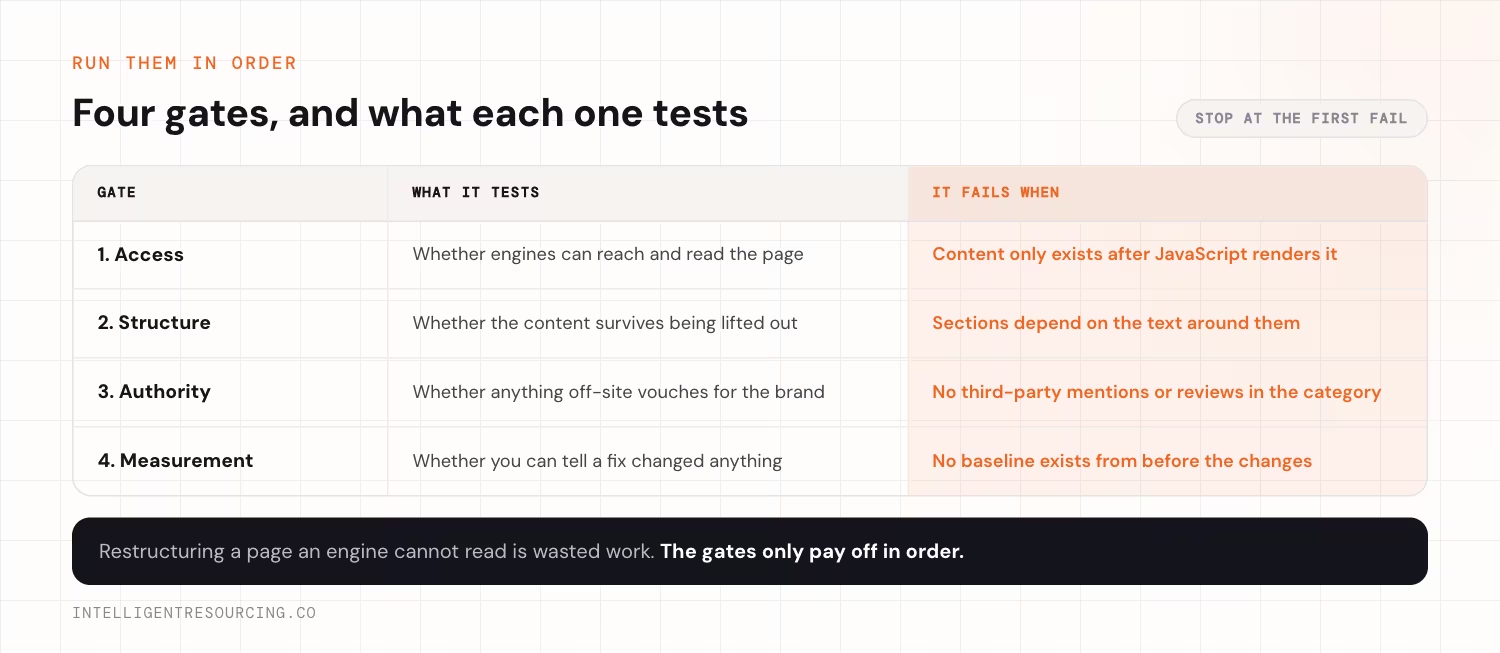
A useful checklist is a readiness audit, not a list of tactics. It applies the same discipline as generative engine optimisation but narrows it to four testable gates, and most published checklists skip to content advice without testing the first one.
| Gate | What it tests | It fails when |
|---|---|---|
| 1. Access | Whether engines can reach and read the page | Content only exists after JavaScript renders it |
| 2. Structure | Whether the content survives being lifted out | Sections depend on the text around them |
| 3. Authority | Whether anything outside the site vouches for the brand | No third-party mentions or reviews in the category |
| 4. Measurement | Whether you can tell a fix changed anything | No baseline exists from before the changes |
The gates are sequential. A page can be well written and still invisible if it fails the first one, which makes restructuring an unreadable page wasted effort. Work down the list and stop at the first gate that fails.
Can AI Engines Even Read Your Pages?
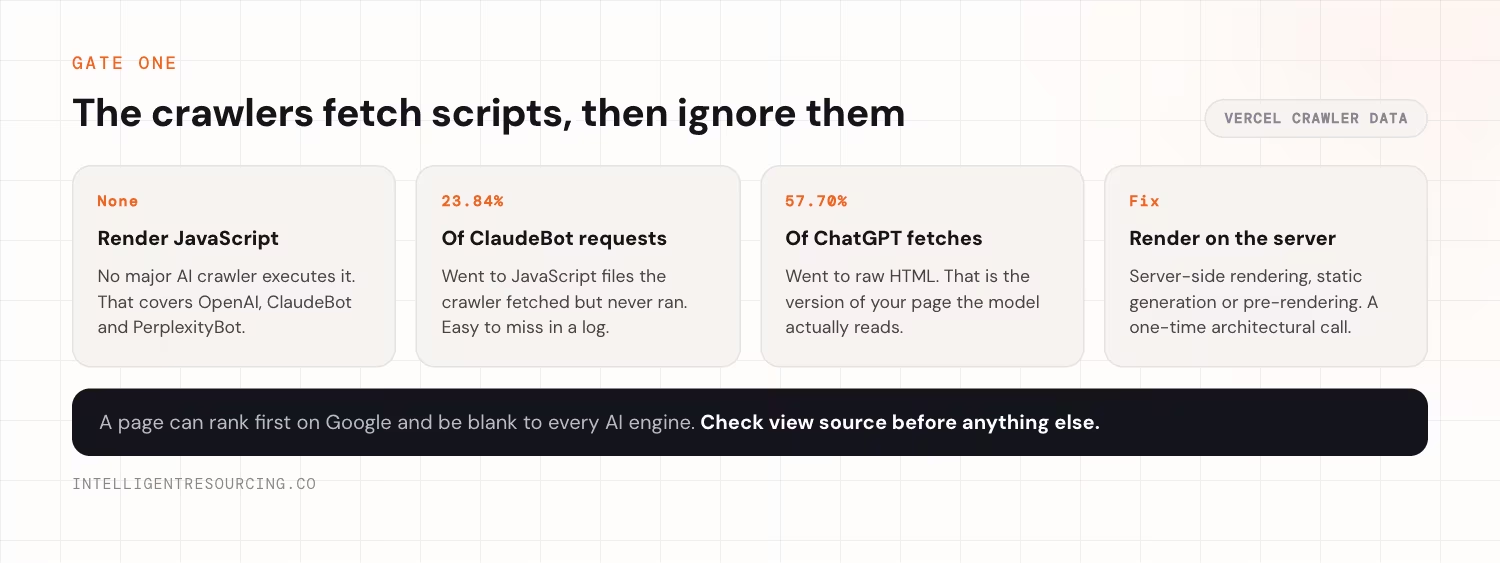
This is the gate most checklists never mention, and it is the one that silently voids everything else.
Vercel's analysis of AI crawler traffic found that AI crawlers do not render JavaScript. It names OpenAI's bots, Anthropic's ClaudeBot and PerplexityBot. They do request JavaScript files, which is what makes this easy to miss in a server log. Claude's crawler spent 23.84% of its requests on JavaScript it never ran. Fetching a script and running it are different things, and only one of them puts your content in front of the model.
Google is the partial exception, and even it hedges. Its own guidance queues pages for rendering in a separate pass and notes a page "may stay on this queue for a few seconds, but it can take longer than that." Google still recommends server-side or pre-rendering on the grounds that not all bots can run JavaScript.
Five checks, in this order:
- View source on the pages you want cited. If the content and metadata are not in the raw HTML, crawlers do not see them, whatever the rendered browser shows.
- Confirm robots.txt does not block AI user agents. Blocking GPTBot, ClaudeBot or PerplexityBot removes you from that engine's retrieval, not just its training data.
- Check that critical scripts and endpoints are not blocked. A blocked script leaves even a rendering-capable crawler with an empty shell.
- Compare canonical tags and metadata between the raw and rendered versions. A mismatch leaves the crawler to resolve a conflict, and it may not resolve it your way.
- Load the page with JavaScript disabled. If it reads as empty to you, it reads as empty to most AI crawlers.
Server-side rendering, static generation or pre-rendering fixes this permanently. It is a one-time architectural decision, which is exactly why it belongs above every content task on the list.
Is Your Content Structured for Extraction?
Engines retrieve passages, not whole pages, so a section that only makes sense in context tends to get skipped.
The practical rule is to answer each heading immediately. Onely's research on machine-readable content puts the response in the first 40 to 60 words of a section, so a system can extract it without reading past an introduction.
Worth noting the same research cuts against a common assumption: it found content over 2,000 words gets cited roughly three times more often than short posts. Short passages, long pages. Trimming word count is not the fix, and self-containment is.
Four checks on any page you want cited:
- One H1 that states the answer, not a headline that needs the article to make sense.
- Every H2 answered in its own opening 40 to 60 words, so the section survives being lifted out.
- No paragraph that depends on the one above it for its subject or meaning.
- Claims and figures stated in full where they sit, rather than referring back to a number introduced earlier.
Our guide to structuring content for AI citation covers the mechanism in more depth, including where markup helps and where it does not.
Does Anything Outside Your Site Vouch for You?
This gate cannot be closed from inside your own content management system, which is why it tends to get skipped.
HubSpot's research on AI search behaviour makes the point directly: unlinked brand mentions influence AI answers, through YouTube videos, Reddit threads, comparison roundups and third-party reviews. Its State of AEO 2026 report found 42% of customer relationship management software buyers used AI search to evaluate vendors, and ranked AI search as the strongest predictor of purchase intent among the activities it tracked. The reputation an engine reads is assembled before a buyer reaches your site.
Three checks:
- Search your brand name alongside your category term. Note which third-party pages mention you and which competitor-adjacent pages do not.
- Confirm listing details are consistent across review platforms, directories and partner pages. Conflicting facts about one brand lower the confidence an engine places in any single source.
- Find the categories where you have no third-party presence at all. A total gap is a bigger problem than an inconsistent one.
How Do You Know Whether It Worked?

Run a baseline before changing a single page, and expect it to show almost nothing.
The Smarketers, an agency that audits these programmes, reports from its own audits that most B2B brands "hold citation shares on at most one platform, and many hold none". It puts first measurable movement at 8 to 12 weeks for most categories. It also notes Perplexity usually moves first, because it retrieves the live web on every query. These are one agency's benchmarks, not an independent study, so treat them as a sighting shot.
A baseline of zero is unremarkable because the pool is so large. Reading Intelligent Resourcing's own tracker on 8 September 2026, across 197 tracked prompts and 6,894 runs, the engines cited 6,342 distinct domains. Being absent from that set is the default state, not a penalty.
Track three things at minimum:
- The prompts a real buyer would type, in their words, not keywords lifted from a search console export.
- Whether the brand is cited and where in the answer, on a fixed schedule so readings compare.
- What changed between readings, so a movement traces to a specific fix rather than a guess.
One good reading does not mean the next one holds. Our guide to citation velocity and repeat visibility covers why consistency is the harder problem.
Which Gate Should You Fix First?
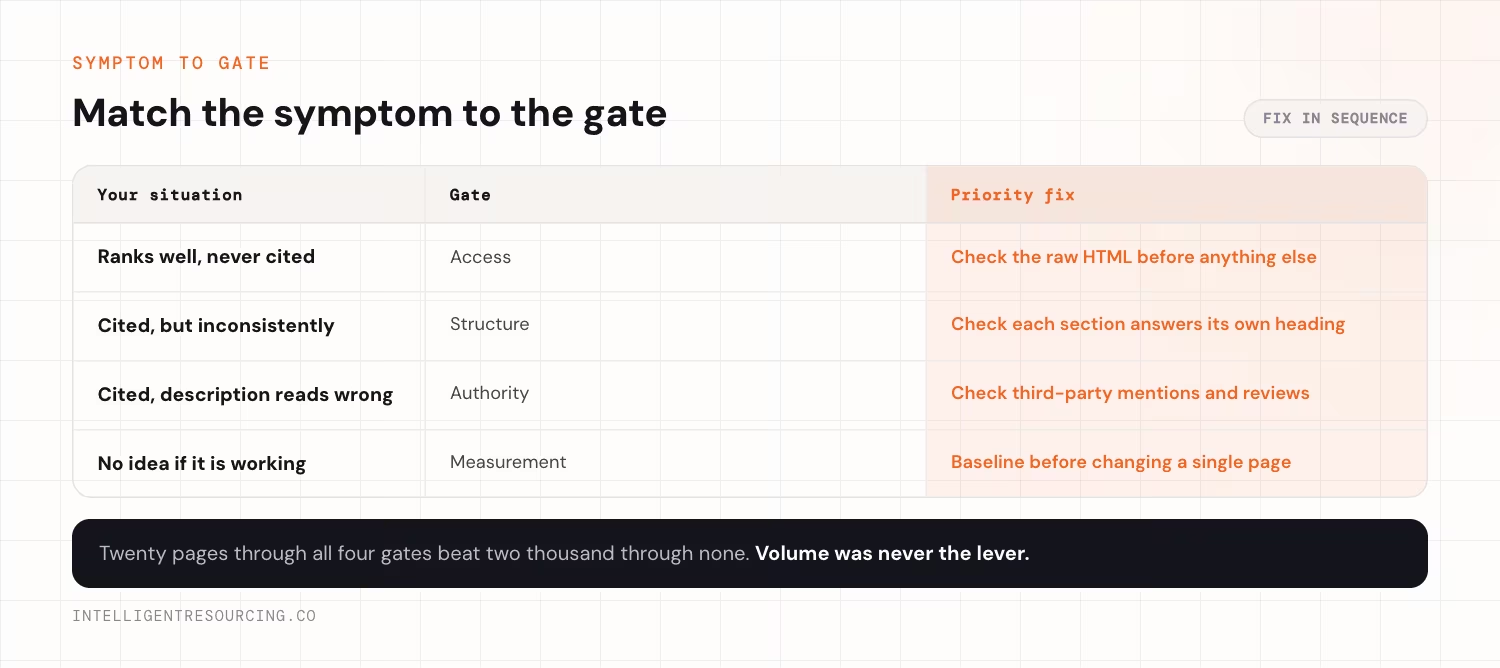
Access, then structure, before commissioning anything new.
The logic is arithmetic. Engines draw from thousands of candidate domains on any given prompt. Adding pages that fail the access gate does not improve your odds, because those pages never enter that pool. Twenty pages through all four gates will out-cite two thousand that clear none.
That ordering also protects the budget. Our guide to diagnosing which layer is failing makes the same argument about search spend. Work out what is actually broken before moving money. A crawl problem, an authority problem and a structure problem all look identical from the outside.
Once the four gates pass, more content starts to compound rather than pile up. For the production side, see our take on building content that gets cited without simply making more of it.
Content Creation
Four gates, in order. Most sites stop at the first one without knowing it, because nothing in a rankings report tells you an engine could not read the page. Book a GEO diagnostic call with Intelligent Resourcing to have it checked against your own pages and prompts.
FAQs
What should I check first before doing LLM SEO?
Access. View source on your key pages and confirm the content is in the raw HTML rather than appearing only after JavaScript runs. Vercel found that none of the major AI crawlers execute JavaScript, so a page that fails this check fails every later gate automatically.
Do I need new content, or can I fix what I have?
Fix what you have first, in most cases. A small set of pages that clear the access and structure gates typically outperforms a much larger site where most pages clear neither.
Does structured data guarantee AI citations?
No. Markup helps an engine interpret a page it has already retrieved. It does not decide whether the page gets retrieved. Whether a section can be lifted out and still make sense matters more at that step.
Should I make my pages shorter so AI can extract from them?
No, and this is a common misreading. Onely's research found longer content gets cited more often, not less. What needs to be short and self-contained is each passage, particularly the 40 to 60 words that open a section.
How often should I re-run this checklist?
Baseline it before any changes, then repeat monthly or quarterly on the same prompt set. Comparable readings over time are worth more than any single snapshot, because retrieval behaviour shifts as engines update.